

Quick view
Shop this guide
Handcrafted Desk, made to order in solid wood.
 Christmas edit
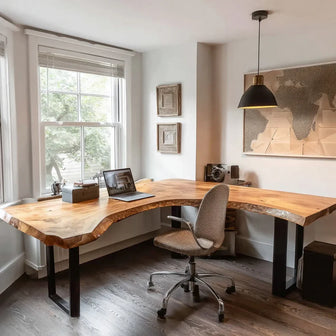
Live Edge L-Shaped Desk – Handmade Solid Wood Corner Desk for Home Office
From $2,340.0010% off at checkout
Christmas edit
Live Edge L-Shaped Desk – Handmade Solid Wood Corner Desk for Home Office
From $2,340.0010% off at checkout
 Christmas edit
Handmade Live Edge Desk – Rustic Solid Wood Office Workstation for Home or Studio
From $2,860.0010% off at checkout
Christmas edit
Handmade Live Edge Desk – Rustic Solid Wood Office Workstation for Home or Studio
From $2,860.0010% off at checkout
 Christmas edit
Sculptural Floating Live Edge Solid Wood Corner Desk & Wall-Mounted Workspace Slab
From $896.00
Christmas edit
Sculptural Floating Live Edge Solid Wood Corner Desk & Wall-Mounted Workspace Slab
From $896.00
 Rustic Floating Shelf Desk – Wall Mounted Study Room Workspace
From $250.00
Rustic Floating Shelf Desk – Wall Mounted Study Room Workspace
From $250.00
 Rustic Floating Shelf Desk – Wall Mounted Study Room Workspace
From $250.00
Rustic Floating Shelf Desk – Wall Mounted Study Room Workspace
From $250.00
 Live Edge Desk – Solid Wood Office Desk with Storage, Modern Computer Desk
From $1,440.00
Live Edge Desk – Solid Wood Office Desk with Storage, Modern Computer Desk
From $1,440.00
A live edge desk is a slab of wood with the natural edge of the tree still intact on one or both sides. Instead of cutting the wood into a clean rectangle, the craftsman preserves the original contour of the tree. No two pieces look the same.
If you are looking at live edge desks, the variation is part of the appeal. It is also what makes buying one confusing. How do you choose between different slabs? What dimensions work for your space? What should you look for in the wood itself?
Here is what matters before you spend money on a live edge desk.
What Makes a Live Edge Desk Different From a Standard Desk
A standard desk is a rectangle. You know the dimensions, you know the surface area, and you know exactly how it will fit in your room. The design is predictable.
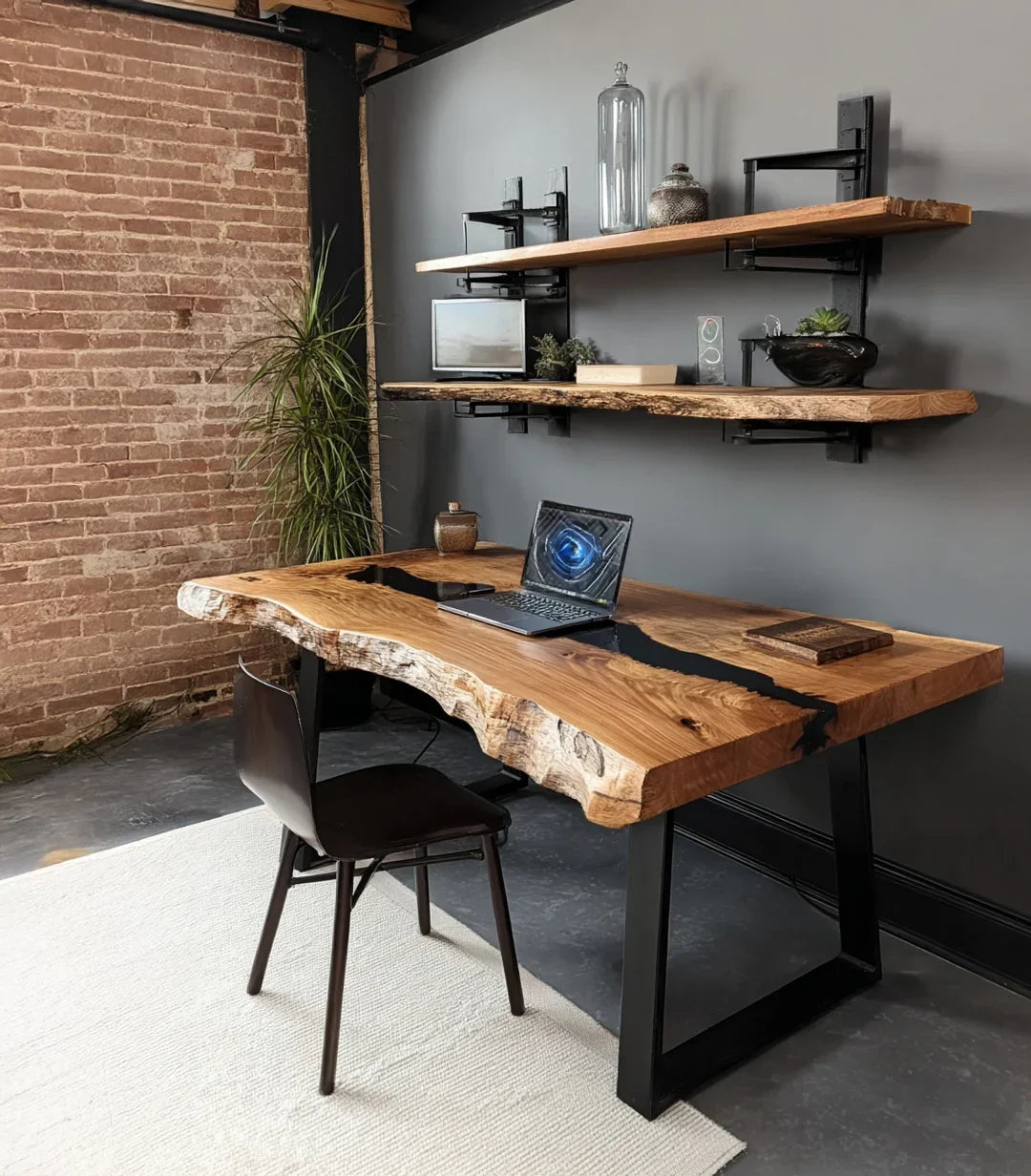
Ashdeco Epoxy Resin Desk – Live Edge Solid Wood Office Table
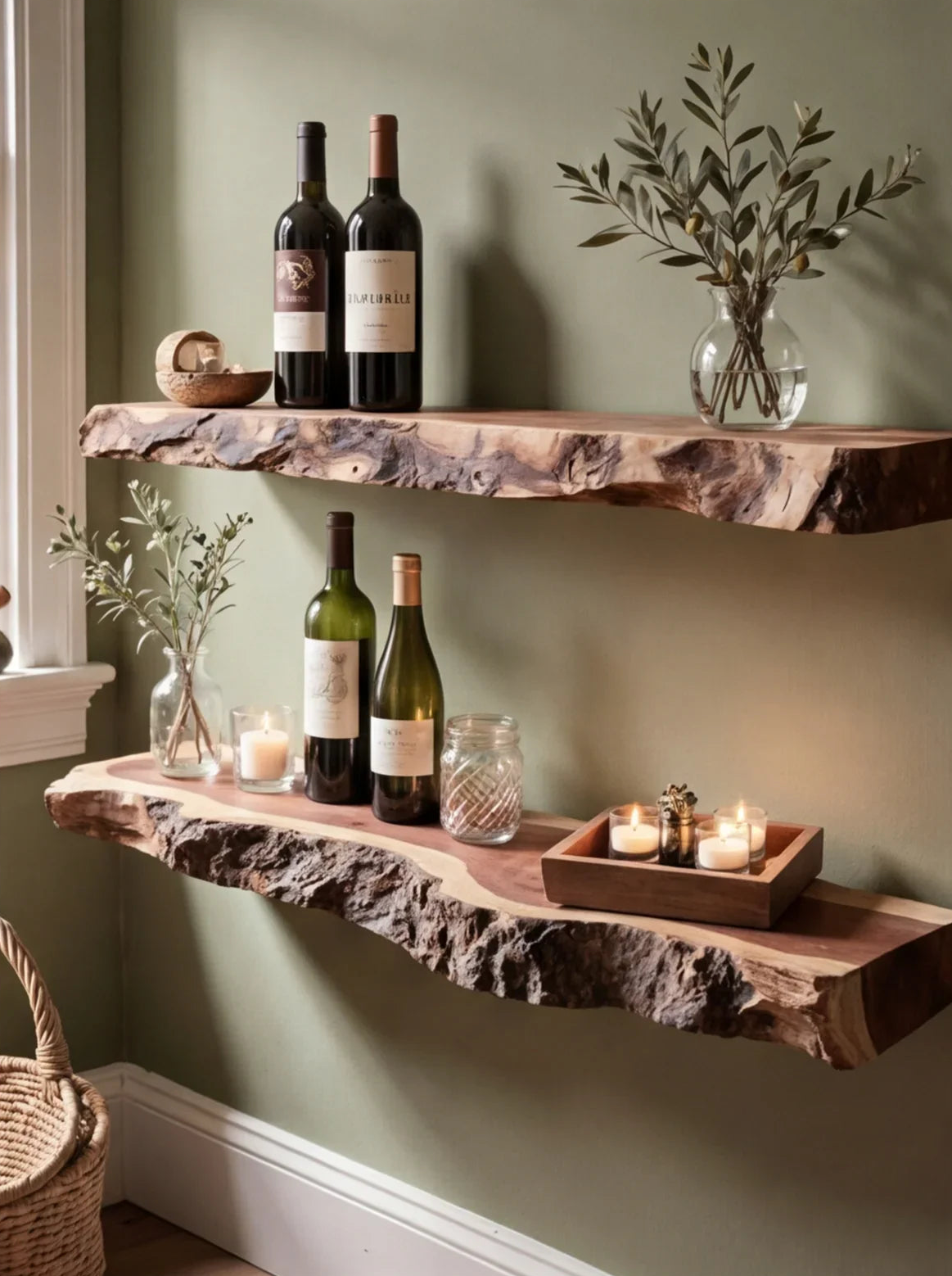
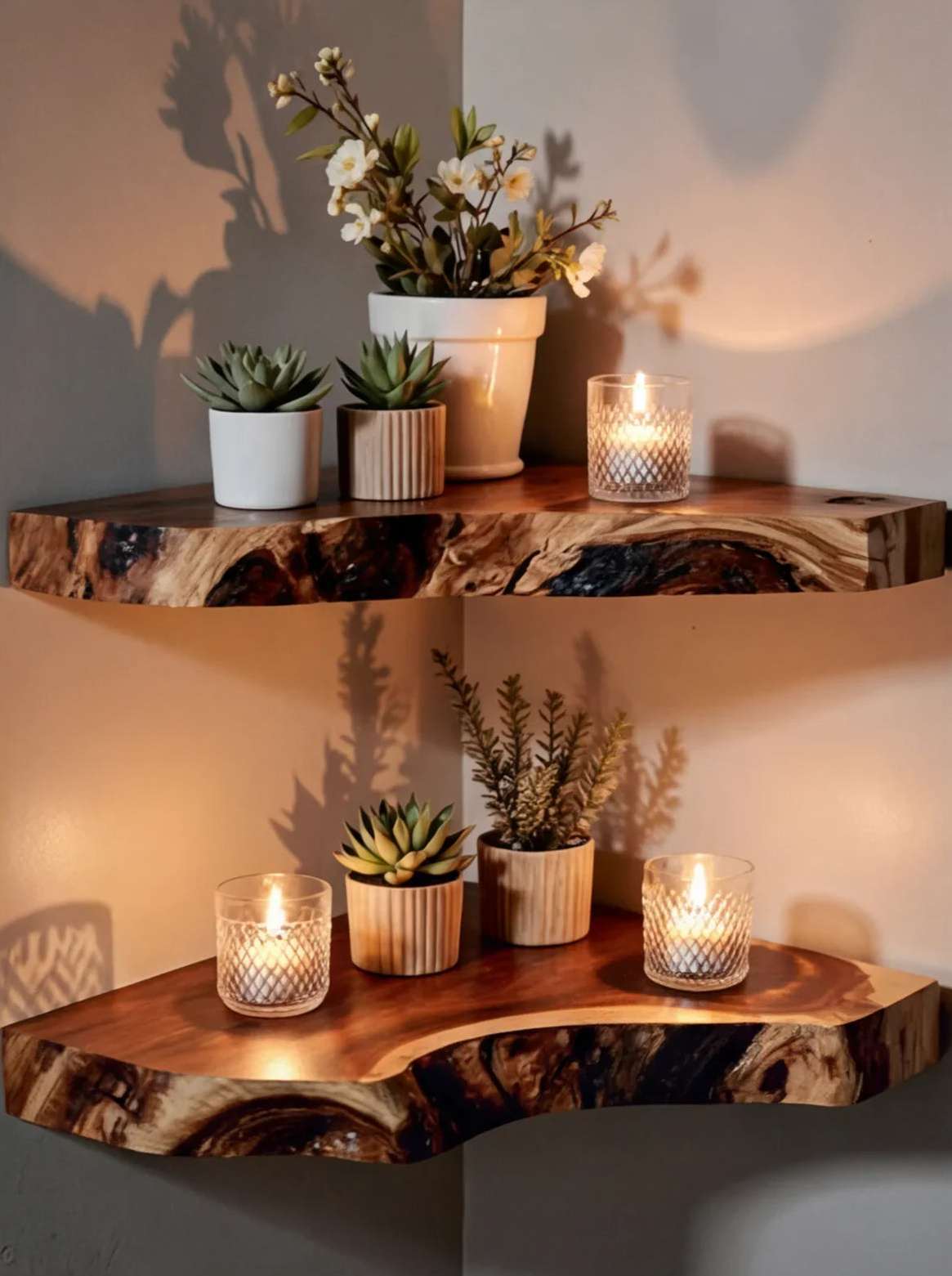
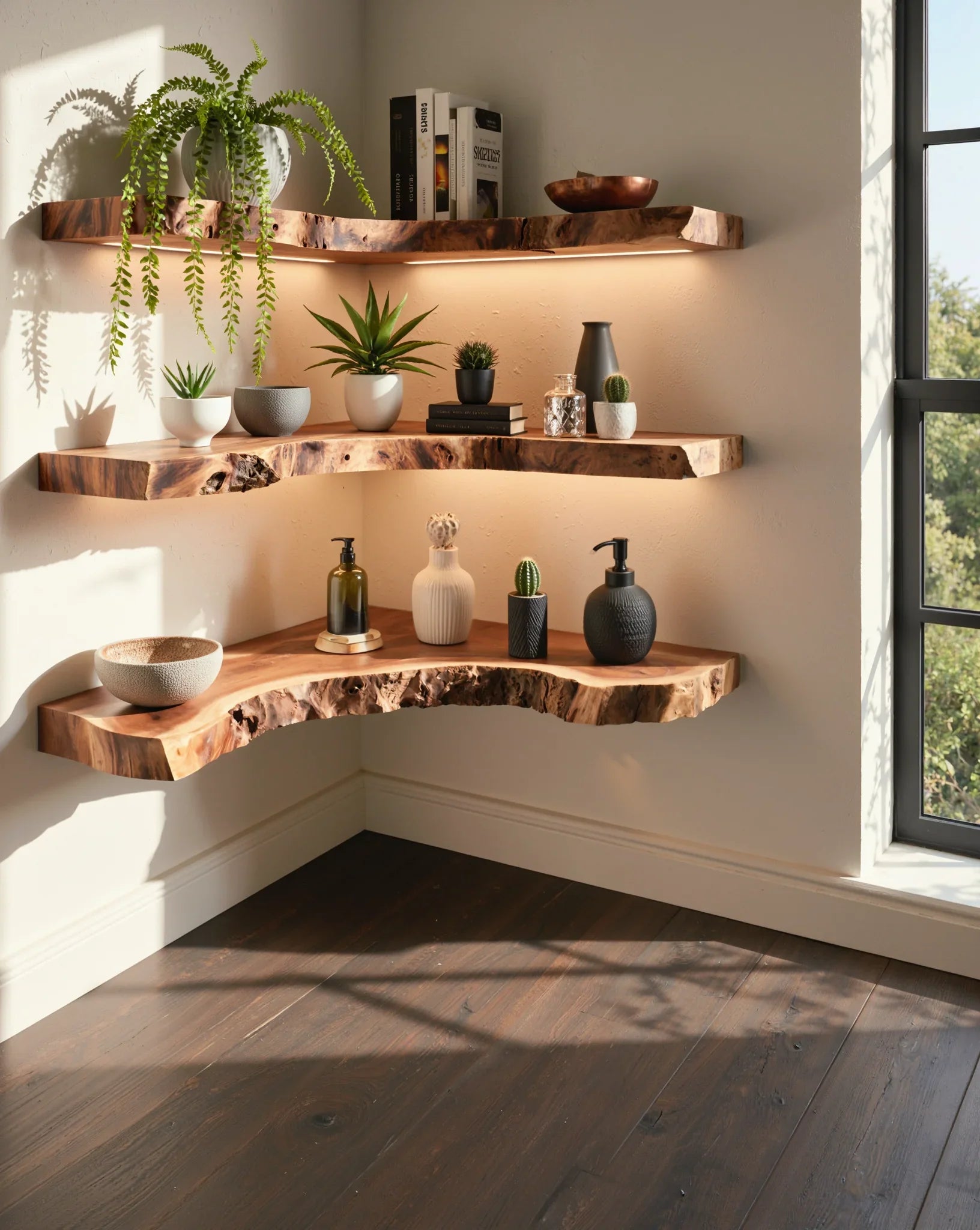
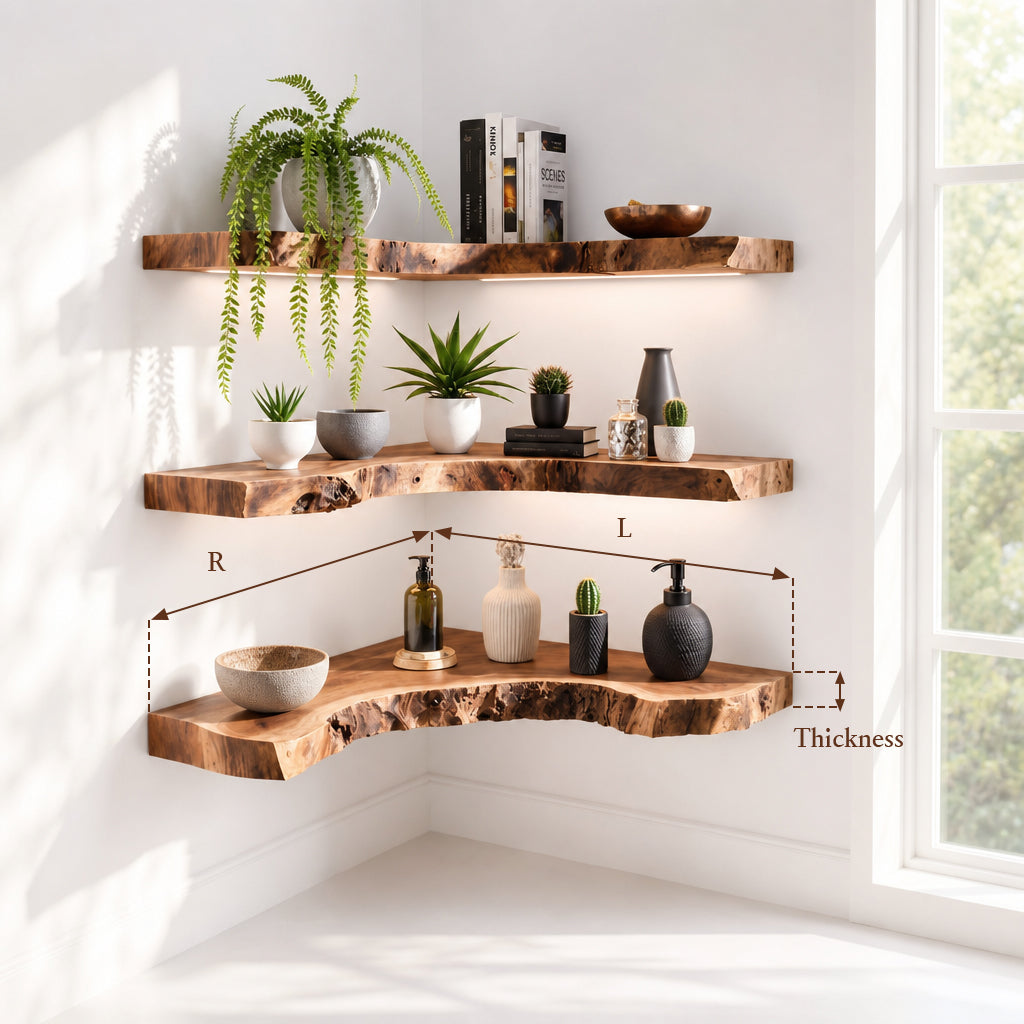
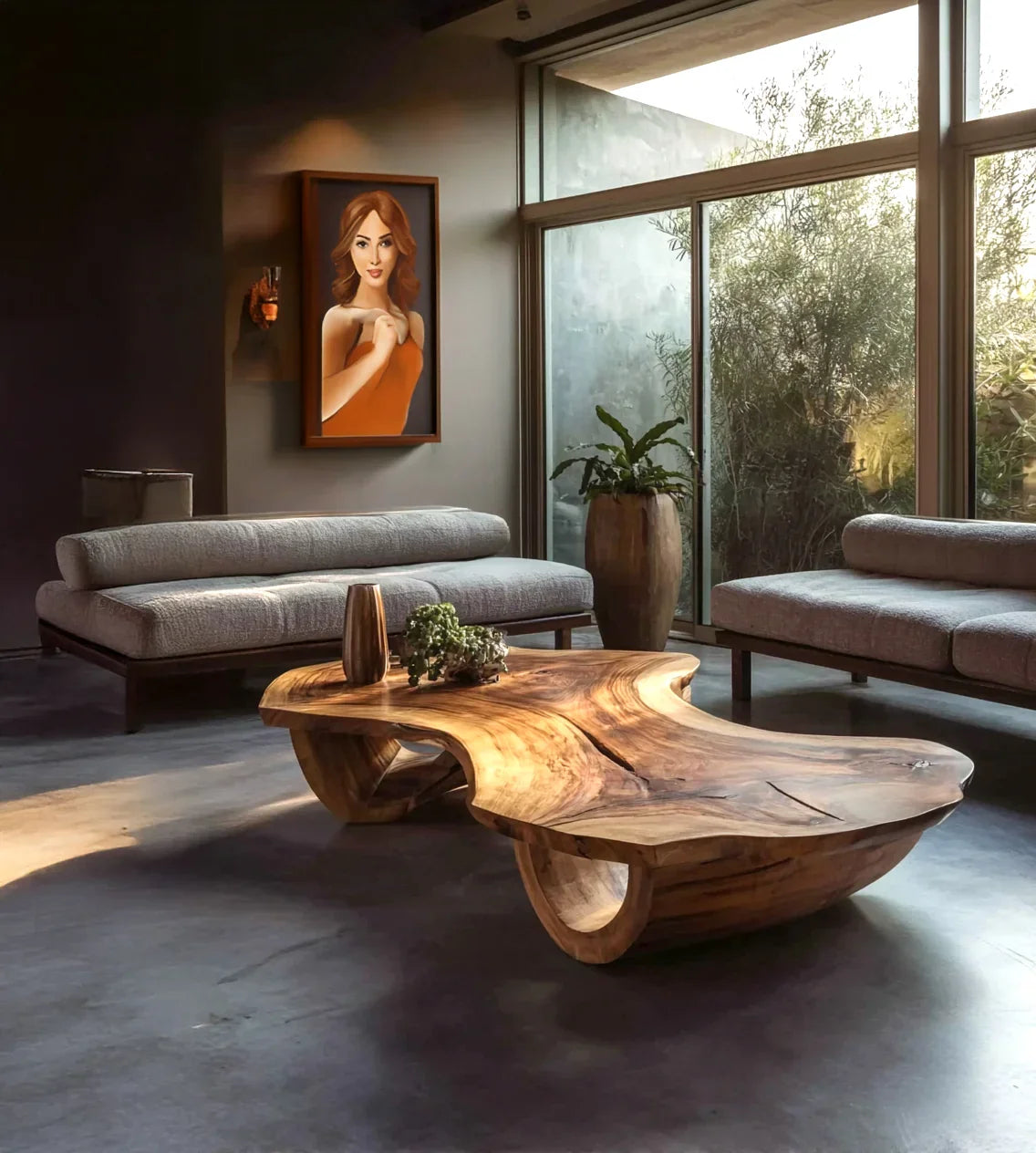
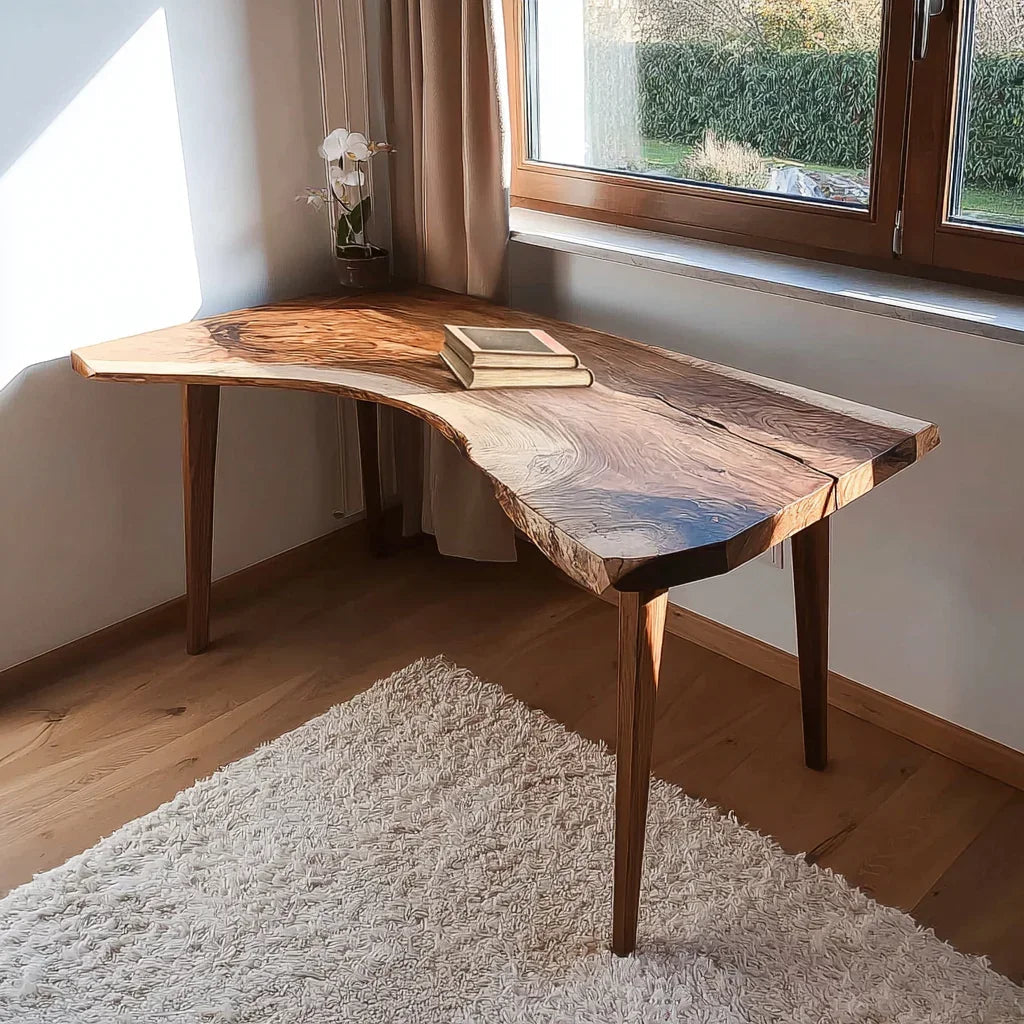
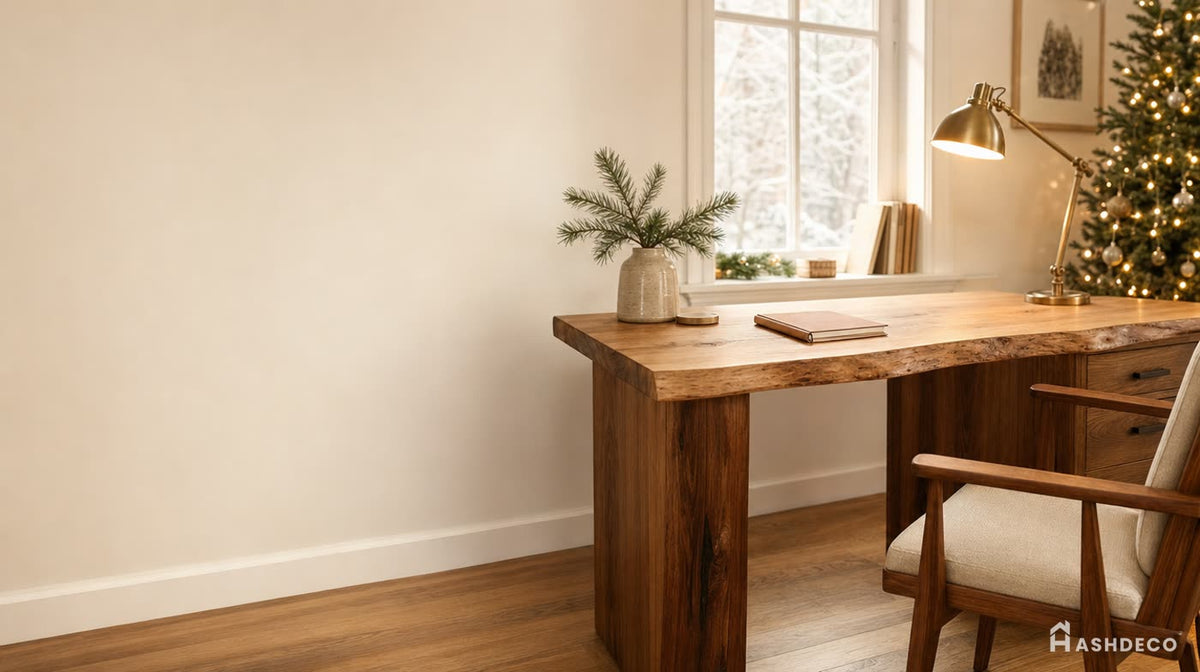
A live edge desk has organic contours on the edges that come from the original tree shape. The two long edges of the desk will follow the natural curve of the trunk. One or both edges might have bark still attached. The thickness of the slab varies in places, thicker in the center of the tree and thinner near the edges.
The practical difference is that a live edge desk takes more consideration to fit in a space. A rectangular desk with a 150cm width fits against a 150cm wall. A live edge slab with a 150cm maximum width might actually measure 140cm at one end and 155cm at the other, making wall alignment tricky.
The aesthetic difference is significant. A live edge desk is a statement piece that transforms a workspace into something more organic and warmer than a standard office setup.
The Wood Species Matters More Than You Think
Different wood species behave differently as a desk surface, and the difference matters for daily use.
Walnut is the most common live edge desk material. It has a rich dark grain pattern, surfaces evenly, and is moderately hard. Walnut desks are mid-range in price and work well for both home offices and professional workspaces.
Oak is harder and more durable than walnut. It has a lighter color with prominent grain lines. Oak is a better choice if your desk gets heavy daily use. The hardness means it resists dents from dropped objects better than softer woods.
Ash has a light color with dramatic grain patterns. It is similar in hardness to oak. The lighter color works well in spaces where you want the desk to feel bright rather than dark.
Maple is the hardest common option. It has a subtle grain and a light, clean appearance. Maple desks are resistant to scratches and dents but can be prone to warping if not properly dried before finishing.
Each species has a different price point. Walnut is typically more expensive than oak or ash. Maple falls in the middle. The species you choose affects both the appearance and the durability of your desk.


Dimensions and Proportions

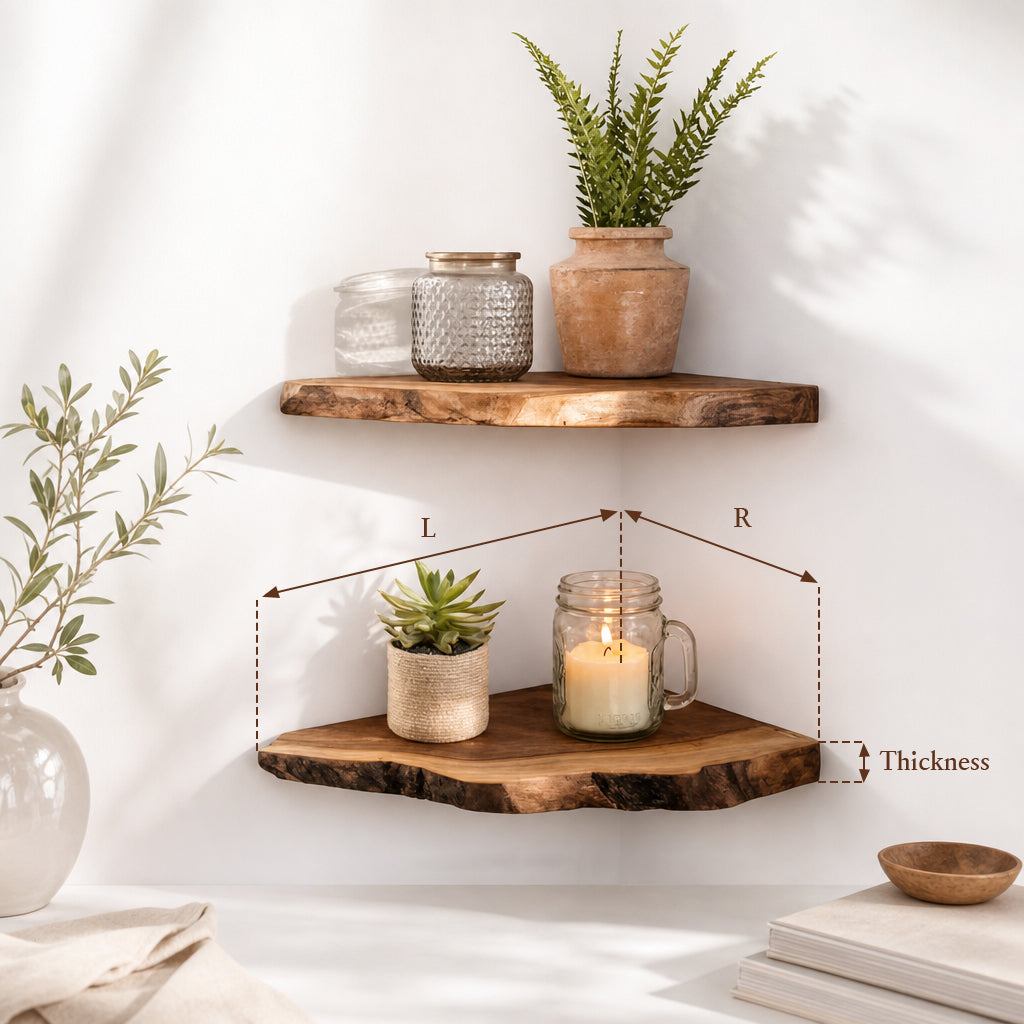
The key measurements for a live edge desk are the length, the width at the widest and narrowest points, and the thickness.
Length is straightforward. Measure your available wall space and match it to the slab length. Remember that the live edge contour does not add functional space, so a 150cm live edge slab has less usable surface area than a clean 150cm rectangle.
Width needs careful consideration. A live edge desk should be at least 50cm deep to function as a proper workspace. Anything narrower than 50cm limits how far you can sit from the wall and how much you can spread out. For dual monitor setups, 60 to 70cm of depth is more comfortable.
Thickness adds to the visual presence. A slab that is 5cm thick feels substantial and permanent. A slab that is 3cm thick looks more refined but can feel less solid under heavy equipment.
Ashdeco live edge pieces include live edge console tables starting around $2,160 for bar-height applications, live edge nightstands at $1,076 for bedside use, and live edge floating vanities for bathrooms. Desk-specific live edge pieces vary by size and wood species.
The Slab Quality: What to Look For
Not all live edge slabs are equal. The quality of the slab determines how it will look in five years and how well it will hold up to daily use.
Check the grain direction. The grain should run perpendicular to the live edge, not parallel. Grain running parallel to the live edge increases the chance of cracking along the edge over time. The grain lines should flow smoothly across the surface without interruptions or unusual patterns that indicate internal stress.
Check for knots. Small, tight knots are fine and add character. Large loose knots or areas where knots have fallen out become structural weak points and maintenance problems.
Check the flatness of the surface before finishing. A properly dried slab should be flat. If a slab has already warped before you receive it, the problem will get worse with time.
Check the live edge condition. Bark that is still attached needs to be firmly bonded to the wood underneath. Loose bark will fall off over time and is difficult to reattach. Run your hand along the live edge to feel for any movement.
Don't miss
These pieces qualify for 10% off orders over $2,000. Applied automatically at checkout.
10% off
Live Edge L-Shaped Desk – Handmade Solid Wood Corner Desk for Home Office
From $2,340.00
10% off at checkout
10% off
Handmade Live Edge Desk – Rustic Solid Wood Office Workstation for Home or Studio
From $2,860.00
10% off at checkout
 10% off
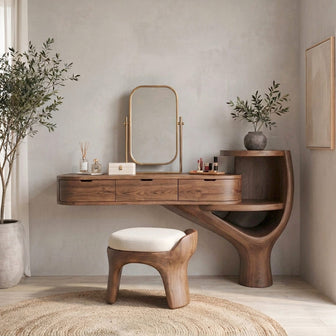
Sculptural Organic Solid Wood Vanity Desk – Modern Japandi Makeup & Writing Table
From $2,576.00
10% off at checkout
10% off
Sculptural Organic Solid Wood Vanity Desk – Modern Japandi Makeup & Writing Table
From $2,576.00
10% off at checkout
 10% off
Modern Live Edge L Shaped Desk For Study Room
From $2,340.00
10% off at checkout
10% off
Modern Live Edge L Shaped Desk For Study Room
From $2,340.00
10% off at checkout
How the Live Edge Fits in Your Space
A live edge desk is not for every room. The organic shape works best in spaces with other natural materials, warm lighting, and a design language that embraces imperfection.
Modern minimalist spaces with clean lines and white walls often struggle to integrate a live edge desk without looking mismatched. The organic contour can feel at odds with a rigorously geometric aesthetic.
Spaces that work well with live edge desks: rustic and farmhouse decors, Japandi and Scandinavian spaces that embrace natural materials, industrial lofts with exposed brick and natural wood, bohemian spaces with layered textures and organic forms.
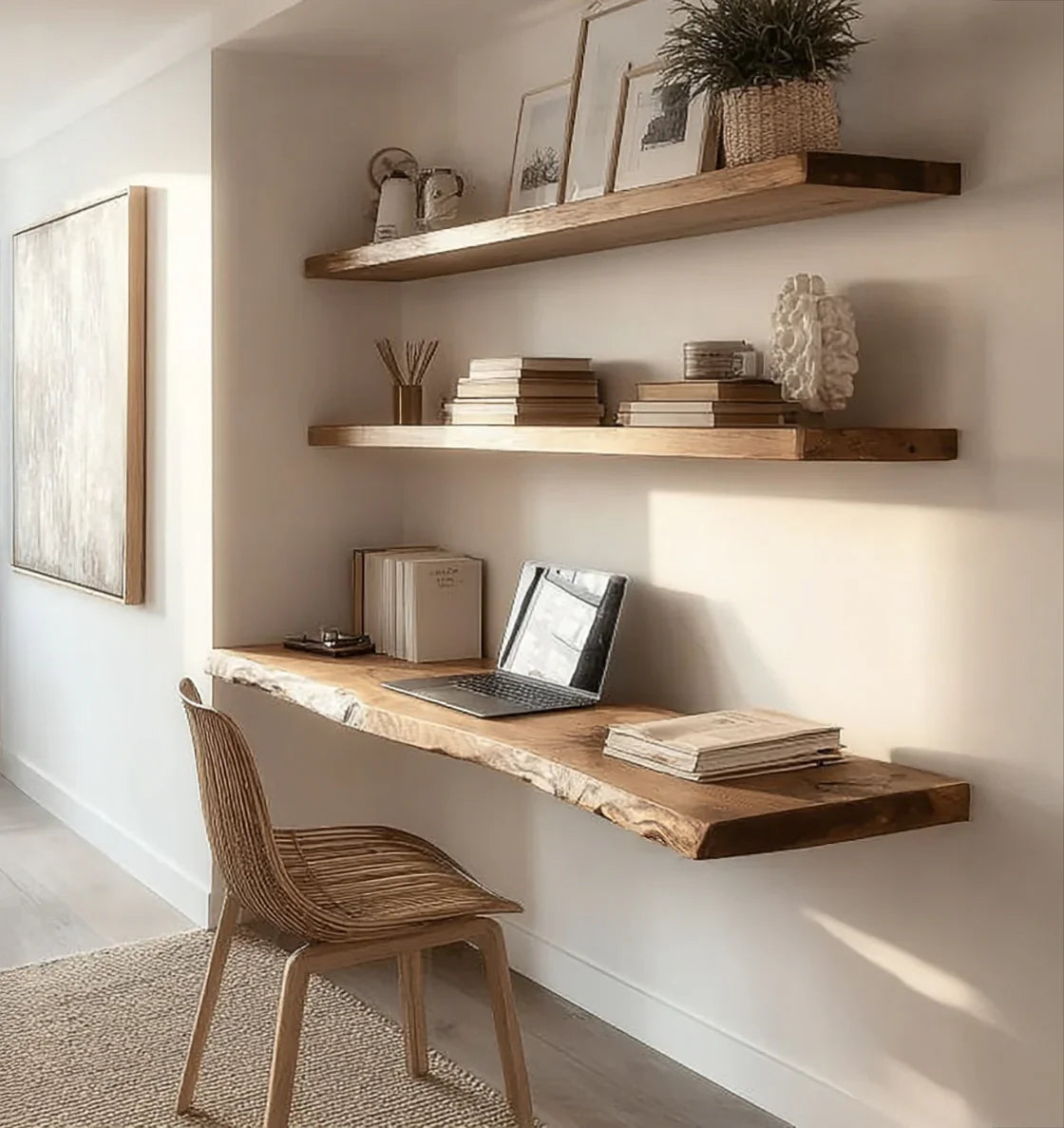
Handmade Live Edge Floating Desk – Rustic Wall Shelf Office Setup
The live edge desk pairs naturally with solid wood shelving, natural fiber rugs, and warm ambient lighting. If your workspace has these elements, the desk will feel at home. If your workspace is stark and modern, the desk may feel out of place.
The Practical Concerns: Weight and Portability
A solid wood live edge desk slab is heavy. A typical 150cm by 60cm walnut slab weighs 20 to 30kg before any base or legs are attached. Adding the base brings the total weight to 30 to 45kg.
This weight affects how you move the desk and where you place it. A live edge desk should be placed against a wall and left there. Frequent moving is impractical and risks damage to the slab and the floor.
The weight also affects the desk base design. A live edge slab needs a substantial base that can support the weight distributed unevenly across the slab surface. Simple hairpin legs work for lighter slabs but can feel insufficient for heavier hardwood slabs.
Care and Maintenance
A live edge desk requires more maintenance than a laminated office desk, but the maintenance is straightforward.
The wood surface should be sealed to prevent stains and moisture damage. Oil finishes bring out the grain and feel natural but require more frequent reapplication. Polyurethane finishes are more durable but give the desk a more coated appearance.
The live edge requires occasional attention. If the bark is still on the edge, check it periodically to make sure it remains firmly attached. If it starts to lift, a small amount of wood-safe adhesive can re-bond it.
Dust the surface regularly with a soft cloth. Avoid wet cleaning products on raw wood finishes. For sealed surfaces, a barely damp cloth followed by a dry cloth is sufficient for regular cleaning.
The wood may develop minor surface scratches over time. For oil-finished desks, light sanding followed by reapplication of oil refreshes the surface. For polyurethane-finished desks, minor scratches can be touched up with a matching wood filler.
The Honest Downsides
A live edge desk is more expensive than a standard desk of comparable size. The handcraftsmanship and unique materials justify the price, but the upfront cost is real.
The organic shape makes it harder to fit exactly into a space. You may need to adjust your room layout to accommodate the contour rather than placing the desk flush against a wall.
The wood moves with humidity changes. In very dry or very humid climates, the slab may develop small cracks or the live edge may lift slightly. This is normal behavior for solid wood and does not indicate a defect.
The desk is difficult to move once placed. The weight and size make relocation a two-person job minimum. Factor this in if you anticipate moving within a few years.
FAQ
What wood species is best for a live edge desk?
Walnut is the most popular choice for its rich color and workability. Oak offers greater durability for heavy-use desks. Maple provides a clean, light appearance with excellent scratch resistance. Each species has different price points and visual characteristics.
How much weight can a live edge desk hold?
A properly supported solid wood live edge desk slab can hold 50 to 100kg depending on the slab thickness, species, and base design. The live edge contour does not significantly reduce load capacity compared to a standard slab of the same dimensions.
Does a live edge desk crack over time?
All solid wood slabs develop some checking (small cracks) as they adjust to humidity and temperature changes. Proper kiln drying before finishing minimizes this tendency. Minor surface checks are normal and do not affect the structural integrity of the desk. Large cracks that extend deep into the slab indicate a drying problem.
Can I use a live edge desk as a standing desk?
Yes, but the contour of the live edge may affect how you position monitors and other equipment. The organic shape also means you cannot push the desk flush against a wall on both sides. For standing desk use, confirm that the slab height matches your standing desk height requirements.
How do I clean and maintain a live edge desk?
Dust with a soft cloth regularly. For oil-finished surfaces, reapply wood oil every 6 to 12 months. For polyurethane-finished surfaces, clean with a barely damp cloth. Avoid placing hot items directly on the wood surface without protection.
Are live edge desks worth the extra cost over standard desks?
For workspaces where aesthetics and natural materials matter, a live edge desk provides value that a standard desk cannot match. The uniqueness of each slab, the warmth of natural wood, and the handcrafted quality justify the higher price for buyers who prioritize these qualities. For purely functional workspaces with tight budgets, a standard desk is the more practical choice.
Explore the Ashdeco live edge desk collection at ashdeco.com/collections/desk.