


Quick view
- The Problem with Product Descriptions
- Method 1: The Weight Test
- Method 2: The Underside Inspection
- Method 3: The Edge Grain Test
- Method 4: The Price Comparison
- Method 5: The Joint Observation
- Method 6: The Finish Consistency Test
- Method 7: The Humidity Response
- What About Ashdeco Tables
- Summary: Quick Checklist
Shop this guide
Handcrafted Dining Tables, made to order in solid wood.
 Round Solid Wood Pedestal Dining Table Handcrafted Solid Wood Center Table
From $1,345.00
Round Solid Wood Pedestal Dining Table Handcrafted Solid Wood Center Table
From $1,345.00
 Round Bistro Dining Table, Small Kitchen Breakfast Table, Compact Circular Dining Table
From $1,022.00
Round Bistro Dining Table, Small Kitchen Breakfast Table, Compact Circular Dining Table
From $1,022.00
 Organic Modern Live Edge Solid Wood Dining Table - Handcrafted Slab Table with Dual Storage Pedestals
From $6,800.0010% off at checkout
Organic Modern Live Edge Solid Wood Dining Table - Handcrafted Slab Table with Dual Storage Pedestals
From $6,800.0010% off at checkout
 Round Solid Wood Dining Table with Architectural Spider Pedestal Base
From $1,254.00
Round Solid Wood Dining Table with Architectural Spider Pedestal Base
From $1,254.00
 Flowing Pedestal Solid Wood Round Dining Table - Japandi Living Sculpture
From $5,850.0010% off at checkout
Flowing Pedestal Solid Wood Round Dining Table - Japandi Living Sculpture
From $5,850.0010% off at checkout
 Sculptural Pedestal Solid Wood Round Dining Table - Organic Modern Centerpiece
From $5,850.0010% off at checkout
Sculptural Pedestal Solid Wood Round Dining Table - Organic Modern Centerpiece
From $5,850.0010% off at checkout
You found a table online. The description says solid wood. The price seems reasonable for solid hardwood. But how do you actually know what you're getting? Online product descriptions can be vague, and some sellers use language that technically means something different from what buyers assume.
This guide gives you practical methods to evaluate whether a dining table is genuine solid wood or something else.
The Problem with Product Descriptions
Furniture product descriptions are written to sell, not to inform. A table described as "solid wood construction" could mean the frame is solid wood while the top is veneer over engineered wood. A table described as "wood dining table" tells you almost nothing. "Crafted from solid hardwood" is closer but still doesn't guarantee full solid wood throughout.
The furniture industry has legitimate reasons for using engineered wood in certain applications. But it also has incentives to make cheaper construction sound more premium than it is. Learning to read between the lines of product descriptions is worth your time before you spend real money.
Method 1: The Weight Test
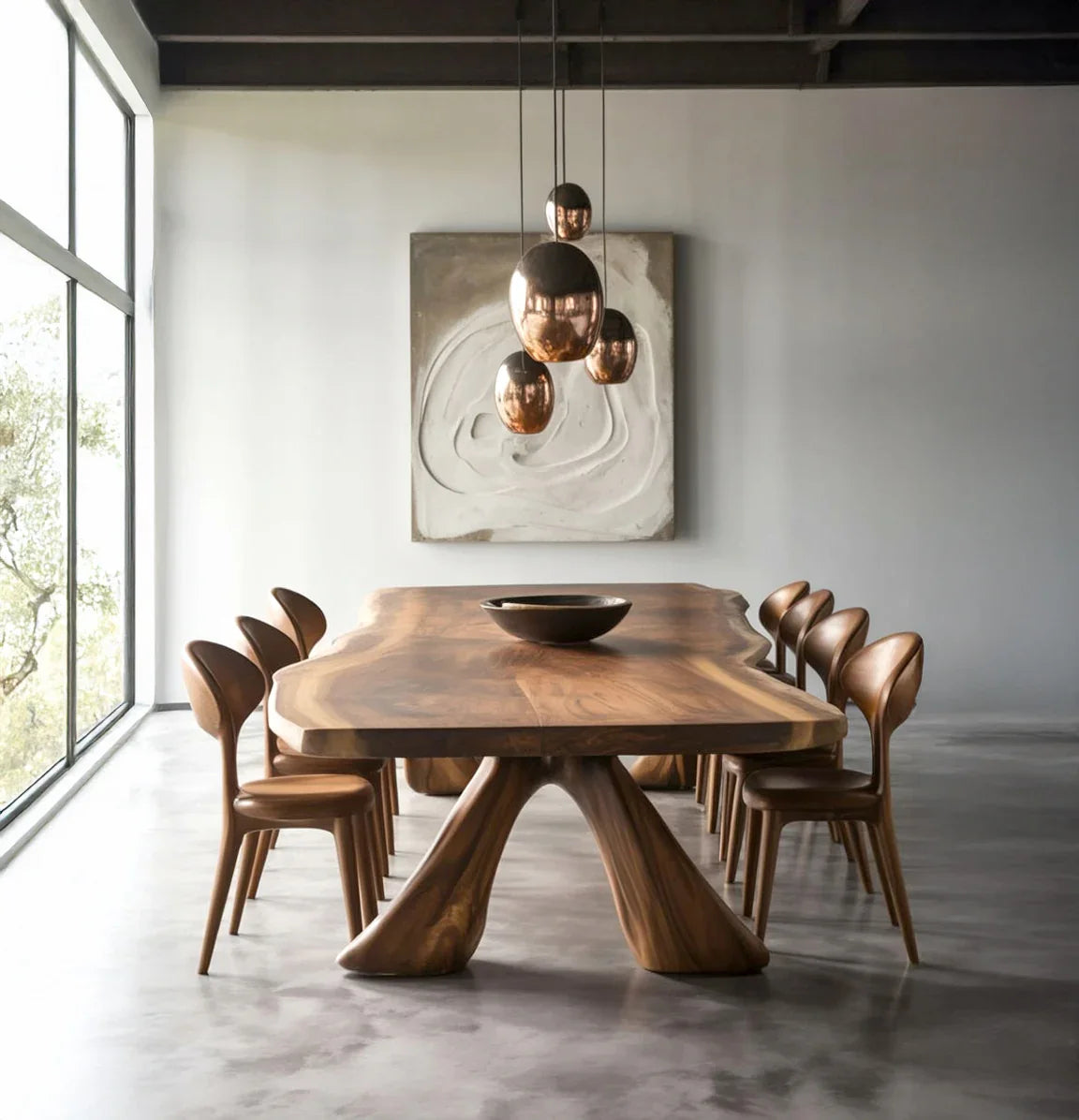
Weight is one of the most reliable indicators. Solid hardwood is heavy. A 72-inch solid oak or acacia dining table typically weighs 120 to 180 pounds or more depending on thickness and base design. A comparable table with a veneer top over particleboard or MDF might weigh 60 to 90 pounds.
If you're buying in person, try to lift one corner or at least push against the table to feel its heft. If it feels surprisingly light for its size, that's a warning sign. Online, check the product weight if listed. An absence of weight information is itself a red flag.
This test is not perfect. Some solid wood tables use thinner tops or hollow legs that reduce weight. But as a first-pass screening tool, weight is genuinely useful.


Method 2: The Underside Inspection
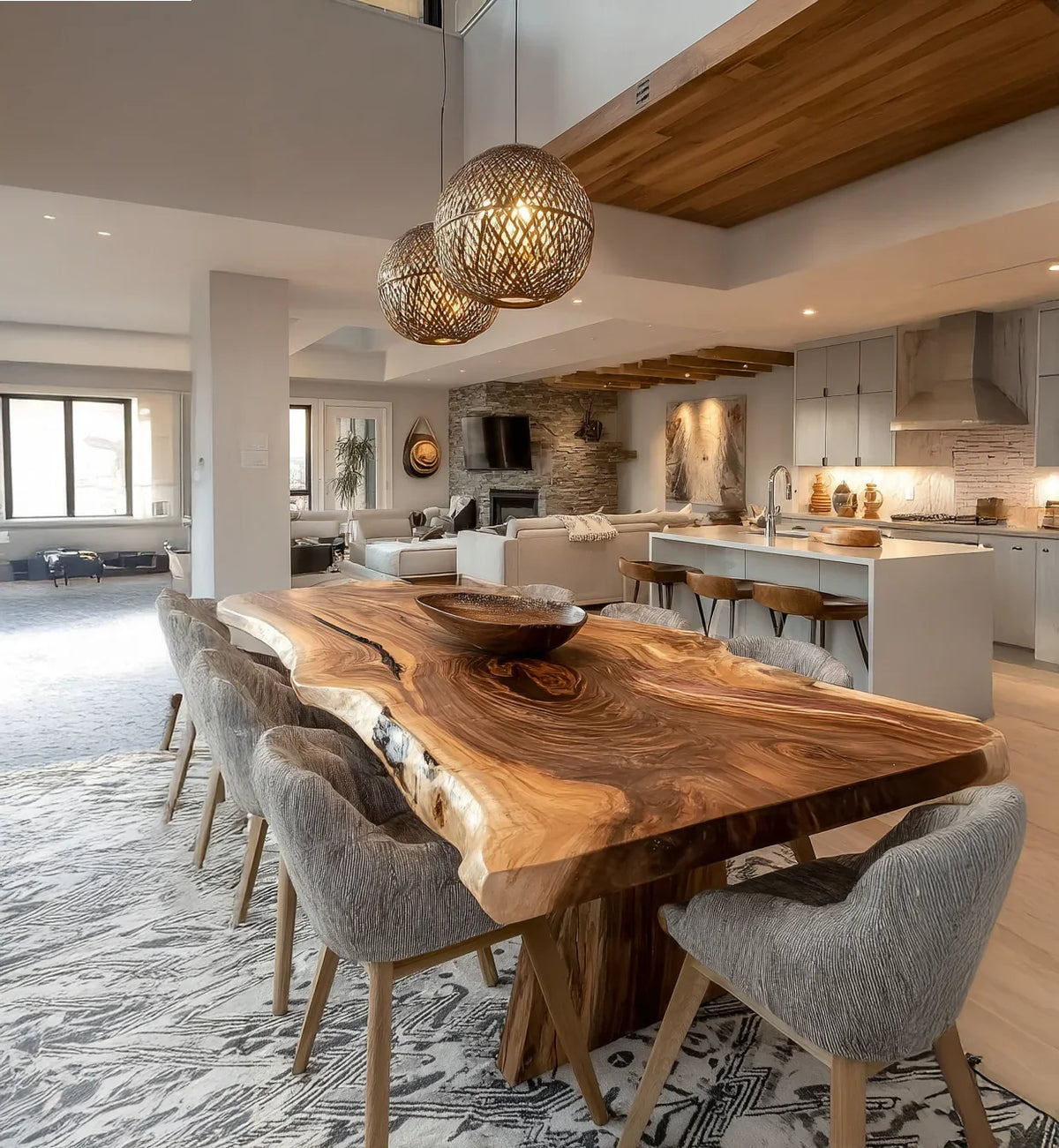
Wherever possible, look at the underside of the tabletop. This is where you can see what the table is actually made of.
What to look for on a solid wood table: Natural wood grain running continuously across the surface. The grain pattern should match or complement the top surface. You might see variation, small knots, and natural character. The color should be consistent with the wood species described.
Warning signs on a veneer or engineered wood table: A very smooth, uniform surface that looks almost too perfect. Seams or edges that don't match the top grain. Seams at straight intervals (indicating engineered board sheets rather than boards glued together). A different material visible at joints, or a layered appearance when you look at the edge.
For tables with finish on the underside, run your hand across it. Solid wood will have slight texture variation. Engineered wood with a good veneer will feel unnaturally smooth.
Method 3: The Edge Grain Test
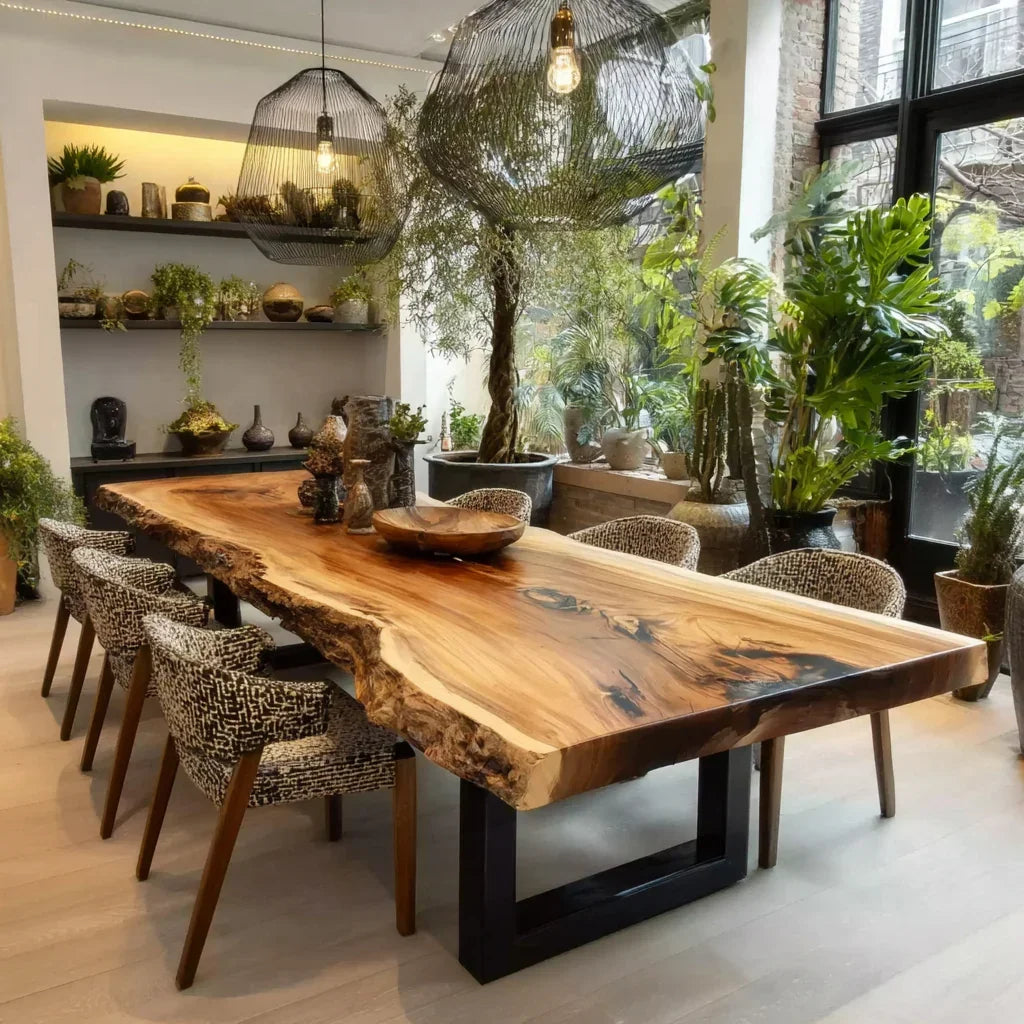
Look at the edge of the tabletop, not just the top surface. On solid wood tables, the edge grain is visible. If the table is made from glued boards, you can usually see the lines where adjacent boards meet. The color and grain of each board will be slightly different. This is normal for solid wood and actually indicates quality construction.
If the edge shows a consistent, uniform surface with no variation between boards, and especially if the surface appears to be a thin layer over a different base material, you're looking at veneer or a different engineered product.
For tables with solid wood edge banding (a solid wood rim applied to the top), the banding itself should be solid wood. Check where the banding meets the top surface for signs of a thin veneer layer.
Don't miss
These pieces qualify for 10% off orders over $2,000. Applied automatically at checkout.
10% off
Organic Modern Live Edge Solid Wood Dining Table - Handcrafted Slab Table with Dual Storage Pedestals
From $6,800.00
10% off at checkout
10% off
Flowing Pedestal Solid Wood Round Dining Table - Japandi Living Sculpture
From $5,850.00
10% off at checkout
10% off
Sculptural Pedestal Solid Wood Round Dining Table - Organic Modern Centerpiece
From $5,850.00
10% off at checkout
 10% off
Organic Live Edge Solid Wood Dining Table with Sculptural River Legs
From $4,180.00
10% off at checkout
10% off
Organic Live Edge Solid Wood Dining Table with Sculptural River Legs
From $4,180.00
10% off at checkout
Method 4: The Price Comparison
Price is informative. A 72-inch dining table priced under $500 is almost certainly not solid hardwood throughout. Manufacturing costs for solid hardwood tables, even from lower-wage factories, don't allow for that price point with genuine solid wood and reasonable margins.
Some reference points for the US market as of 2025 to 2026:
A genuinely solid acacia dining table typically starts around $800 to $1,000 for smaller bistro sizes. Solid oak tables typically start around $1,500. Walnut tables typically start above $2,500. These are approximate and vary with design complexity and craftsmanship, but the ranges are grounded in actual material and labor costs.
If a table is described as solid wood and priced significantly below these ranges, the description is likely misleading in some way. Either the top is not solid wood, the wood species is not what you think, or the construction uses significant engineered wood components.
Method 5: The Joint Observation
Look at where the legs attach to the tabletop, and where the apron (the frame supporting the top) connects to the legs. Quality solid wood tables will have wood-to-wood joinery at these points. You might see mortise and tenon joints, properly fitted dowels, or wooden pegs.
Metal brackets bolted to the wood and used as the primary connection method often indicate furniture built for cost rather than longevity. Metal brackets are not inherently bad, but in quality furniture they supplement solid joinery rather than replacing it.
If you can see the connection from multiple angles, look for signs that the joints are wood-on-wood fitted, as opposed to brackets or metal hardware carrying the load.
Method 6: The Finish Consistency Test
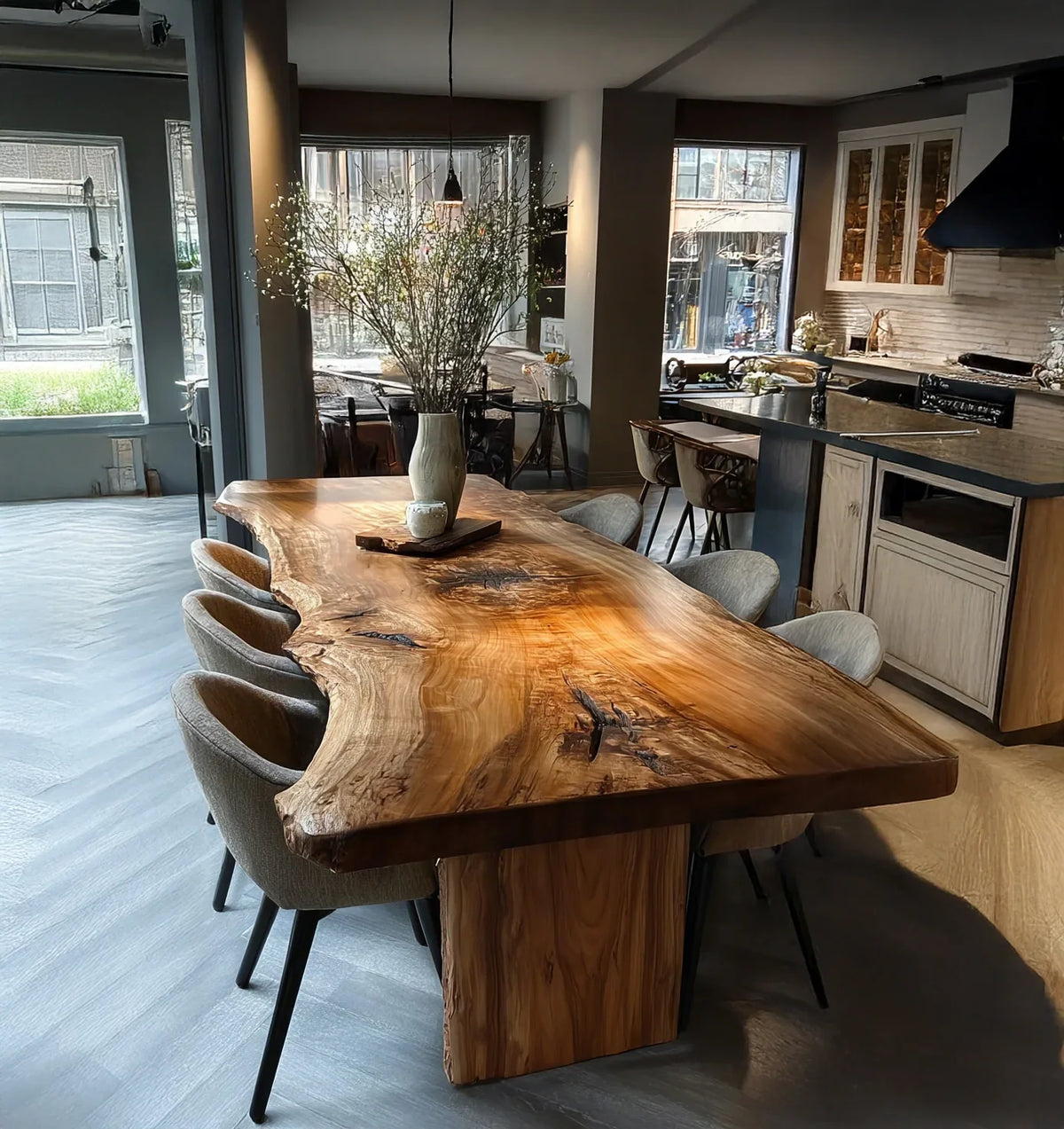
Solid wood absorbs finish differently in different areas depending on grain density. After finishing, you'll see subtle variation in color and sheen across a solid wood table top. This variation is natural and indicates real wood.
A veneer table with a perfectly uniform finish, where every part of the surface has exactly the same sheen and color with no subtle variation, may have a highly engineered surface. This isn't always the case, but it's a clue.
Similarly, solid wood tables sometimes show slight grain raise (texture difference) in some areas after finishing. This is normal and can be minimized with proper finishing but rarely eliminated entirely.
Method 7: The Humidity Response
This one takes time, but if you already own a table and are trying to confirm its construction, watch how it responds to humidity changes. Solid wood expands and contracts with seasonal humidity swings. You might notice slight movement in table width or length between winter and summer, particularly in less climate-controlled homes.
Engineered wood is more dimensionally stable and shows less seasonal movement. If your table shows no response to significant humidity changes, it may contain significant engineered wood content. This test is slow and requires observation over time.
What About Ashdeco Tables
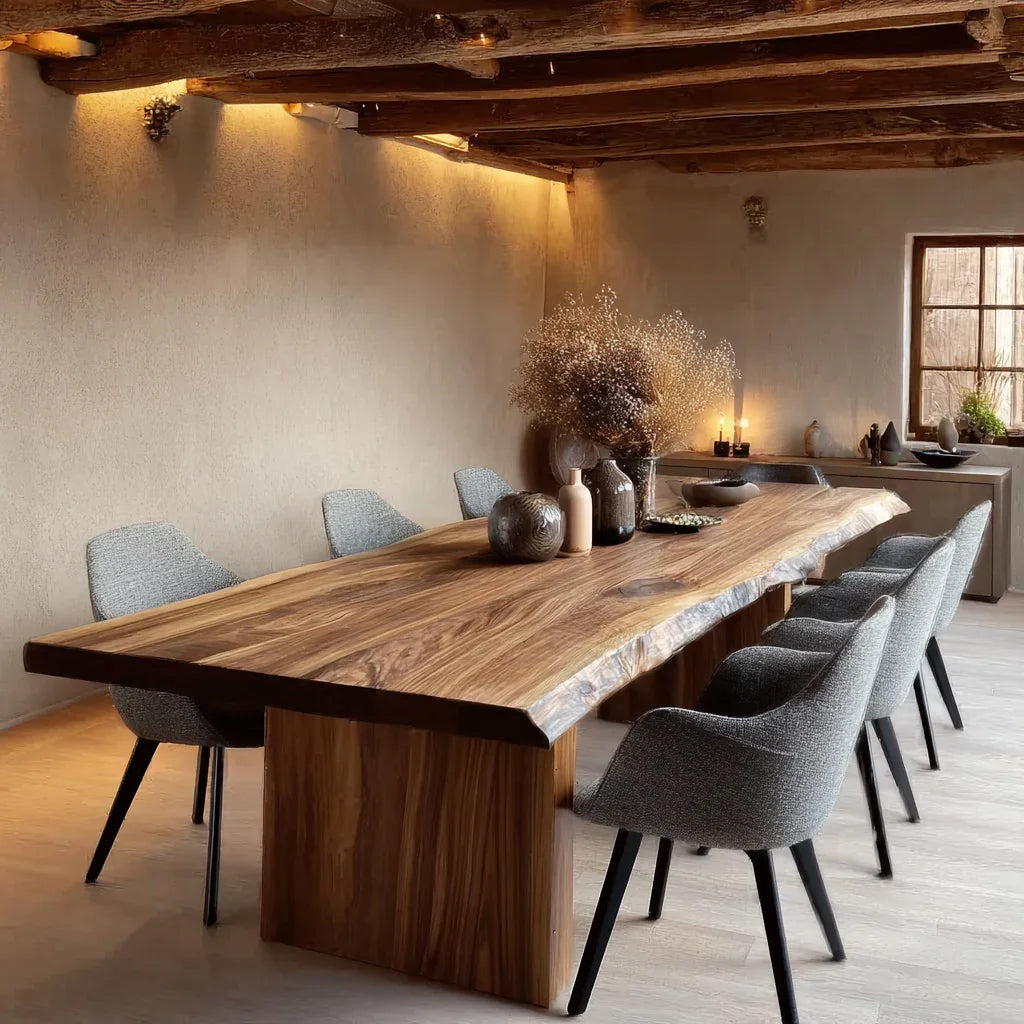
Ashdeco's handcrafted dining tables are solid wood throughout, with each piece made from hardwood boards glued together and joined using traditional methods. The furniture is made in Vietnam by artisans working with solid wood, not engineered wood with wood veneer. The joinery uses mortise and tenon and related approaches rather than metal brackets as primary structural connections.
The product descriptions specify the wood species and construction approach, and the prices reflect solid hardwood construction rather than veneer-over-engineered-wood pricing. If you have specific questions about a particular table's construction, the product pages provide additional detail.
Summary: Quick Checklist
Use this when evaluating a table:
- Heavy for its size? Weight indicates solid hardwood. - Underside looks like the top? Solid wood shows consistent grain throughout. - Edge shows board seams? Natural variation between boards indicates solid wood. - Price matches solid wood reality? Below-market pricing for "solid wood" is suspicious. - Wood-to-wood joinery at legs and apron? Mortise and tenon or dowels, not just metal brackets. - Finish has subtle variation? Natural differences indicate real wood.
If all signs point positive, you're looking at genuine solid wood. If several signs are ambiguous or negative, dig deeper or ask the seller directly what the tabletop is made of.
Related reading:
For a broader guide to what to look for in a quality dining table, see Solid Wood Dining Table: The Complete Buyer's Guide.