

Shop this guide
Handcrafted Dining Tables, made to order in solid wood.
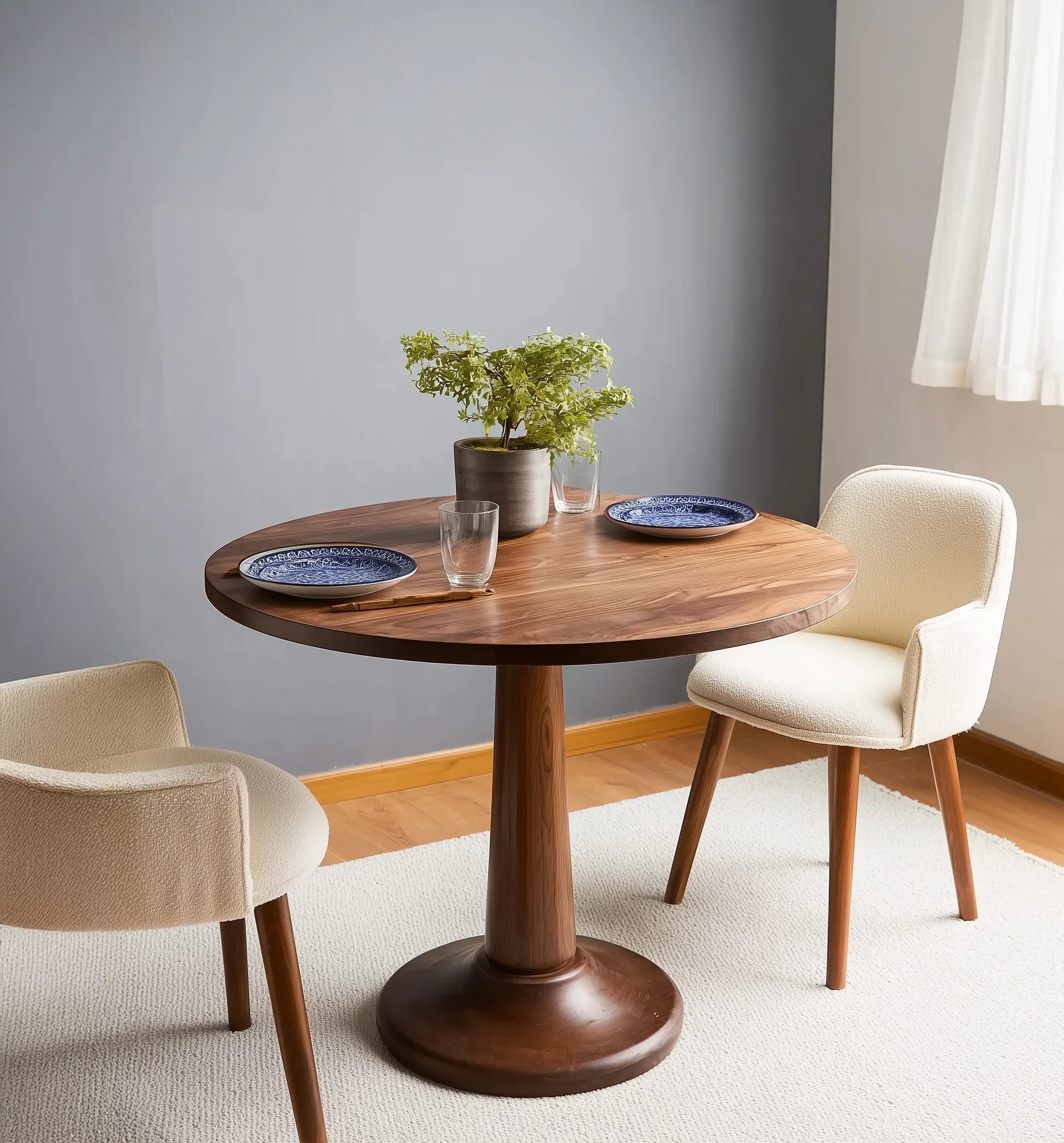
 Round Solid Wood Pedestal Dining Table Handcrafted Solid Wood Center Table
From $1,345.00
Round Solid Wood Pedestal Dining Table Handcrafted Solid Wood Center Table
From $1,345.00
 Round Bistro Dining Table, Small Kitchen Breakfast Table, Compact Circular Dining Table
From $1,022.00
Round Bistro Dining Table, Small Kitchen Breakfast Table, Compact Circular Dining Table
From $1,022.00
 Organic Modern Live Edge Solid Wood Dining Table - Handcrafted Slab Table with Dual Storage Pedestals
From $6,800.0010% off at checkout
Organic Modern Live Edge Solid Wood Dining Table - Handcrafted Slab Table with Dual Storage Pedestals
From $6,800.0010% off at checkout
 Round Solid Wood Dining Table with Architectural Spider Pedestal Base
From $1,254.00
Round Solid Wood Dining Table with Architectural Spider Pedestal Base
From $1,254.00
 Flowing Pedestal Solid Wood Round Dining Table - Japandi Living Sculpture
From $5,850.0010% off at checkout
Flowing Pedestal Solid Wood Round Dining Table - Japandi Living Sculpture
From $5,850.0010% off at checkout
 Sculptural Pedestal Solid Wood Round Dining Table - Organic Modern Centerpiece
From $5,850.0010% off at checkout
Sculptural Pedestal Solid Wood Round Dining Table - Organic Modern Centerpiece
From $5,850.0010% off at checkout
Walk into any furniture showroom and you'll see two main base styles for dining tables: pedestal bases (usually a single central support) and leg bases (four legs, sometimes with an apron frame). Both work. Both can be beautiful. But they're not interchangeable in terms of how they feel, how they age, and what they demand from your space.
This is a practical comparison to help you think through which is actually better for your situation.
The Pedestal Table
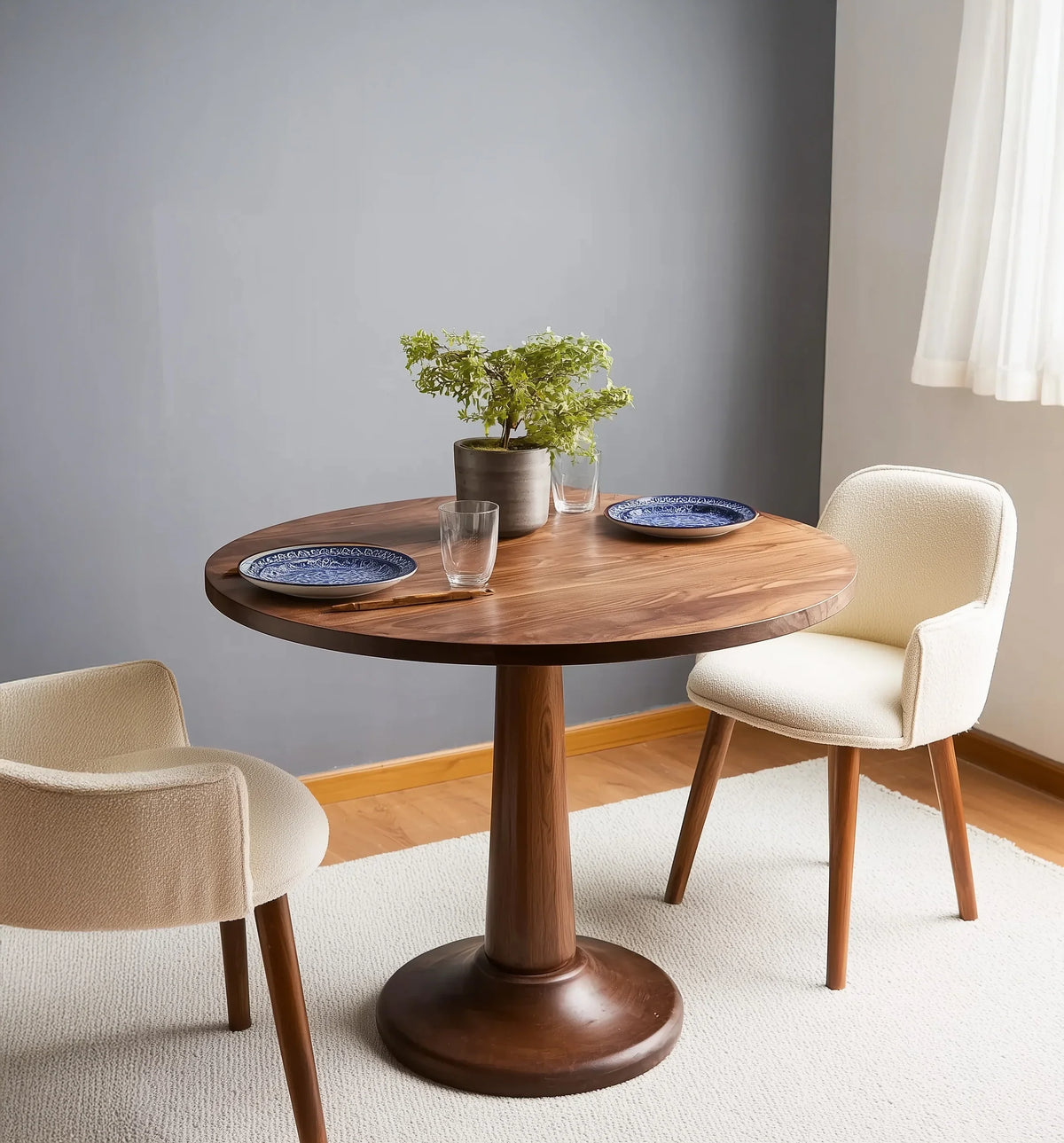
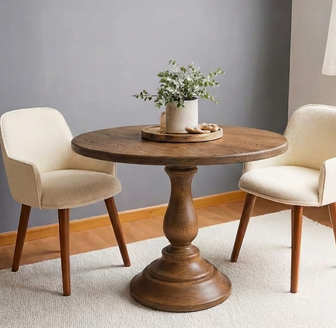
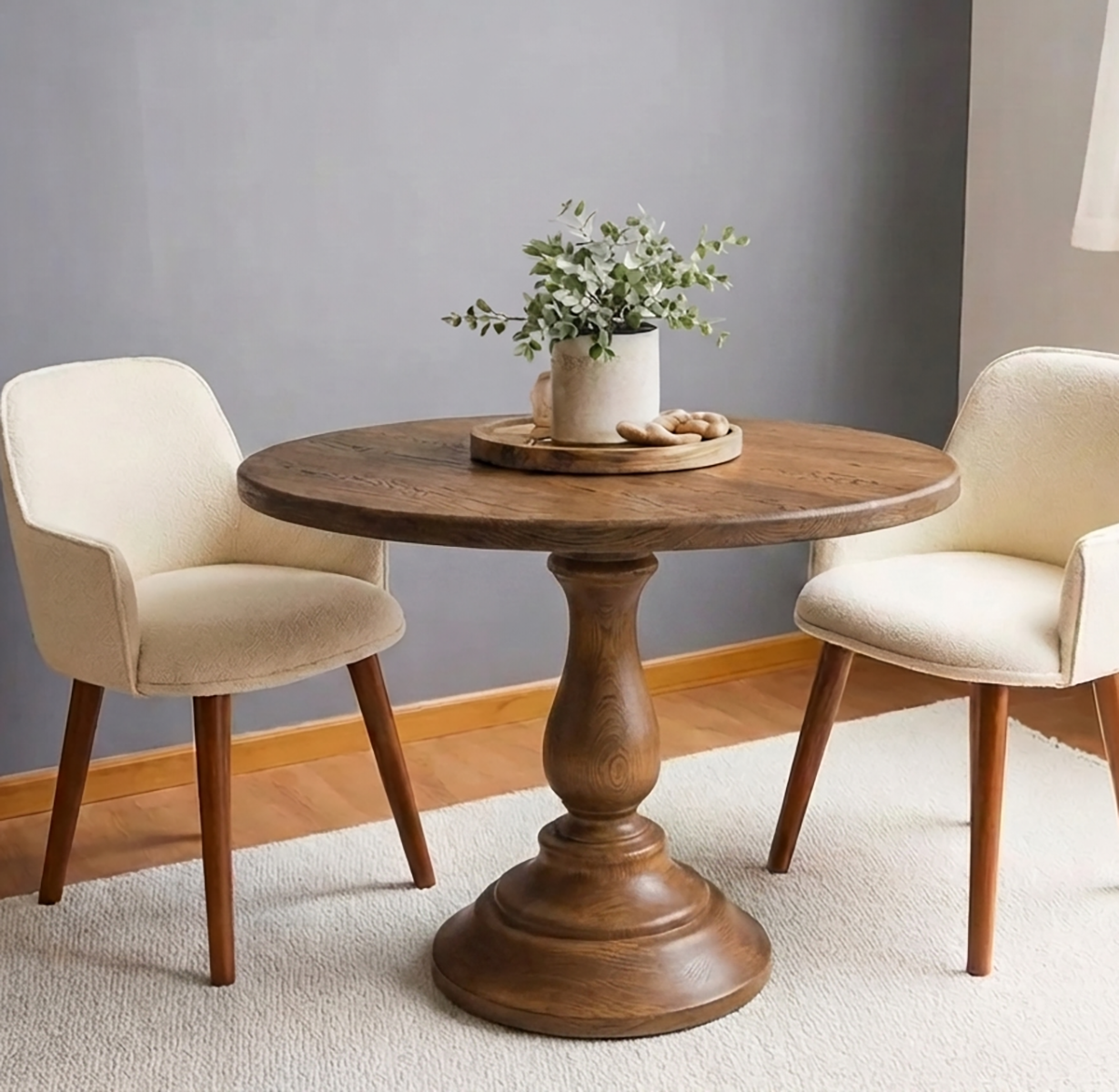
A pedestal table has a single central base, usually with arms that spread out to support the tabletop. The classic tulip pedestal, common in mid-century modern designs, has a slender central column that widens at the floor and at the top where it meets the table. Other pedestal designs are more substantial, with sculptural branching forms or solid block bases.
Advantages:
The main advantage of a pedestal is legroom. Without corner legs, you have complete freedom to pull chairs in from any direction. Nobody bangs their knee on a corner leg. This sounds minor until you have a dining table that seats six or eight and people are trying to get in and out during a meal.
Pedestal tables also feel more open visually. A room with a pedestal table tends to feel less cluttered and more spacious, which matters in smaller dining areas or open-plan living spaces.
For circular and round tables, pedestals are the natural choice and the overwhelming majority of round tables use this design. It would look odd to have a round table on four separate legs.
Disadvantages:
The biggest practical disadvantage is stability under load. A pedestal table with a large, heavy top can develop a wobble over time, particularly if the base-to-top connection weakens. This is especially true if the table is built with a thinner central column rather than a substantial base.
With a single central support, the table cannot use an apron frame for additional rigidity. The top must be supported directly by the pedestal connection, which concentrates stress in one area. A quality pedestal table with proper engineering handles this fine, but lower-quality construction is more prone to developing problems.
If you sit at the ends of a long rectangular pedestal table, the far corners of the tabletop can flex more than they would on a table with perimeter support. For a table seating four on the long sides only, this is less of an issue. For a table meant to seat six or eight with people at the ends, the end-seat experience can be noticeably less stable.
Finally, pedestal bases take up floor space in the center of the table, which can complicate placing a dining rug or arranging dining chairs in a consistent line.
The Leg Table
A traditional four-leg table, often with an apron (horizontal frame connecting the legs below the tabletop), distributes support across multiple points. The apron adds structural rigidity to the tabletop and ties the legs together into a unified frame.
Advantages:
The primary advantage is structural stability. With four corners bearing the load and an apron connecting them, the table as a system is inherently more rigid than a pedestal design. The connection between legs and apron provides multiple load paths, so if one joint weakens, the others hold.
Leg tables also allow for apron-based features like built-in extension mechanisms or additional support. The apron frame provides mounting points for these components that a pedestal simply cannot offer.
For rectangular tables meant to seat six or more, the leg design provides better support for the long spans where the top might otherwise flex.
Disadvantages:
The corner legs are exactly that: corners. In a dining setting, this means people seated at the corners of the table are often blocked from pulling their chair in fully, or they must angle their legs around the legs. For families with young children, this is a daily friction point. You will hear "my chair is stuck again" many times over the life of a leg table.
Leg tables also feel visually heavier. In a small dining room, a substantial leg table with a thick top can make the space feel crowded. A pedestal table of the same size creates a lighter visual impression.


Direct Comparison
Stability: Leg tables win for large tables and long spans. For small to medium tables (up to 54 inches), a quality pedestal is perfectly stable. Beyond that, leg tables have a structural advantage.
Legroom: Pedestal tables win clearly. The absence of corner obstructions matters in daily use.
Aesthetics: This is entirely personal. Mid-century modern and contemporary spaces often favor pedestals. Traditional, farmhouse, and rustic settings tend toward leg tables with aprons. Both can be beautiful.
Maintenance: Both are similar. Pedestal tables have fewer joints to check for loosening, but if the single central connection fails, it's more critical. Leg tables have more joints but the failure of any single joint is less catastrophic because the others carry the load.
For small spaces: Pedestal tables are generally better. The visual openness and freedom from corner legs matter more in a compact room.
For large families: Leg tables are generally better for rectangular tables seating six or more. The structural advantage becomes more important as table size increases.
What Ashdeco Offers
Ashdeco's dining table collection includes both pedestal and leg designs.
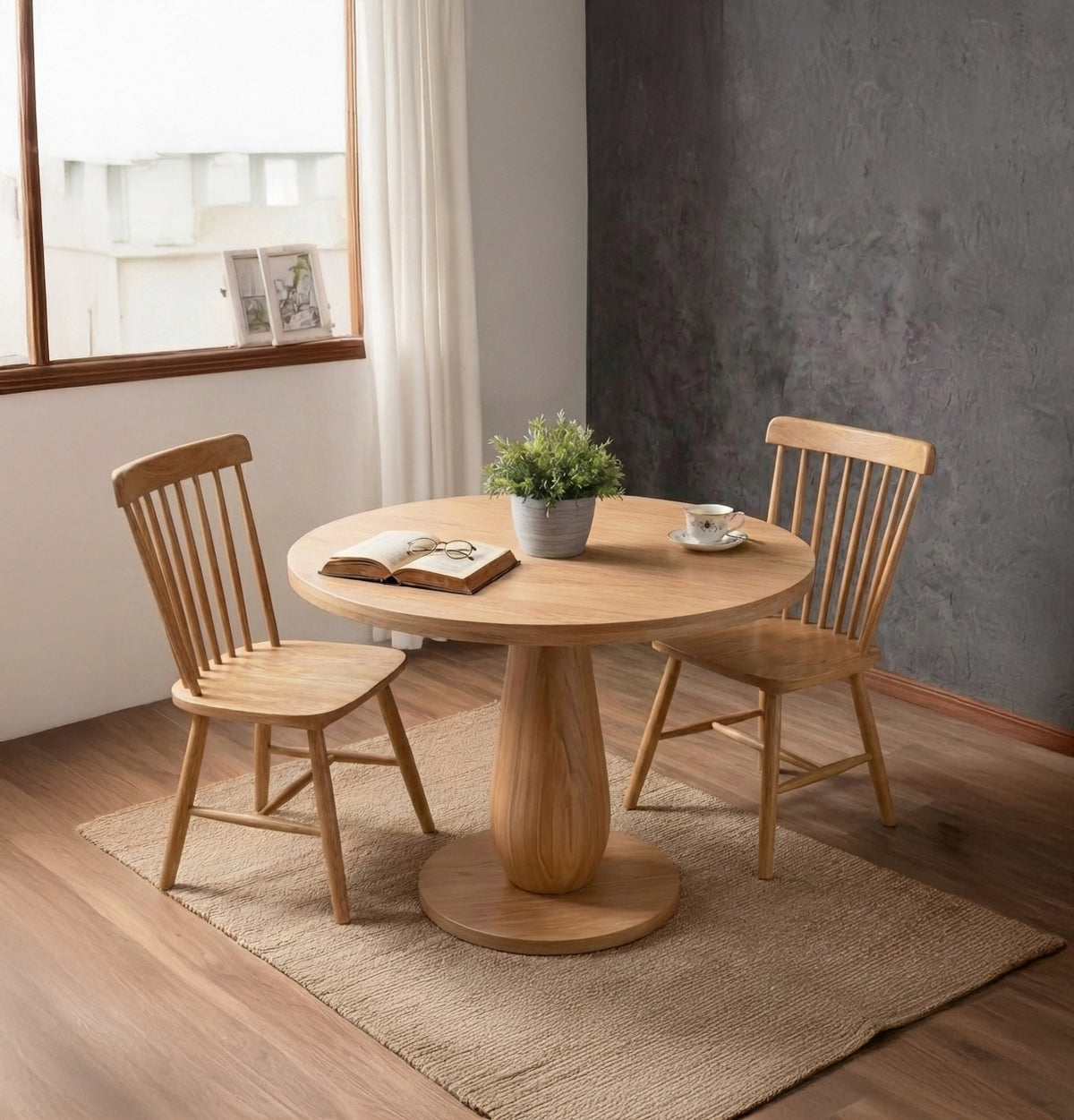
For pedestal tables, the Round Solid Wood Pedestal Dining Table is available at $1,345 and $1,545 (two variants with slightly different proportions). These handcrafted solid wood pedestal tables feature traditional mortise and tenon joinery connecting the base to the tabletop, with the spread-arm design that has proven stable over decades of use.
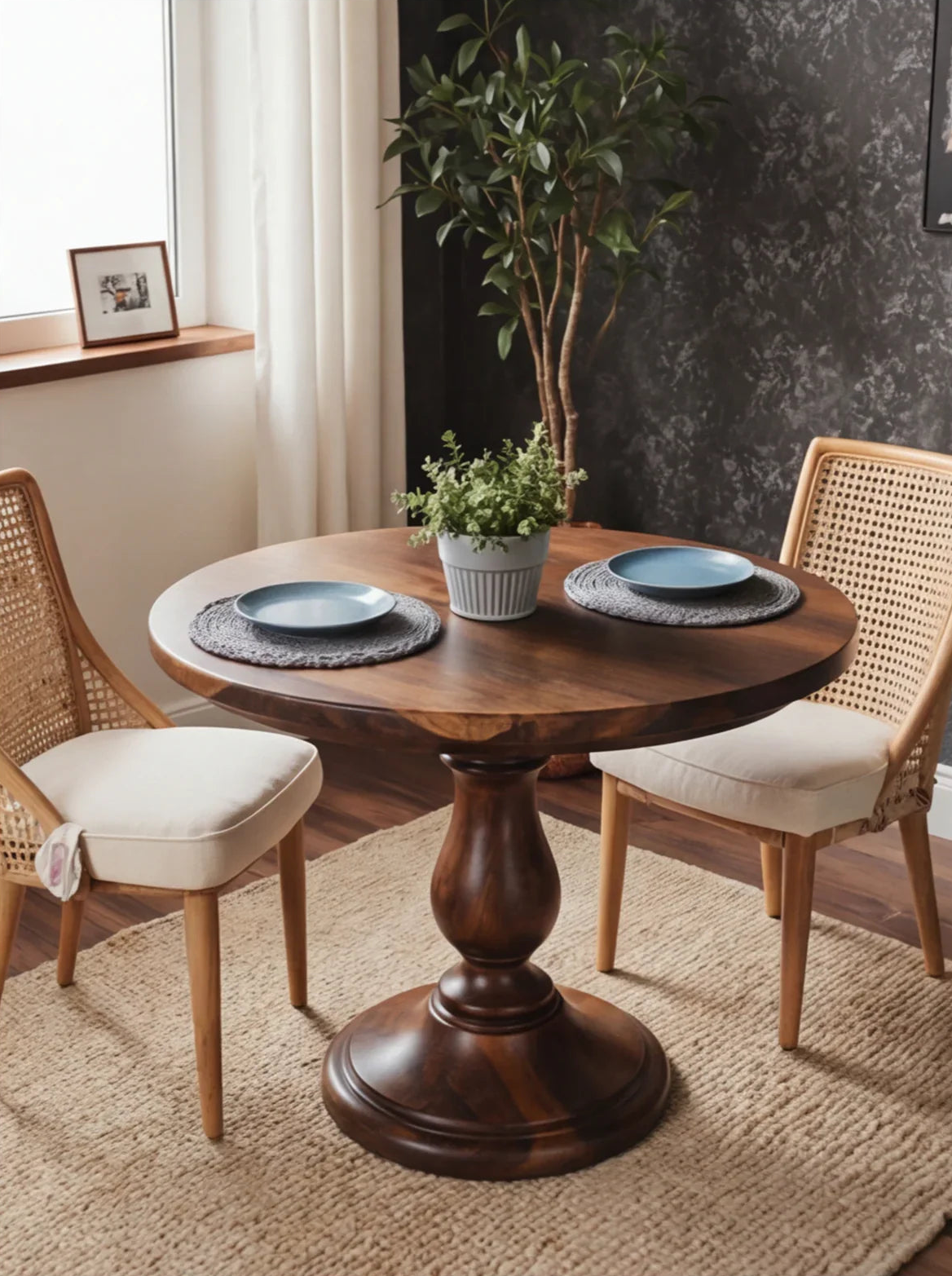
The Solid Oak Round Dining Table at $1,022 also uses a tulip-style pedestal leg design and seats two to six people. At this price point for solid oak with a pedestal base, it's a competitive option.
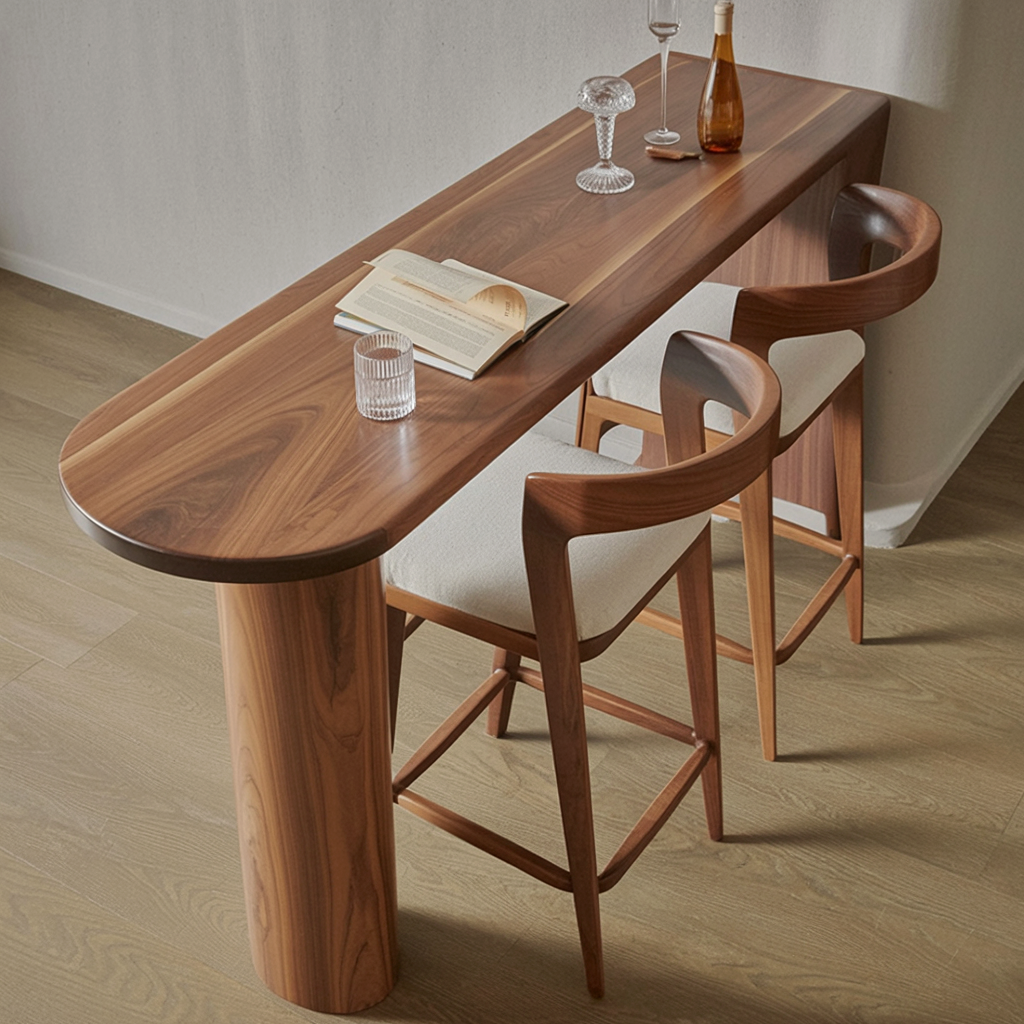
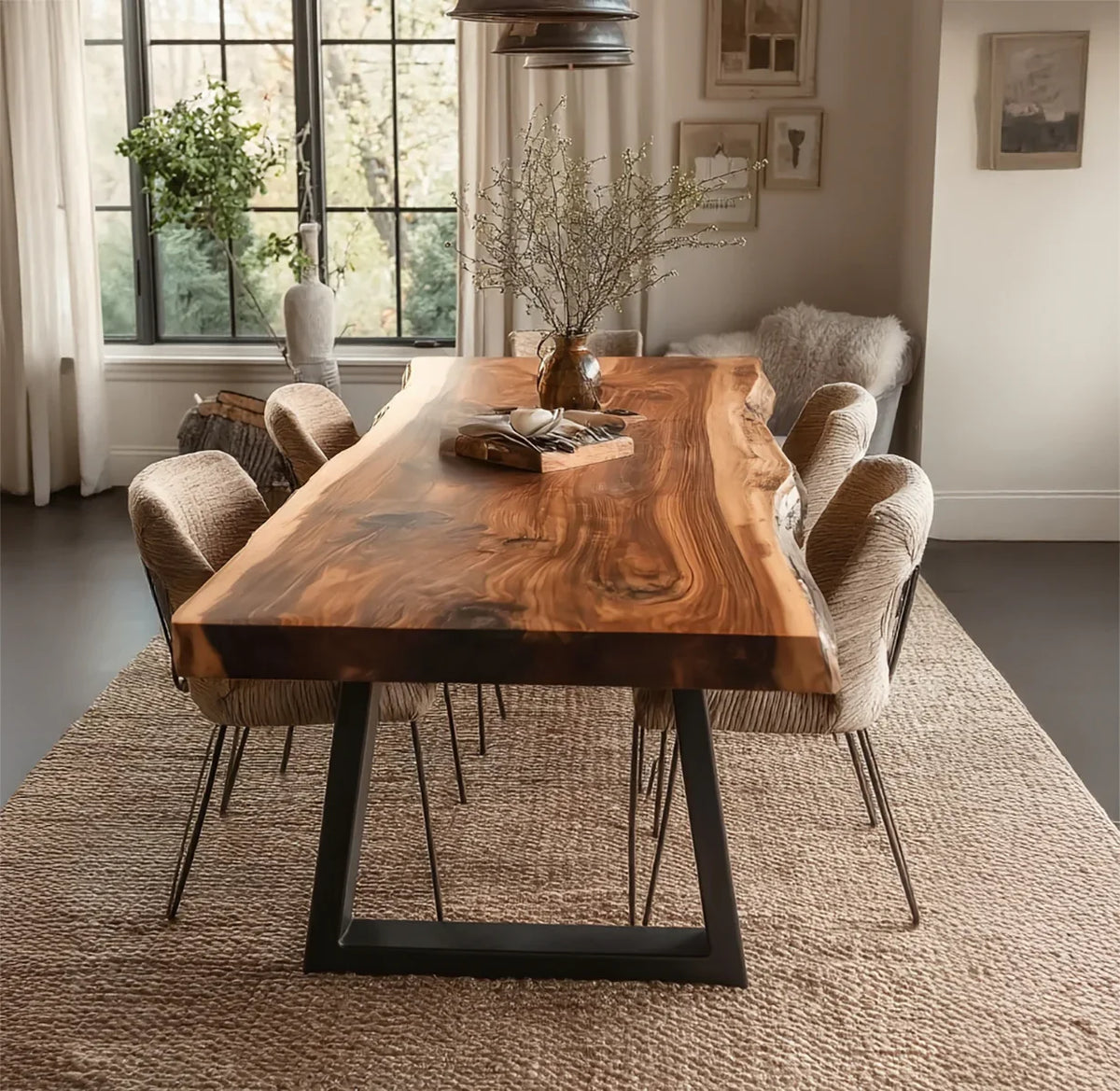
For leg-based tables, Ashdeco's Sculptural Dining/Bar Table at $2,456 uses a sculptural solid wood base design that distributes support with artistic form, and the larger Modern Minimalist Kitchen Table at $5,989 uses a leg-based frame with clean modern lines.
Don't miss
These pieces qualify for 10% off orders over $2,000. Applied automatically at checkout.
10% off
Organic Modern Live Edge Solid Wood Dining Table - Handcrafted Slab Table with Dual Storage Pedestals
From $6,800.00
10% off at checkout
10% off
Flowing Pedestal Solid Wood Round Dining Table - Japandi Living Sculpture
From $5,850.00
10% off at checkout
10% off
Sculptural Pedestal Solid Wood Round Dining Table - Organic Modern Centerpiece
From $5,850.00
10% off at checkout
 10% off
Organic Live Edge Solid Wood Dining Table with Sculptural River Legs
From $4,180.00
10% off at checkout
10% off
Organic Live Edge Solid Wood Dining Table with Sculptural River Legs
From $4,180.00
10% off at checkout
Making Your Decision
The question is not which base style is objectively better. It's which one fits your room and your use pattern.
If your dining space is small or medium-sized and you want visual openness, a pedestal table makes sense. If you have a larger rectangular table that seats six or more, the structural advantages of a leg design become more relevant.
If you have young children who bump into things constantly, a pedestal eliminates the most common collision point. If you have a room where the visual weight of furniture matters, a pedestal table will feel lighter.
One practical approach: set chairs around both types in a showroom if possible. Push against the tabletop. See how the table responds to lateral force. A quality table of either type should feel solid, but you'll notice the difference in how the movement feels.
Products mentioned:
- Round Solid Wood Pedestal Dining Table Handcrafted - $1,345 - Round Solid Wood Pedestal Dining Table Handcrafted - $1,545 - Solid Oak Round Dining Table, Tulip Pedestal Leg - $1,022 - Handcrafted Solid Wood Sculptural Dining/Bar Table - $2,456 - Solid Wood Dining Table Modern Minimalist Kitchen Table - $5,989