Quick view
Shop this guide
Handcrafted Benches, made to order in solid wood.
 Christmas edit
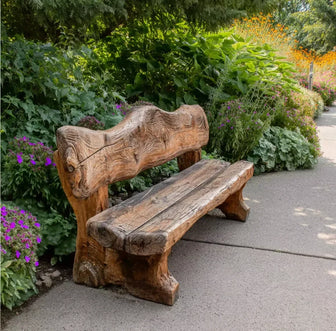
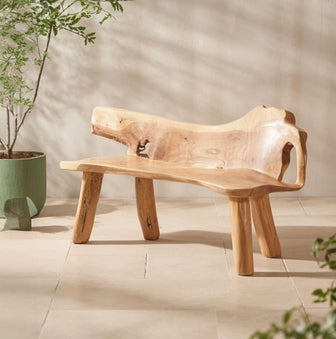
Handcrafted Rustic Solid Wood Bench - Natural Log Seating for Garden & Patio
From $1,553.00
Christmas edit
Handcrafted Rustic Solid Wood Bench - Natural Log Seating for Garden & Patio
From $1,553.00
 Christmas edit
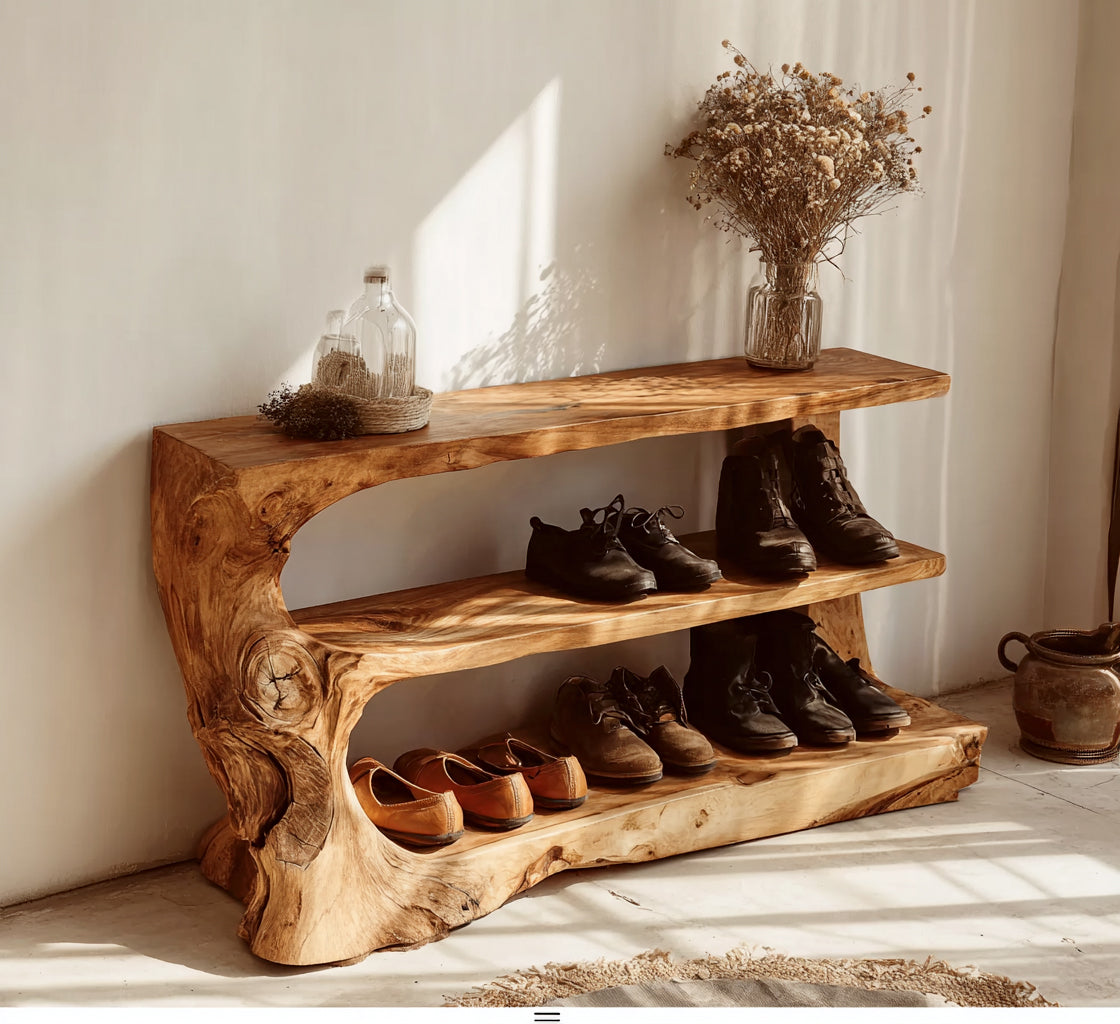
Live Edge Wooden Entryway Bench – Solid Wood Hallway Bench with Shelf
From $1,050.00
Christmas edit
Live Edge Wooden Entryway Bench – Solid Wood Hallway Bench with Shelf
From $1,050.00
 Christmas edit
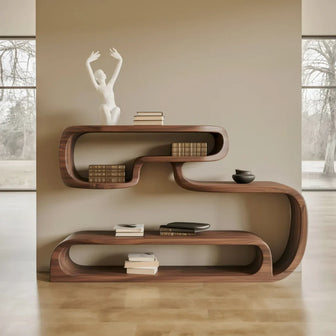
Handcrafted Walnut Bench – Organic Sculptural Mid-Century Design
From $2,327.0010% off at checkout
Christmas edit
Handcrafted Walnut Bench – Organic Sculptural Mid-Century Design
From $2,327.0010% off at checkout
 Christmas edit
Solid Wood Sculptural Bench, Mid-Century Modern Organic Entryway Seating
From $1,876.00
Christmas edit
Solid Wood Sculptural Bench, Mid-Century Modern Organic Entryway Seating
From $1,876.00
 Christmas edit
Handcrafted Sculptural Wood Bench – Modern Organic Curved Entryway Bench
From $2,060.0010% off at checkout
Christmas edit
Handcrafted Sculptural Wood Bench – Modern Organic Curved Entryway Bench
From $2,060.0010% off at checkout
 Christmas edit
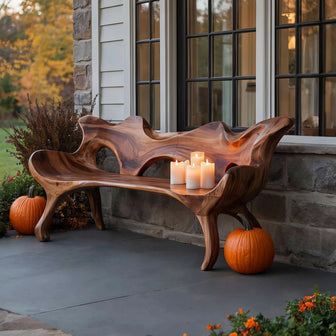
Organic Live Edge Solid Wood Halloween Sculptural Bench
From $2,234.0010% off at checkout
Christmas edit
Organic Live Edge Solid Wood Halloween Sculptural Bench
From $2,234.0010% off at checkout
Your shoe bench entryway layout depends entirely on one number: how many inches of wall space you actually have. Not approximately. Not "it's a small entryway." The exact measurement. A 30-inch entryway and a 42-inch entryway need completely different approaches, and getting it wrong means a bench that blocks traffic or wastes space. Here are entryway bench ideas with precise measurements for every size, from small entryway shoe storage solutions to grand foyer setups.
I've helped customers plan entryway layouts for spaces as narrow as 24 inches and as wide as 96 inches. The principles are the same: measure first, choose function over aesthetics, and leave enough clearance for daily traffic flow.
Under 30 Inches: The Apartment Nook
Entryways under 30 inches wide need a compact shoe bench no wider than 20-24 inches, mounted against the wall with zero floor protrusion beyond 12 inches of depth. At this size, every inch matters - a bench that's even 2 inches too wide turns your entryway from tight to impassable. Think vertically, not horizontally.
The Layout (24-inch wall space)
- Bench: 20 × 12 × 18 inches, placed flush against the back wall
- Above bench: Wall-mounted hook strip (20 inches wide, 4 hooks) at 60 inches from floor
- Floor clearance: 12 inches of depth leaves 12+ inches of walking path in a 24-inch-deep entryway
- Shoe capacity: 3 pairs on bench shelf, 1 pair being worn
The critical rule for nooks: Your bench depth plus walking clearance must equal your entryway depth. If your entry is 30 inches deep (wall to door swing), a 12-inch-deep bench leaves 18 inches for walking - tight but functional. A 16-inch-deep bench leaves 14 inches - too narrow for comfortable passage.

This is where a slim shoe bench earns its place. Wall-mounted coat hooks above the bench (rather than a standing coat rack) save the 14-18 inches of floor diameter that a freestanding rack would consume. Our shoe bench dimensions guide article walks through the specifics.
Real-World Apartment Hack
In apartments with no dedicated entryway - just a door opening into the living room - place a 24-inch bench perpendicular to the wall, 6 inches from the door frame. This creates a visual entryway zone without blocking the door's swing arc. The bench acts as both shoe storage and a room divider.
30-42 Inches: The Standard Hallway Entry
A hallway entryway between 30 and 42 inches wide is the most common configuration in American homes built between 1950 and 2000. This space fits a 24-36 inch bench comfortably, with room for one accent piece - a small basket, a coat hook panel, or a narrow floating shelf above. If you're weighing your options, our guide on small entryway ideas breaks it down further.
The Layout (36-inch wall space)
- Bench: 30-36 × 14 × 18 inches, centered on the wall
- Above bench: Floating shelf at 48 inches from floor (for keys, sunglasses, mail)
- Side clearance: 0-3 inches on each side of bench
- Shoe capacity: 5-6 pairs on single tier, 7-8 on double tier
Centering vs. corner placement: In hallway entries, center the bench on the wall. This creates symmetry that makes the space feel wider. Corner placement saves a few inches but creates a visually lopsided entry that feels cramped.
The Height Decision
At 36 inches of wall width, you have enough bench surface for comfortable seating. Choose height based on your priority:
- 18 inches (standard seat height): Prioritizes sitting comfort. One tier of shoes. Best if someone in the household has mobility issues.
- 20 inches: Adds a second shoe shelf. Still comfortable seating for adults 5'4" and above.
- 22 inches: Two full tiers. Seating works for adults 5'7"+. Best for families who need shoe volume.


42-54 Inches: The Comfortable Entry
Entryways between 42 and 54 inches wide are the sweet spot - wide enough for a proper bench-plus-accessory layout, narrow enough to feel intentionally designed rather than empty. A 36-48 inch bench with a complementary piece creates a functional landing zone that handles a family's daily transition.
The Layout (48-inch wall space)
Option A - Bench + Standing Coat Rack:
- Bench: 36 × 14 × 18 inches, placed left of center
- Coat rack: Standing tree-style, 14 × 14 inch base, placed at right end of wall
- Gap between bench and rack: 2-4 inches
- Total footprint: 52-54 inches (bench overlaps slightly past wall edges)
- Shoe capacity: 5-6 pairs. Coat capacity: 8-12 items.
Option B - Bench + Wall Mirror:
- Bench: 42 × 14 × 20 inches, centered
- Mirror: 24 × 36 inches, hung centered above bench, bottom edge at 40 inches from floor
- Shoe capacity: 7-8 pairs (double tier)
Option A works best for homes without a coat closet. Option B suits homes where aesthetics outweigh coat storage needs. Both create a complete entryway station from just two pieces.

A solid wood coat rack paired with a matching shoe bench - same wood species, same finish - makes the entryway look designed rather than assembled from random pieces. We've written a full breakdown in our shoe bench vs IKEA cost post.
54-72 Inches: The Wide Entryway
Wide entryways between 54 and 72 inches offer enough space for a 48-inch bench with room to breathe. The common mistake here is choosing a bench that's too small, leaving awkward empty wall space. The opposite mistake - filling every inch - is equally problematic. The 60/40 rule applies: furniture should occupy roughly 60% of the wall width, leaving 40% as visual breathing room.
The Layout (60-inch wall space)
- Bench: 48 × 16 × 20 inches, placed slightly off-center (24 inches from left wall, 12 from right)
- Standing coat rack or tall plant: Right side, in the 12-inch gap
- Above bench: 36-inch floating shelf at 48 inches from floor
- Shoe capacity: 8-10 pairs (double tier)
- Walking clearance: 16-inch bench depth in a 36-inch-deep entry = 20 inches clear
Off-center placement creates visual movement. A perfectly centered bench on a wide wall looks institutional. Shifting the bench 6-8 inches toward one end and placing a vertical accent (plant, coat rack, tall basket) on the short side creates asymmetric balance - the same principle interior designers use in gallery walls.
Don't miss
These pieces qualify for 10% off orders over $2,000. Applied automatically at checkout.
10% off
Handcrafted Walnut Bench – Organic Sculptural Mid-Century Design
From $2,327.00
10% off at checkout
10% off
Handcrafted Sculptural Wood Bench – Modern Organic Curved Entryway Bench
From $2,060.00
10% off at checkout
10% off
Organic Live Edge Solid Wood Halloween Sculptural Bench
From $2,234.00
10% off at checkout
 10% off
Handcrafted Solid Wood Artistic Wood Bench – Soft Organic Wave Silhouette
From $2,534.00
10% off at checkout
10% off
Handcrafted Solid Wood Artistic Wood Bench – Soft Organic Wave Silhouette
From $2,534.00
10% off at checkout
72+ Inches: The Grand Foyer
Foyers 72 inches and wider can handle a 60-inch bench as the centerpiece, often paired with a matching coat rack, console table, or both. At this scale, the entryway functions as a room, not just a transition zone. Design it accordingly.
The Layout (84-inch wall space)
- Bench: 60 × 16 × 22 inches, centered on wall
- Console table: 36 × 12 × 30 inches, placed on adjacent wall or behind the door
- Coat rack: Freestanding tree-style, opposite corner
- Runner rug: 24 × 72 inches, placed in front of bench (extends 6 inches past each end)
- Shoe capacity: 14-15 pairs (double tier on 60-inch bench)
At this size, consistency in wood species and finish matters more than in smaller entries. A solid wood bench, console table, and coat rack in matching acacia or walnut creates a cohesive room. Mixing materials (metal rack, wood bench, painted shelf) at this scale looks chaotic.
The Grand Foyer Proportion Guide
According to the American Society of Interior Designers, the most visually balanced entryway furniture arrangements follow the golden ratio principle: the primary piece (bench) should be approximately 1.6× the width of the secondary piece (coat rack base, console table, or shelf).
- 60-inch bench + 36-inch console: Ratio 1.67 - visually balanced
- 48-inch bench + 30-inch shelf: Ratio 1.60 - ideal
- 60-inch bench + 24-inch coat rack base: Ratio 2.5 - bench dominates, add a third element
5 Layout Mistakes That Waste Entryway Space
- Bench too deep for the space. If your entryway is under 30 inches deep (wall to opposite wall or door), keep bench depth to 12 inches maximum. A 16-inch bench in a 28-inch space leaves just 12 inches for walking - uncomfortable.
- Ignoring door swing. Measure where your front door opens to at full extension. The bench must sit entirely outside the door's arc. A bench clipped by a door edge on every entry is infuriating.
- Coat rack behind the door. Standing coat racks placed behind an inward-opening door get knocked every time someone enters. Place them on the hinge side or opposite wall.
- No vertical storage in narrow entries. In entries under 36 inches wide, wall-mounted hooks at 60 inches high store coats without consuming any floor space. A standing rack in this space blocks half the passageway.
- Forgetting the 24-inch sit zone. When someone sits on a shoe bench to put on shoes, their legs extend 20-24 inches in front of the bench. If there's a wall or obstacle within 24 inches, sitting becomes awkward. Factor this into your depth calculation.
FAQ
What size shoe bench for a small entryway?
For entryways under 36 inches wide, choose a shoe bench between 20 and 24 inches wide with 12 inches of depth. This fits 3-4 pairs of shoes and one seated adult without blocking the passageway. Pair with wall-mounted hooks instead of a standing coat rack to save floor space.
How far should a shoe bench be from the front door?
Leave at least 36 inches between the shoe bench and the fully opened front door. This prevents the door from hitting the bench and allows comfortable entry. If your door opens inward, measure the door's full swing arc before choosing bench placement.
Can I put a shoe bench in a hallway?
Yes, if the hallway is at least 42 inches wide. A bench with 14 inches of depth in a 42-inch hallway leaves 28 inches of walking width - enough for one person to pass comfortably. For two-person passage (48+ inches needed), choose a 12-inch-deep bench or consider a wall-mounted shoe shelf instead.
What goes above an entryway shoe bench?
The three most functional options above a shoe bench are: a floating shelf at 48 inches from the floor (for keys, mail, sunglasses), a mirror centered 40 inches from the floor (for outfit checks), or a wall-mounted hook strip at 60 inches (for coats and bags). Choose based on what your entryway lacks most.
How do I make a narrow entryway look wider?
Use a bench that's the same color as the wall behind it - this creates visual continuity. Mount a horizontal mirror above the bench to reflect light and create depth. Avoid dark-stained wood in entries narrower than 36 inches; light natural wood tones expand the visual space.