Retro Cabinet Record Player: How to Pick the Right One for Your Space
Why does this distinction matter? Because a buyer looking for a 90s-style retro cabinet record player - warm, grounded, chunky oak or walnut - is shopping for a fundamentally different aesthetic than someone chasing mid-century teak with hairpin legs. Ashdeco's record player stand collection spans both directions, so knowing which lane you're in saves time and prevents mismatched rooms.

Why Retro Record Player Cabinets Are Growing in Popularity
Vinyl isn't a niche hobby anymore. According to the RIAA Year-End Revenue Report, U.S. vinyl revenue surpassed $1 billion in 2025, continuing a nearly 20-year growth streak. In 2024, the format contributed to a record $17.7 billion in total U.S. music revenue. More people buying records means more people needing somewhere to put them.
Three factors drive the cabinet trend specifically:
- Space consolidation. Urban apartments and home offices favor single-purpose furniture that does multiple jobs. A cabinet replaces a turntable stand, a record shelf, and a speaker platform - three pieces become one. If your space is especially tight, our vinyl record storage ideas for small spaces guide covers compact alternatives with real dimensions.
- Dust protection. Open shelving looks clean on day one. By month three, records on open shelves collect dust, stylus areas get gritty, and cleaning becomes a weekly chore. Enclosed cabinets solve this.
- The 90s aesthetic comeback. As design trends shift back toward warm, grounded interiors, buyers are seeking furniture with the weight and warmth that defined 90s living rooms - and record player cabinets fit that mold perfectly.
Types of Retro Record Player Cabinets
Open-Console Designs
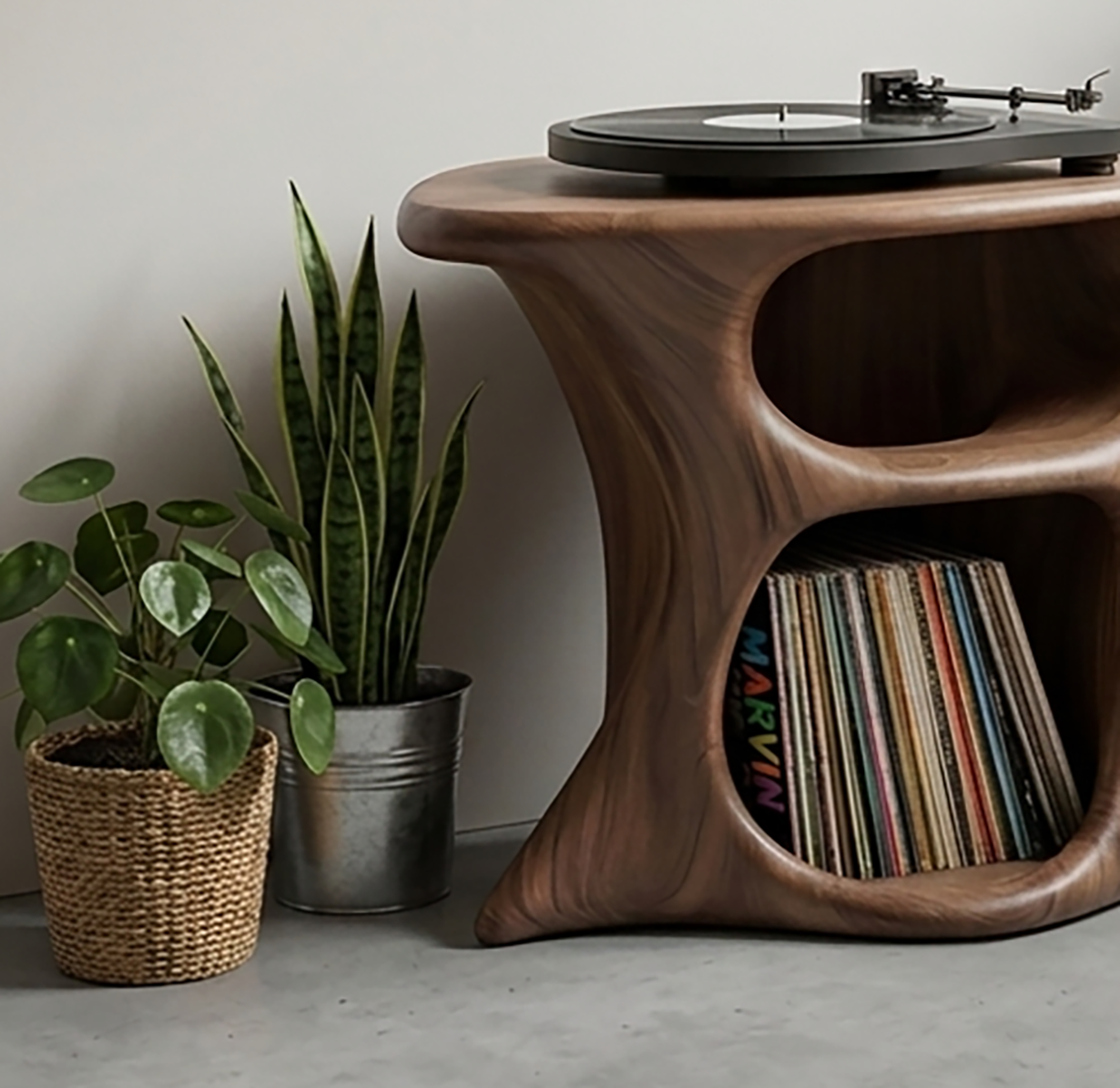
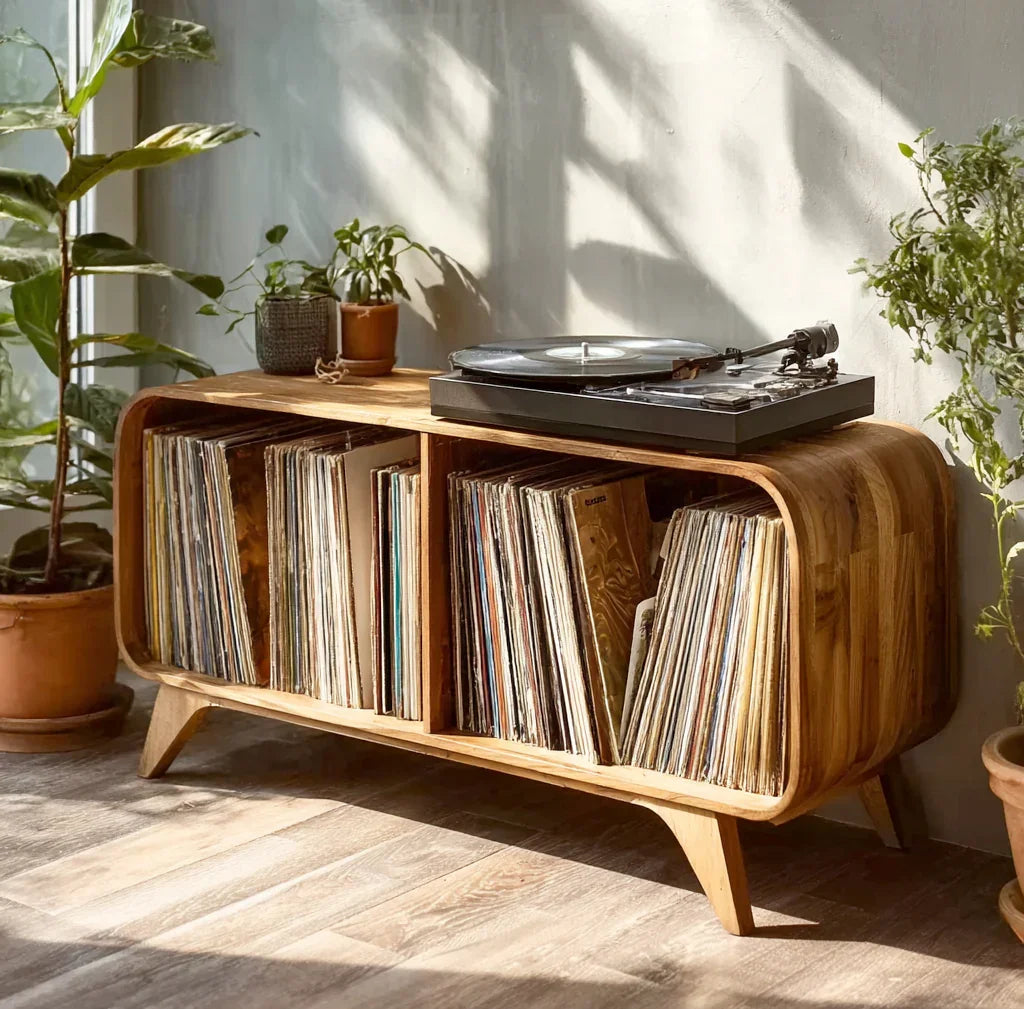
Open-console retro cabinets feature exposed shelving beneath the turntable platform. Your records are visible and within arm's reach. Ashdeco's record player stands with open shelving typically offer two to four compartments below the turntable deck, holding 80–150 LPs depending on shelf dimensions.
Best for: frequent listeners who rotate records often, rooms with low dust exposure, buyers who want the visual rhythm of album spines as part of the room's decor.

Enclosed Cabinets with Doors
Enclosed designs - like Ashdeco's Solid Wood Turntable Stand with Farmhouse Storage - add doors or drawers that shield records from dust, sunlight, and pets. The trade-off is slightly less airflow around electronics and the minor inconvenience of opening a door every time you change records.
Best for: family rooms, setups near windows or entry paths, collectors with 100+ records who want a cleaner visual profile when the system isn't in use. If you're still working out exactly how much storage your collection needs, our record player stand with vinyl storage guide walks through the room-fit math.
Modular / Convertible Units
Some retro cabinet record players include adjustable shelving, removable panels, or optional add-ons like USB charging ports or integrated wireless charging pads. These are flexible but can compromise structural rigidity - the turntable deck may flex under heavy loads if the frame isn't reinforced.
Best for: buyers whose collection size is still growing, multi-use rooms where the cabinet doubles as a general media console.
How to Choose a Retro Cabinet Record Player
Measure Your Turntable Footprint First
Before looking at aesthetics, measure your turntable's exact dimensions - width, depth, and height with the dust cover open. Many "universal fit" cabinets leave only 2–3 cm of clearance above the plinth, which is enough for a belt-drive mechanism but not enough to lift the dust cover fully while playing. Check that the cabinet's top surface extends at least 3–5 cm beyond the turntable on each side for a visually balanced look.
Platform height matters just as much as footprint. Standard turntable platform height runs 28-32 inches from the floor for seated listening, or 36+ inches for standing setups. Our record deck stand buying guide covers the full height-to-listening-position math, including why the wrong platform height can introduce tracking angle errors that wear out records faster.
Calculate Weight Capacity - Vinyl Is Heavier Than You Think
This is the most commonly underestimated factor. A standard pressing weighs 120–150 grams. Audiophile heavyweight pressings run 180–220 grams. If you plan to store 200 records, that's anywhere from 24 kg (all standard pressings) to 44 kg (all heavyweight) - just for the vinyl, not including the turntable (typically 4–8 kg), amplifier, or speakers.
When evaluating a cabinet, look at per-shelf weight ratings, not just the marketing claim of "holds 350 albums." Shelf boards under 18 mm thickness will bow over time under that load. Solid hardwood shelves outperform engineered wood, which in turn outperforms particleboard.
If you want a deeper breakdown of how much storage you actually need for your collection size, Ashdeco's record player stand with storage guide covers the math in detail.
Material & Build Quality
Material choice affects three things: vibration dampening, longevity, and how the piece ages in your room.
- Solid hardwood (walnut, oak, acacia, teak) - best vibration isolation, develops character over time, highest durability. Ashdeco's Solid Wood Record Player Stand and Handcrafted Wooden Record Player Stand both use solid hardwood construction, handcrafted by Vietnamese artisans.
- Plywood with hardwood veneer - decent middle ground. Stable, reasonably heavy, good if the face veneer is real wood (not printed laminate).
- MDF / particleboard - budget option. Prone to warping under sustained load, poor vibration dampening, edges chip over time. Fine for a temporary setup, not ideal for a permanent listening zone.

Vibration Isolation & Platform Stability
Even the best cartridge will underperform if the platform it sits on vibrates. Look for these features:
- Rubber or cork isolation pads between the turntable deck and the cabinet surface.
- Separate, reinforced mounting bracket for the turntable (not just resting on the same shelf as your records).
- Level-adjustable feet - critical on uneven floors, and often overlooked by first-time buyers.
Read reviews specifically mentioning "rumble," "feedback," or "bass distortion." These are the real-world indicators of poor vibration control. Our record player stand and vinyl storage guide breaks down exactly how mass and joint construction affect vibration dampening, if you want the mechanics behind the recommendation.
Cable Routing & Ventilation
A well-designed retro cabinet record player includes pre-drilled grommets or rear-channel grooves for RCA and power cables. Visible cables snaking across the front of a beautiful walnut cabinet defeats the purpose of buying furniture-grade gear. Check that the cabinet has at least one rear access point for power and signal lines.
Ventilation matters more than most buyers expect. If your cabinet houses an amplifier, preamp, or streaming module alongside the turntable, trapped heat can shorten component lifespan. Look for ventilation gaps, open-back designs, or rear vent holes - especially in enclosed cabinets. If your setup includes powered speakers or a receiver, our record player stand with speakers guide covers what to check before you buy.

Style Match: 90s vs Mid-Century vs Vintage
This is where terminology confusion costs buyers time and money. Here's a quick field guide:
| Style | Era reference | Key visual traits | Typical woods |
|---|---|---|---|
| Mid-century modern | 1940s–1970s | Tapered legs, clean lines, minimal hardware, light profile | Teak, walnut, rosewood |
| 90s retro | 1990s revival | Chunky proportions, warm earth tones, visible grain, heavier presence | Oak, acacia, dark walnut, wood-grain veneer |
| Vintage / antique | 1950s–1970s originals | Patina, enclosed hi-fi console format, lattice speaker grilles | Mahogany, oak, walnut |
Match the weight and warmth of your existing furniture, not just the "retro" label - a mid-century piece with hairpin legs will look visually disconnected in a room built around chunky, earth-toned 90s pieces, even though both technically qualify as "retro." If your room already leans clean and restrained rather than chunky and warm, our modern record player stand ideas guide covers a lighter, more minimal direction.
For a side-by-side comparison of cabinet versus open stand setups (including dust protection, heat ventilation, and weight capacity), see Ashdeco's wood record player cabinet vs open stand guide.
Ready to find your retro record player cabinet?
Browse 31 handcrafted solid wood record player stands - 90s-inspired, mid-century, and organic modern styles, each built by Vietnamese artisans to hold your gear and your collection for decades.
Shop Record Player Stands →Common Mistakes When Buying a Retro Cabinet Record Player
- Assuming any shelf will work. A bookshelf rated for paperbacks won't handle the concentrated point-load of a turntable's motor and platter. Use furniture designed for audio equipment.
- Ignoring weight capacity math. 200 heavyweight LPs at 200g each = 40 kg. Add the turntable, amp, and speakers. A shelf that "looks sturdy" may sag within months.
- No vibration isolation. A turntable sitting directly on a thin shelf will pick up footstep vibrations, speaker bass, and even HVAC rumble. Isolation pads cost little and make a noticeable difference.
- Forgetting the dust cover clearance. Many buyers measure their turntable with the cover closed, then discover it won't fit under the cabinet's overhead shelf when open.
- Buying purely for aesthetics. A gorgeous cabinet that doesn't fit your turntable or can't hold your collection is just an expensive shelf.
Styling Your Retro Cabinet Record Player in a 90s-Inspired Room
The 90s interior aesthetic favored warmth, weight, and authenticity over minimalism. Here's how to position your cabinet so it feels intentional, not accidental:
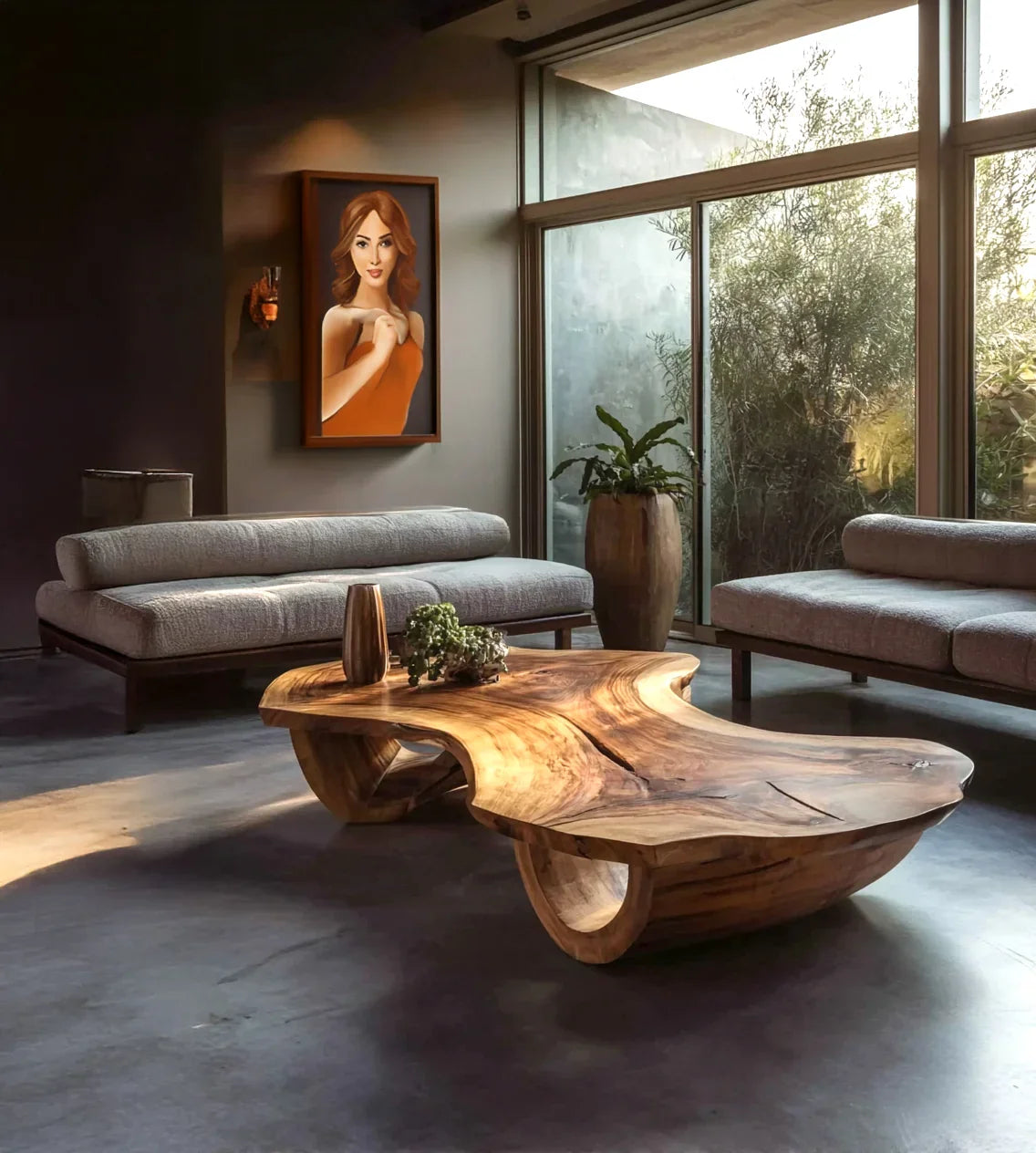
- Make it the anchor. Like a dark wood coffee table in a 90s living room, your retro cabinet record player should be the visual gravity point of the listening area. Position it on a wall where the eye naturally lands, not tucked in a corner.
- Layer warm lighting. Floor lamps and table lamps with warm bulbs (2700K–3000K) complement the natural wood tones. Avoid cool, clinical overhead lighting - it flattens the grain and makes the room feel sterile.
- Pair with natural textures. Jute rugs, linen cushions, woven baskets, and live plants create the tactile warmth that 90s design excelled at. The wood grain in your cabinet reads richer against these materials.
- Display your records. If your cabinet has open shelving, arrange a small selection of album spines facing outward. It's functional and adds personality. For enclosed cabinets, use the top surface for a small plant, a framed print, or a turntable cleaning kit.
Maintaining Your Retro Cabinet Record Player
- Dust prevention. Wipe surfaces with a microfiber cloth weekly. For enclosed cabinets, open doors periodically to air out compartments and prevent moisture buildup.
- Humidity control. Keep the cabinet in a climate-controlled room (40–60% relative humidity). Direct sunlight warps wood over time and fades finishes.
- Shelf inspection. Every 6 months, check shelf joints, tighten any loose screws, and verify that shelf boards haven't developed a visible bow. Catch it early, and a simple support bracket fixes it.
- Turntable maintenance. Clean the stylus before each session. Check belt tension on belt-drive units quarterly. A well-maintained turntable on a poorly maintained cabinet still sounds worse than the reverse.
Frequently Asked Questions
Can a retro cabinet record player hold all vinyl sizes?
Most modern cabinets are designed for standard 12" LPs. Many also accommodate 10" and 7" records, but you should verify shelf height - 7" singles need at least 18 cm of vertical clearance, while 12" LPs need 32–33 cm. Adjustable shelves give you the most flexibility.
Do record player cabinets need ventilation?
Turntables generate minimal heat, but amplifiers, preamps, and streaming modules don't. If your cabinet houses any active electronics, ventilation is essential. Look for rear vent holes, open-back designs, or leave cabinet doors slightly ajar during long listening sessions.
Is assembly required?
Most retro cabinet record players arrive partially assembled or flat-packed. Expect 45–90 minutes of assembly with included hardware. Solid hardwood pieces from makers like Ashdeco often arrive pre-assembled or require minimal setup - just attach feet and level.
How do I protect my cabinet from sunlight damage?
Keep the cabinet out of direct sunlight when possible. UV exposure fades wood finishes and can warp thin panels over time. If relocation isn't an option, use curtains or UV-filtering window film. A quality wood polish or beeswax treatment every 3–6 months also helps maintain the finish.
Shop Retro Cabinet Record Players at Ashdeco
Every Ashdeco record player stand is handcrafted from solid wood by Vietnamese artisans - the same woodworking traditions that made mid-century and vintage hi-fi cabinets legendary. Whether you're drawn to the chunky warmth of 90s-inspired designs or the clean lines of mid-century modern, there's a piece that fits your space.
Browse the full Ashdeco Record Player Stand Collection - each one built to hold your gear, protect your records, and anchor your listening room.