Dark Wood Coffee Tables: Bringing Back That '90s Living Room Feeling
The all-white, gray-washed living room era is fading. You've probably noticed - design feeds are shifting. Cold tones are out. Warmth is back. And at the center of that shift? The dark wood coffee table.
Not a coincidence. Dark wood was the backbone of 90s interiors. Heavy, grounded, unapologetically warm. A room with a dark wood coffee table didn't feel staged - it felt like someone actually lived there.
This guide breaks down the dark wood coffee table options worth your attention, how to style them so the room feels warm instead of heavy, and the mistakes that'll make the whole thing fall flat. Let's get into it.

Why Dark Wood Coffee Tables Defined the 90s Living Room
The 80s were all glass, chrome, and sharp edges. The 90s swung hard the other way.
Furniture got heavier. Warmer. Wood took over - especially dark wood. A dark walnut or teak coffee table wasn't just functional. It was the visual anchor of the entire room. Everything else - the sofa, the rug, the art - revolved around it.
There's a reason that worked. Dark tones in interior design do something specific: they ground a space. They create gravity. A light room with a dark coffee table feels intentional. A room full of light furniture with no dark anchor feels... floaty. Unfinished.
The 90s understood this intuitively. And honestly, the psychology checks out - darker, warmer tones make spaces feel cozier, more intimate, more lived-in. That's not nostalgia talking. That's just how our brains process contrast and warmth in a room.
If you want to understand how this fits into the broader picture, our How to Mix 90s Furniture With Modern Interiors guide covers the full framework - but the coffee table is usually the best place to start.

Types of Dark Wood Coffee Tables Worth Looking At
Not all dark wood is the same. The tone, grain pattern, and character vary wildly depending on the species. Here are the four types you'll see most often - and the ones Ashdeco actually works with.
Walnut Coffee Tables
Walnut is the gold standard for dark wood coffee tables. Rich, medium-dark brown with a smooth, sometimes wavy grain that catches light beautifully. It's dark enough to anchor a room but warm enough not to feel cold or heavy.
Walnut works in almost any setting. Pair it with a cream sofa and it pops. Put it in a room full of earth tones and it blends seamlessly. It's the most versatile dark wood you can choose.
Best for: living rooms that need warmth without the visual weight of darker woods.

Teak Coffee Tables
Teak sits in a slightly different lane. It's darker than people expect - a deep golden-brown that matures into an even richer tone over time. The grain is tighter than walnut, more linear, and the natural oils in the wood give it a subtle sheen that's hard to fake.
Teak was huge in mid-century and 90s Scandinavian-influenced interiors for a reason. It's durable, gorgeous, and ages gracefully. A teak coffee table doesn't just look good on day one - it looks better five years in.
Best for: rooms leaning toward natural, organic, or Scandinavian-inspired styling. If you want that warm, lived-in 90s energy without the heaviness, teak delivers.
Acacia Coffee Tables
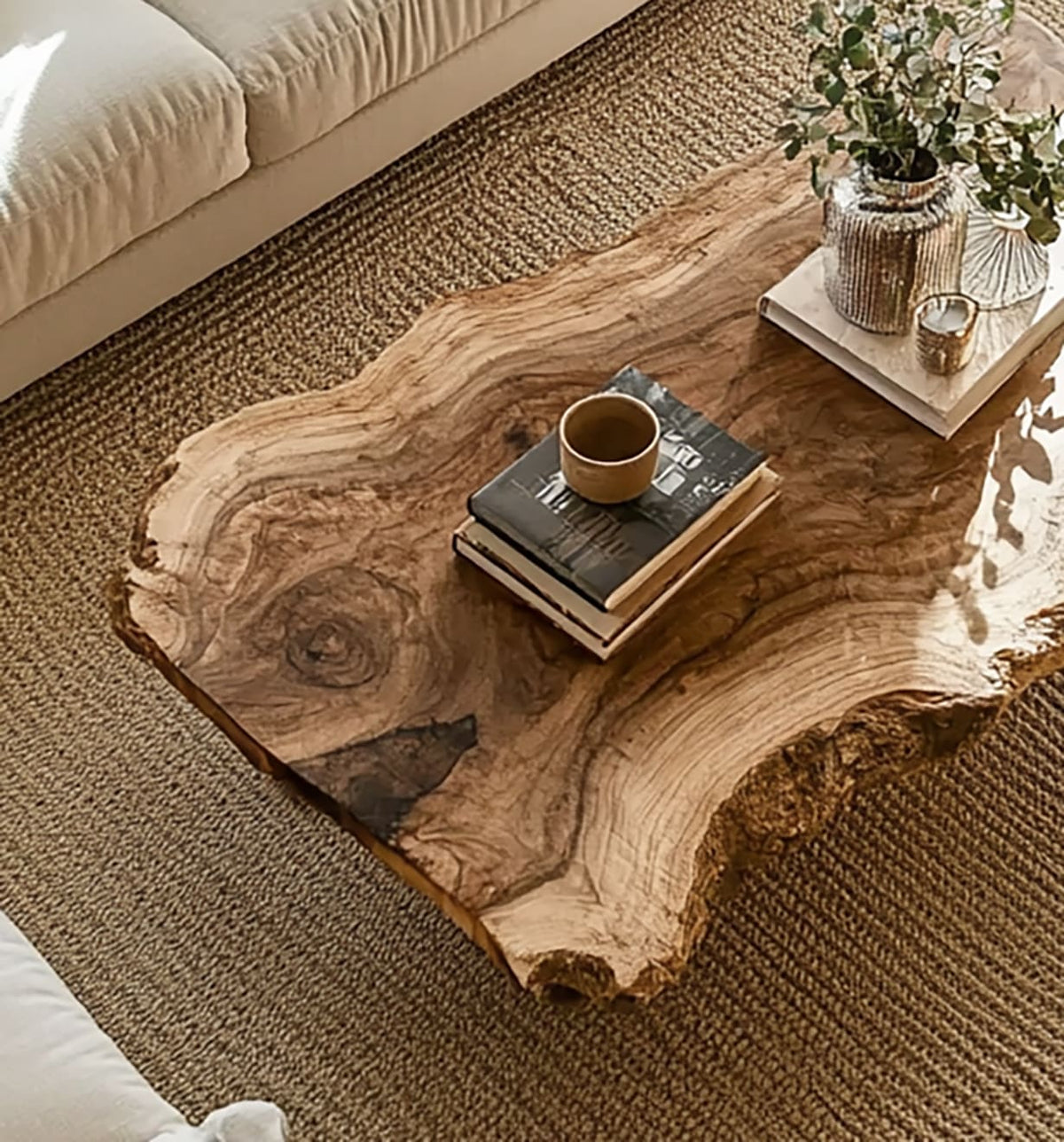
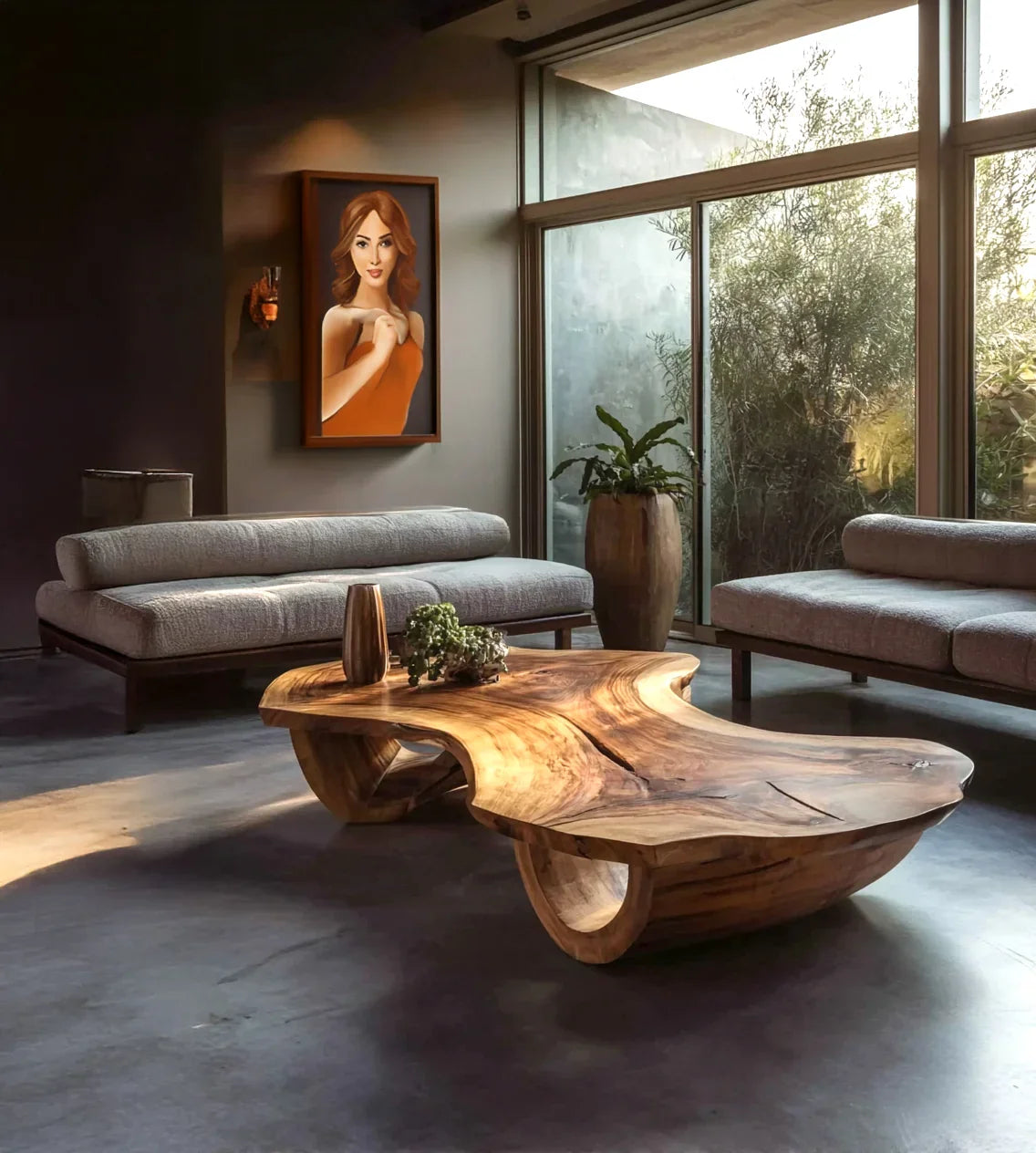
Acacia is the wildcard - and honestly, one of the most interesting dark woods for furniture. It's dense, durable, and the color range is wide: from medium amber to deep chocolate brown, often with dramatic grain variation in a single piece.
Where walnut is smooth and refined, acacia is raw and honest. You can see the knots, the character marks, the story of the tree. That's exactly why it fits the 90s aesthetic so well - rooms back then didn't chase perfection. They chased authenticity.
An acacia coffee table works especially well in rooms with natural textures: jute rugs, linen throws, woven baskets. The wood's roughness contrasts beautifully with soft textiles.
Best for: earthy, organic, nature-forward interiors. If your room has plants, natural fibers, and warm lighting, acacia will feel right at home.

Reclaimed Barnwood Coffee Tables
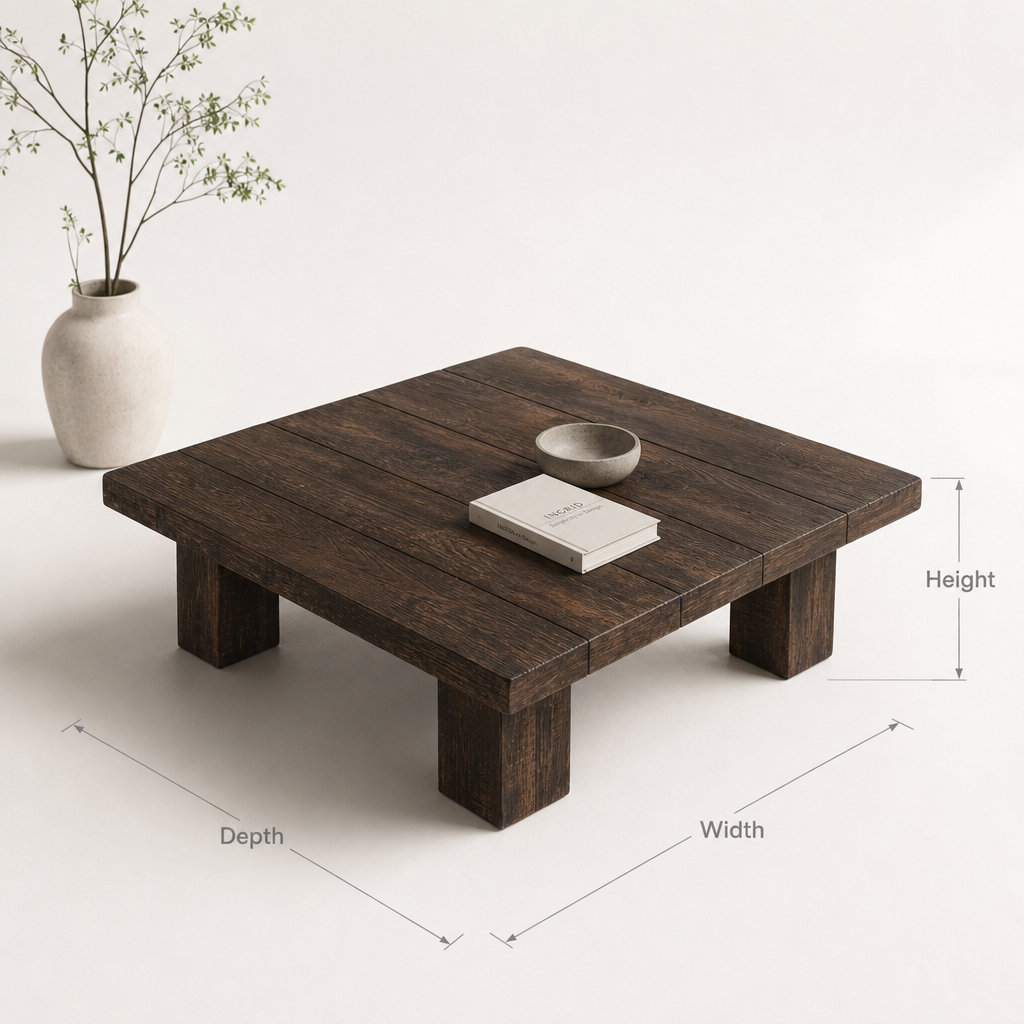
Reclaimed barnwood is in its own category. Each piece carries history - weathering, nail holes, patina that no stain can replicate. The color is deep and weathered, a brown that's been earned through decades of sun and rain.
This isn't for every room. A barnwood coffee table demands attention. It's a statement piece, and the rest of the room needs to step back and let it breathe.
But when it works, it works incredibly well. The character in reclaimed wood adds a layer of warmth and authenticity that new furniture simply can't match. It's the closest thing to "90s lived-in" you can buy new.
Best for: rooms with a rustic, farmhouse, or organic modern vibe. If you want a coffee table that starts conversations, this is it.

How to Style a Dark Wood Coffee Table (Without the Room Feeling Heavy)
A dark wood coffee table is a powerful piece. Style it right and it anchors the whole room. Style it wrong and the space feels like a cave. Here's how to get it right.
Lighten the Surroundings
This is rule number one for a reason. A coffee table in a room full of dark furniture and dark walls? That's a basement, not a living room.
Lighten up the space around it. Cream or white walls. A light rug - jute, cream wool, or a neutral pattern. Bright textiles on the sofa. The contrast is what makes the table pop.
Check out how Rustic Coffee Table Ideas handles this - a linen table runner over natural wood, whites and creams layered with warm tones. That's the exact principle: when your base palette is light and calm, the dark wood becomes the hero instead of getting swallowed.
Layer With Natural Textures
Dark wood is a large, solid mass. Soften it with texture. A woven basket underneath. A linen runner across part of the surface. A jute or braided rug beneath. The tactile contrast between hard wood and soft fiber is what makes a room feel designed, not decorated.
Add Metal or Glass Accents
You don't need to ban all modern materials. A slim metal floor lamp next to a dark wood table creates visual tension that keeps the room feeling fresh. A glass vase or ceramic bowl on the table breaks up the wood-on-wood monotony.
The goal isn't to recreate a 90s room. It's to blend 90s warmth with contemporary lightness.
Mind the Scale
A chunky dark wood coffee table needs breathing room. Don't pack it in between two heavy armchairs and a thick sofa. Leave space. Let the table be seen.
If your room is small, go for a narrower table - maybe a teak or acacia piece with slimmer proportions. The dark tone will still anchor the space without overwhelming it.
Warm Lighting Is Non-Negotiable
Dark wood absorbs light. If your room relies on a single overhead fixture, the table will look flat and dead.
Add warm lamps. A linen-shade floor lamp like our Driftwood Floor Lamp does double duty - warm, diffused light plus a natural wood base that echoes the coffee table's material palette. Swap cool-white bulbs for warm white (2700K–3000K). Layer table lamps on sideboards.
Lighting is the cheapest way to transform how dark wood reads in a room. Use it.
Style the Surface Intentionally
A dark wood coffee table covered in remote controls, coasters, and junk mail defeats the entire purpose. Style it with intention:
- A stack of 2–3 books
- One small plant or vase
- A single object - a ceramic piece, a candle, something sculptural
That's it. The negative space matters as much as what you place.
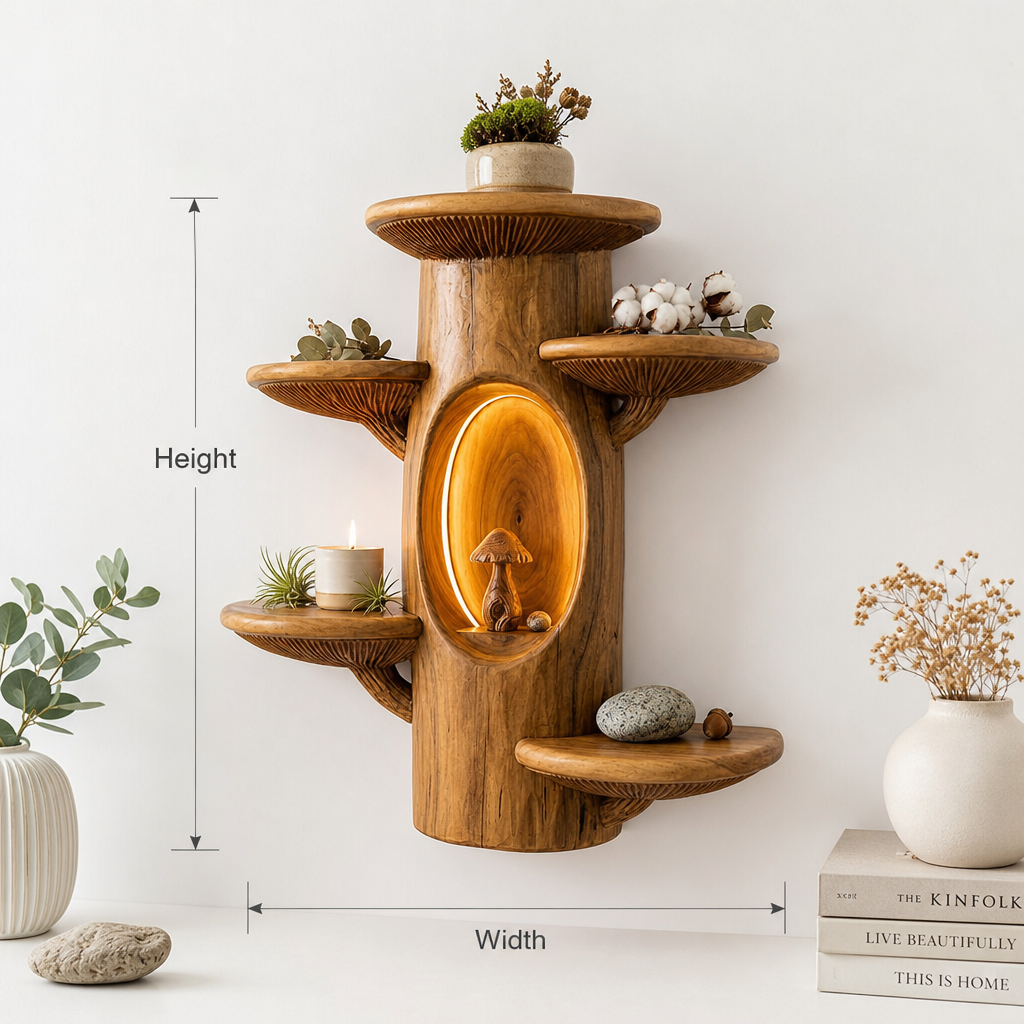
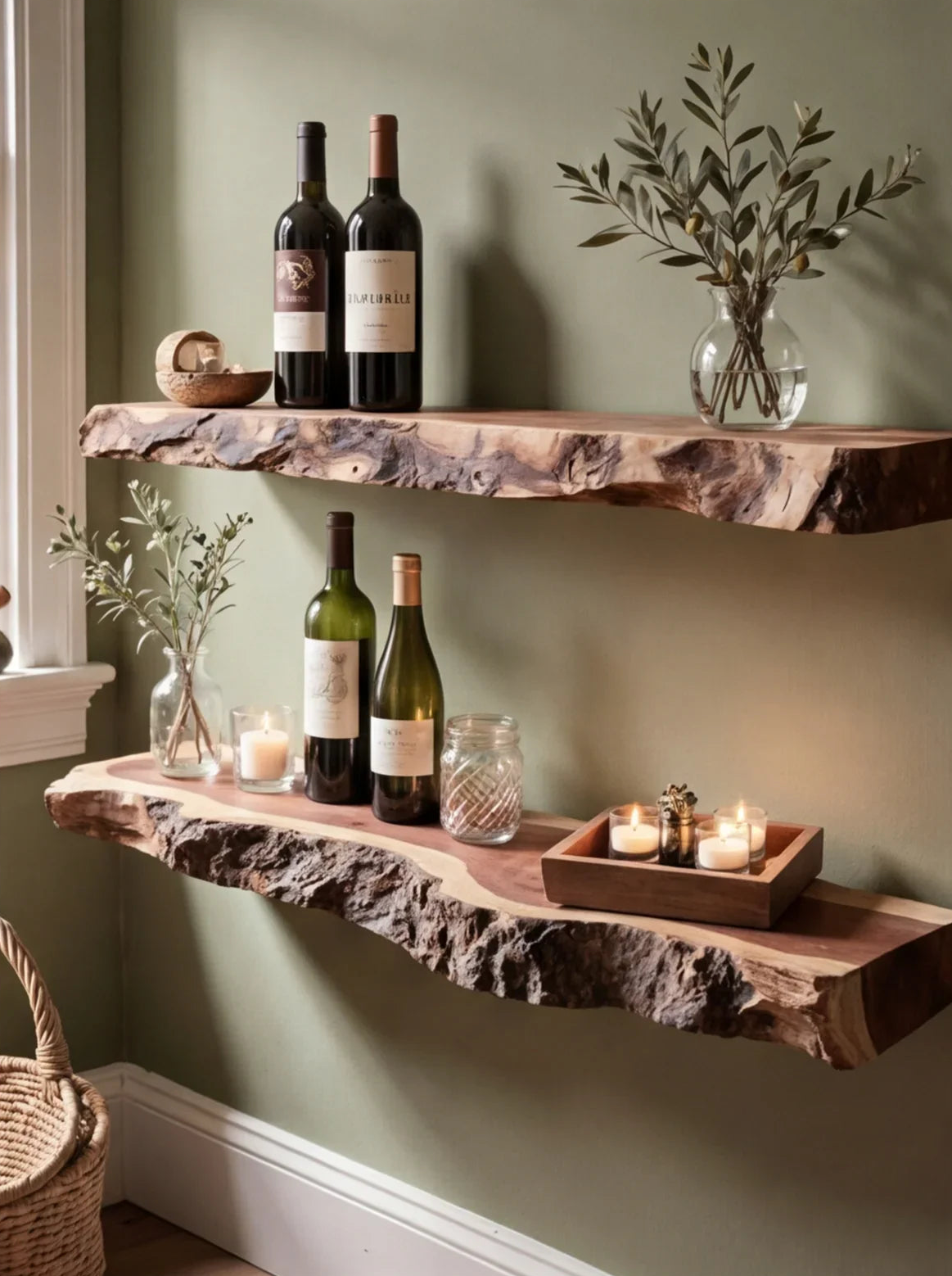
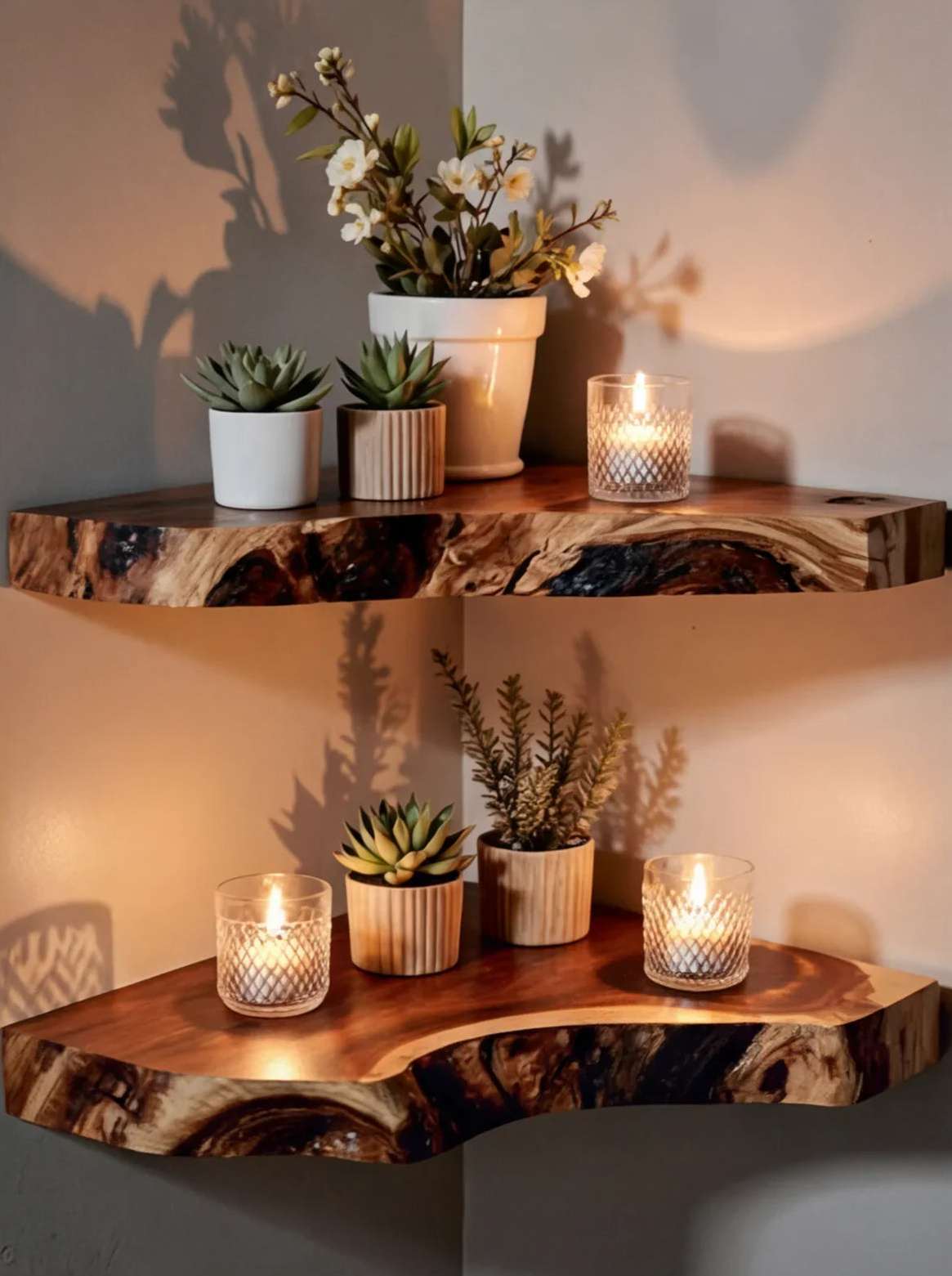
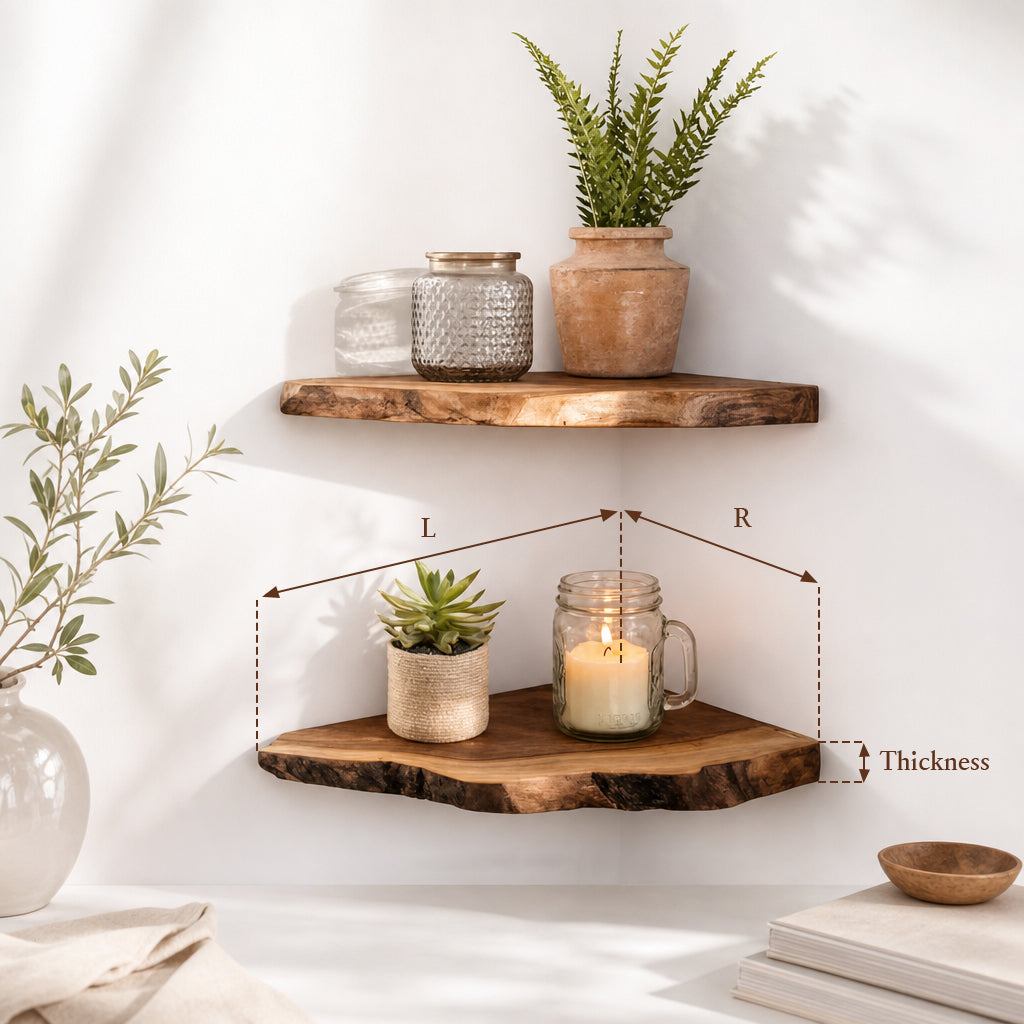
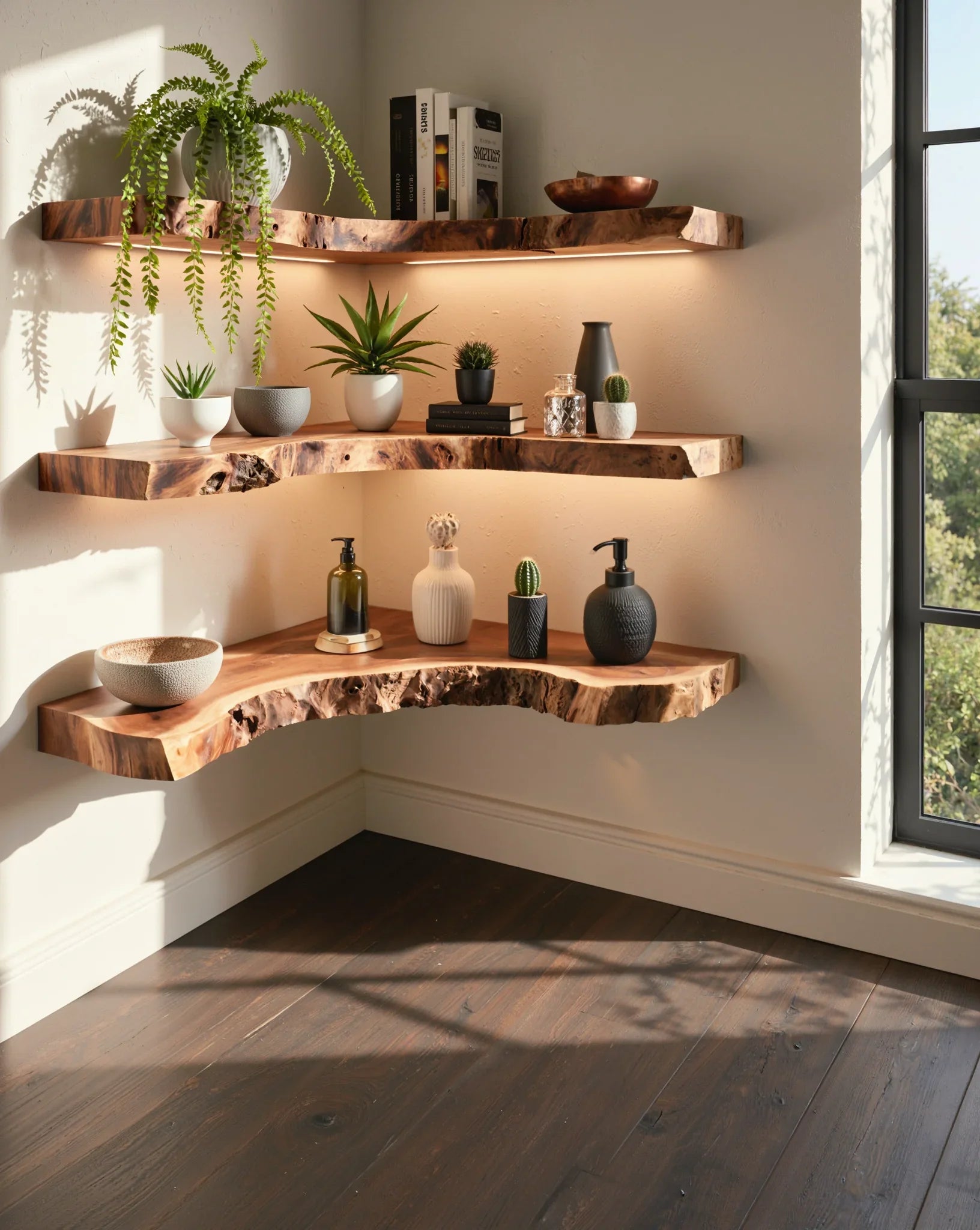
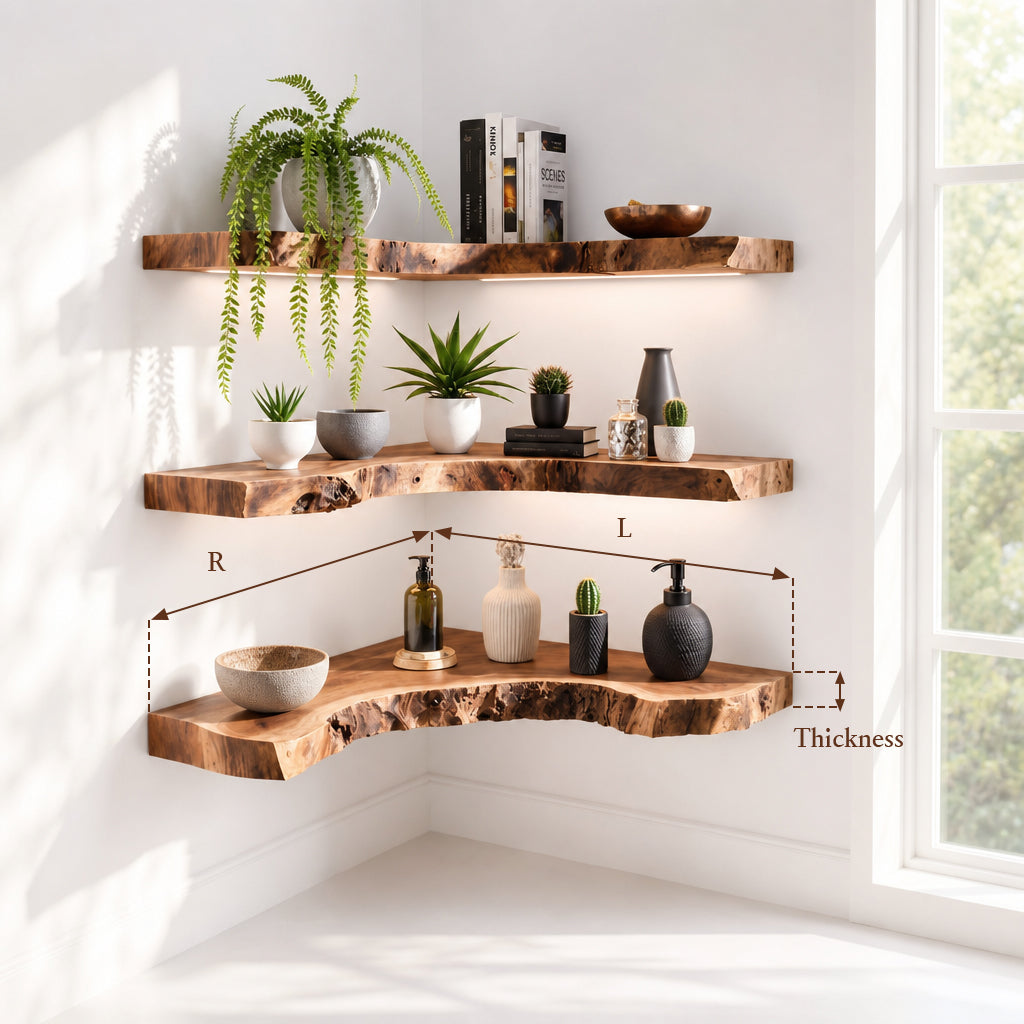
If this feels abstract, our Rustic Corner Shelf Ideas nails the same principle - one item per shelf, intentional negative space, nothing crammed in. Apply that same energy to your coffee table surface.

Common Mistakes With Dark Wood Living Rooms
Even with great taste, it's easy to mess this up. Here are the pitfalls we see most often.
Too much dark everywhere. Dark coffee table + dark sofa + dark curtains + dark accent chair = cave. One or two dark anchor pieces per room is the sweet spot. The rest should be lighter to create contrast.
Ignoring the undertone. Walnut runs warm. Acacia can lean warm or cool depending on the piece. Reclaimed barnwood is usually warm but weathered. If you pair a warm walnut table with cool gray walls, the clash will feel off even if you can't pinpoint why. Match undertones or bridge them with warm neutrals.
Wrong rug size. A small light rug under a large dark coffee table looks accidental - like the rug shrank. Size the rug so at least the front legs of surrounding furniture sit on it. The dark table should feel grounded on the rug, not perched on it.
Skipping maintenance. Dark wood shows everything - scratches, water rings, dust, fingerprints. More than light wood. Wipe it down regularly. Use coasters. Don't set hot mugs directly on the surface. A little care goes a long way.
Treating it like a catch-all. A dark wood coffee table should anchor your living room, not become a dumping ground. Style the surface. Keep it intentional. If something doesn't earn its place on the table, it doesn't belong there.

Find Your Room's New Anchor Piece
Handcrafted from genuine reclaimed wood by Vietnamese artisans, every grain pattern tells its own story - the same warmth and character that made dark wood the heart of the 90s living room.
Shop Coffee Tables →Frequently Asked Questions
What wood is best for a dark wood coffee table?
Walnut is the most versatile - rich color, smooth grain, works in almost any room. Teak is a close second with its durability and warm golden-brown tone. Acacia offers dramatic grain variation and a raw, organic character. Reclaimed barnwood brings unmatched patina and history. The "best" depends on your room's style: refined (walnut), organic (teak or acacia), or rustic (barnwood).
Does a dark coffee table make a room look smaller?
It can - if everything else in the room is also dark. But a dark wood coffee table in a light, neutral room actually creates depth and dimension. The contrast makes the space feel larger, not smaller. The key is balance: one or two dark anchor pieces, light surroundings, and good warm lighting.
How do you clean and maintain a dark wood coffee table?
Dust regularly with a soft, dry cloth. Wipe spills immediately - dark wood shows water rings more than light wood. Use coasters for all drinks. Avoid harsh chemical cleaners; a damp cloth with mild soap is enough for most messes. For deeper cleaning, use a wood-specific cleaner. A light coat of furniture oil or wax every few months keeps the finish healthy.
Can you mix a dark wood coffee table with light furniture?
Absolutely - that's actually the ideal combo. A dark coffee table with light sofas, cream walls, and a neutral rug creates the exact contrast that makes both elements pop. The dark piece anchors; the light pieces open the room up. It's a classic design move for a reason.
Are dark wood coffee tables still popular in 2026?
They are. The shift away from all-white, gray-washed interiors has been building for years, and dark wood is a primary beneficiary. People want warmth, character, and authenticity in their spaces - which is exactly what a dark wood coffee table delivers. Expect this trend to strengthen through the rest of the decade.
Wrapping Up
A dark wood coffee table isn't just a piece of furniture. It's the anchor of a room - the thing that makes everything else feel intentional.
Whether you go with walnut, teak, acacia, or reclaimed barnwood, the rules stay the same: lighten the surroundings, layer textures, light it warmly, and style the surface with restraint.
The 90s got this right. Dark wood brought warmth to rooms that needed it. And it's doing the same thing now.
Browse our coffee table collection to find the piece that fits your space.