Trending Coffee Tables 2026: What's In, What's Out & Which Styles Last
Choosing a trending coffee table is easier when you know which styles are built to last.
| Trend | Best For | Longevity (1-5) | Budget Range | Worth Buying? |
|---|---|---|---|---|
| Sculptural & Organic Shapes | Statement rooms, open-plan living | 3 | $300-$2,000+ | Yes - if you love it, it's art not just furniture |
| Live Edge & Raw Natural Wood | Rustic modern, nature-themed spaces | 4 | $200-$3,000 | Yes- timeless material, each piece unique |
| Mixed Materials (Wood + Metal/Stone/Glass) | Transitional rooms, compromise spaces | 3 | $150-$800 | Only if joint quality is solid |
| Lift-Top & Hidden Storage | WFH households, small apartments, families | 4 | $200-$1,000 | Yes - function drives longevity, not fashion |
| Round & Oval Shapes | Almost everyone, especially sectionals & kids | 5 | $150-$1,500 | Yes - shape > trend, this is timeless |
| Sustainable & Reclaimed Wood | Eco-conscious buyers, rustic/farmhouse | 4 | $200-$2,000 | Yes - only if finish safety is verified |
If you want the short version: round/oval and live edge are the safest bets. Lift-top is the most practical. Sculptural is the boldest. Everything else depends on your room.
For sizing specifics, see our Standard Coffee Table Dimensions Guide.

Why Coffee Table Trends Are Changing Right Now
If you've noticed coffee tables looking less like rectangles on legs and more well, sculptures you can put your drink on - you're not imagining things. Three forces are reshaping what's trending:
1. Work-from-home permanence. The coffee table is no longer just for coffee. It's a laptop desk, a dining surface, a kid's homework station. That's why lift-tops, hidden storage, and durable materials are surging - people need furniture that does more than one thing.
2. The anti-IKEA reaction. After a decade of identical boxy particle-board tables, buyers are craving pieces that feel individual. Live edge slabs, hand-carved shapes, reclaimed wood with visible history - these are the opposite of mass-produced sameness.
3. Open-plan living changed the coffee table's job. In a traditional living room, the coffee table sits behind the sofa and nobody thinks about it. In an open-plan space, it's visible from the kitchen, the dining area, the entryway. It's a focal point now, not a background piece. That's why sculptural and mixed-material designs are trending - they need to hold visual attention from multiple angles. If you're furnishing the whole open-plan space at once, it's worth sizing the dining table alongside the coffee table rather than treating them as separate decisions - our dining table seating capacity guide covers the right table size for 2 to 12 people so both pieces feel proportional to the room and to each other.
These aren't passing whims. They're responses to how people actually live now. Trends rooted in lifestyle shifts tend to last longer than trends rooted in aesthetics alone.

Trend #1 - Sculptural & Organic Shapes
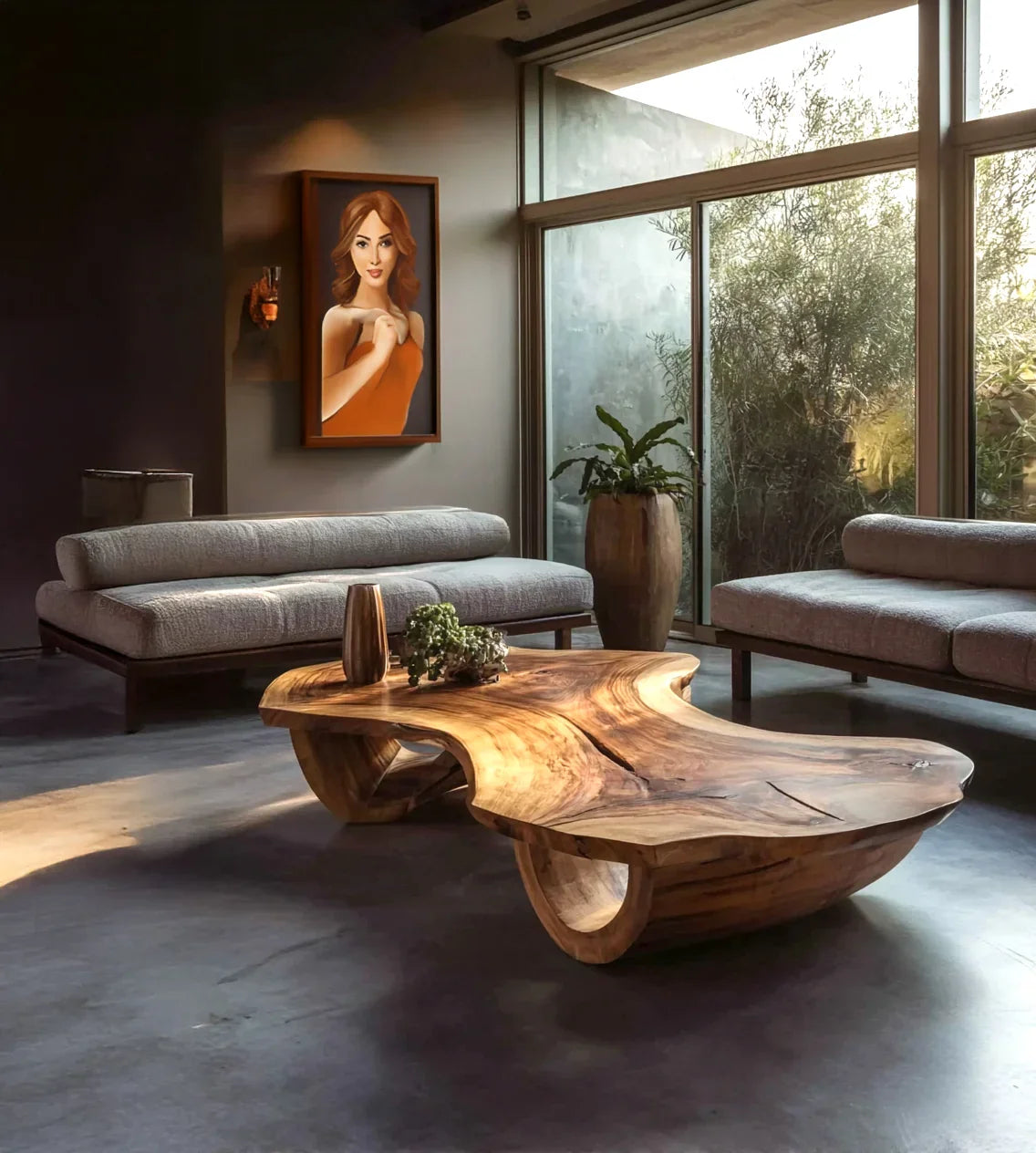
Curves, irregular silhouettes, pebble-like tops, asymmetrical outlines-2026's most visually striking trend treats coffee tables as functional art. Think carved wood bases that look hand-shaped, resin-and-wood river tables, stone tops on twisted legs.
Why it's trending: It's the visual reaction to a decade of clean-lined mid-century minimalism. When every living room looks the same, a sculptural table is the easiest way to make yours feel different without redoing the whole room.
Who it works for:
- Open-plan spaces where the table is visible from multiple rooms
- Minimalist rooms (the table becomes the focal point, so you need less other decor)
- Design-forward homeowners who want a conversation starter
Who should skip:
- Small rooms (sculptural tables eat visual space and compete with everything else)
- Maximalist rooms (too many statement pieces = visual chaos)
- Budget-conscious buyers (artisanal shapes cost $500-$2,000+)
Price range: $300-$2,000+ depending on material and artisan level.

Trend #2 - Live Edge & Raw Natural Wood
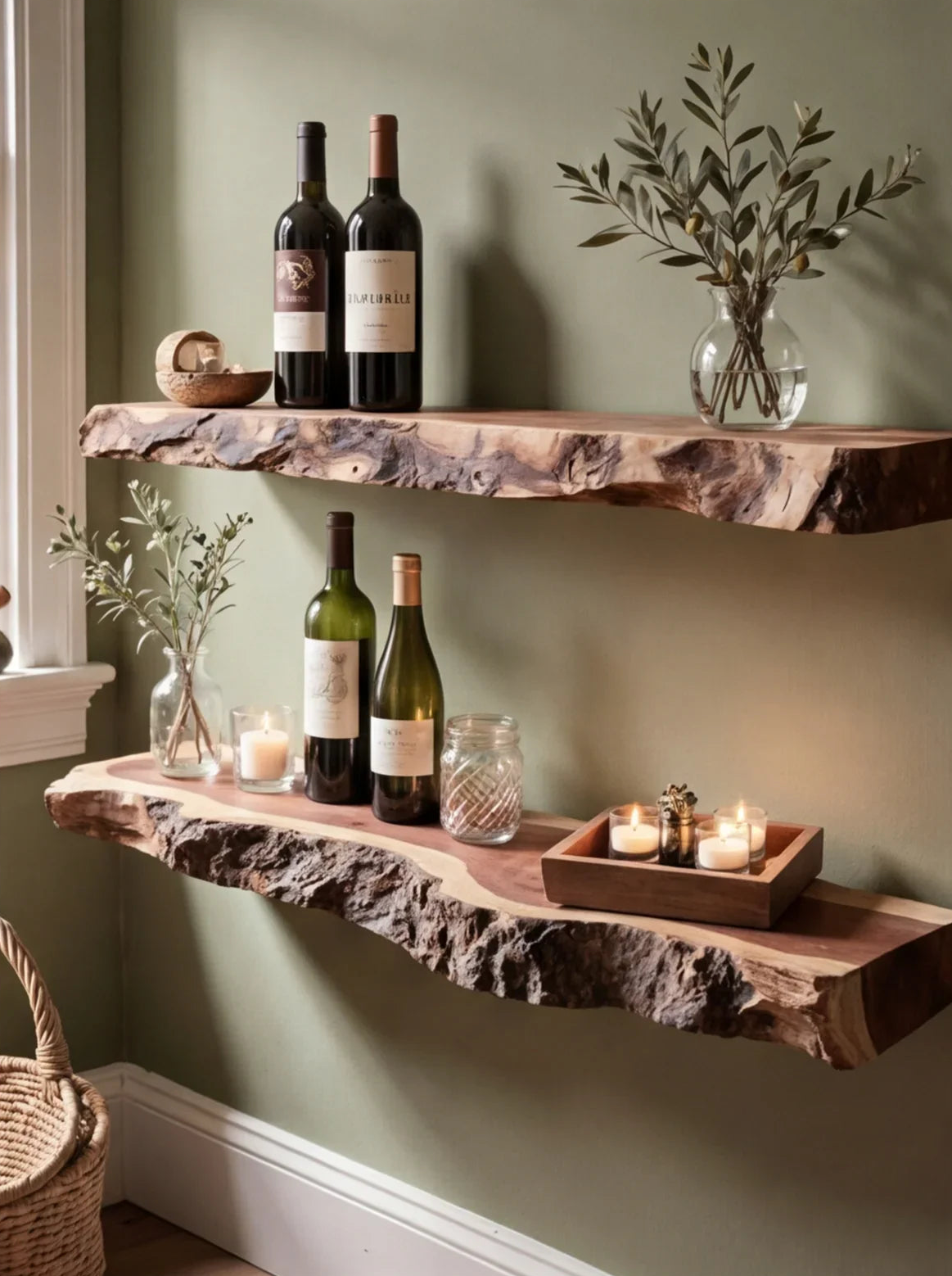
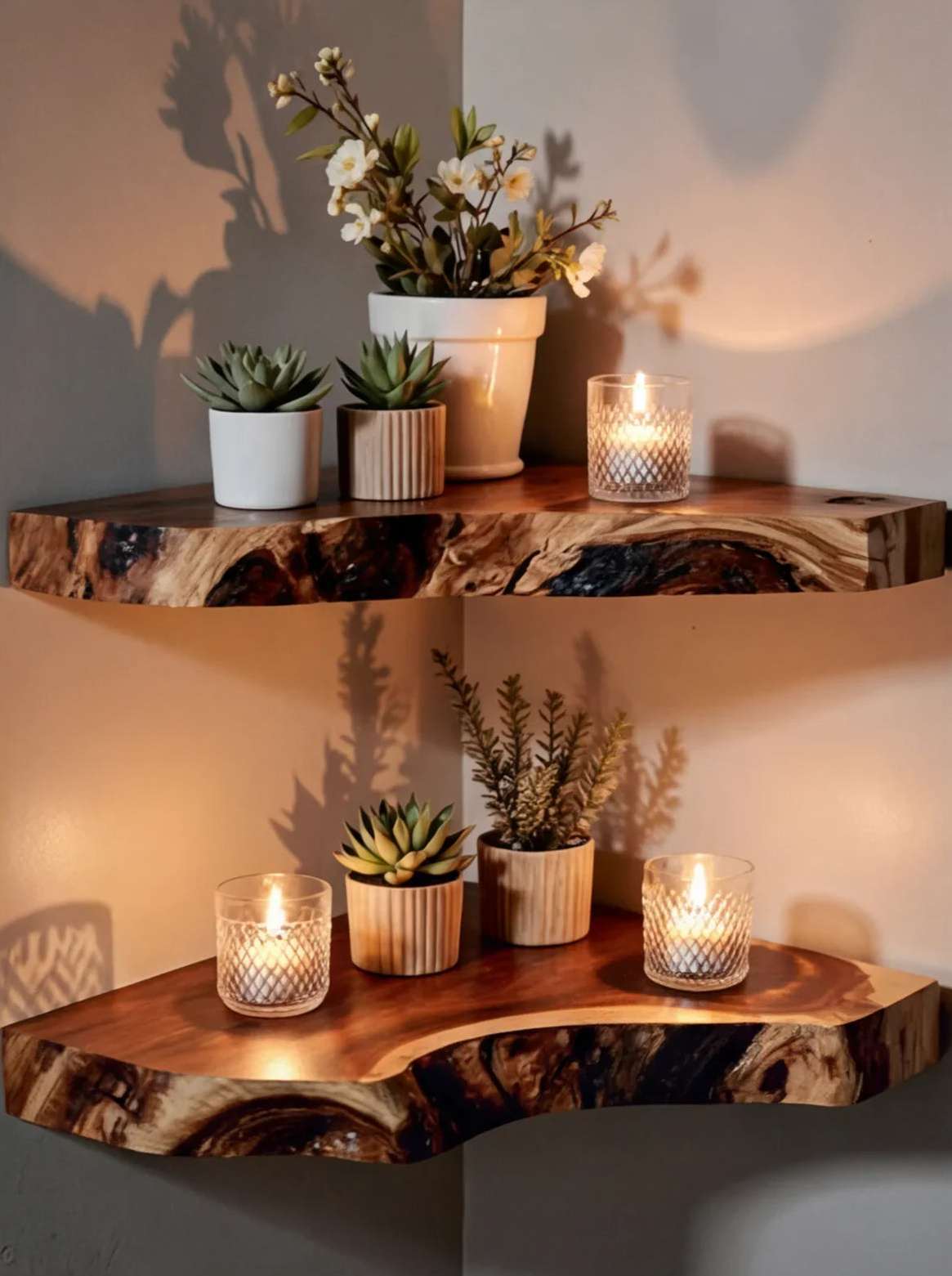
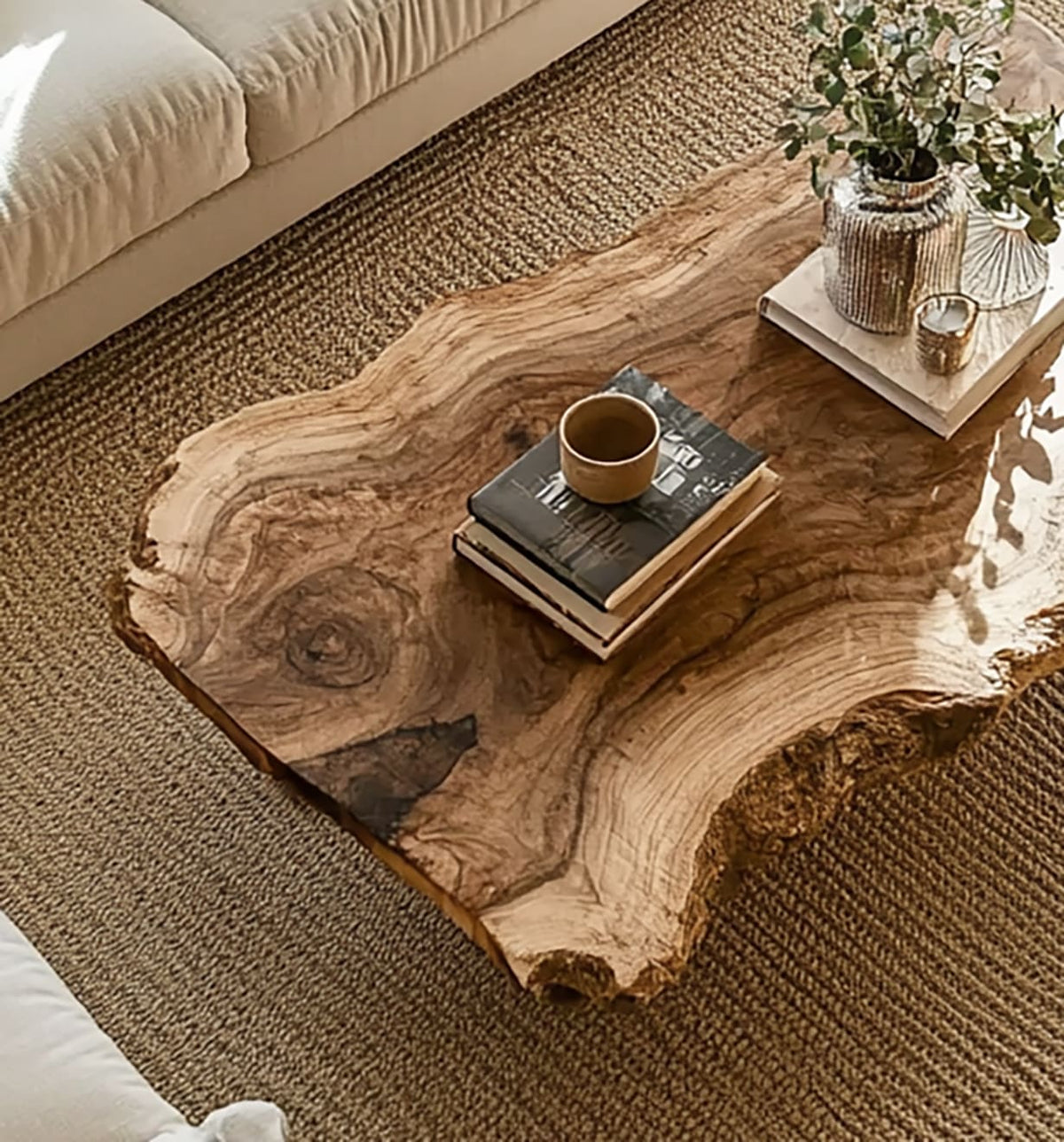
Natural wood slabs with the bark line preserved, organic edges celebrated, imperfections treated as character rather than defects. Every single piece is different - grain pattern, edge shape, color variation.
Why it's trending: The biophilic design movement (bringing nature indoors) meets the desire for one-of-a-kind furniture. In a world where you can click "add to cart" on an identical table that 10,000 other people own, a live edge slab is your antidote.
Who it works for:
- Rustic modern and farmhouse-transitional interiors
- Nature-themed rooms (woodland, organic, earthy palettes)
- Anyone who wants a table with a story ("this slab came from a 200-year-old oak")
Who should skip:
- Ultra-modern glass-and-steel rooms (the style clash is real)
- People who want a uniform, predictable appearance
Price range: $200-$3,000. The spread is huge because it depends on wood species (acacia and mango are affordable; walnut and live oak are premium), slab size, and whether it's artisan-crafted or factory-cut.
If you're drawn to live edge, check out our handcrafted live edge coffee table - each piece is cut and finished by hand from solid wood, no veneer, no particle board.

Trend #3 - Mixed Materials (Wood + Metal, Wood + Stone, Wood + Glass)
Wood top with black metal hairpin legs. Glass insert in a walnut frame. Stone pedestal base with a wooden shelf. Mixed-material tables are bridging style gaps that single-material tables can't.
Why it's trending: Transitional decorating is the norm now. Few people commit to a single style (all mid-century, all farmhouse, all industrial). Mixed-material tables work in more rooms because they borrow from multiple aesthetics. A wood-and-metal table reads warm in a modern room and industrial in a rustic room.
Who it works for:
- Transitional spaces that blend styles
- Rooms where partners compromise ("I want rustic, you want modern" → wood + metal)
- Rental apartments where you can't change the room's built-in style
Who should skip:
- Purist rooms (all-modern or all-rustic - mixed materials feel accidentally out of place)
- Heavy-use households (more materials = more joints = more potential failure points)
Price range: $150-$800.
The quality check: When buying a mixed-material table, look at the joints. Where wood meets metal, are there bolts or just glue? Where stone meets wood, is there a proper support bracket? Joints matter more than aesthetics here - a beautiful table with glued-only metal legs will wobble within a year.
Trend #4 - Lift-Top & Hidden Storage Coffee Tables
Tabletop lifts on a hinge or gas-lift mechanism to reveal storage underneath, or lifts higher to create a laptop/meals surface. Some have compartments, some have drawers, some have both.
Why it's trending: The coffee table is now a multi-purpose workstation. Remote workers eat at it, type on it, store their chargers in it. Families use it for toy storage, blanket storage, remote control purgatory. A lift-top table does three jobs: surface, storage, and desk.
Who it works for:
- Studio apartments and small living rooms (one piece = multiple functions)
- Work-from-home households
- Families who need hidden storage (toys, remotes, coasters, cables)
Who should skip:
- Aesthetic-first rooms (lift mechanisms add bulk, less visually clean)
- Heavy-item storage (mechanisms aren't designed for 50+ lbs of constant weight)
Price range: $200-$1,000.
Mechanism quality breakdown:
| Mechanism | How It Works | Durability | Feel | Best For |
|---|---|---|---|---|
| Gas-lift | Pneumatic cylinder | High (5,000+ cycles) | Smooth, controlled | Daily use, laptop work |
| Spring-loaded | Metal spring hinge | Medium (2,000-3,000 cycles) | Snappy, can slam | Occasional use |
| Hinge-only | Simple pivot hinge | Medium-high | Manual, no assist | Budget builds, light use |
Most cheap lift-top tables use spring-loaded mechanisms that feel snappy and can slam shut on fingers. Gas-lift mechanisms cost more but feel like they belong on furniture, not a garage door. If you're using the lift-top daily, pay for gas-lift.
Trend #5 - Round & Oval Coffee Tables (Still Dominant)
Round and oval coffee tables have outsold rectangular designs for the third year running. A 36-42" diameter round table is now the default choice for average living rooms with a standard 3-seater sofa.
Why it's trending: No sharp corners (kids, pets, shins), better traffic flow (you can walk around a curve without the hip-check), and they fit more sofa arrangements (sectionals, loveseats, sofa + chair combos) without looking awkward.
Who it works for:
- Almost everyone, honestly
- Rooms with sectionals (round tables nest into the L-shape naturally)
- Families with young kids (no corner impacts)
- Small spaces (round tables take up less visual footprint than rectangular ones of equal surface area)
Who should skip:
- Long, narrow rooms (a round table wastes space at both ends - go oval instead)
Price range: $150-$1,500.
For full dimension guidance, see our Standard Coffee Table Dimensions Guide. And if you're working with a small apartment, our Small Coffee Table Ideas for Apartments has specific picks and layout tips.

Trend #6 - Sustainable & Reclaimed Wood
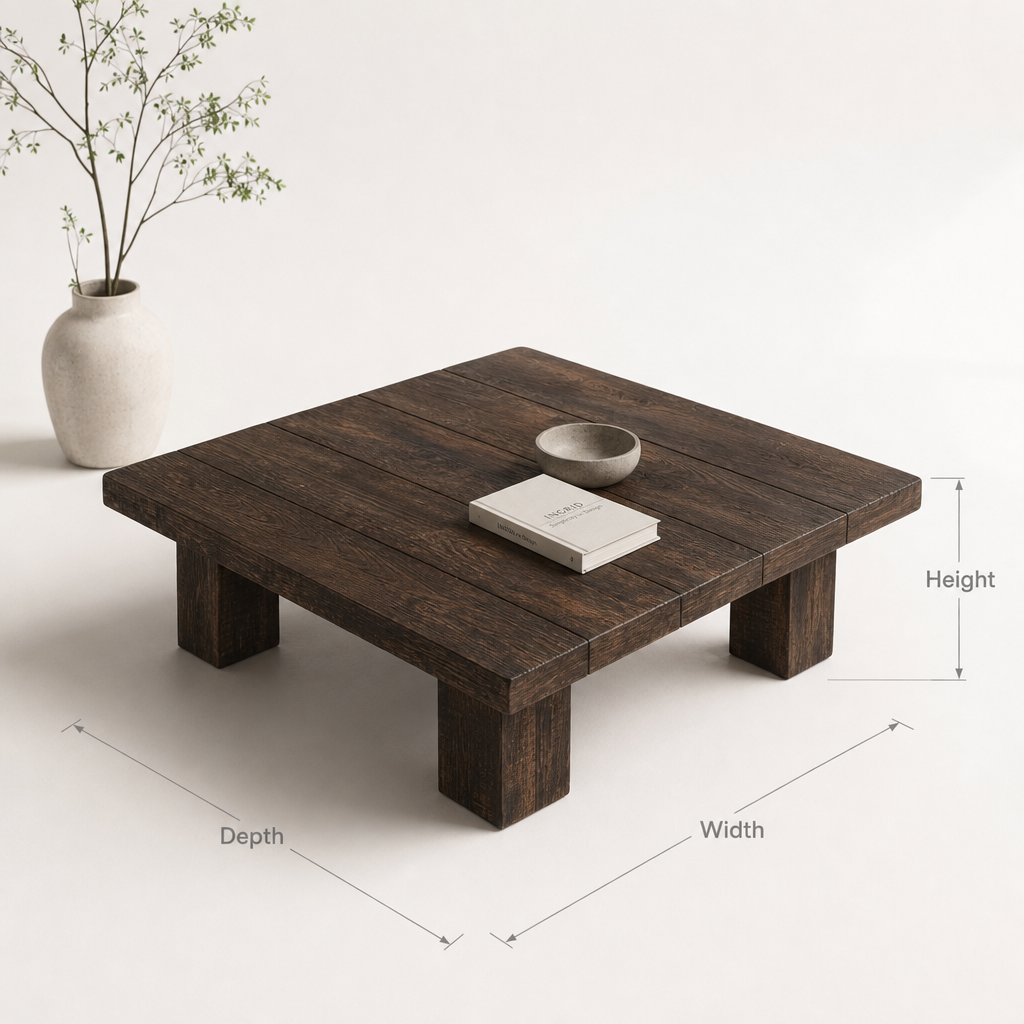
Tables made from reclaimed barn wood, salvaged timber, FSC-certified hardwood, or recycled composite materials. Each piece carries the history of its source - old nail holes, weathering marks, varied grain from decades of growth.
Why it's trending: Environmental consciousness meets storytelling. Buyers want furniture with a provenance. "This table was made from a 150-year-old barn in Pennsylvania" is a better conversation starter than "it's from the big box store."
Who it works for:
- Eco-conscious buyers who check supply chains
- Rustic and farmhouse interiors (reclaimed wood is the natural fit)
- Anyone who values uniqueness over uniformity
Who should skip:
- Buyers who want consistent appearance (reclaimed wood varies wildly in color, grain, and texture)
- Ultra-modern rooms (the rustic character clashes)
Price range: $200-$2,000+.
Verification matters: Not every "reclaimed" label is genuine. Look for FSC certification, transparent sourcing (where the wood came from), and finish safety information. Reclaimed wood sometimes carries old treatments or finishes - make sure the seller has properly cleaned and re-sealed the material with non-toxic finishes. If you can smell a chemical finish, the table is still off-gassing.

Trending Coffee Table Colors
Color is the fastest way to spot whether a coffee table is trending or dated. Here's what's moving in 2026:
Warmer, Darker Woods - The Comeback
For the past several years, gray washes and light natural wood (ash, blonde oak, bleached pine) dominated. In 2026, the pendulum has swung back toward walnut, dark oak, espresso, and rich acacia tones. Elle Decor and multiple interior designers have called out darker woods as the defining finish direction for the year.
Why: warmer tones create a cozier, more grounded feeling in a room. After years of airy, Scandinavian light-wood everything, people are craving depth and richness. Dark wood also hides stains and scratches better - practical, not just pretty.

Black and Matte Finishes - The Modern Neutral
Black coffee tables - matte black powder-coated metal, ebonized wood, blackened steel bases - are having a moment. They work as visual anchors in light-colored rooms and pair well with almost any accent color.
Why it works: black is the new neutral for furniture, the same way it's been for fashion. It grounds a room without competing.

Natural / Unfinished-Looking Wood - The "Raw" Aesthetic
Some of the trendiest tables right now look barely finished - just a light oil or wax that lets the raw wood show through. No stain, no dark wash, no color manipulation. Just the wood, honestly presented.
Why it works: it's the anti-gimmick finish. When every other table is trying to look like something else, a table that looks like wood feels refreshing.
What's Fading - Gray Wash and Two-Tone High-Contrast
Gray-washed coffee tables (the "farmhouse gray" of 2019-2022) are visibly declining. So are high-contrast two-tone tables (black legs + white top, or vice versa)- they read as dated in a way that warm wood tones never do.
If you're buying today and want your table to still look good in 5 years, skip gray wash. Pick warm wood, black, or natural.

What's Going Out of Style?
Not every coffee table that's popular today will still look current in two years. Here's what designers are actively moving away from:
Mass-Produced Boxy Rectangles - The flat-pack, particle-board, rectangular table with straight metal legs isn't disappearing - it's just no longer stylish. It's become the default, the invisible, the thing nobody notices.
Glass-Top Tables (the 2010s Kind)-Full glass-top coffee tables with chrome legs were everywhere from 2008 to 2018. They're still available, but they read as dated-the furniture equivalent of a frosted-tip haircut.
Farmhouse Gray Wash -The gray-washed, distressed, "shabby chic" coffee table had a great five-year run. That run is over. It photographs well on Pinterest but looks tired in person.
Oversized Trunk Coffee Tables- The large, heavy, industrial-trunk-as-coffee-table trend peaked around 2016. They're impractical (too heavy to move, rough edges, limited surface area due to domed lids) and their visual weight overwhelms most living rooms.
Excessive Ornamentation -Carved legs with scrolls, inlaid patterns, gold-leaf details - the "look at how fancy my table is" era is giving way to "look at how honest my table is." Simplicity with quality materials is winning over ornamentation.
What's Staying
Round shapes. Live edge. Solid wood. Mixed materials done with intention. Lift-top function. These aren't trends - they're responses to how people live. Responses don't expire the way aesthetics do.
How to Pick a Trending Coffee Table That Actually Fits Your Room
Knowing what's trending is half the battle. The other half is making sure the trending table you pick actually works in your space.
The sofa-to-table ratio: Your coffee table length should be roughly ½ to ⅔ the length of your sofa. A 90" sofa pairs with a 45"-60" table. Shorter than that and the table looks lost. Longer and it dominates.
Height matching: Table height should be within 1-2" of your sofa seat height. Most sofas seat at 17"-19". Most coffee tables are 16"-18". If your sofa is unusually low (15") or high (20"+), you'll need to measure carefully.
Traffic flow: Leave at least 18" between the table edge and the sofa front. Leave 30"+ for main walkways around the table. Less than 18" and your knees hit the table every time you stand up.
Style harmony: Match the room's dominant material, or intentionally contrast with one shared element (a leg shape, a finish tone, a design era). Random contrast reads as accidental. Intentional contrast reads as curated.

Common Mistakes When Buying a Trending Coffee Table
Buying for the trend, not the room. A sculptural live-edge slab looks incredible in a showroom and overwhelming in a 12—14 living room. Always measure before falling in love.
Ignoring mechanism quality on lift-top tables. A $250 lift-top table with a spring mechanism will feel broken by month six. A $500 one with gas-lift will feel solid for years. The difference is in the hardware, not the wood.
Mixed materials done badly. Two materials (wood + metal) = intentional. Three or more (wood + metal + glass + stone) = visual chaos. The line between eclectic and cluttered is thinner than you think.
Reclaimed wood without checking finish safety. Old barn wood sometimes carried lead paint, arsenic-based preservatives, or creosote treatments. Reputable sellers strip, clean, and re-seal with modern non-toxic finishes. If the listing doesn't mention finish type, ask.
Round table in a long narrow room. A round table wastes space at both ends of a narrow room. Go oval instead - same soft corners, better space efficiency.
Trend-chasing every year. Coffee tables aren't throwaway items. If you replace yours every time the trend shifts, you're spending $500-$1,500 every 18 months and your room never feels settled. Buy for the 5-year horizon minimum.

FAQ
What coffee table style is most popular right now?
Round and oval coffee tables are the most popular overall, followed by live edge and sculptural organic shapes. Round tables have outsold rectangular designs for three consecutive years.
Are live edge coffee tables still trending?
Yes, and they're one of the more "future-proof" trends because they're based on material authenticity, not a specific aesthetic. Natural wood doesn't go out of style - only the finish trends around it change.
What is the best coffee table material for 2026?
Solid wood (walnut, oak, acacia, rubberwood) is the most versatile and longest-lasting. For small spaces, mixed materials (wood + metal) offer the best balance of style and visual lightness.
Is a round or rectangular coffee table more in style?
Round. Round tables outsell rectangular ones, work better with sectionals, are safer for kids, and take up less visual space in a room. The only time rectangular makes more sense is in a long, narrow room.
Are lift-top coffee tables worth it?
If you work from home, eat at your coffee table, or need hidden storage - absolutely. If the table is purely decorative, skip it. The mechanism adds cost and bulk that you don't need.
How do I know if a coffee table trend will last?
Ask: is this trend based on how people live (function) or how people photograph (aesthetics)? Function-driven trends (lift-top, round shapes, solid wood) last. Aesthetic-driven trends (gray wash, trunk tables, excessive ornamentation) fade.
What coffee table goes best with a sectional sofa?
Round or oval tables nest into the L-shape naturally. A rectangular table often extends awkwardly past one end of the sectional. For sizing specifics, see our Standard Coffee Table Dimensions Guide.
Related Reading
- Live Edge Coffee Table - handcrafted solid wood, each piece unique
- Shop All Coffee Tables - full Ashdeco collection