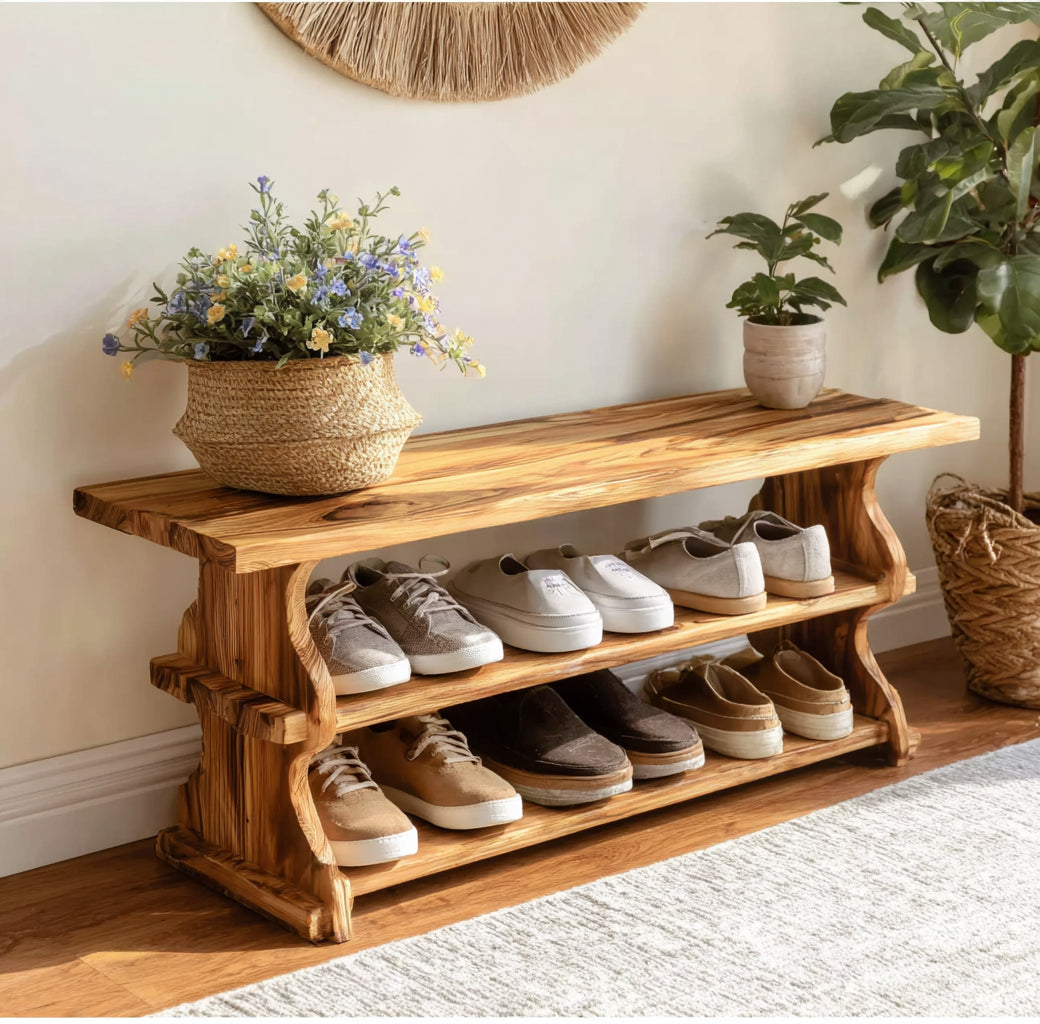
























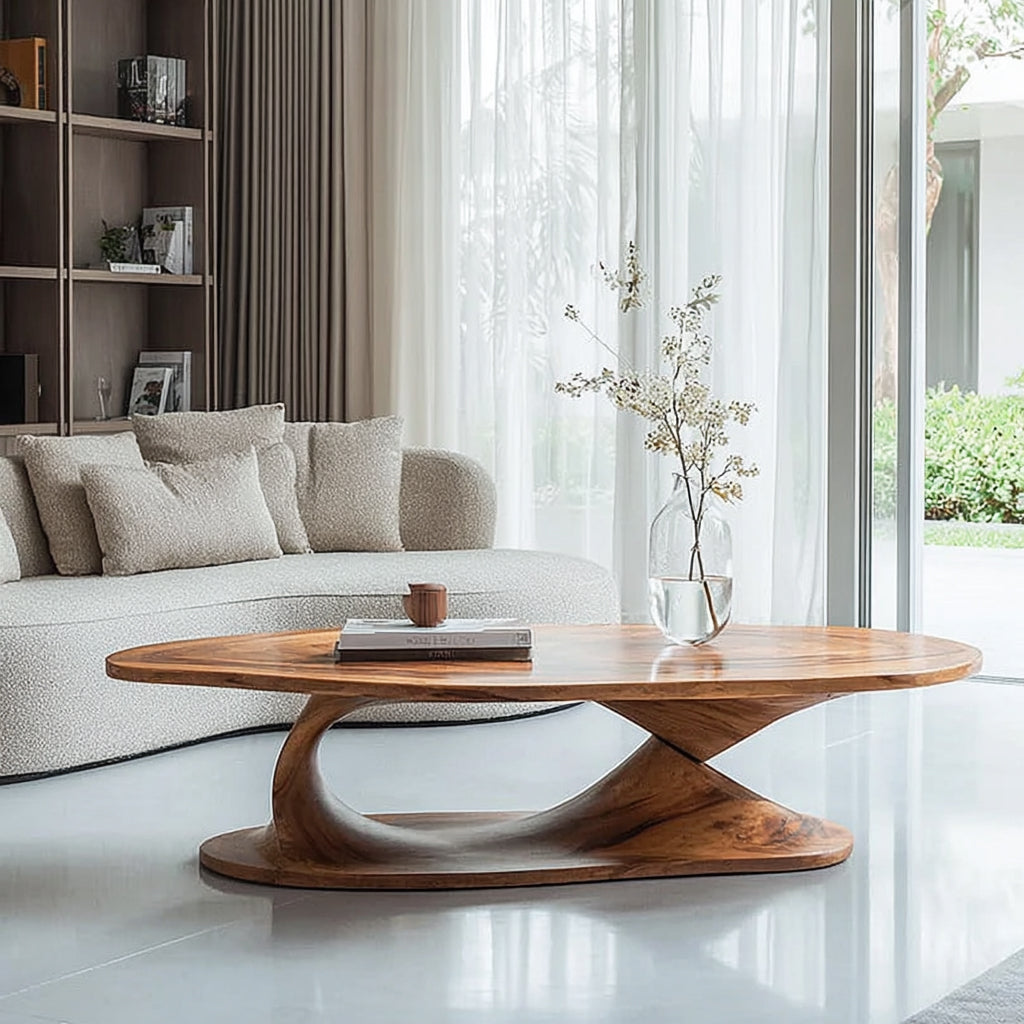
Quick view
- Why solid wood is different from everything else
- The wood Ashdeco uses (and why it matters for care)
- The 3-step care routine (weekly, monthly, yearly)
- The 5 things that actually damage wood furniture
- Specific care by product type
- When wood changes color (and why that's fine)
- Honest downsides of solid wood
- FAQ
Shop this guide
Handcrafted Trending, made to order in solid wood.
 Christmas edit
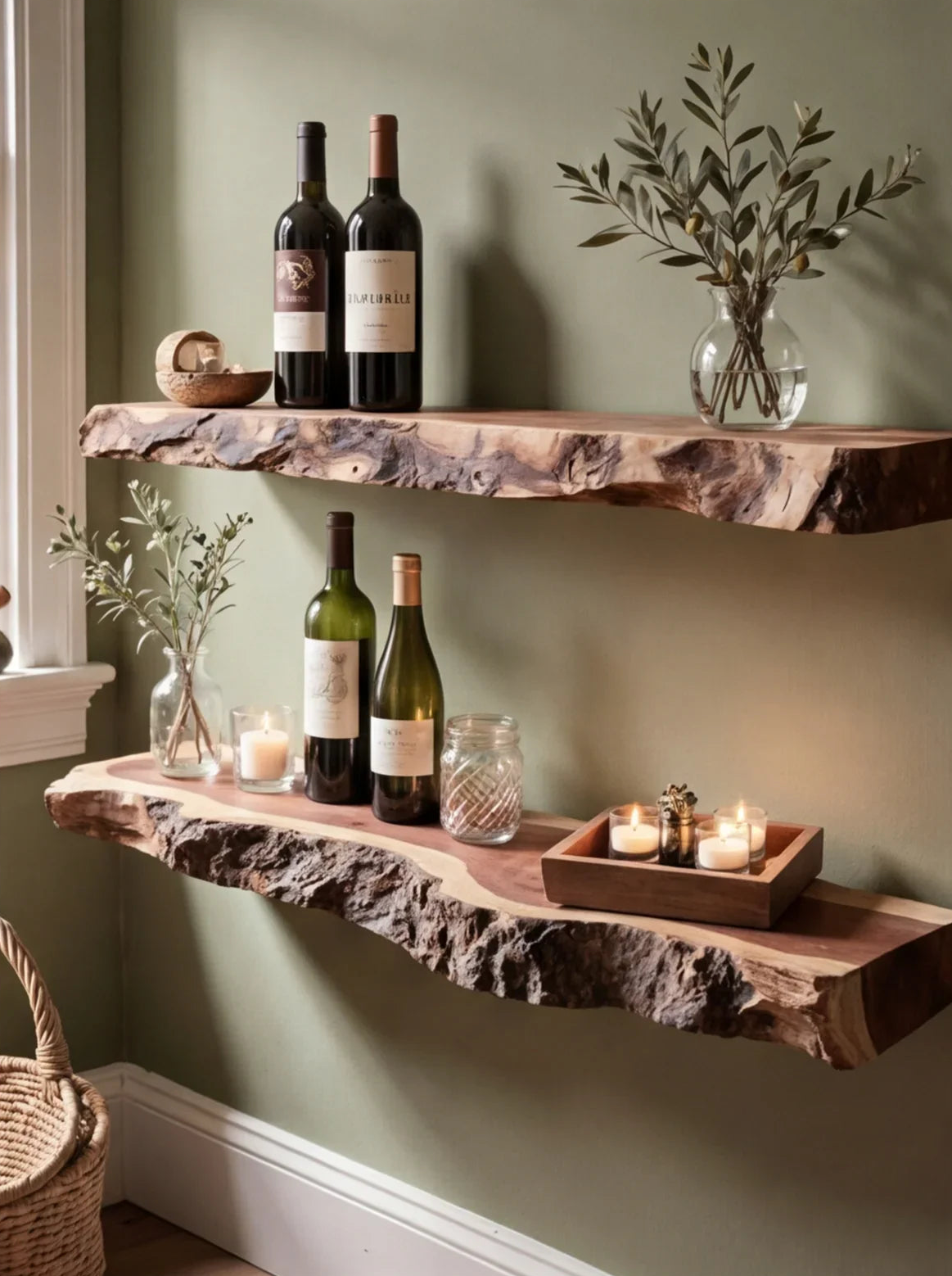
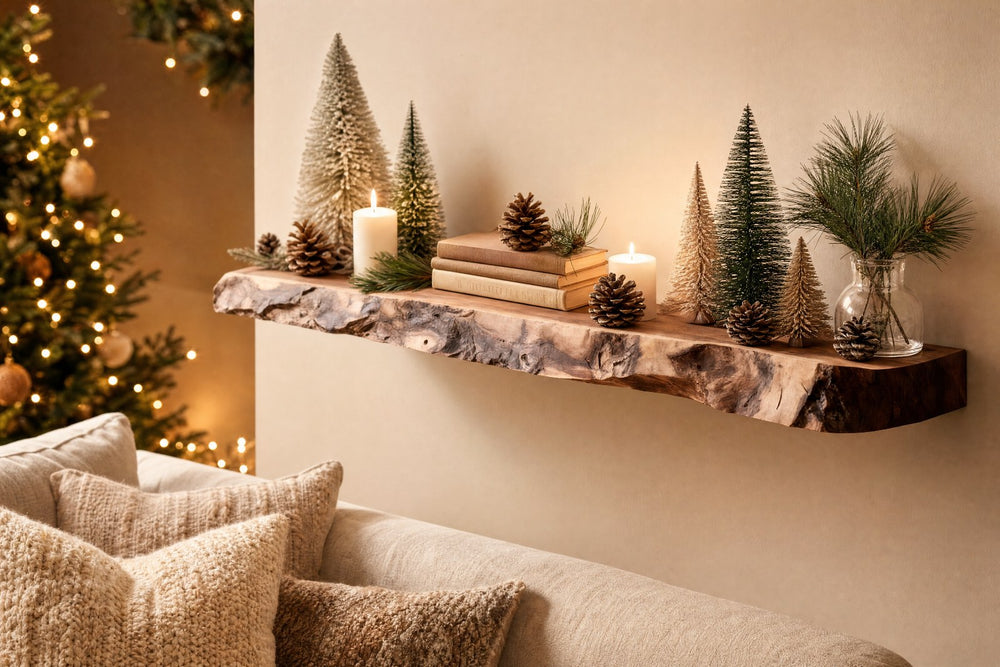
Handcrafted Live Edge Floating Bar Shelf – Rustic Solid Wood Wall Shelf for Kitchen or Bar
From $167.00
Christmas edit
Handcrafted Live Edge Floating Bar Shelf – Rustic Solid Wood Wall Shelf for Kitchen or Bar
From $167.00
 Christmas edit
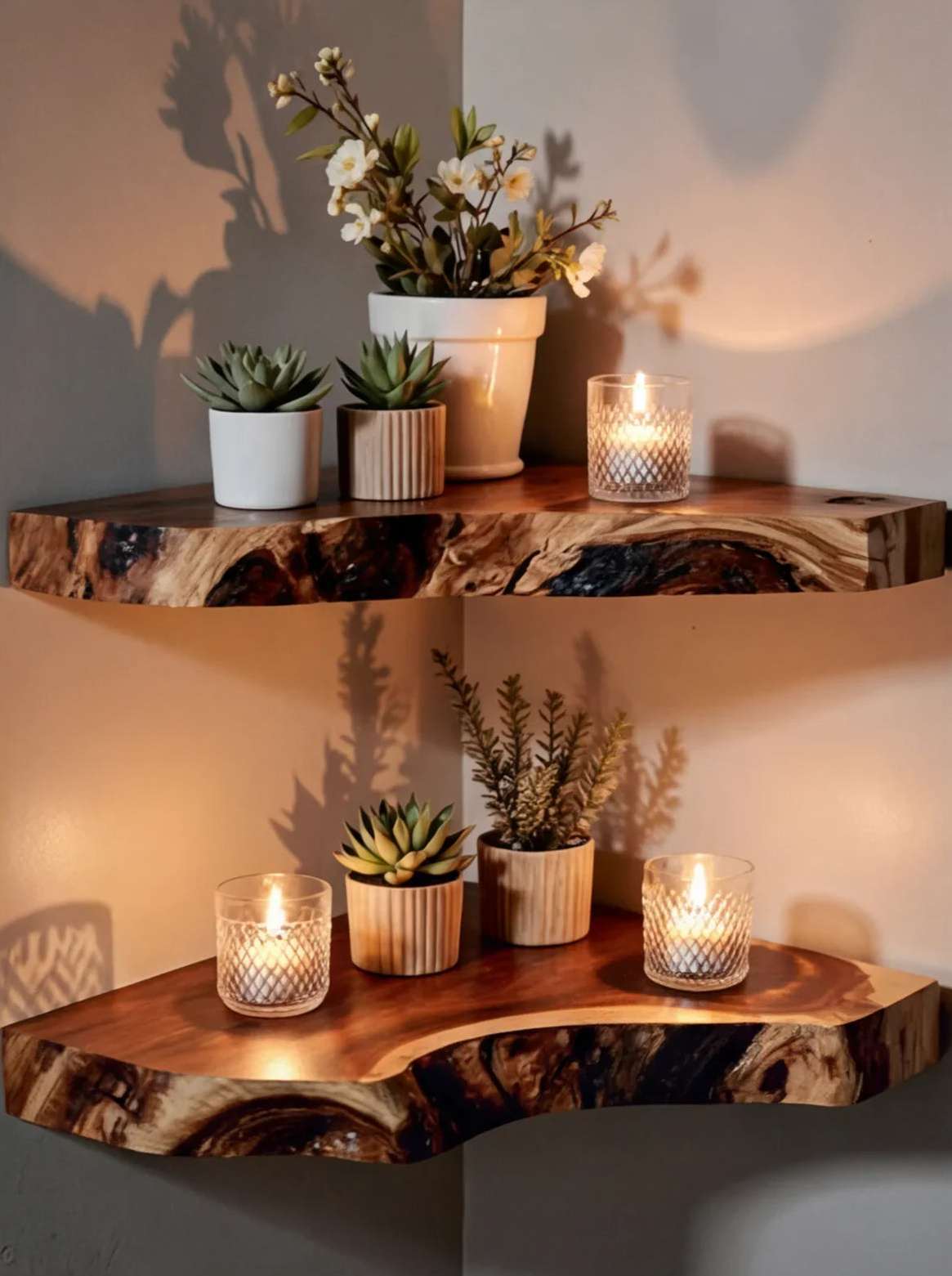
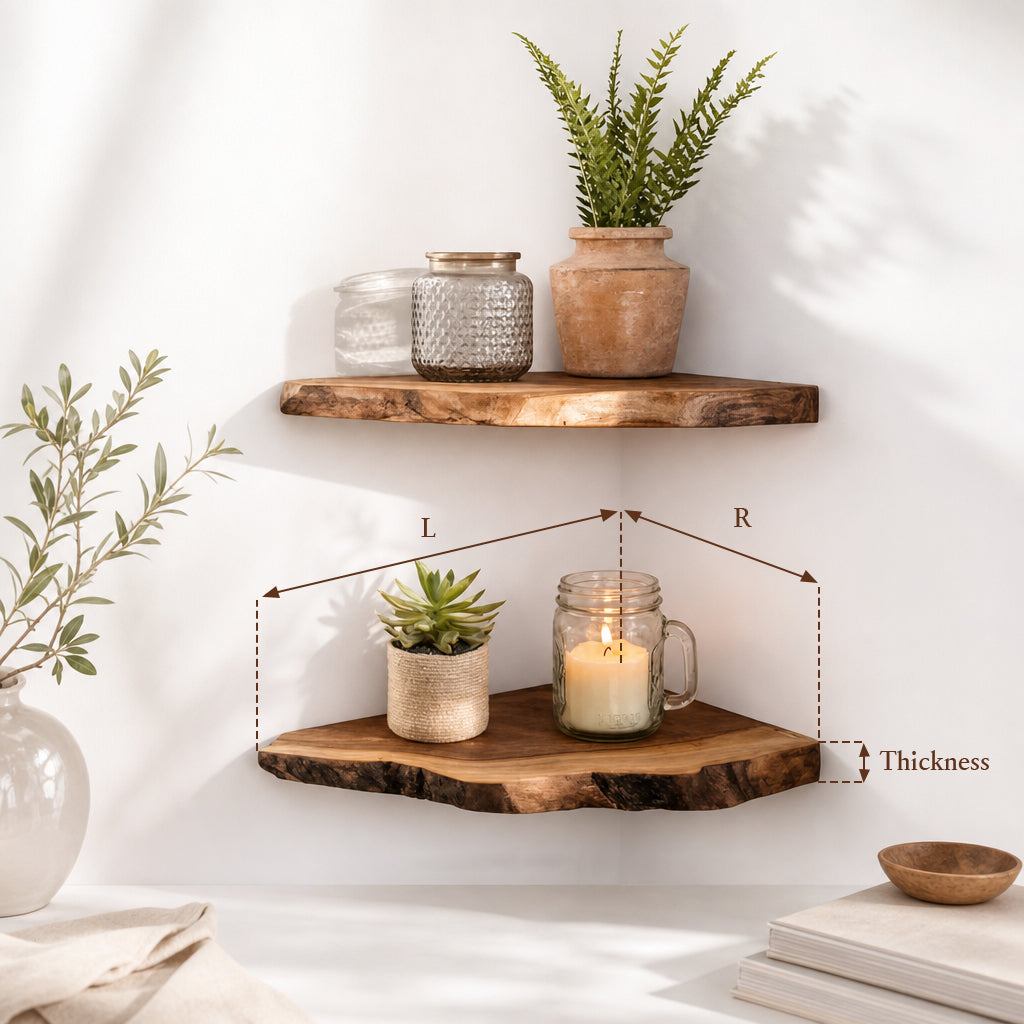
Rustic Corner Wall Shelf – Natural Live Edge Wood Floating Shelf for Candles and Plants
From $176.00
Christmas edit
Rustic Corner Wall Shelf – Natural Live Edge Wood Floating Shelf for Candles and Plants
From $176.00
 Christmas edit
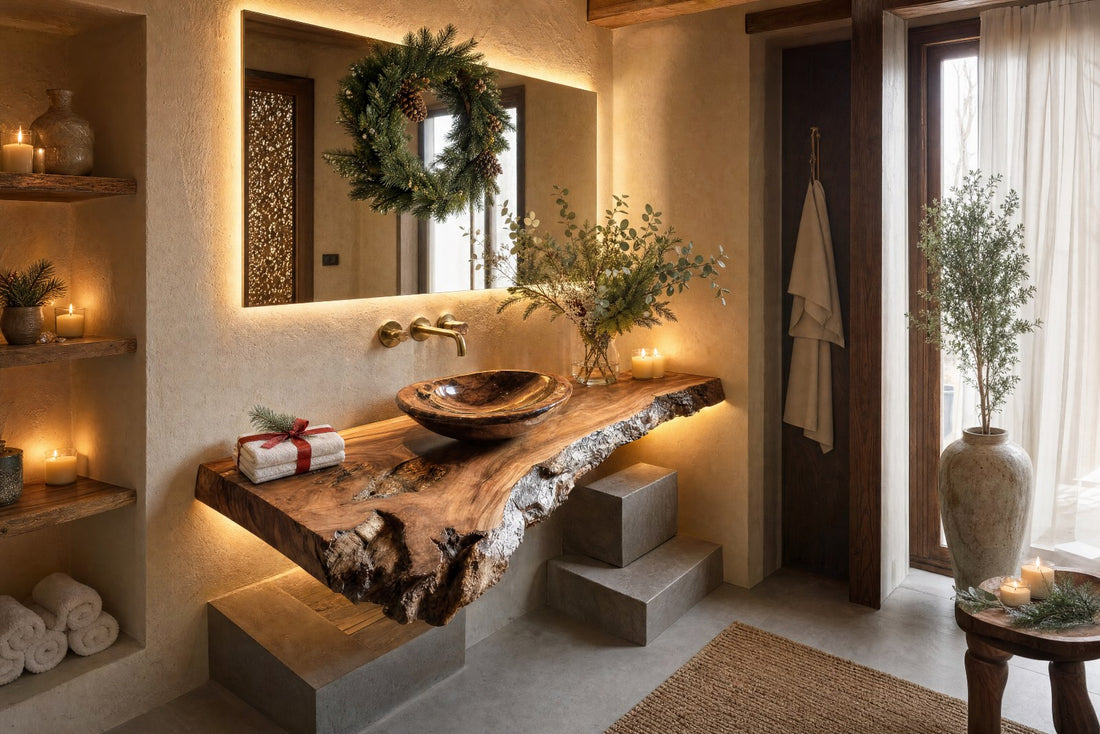
Rustic Live Edge Floating Vanity – Handmade Wooden Bathroom Shelf with Brackets
From $180.00
Christmas edit
Rustic Live Edge Floating Vanity – Handmade Wooden Bathroom Shelf with Brackets
From $180.00
 Christmas edit
Rustic Teak Root Wood Corner Shelf - Floating Corner Shelf Decor
From $176.00
Christmas edit
Rustic Teak Root Wood Corner Shelf - Floating Corner Shelf Decor
From $176.00
 Christmas edit
Live Edge Corner Floating Shelf – Handcrafted Solid Wood Wall Shelf
From $140.00
Christmas edit
Live Edge Corner Floating Shelf – Handcrafted Solid Wood Wall Shelf
From $140.00
 Christmas edit
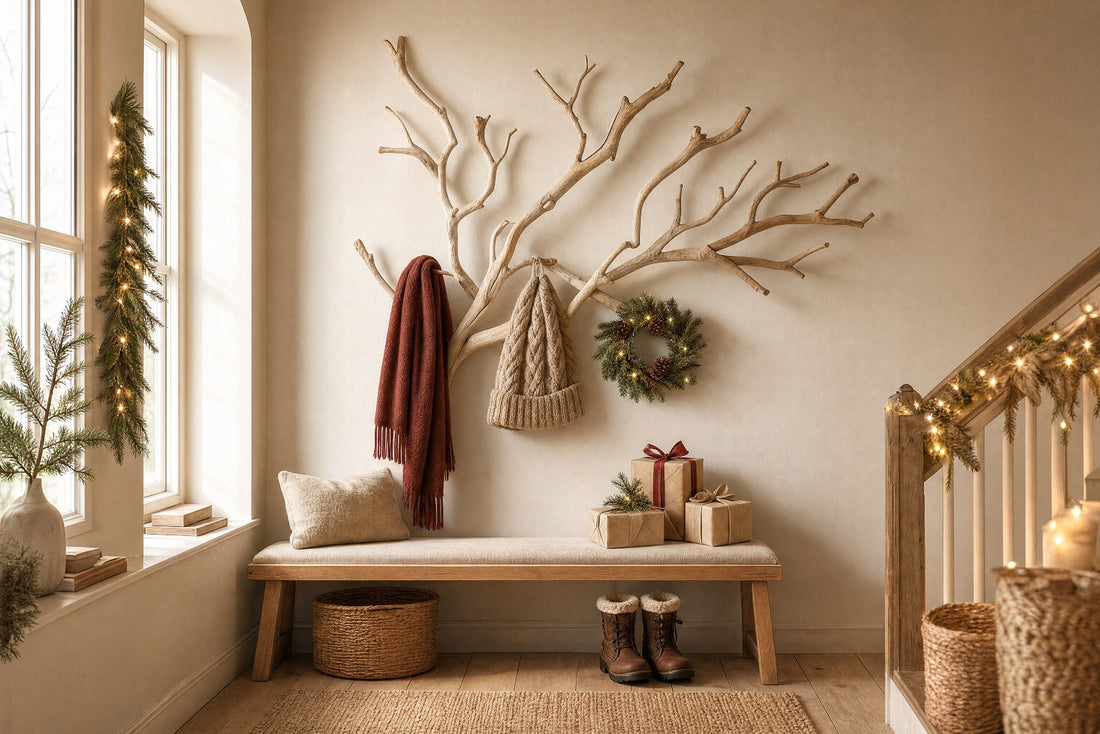
Custom Wood Coat Rack – Driftwood Wall Mount Clothes Rack with Unique Hooks
From $697.00
Christmas edit
Custom Wood Coat Rack – Driftwood Wall Mount Clothes Rack with Unique Hooks
From $697.00
You spent good money on solid wood furniture. Maybe it was a live edge coffee table, floating shelves, or a tree bookshelf that took weeks to arrive because someone actually carved it by hand.
Now you want it to look this good in 10 years. Maybe 20.
The problem? Most "wood care" advice online is vague recycled nonsense. "Dust regularly." "Avoid direct sunlight." Thanks. Very helpful.
Here is what actually matters, what ruins wood faster than neglect, and the specific care routine that works for solid hardwoods used in handcrafted furniture.
Why solid wood is different from everything else
Particle board, MDF, laminate. They all pretend to be wood. But they respond to moisture, heat, and age completely differently.
Solid wood is a natural material. It expands when humidity goes up. It contracts when the air dries out. This is normal, not a defect. A tiny gap that appears in winter and closes in summer? That's the wood breathing. Leave it alone.
MDF and particle board don't breathe. They absorb moisture and swell. Once they swell, they don't come back. That's why the $200 IKEA bookshelf warps after two years in a humid room while a solid wood piece from the 1970s still looks fine.
The takeaway: solid wood needs different care than engineered wood. Most generic "furniture care" articles don't make this distinction, and that's where people go wrong.
The wood Ashdeco uses (and why it matters for care)
Ashdeco furniture is made from solid natural hardwood, hand-selected and kiln-dried by Vietnamese artisans who've worked with these materials for generations.

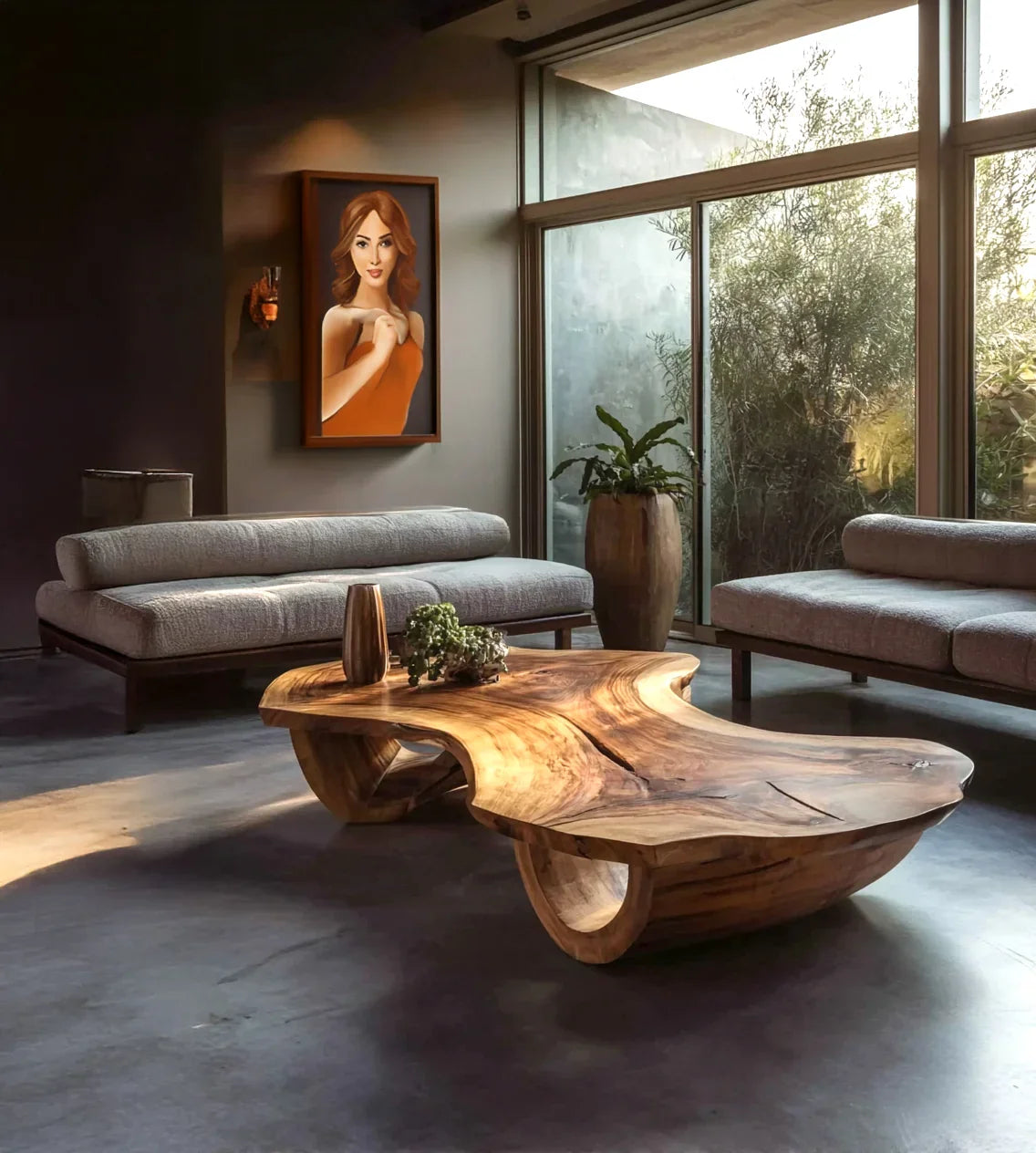
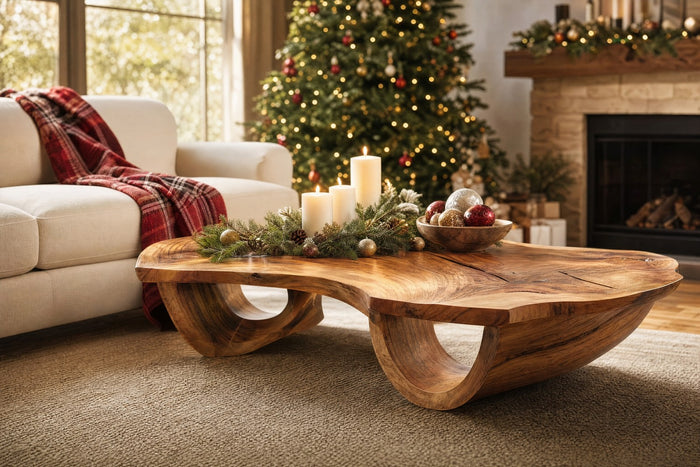
Live Edge Wood Coffee Table - Handmade Rustic Farmhouse Trestle Table
What makes this wood good for furniture:
- Lightweight compared to many commercial hardwoods (easier to mount, move, rearrange)
- Naturally resistant to termites and boring insects
- Beautiful grain patterns with warm golden-brown tones that darken with age
- Doesn't crack easily during drying (important for carved pieces)
- Takes oil finishes well
What natural hardwood doesn't like:
- Standing water left on the surface for hours
- Harsh chemical cleaners (bleach, ammonia, acetone)
- Sudden humidity swings (going from air-conditioned 40% humidity to 85% outdoor humidity repeatedly)
- Prolonged direct sunlight on one side (creates uneven fading)


The 3-step care routine (weekly, monthly, yearly)

Step 1: Weekly dusting (2 minutes)
Use a soft, dry microfiber cloth. Wipe with the grain, not against it.
That's it. Don't overthink this.
What NOT to use: Feather dusters push dust into crevices. Paper towels can scratch softer finishes. Pledge and other spray polishes leave a silicone buildup that makes refinishing harder later.
Step 2: Monthly cleaning (10 minutes)
Mix a few drops of mild dish soap (Dawn, Seventh Generation, whatever you have) in a bowl of warm water. Dampen a cloth, wring it out until it's barely wet, and wipe the surface.
Follow immediately with a dry cloth. Don't let water sit on the wood.
For sticky spots or food residue: Same method, but let the damp cloth sit on the spot for 30 seconds before wiping. Don't scrub hard. The moisture loosens the residue so you can lift it off.
Step 3: Oil treatment every 6-12 months
This is the step most people skip, and it's the one that makes the biggest difference over 5, 10, 20 years.
What to use: Food-safe mineral oil, Danish oil, tung oil, or beeswax polish. Each has tradeoffs:
- Mineral oil is cheapest and easiest. Wipe on, wait 15 minutes, wipe off. No smell. Works well for shelves, bookshelves, and pieces that don't get heavy use.
- Danish oil penetrates deeper and adds a slight sheen. Better for tables, desks, and surfaces you touch daily. Needs 24 hours to cure.
- Tung oil gives the most durable finish. Two coats minimum, 48 hours between coats. Best for coffee tables, dining tables, and bathroom vanities that face moisture regularly.
- Beeswax polish is a good option if you want a soft matte look. Melt, apply thin, buff off. Reapply every 3-4 months.
How to apply:
- Clean the surface first (Step 2 above)
- Pour a small amount on a lint-free cloth
- Rub into the wood following the grain direction
- Wait 15-30 minutes
- Buff off any excess with a clean dry cloth
Your furniture will look noticeably richer after oiling. The grain pops. Dry spots disappear. It's satisfying.
The 5 things that actually damage wood furniture

1. Water rings from glasses
Cold glasses sweat. The condensation sits on the wood. A white ring appears within hours.
Prevention: Coasters. Boring but true.
Fix if it already happened: Place a clean cloth over the ring and press a warm (not hot) iron over it for 5-10 seconds. The heat draws moisture out of the wood. Check and repeat. This works about 80% of the time on light rings.
2. Direct sunlight
UV light fades wood. Natural hardwood darkens beautifully with age, but uneven sun exposure creates patches where one side is darker than the other.
Prevention: Rotate furniture occasionally if it sits near windows. Close blinds during peak sun hours. You don't need to keep your furniture in a cave, just avoid leaving the same spot in direct sun for months.
3. Dry air from heating systems
Winter heating drops indoor humidity to 20-30%. Wood contracts. Joints can loosen. Small cracks appear.
Prevention: Run a humidifier in winter. Keep indoor humidity between 40-60%. A $30 hygrometer from Amazon tells you exactly where you stand.
4. Heat damage from hot pots and mugs
A 200°F coffee mug on raw wood leaves a white mark instantly. On finished wood, it takes a few minutes but still happens.
Prevention: Trivets and coasters. Always.
5. Chemical cleaners
This one causes more damage than all the others combined, because people think they're helping.
Products to avoid on solid wood:
- Pledge (silicone buildup)
- Windex (ammonia strips finish)
- Bleach-based cleaners
- Vinegar in high concentration (weakens finish over time)
- "All-purpose" spray cleaners
What to use instead: Mild dish soap and water. That's genuinely all you need.
Don't miss
These pieces qualify for 10% off orders over $2,000. Applied automatically at checkout.
 10% off
Solid Wood Turntable Stand – Rustic Record Player Cabinet with Farmhouse Storage
From $2,036.00
10% off at checkout
10% off
Solid Wood Turntable Stand – Rustic Record Player Cabinet with Farmhouse Storage
From $2,036.00
10% off at checkout
 10% off
Tree Bookshelf – Rustic Wooden Book Tree Shelf, Wall-Mounted Natural Wood Décor
$2,099.00
10% off at checkout
10% off
Tree Bookshelf – Rustic Wooden Book Tree Shelf, Wall-Mounted Natural Wood Décor
$2,099.00
10% off at checkout
 10% off
Live Edge L-Shaped Desk – Handmade Solid Wood Corner Desk for Home Office
From $2,340.00
10% off at checkout
10% off
Live Edge L-Shaped Desk – Handmade Solid Wood Corner Desk for Home Office
From $2,340.00
10% off at checkout
 10% off
Handcrafted Walnut Bench – Organic Sculptural Mid-Century Design
From $2,327.00
10% off at checkout
10% off
Handcrafted Walnut Bench – Organic Sculptural Mid-Century Design
From $2,327.00
10% off at checkout
Specific care by product type
Floating shelves and wall-mounted pieces
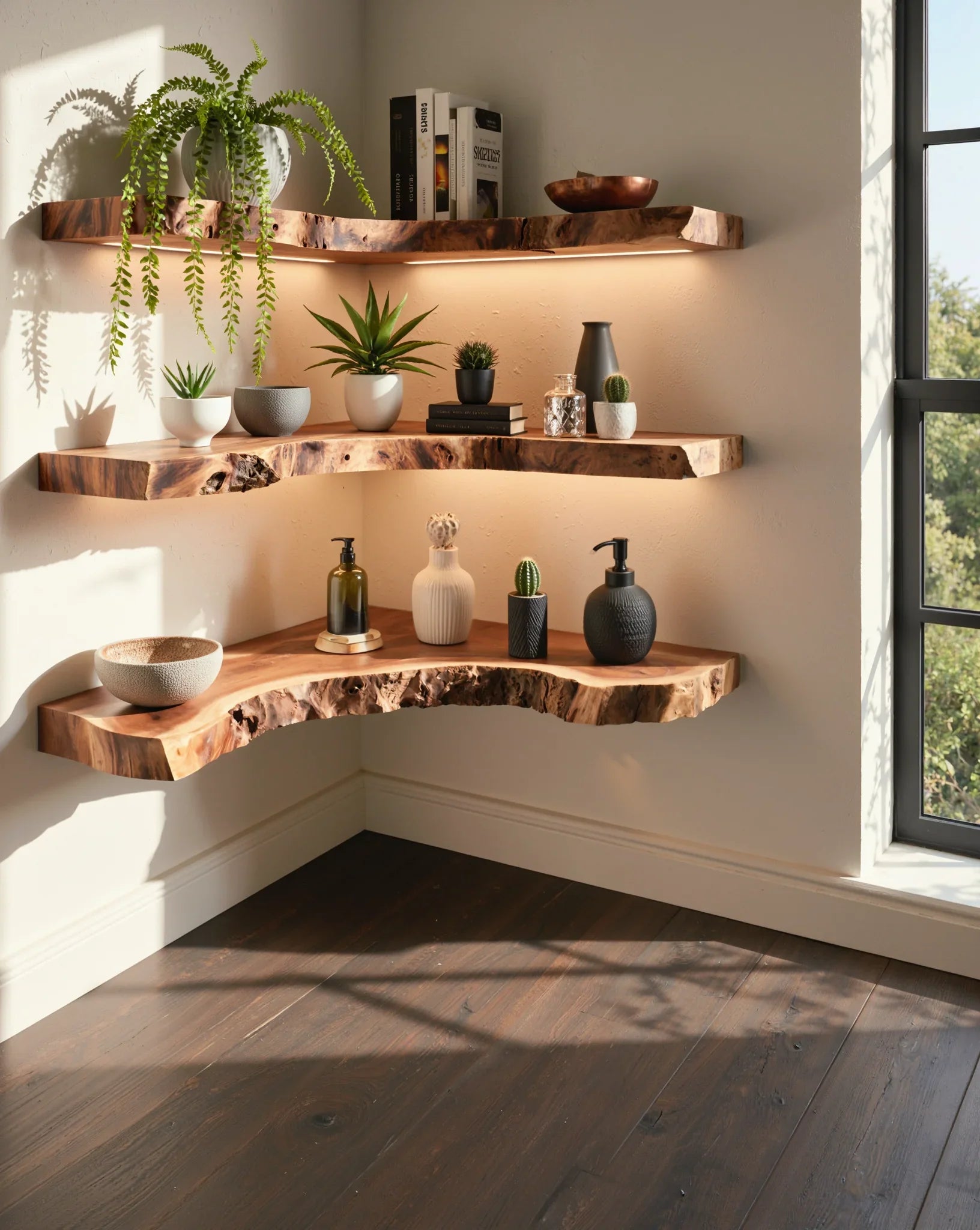
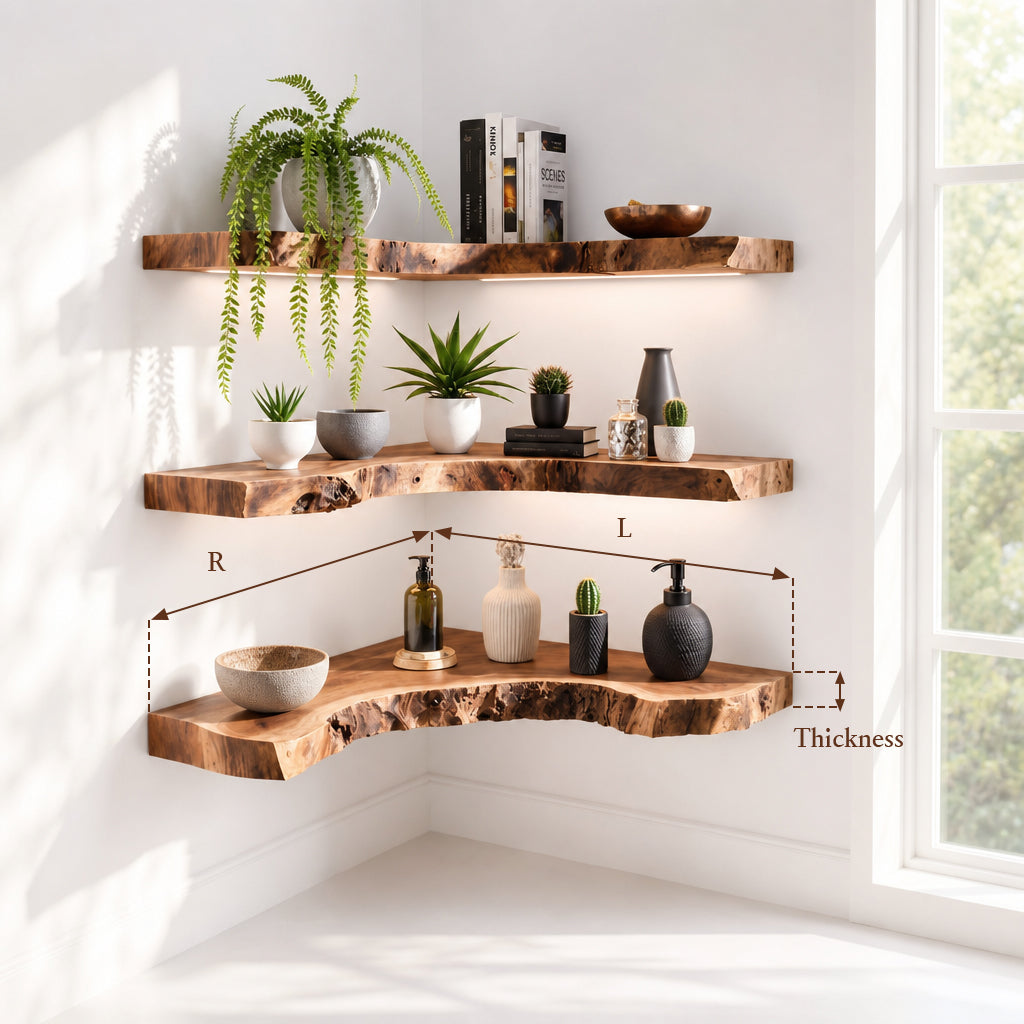
Least maintenance of any furniture. Dust weekly. Oil once a year. They don't get food spills, water rings, or heat damage because nobody puts hot mugs on a wall shelf. The main risk is dust buildup on the top surface where you can't see it.
Browse Ashdeco's floating shelves collection to see the variety of live edge and natural wood options.

Live Edge Nursery Shelves - Artisan Solid Wood Decor
Coffee tables and dining tables
Highest maintenance because they take daily abuse. Oil every 6 months. Use coasters and trivets religiously. Wipe spills within 5 minutes, not "later."
Check out the live edge coffee tables if you're looking for a table that develops character over time rather than falling apart.
Tree bookshelves
The carved branch details collect dust in crevices. Use a soft brush (a clean paintbrush works great) to dust the detailed sections monthly. The flat shelf surfaces just need regular cloth dusting.
Bathroom vanities
The hardest environment for wood. Humidity swings from showers, water splashes, soap residue. Oil every 4-6 months instead of yearly. Wipe water off the surface after each use. A properly maintained solid wood vanity in a bathroom will outlast any MDF vanity, but it does need more attention.
Cat trees
Cats scratch. That's the point. Solid hardwood handles scratching better than carpet-covered MDF because scratches on natural wood add character, while scratches on MDF expose the compressed particle core underneath. You can sand out deep scratches on solid wood and re-oil. Try that on particle board.
When wood changes color (and why that's fine)
Solid hardwood starts with a warm golden tone and gradually darkens to a rich brown over months and years. This patina is considered desirable, not damage.
If you want to slow the darkening: keep the piece out of direct sun and oil less frequently. If you want to speed it up: more sun exposure and regular oiling will deepen the color faster.
Some people panic when they notice color changes. Don't. Your furniture is aging the way wood is supposed to age. That's half the reason you bought solid wood instead of a laminate copy.
Honest downsides of solid wood
It's heavier to move. It does react to humidity changes. It costs more upfront. Scratches and dents happen and can't be hidden under a new layer of veneer.
But dents in solid wood? You can fix them. Place a wet cloth over a dent, press a warm iron over it, and the wood fibers swell back into place. You can sand and re-oil. You can refinish completely after 15 years and it looks brand new.
Try any of that with MDF.
FAQ
How often should I oil solid wood furniture?
Every 6-12 months for most pieces. Coffee tables and dining tables that get daily use benefit from every 6 months. Shelves and bookshelves are fine with once a year. Bathroom vanities need it every 4-6 months due to humidity exposure.
Can I use olive oil on wood furniture?
Don't. Olive oil goes rancid over time and leaves a sticky residue that attracts dust. Use food-safe mineral oil, Danish oil, or tung oil instead.
Is the hardwood Ashdeco uses durable?
Yes. The solid hardwoods used in Ashdeco furniture rate in the medium-hard to hard category on the Janka hardness scale, comparable to black walnut. Durable enough for daily-use furniture while being light enough to mount on walls comfortably.
What's the white ring on my table and how do I remove it?
That's moisture trapped under the finish, usually from a cold glass. Place a clean cloth over the spot and press a warm iron on it for 5-10 seconds. The heat draws the moisture out. Check after each pass.
Does solid wood furniture attract termites?
The hardwoods used in Ashdeco furniture have natural resistance to termites and boring insects. Properly kiln-dried and finished wood is even less attractive to pests. Indoor furniture with a good oil or lacquer finish is very unlikely to have termite issues.
How do I fix a scratch on solid wood?
Light scratches: rub a walnut meat (yes, the nut) along the scratch. The oils fill and darken the mark. Deep scratches: sand lightly with 220-grit sandpaper in the grain direction, then re-oil. You can't do either of these on MDF or laminate.