



















Quick view
- Kitchen Open Shelving: The Honest Pros, Cons, and How to Make It Work
- The Case for Open Shelving
- The Case Against Open Shelving
- What to Store on Open Kitchen Shelves
- Kitchen Open Shelving: Material Choices That Last
- Styling Open Shelves for a Kitchen That Gets Used
- Open Shelving Layout Mistakes to Avoid
- The Hybrid Approach: Best of Both Worlds
- Frequently Asked Questions
- Your Kitchen, Your Rules
Shop this guide
Handcrafted Floating Shelves for Kitchen, made to order in solid wood.
 Sculptural 4-Tier Solid Wood Wall Kitchen Shelf – Handcrafted Organic Spice Rack Floating Display
From $735.00
Sculptural 4-Tier Solid Wood Wall Kitchen Shelf – Handcrafted Organic Spice Rack Floating Display
From $735.00
 Rustic Solid Wood Scalloped Spice Rack - Handcarved Wavy Edge Kitchen Wall Shelf for Jars & Pantry Storage
From $445.00
Rustic Solid Wood Scalloped Spice Rack - Handcarved Wavy Edge Kitchen Wall Shelf for Jars & Pantry Storage
From $445.00
 Wavy 5-Tier Solid Wood Wall Kitchen Shelf | Handcrafted Spice Rack Floating Display Shelving
From $496.00
Wavy 5-Tier Solid Wood Wall Kitchen Shelf | Handcrafted Spice Rack Floating Display Shelving
From $496.00
 Handcrafted Live Edge Floating Whiskey & Wine Bar – Special Gift for Sports & Wine Loving Dad
From $529.00
Handcrafted Live Edge Floating Whiskey & Wine Bar – Special Gift for Sports & Wine Loving Dad
From $529.00
 Handcrafted Live Edge Floating Whiskey Bar – Gift for Dad Who Loves Fine Spirits
From $429.00
Handcrafted Live Edge Floating Whiskey Bar – Gift for Dad Who Loves Fine Spirits
From $429.00
 Sculptural Live Edge Solid Wood Outdoor Bar – Dream Bar for Father’s Whiskey Collection
From $634.00
Sculptural Live Edge Solid Wood Outdoor Bar – Dream Bar for Father’s Whiskey Collection
From $634.00
Kitchen Open Shelving: The Honest Pros, Cons, and How to Make It Work
Open shelving in kitchens sparks strong opinions. Designers love the airy, editorial look. Practical cooks worry about dust, grease, and the pressure to keep everything Instagram-ready at all times. Both sides have a point.
The truth about kitchen open shelving sits somewhere in the middle. It works brilliantly in some kitchens and fails miserably in others - and the difference usually comes down to how you plan it, what you store on it, and whether you're honest about your own tidiness habits.
This guide breaks down the real advantages and drawbacks, shows you what belongs on open shelves (and what doesn't), and offers practical styling strategies for kitchens that actually get used.
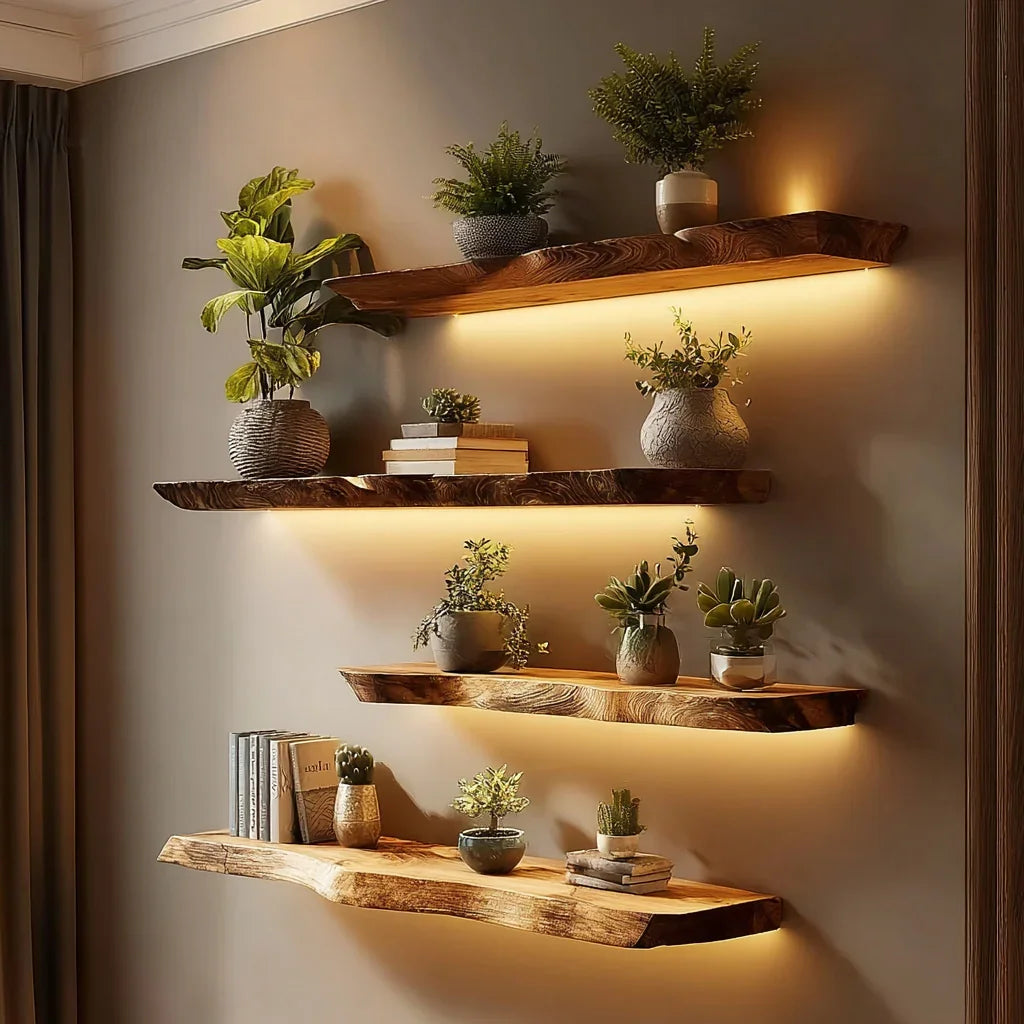
The Case for Open Shelving
Open shelves earned their popularity for real reasons, aesthetics. Here's what they genuinely deliver:
Visual openness
Upper cabinets make kitchens feel boxed in, especially in smaller spaces. Removing them - or replacing one section with open shelves - immediately opens the sightline. The room feels taller, wider, and lighter. In galley kitchens or apartments with limited square footage, this visual expansion is significant.
Easy access
No doors to open, no handles to grab. Everyday dishes, glasses, and mugs sit right where you can reach them. For items you use daily, open shelves cut out a step in every meal prep and cleanup cycle. Over a year, that's thousands of small frictions eliminated.
Forced organization
This one's counterintuitive. Closed cabinets hide mess; open shelves expose it. For people who respond well to visual accountability, open shelving creates a natural incentive to stay organized. You curate what's visible, which means you also curate what you own.
Cost savings
Upper cabinets are expensive. Custom cabinetry can run $300-$800 per linear foot. A set of solid wood floating shelves costs a fraction of that and installs in an afternoon. If you're renovating on a budget, replacing one wall of uppers with open shelves saves real money.
Display opportunity
Kitchens don't have to be purely utilitarian. A set of handmade ceramic bowls, a few copper measuring cups, or a collection of vintage spice jars - open shelves let you display things you've collected. The kitchen becomes a room with personality, a cooking station.
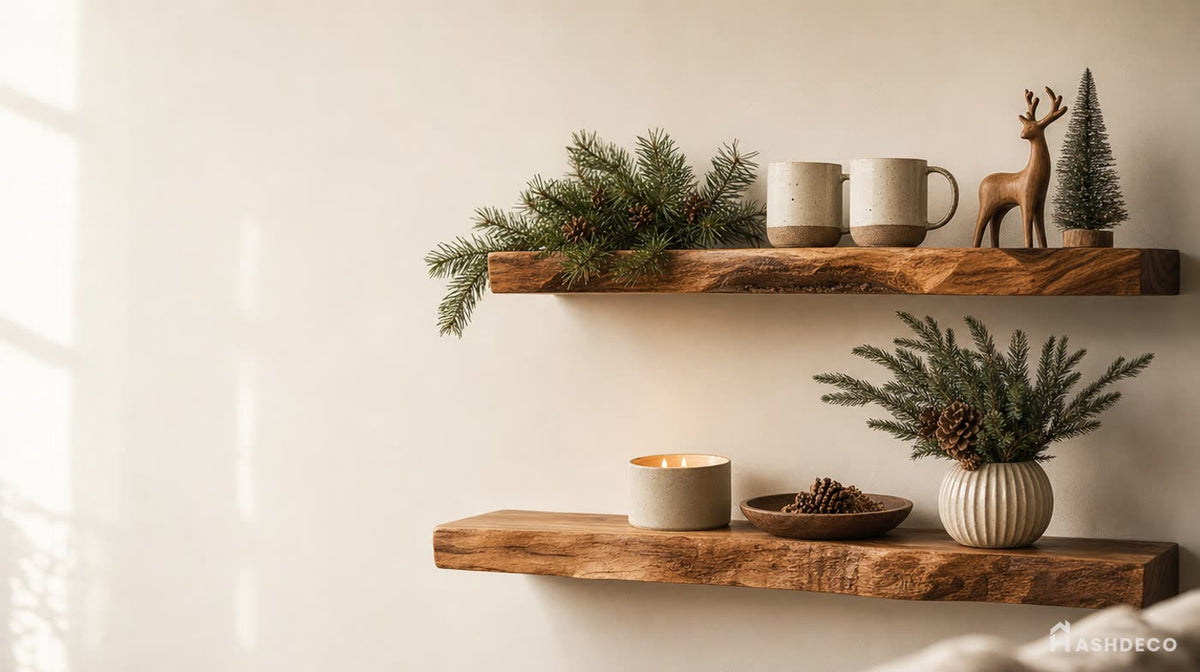


The Case Against Open Shelving
Now the honest part. Open shelving has real downsides, and pretending otherwise leads to regret.
Dust and grease accumulation
Cooking generates airborne grease, especially if you fry, sauté, or use a gas stove. That grease lands on everything , including items on open shelves. Dishes you don't use daily develop a sticky film that requires washing before use. Dust compounds the problem, mixing with grease to form a grimy coating.
The fix: Place open shelves away from the stove. The sweet spot is at least 4-6 feet from the cooktop. A good range hood that vents externally (not a recirculating filter) reduces airborne grease by 70-80%.
Constant styling pressure
Open shelves look great in photos because someone spent 45 minutes arranging them. In daily life, you grab a mug, cook dinner, and don't perfectly replace everything. If visual clutter stresses you out, open shelving becomes a source of low-level anxiety rather than joy.
The fix: Use open shelves for a curated selection of items you don't move often (display pieces, cookbooks, plants). Keep daily-use items in a lower cabinet or on a separate shelf near the sink.
Limited storage capacity
A standard upper cabinet holds roughly 30% more than an open shelf in the same footprint, because cabinets stack items behind doors at various depths. If you're working with a compact kitchen and own a lot of kitchenware, losing that hidden storage hurts.
The fix: Hybrid approach. Replace one section of upper cabinets with open shelves, not all of them. You get the visual benefit without sacrificing all your storage.

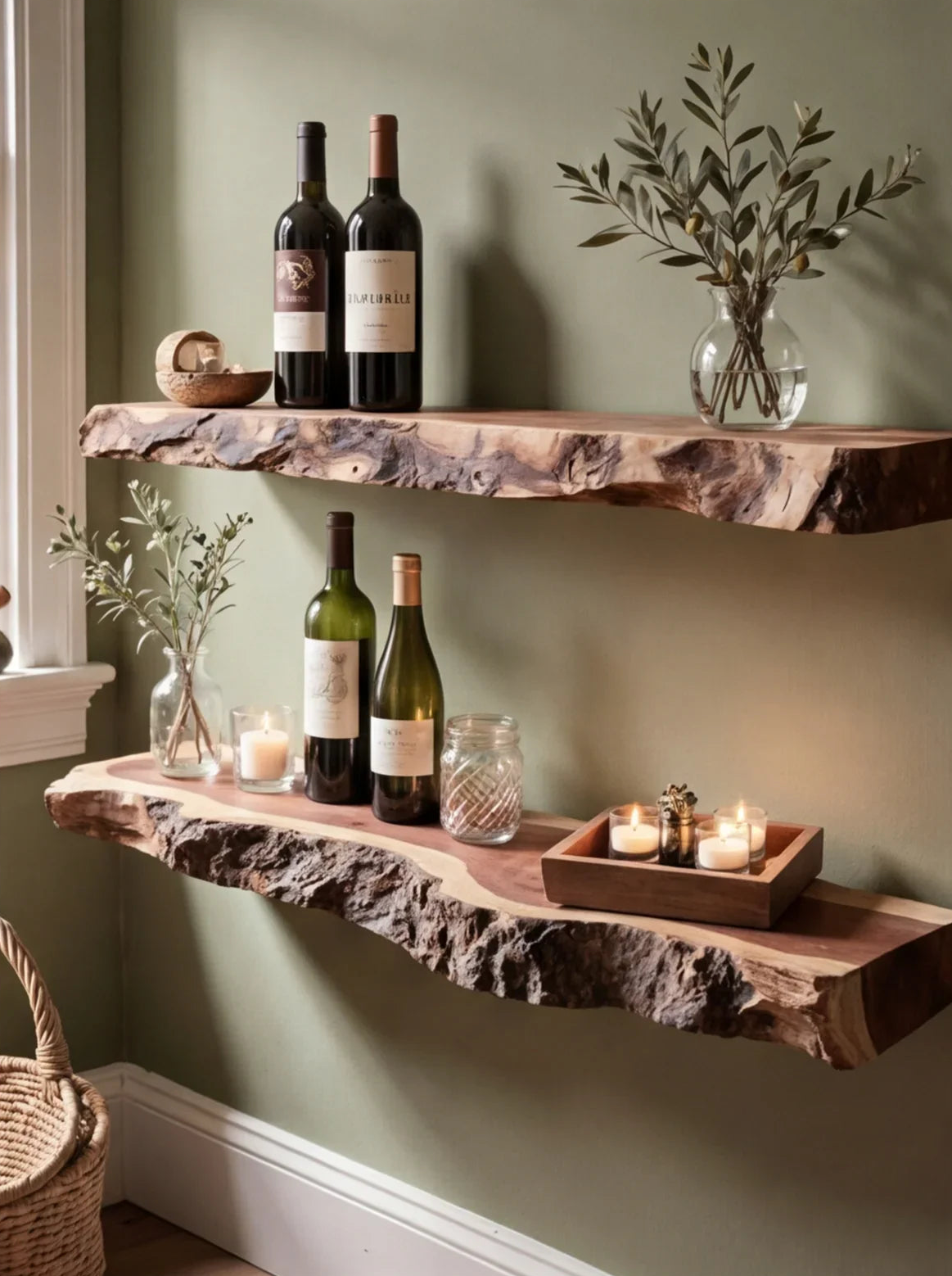
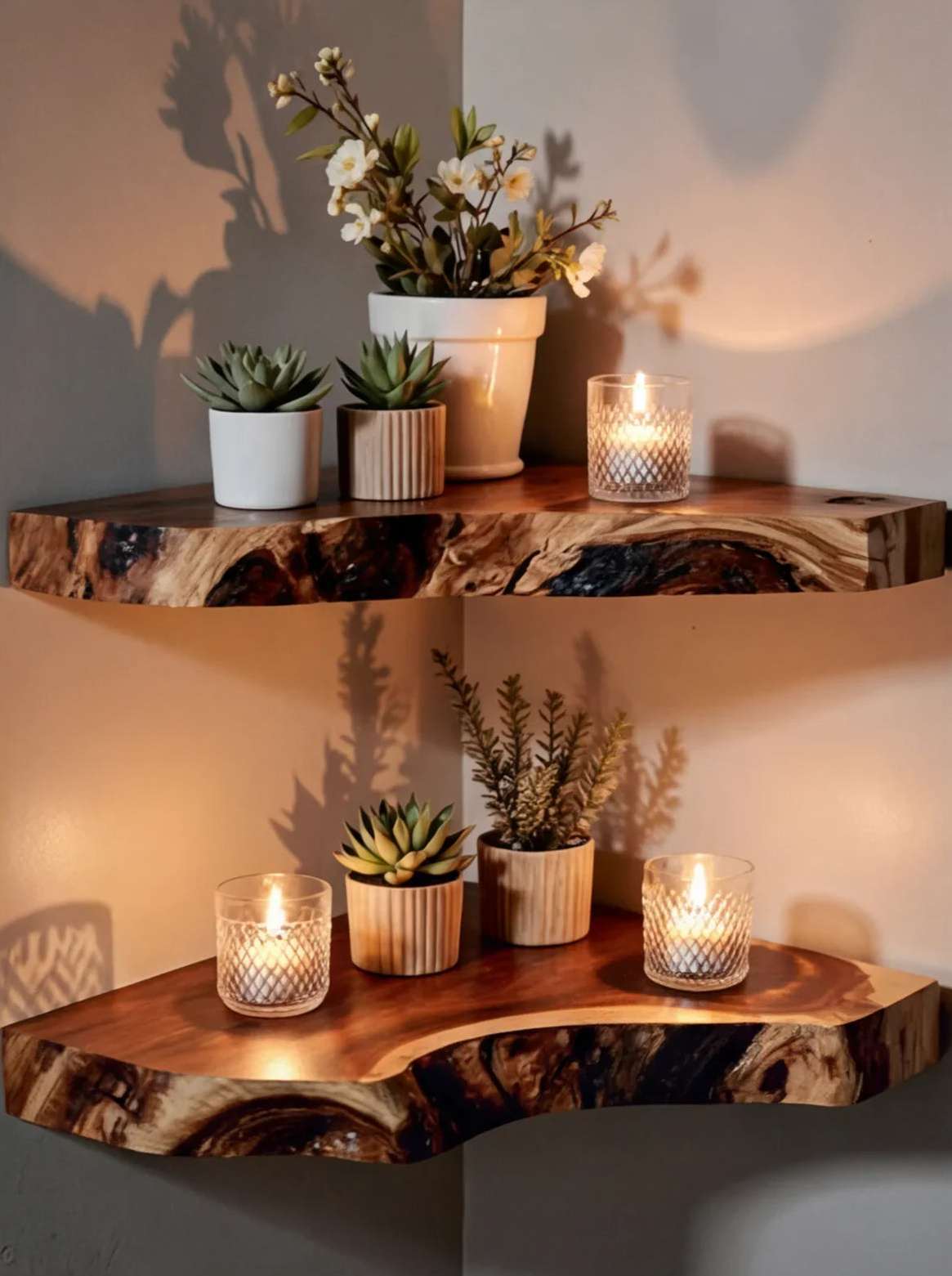
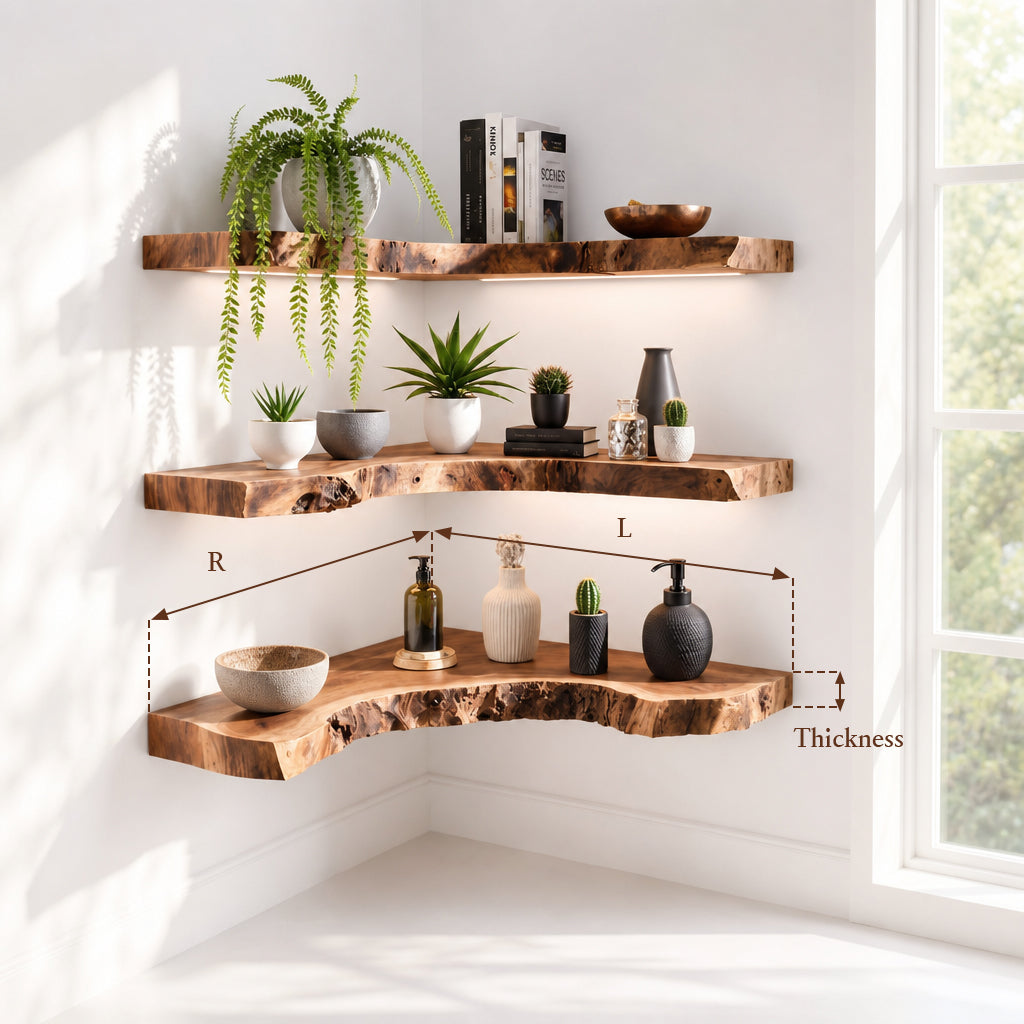
Live Edge Floating Kitchen Shelf – Solid Wood Wall-Mounted Storage
What to Store on Open Kitchen Shelves
The secret to kitchen open shelving that works long-term: be selective. Not everything belongs on display.
Good candidates:
- Everyday dishes and bowls. Items you use and wash daily don't collect dust. Keep a stack of 4-6 plates and bowls , enough for regular meals, not your entire set.
- Mugs and glasses. Face them forward, rim-up. Use matching or coordinated sets for a clean look, or embrace the eclectic mix if that's your style.
- Cookbooks. Three to five favorites, spines out. They add color, personality, and are actually useful within arm's reach.
- Small plants. Herbs (basil, rosemary, thyme) in small pots are both decorative and functional. Trailing plants like pothos work on upper shelves.
- Oils, vinegars, and frequently used spices. Transfer to uniform bottles or jars. Glass with labels looks intentional; mismatched plastic containers don't.
Bad candidates:
- Rarely used appliances. A stand mixer on an open shelf collects dust and wastes prime display space.
- Tupperware and plastic containers. They look cluttered regardless of arrangement. Keep these in a drawer or cabinet.
- Bulk pantry items. Cereal boxes, chip bags, and bulk rice belong in a pantry or closed cabinet. No amount of styling makes a Costco-sized bag of granola look good on a floating shelf.
- Cleaning supplies. Keep dish soap, sponges, and cleaning sprays under the sink. They kill the aesthetic instantly.
Kitchen Open Shelving: Material Choices That Last
Kitchen shelves face tougher conditions than shelves in a bedroom or living room. Humidity, heat, splashes, and grease exposure mean material choice matters more here than anywhere else in the house.
- Solid hardwood. Walnut, oak, and ash handle kitchen conditions well when properly sealed. They resist warping better than softwoods and develop a richer patina over time. A polyurethane or tung oil finish provides moisture protection.
- Stainless steel. Indestructible and easy to clean, but cold-looking. Best in industrial or professional-style kitchens.
- MDF or particleboard. Avoid these in kitchens. Moisture causes swelling and eventual crumbling. The lower price isn't worth the replacement cycle.
- Marble or stone. Beautiful but heavy, expensive, and porous (stains from oil and wine). Requires sealing and careful maintenance.
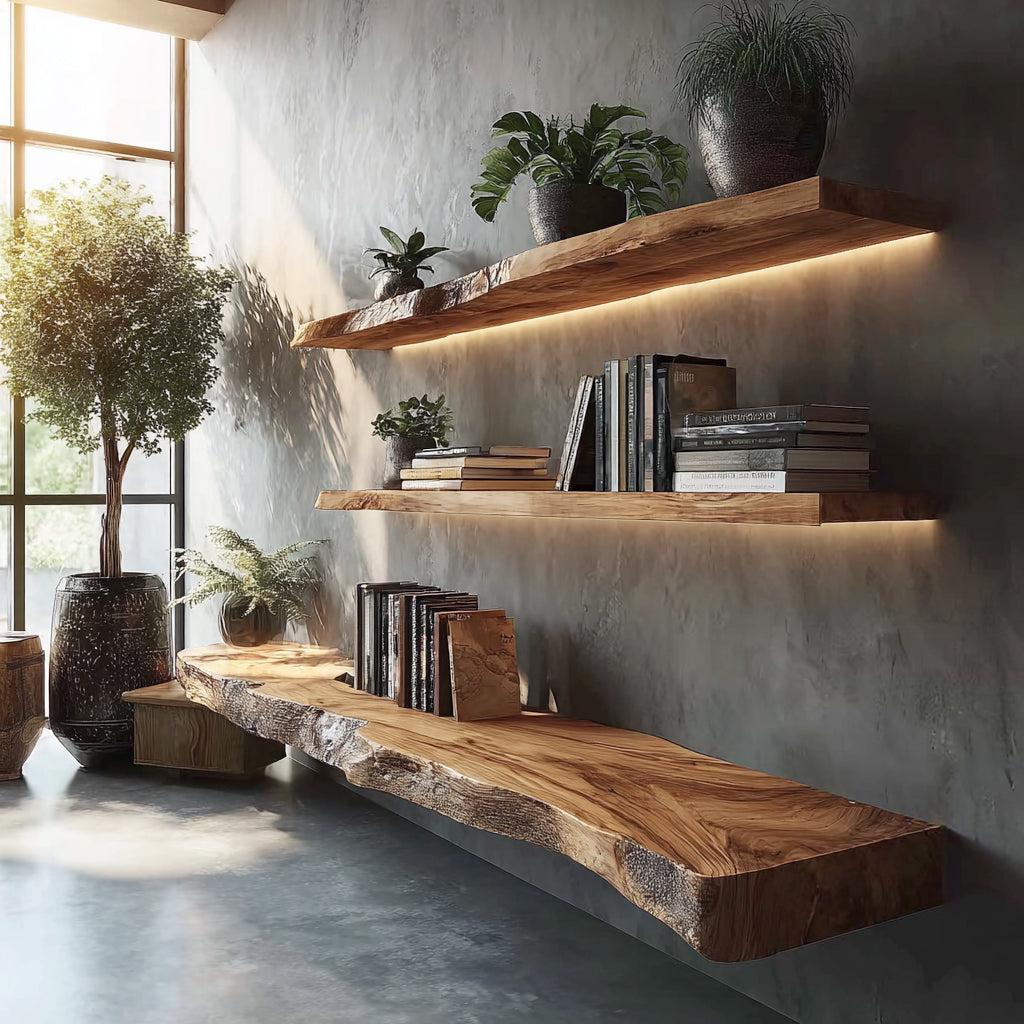
For most kitchens, solid hardwood floating shelves hit the right balance of warmth, durability, and cost. Check out Ashdeco's floating shelf collection , each shelf is handcrafted from solid wood by Vietnamese artisans and sealed to handle kitchen conditions.
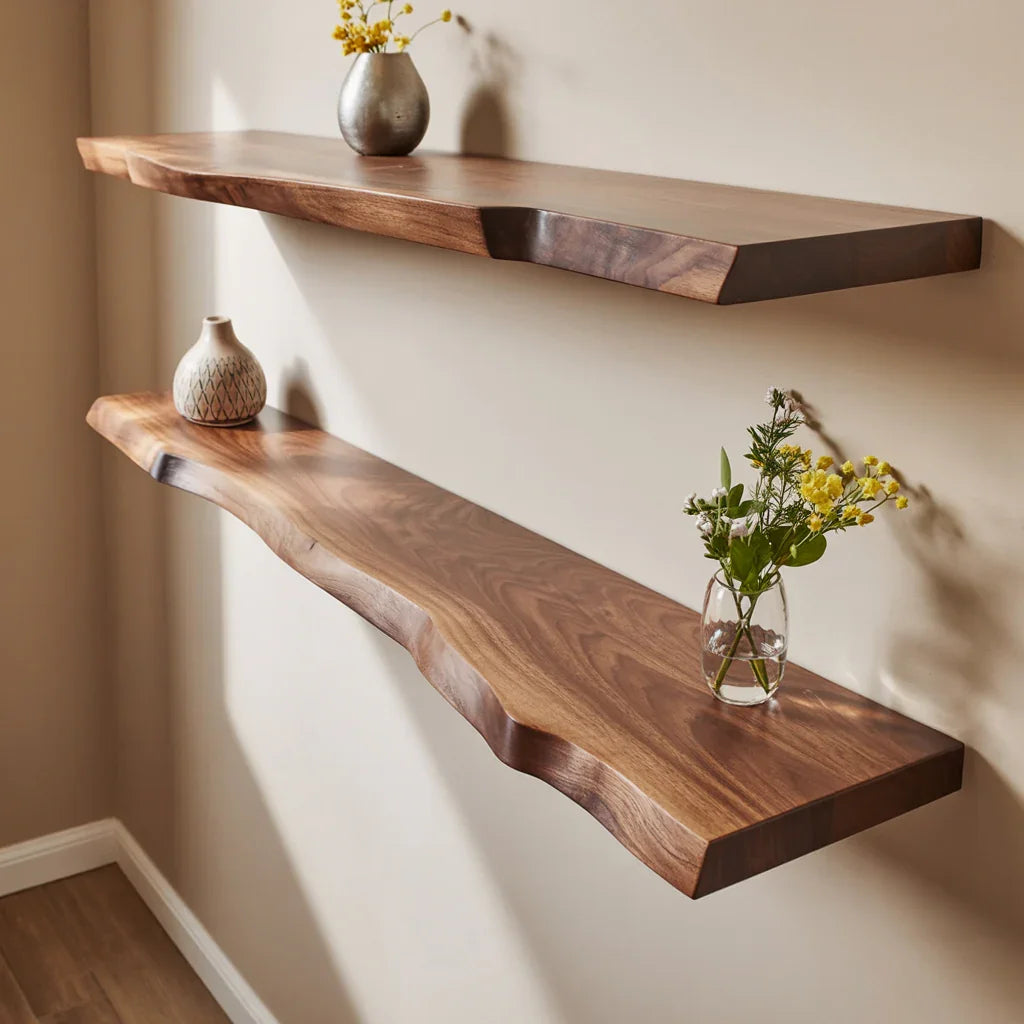
Styling Open Shelves for a Kitchen That Gets Used
Forget the magazine spreads where every shelf holds exactly three items in perfect alignment. Here's how to style kitchen open shelving for real life:
- Layer front to back. Place taller items (bottles, vases, cutting boards) at the back. Shorter items (bowls, jars) in front. This creates depth without clutter.
- Group by function. Coffee station on one shelf (mugs, pour-over, sugar jar). Cooking essentials on another (oils, salt cellar, pepper mill). Grouping by use makes the arrangement practical, pretty.
- Leave breathing room. Don't fill every inch. Leave 20-30% of each shelf empty. Negative space makes the displayed items look intentional, not crammed.
- Add one non-kitchen item per shelf. A small plant, a ceramic figurine, a framed postcard. It breaks the "everything here is functional" monotony and adds personality.
- Use consistent materials. If your jars are glass, keep them all glass. If your plates are white ceramic, don't mix in a random melamine set. Consistency reads as curated; randomness reads as messy.

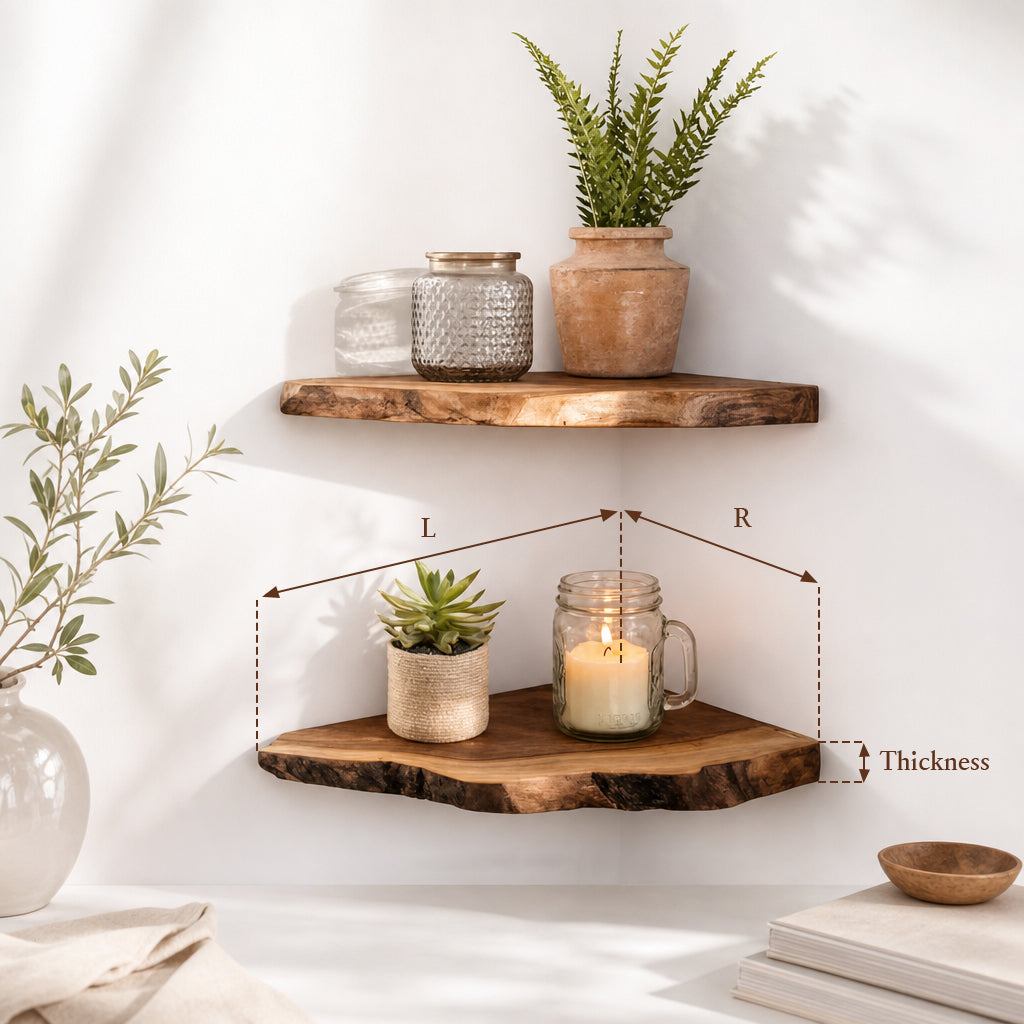
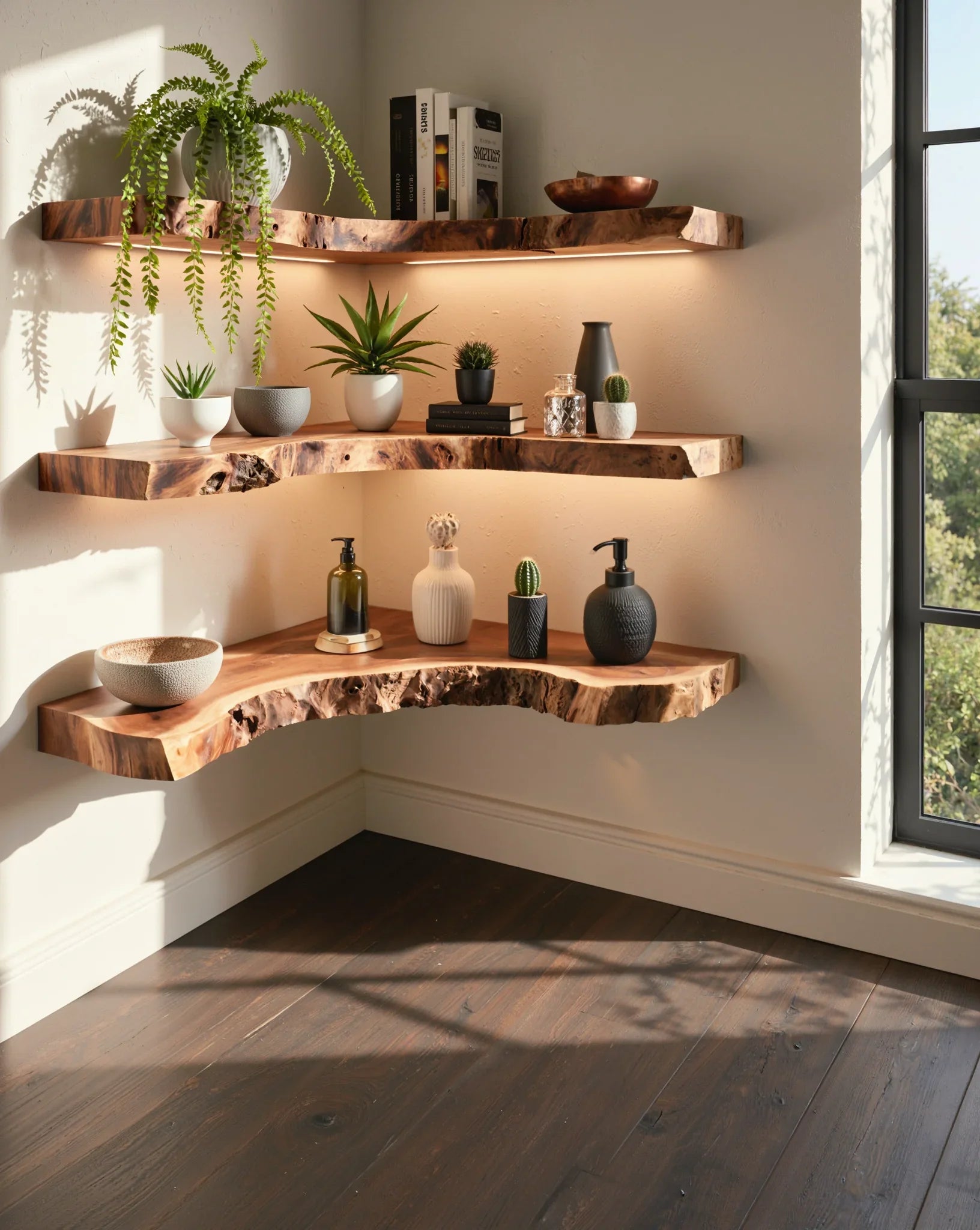
Rustic Live Edge Floating Wall Shelf – Solid Wood Home Decor
Open Shelving Layout Mistakes to Avoid
These are the errors that turn a good idea into a "why did we do this?" situation:
- Shelves too close to the stove. Grease splatter zone extends 3-4 feet from a cooktop. Shelves within that range need constant cleaning.
- Mounting too high. If you need a step stool to reach the top shelf, it's too high. Accessible shelves sit between 48-72 inches from the floor.
- Too many shelves. Two or three shelves on a section of wall is plenty. Five stacked shelves look like a retail display, not a kitchen.
- Ignoring weight limits. Stacking heavy dinnerware sets on thin shelves leads to sagging and, eventually, failure. Check the weight rating. Solid wood on proper brackets handles more than particle board on basic pins.
- No lighting. Open shelves in a dimly lit corner look like an afterthought. Under-shelf LED strips or a nearby pendant light makes displayed items pop.
The Hybrid Approach: Best of Both Worlds
You don't have to go all-in. The most functional kitchens use a mix:
- Open shelves flanking a window. The window provides visual break; shelves on either side frame it with displayed items.
- Open shelves above the sink, cabinets above the stove. This keeps daily dishes accessible while protecting items near the cooking zone.
- One feature wall of open shelving, standard cabinets everywhere else. You get the design impact without sacrificing total storage.
- Open shelves on top, closed cabinets below. Lower cabinets hide the messy essentials; upper open shelves display the pretty stuff.
This hybrid strategy is what most professional kitchen designers actually recommend. It acknowledges that kitchens are working rooms, not showrooms , but they can still look good.
Frequently Asked Questions
Do open kitchen shelves get dusty quickly?
Items used daily (plates, mugs, glasses) stay dust-free because you're constantly handling them. Display-only items need a wipe-down every 1-2 weeks, depending on your cooking habits and ventilation. A good range hood reduces dust and grease accumulation significantly.
Is kitchen open shelving cheaper than cabinets?
Significantly. A pair of solid wood floating shelves costs $50-$200 total. The same wall section in custom cabinets runs $600-$2,400. Even prefab cabinets cost 3-5 times more than quality open shelving.
What's the best wood for kitchen open shelves?
Hardwoods like walnut, oak, ash, and maple are ideal. They resist warping from heat and humidity better than softwoods (pine, cedar). Seal with a food-safe finish like tung oil or polyurethane for moisture protection.
How deep should kitchen open shelves be?
10-12 inches is the standard. This accommodates dinner plates (10-11 inches) and leaves a small lip at the front. Deeper than 14 inches makes items at the back hard to reach and visually heavy.
Can I install open shelves on a tile backsplash?
Yes, but it requires a masonry drill bit and tile-specific anchors. Drill slowly to avoid cracking tiles. Alternatively, mount a French cleat above the tile line and hang shelves from it. If you're unsure, hire a professional , cracked tile is expensive to replace.
Will open shelving lower my home's resale value?
It depends on the market. In design-forward areas, open shelving can be a selling point. In traditional markets, some buyers see missing cabinets as incomplete. The safe play: keep the cabinet hardware and fill holes if you switch to shelves, so the conversion is reversible.
Your Kitchen, Your Rules
Kitchen open shelving isn't for everyone, and that's fine. But if you cook regularly, value accessibility, and don't mind a weekly wipe-down, it transforms how a kitchen looks and functions. Start small , replace one section of upper cabinets with a pair of solid wood floating shelves and live with it for a month. You'll know quickly whether it suits your lifestyle.
Ashdeco's floating shelves are handcrafted from solid wood by Vietnamese artisans , built to handle real kitchen life, photo shoots. Explore the full collection and find the right fit for your space.