




















Quick view
- The gap between floating shelf inspiration and floating shelf reality
- What the shelf is made of matters more than how you style it
- Three mounting systems (and when each one makes sense)
- Five styling rules that actually hold up
- Room-by-room: what changes and what doesn't
- Common mistakes that ruin the look
- Frequently asked questions
Shop this guide
Handcrafted Floating Shelves, made to order in solid wood.
 Sculptural Overlapping Circular Solid Wood Wall Shelf with Multi Tier Display
From $1,354.00
Sculptural Overlapping Circular Solid Wood Wall Shelf with Multi Tier Display
From $1,354.00
 Mountain Landscape Relief Solid Wood Floating Shelf Live Edge Display Ledge
From $1,154.00
Mountain Landscape Relief Solid Wood Floating Shelf Live Edge Display Ledge
From $1,154.00
 Enchanted Forest Circular Wall Shelf - Round Carved Timber Mushroom Portal
From $1,023.00
Enchanted Forest Circular Wall Shelf - Round Carved Timber Mushroom Portal
From $1,023.00
 Cottagecore Arched Wood Wall Niche - Hand-Carved Fairy Mushroom Alcove Shelf
From $1,356.00
Cottagecore Arched Wood Wall Niche - Hand-Carved Fairy Mushroom Alcove Shelf
From $1,356.00
 Sculptural Hand-Carved Mushroom Solid Wood Corner Floating Shelf & Biomorphic Wall Display Ledge
From $345.00
Sculptural Hand-Carved Mushroom Solid Wood Corner Floating Shelf & Biomorphic Wall Display Ledge
From $345.00
 Sculptural Hand-Carved Mushroom Solid Wood Floating Shelves & Biomorphic Wall Display Ledges
From $345.00
Sculptural Hand-Carved Mushroom Solid Wood Floating Shelves & Biomorphic Wall Display Ledges
From $345.00
The gap between floating shelf inspiration and floating shelf reality
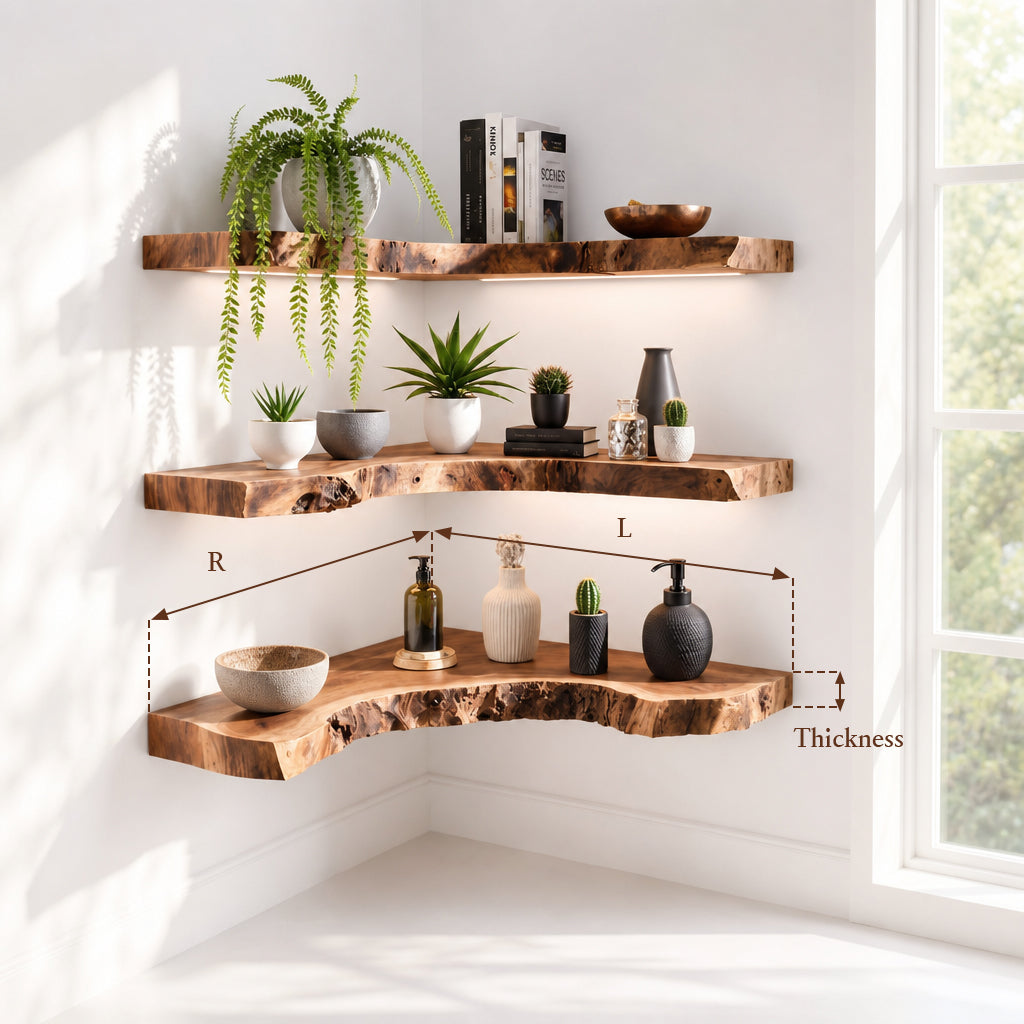
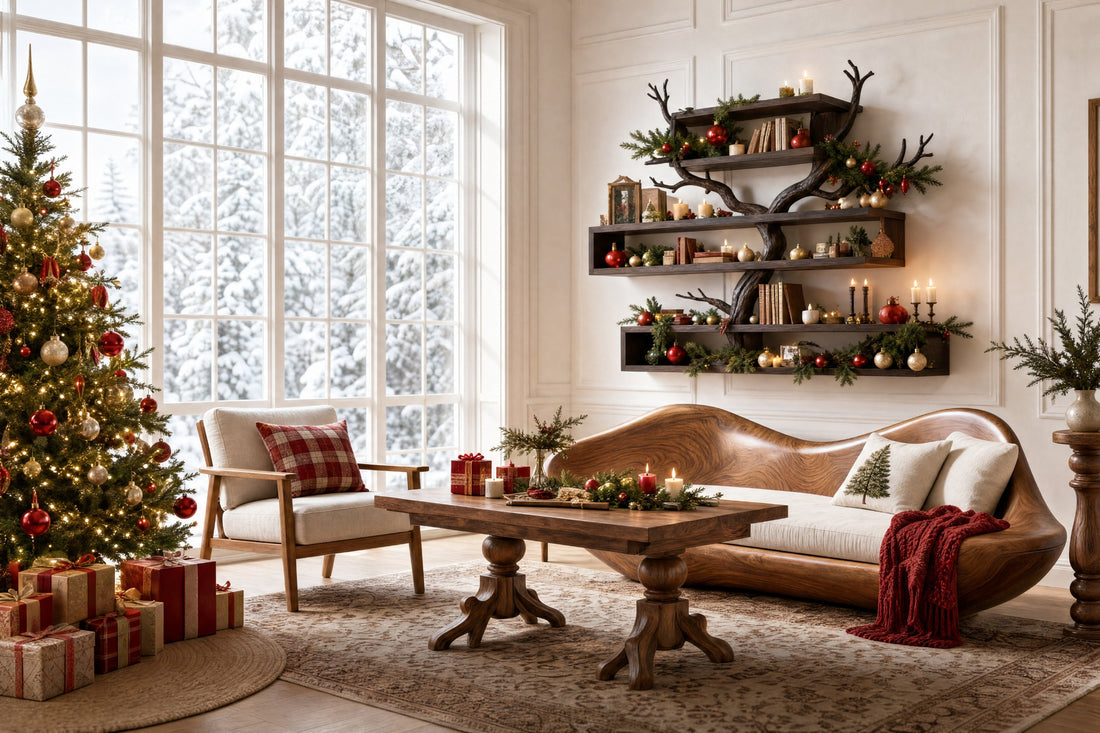
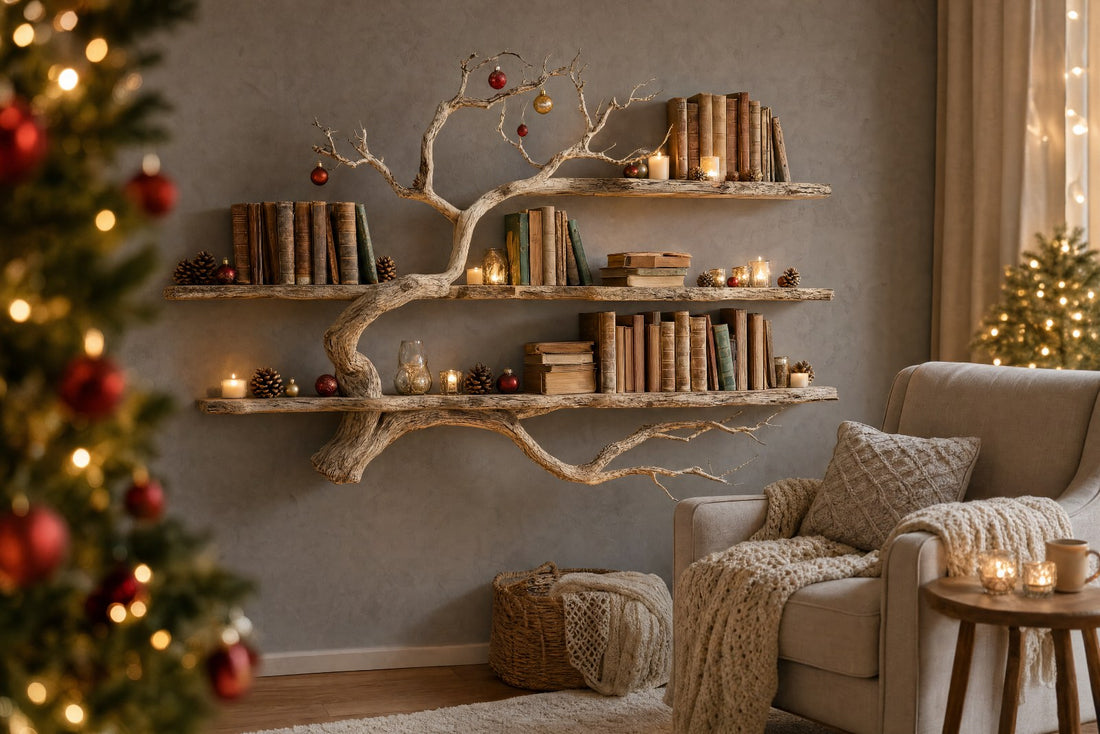
You've seen the photos. Three shelves in a staggered arrangement, each holding a curated mix of books, a small plant, and some kind of ceramic object. Warm light. Clean wall. Everything perfectly spaced.
Then you install your own shelves. Week one looks great. Week three, the shelves are holding mail, keys, a phone charger, and whatever else landed there. The plant is dead or gone. The ceramic thing got pushed behind a stack of bills.
The problem isn't your taste. It's that most floating shelf content online shows you what shelves look like right after staging and stops there. Nobody talks about why some setups stay looking good and others degrade within a month. That's mostly about materials, mounting, and a few simple rules for what goes on the shelf.

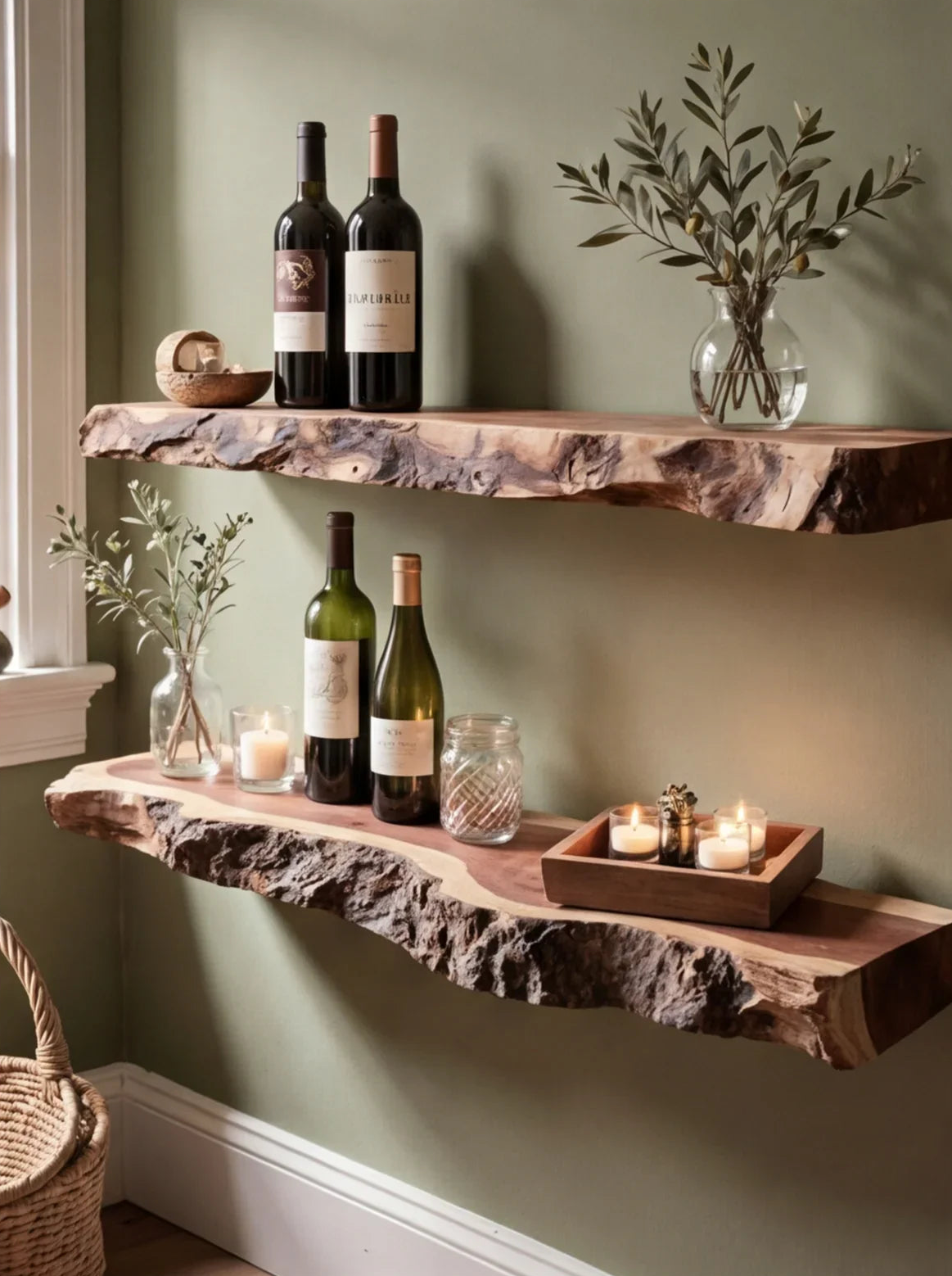
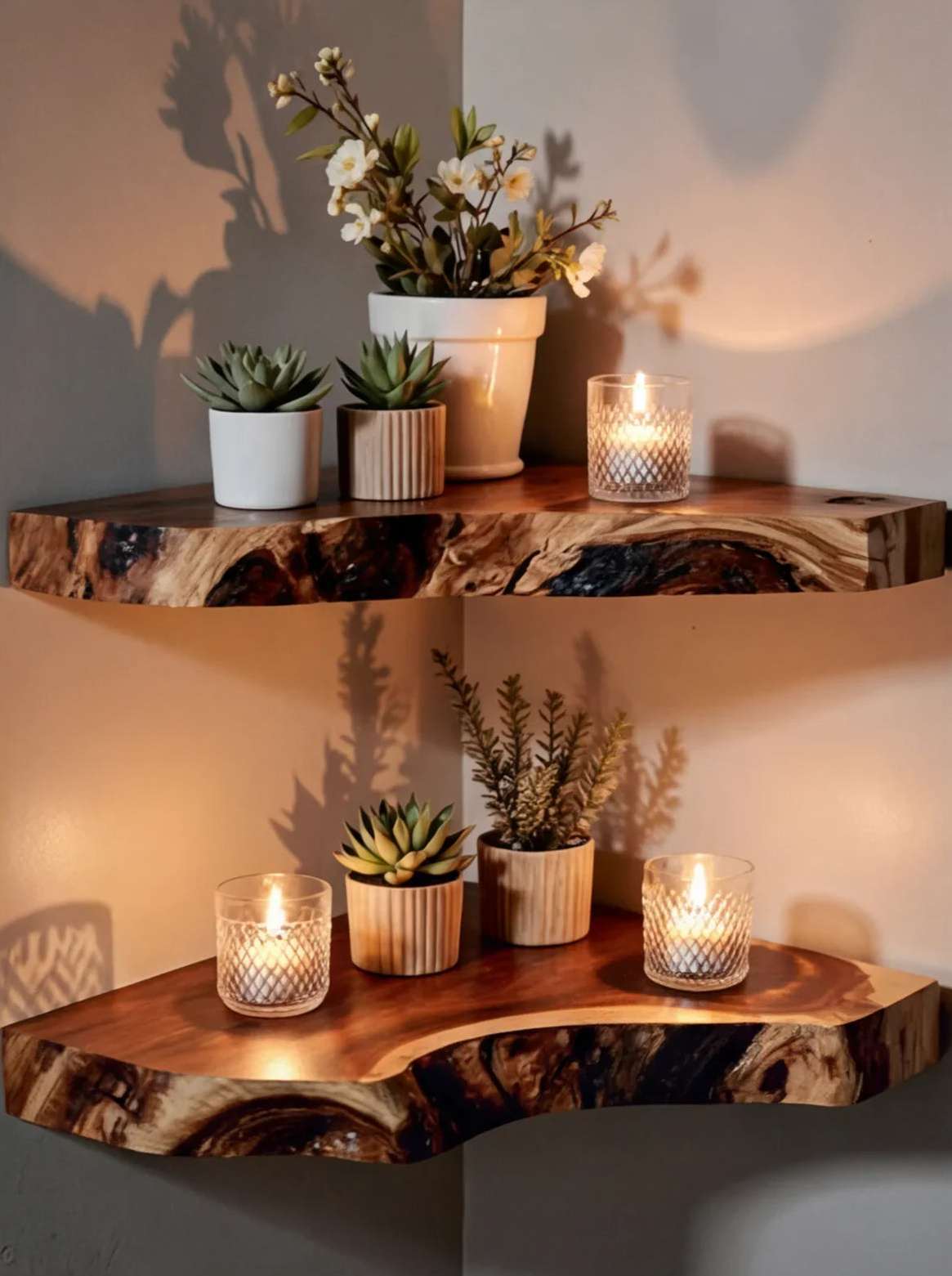
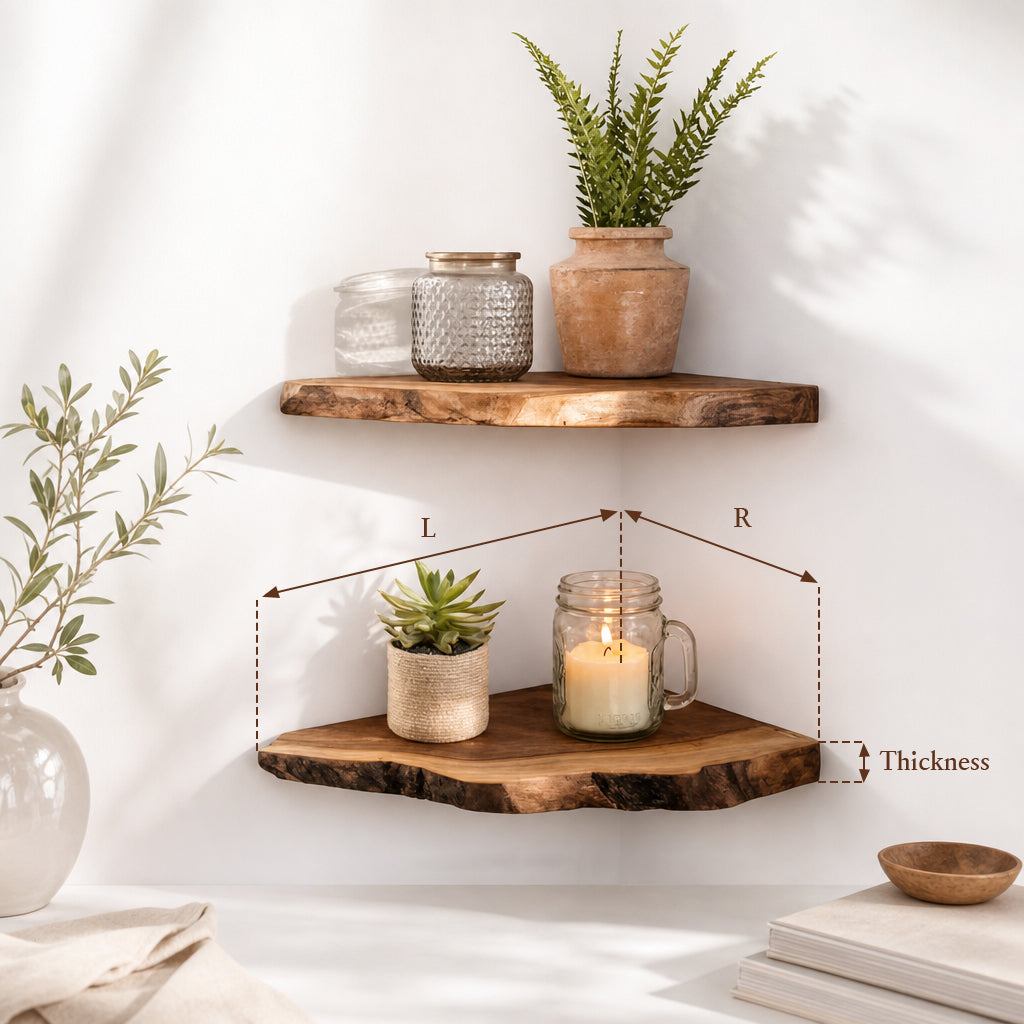
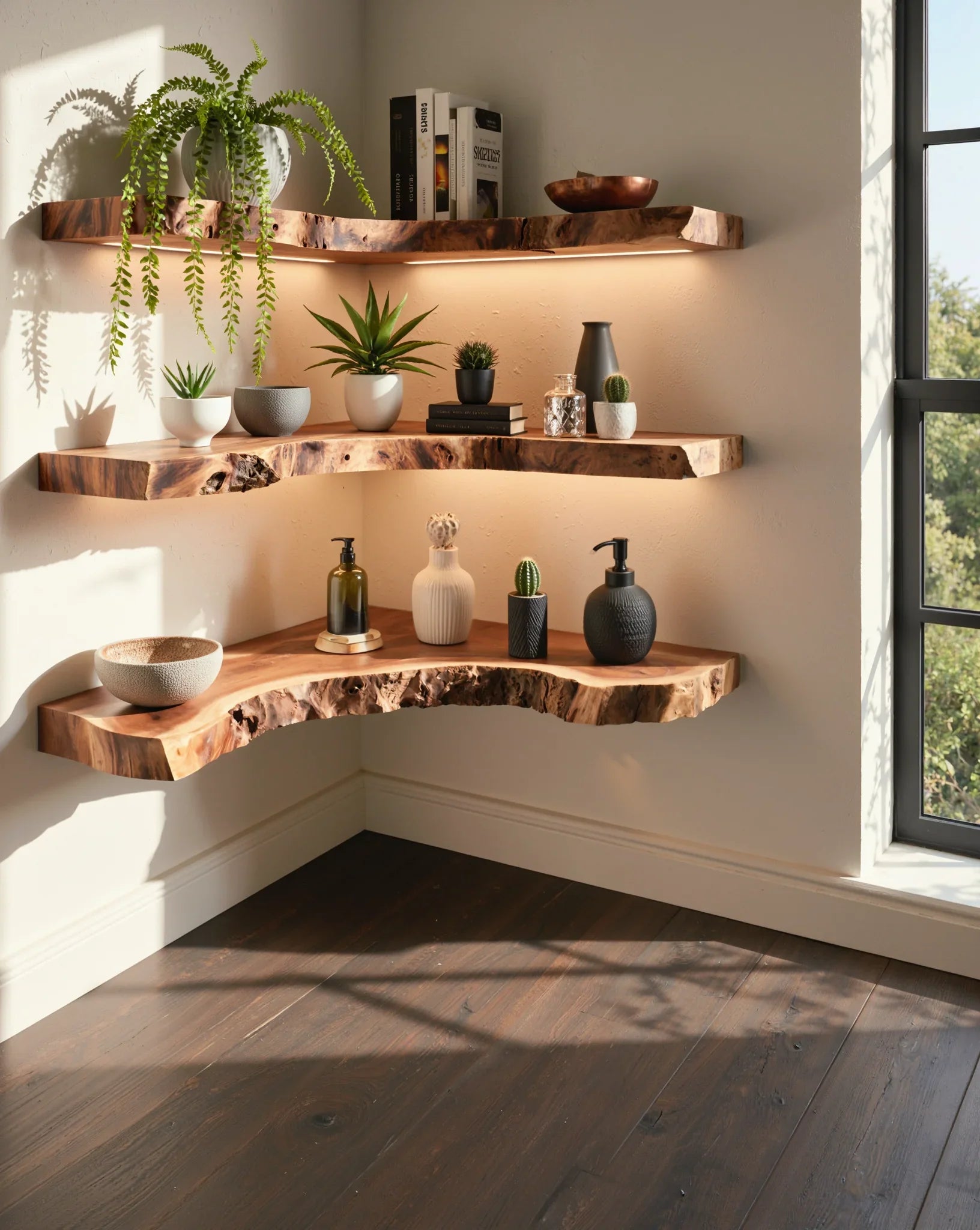
Live Edge Corner Floating Shelves — from $140
What the shelf is made of matters more than how you style it
Most people shop for floating shelves by appearance: color, length, thickness. The material gets a glance at best. But the material determines whether the shelf stays flat, holds weight, and looks the same after two years.
MDF with veneer or laminate. The cheapest option. MDF is medium-density fiberboard, which is essentially sawdust and resin pressed into a board. It's smooth, consistent, and easy to paint. The problem is weight capacity and moisture. MDF sags under load over time, especially on longer spans. A 36-inch MDF shelf holding a row of books will develop a visible bow within 6 to 12 months. Get it wet (bathroom, kitchen) and it swells permanently. Most shelves under $30 are MDF.
Particle board with wrap. Even cheaper than MDF. Some budget sellers use particle board with a photo-printed vinyl wrap that mimics wood grain. These shelves weigh almost nothing. They look passable in product photos and terrible in person. The vinyl peels at the edges. The board cracks if you over-tighten the mounting hardware. Skip these entirely.
Pine and softwoods. Real wood, but soft. Pine dents easily. If you put a heavy object on a pine shelf and leave it for months, you'll see an impression in the surface. Pine also tends to warp if the room's humidity changes much. On the upside, pine takes stain well and costs less than hardwoods. Works fine for decorative-only shelves in dry rooms.
Hardwoods (oak, walnut, ash, acacia). Dense, heavy, resistant to sagging and impact. A 36-inch hardwood shelf can hold 40+ pounds without deflecting visibly. The grain pattern adds visual interest that you can't fake with laminate. These shelves cost more upfront but don't need replacement. A solid oak shelf installed today will still be flat and functional in 10 years.
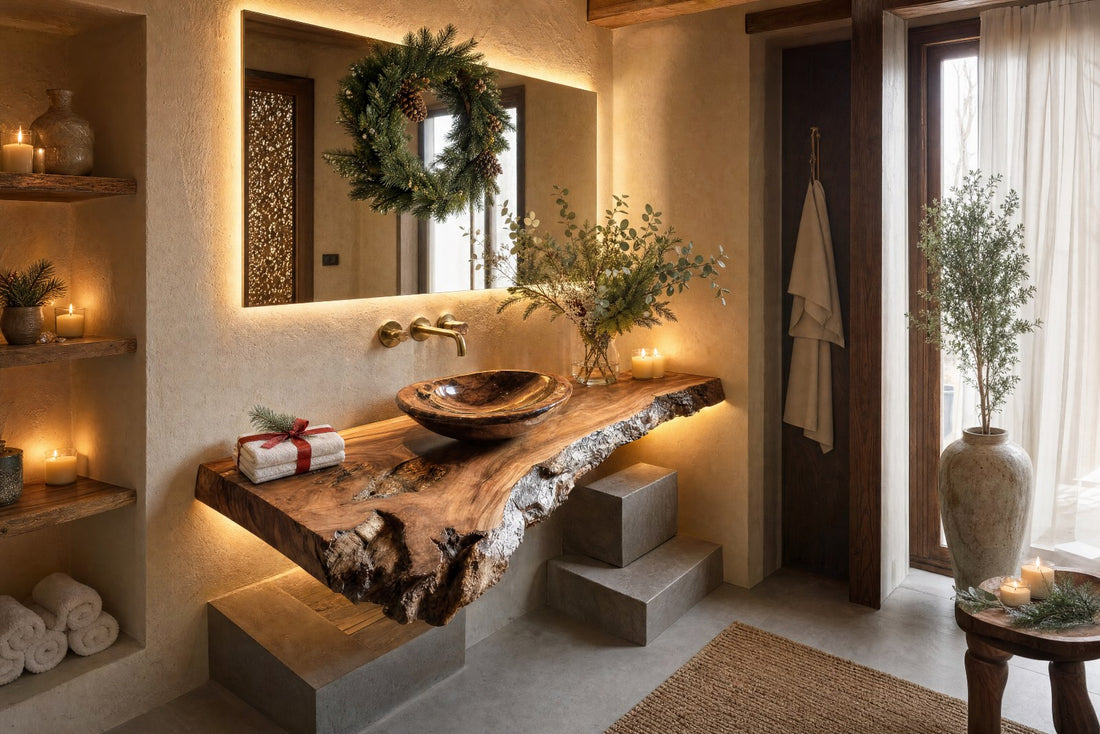
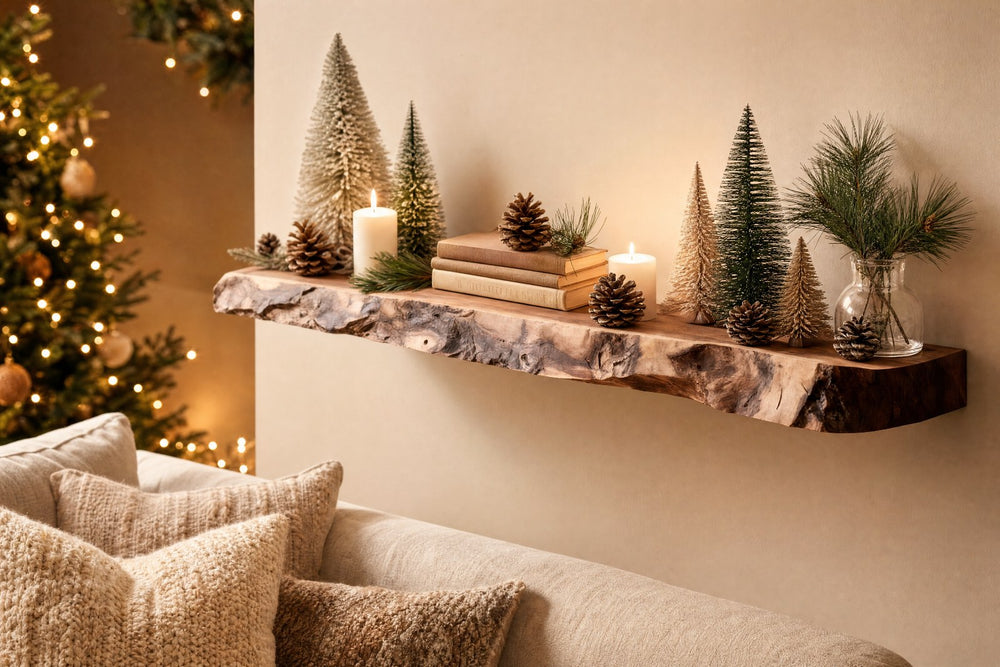
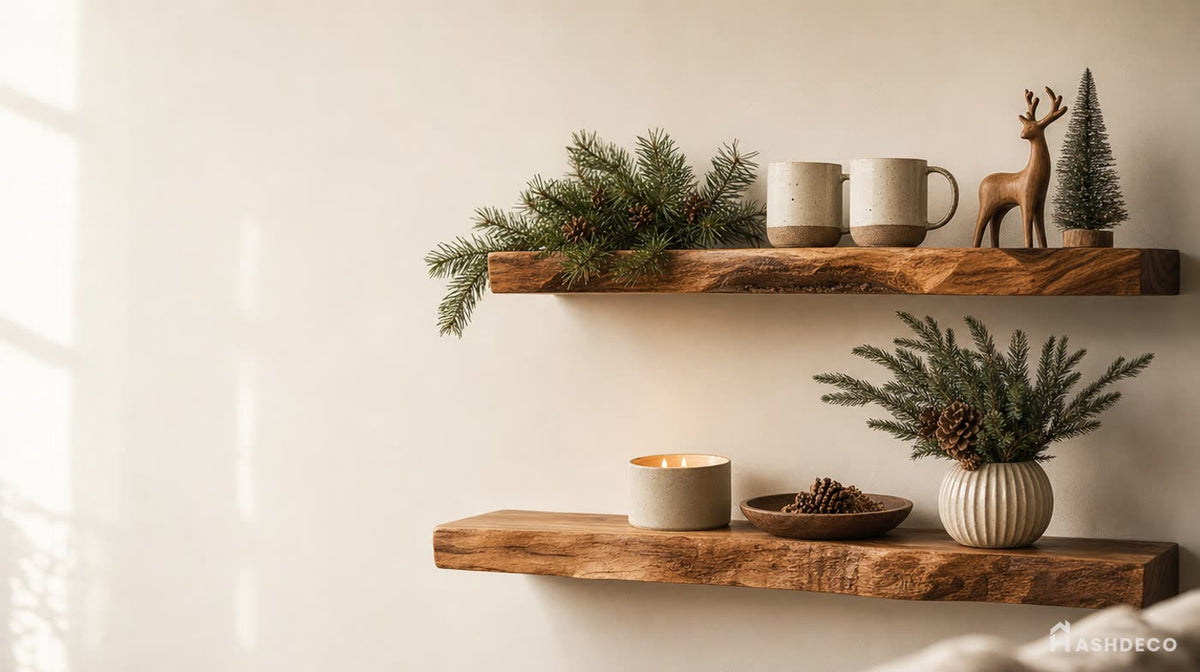
Live edge wood. The unfinished, natural edge of the plank is preserved instead of being cut straight. This is a style choice, not a material difference. Live edge shelves can be pine, walnut, acacia, or any other species. What makes them different is that each shelf has a unique profile. No two are identical. The bark edge, the curves, the width variation, all of it comes from the specific tree that produced the plank.
The price range across these materials runs from about $15 for a basic MDF shelf to $100 to $500 for solid hardwood or live edge. The difference in how long they look good is even wider.


Three mounting systems (and when each one makes sense)

The mounting system determines two things: how much weight the shelf holds, and how clean the installation looks. All three common systems hide the hardware, but they're not equally strong.
French cleat. Two interlocking angled strips, one on the wall and one on the back of the shelf. The shelf hooks onto the wall strip and gravity holds it in place. This is the strongest mounting method for floating shelves. A properly installed French cleat into wall studs can hold 50+ pounds per shelf. It's also the easiest to level and adjust after installation. The tradeoff is that the cleat adds a small gap between the shelf and the wall (usually half an inch), which is visible if you look from the side.
Hidden rod bracket. Metal rods extend from a wall-mounted plate into holes drilled in the back of the shelf. The shelf slides onto the rods and sits flush against the wall. This gives the cleanest look because there's zero visible gap. Weight capacity depends on the rod diameter and wall material. In drywall with toggle bolts, expect 20 to 30 pounds per shelf. Into studs, 40+ pounds. The limitation is that once installed, the shelf position is fixed. Adjusting height means new holes in the wall.
Keyhole slots. The shelf has keyhole-shaped slots on the back that drop over screws in the wall. Simple, cheap, and fast to install. Weight capacity is the lowest of the three, typically 10 to 20 pounds depending on the screw anchors. Keyhole mounts work for lightweight decorative items. Don't put books, ceramics, or anything heavy on them. They're also the least stable laterally. A bump can shift the shelf sideways off the screws.
The stud question. Regardless of mounting system, screwing into wall studs roughly doubles the weight capacity versus drywall anchors. If your shelves will hold anything heavier than a picture frame, find the studs. A $10 stud finder pays for itself immediately.
Five styling rules that actually hold up

Most shelf styling advice is subjective. These five rules come from interior designers who stage homes for sale, where the shelves need to look good in photographs and survive weeks of open house traffic without rearrangement.
Odd numbers. Group items in threes or fives, not twos or fours. The human eye processes asymmetry as more natural and interesting than symmetry. Three books with a plant and a frame reads as curated. Four books lined up reads as storage.
Vary heights. The tallest item on the shelf should be at least twice the height of the shortest. This creates a visual triangle that gives the eye a path to follow. All same-height items on a shelf look like a lineup. Stagger the heights deliberately.
Leave breathing room. The shelf should be 30 to 40 percent empty. That sounds like a lot, but empty space is what separates "styled" from "cluttered." If every inch of shelf is covered, it reads as overflow storage. The empty space tells your eye that the items there were chosen, not dumped.
Layer front to back. Place a larger item at the back (leaning art print, tall vase) and smaller items in front of it. This creates depth on a surface that's only 6 to 12 inches deep. Without layering, the shelf reads as flat and one-dimensional from across the room.
Mix materials. Wood, ceramic, glass, metal, greenery. Put at least three different material types on each shelf. A shelf with all ceramic looks like a pottery display. A shelf with all books looks like a library. The mix of textures creates visual contrast that makes the whole arrangement more interesting.
The hardest part of these rules is restraint. The temptation is to fill every shelf completely. Resist it. Less on the shelf means each item gets noticed. More on the shelf means nothing does.
Don't miss
These pieces qualify for 10% off orders over $2,000. Applied automatically at checkout.
Room-by-room: what changes and what doesn't
Living room. The highest-visibility location. Go with hardwood or live edge for the material because guests will see these up close. Style with a mix of books, plants, and one or two personal items. Avoid family photos on living room floating shelves unless they're framed consistently. Mismatched frames on open shelves look chaotic from across the room.
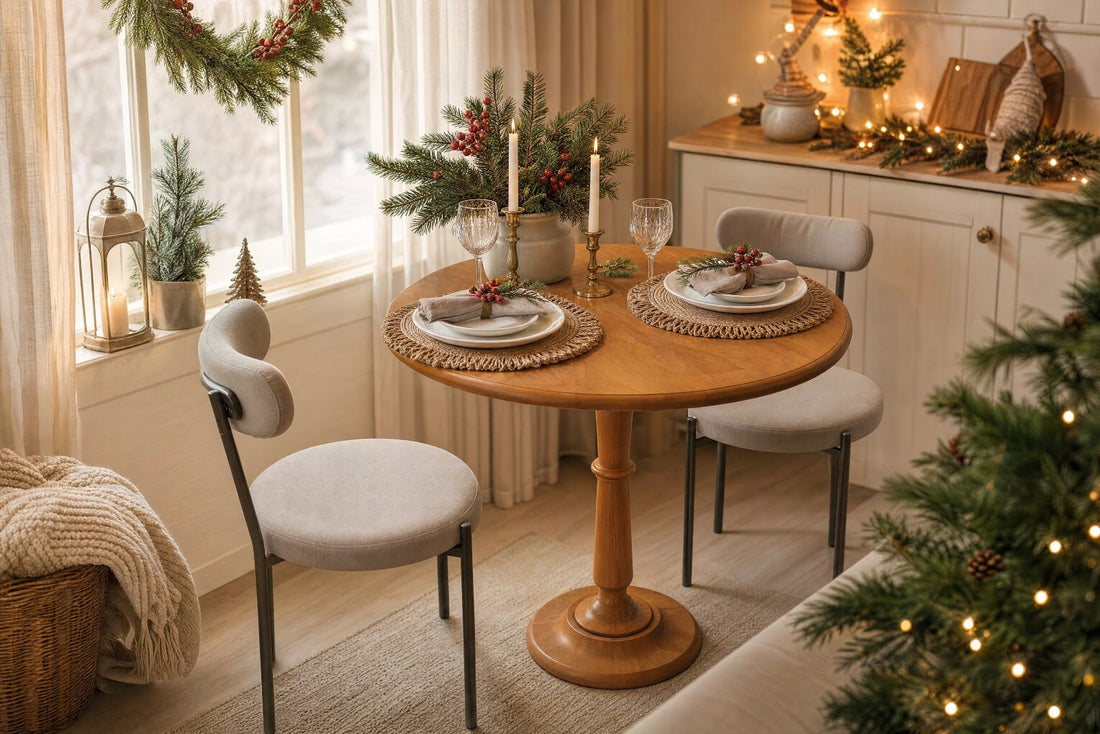
Kitchen. Moisture and grease are the enemies here. MDF will swell. Pine will absorb cooking odors. Use sealed hardwood or finished live edge. Keep the styling functional: spice jars, cooking oils in matching vessels, a small herb plant. Kitchen shelves that try to be decorative end up being annoying to cook around.
Bathroom. The wettest room in the house. Any shelf material that swells with moisture is a bad choice. Sealed hardwood, treated live edge, or metal shelves. Store rolled towels, soap dispensers, and a small plant (pothos does well in humid environments). French cleat mounting into studs is recommended because bathroom walls often have plumbing behind them that limits anchor options.
Bedroom. Lower stakes. Almost any material works because bedrooms are dry and low-traffic. This is a good room for softer styling: candles, small framed art, books you're currently reading. Pine works fine here if you prefer the softer look and lower price.
Home office. Function first. These shelves hold books, binders, and equipment. Weight capacity matters more than aesthetics. Go with hardwood on French cleats into studs. Style with matching storage boxes or baskets to contain small items. Open shelves with scattered office supplies look messy within days.
Browse our full floating shelves collection for solid wood options that handle both the weight and the look.
Common mistakes that ruin the look
Installing too high. The most common error. Eye level for floating shelves means your eye level, which is roughly 57 to 60 inches from the floor for the main shelf. Shelves installed at 72 inches or higher become dead storage that you can't reach or see properly.
Spacing too close. Multiple shelves need 10 to 14 inches between them vertically. Less than 10 inches and you can't fit anything useful. More than 14 inches and the arrangement looks disconnected.
Matching everything. All-white shelves on a white wall with white objects is a Pinterest look that reads as sterile in person. Contrast is what creates visual interest. Dark shelves on a light wall, or warm wood against cool paint colors. The shelf itself is a design element. Let it show.
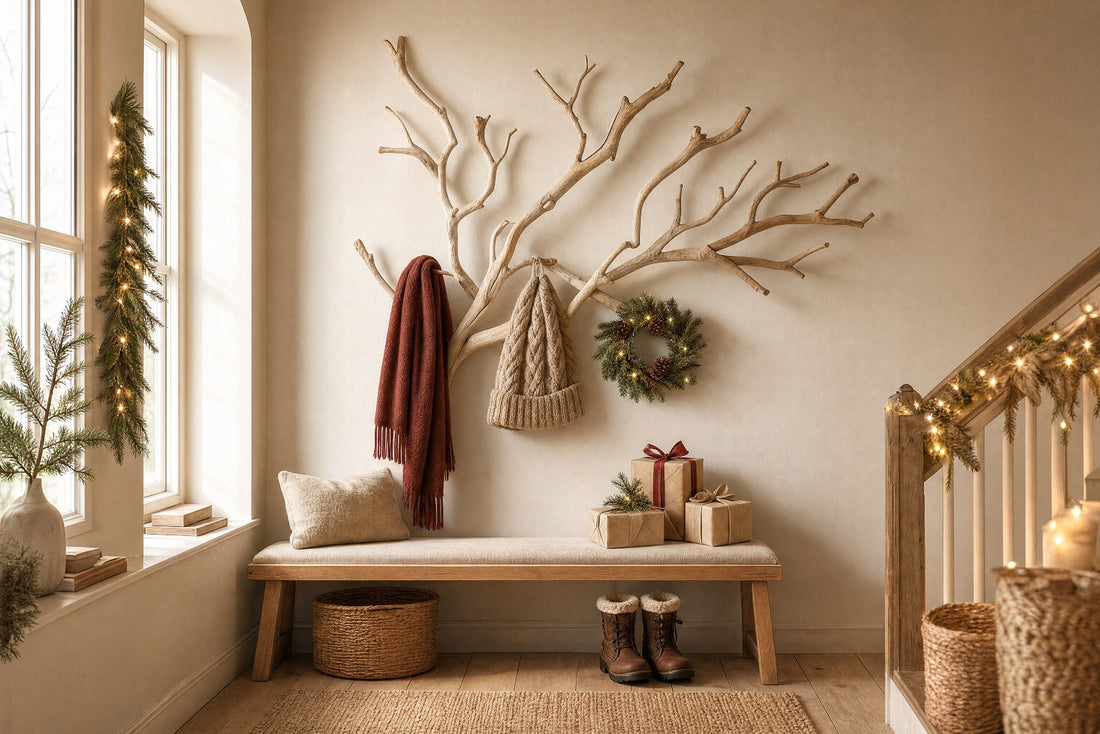
Ignoring the wall. A floating shelf on a blank wall looks like an afterthought. Group shelves near other wall elements: above a desk, flanking a window, beside a mirror, under art. Shelves work best as part of a wall composition, not as isolated additions.
Overloading one end. Distribute weight evenly across the shelf span. All the heavy items on one side creates a visual imbalance and puts asymmetric stress on the mounting hardware. Some brackets tolerate this. Most don't.
Frequently asked questions
How much weight can floating shelves hold?
It depends on the material, mounting system, and wall type. A solid hardwood shelf on French cleats into studs can hold 50+ pounds. An MDF shelf on keyhole mounts in drywall maxes out around 10 to 15 pounds. Check the manufacturer's rated weight capacity and subtract 20 percent as a safety margin.
Do floating shelves work on plaster walls?
Yes, but standard drywall anchors won't work in plaster. You need toggle bolts or screws into the lath behind the plaster. Drilling into plaster requires a masonry bit at low speed to avoid cracking. Once properly anchored, plaster walls hold floating shelves just as well as drywall.
How do I keep floating shelves from sagging?
Choose hardwood over MDF or particle board. Limit shelf span to 36 inches for unsupported shelves (shorter if holding heavy items). Use hidden rod brackets with thick rods (at least 3/8 inch diameter) or French cleats. If the shelf is already sagging, it's usually the material failing under load. Replace it rather than trying to fix it.
What's the best wood for floating shelves in a kitchen?
Sealed hardwood: oak, walnut, or acacia. These species resist moisture absorption and don't warp in humid environments. Apply food-safe polyurethane or tung oil finish to protect against splashes and steam. Avoid untreated pine or MDF in kitchens.
Can I install floating shelves without drilling into studs?
Yes, but with limitations. Heavy-duty drywall anchors (toggle bolts, snap toggles) can hold 20 to 30 pounds per anchor point. For lightweight decorative shelves, this is enough. For bookshelves or kitchen storage, find the studs. No drywall anchor is as strong as a screw in solid wood framing.
How do I style floating shelves without them looking cluttered?
Follow the 60/40 rule: 60 percent items, 40 percent empty space. Group items in odd numbers. Vary heights. Mix materials (wood, ceramic, glass, greenery). And edit regularly. If something hasn't earned its spot on the shelf in the last month, remove it.