Why Entryway Organization Changes How Your Entire Home Feels
The entryway sets the tone for your whole house. Walk through a cluttered one - shoes piled against the wall, coats draped over chairs, keys lost somewhere in the chaos - and stress follows you inside before you've even taken off your jacket.
Organize that same space with purpose, and something shifts. There's a place for every item that crosses the threshold. Coats go on hooks. Shoes slide into a bench. Keys land in their designated spot. You walk from outside-world-chaos into home-calm in the space of three steps.
The challenge is that entryways are often the most neglected spaces in a home. They're small, awkwardly shaped, and somehow expected to handle everything - outerwear, footwear, bags, mail, dog leashes, umbrellas, and whatever else accumulates near the door.
This guide covers practical solutions that work for entryways of all sizes, from narrow apartment corridors to generous foyer spaces.
Start With the Four Entryway Essentials
Every functional entryway needs to handle four categories of stuff. Once you've addressed all four, the space works. Miss one, and clutter fills the gap.
1. Coat and Bag Storage
Outerwear is the biggest visual clutter contributor in most entryways. Jackets, hoodies, scarves, and bags need dedicated vertical storage - hooks, a coat rack, or a closet. Without it, these items end up draped over furniture, piled on chairs, or tossed on the floor.
The minimum: At least one hook per person who lives in your home, plus two guest hooks. If you have a family of four, that's six hooks minimum.
The upgrade: A freestanding coat rack or wall-mounted hook system that also accommodates bags, hats, and scarves. Look for options with varying hook heights , lower hooks for kids, higher ones for adults.
2. Shoe Management
Shoes multiply near doors. It's a law of nature. A family of four can easily accumulate 8-12 pairs of daily-use shoes near the entryway, and without a system, they spread across the floor like a obstacle course.
The minimum: A shoe rack or tray that keeps pairs organized and off the walking path.
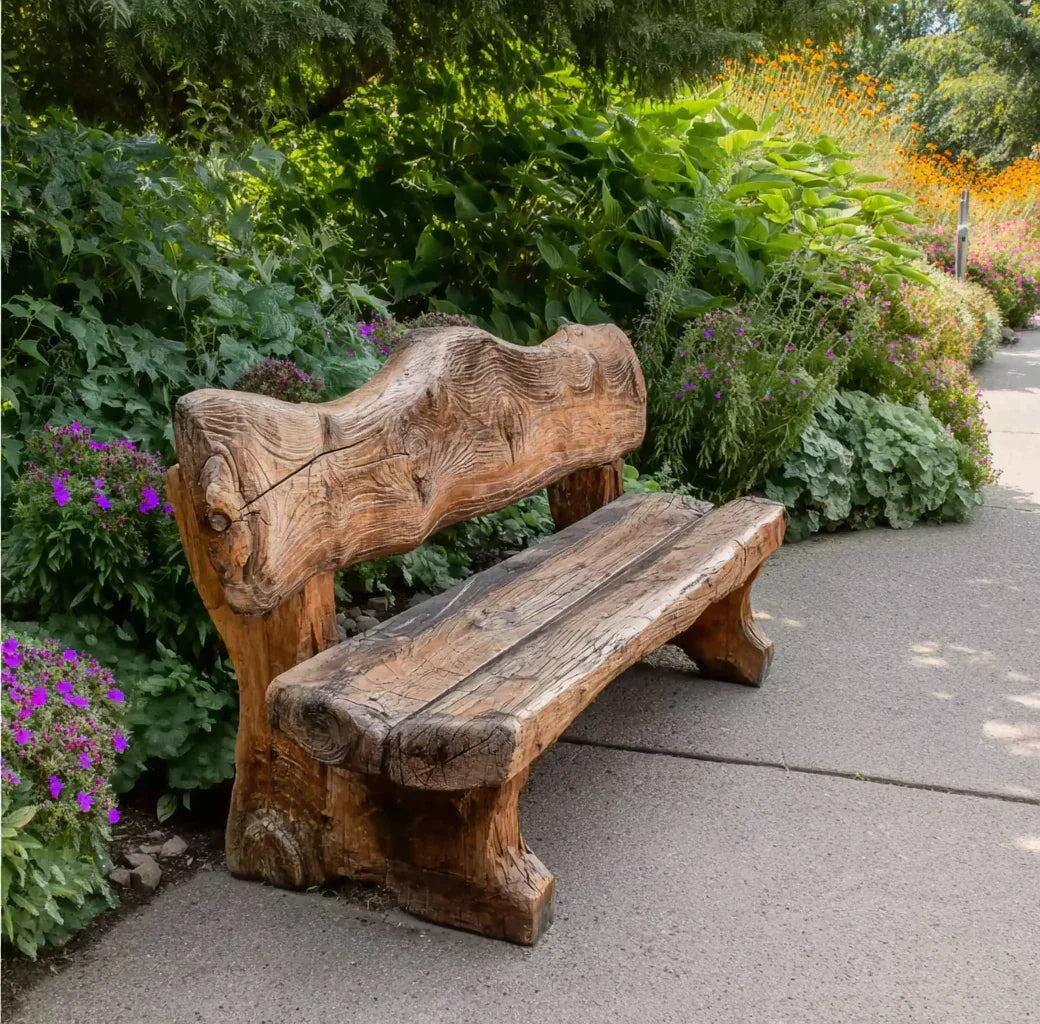
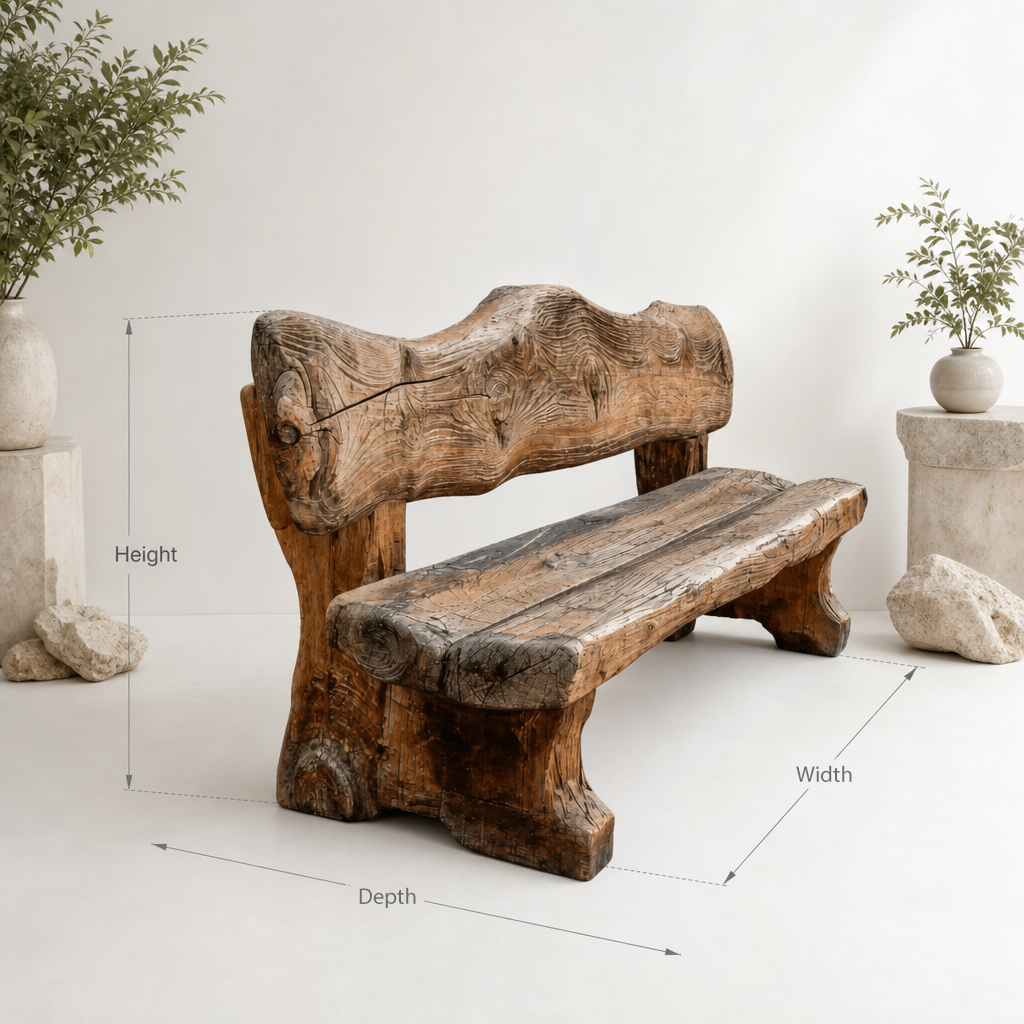
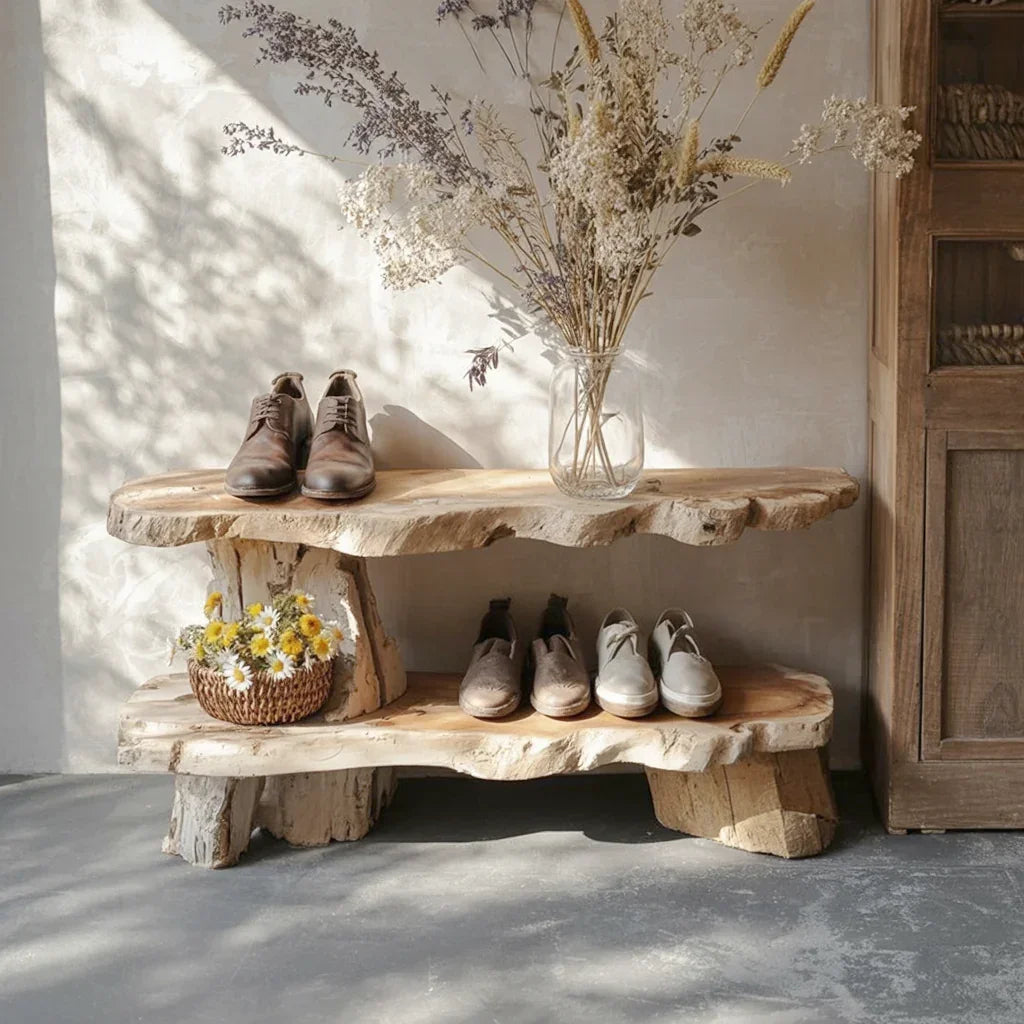
The upgrade: A shoe bench , it handles shoe storage underneath while providing a place to sit while putting shoes on and taking them off. This is the single most impactful piece of entryway furniture for families. No more hopping on one foot or leaning against the wall.
3. Key and Small Item Landing Zone
Keys, wallets, phones, sunglasses , the small everyday carry items that need a consistent home. Without one, you spend five minutes every morning searching for your keys. (According to a 2017 Pixie survey, Americans spend an average of 2.5 days per year looking for lost items, with keys being the number one offender.)
The minimum: A small tray or bowl on a surface near the door.
The upgrade: A console table with a tray, small drawer, or designated key hooks. This gives your everyday items a home that's both accessible and tidy.
4. Mail and Paper Management
Mail comes in daily and, without a system, forms growing piles on any available surface. The entryway is where mail enters the house , it should also be where mail gets triaged.
The minimum: A wall-mounted letter holder or a designated spot on your console table.
The upgrade: A sorting system , one slot for "needs action," one for "to file," and a recycling bin right there for the junk mail that comprises most of what arrives.
Solutions for Small Entryways
Small entryways , the narrow hallways, the apartment entries that barely qualify as a "space" , need vertical thinking. You don't have floor area to spare, so every solution should go up, not out.

Wall-Mounted Hooks Instead of a Closet
A row of sturdy hooks mounted directly to the wall takes up zero floor space and handles coats as effectively as a closet. Mount them at staggered heights for visual interest and to accommodate different-length garments.
Pro tip: Mount hooks on a single board or rail rather than directly into the wall. This looks cleaner, distributes weight better, and only requires two anchor points instead of one per hook.
Slim Console Tables
Look for console tables under 12 inches deep. These provide a surface for keys and mail without eating into your walkway. Many slim consoles include a small shelf below for additional storage or a decorative basket.
Floating Shelves
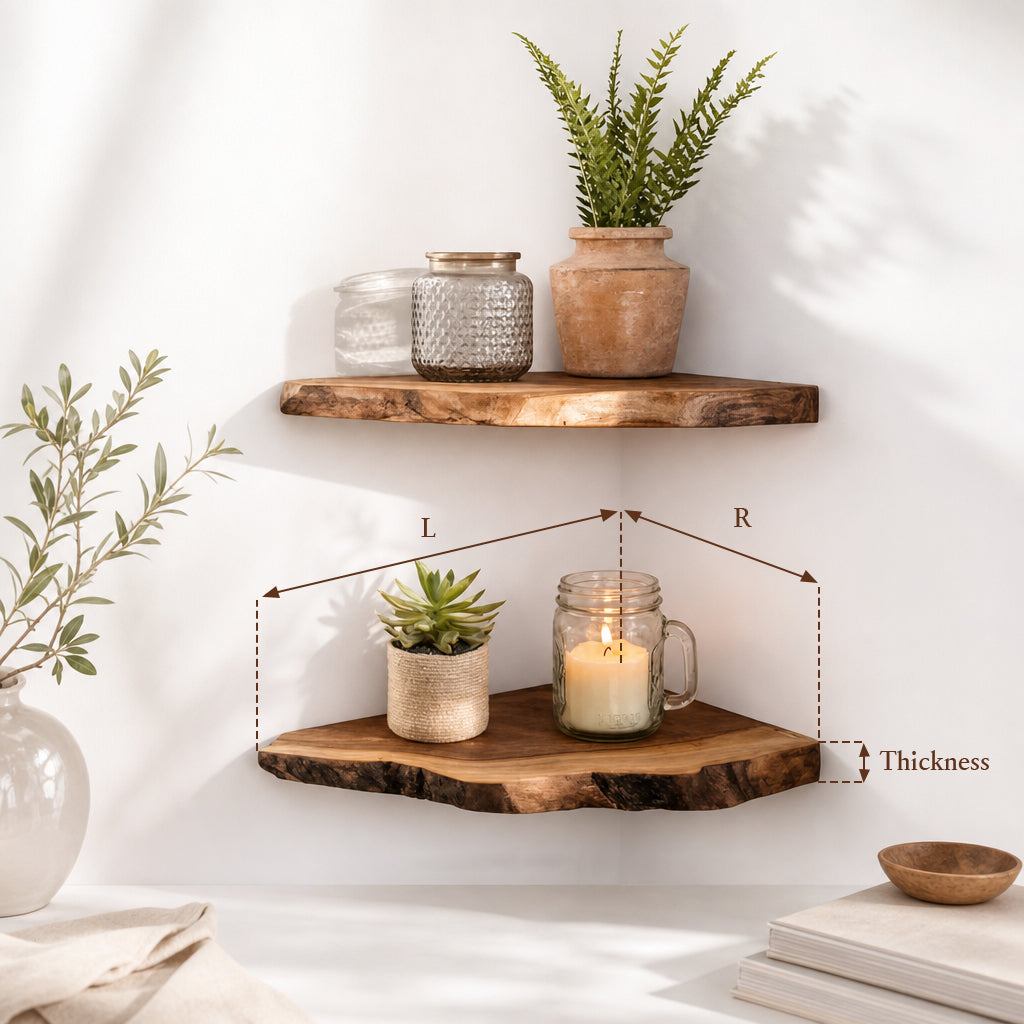
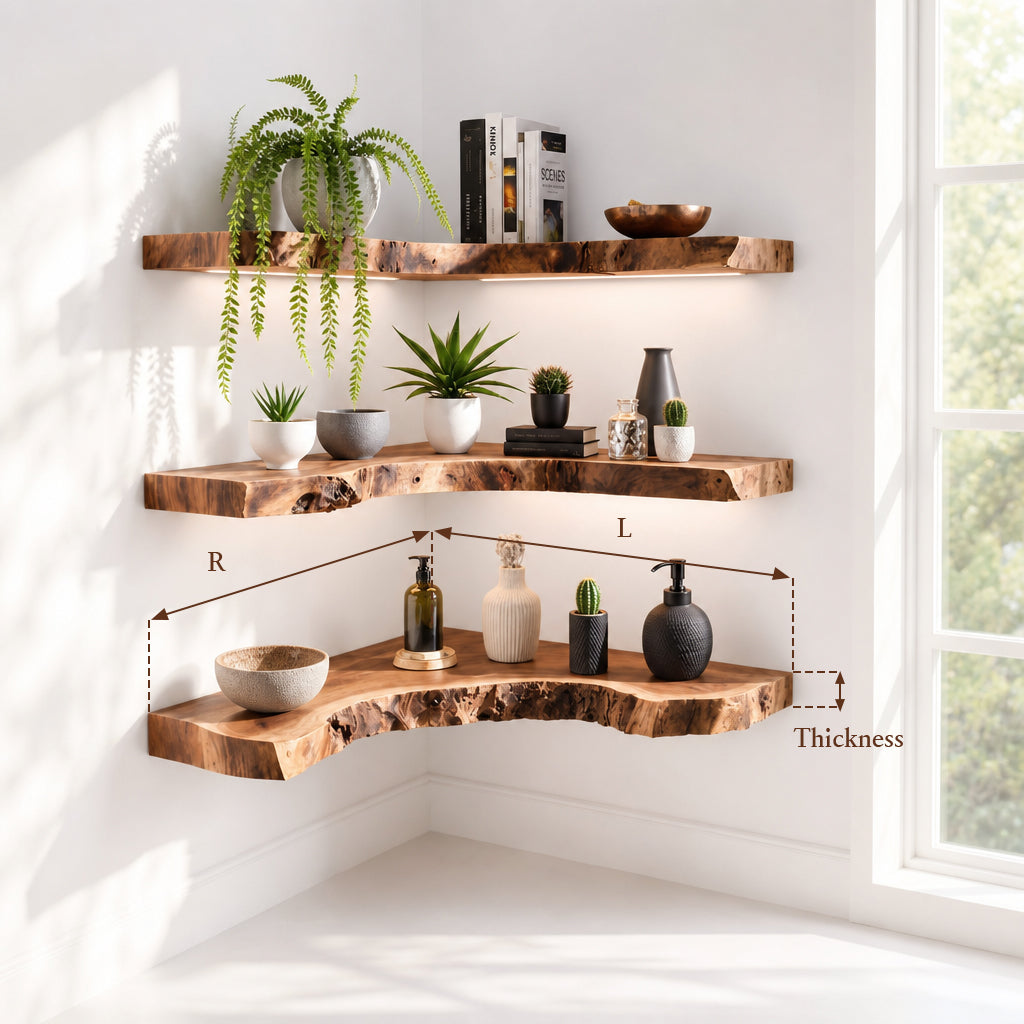
A single floating shelf mounted 4-5 feet high provides a landing zone for keys and small items without requiring any floor space at all. Add a small basket or tray on the shelf to corral items neatly.
Over-Door Organizers
The back of your front door is free real estate. Over-door hooks handle bags and light jackets. Over-door shoe organizers (the clear-pocket type) can hold shoes but gloves, sunglasses, dog leashes, and other small items.
Multifunctional Furniture Is Non-Negotiable
In a small entryway, every piece needs to pull double duty. A shoe bench is the perfect example , it stores shoes, provides seating, and can hold a basket on top for scarves and gloves. One piece, three functions, minimal footprint.
Solutions for Large Entryways and Foyers
If you have the space, you have more options , but more space can also mean more visual chaos if you don't approach it with intention. The goal is still the same: handle the four essentials (coats, shoes, keys, mail) while creating an entry experience that feels welcoming.
The Furniture Combo Approach
A larger entryway can support a coordinated furniture setup:
- A freestanding coat rack or hall tree for outerwear
- A shoe bench for footwear and seating
- A console table for keys, mail, and decorative items
- A mirror above the console for a final check before heading out
This combination covers every organizational need while creating a cohesive, intentional space. When these pieces are made from matching or complementary wood, the entryway becomes a design statement rather than just a pass-through zone.
Bench with Storage
An entry bench with a hinged seat or drawers provides hidden storage for seasonal items , gloves, hats, rain gear, the extra shoes that don't need to be visible daily. This keeps the main storage zones (hooks and shoe rack) reserved for frequently used items, preventing overcrowding.
Statement Coat Rack
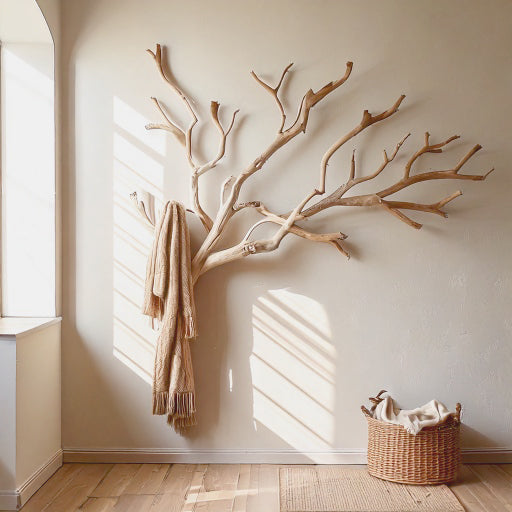
In a larger entry, a coat rack can be more than functional storage , it can be a design piece. A well-crafted wooden coat rack with an organic, sculptural form adds vertical interest and personality to the space while handling its primary job of keeping coats off the furniture.

The Seasonal Rotation System
One reason entryways get cluttered is that people try to keep everything near the door year-round. Winter coats take up space in July. Sandals clog the shoe rack in December. A seasonal rotation solves this.
How It Works
- Active storage (entryway): Only the current season's items stay near the door. In winter: heavy coats, boots, gloves, scarves. In summer: light jackets, sandals, sunglasses, sunscreen.
- Reserve storage (closet or bedroom): Off-season items go into a closet, under-bed storage, or anywhere else out of the entryway.
- Rotate quarterly: When the seasons change, swap what's in the entryway. This takes 20 minutes and dramatically reduces daily clutter.
This system is especially important in small entryways where every inch matters. Four hooks can handle four current-season coats. Those same four hooks can't handle four winter coats plus four spring jackets plus two rain ponchos.
Organizing With Kids
Kids are entropy generators, especially near the front door. Backpacks, lunchboxes, sports equipment, art projects coming home from school , it all floods the entryway. Here's what works:
Give Each Kid Their Own Zone
Assign each child a specific hook (or set of hooks), a shoe spot, and a backpack location. Label them if needed , even a simple name tag makes the expectation clear. Kids are more likely to use a system when they feel ownership over their specific spot.
Install Hooks at Kid Height
Adult-height hooks are useless for kids under 8. Mount a second row of hooks at 3-3.5 feet for younger children. They can reach these independently, which means they're more likely to actually hang up their coat instead of dropping it on the floor.
Add a "Launch Pad" Basket
A basket near the door designated for "things that need to go out tomorrow" , permission slips, library books, soccer cleats. Load it in the evening, grab it in the morning. This prevents the morning scramble of searching for things that should have been ready the night before.
Keep a Donation Bag Nearby
Kids' shoes and coats are outgrown constantly. A bag in the coat closet labeled "donate" catches outgrown items as they're discovered, rather than letting them take up entryway space indefinitely.
Pet-Friendly Entryway Organization
If you have dogs, the entryway also handles leashes, waste bags, treats, towels for muddy paws, and potentially a water bowl or food station. These items need their own organizational plan.
- Leash hooks: A dedicated hook (or hooks) for each dog's leash, mounted near the door at a comfortable reach. Don't mix these with coat hooks , you'll spend time untangling.
- Paw-cleaning station: A small mat with an old towel basket nearby. Wipe paws before they hit the hardwood. This protects your floors and keeps the rest of the house cleaner.
- Treat jar on the console table: A small sealed container for training treats makes departure and arrival transitions smoother.
- Washable entry rug: Essential. Choose one that's machine-washable and large enough to catch the first few steps inside. Indoor-outdoor rugs work well and are nearly indestructible.

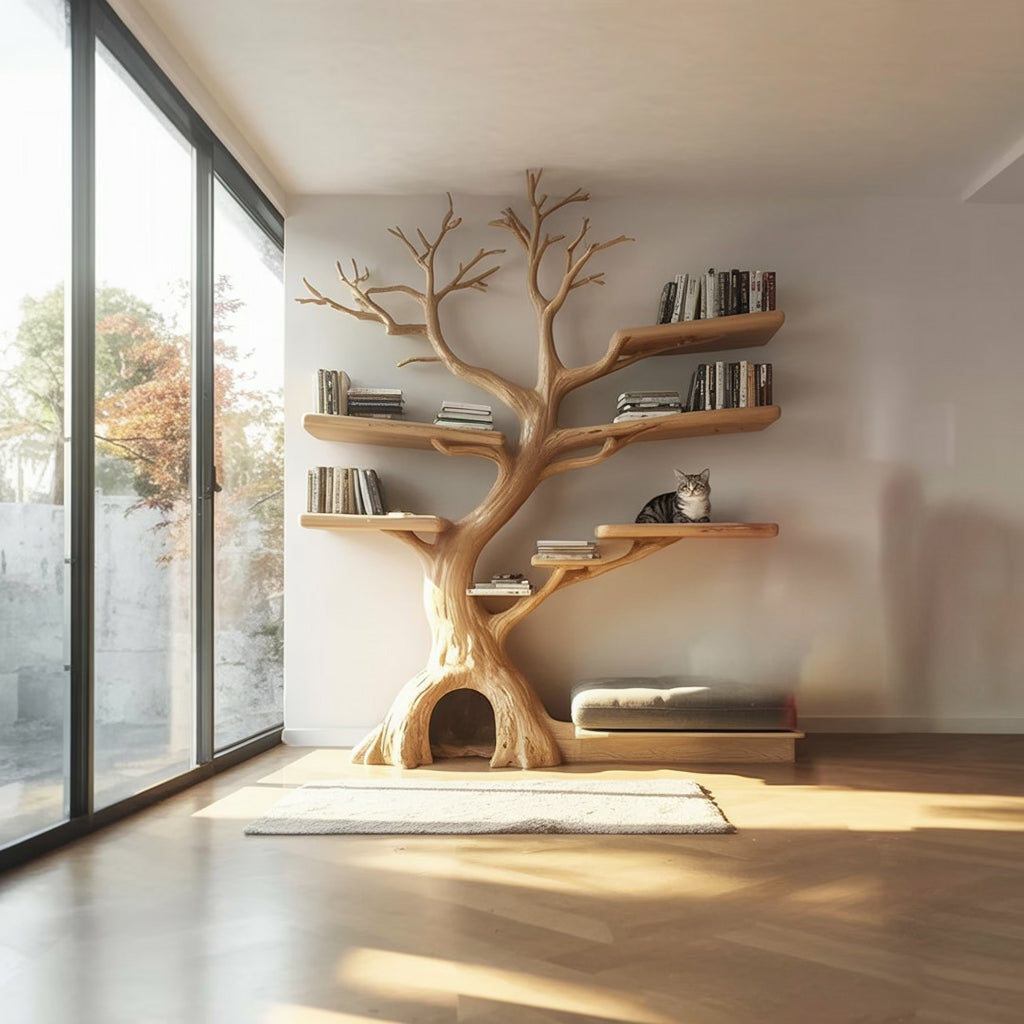
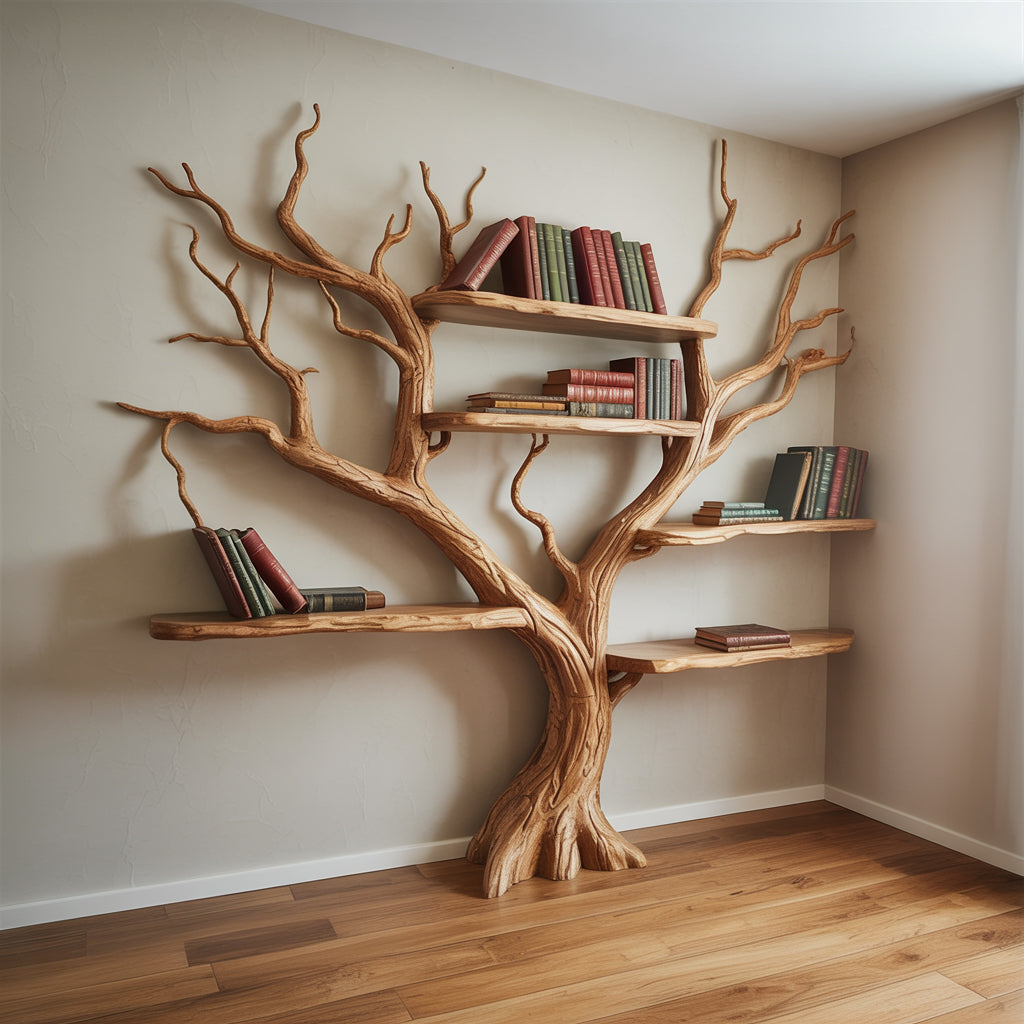
Driftwood Tree Branch Coat Rack – Standing Solid Wood Clothes Rack with Shelves
Materials Matter: Why Solid Wood Wins in the Entryway
The entryway is a high-traffic, high-impact zone. Furniture here gets bumped with bags, kicked with boots, splashed with rain water, and subjected to temperature swings from the opening door. This is not the place for particleboard that swells at the first hint of moisture.
Solid wood furniture handles entryway conditions naturally:
- Impact resistance: A solid hardwood bench can take a direct hit from a dropped backpack or a kicked boot without structural concern
- Moisture tolerance: Finished solid wood handles the occasional splash or wet umbrella without swelling or delaminating
- Repairability: When (not if) the entryway bench gets scratched, solid wood can be sanded and refinished. Try that with laminate.
- Weight and stability: Solid wood furniture stays put. It won't slide when kids plop down to tie their shoes or when someone leans on the console table.
Ashdeco's shoe benches, coat racks, and console tables are all crafted from solid wood by Vietnamese artisans , built to handle the reality of daily entryway use while looking good enough to make a strong first impression.
Step-by-Step: Transforming Your Entryway This Weekend
You don't need a full renovation. Most entryways can go from chaotic to organized in a single afternoon. Here's the process:
Step 1: Empty and Assess (30 Minutes)
Remove everything from the entryway. Everything. Put it in another room temporarily. Now look at the empty space and note the dimensions, the wall space available for hooks, whether there's room for a bench, where the natural "landing zone" falls (usually the surface closest to the door).
Step 2: Sort and Purge (30 Minutes)
Go through everything you removed. Toss what's broken. Donate what's outgrown or unused. Relocate items that don't belong near the door. You'll likely eliminate 30-40% of the clutter before you even start organizing.
Step 3: Install the Infrastructure (1-2 Hours)
Mount hooks, set up the shoe bench or rack, position the console table. Focus on the four essentials: coats, shoes, keys, mail. Everything else is secondary.
Step 4: Assign Spots (15 Minutes)
Every item that belongs in the entryway gets a designated location. Communicate these to everyone in the household. For kids, demonstrate and practice.
Step 5: Maintain (5 Minutes Daily)
Once the system is set up, maintenance is simple: spend five minutes at the end of each day returning items to their spots. Do this consistently for two weeks and it becomes automatic.
Frequently Asked Questions
What's the single most important piece of entryway furniture?
A shoe bench. It solves the two most common entryway problems at once , shoe clutter on the floor and no comfortable place to sit while putting shoes on or taking them off. If you can only add one piece to your entryway, make it a bench with shoe storage underneath.
How many hooks do I really need?
At minimum, one per person in the household plus two for guests. For a family of four, that's six hooks. If space allows, go for eight , you'll use them for bags, scarves, umbrellas, and the extra jacket someone always leaves over.
My entryway is also a narrow hallway. How do I organize it without blocking the path?
Keep everything on one wall, using hooks mounted high (coats) and slim storage low (a narrow shoe rack or vertical shoe organizer). A slim console table under 12 inches deep provides a key landing zone without blocking traffic flow. Avoid anything that juts out into the walking path , including open coat rack arms at head height.
How do I keep the entryway organized long-term?
The key is making the organized state easier than the cluttered state. If hooks are within arm's reach of the door, hanging a coat is easier than draping it on a chair. If the shoe bench is right there, sliding shoes in is easier than kicking them off randomly. Design your system around the path of least resistance, and it maintains itself.
What should I do about mail that piles up?
Process mail at the door, not later. Stand at your console table and sort immediately: trash the junk (have a recycling bin right there), set aside bills and action items, file anything worth keeping. The rule is simple , mail should never make it past the entryway unsorted. A wall-mounted letter sorter with "action" and "file" slots keeps this visual and easy.
Can I create an entryway if my front door opens directly into the living room?
Yes. Define the entry zone with a rug, a coat rack or hooks on the nearest wall, and a small bench or console table. You're essentially creating a visual boundary between "entry" and "living room" using furniture placement. A narrow bookshelf or room divider can add physical separation if the space allows.
From Chaos to Calm: It's Simpler Than You Think
Entryway organization isn't about achieving magazine-perfect minimalism. It's about giving your daily essentials a home so they stop migrating around the house. A coat rack, a shoe bench, a place for keys, a system for mail , that's really all it takes.
The furniture you choose makes a difference, both in how the space functions and how it feels. Solid wood pieces from Ashdeco , crafted by Vietnamese artisans from real hardwood , bring warmth, durability, and a handmade quality that makes your entryway feel intentional rather than improvised.
Start with the four essentials. Build the system. Maintain it for two weeks. The calm that greets you when you walk through the door is worth every minute you invest.