





















Quick view
- Why a Coat Rack with Shoe Storage Beats Two Separate Pieces
- Three Types of Coat Rack with Shoe Storage
- Wall-Mounted vs Standing Coat rack: Which One Fits Your Entryway?
- How Many Pairs of Shoes Do You Actually Need Space For?
- Why Solid Wood Matters in an Entryway Coat Rack
- FAQ
- One piece. One entryway. No chaos.
Shop this guide
Handcrafted Coat Racks & Hangers, made to order in solid wood.
 Christmas edit
Custom Wood Coat Rack – Driftwood Wall Mount Clothes Rack with Unique Hooks
From $697.00
Christmas edit
Custom Wood Coat Rack – Driftwood Wall Mount Clothes Rack with Unique Hooks
From $697.00
 Christmas edit
Antler Coat Rack – Rustic Handmade Wall Hook for Home & Office
From $517.00
Christmas edit
Antler Coat Rack – Rustic Handmade Wall Hook for Home & Office
From $517.00
 Christmas edit
Natural Driftwood Coat Rack – Handcrafted Tree Branch Standing Hanger for Entryway or Bedroom
From $1,056.00
Christmas edit
Natural Driftwood Coat Rack – Handcrafted Tree Branch Standing Hanger for Entryway or Bedroom
From $1,056.00
 Christmas edit
Ashdeco Solid Wood Coat Rack – Vintage 10 Hooks Hat & Clothes Stand
$520.00
Christmas edit
Ashdeco Solid Wood Coat Rack – Vintage 10 Hooks Hat & Clothes Stand
$520.00
 Christmas edit
Rustic Tree Branch Coat Rack – Solid Wood Standing Hanger for Home Decor
From $1,556.00
Christmas edit
Rustic Tree Branch Coat Rack – Solid Wood Standing Hanger for Home Decor
From $1,556.00
 Rustic Wooden Standing Coat Rack – Handmade Tree Branch Hook Organizer
From $1,056.00
Rustic Wooden Standing Coat Rack – Handmade Tree Branch Hook Organizer
From $1,056.00
Coat Rack with Shoe Storage: The Easiest Way to Fix a Chaotic Entryway
A coat rack with shoe storage is the simplest fix for the most chaotic corner of your home - the entryway.
You open the front door. Shoes scatter across the floor. A jacket hangs off the arm of a chair that nobody sits in. Keys land on whatever surface is closest - which today is the floor. Sound familiar?
The entryway catches everything you drop the moment you walk in, and it shows. Most people blame themselves for the mess, as if the problem is discipline. It's not. The problem is that a bare entryway gives you no place to put anything.
One piece of furniture fixes that. Hooks catch the coats. Shelves catch the shoes. You don't need two separate pieces fighting for floor space in a hallway that barely fits one.

Why a Coat Rack with Shoe Storage Beats Two Separate Pieces
Buying a standalone coat rack and a separate shoe cabinet sounds logical until you actually try it. Two pieces of furniture in an entryway that's four feet wide means you're squeezing past them sideways every time you leave the house.
Beyond the space problem, there's the look. A black metal coat rack next to a white laminate shoe cabinet next to a wooden console table - the entryway starts looking like a furniture showroom where nobody coordinated the floor plan. One piece that does both jobs reads as intentional. Two mismatched pieces reads as "we bought whatever fit."
There's also a practical reason to avoid closed shoe cabinets: moisture. Shoes come in damp from rain, snow, or just a long day. Seal them inside a cabinet with no airflow and you get two things - odor that hits you every time you open the door, and the slow creep of mold on the soles. Open shelves let shoes breathe. They dry faster, smell less, and the shelf itself becomes part of the room rather than a box you're trying to hide. For a broader look at entryway furniture sizing - especially if you're weighing a console table instead - our console table size guide walks through the numbers.
Three Types of Coat Rack with Shoe Storage
Not every entryway is shaped the same. The right choice depends on how much floor space you have, how many people live in the house, and whether anyone needs to sit down to put their shoes on. Here are the three designs that cover almost every situation.

Wall-Mounted Coat Rack with Shelf
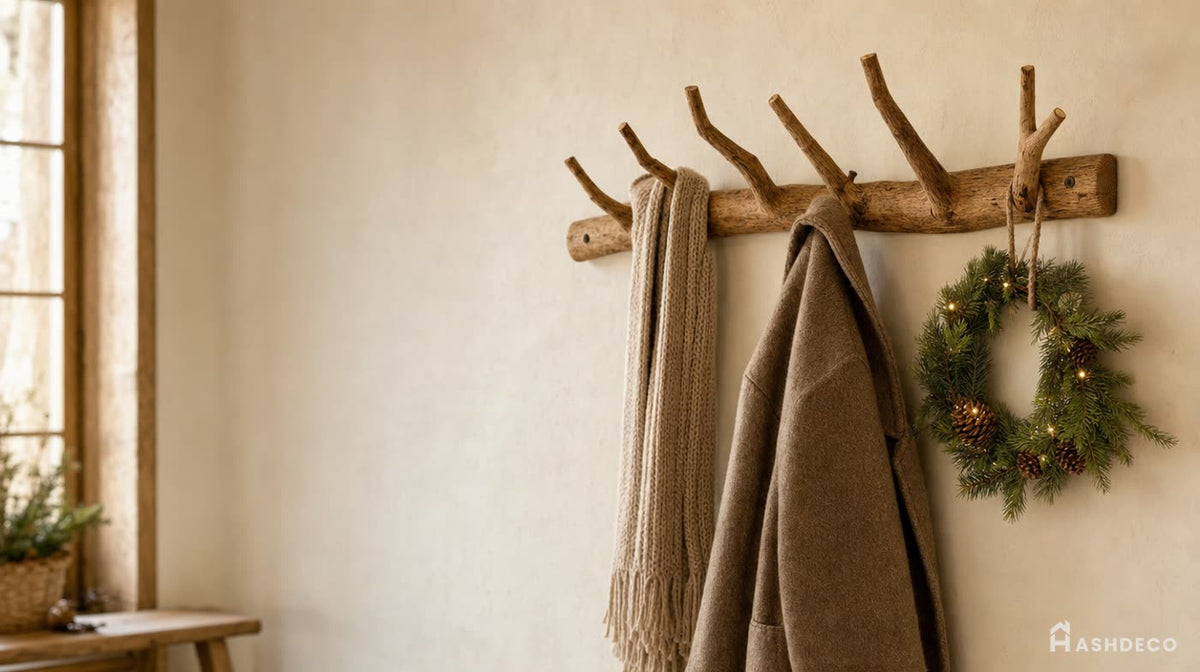
This is the one for small entryways, apartments, and anywhere floor space is at a premium. A wall mounted coat rack with shelf mounts directly to the wall - zero footprint on the floor. The shelf sits above, giving you a surface for shoes, a catch-all bowl for keys, or a plant that makes the entryway feel like more than a hallway. Hooks below hold coats, bags, and umbrellas.
The hidden advantage of a wall-mounted design is how much floor it opens up. You can run a vacuum straight across without navigating around legs. You can place a slim bench or a basket underneath without the rack getting in the way. And if the floor is uneven - old tile, stone, anything that would make a standing rack wobble - wall-mounted sidesteps the problem entirely.
Wall-mounted models ship as a single assembled piece - no parts to sort, no hardware to figure out. Mount it to the wall studs and it's done.
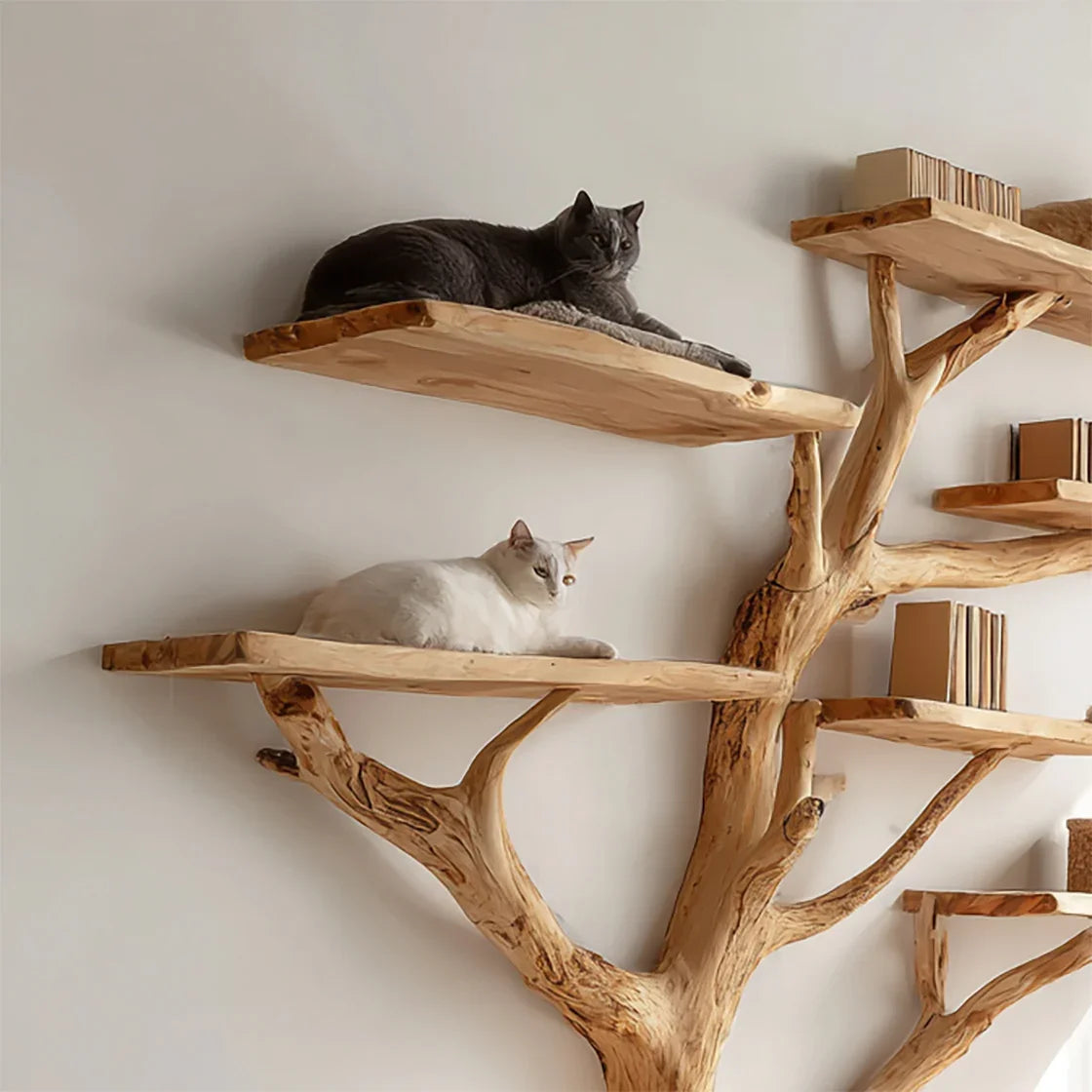
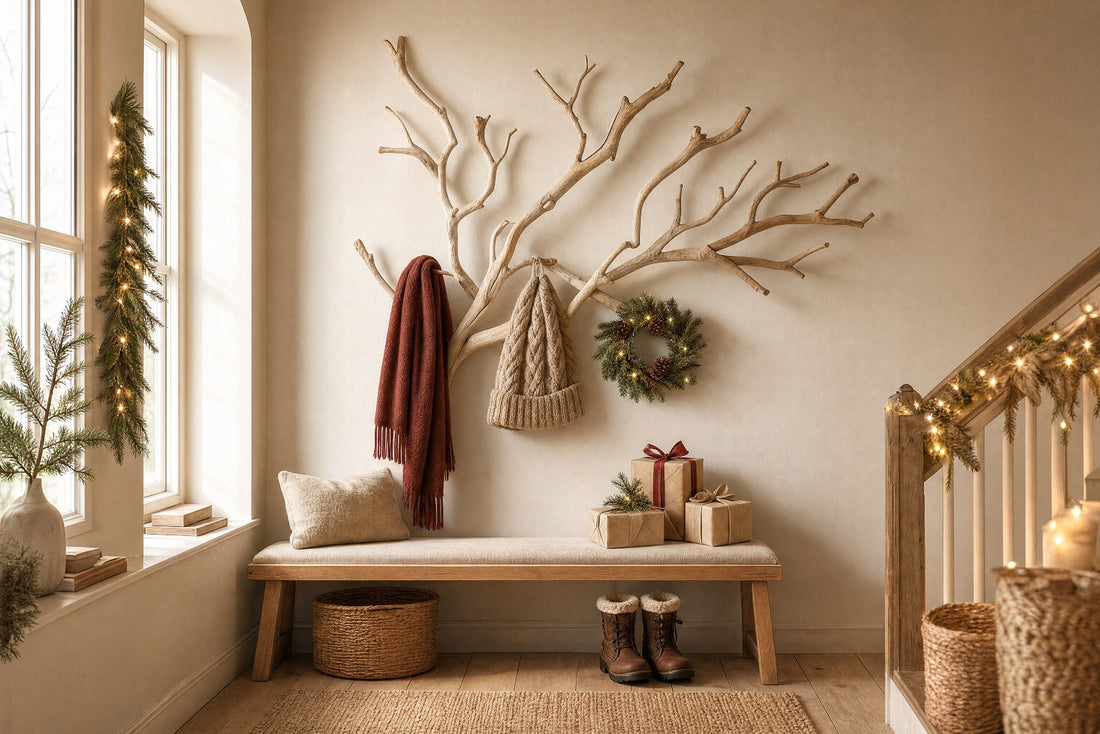
Live edge wood takes this from functional to focal point. A solid wood coat rack with natural grain and organic branch hooks doesn't look like something you bought to solve a storage problem - it looks like something you chose because it transforms the wall.

Standing Hall Tree with Shoe Storage
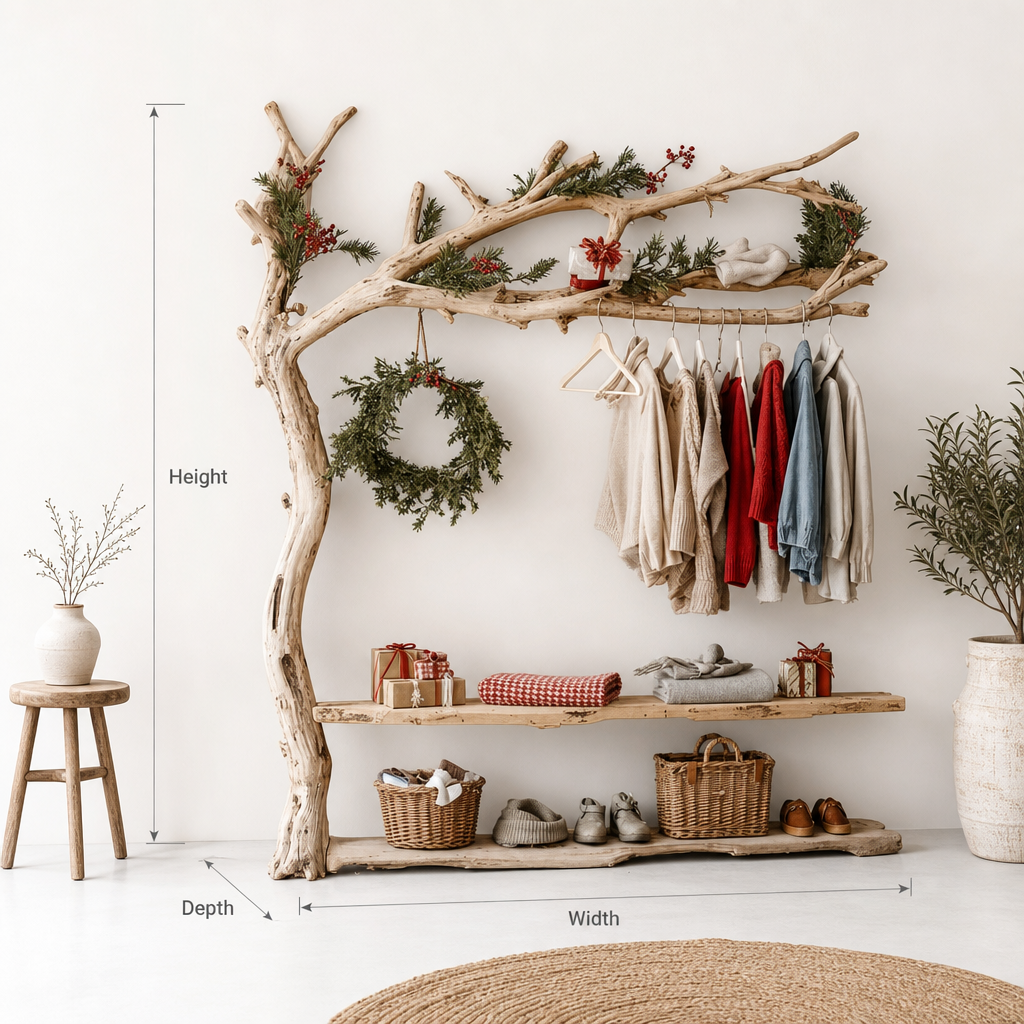
If your entryway has more than four feet of width, a standing hall tree with shoe storage gives you the most capacity. These are floor-standing pieces with multiple tiers: hooks up top for coats, shelves in the middle for shoes, and sometimes a lower shelf for boots or baskets.
A typical standing hall tree holds 6 to 10 pairs of shoes across two or three tiers, plus coats for a family of three or four. The footprint is usually 18 to 24 inches deep and 30 to 50 inches wide - compact enough that it doesn't feel like a wardrobe in the hallway, but substantial enough to anchor the room visually.
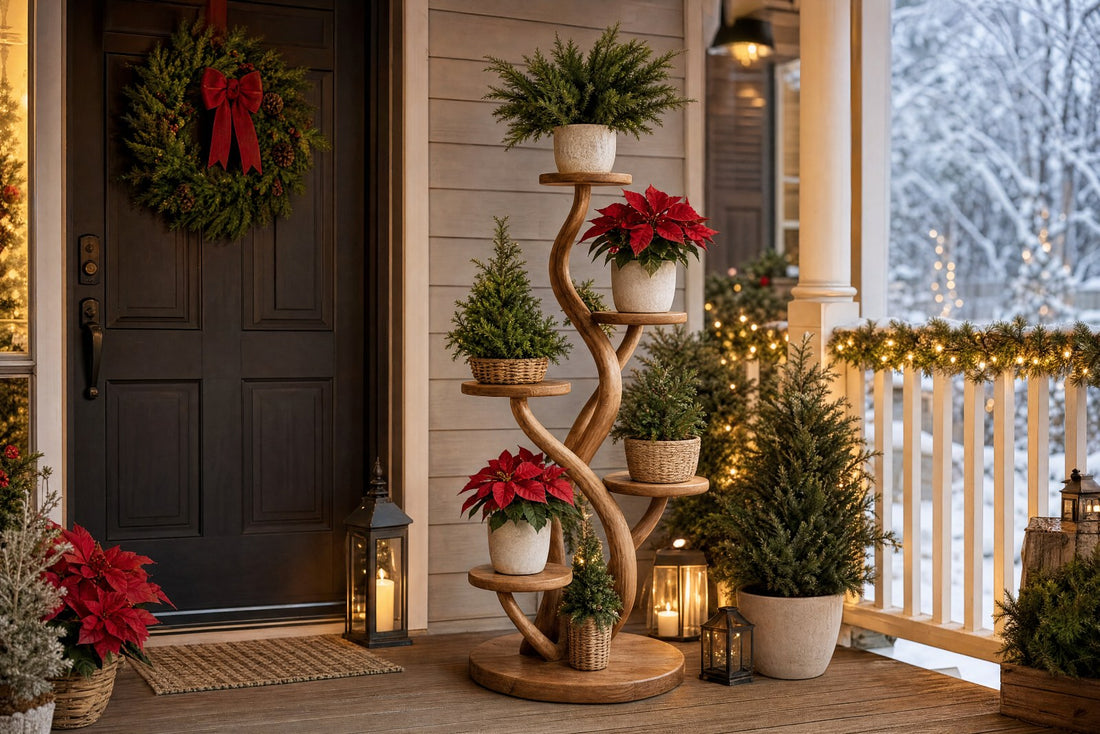
The ones worth buying are made from solid driftwood or hardwood, not factory-cut planks. A handcrafted tree branch hall tree has organic shapes that no two artisans replicate the same way - each hook, each branch, each shelf position is unique to that piece. It's furniture that doubles as sculpture, which matters in an entryway where there's usually not much else to look at.
Coat Rack with Bench and Shoe Storage
This is the all-in-one: a bench to sit on while you lace up, shoe storage underneath, and coat hooks above. It solves the full entryway workflow - walk in, sit down, shoes off, coat up - in one piece.
A coat rack with bench and shoe storage is especially practical for households with kids who can't balance on one foot yet, or older family members who appreciate a stable seat while changing footwear. The bench needs to be at least 14 to 16 inches deep to sit comfortably - anything shallower and you're perching, not sitting.
What separates a quality bench rack from a forgettable one is the wood. Solid acacia or walnut holds its shape under daily use. MDF benches start squeaking within a year, and particle board won't survive a wet shoe placed on it more than a few times. A solid wood entryway bench with integrated coat rack is built to handle exactly this kind of use - not just look good in a listing photo.
Shop Handcrafted Coat Racks with Shoe Storage
Every piece is made from solid driftwood or hardwood by Vietnamese artisans. No MDF. No assembly-line copies. Each one is a one-off.




Wall-Mounted vs Standing Coat rack: Which One Fits Your Entryway?
If you're stuck between the two, this table cuts through the noise:
| Your situation | Best choice |
|---|---|
| Entryway under 4 feet wide | Wall-mounted coat rack with shelf |
| Entryway over 4 feet wide | Standing hall tree with shoe storage |
| Need a place to sit while putting on shoes | Coat rack with bench and shoe storage |
| Uneven or delicate flooring | Wall-mounted (no legs to level or scratch) |
| Renting or prefer not to drill | Standing coat rack |
The width rule isn't arbitrary. An entryway narrower than four feet needs the walking path to stay completely clear. A standing rack at 20 inches deep leaves roughly 28 inches of passage - technically enough, but it feels tight. Wall-mounted leaves the full width open and only uses vertical space, which an entryway has plenty of.
How Many Pairs of Shoes Do You Actually Need Space For?
Most people guess their shoe count and guess wrong. The number that matters isn't how many shoes you own - it's how many live at the entryway every day. Those are different numbers.
Each pair of adult shoes takes about 10 to 12 inches of shelf width. Kids' shoes take less - about 6 to 8 inches per pair - but kids also own more pairs that somehow multiply in the dark. Here's what shelf configurations actually hold:
- One shelf tier: 3 to 4 pairs of adult shoes
- Two shelf tiers: 6 to 8 pairs
- Three shelf tiers: 9 to 12 pairs
A quick rule: multiply the number of people in the house by two or three pairs each. That's the minimum storage you need at the entryway. A household of three needs space for at least six to nine pairs of everyday shoes - the ones that get worn most often and therefore live by the door.
One detail that's easy to overlook: shelf clearance. Tall boots, high-top sneakers, and heels need at least 8 to 10 inches of vertical space between shelves. A coat rack with adjustable or generously spaced shelving keeps you from having to lay boots sideways or jam them in at an angle. Measure your tallest pair before you buy - it takes thirty seconds and saves the frustration of discovering the top shelf is too low after the rack is assembled.
For a deeper dive on shoe-specific storage furniture, our shoe storage bench guide for small apartments covers capacity and sizing in more detail.

Don't miss
These pieces qualify for 10% off orders over $2,000. Applied automatically at checkout.
 10% off
Sculptural Solid Wood Hall Tree - Artistic Branch Tree Hanger - Unique Live Edge Entryway Coat Rack
$2,234.00
10% off at checkout
10% off
Sculptural Solid Wood Hall Tree - Artistic Branch Tree Hanger - Unique Live Edge Entryway Coat Rack
$2,234.00
10% off at checkout
 10% off
Handcrafted Tree Branch Clothing Rack – Solid Wood Wardrobe Shelf Organizer for Home Décor
$2,333.00
10% off at checkout
10% off
Handcrafted Tree Branch Clothing Rack – Solid Wood Wardrobe Shelf Organizer for Home Décor
$2,333.00
10% off at checkout
 10% off
Sculptural Hand-Carved Solid Wood Tree Entryway Bench & Branch Coat Rack with Integrated Shoe Shelf
From $2,534.00
10% off at checkout
10% off
Sculptural Hand-Carved Solid Wood Tree Entryway Bench & Branch Coat Rack with Integrated Shoe Shelf
From $2,534.00
10% off at checkout
 10% off
Sculptural Hand-Carved Tree Solid Wood Open Wardrobe Closet System & Branch Wall Storage Bench
$3,876.00
10% off at checkout
10% off
Sculptural Hand-Carved Tree Solid Wood Open Wardrobe Closet System & Branch Wall Storage Bench
$3,876.00
10% off at checkout
Why Solid Wood Matters in an Entryway Coat Rack
The entryway is harder on furniture than almost any room in the house. Rain blows in when the door opens. Wet shoes drip on lower shelves. Humidity swings between seasons. Coats get yanked off hooks in a hurry. This is not the place for materials that fail under real conditions.
MDF and particle board - the materials inside most mass-market coat racks - swell when exposed to moisture. The edges puff up. The laminate peels. In an entryway that sees rain and damp shoes six months out of the year, an MDF rack can look five years old after one season.
A solid wood coat rack handles this differently. Hardwoods like acacia, walnut, and oak have dense fiber structures that resist moisture absorption. They don't swell. They don't delaminate. Acacia in particular has a Janka hardness rating of 1,750 - harder than maple - which means it resists both moisture and the dings that come from daily use.
Then there's the aesthetic side. A driftwood or live edge coat rack isn't trying to look like wood - it is wood, with the original grain, knots, and contours preserved. Branch hooks are the wood's natural shape, not something shaped by a machine to look organic. When someone walks into your entryway, the rack is the first piece of furniture they see. A handcrafted solid wood coat rack from Ashdeco makes that first impression count - it signals that someone in this house cares about materials, not just function.
This isn't a piece you replace when the next trend cycles through. A solid hardwood coat rack with shoe storage lasts decades - not because it's stored carefully, but because it's built from a material that doesn't degrade under the exact conditions an entryway throws at it.
FAQ
How many shoes can a coat rack with shoe storage hold?
It depends on the design. A wall-mounted coat rack with a two-tier shelf typically holds 6 to 8 pairs. A standing hall tree with three tiers holds 10 to 14 pairs. Families should look for models with a bench - the storage underneath can handle the overflow that doesn't fit on the main shelves.
Can a wall-mounted coat rack with shoe storage hold heavy winter boots?
Yes - if it's mounted into wall studs and built from solid wood. A properly anchored hardwood shelf handles 15 to 30 pounds per tier without flexing. Two or three pairs of winter boots weigh roughly 10 to 15 pounds, well within a solid wood shelf's range. MDF shelves won't hold the same weight safely over time.
How high should coat hooks be on a coat rack with shoe storage?
For most adults, coat hooks should be mounted between 60 and 66 inches from the floor. If children will use the rack daily, consider adding a second row of hooks around 40-48 inches high. The goal is to keep coats easy to hang without dragging on the floor.
Which is better: a coat rack with shoe storage or a separate shoe cabinet?
For small to medium entryways, a combined coat rack with shoe storage saves floor space and keeps the room visually cohesive - one intentional piece instead of two that may not match. Open shelves also let shoes dry naturally, preventing the moisture and odor buildup that closed cabinets trap. If your entryway is larger and you own 20-plus pairs of shoes, a dedicated shoe cabinet can make more sense. For most homes, a single rack that does both jobs is the smarter use of space.
How deep should a shoe shelf on a coat rack be?
A minimum of 10 inches deep for adult shoes up to a US men's size 11. For larger sizes - 12 and above - or boots that need to sit flat, look for shelves at least 12 to 14 inches deep. Measure your largest pair of everyday shoes before buying. It's a thirty-second check that prevents the frustration of shoes hanging off the front edge.
Is solid wood actually worth the cost for an entryway coat rack?
Yes - especially in an entryway. This room sees more moisture, temperature swings, and physical contact than almost any other space in the house. MDF swells and laminate peels under these conditions. Solid hardwood like acacia and walnut handles moisture without warping and doesn't need a protective veneer that can separate over time. A handcrafted solid wood coat rack also does something no mass-market rack can - it makes the first room guests see feel intentional rather than utilitarian.
One piece. One entryway. No chaos.
An entryway doesn't need a lot of furniture. It needs the right furniture. A coat rack with shoe storage catches the two things that make an entryway look messy - coats and shoes - in one place that was designed to hold them both. No more jackets on chairs. No more shoes forming a pile by the door. No more buying one thing to hold coats and another to hold shoes and hoping they look like they belong together.
Choose wall-mounted if your entryway is tight, standing if you have room to breathe, and a bench model if someone in the house needs to sit while they put their shoes on. Pick solid wood - not because it's nicer, but because an entryway will destroy anything less durable within a few seasons. The grain, the knots, the branch hooks that nobody else has exactly the same way - that's the part you'll be glad you didn't compromise on every time you walk through the door.
Browse the full Ashdeco coat racks and hangers collection - each piece is handcrafted from solid driftwood or hardwood by artisans in Vietnam, shipped fully assembled for wall-mounted models, with concealed mounting hardware included. Also see our best wooden coat racks guide for 2026 for a broader comparison of standing, wall, and tree rack options.