





















Quick view
- Why Most Shoe Storage Benches Don't Fit Small Entryways
- How to Choose the Right Shoe Bench for a Small Space
- Storage Styles That Work in Small Entryways
- Space-Saving Layouts for Tight Entryways
- Material Matters for Small-Space Benches
- Styling Tips That Won't Clutter Your Hallway
- Common Mistakes to Avoid
- FAQ
Shop this guide
Handcrafted Benches, made to order in solid wood.
 Christmas edit
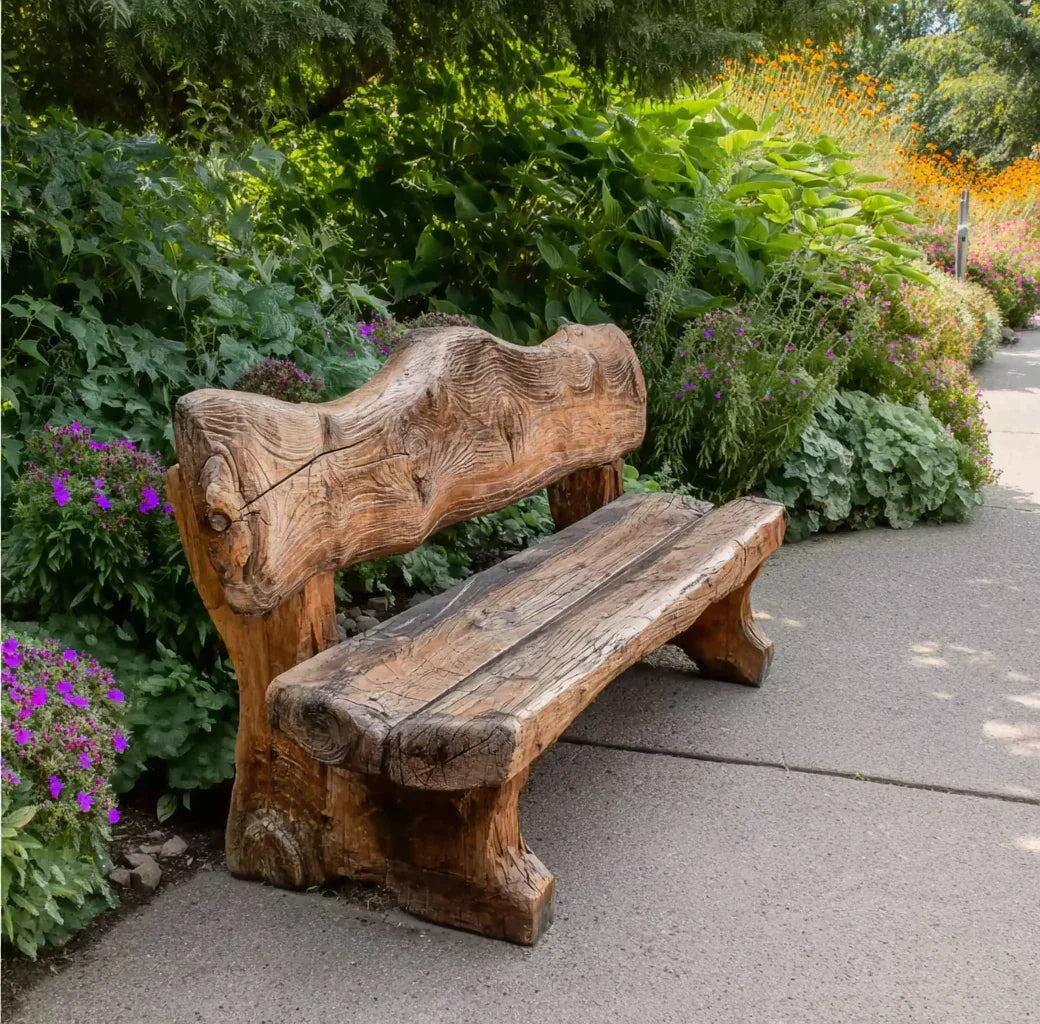
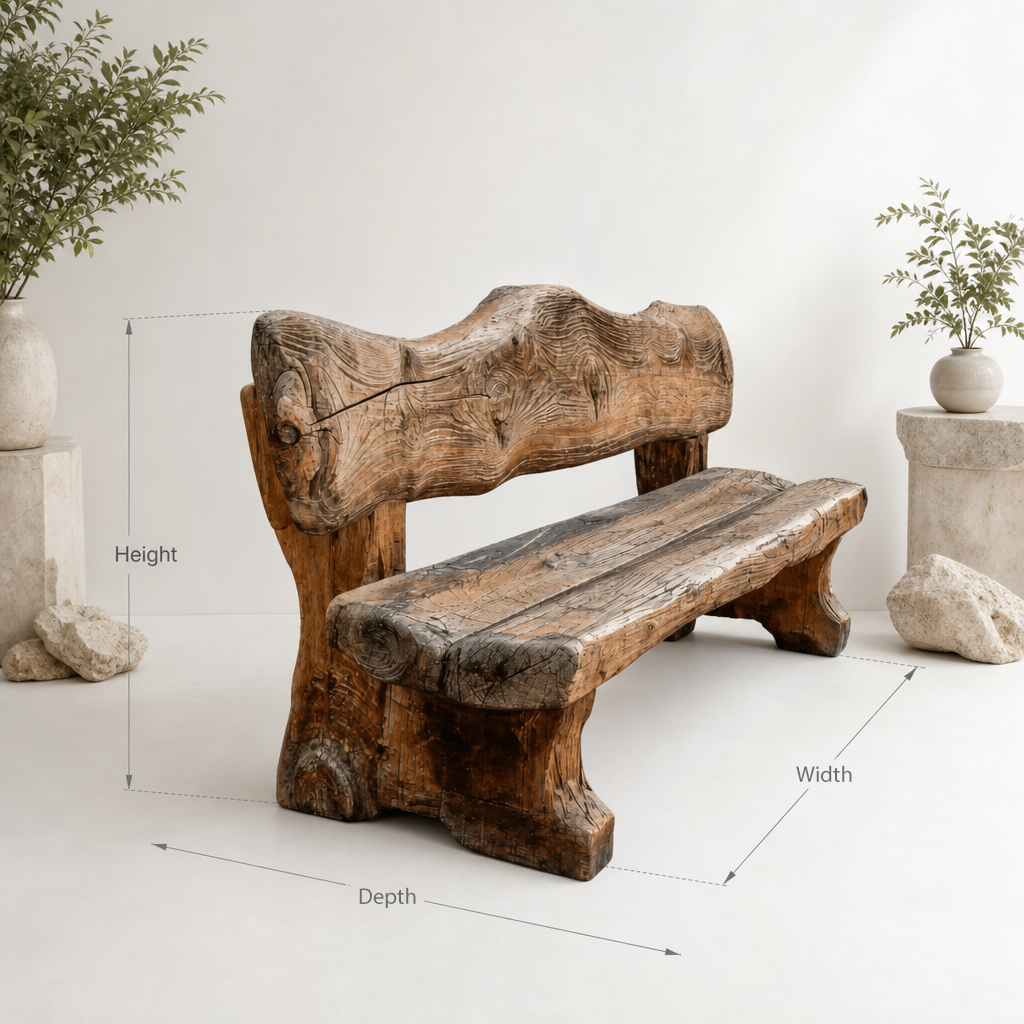
Handcrafted Rustic Solid Wood Bench - Natural Log Seating for Garden & Patio
From $1,553.00
Christmas edit
Handcrafted Rustic Solid Wood Bench - Natural Log Seating for Garden & Patio
From $1,553.00
 Christmas edit
Live Edge Wooden Entryway Bench – Solid Wood Hallway Bench with Shelf
From $1,050.00
Christmas edit
Live Edge Wooden Entryway Bench – Solid Wood Hallway Bench with Shelf
From $1,050.00
 Christmas edit
Handcrafted Walnut Bench – Organic Sculptural Mid-Century Design
From $2,327.0010% off at checkout
Christmas edit
Handcrafted Walnut Bench – Organic Sculptural Mid-Century Design
From $2,327.0010% off at checkout
 Christmas edit
Solid Walnut Sculptural Bench, Mid-Century Modern Organic Entryway Seating
From $1,876.00
Christmas edit
Solid Walnut Sculptural Bench, Mid-Century Modern Organic Entryway Seating
From $1,876.00
 Christmas edit
Handcrafted Sculptural Wood Bench – Modern Organic Curved Entryway Bench
From $2,060.0010% off at checkout
Christmas edit
Handcrafted Sculptural Wood Bench – Modern Organic Curved Entryway Bench
From $2,060.0010% off at checkout
 Christmas edit
Organic Live Edge Solid Wood Halloween Sculptural Bench
From $2,234.0010% off at checkout
Christmas edit
Organic Live Edge Solid Wood Halloween Sculptural Bench
From $2,234.0010% off at checkout
Shoe Storage Bench for Small Apartments: Sizes, Storage Types & What Actually Fits
Let's be honest - a shoe storage bench is one of those things you don't think about until you're tripping over sneakers in your own hallway every single day. A good one gives you a place to sit and keeps shoes off the floor at the same time. Two birds, one piece of furniture.
But here's the catch: if your entryway is under four feet wide (hello, apartment living) or your front door basically deposits guests straight into your living room, most shoe benches you'll find online are just too big. They jut into your walking path. They eat up what little space you had. Instead of being helpful, they become the thing you squeeze past forty times a day. That's the opposite of what you want.
The bench that actually works in a tight space is different. It's shallow enough to hug the wall, compact enough to leave you room to breathe, and smart enough to hide the shoe chaos so your apartment doesn't look like a locker room. This guide is about finding that bench - the one that fits your space instead of fighting it.

Why Most Shoe Storage Benches Don't Fit Small Entryways
The Width Problem - Hallway vs Bench
Here's a number that matters: most apartment hallways are somewhere between 36-42 inches (91-107 cm) wide. Some are even tighter, down around 30 inches (76 cm). Now look at the average shoe bench online - 36 to 48 inches (91-122 cm) wide. Do the math. That bench is going to swallow your entire wall and leave you with zero breathing room. In a hallway that narrow, a bench any wider than 30 inches (76 cm) becomes the only thing your eye lands on when you walk in the door. Not exactly the welcoming vibe you were going for.
A narrow bench at 24-30 inches (61-76 cm) changes the whole equation. It gives you a real seat and real shoe storage, but leaves space on the wall for a mirror or some hooks. The hallway still feels like a hallway - not a furniture showroom with one oversized piece.
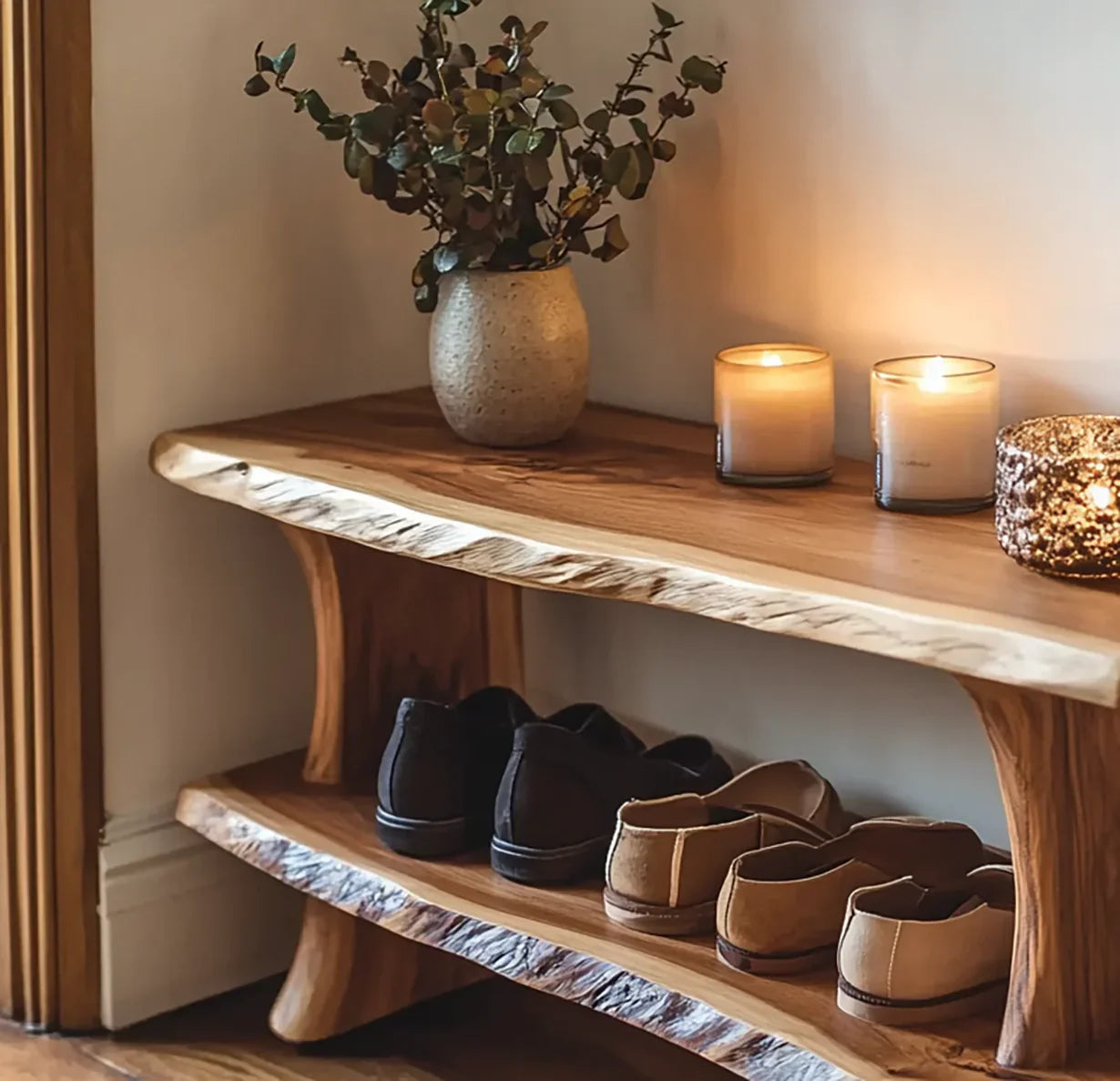
>>> Space-saving rustic hallway bench
The Depth Problem - You Need Walking Room
Everyone talks about width, but depth is what'll get you. Your hallway is probably under 42 inches (107 cm) across. You need room to stand in front of the bench and actually put your shoes on - that eats up some of that width. What's left is maybe 12-14 inches (30-35 cm) of depth for the bench itself.
Most standard benches run 16-18 inches (40-45 cm) deep. That means they'll poke out into your path by 4 inches (10 cm) or more. Four inches doesn't sound dramatic until you've hip-checked the same corner for the twentieth time in a week. A bench at 12-14 inches (30-35 cm) deep sits nearly flush to the wall and stays out of your way. That's the difference between furniture that works and furniture you resent.
The Open-Shelf Trap in Open-Plan Apartments
This is the apartment reality: no mudroom, no foyer, no transition zone. Your front door swings open and boom - you're already in the living room. The first thing anyone sees is your entryway setup, and if that setup involves six pairs of shoes spilling across an open shelf, that's the first impression your whole home makes.
Closed storage changes this completely. Doors, drawers, tilt-out compartments - whatever hides the shoes. What guests see is a clean wooden bench that looks like actual furniture, not a shoe rack someone left in the wrong room. That's the move.
How to Choose the Right Shoe Bench for a Small Space
Step 1: Match the Bench Width to Your Wall
Before you even open a browser tab, grab a tape measure. Know your wall. For a hallway 30-36 inches (76-91 cm) wide, a 24-inch (61 cm) bench is about as big as you want to go - it leaves a bit of wall on each side so the piece doesn't feel crammed in like a Tetris block. If your entryway is 36-42 inches (91-107 cm), you can stretch to a 30-inch (76 cm) bench comfortably. And at 42-48 inches (107-122 cm), a 36-inch (91 cm) bench works without dominating the space. The rule is dead simple: the narrower your hallway, the more precisely you need to match the bench to the wall. No guessing.
Step 2: Get the Depth Right - The 12-14 Inch Sweet Spot
12 to 14 inches (30-35 cm) deep - that's the range where good things happen. At 14 inches (35 cm), you can sit down like a normal human and tie your shoes without feeling like you're perched on a balance beam. Drop below 10 inches (25 cm) and you're basically sitting on a ledge. You can do it, sure, but you won't want to stay there longer than 30 seconds. Go above 16 inches (40 cm) and now you're eating into walking space.
The difference between 14 and 16 inches (35-40 cm) looks tiny on a spec sheet. In a 39-inch (100 cm) hallway, it's the difference between walking past normally and doing that awkward sideways shuffle every single time. Every inch counts.
Step 3: Calculate Your Available Depth
Here's how the math shakes out: a 36-inch (91 cm) hallway, minus 24 inches (60 cm) of standing room, gives you 12 inches (30 cm) for the bench - right at the edge of the sweet spot. A 39-inch (100 cm) hallway leaves you 15 inches (38 cm). At 42 inches (107 cm), you've got up to 18 inches (46 cm) to work with, though sticking closer to that 12-14 inch sweet spot keeps the hallway from feeling pinched. The good news: most apartment hallways that are 36 inches or wider can absolutely fit a comfortable narrow bench. The numbers work out better than you'd expect.
Step 4: Size the Storage to Your Household
Let's talk real numbers. A 24-inch (61 cm) narrow bench holds about 4 to 6 pairs on a single shelf underneath. Bump up to a 30-inch (76 cm) bench and you're looking at 6 to 8 pairs. Now, here's the trick: go for a two-tier design - two shelves stacked under the seat - and you double that capacity without the bench taking up one extra inch of floor space. For couples, a 24-inch (61 cm) two-tier bench handles everything both of you wear daily. Families of three or four should aim for 30-36 inches (76-91 cm) with at least two storage levels. Rotate seasonal shoes to the closet and you're golden.
>>> Read more shoe bench dimensions guide


Storage Styles That Work in Small Entryways
Closed Storage - The Apartment-Friendly Choice
If your entryway opens straight into your living space, closed storage isn't a nice-to-have. It's the move. Doors, drawers, or tilt-out compartments keep everything behind a clean face. Tilt-out designs are especially slick for narrow benches because they use the entire depth of the unit - no wasted space behind a hinge. And since doors swing open with very little clearance, they work fine even if your bench sits close to a perpendicular wall.
One thing to know: shoes need to be reasonably dry before you shut them away. Trap moisture inside a closed compartment and you're asking for odor and eventually mildew. It's not a dealbreaker - just a habit to build.
Open Shelves - Fast, but Visible
Open shelves are the fastest thing going - you grab your shoes and go, no doors to fuss with. They let air circulate too, so damp shoes dry naturally instead of festering. The obvious downside in an apartment: everyone sees your shoes, always.
Floating Bench - The Floor-Space Illusion
If your floor space is truly next to nothing, a floating bench mounts directly to the wall with no legs touching the ground. The entire floor underneath stays open. Visually, this is magic in a narrow hallway - your eye travels right under the bench without stopping, which makes the whole space read as wider than it actually is.

Space-Saving Layouts for Tight Entryways
Vertical Stack - Hooks Above the Bench
When your entryway is only 3 feet wide, you don't have the luxury of a bench over here and a coat rack over there. The smart play: mount hooks on the wall above the bench. One vertical column handles everything - shoes down low, seating in the middle, coats up high. Nothing wasted. This is easily the most efficient layout for a narrow apartment entryway.
Add a Slim Shelf Above for Drop-Zone Items
If you've got the ceiling height, throw a small floating shelf above the bench for keys, mail, maybe a tiny plant. The bench handles shoes and seating, the shelf handles the drop-zone stuff you'd otherwise dump on the nearest surface. You've turned one narrow slice of wall into a full entryway station - zero extra floor space required.
Just keep that upper shelf shallow. 6-8 inches (15-20 cm) is plenty. Go deeper than that and you've created a head-bump zone that'll get you every single morning.
The Corner Bench - When a Straight Bench Won't Work
Some entryways have an L-shape or an awkward corner that a straight bench just can't work with - it'd block a door swing or cut across the natural walking path. A compact corner bench set at a 45-degree angle slides into that dead space perfectly. The trade-off: corner benches are smaller than straight ones, so you're looking at 3 to 5 pairs instead of 6 to 8. But they go where nothing else can, and sometimes that's the whole game.
>>> Read more entryway bench with closed storage
Don't miss
These pieces qualify for 10% off orders over $2,000. Applied automatically at checkout.
10% off
Handcrafted Walnut Bench – Organic Sculptural Mid-Century Design
From $2,327.00
10% off at checkout
10% off
Handcrafted Sculptural Wood Bench – Modern Organic Curved Entryway Bench
From $2,060.00
10% off at checkout
10% off
Organic Live Edge Solid Wood Halloween Sculptural Bench
From $2,234.00
10% off at checkout
 10% off
Handcrafted Solid Wood Artistic Wood Bench – Soft Organic Wave Silhouette
From $2,534.00
10% off at checkout
10% off
Handcrafted Solid Wood Artistic Wood Bench – Soft Organic Wave Silhouette
From $2,534.00
10% off at checkout
Material Matters for Small-Space Benches
Solid Wood vs MDF - Stability in a Cramped Hallway
A narrow bench has a smaller footprint by definition, which means it's easier to knock around. In a tight hallway, someone's going to brush past it with a backpack or a grocery bag - probably every day. A handcrafted solid wood bench has real weight to it. It stays put when life bumps into it. MDF and particle board benches, even narrow ones, are light enough to wobble or shift every time someone walks by. In a cramped space where contact is inevitable, weight equals stability. Simple as that.
Moisture Resistance - Wet Shoes Happen
Wet shoes happen. Rain, snow, whatever you walked through - that moisture ends up on or under your bench. Solid wood handles occasional dampness without drama. It doesn't swell, doesn't warp, doesn't start peeling at the edges. MDF? It drinks water like a sponge and once those edges puff up, the bench is permanently damaged. In an apartment where this bench might be the only piece of furniture between your door and your living space, it needs to survive real life.
Light Wood vs Dark Wood - Visual Weight
Lighter woods like oak and ash bounce more light around and make a narrow hallway feel more open - less like a corridor, more like a room. Dark woods like walnut or anything heavily stained are gorgeous and add serious warmth, but in a tight space they can make things feel heavier, more enclosed. If your hallway gets zero natural light, lean light. If you've got decent lighting and you love the richness of dark wood, pick a design with an open base - legs that expose the floor underneath so the visual weight doesn't feel like a solid block from wall to floor.
>>> Narrow solid wood entryway shoe bench
Styling Tips That Won't Clutter Your Hallway
Keep the Surface Clean - One or Two Objects Max
Resist the urge to style the bench seat like a coffee table. It's still a shoe bench. Someone needs to sit there. A single small plant, a slim tray for keys, or one decorative object is more than enough. Anything more and the bench stops being functional, which defeats the whole point.
The Mirror Above - Hallway Doubler
A mirror hung centered above the bench is the oldest trick in the book for a reason - it visually doubles the width of the hallway. Keep it proportional: the mirror should be 4-6 inches (10-15 cm) narrower than the bench on each side. That creates a balanced frame of negative space around it. A mirror that's wider than the bench looks top-heavy and weirdly unstable, like it might slide off the wall.
One Frame, Not a Gallery Wall
It's tempting, sure. Photos, art prints, little frames - before you know it the wall above the bench is a collage. In a narrow hallway, multiple frames create visual noise that makes the space feel busy and cramped. Pick one framed piece or one mirror and call it done. Let the wall breathe.

Common Mistakes to Avoid
Buying Without Measuring
Most shoe benches you'll find online are sized for entryways with something like 59 inches (150 cm) of clearance - think standard suburban house, not apartment. If you don't measure your exact wall width and hallway depth before you order, you're gambling. A 47-inch (120 cm) bench in a 39-inch (100 cm) hallway? That's not going to end well. Tape measure first, credit card second.
Ignoring the Door Swing
Your front door swings inward. That arc it traces is probably 32-36 inches (81-91 cm) - check whether it overlaps with your bench location before you commit. A bench that works on paper can become a bench you have to contort around every time you come home.
Choosing Form Over Function
A bench that looks stunning on the product page but holds three pairs of flip-flops isn't solving your problem. It's creating a new one. In a small apartment, every piece of furniture has to earn its footprint. If it isn't storing shoes and providing a seat and fitting your actual space, it's not the right piece.
FAQ
What's the best width for a shoe bench in a small hallway?
For hallways 30-36 inches (76-91 cm) wide, stick to a 24-inch (61 cm) bench. For 36-42 inch (91-107 cm) hallways, a 30-inch (76 cm) bench is comfortable. Anything wider than 36 inches (91 cm) only makes sense in entryways over 48 inches (122 cm) across.
How deep should a shoe storage bench be for a narrow space?
The sweet spot is 12-14 inches (30-35 cm) deep. That's enough to sit comfortably while leaving walking clearance in a narrow hallway. Avoid benches deeper than 16 inches (40 cm) unless your hallway is at least 48 inches (122 cm) wide.
Can a shoe bench work in an entryway that opens straight into the living room?
Yes - closed storage is key. A bench with doors or tilt-out compartments hides the shoes, so your living room doesn't read as a mudroom. Pair it with a mirror above and it reads as intentional furniture, not utility storage.
Are floating shoe benches sturdy enough?
When properly mounted into wall studs, a floating bench holds 200-300 lbs (90-135 kg) - more than enough for two adults sitting. The limiting factor is always the installation, not the bench itself.
What material holds up best in a high-traffic narrow hallway?
Solid hardwood. It handles bumps, moisture, and daily use without warping or chipping. MDF is lighter and cheaper but doesn't survive long in a tight hallway where contact is inevitable.
Shop Narrow Shoe Benches →