



















Quick view
- What Is a Shoe Bench and Why Does Every Entryway Need One?
- Shoe Bench Size Guide - Match Your Bench to Your Entryway
- Shoe Capacity by Bench Size - Real Numbers, Not Marketing Fluff
- Material Comparison - Solid Wood vs. MDF vs. Metal vs. Bamboo
- Open Shelf vs. Closed Cabinet Storage - Which Is Better?
- With Backrest vs. Without - Comfort, Space, and Style Trade-Offs
- Weight Capacity - What Your Shoe Bench Actually Needs to Hold
- Style Guide - From Rustic to Modern Minimalist
- Entryway Layout Ideas - Bench + Coat Rack + Mirror Combos
- Why Handcrafted Solid Wood Shoe Benches Outlast Mass-Produced Alternatives
- Joinery that survives real life, not just the showroom
- Price Ranges and What to Expect at Each Level
- How to Choose the Right Shoe Bench - Step-by-Step Decision Framework
- Frequently Asked Questions About Shoe Benches
- Your Entryway Deserves Better Than Disposable Furniture
- Find your match in minutes, not hours of scrolling
Shop this guide
Handcrafted Benches, made to order in solid wood.
 Christmas edit
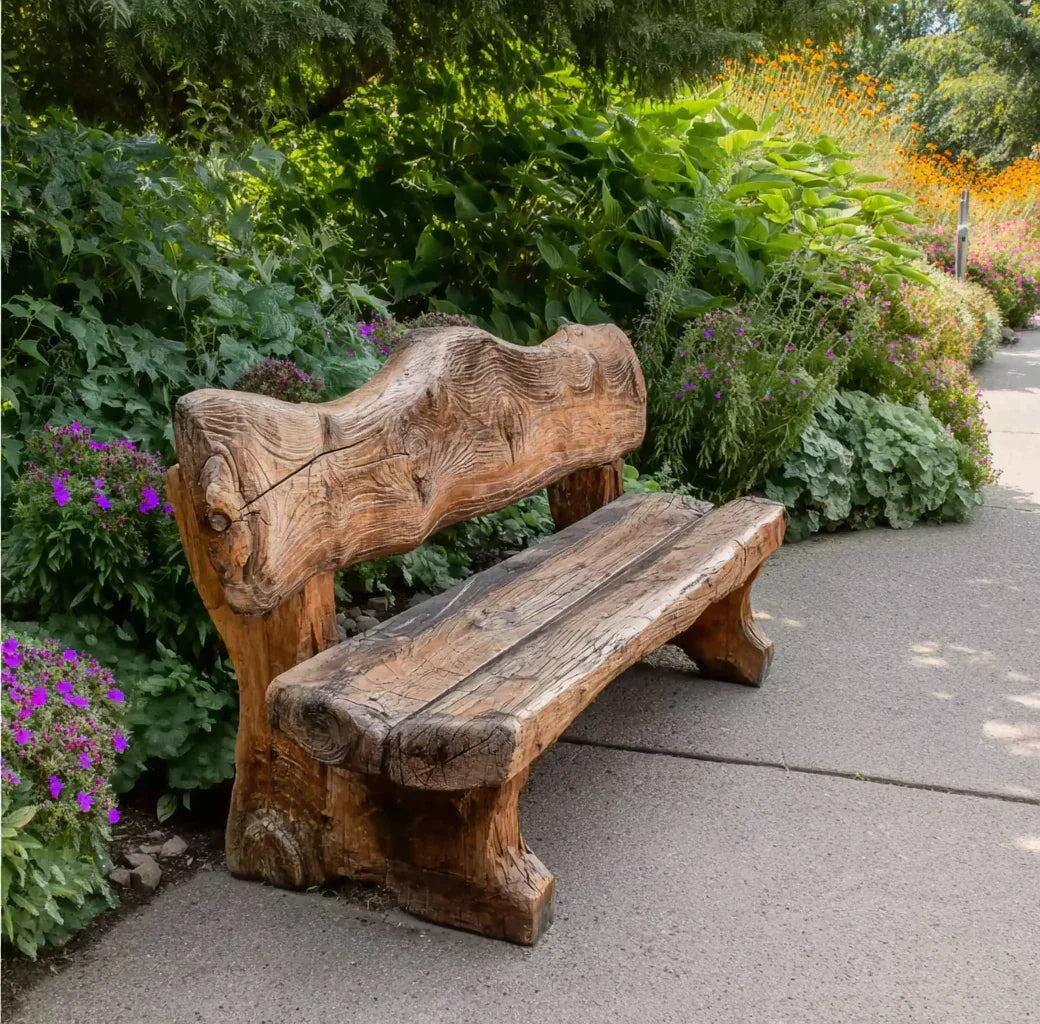
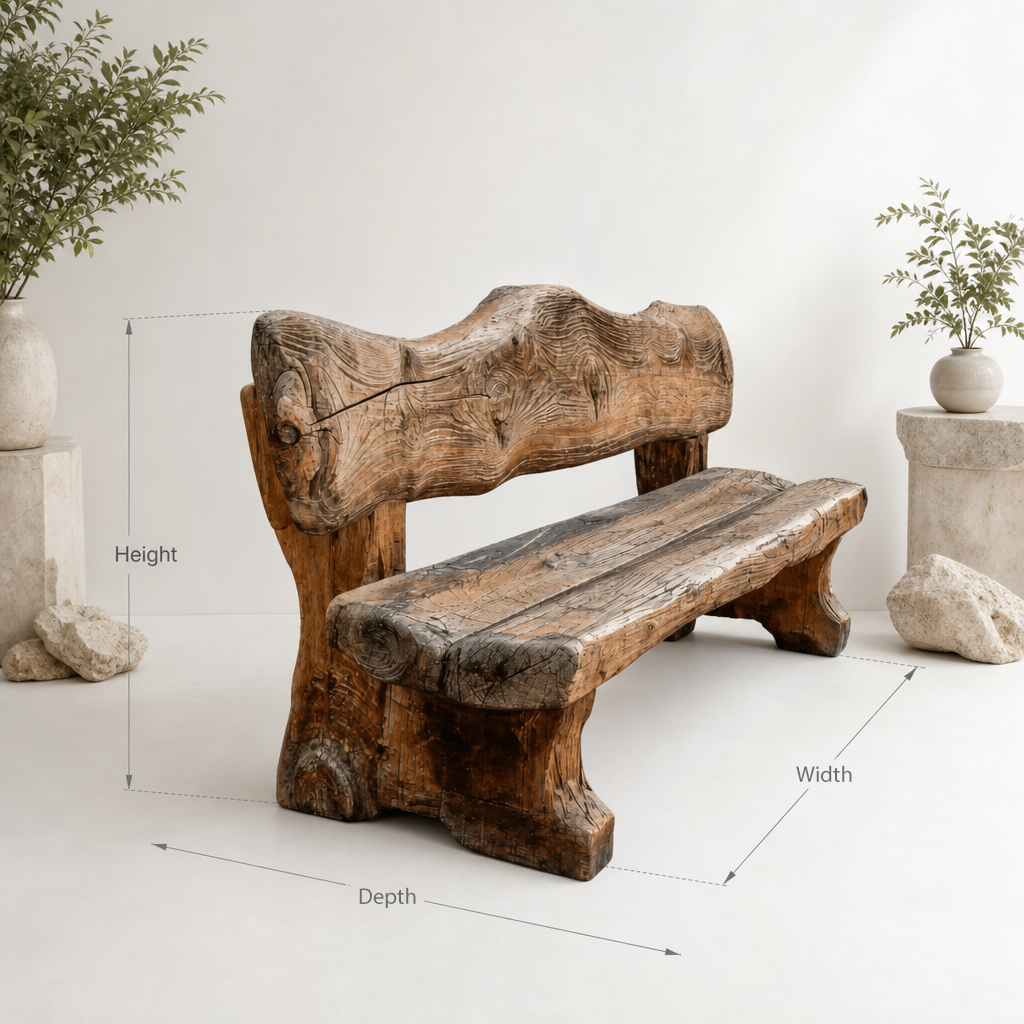
Handcrafted Rustic Solid Wood Bench - Natural Log Seating for Garden & Patio
From $1,553.00
Christmas edit
Handcrafted Rustic Solid Wood Bench - Natural Log Seating for Garden & Patio
From $1,553.00
 Christmas edit
Live Edge Wooden Entryway Bench – Solid Wood Hallway Bench with Shelf
From $1,050.00
Christmas edit
Live Edge Wooden Entryway Bench – Solid Wood Hallway Bench with Shelf
From $1,050.00
 Christmas edit
Handcrafted Walnut Bench – Organic Sculptural Mid-Century Design
From $2,327.0010% off at checkout
Christmas edit
Handcrafted Walnut Bench – Organic Sculptural Mid-Century Design
From $2,327.0010% off at checkout
 Christmas edit
Solid Walnut Sculptural Bench, Mid-Century Modern Organic Entryway Seating
From $1,876.00
Christmas edit
Solid Walnut Sculptural Bench, Mid-Century Modern Organic Entryway Seating
From $1,876.00
 Christmas edit
Handcrafted Sculptural Wood Bench – Modern Organic Curved Entryway Bench
From $2,060.0010% off at checkout
Christmas edit
Handcrafted Sculptural Wood Bench – Modern Organic Curved Entryway Bench
From $2,060.0010% off at checkout
 Christmas edit
Organic Live Edge Solid Wood Halloween Sculptural Bench
From $2,234.0010% off at checkout
Christmas edit
Organic Live Edge Solid Wood Halloween Sculptural Bench
From $2,234.0010% off at checkout
Shoe Bench Buying Guide 2026 - Size, Style & Material Tips
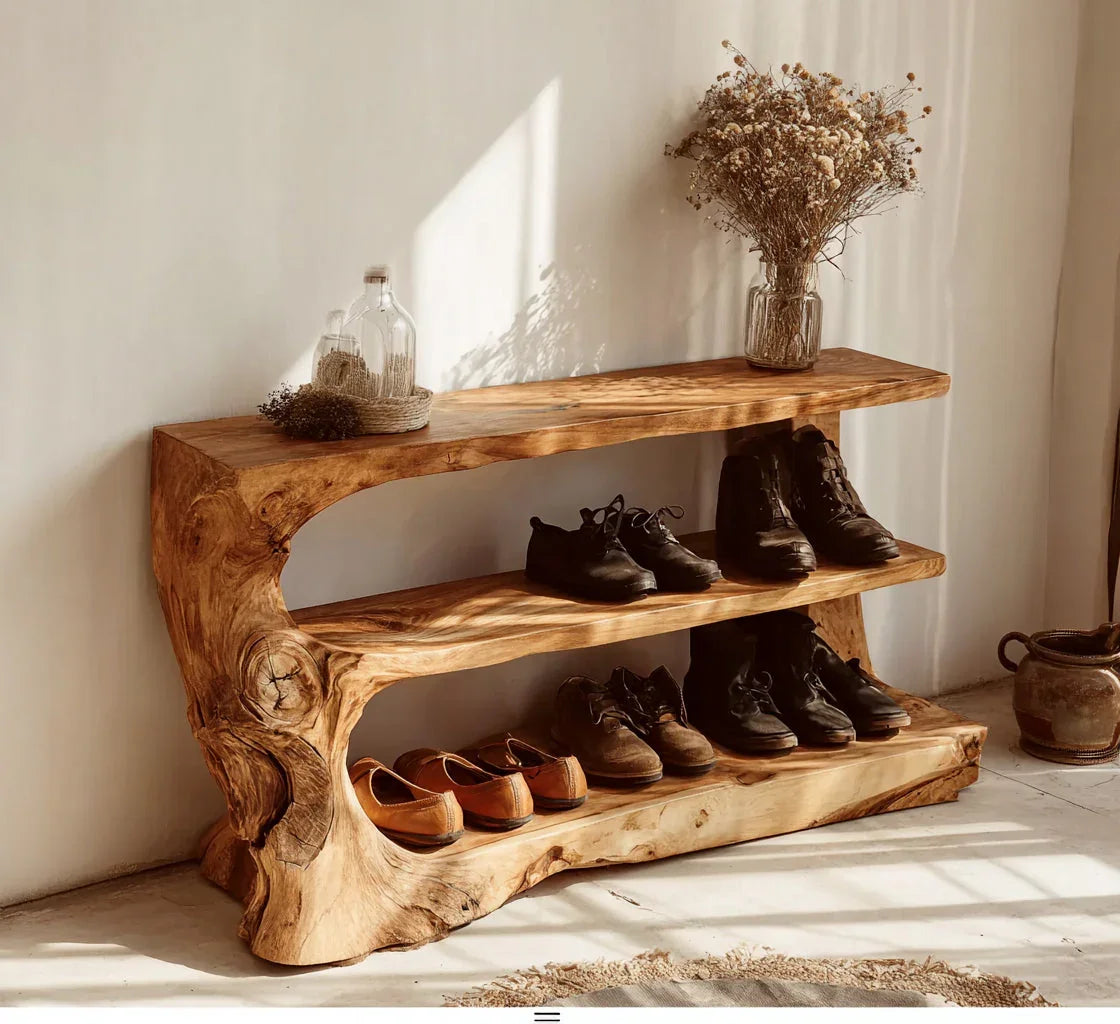
A shoe bench does more than hold your sneakers - it sets the tone for your entire home the moment someone walks through the door. Yet most buyers grab the first flat-pack option they find online, only to watch it sag, wobble, or peel within a year. This guide gives you everything you need to choose the right size, style, and material so your entryway stays organized and impressive for decades, not months.
We'll walk through exact dimensions for every entryway width, real shoe-capacity numbers (not inflated marketing claims), an honest material comparison, layout ideas that maximize small spaces, and what separates a handcrafted solid wood shoe bench from the disposable alternatives flooding Amazon. Whether you're furnishing a 36-inch apartment entry or a grand 8-foot foyer, the right bench is waiting - you just need to know what to look for.

What Is a Shoe Bench and Why Does Every Entryway Need One?
A shoe bench is a dual-purpose furniture piece that combines seating with dedicated shoe storage, typically placed in an entryway, mudroom, or hallway. Unlike a standalone shoe rack or a plain bench, it eliminates the "pile of shoes by the door" problem while giving you a comfortable spot to sit while lacing up. The best versions add visual warmth to what is often the most neglected room in the house.
The Problem a Shoe Bench Actually Solves
The average American household has 2.5 people and roughly 30-40 pairs of shoes in active rotation. Without a system, those shoes end up scattered across the floor, kicked under a console table, or heaped in a closet you dread opening. An entryway shoe bench corrals the daily-wear pairs - the 6 to 12 that actually get used each week - right where they're needed.
But it's not just about shoes. A bench gives elderly family members and small children a stable place to sit. It gives you a surface to set grocery bags while you fish for keys. And when guests arrive, a well-chosen shoe bench signals that your home is intentional, not accidental.

Shoe Bench vs. Shoe Rack vs. Shoe Cabinet: Quick Comparison
These three get confused constantly, so here's the honest breakdown:
| Feature | Shoe Bench | Shoe Rack | Shoe Cabinet |
|---|---|---|---|
| Seating | ✅ Yes - primary function | ❌ No | ❌ No (some have a top you can sit on) |
| Shoe visibility | Open shelves or partial cover | Fully visible | Fully hidden behind doors |
| Typical capacity | 6-16 pairs | 12-30 pairs | 12-24 pairs |
| Entryway footprint | Medium | Small-medium | Large |
| Best for | Entryways, mudrooms | Closets, garages | Formal foyers, apartments |
| Durability (solid wood) | 20+ years | 5-10 years | 10-15 years |
If your primary need is seating + daily shoe access at the entry point of your home, a shoe bench wins every time. Racks belong in closets; cabinets work in formal spaces where you want shoes hidden. But a bench? That's the workhorse of entryway furniture.
Shoe Bench Size Guide - Match Your Bench to Your Entryway
The single biggest mistake buyers make is choosing a shoe bench by looks alone, then discovering it's either too wide for the wall or too narrow to be useful. Size should be your first filter, not your last. Measure your entryway wall width, subtract 4-6 inches for breathing room on each side, and use the chart below to find your range.

Size Chart by Entryway Width
| Entryway Wall Width | Recommended Bench Width | Bench Depth | Ideal For |
|---|---|---|---|
| 30-40 inches | 24-33 inches | 12-14 inches | Apartments, narrow halls |
| 41-54 inches | 36-45 inches | 14-16 inches | Standard entryways, condos |
| 55-72 inches | 48-60 inches | 14-18 inches | Spacious foyers, mudrooms |
| 73-96 inches | 60-80 inches | 16-20 inches | Grand entryways, wide mudrooms |
| 96+ inches | 72-96 inches (or two benches) | 16-20 inches | Open-plan entries, boot rooms |
Depth matters more than you think. A bench shallower than 12 inches won't fit men's size 10+ shoes comfortably on the lower shelf. Go with at least 14 inches if anyone in your household wears size 9 or above. For boots, you'll want 16-18 inches of depth and a taller shelf opening (at least 8 inches clear height).
Height Considerations: Comfort vs. Capacity
Standard shoe bench seat height is 17-19 inches - the same ergonomic range as a dining chair. This works for most adults to sit, bend, and tie shoes without straining their back. Below 16 inches, the bench feels like a kids' stool. Above 20 inches, shorter adults and seniors struggle to get up.
Here's the trade-off: a taller bench (20-22 inches total) gives you room for two generous shelf tiers underneath. A standard 18-inch bench typically fits one open shelf plus a small gap at the bottom. If shoe capacity is your priority, go taller - but test the seat height against the shortest person who'll use it daily.
For benches with a backrest, total height jumps to 33-38 inches. That doesn't affect shoe storage dimensions underneath, but it does affect visual weight in small entryways. More on backrests later in this guide.


Shoe Capacity by Bench Size - Real Numbers, Not Marketing Fluff
Most product listings inflate shoe capacity by counting women's flats arranged perfectly in a catalog photo. Real households have a mix of sneakers, boots, heels, and men's shoes. Here are honest, real-world capacity numbers based on a mix of shoe sizes and types - not the theoretical maximum.

Realistic Capacity Chart
| Bench Width | Shelves | Pairs (Mixed Shoes) | Pairs (Sneakers Only) | Pairs (With Boots) |
|---|---|---|---|---|
| 24 inches | 1 | 3-4 | 4 | 2-3 |
| 36 inches | 1 | 4-6 | 6 | 3-4 |
| 36 inches | 2 | 8-10 | 10-12 | 6-8 |
| 48 inches | 1 | 6-8 | 8 | 4-6 |
| 48 inches | 2 | 12-14 | 14-16 | 8-10 |
| 60 inches | 2 | 14-18 | 18-20 | 10-14 |
| 72+ inches | 2 | 18-24 | 22-26 | 14-18 |
How to Calculate Your Household's Needs
Here's a quick formula: count the number of people in your home, multiply by 3 (the average daily-rotation pairs per person), and that's your minimum shoe bench capacity. A family of four needs space for at least 12 pairs on or near the bench.
If 12 pairs sounds like a lot for one bench, consider a two-tier shoe storage bench in the 48-60 inch range - that comfortably handles it. For families with five or more, pair a bench with a wall-mounted shoe rack above, or choose a wider 72-inch model.
One thing manufacturers won't tell you: shelf height matters as much as shelf width. If the shelf opening is under 6 inches, high-top sneakers and ankle boots won't fit without tilting. Look for at least 7 inches of clear height per shelf tier - 8 inches if anyone in your house wears boots regularly.
Material Comparison - Solid Wood vs. MDF vs. Metal vs. Bamboo
Material determines everything: how long your shoe bench lasts, how much weight it holds, whether it survives wet shoes and muddy boots, and how it looks after five years. Here's an honest comparison based on real performance data, not marketing claims.

The Full Material Breakdown
| Factor | Solid Hardwood | MDF / Particle Board | Metal (Steel/Iron) | Bamboo |
|---|---|---|---|---|
| Lifespan | 20-50+ years | 2-5 years | 10-20 years | 5-10 years |
| Weight capacity (seat) | 300-500 lbs | 150-200 lbs | 250-400 lbs | 200-250 lbs |
| Water resistance | Moderate (sealed) to high | Very low - swells and warps | High (if powder-coated) | Moderate - needs sealing |
| Scratch resistance | High (hardwoods like walnut, ash) | Low - vinyl wrap chips easily | Medium - shows scuffs | Low-medium |
| Repairability | Excellent - sand, re-stain, re-oil | Nearly impossible | Moderate - repaint, weld | Limited |
| Feel and warmth | Warm, natural grain, unique | Flat, uniform, plasticky | Cold, industrial | Light, natural but thin |
| Price range | $250-$800+ | $50-$150 | $80-$300 | $60-$200 |
| Eco-friendliness | High (renewable, biodegradable) | Low (formaldehyde, short life) | Medium (recyclable but energy-heavy) | High (fast-growing) |
Why MDF Shoe Benches Fail in Entryways
MDF (medium-density fiberboard) dominates the budget shoe bench market - and for good reason: it's cheap to manufacture and easy to wrap in a photo-printed "wood grain" vinyl. But entryways are the worst possible environment for MDF.
Wet shoes, dripping umbrellas, snow-covered boots, muddy cleats - all of this introduces moisture directly to the bottom shelf. MDF absorbs water like a sponge. Once the particle core swells, the vinyl peels, the shelf bows, and the whole bench becomes a soft, sagging mess. This typically happens within 12-18 months of regular use.
We've seen customer photos of MDF shoe benches where the bottom shelf literally crumbled after one winter in a Northeast mudroom. That $79 "bargain" ends up costing $79 every two years - or $400+ over a decade. A shoe bench in solid wood from a quality maker costs more upfront but survives decades of daily abuse without structural failure.
The Case for Solid Wood - Especially Handcrafted
Solid hardwood is the gold standard for entryway furniture, and it's not close. A well-made wooden shoe bench storage piece in walnut, ash, or acacia handles 300-500 lbs of seat weight, shrugs off daily moisture exposure when properly sealed, and actually looks better with age as the wood develops character and patina.
But not all solid wood benches are equal. Factory-produced solid wood furniture is often assembled with dowels and wood glue on an assembly line, with minimal attention to grain direction, joint reinforcement, or finish quality. The wood is kiln-dried to the bare minimum and rarely hand-inspected for weak points.
Handcrafted solid wood furniture - like what Ashdeco's Vietnamese artisans produce - takes a fundamentally different approach. Each component is carved and shaped individually, with the artisan reading the grain of each piece to place it where it's strongest. Joints are reinforced with traditional techniques like mortise-and-tenon or dovetail construction. The result is a bench that doesn't just contain solid wood - it's built by someone who understands wood at a material level.
This is why handcrafted pieces routinely outlast factory equivalents by two to three times. The wood is the same species; the craftsmanship is what separates a 10-year bench from a 30-year bench.

Don't miss
These pieces qualify for 10% off orders over $2,000. Applied automatically at checkout.
10% off
Handcrafted Walnut Bench – Organic Sculptural Mid-Century Design
From $2,327.00
10% off at checkout
10% off
Handcrafted Sculptural Wood Bench – Modern Organic Curved Entryway Bench
From $2,060.00
10% off at checkout
10% off
Organic Live Edge Solid Wood Halloween Sculptural Bench
From $2,234.00
10% off at checkout
 10% off
Handcrafted Solid Wood Artistic Wood Bench – Soft Organic Wave Silhouette
From $2,534.00
10% off at checkout
10% off
Handcrafted Solid Wood Artistic Wood Bench – Soft Organic Wave Silhouette
From $2,534.00
10% off at checkout
Open Shelf vs. Closed Cabinet Storage - Which Is Better?
Open-shelf shoe benches and closed-cabinet designs each solve different problems. Open shelves offer faster access, better ventilation, and a casual look. Closed cabinets hide clutter, reduce odor spread, and create a cleaner aesthetic. Your choice depends on how your household actually uses the entryway - not what looks best in a catalog photo.
Open Shelf: Pros and Best Use Cases
Ventilation is the killer feature. Shoes need airflow to dry out and prevent mold and odor buildup. Open-shelf shoe benches let air circulate freely around each pair, which is critical if you live in a humid climate, have active kids tracking in sweat-soaked sneakers, or deal with rainy/snowy seasons.
Open shelves also make it faster to grab and go. No bending down to open a door, no fumbling with a pull-out drawer - you see your shoes, you pick them up, you leave. For families with young children, this visual accessibility means kids can actually put their own shoes away (a minor miracle worth optimizing for).
The downside: open shelves show everything. If your household's shoe game is more "chaotic pile" than "curated display," the bench can look messy. Dust also collects more freely on open shelves, requiring a weekly wipe-down.
Best for: Mudrooms, back entries, casual households, humid climates, families with kids.
Closed Cabinet: Pros and Best Use Cases
Closed-front shoe storage bench designs with doors or tilt-out drawers hide shoes completely. This creates a clean, minimal look that works well in formal entryways, apartments where the front door opens directly into the living space, or homes where aesthetic control matters more than grab-and-go speed.
Some closed designs use slatted doors or perforated panels to allow partial airflow while still hiding the contents. This is a strong compromise if you want the clean look but worry about ventilation. Avoid fully sealed cabinets with no airflow - they trap moisture and create odor problems within weeks.
Best for: Formal foyers, apartments, minimalist interiors, guest-facing entryways.

The Hybrid Option
Some of the best shoe bench designs combine both: open shelves on top (or at the front) for daily-use shoes, with a closed compartment or drawer for less-used pairs, shoe care supplies, or seasonal items like gloves and scarves. This gives you the speed of open access with the tidiness of concealed storage.
If you're choosing between pure open and pure closed, lean open. Ventilation problems are harder to fix after the fact than aesthetic ones - you can always add fabric storage bins to open shelves to hide the mess, but you can't add airflow to a sealed cabinet without modifying the doors.
With Backrest vs. Without - Comfort, Space, and Style Trade-Offs
A backrest transforms a shoe bench from a perch into a seat. It adds comfort for longer sitting, provides back support for seniors and anyone with mobility issues, and gives the bench a more substantial, furniture-grade presence. But it also adds height, visual bulk, and cost. Here's how to decide.
When You Need a Backrest
Choose a bench with a backrest if:
- Seniors or people with mobility issues use it daily - getting up from a backless bench requires more core strength. A backrest provides the support to push off from.
- The bench sits in a space where people linger - mudrooms where kids wait for the school bus, foyers with a window, entries where you sort mail or chat with a neighbor.
- You want a "furniture" look, not a "utility" look - a backrest gives the bench visual authority. It reads as an intentional design choice, not a storage afterthought.
- The wall behind is blank and needs anchoring - a high-backed bench fills vertical space and can replace the need for wall art or a mirror above.
When to Skip the Backrest
Go without a backrest if:
- Your entryway is narrow - backless benches are visually lighter and don't block sightlines, making tight entries feel more open.
- The bench sits under a window or mirror - a backrest would block the feature behind it.
- You want flexibility - backless benches double as side tables, plant stands, or extra seating when pulled into other rooms.
- Quick in-and-out is the priority - you sit for 20 seconds to tie your shoes, not 20 minutes.

Dimension Comparison
| Specification | With Backrest | Without Backrest |
|---|---|---|
| Total height | 33-38 inches | 17-22 inches |
| Visual weight | Substantial - dominates the wall | Light - blends into the space |
| Seat comfort (10-min sit) | 8/10 | 5/10 |
| Wall space required above | None - backrest fills it | Yes - needs art, mirror, or hooks above |
| Average price premium | +15-30% | Baseline |
| Ease of moving | Heavier, more awkward | Lighter, easier to reposition |
Our recommendation: if the bench is the primary seating in your entryway and someone over 60 uses it regularly, get the backrest. For everything else, a backless design gives you more flexibility and a cleaner look.
Weight Capacity - What Your Shoe Bench Actually Needs to Hold
Weight capacity determines whether your shoe bench is safe furniture or a liability. A bench that holds 150 lbs sounds fine - until two adults sit on it at Thanksgiving while pulling on boots. Here's what the numbers actually mean and what to look for.
How Much Capacity Do You Actually Need?
The average American adult weighs approximately 180 lbs (men) and 170 lbs (women). If two people ever sit on your bench simultaneously - helping a child with shoes, a couple getting ready to leave - you need at least 350 lbs of static load capacity. Add a 1.5x safety margin (for the dynamic force of sitting down, not just static weight), and you're looking at 500+ lbs as the real target.
Here's a practical tier system:
- Under 200 lbs: Decorative only. One small adult at a time. Common in bamboo and MDF benches. Not recommended for daily family use.
- 200-300 lbs: Single-user bench. Fine for one adult, but creaks under two. Typical of metal-frame budget benches and most bamboo models.
- 300-500 lbs: The sweet spot. Handles two adults comfortably with safety margin. Standard for well-made solid wood benches.
- 500+ lbs: Built to last generations. Typical of thick hardwood construction with reinforced joints. This is where handcrafted solid wood benches from makers like Ashdeco land - because the joinery is engineered for real loads, not catalog photos.
Where Benches Fail: The Weak Points
Benches don't break in the middle of the seat (unless the material is extremely thin). They fail at three specific points:
- Leg joints - where legs connect to the seat frame. Glued butt joints fail first. Mortise-and-tenon or bolted joints hold.
- Shelf supports - internal shelves held by plastic pegs or thin dowels can collapse under 30+ lbs of shoes. Dadoed shelves (where the shelf sits in a groove cut into the side panel) are far stronger.
- Seat sag - thin MDF or plywood seats bow permanently under repeated loading. Solid hardwood seats 3/4-inch thick or more maintain their flat profile for decades.
When evaluating any shoe bench, ask specifically about joint construction and shelf mounting. If the listing doesn't mention it, assume the cheapest method was used.
Style Guide - From Rustic to Modern Minimalist
A shoe bench needs to match your entryway's visual language, not fight against it. The same storage function can look completely different depending on the design style. Here's how the major aesthetics translate to shoe bench design, and what to look for in each.
Rustic and Farmhouse
A rustic shoe bench emphasizes the natural character of the wood: visible grain, knots, live edges, and hand-distressed finishes. The look is warm, inviting, and intentionally imperfect. Farmhouse variants often add turned legs, beadboard back panels, or a weathered paint finish over natural wood.
This style works beautifully in homes with hardwood floors, shiplap walls, or earthy color palettes. The key to a good rustic bench is authenticity - furniture where the wood's natural character is celebrated, not factory-simulated with a printed vinyl overlay. Handcrafted pieces where artisans work with the wood's natural shape and grain produce the most convincing rustic aesthetic because the texture is real, not applied.
Pair a rustic shoe bench with wrought-iron wall hooks, a woven jute rug, and a galvanized metal basket for accessories.
Mid-Century Modern and Scandinavian
Clean lines, tapered legs, light-toned wood (ash, birch, maple), and minimal ornamentation define these styles. Shoe benches in this aesthetic tend to be lower-profile, with slim silhouettes and open shelving. The wood is smooth and lightly finished to show grain without adding heaviness.
Scandinavian entryway design favors function wrapped in quiet beauty. A solid wood bench with one or two open shelves, paired with a wall-mounted coat rack, creates the classic Nordic mudroom look that's dominated Pinterest and design magazines for the past decade.
Industrial and Contemporary
Industrial shoe benches combine metal frames (iron, steel) with wood seats and shelves. The contrast of warm wood and cold metal creates visual tension that works in lofts, converted spaces, and modern urban homes. Look for welded steel pipe legs or hairpin legs paired with thick reclaimed or solid wood slabs.
Pure contemporary designs lean toward floating-shelf illusions, hidden hardware, and sharp geometric shapes. These often require precise craftsmanship to achieve the "effortless" look - another area where handcrafted construction outshines mass production, since every edge and joint needs to be exact.
Entryway Layout Ideas - Bench + Coat Rack + Mirror Combos
A shoe bench works hardest when it's part of a complete entryway system, not a standalone piece. The classic trio - bench, coat rack, and mirror - handles shoes, outerwear, and that last-second appearance check before you walk out the door. Here's how to arrange them based on your space.

Layout 1: The Vertical Stack (Narrow Entryways, 30-48 inches wide)
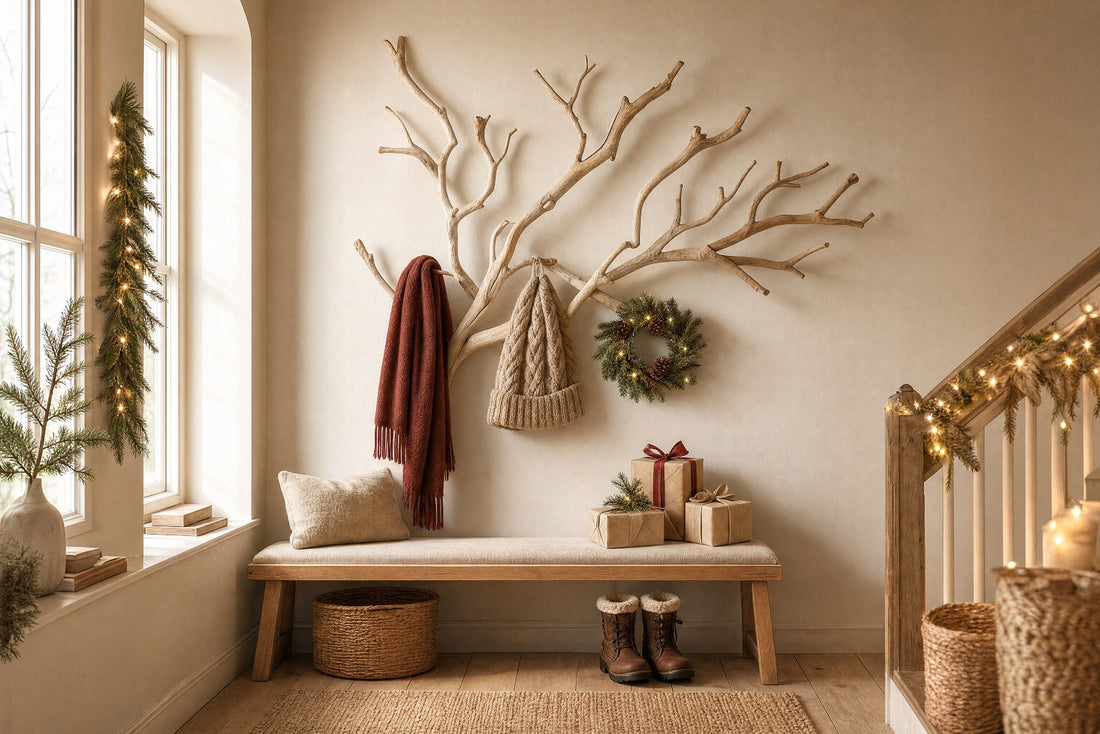
When width is limited, build upward. Place your entryway shoe bench against the wall, mount a row of coat hooks or a wall-mounted coat rack 12-15 inches above the bench's seat (or above the backrest if it has one), and hang a small round mirror above or beside the hooks.
This arrangement keeps everything in a single vertical column, uses zero floor space beyond the bench footprint, and creates a surprisingly complete entry station in under 4 square feet of wall space. For narrow halls, choose a bench no wider than 36 inches with open shelves below to keep the visual weight low.
Layout 2: The L-Shape (Corner Entryways, 48-72 inches per wall)
If your entry turns a corner, use the L. Place the shoe bench along the longer wall and mount a coat rack or coat rack tree in the corner or along the shorter wall. A full-length mirror goes on the shorter wall opposite the bench.
This layout feels intentional and designed, even in builder-grade homes. The bench handles shoes and seating, the corner handles coats and bags, and the mirror adds depth and light. It's the most Instagram-worthy arrangement and the most functional for families.
Layout 3: The Gallery Wall (Wide Entryways, 72+ inches)
With a wide wall to work with, you can go generous. A 60-72 inch wooden bench anchors the bottom, with a combination of hooks, shelves, framed art, and a mirror arranged gallery-style above. This is the classic American mudroom look, and it's where a substantial solid wood bench really shines - the wide, handcrafted piece becomes the focal point of the entire wall.
Add a wall-mounted coat rack as the functional centerpiece of the gallery arrangement, flanked by matching frames or decorative baskets. Storage baskets on the bench's lower shelf keep the look cohesive.
Accessories That Complete the Setup
- Woven baskets - place on bench shelves to hide small items (keys, sunglasses, dog leashes)
- Boot tray - set on the floor below or beside the bench for wet/muddy footwear
- Seat cushion - adds comfort and color; choose washable covers for easy cleaning
- Umbrella stand - compact cylindrical stands tuck beside the bench for rainy climates
- Key hooks or small wall shelf - mount at hand-height next to the mirror for daily grab-and-go items
Why Handcrafted Solid Wood Shoe Benches Outlast Mass-Produced Alternatives
A solid wood shoe bench from a furniture factory and one handcrafted by skilled artisans start with the same raw material. But the end products are fundamentally different in construction quality, longevity, and long-term value. Here's exactly why - with specifics, not marketing slogans.

Joinery That Survives Real Life
Mass-produced benches use the fastest joint methods: cam locks, dowels with glue, and pocket screws. These work fine on day one. But entryway furniture endures constant stress - people dropping onto the seat, kids swinging their legs, shoes being shoved onto shelves. Over time, cam locks loosen (they're designed for one-time assembly), glue joints dry and crack, and pocket screws strip out of softwood or MDF.
Handcrafted benches use time-tested joinery: mortise-and-tenon joints where a projecting piece locks into a matching cavity, or dovetail joints that physically interlock so the pieces can't pull apart even without glue. These techniques take 3-5 times longer to execute than factory methods, but they produce joints that actually tighten under load instead of loosening.
Ashdeco's Vietnamese artisans use modular construction - each component is carved and shaped separately, then assembled by hand. This isn't just a production method; it's a quality control system. Each piece is inspected, fitted, and adjusted individually before final assembly. Factory production inspects by random sampling; handcrafted production inspects every single piece.
Wood Selection and Grain Intelligence
A factory cuts lumber for maximum yield - fitting as many parts as possible from each board, regardless of grain direction. An experienced woodworker reads the grain and places each piece where it's structurally strongest. Seat planks are oriented so the grain runs along the length (maximizing flex resistance). Legs use straight-grain sections for compressive strength. Shelf supports use the densest part of the board.
This "grain intelligence" is invisible in product photos but profoundly affects real-world performance. A bench seat made from a plank cut across the grain can crack under repeated stress. The same species, cut with the grain and placed by someone who knows wood, handles the same stress for decades.
Finish Quality and Repairability
Factory finishes are sprayed on assembly lines - fast, uniform, but thin. Handcrafted finishes are applied in multiple coats with sanding between layers, building up protection that penetrates deep into the wood fiber rather than sitting on the surface.
More importantly, handcrafted solid wood furniture is repairable. A scratch on a factory MDF bench exposes raw particle board - there's no fix. A scratch on a solid wood bench can be sanded out and refinished. A wobbly joint can be re-glued and clamped. Even significant damage - a cracked leg, a warped shelf - can be repaired by a woodworker, because the entire piece is solid material, not layers of different materials bonded together.
This repairability is the real environmental argument for solid wood. A bench you repair and refinish over 30 years produces zero additional manufacturing waste. A bench you replace every 3 years generates ten times the waste, packaging, and shipping emissions.
Handcrafted in Vietnam
Joinery that survives real life, not just the showroom
Ashdeco's solid wood shoe benches use mortise-and-tenon joinery built by Vietnamese artisans - engineered for 500+ lbs and decades of daily use.
Shop solid wood shoe benches →Price Ranges and What to Expect at Each Level
Shoe bench prices range from $40 to over $1,000, and the jump between tiers isn't just about brand name - it reflects real differences in materials, construction, and how long the bench will serve you. Here's what your money actually buys.
Budget: $40-$120
Materials are MDF, particle board with vinyl wrap, thin bamboo slats, or lightweight metal tubing. Assembly is cam-lock or basic screw construction. Shelves are typically held by plastic pegs.
What to expect: functional for 1-3 years. Fine for a rental apartment where you don't plan to stay. Weight capacity is usually 150-200 lbs (one average adult). These benches often ship with instructions that require 45+ minutes of assembly and an allen wrench that strips after three bolts.
Watch out for: "wood" in the listing that actually means "wood-print vinyl over particle board." If the listing doesn't specifically say "solid wood" with a species name (walnut, oak, acacia), it's not solid wood.
Mid-Range: $120-$350
This tier includes metal-frame benches with real wood seats, basic solid wood construction (often pine or rubber wood), and higher-quality bamboo designs. You'll see better hardware, sturdier shelves, and more design variety.
What to expect: 5-10 years of solid use. Weight capacity around 250-350 lbs. Assembly is more robust (bolts instead of cam locks), and some models come partially pre-assembled. This is the "good enough" tier for most households - functional, decent-looking, and not heartbreaking when it eventually wears out.
Premium: $350-$800+
Solid hardwood construction (walnut, ash, acacia, teak), handcrafted joinery, multi-coat finishes, and designs by actual furniture makers rather than factory engineers. These are the benches that become permanent fixtures in your home.
What to expect: 20-50+ years. Weight capacity 400-600 lbs. The wood develops a richer patina with age. Repairs are possible. Your children might inherit it. The handcrafted solid wood shoe benches from Ashdeco fall in this range - each one shaped by Vietnamese artisans who treat wood sculpting as a craft, not a production quota.
The cost-per-year math is simple: a $75 MDF bench lasting 3 years costs $25/year. A $450 solid wood bench lasting 30 years costs $15/year. Premium is literally cheaper over time.
How to Choose the Right Shoe Bench - Step-by-Step Decision Framework
If you've read this far, you have all the data. Now here's the sequence to make the actual decision without overthinking it. Follow these steps in order - each one narrows your options by roughly half.

Step 1: Measure Your Space (Eliminates 50% of Options)
Measure the wall width where the bench will go. Subtract 8-12 inches total for breathing room. That's your maximum bench width. Also measure the depth available - if there's a door swing, hallway traffic path, or opposite wall closer than 36 inches, you need a shallow-depth bench (12-14 inches max).
Step 2: Count Your Shoes (Sets the Capacity Target)
People in household × 3 = minimum pairs your bench needs to hold. Check our capacity chart above and match your number to a bench size. If the required capacity exceeds what fits in your measured space, plan for a secondary shoe storage solution (closet rack, over-door organizer) for overflow.
Step 3: Choose Your Material (Sets the Budget and Lifespan)
If this is a long-term home, invest in solid wood. If you're renting and moving in a year, a mid-range metal-frame bench is practical. Avoid MDF in any entryway that sees rain, snow, or regular moisture - the math never works out.
Step 4: Open vs. Closed Storage
Humid climate or active family → open shelves. Formal entry or apartment → consider closed or hybrid. When in doubt, choose open (you can always add baskets for concealment).
Step 5: Backrest or Not
Senior household member or bench-as-seating → get the backrest. Quick in-and-out or under-window placement → skip it.
Step 6: Style Matching
Look at your entryway's existing palette and materials. Wood floors → wood bench (match the tone or create intentional contrast). Tile or stone → wood adds warmth. Existing modern furniture → clean-line bench. Existing farmhouse elements → rustic shoe bench with natural character.
Browse Ashdeco's shoe bench collection with these filters in mind, and you'll find the right match in minutes rather than hours of scrolling.
Frequently Asked Questions About Shoe Benches
How wide should a shoe bench be for a standard entryway?
A standard residential entryway is typically 48-60 inches wide. For this space, a shoe bench between 36 and 48 inches wide works best, leaving 6-12 inches of clearance on each side for visual breathing room and easy access. Always measure your specific wall before ordering.
How many shoes can a shoe bench hold?
A typical 48-inch wide, two-shelf shoe bench holds 12-14 pairs of mixed shoes in real-world use. Marketing often claims 16-20 pairs, but that assumes small women's flats arranged perfectly. Expect about 3 pairs per linear foot of shelf space with a normal mix of shoe sizes and types.
Is solid wood better than MDF for a shoe bench?
Yes - significantly. Solid wood handles the moisture, weight, and daily impact that entryway furniture endures. MDF absorbs water, swells, and structurally fails within 1-3 years in entryways exposed to wet shoes and humidity. Solid wood lasts 20-50+ years when properly finished and can be repaired and refinished.
What is the best height for a shoe bench seat?
The ideal seat height is 17-19 inches, matching the ergonomic range of standard chair seating. This allows most adults to sit comfortably, bend to tie shoes, and stand back up without strain. For households with elderly users, stay at 18-19 inches to make standing easier on joints.
Can a shoe bench support two adults sitting together?
A well-built solid wood shoe bench with reinforced joinery can support 400-500+ lbs, easily handling two adults. Budget MDF or thin bamboo benches rated at 150-200 lbs cannot safely hold two adults. Always check the weight capacity rating and lean toward solid hardwood construction for shared seating.
Should I get a shoe bench with or without a backrest?
Choose a backrest if elderly household members need support when sitting and standing, or if the bench serves as primary seating in a space where people sit for more than a minute. Skip the backrest for narrow entryways, under-window placement, or quick in-and-out use to keep the visual profile low and maintain layout flexibility.
How do I keep my shoe bench from getting smelly?
Choose an open-shelf design for maximum airflow. Place cedar shoe inserts or activated charcoal pouches on each shelf to absorb moisture and odor. Wipe shelves weekly with a damp cloth and mild wood cleaner. For closed-cabinet designs, leave doors slightly open overnight to ventilate, and use a removable boot tray to catch moisture before it reaches the wood.
What's the best shoe bench for a mudroom?
Mudrooms need a bench that handles heavy moisture, boots, and high traffic. We recommend a solid hardwood shoe bench (36-60 inches wide) with open shelves for ventilation, a sealed finish for water resistance, and at least 300 lbs of seat capacity. Pair it with a boot tray and wall-mounted coat hooks for a complete mudroom station.

Your Entryway Deserves Better Than Disposable Furniture
The right shoe bench organizes your daily shoe chaos, gives everyone a place to sit, and sets the first impression for every person who walks through your door. It's not complicated - measure your space, count your shoes, pick a material that lasts, and choose a style that fits your home.
If you're ready to invest in a piece that lasts decades instead of seasons, explore Ashdeco's handcrafted solid wood shoe bench collection - every piece carved by Vietnamese artisans from real hardwood, built with the kind of joinery and finish that turns an entryway essential into a family heirloom.
Decision made? Time to shop
Find your match in minutes, not hours of scrolling
Browse Ashdeco's full shoe bench collection - filter by size, material, and style using everything you just learned.
Browse the collection →