



Quick view
- Types of Outdoor Cat Trees
- Best Materials for Outdoor Cat Trees
- Safety Essentials for Outdoor Cat Trees
- DIY Outdoor Cat Tree vs. Handcrafted: An Honest Comparison
- Placement Tips for Outdoor Cat Trees
- Best Outdoor Cat Tree Picks by Situation
- Maintenance: Keeping Your Outdoor Cat Tree in Shape
- Frequently Asked Questions
Shop this guide
Handcrafted Cat Tree Tower, made to order in solid wood.
 Hollow Tunnel Cave Sisal Scratching Cat Tree Tower in Sculpted Solid Wood
From $1,532.00
Hollow Tunnel Cave Sisal Scratching Cat Tree Tower in Sculpted Solid Wood
From $1,532.00
 Multi Tier Sculpted Botanical Canopy Cat Tree Tower in Matte Finished Solid Wood
From $1,765.00
Multi Tier Sculpted Botanical Canopy Cat Tree Tower in Matte Finished Solid Wood
From $1,765.00
 Sculptural Spiral Solid Wood Cat Tree Tiered Modern Feline Lounger
From $2,217.0010% off at checkout
Sculptural Spiral Solid Wood Cat Tree Tiered Modern Feline Lounger
From $2,217.0010% off at checkout
 Nature Inspired Branch Solid Wood Corner Cat Tree Tower Condo
From $1,854.00
Nature Inspired Branch Solid Wood Corner Cat Tree Tower Condo
From $1,854.00
 Live Edge Slice Tiered Solid Wood Cat Tree Freestanding Multi Level Perch
From $1,732.00
Live Edge Slice Tiered Solid Wood Cat Tree Freestanding Multi Level Perch
From $1,732.00
 Artisanal Solid Wood Sculptural Tree Cat Tower & Multi-Tier Botanical Display Perch Stand
From $2,076.0010% off at checkout
Artisanal Solid Wood Sculptural Tree Cat Tower & Multi-Tier Botanical Display Perch Stand
From $2,076.0010% off at checkout
An outdoor cat tree turns your backyard into a feline playground. Cats are hardwired to climb, perch, and survey their territory from above - and a well-built outdoor cat tree gives them exactly that. Unlike flimsy indoor carpet towers, outdoor cat trees need to handle UV exposure, rain, humidity, and the occasional squirrel chase. The payoff? A happier, more stimulated cat and a backyard that actually looks interesting.
This guide covers every type of outdoor cat tree worth considering, the materials that survive the elements, safety essentials, and whether you should build one yourself or invest in a handcrafted piece that lasts.
Types of Outdoor Cat Trees
Outdoor cat trees come in more varieties than most people realize. The right choice depends on your yard size, climate, and how many cats you're outfitting. Here's a breakdown of the most practical styles for backyard use.
Freestanding Tower Cat Trees
These are the classic multi-level structures with platforms, perches, and sometimes enclosed hideaways. For outdoor use, look for models built from cedar, teak, or treated hardwood - not particleboard wrapped in carpet. A solid freestanding tower should weigh enough (or be anchored) to resist tipping when a 15-pound cat launches off the top platform.
Freestanding towers work best on flat patios or decks. On grass, they tend to sink and wobble over time unless you add a gravel base or concrete footings.
Tree-Mounted and Trunk-Wrap Cat Trees
If you have a mature tree in your yard, mounting platforms and perches directly to the trunk is one of the most natural-looking options. Use lag bolts rated for outdoor use (stainless steel or hot-dipped galvanized) and check annually for tree growth engulfing the hardware.
This style suits yards with established shade trees and cats that already show interest in climbing bark.
Cat Patios (Catios) with Climbing Elements
A catio is an enclosed outdoor space - essentially a screened porch for cats. Adding vertical climbing posts, shelves, and bridges inside a catio gives you the best of both worlds: outdoor stimulation with full containment. Catios range from small window-box style enclosures to full walk-in structures.
If your neighborhood has coyotes, hawks, or busy roads, a catio with built-in climbing features is the safest outdoor cat tree setup.
Natural Driftwood and Branch Cat Trees
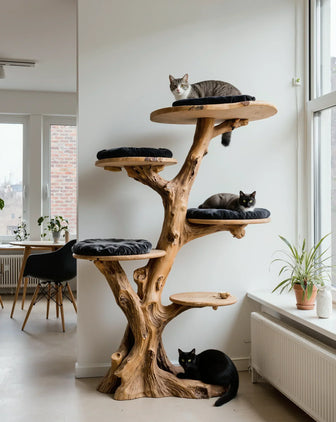
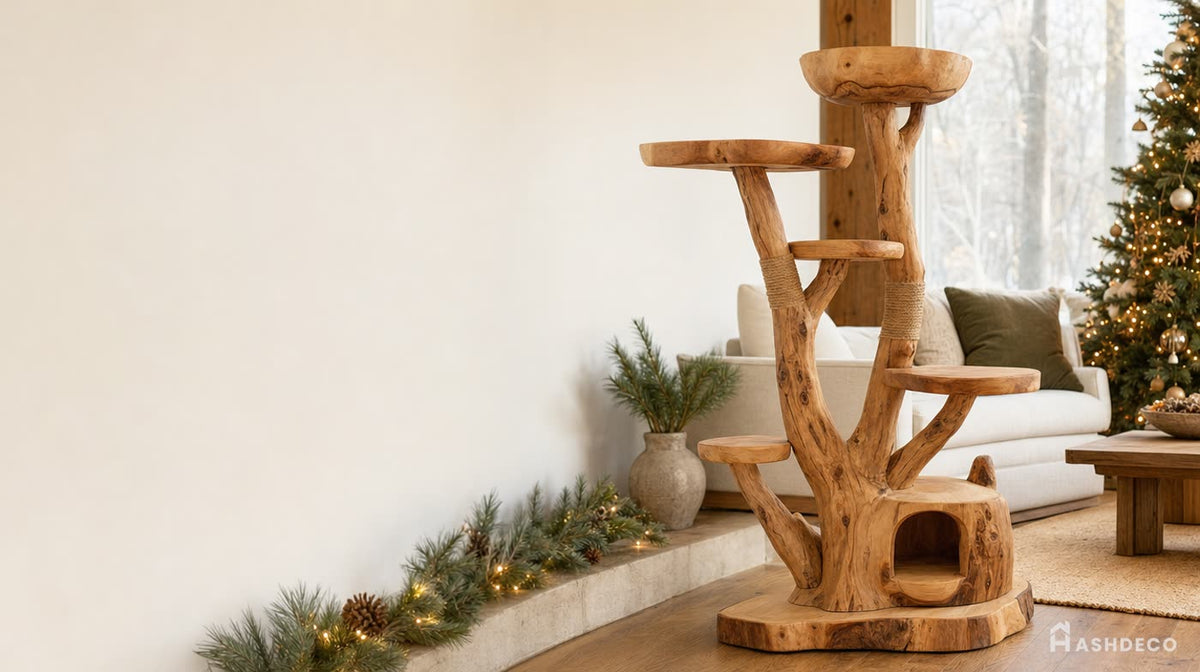
These use real branches - often driftwood, manzanita, or reclaimed hardwood limbs - as the climbing structure. The organic shapes create varied grip angles that are excellent for claw health. Each piece is unique, which makes them conversation starters as much as cat furniture.

Ashdeco's handcrafted cat tree towers follow this philosophy - Vietnamese artisans hand-select and shape solid wood into natural climbing structures that double as sculptural yard art. We cover this in more detail in our cat tree towers — workshop walkthrough guide.
Best Materials for Outdoor Cat Trees
Material choice makes or breaks an outdoor cat tree. Indoor-grade materials will warp, rot, or fall apart within a single season outdoors. Here's what actually works and what to avoid.
| Material | Weather Resistance | Durability | Cat-Friendliness | Cost |
|---|---|---|---|---|
| Western Red Cedar | Excellent - natural oils repel moisture | 15-20 years | Great grip, safe if chewed | $$ |
| Teak | Excellent - highest oil content | 25+ years | Smooth, good for platforms | $$$ |
| Pressure-Treated Pine | Good with treatment | 10-15 years | Avoid - chemicals unsafe for cats | $ |
| White Oak | Very good - closed grain | 20+ years | Excellent for scratching posts | $$ |
| Carpet/Particleboard | Poor - absorbs water, molds | 1-2 seasons | Traps bacteria when wet | $ |
Critical warning: Never use pressure-treated lumber (the green-tinted stuff from hardware stores) for cat furniture. The copper azole compounds used in modern treatment are toxic if ingested. Cats groom their paws constantly - any chemical on a climbing surface ends up in their mouths.
Stick with naturally rot-resistant species: cedar, white oak, black locust, or teak. If you want a finish, use food-grade linseed oil or tung oil - both are non-toxic once cured.


Safety Essentials for Outdoor Cat Trees
An outdoor cat tree faces hazards that indoor furniture never encounters. Getting safety right means your cat enjoys the tree for years instead of visiting the emergency vet. These are the non-negotiable considerations for any backyard setup.
Stability and Anchoring
Outdoor cat trees must be anchored. Period. Wind gusts, energetic leaps, and multiple cats climbing simultaneously create forces that topple unsecured structures. For freestanding units, bolt the base to a concrete patio or use ground anchors rated for at least 200 pounds of lateral force. If you're weighing your options, our guide on best cat trees for large cats breaks it down further.
On decks, use through-bolts with backing plates underneath the decking boards. Lag screws alone pull out of weathered wood.
Height and Fall Protection
Cats are agile, but falls from 8+ feet onto hard surfaces can cause injuries - especially for older or heavier cats. Keep the highest platform under 6 feet unless you've got soft ground (mulch, grass) underneath. Add intermediate platforms every 18-24 inches so cats can descend in controlled steps rather than jumping from the top.
Predator Protection
An outdoor cat tree in an open yard puts your cat at a height advantage against ground predators but can make them visible to aerial predators like hawks and owls. Add a covered top platform or position the tree under existing tree canopy for overhead protection.
If your area has coyotes or large dogs, ensure the tree is inside a fenced area and the lowest platform sits at least 4 feet off the ground.
Hardware and Fastener Safety
Use stainless steel or hot-dipped galvanized hardware only. Standard zinc-plated screws and bolts rust within months outdoors, creating sharp edges and structural failure. Countersink all bolt heads and cap any exposed threads - cats rub their faces on everything.
DIY Outdoor Cat Tree vs. Handcrafted: An Honest Comparison
Building your own outdoor cat tree is tempting - YouTube is full of tutorials, and lumber is available at any hardware store. But there's a real gap between a weekend DIY project and a professionally built piece. Here's an honest look at both paths.
| Factor | DIY Build | Handcrafted (e.g., Ashdeco) |
|---|---|---|
| Cost | $80-$250 in materials | $200-$600+ |
| Build Time | 6-12 hours + tool investment | Ships ready to assemble |
| Aesthetics | Functional, boxy look | Sculptural, organic shapes |
| Structural Integrity | Depends on skill level | Professional joinery |
| Customization | Fully custom | Each piece unique by nature |
| Lifespan Outdoors | 3-7 years typical | 10-20+ years (solid hardwood) |
The DIY path makes sense if you already own a miter saw, drill press, and orbital sander - and you enjoy the build process. Start with cedar 4x4 posts and 2x8 platforms. Wrap posts in sisal rope (not jute - jute rots fast outdoors). Apply two coats of tung oil and let it cure for 72 hours before letting cats use it.

The handcrafted path makes sense if you want a piece that looks like it belongs in a designed outdoor space. Ashdeco's solid wood cat trees are shaped from natural wood forms by Vietnamese artisans - each one follows the grain and curves of the original timber. They're built to last decades, not seasons.
Middle ground: buy a handcrafted base structure and add your own sisal-wrapped posts or rope bridges as DIY add-ons.
Don't miss
These pieces qualify for 10% off orders over $2,000. Applied automatically at checkout.
10% off
Sculptural Spiral Solid Wood Cat Tree Tiered Modern Feline Lounger
From $2,217.00
10% off at checkout
10% off
Artisanal Solid Wood Sculptural Tree Cat Tower & Multi-Tier Botanical Display Perch Stand
From $2,076.00
10% off at checkout
 10% off
Sculptural Hand-Carved Tree Solid Wood Wall-Mounted Cat Climbing Tower with Dual House Condos & Display Shelves
$3,012.00
10% off at checkout
10% off
Sculptural Hand-Carved Tree Solid Wood Wall-Mounted Cat Climbing Tower with Dual House Condos & Display Shelves
$3,012.00
10% off at checkout
 10% off
Sculptural Hand-Carved Tree Solid Wood Cat Tower & Multi-Tier Luxury Feline Climbing Tree with Tunnel Condo Base
From $2,654.00
10% off at checkout
10% off
Sculptural Hand-Carved Tree Solid Wood Cat Tower & Multi-Tier Luxury Feline Climbing Tree with Tunnel Condo Base
From $2,654.00
10% off at checkout
Placement Tips for Outdoor Cat Trees
Where you place an outdoor cat tree matters as much as what you buy. The wrong spot means your cat ignores it entirely. The right spot becomes their favorite perch within days. Use these guidelines to find the sweet spot in your yard.
Sun and Shade Balance
Cats love sunbathing but overheat quickly. Place the tree where it gets morning sun and afternoon shade - east-facing walls or under deciduous trees work perfectly. Avoid full-sun south or west exposures unless you add a shade canopy to the top platform.
Sightline Positioning
Cats choose perches based on visual coverage. Position the tree where it overlooks the most yard area - corners work well because cats can monitor two directions at once. Avoid placing it against a solid fence where the cat has to look over their shoulder to watch behind them.
Proximity to the House
Keep the tree within 15-20 feet of a door so you can monitor your cat and they can retreat indoors quickly. Placing it adjacent to a window also lets indoor-only cats enjoy watching the outdoor cat tree - which can work as enrichment even if they never go outside.
Ground Surface
Set up on level ground with good drainage. Mulch or pea gravel underneath the tree provides cushioning for jumps and prevents mud puddles that cats avoid. Avoid placing directly on lawn - the tree's shadow kills grass, creating a mud pit within weeks.
Best Outdoor Cat Tree Picks by Situation
Every backyard is different. Here are targeted recommendations based on common scenarios rather than a generic "top 10" list.
Small patio or balcony: A wall-mounted series of shelves and platforms uses vertical space without eating floor area. Use L-brackets rated for 50+ pounds each and mount into masonry or studs.
Large fenced yard: A freestanding multi-level tower with 4+ platforms gives cats maximum climbing variety. Look for models with at least a 24"x24" base for stability. Browse Ashdeco's cat tower collection for handcrafted options that hold up to weather.
Yard with existing trees: Mount platforms directly to a trunk. Two to three platforms at staggered heights connected by angled ramps create a climbing route that feels natural.
Multi-cat household: You need multiple perches at the same height - cats establish hierarchy through vertical positioning, and forcing them to compete for one top spot causes stress. Choose a tree with at least two platforms at the highest level.

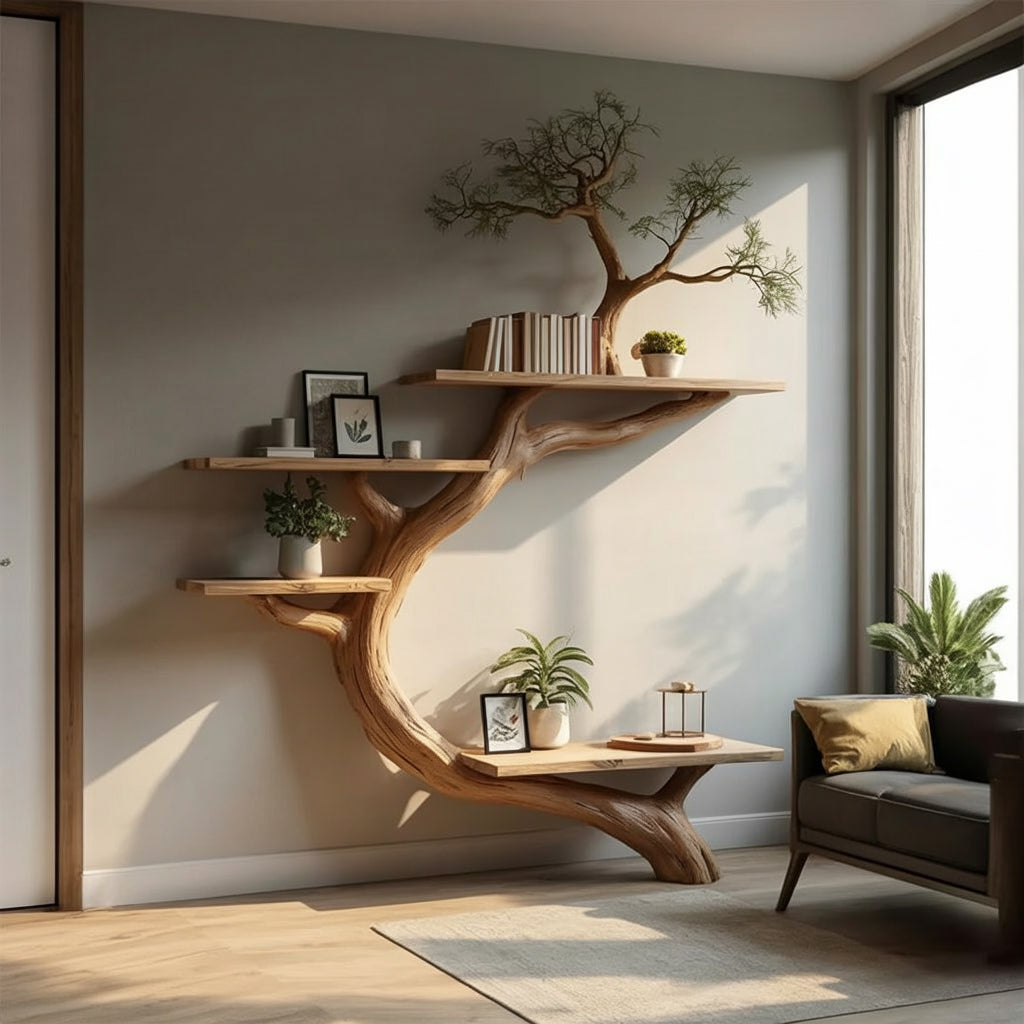
For a completely different take on vertical space indoors, Ashdeco's tree-shaped bookshelves double as cat climbing structures while displaying books - a functional crossover worth considering for covered patios.
Maintenance: Keeping Your Outdoor Cat Tree in Shape
Even the best materials need periodic care outdoors. A simple maintenance routine keeps your cat tree safe and good-looking through every season.
Monthly: Check all fasteners for looseness. Temperature cycling expands and contracts wood, gradually backing out screws. Retighten or replace any that feel loose.
Quarterly: Inspect sisal rope wrapping for fraying or mold. Replace sections that show wear - cats avoid scratching degraded rope, which means they'll scratch your outdoor furniture instead.
Annually: Sand any rough spots that have developed and reapply a coat of tung oil or linseed oil. Check for any insect damage - carpenter bees and powder post beetles target untreated softwoods.
After storms: Inspect anchor points and test stability before letting cats back on the structure. High winds can loosen ground anchors even if the tree looks fine on the surface.
Frequently Asked Questions
Can I leave a cat tree outside year-round?
Yes, if it's built from naturally weather-resistant wood like cedar, teak, or white oak and uses stainless steel hardware. Avoid any cat tree made with MDF, particleboard, or carpet - these materials trap moisture and develop mold within weeks outdoors. Apply a fresh coat of tung oil each spring to maintain water resistance.
How do I cat-proof an outdoor cat tree against escape?
If your cat is supervised outdoors, the tree itself doesn't need escape-proofing. For unsupervised time, place the tree inside a catio or fenced enclosure with a 45-degree inward-angled top extension that prevents climbing over. Roller bars along fence tops also work - cats can't grip a spinning bar.
What height should an outdoor cat tree be?
Between 4 and 6 feet is the sweet spot for most backyards. This gives cats enough height to feel secure and survey their territory without creating dangerous fall distances. If you go taller, add intermediate platforms every 18-24 inches and ensure soft ground cover underneath.
Is treated lumber safe for outdoor cat furniture?
No. Modern pressure-treated wood uses copper azole (CA-C) or alkaline copper quaternary (ACQ), both of which are toxic to cats if ingested through paw grooming. Use naturally rot-resistant species instead: western red cedar, white oak, teak, or black locust. These last just as long outdoors without chemical treatment.
How much does a good outdoor cat tree cost?
Budget DIY builds run $80-$150 in materials. Quality pre-made outdoor cat trees from mainstream brands cost $150-$350. Handcrafted solid wood pieces - like those from Ashdeco, shaped by Vietnamese artisans from natural timber - range from $200-$600+ depending on size and wood species. The handcrafted route costs more upfront but typically lasts 5-10x longer than mass-produced alternatives.