Best Floating Bathroom Vanities in 2026 - Styles, Sizes & Expert Picks
A floating bathroom vanity does something no freestanding cabinet can - it makes a small bathroom feel bigger instantly. By mounting the vanity to the wall and leaving the floor exposed beneath it, you gain visual space, easier cleaning access, and a modern look that's dominated bathroom design for the past five years.
But "floating vanity" covers an enormous range of products, from $200 IKEA boxes to $3,000 handcrafted live edge slabs. The difference between a vanity that elevates your bathroom and one that sags off the wall after two years comes down to material, mounting method, and build quality.
At Ashdeco, we build floating bathroom vanities from solid wood - every piece handcrafted by Vietnamese artisans. We've shipped over 95 different vanity designs and helped homeowners across the US navigate size, style, and installation decisions. This guide distills everything we've learned.
What Is a Floating Bathroom Vanity?
A floating bathroom vanity is a wall-mounted cabinet or countertop that hangs above the floor, typically 2-6 inches of clearance between the vanity bottom and the floor. Unlike freestanding vanities that sit directly on the ground, floating models are secured to wall studs using heavy-duty brackets or a French cleat system.
The floating effect creates three practical advantages:
More visual floor space. The visible floor beneath the vanity tricks the eye into perceiving a larger room. This matters most in bathrooms under 50 square feet - which is most American bathrooms.
Easier cleaning. No cabinet legs collecting dust, no awkward corners where mop heads can't reach. You can sweep or mop the entire bathroom floor in one pass.
Adjustable height. Unlike freestanding vanities locked at a factory-set height, you choose exactly where to mount a floating vanity. Standard is 30-36 inches, but you can go lower for children or higher for tall users.
Best Floating Bathroom Vanity Styles for 2026
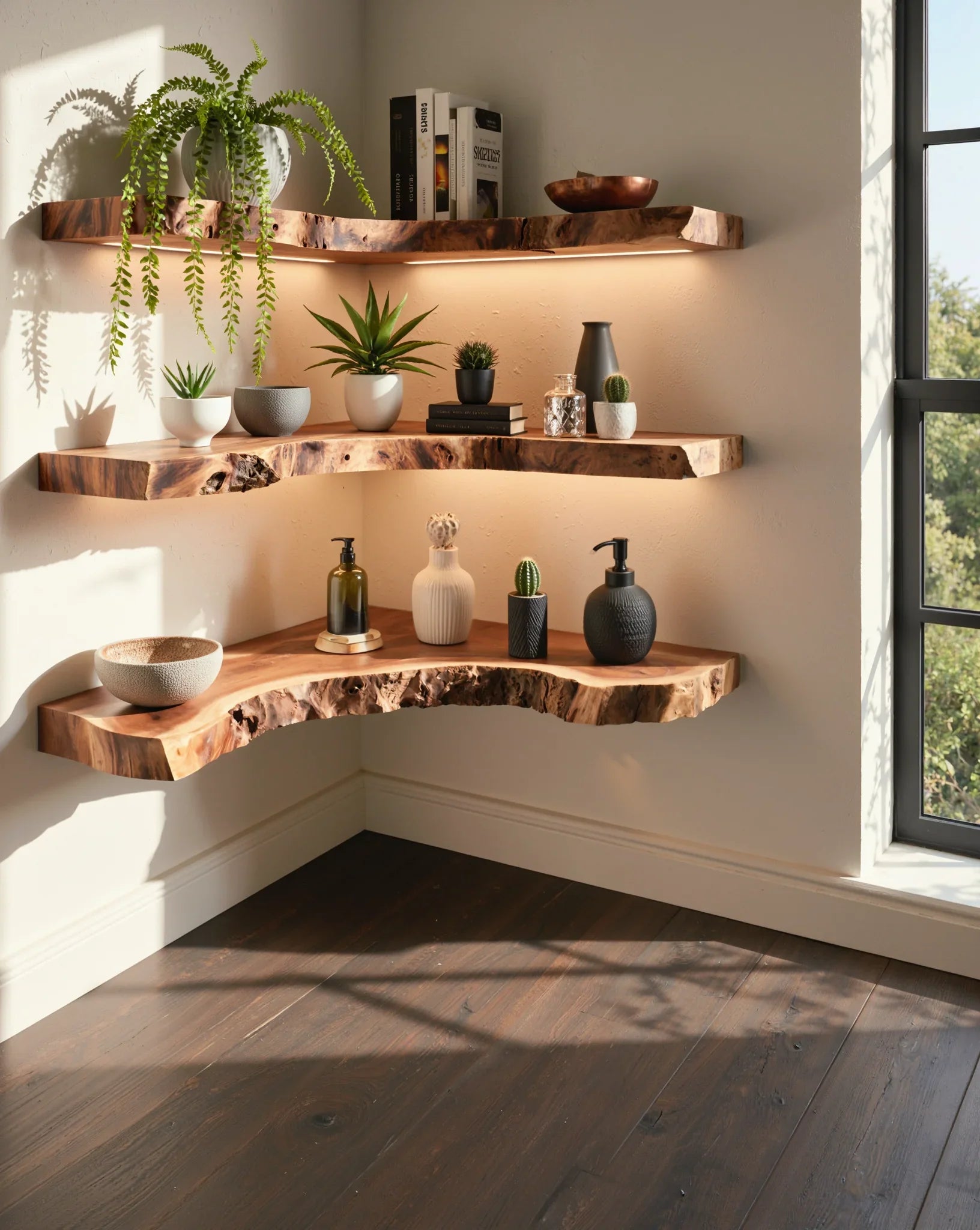
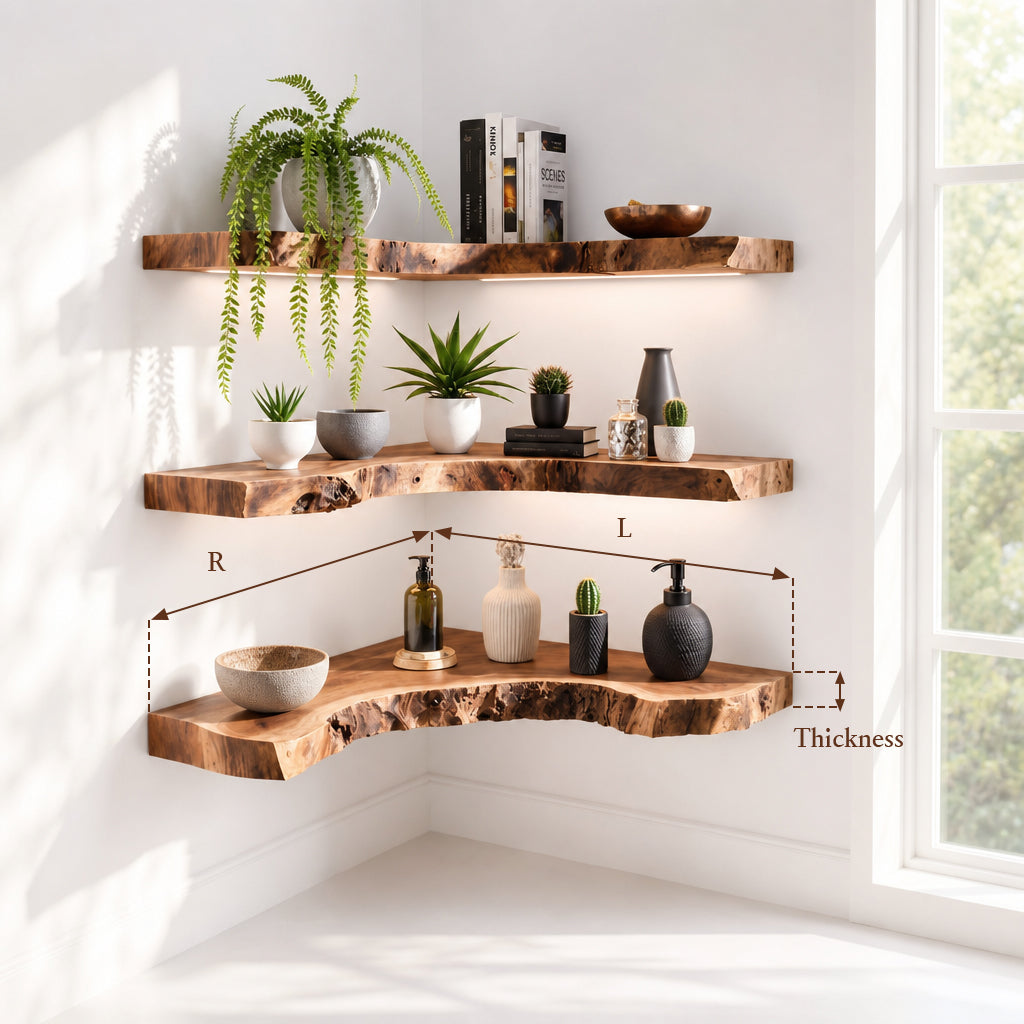
1. Live Edge Floating Vanity - The Statement Piece

Best for: Master bathrooms, powder rooms, anyone who wants a conversation-starting vanity
Price range: $180-$600 (shelf only) | $1,500-$2,000 (full vanity with storage)
Sizes: 16" to 79" wide, 18" deep
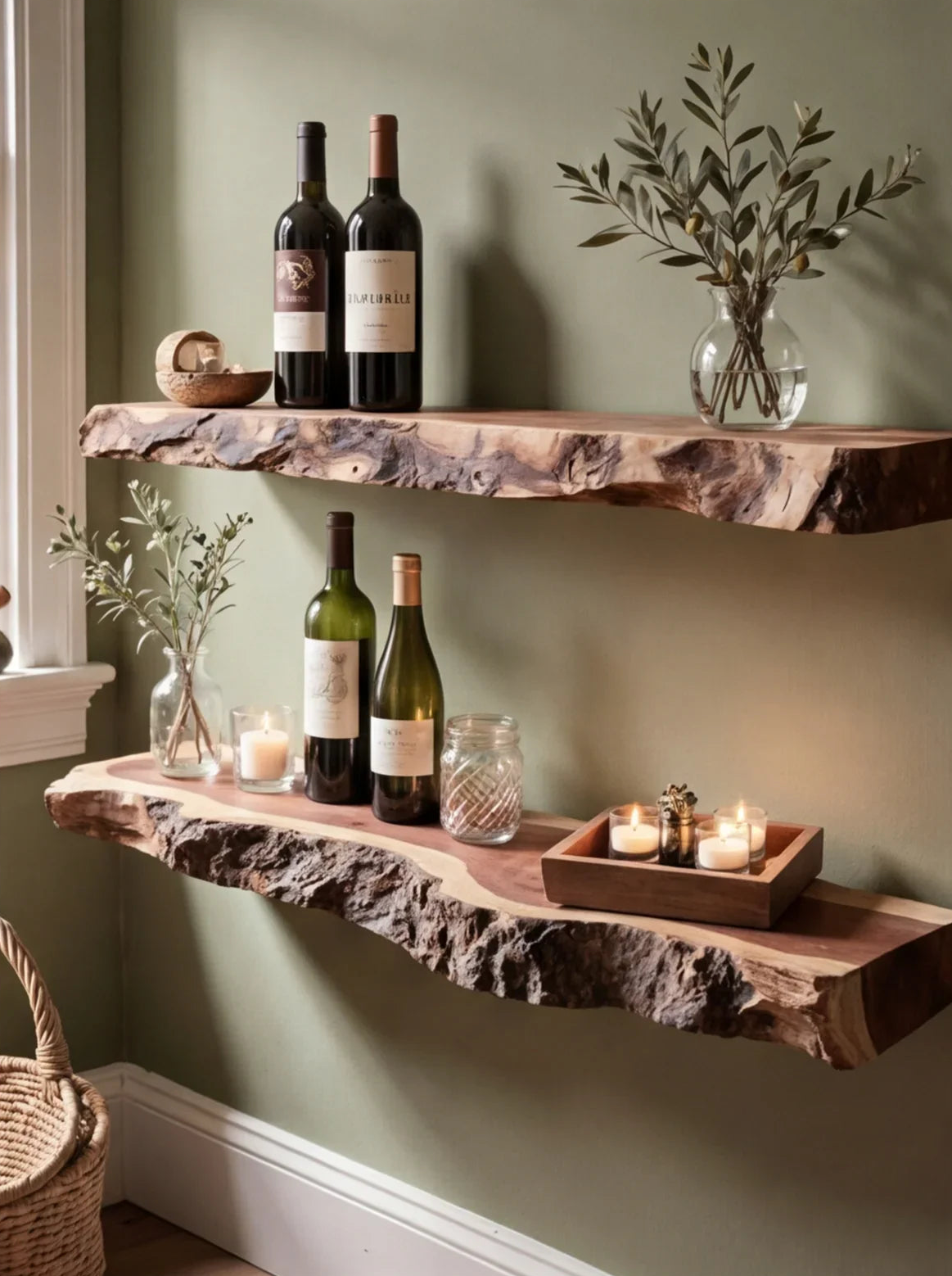
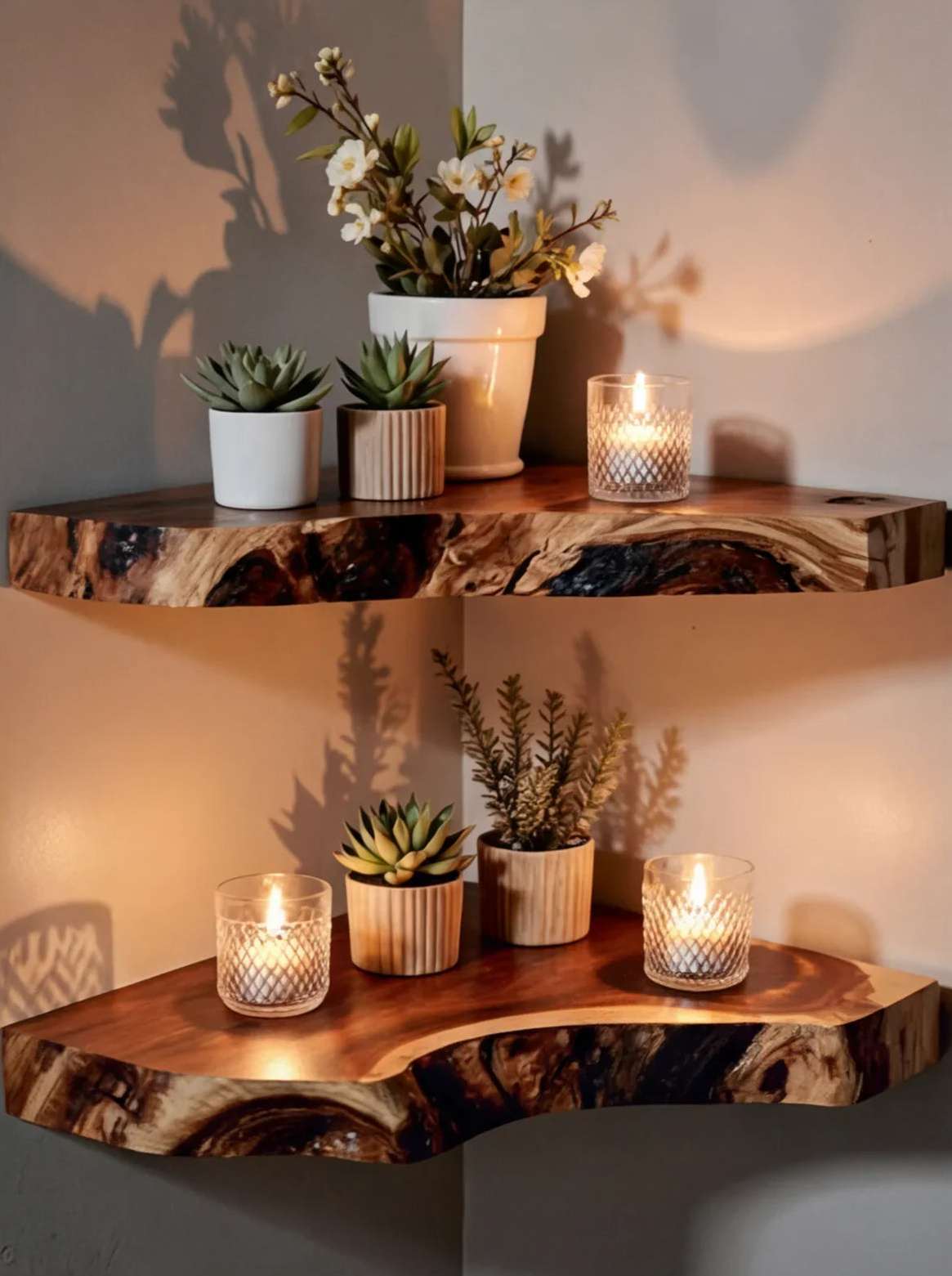
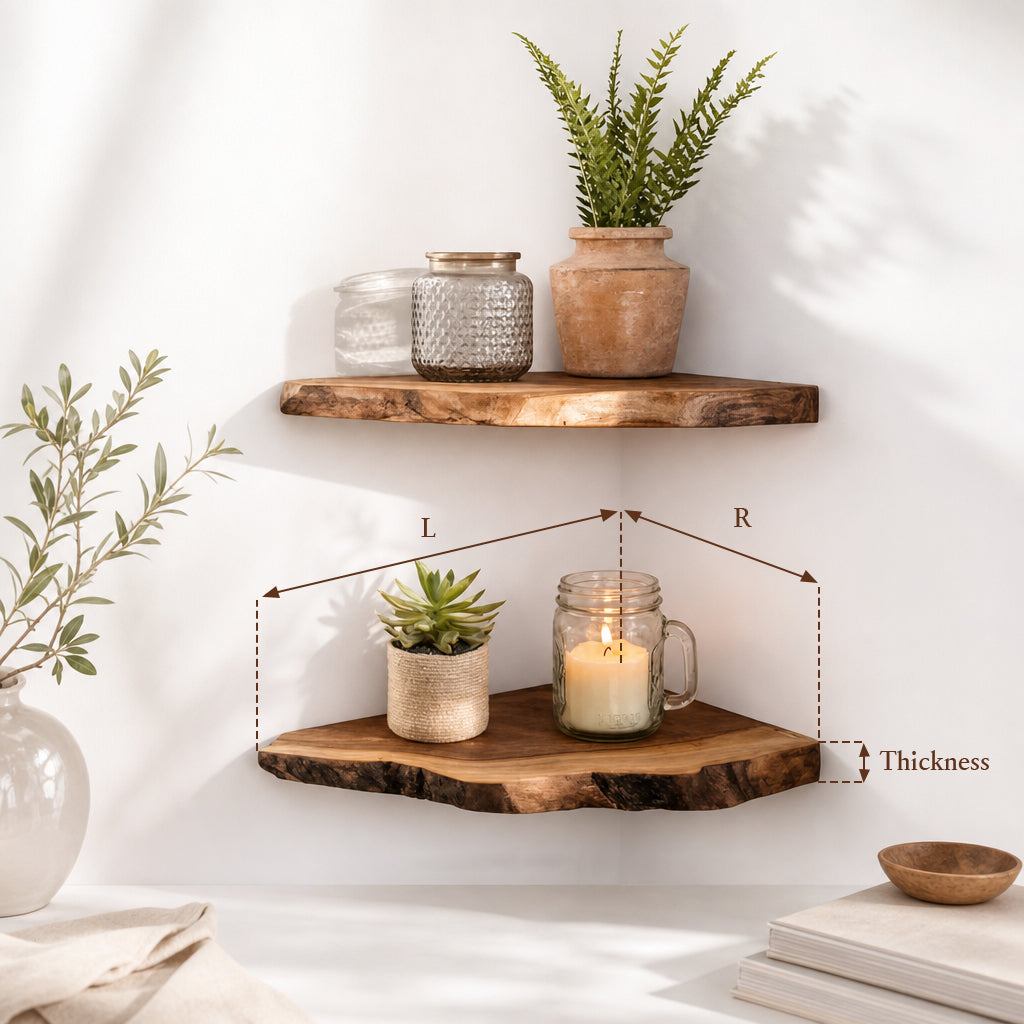
The live edge floating vanity preserves the natural edge of the wood slab - the organic, undulating line where bark once was. No two pieces share the same edge profile, which makes each vanity genuinely one-of-a-kind.
Live edge vanities have moved from niche to mainstream in 2026 because they solve a design tension: homeowners want natural warmth but don't want their bathroom to look like a log cabin. A live edge slab mounted on a clean white wall delivers organic beauty with a distinctly modern presentation.
What to look for:
- Solid wood construction (not veneer over particle board)
- Waterproof seal - critical in bathrooms
- Visible grain variation - this is the point
- Wall-mount hardware rated for the vanity weight plus a full sink of water
Ashdeco's approach: Every live edge vanity starts as a solid wood slab, hand-selected for grain character. Our artisans preserve the natural edge while ensuring the top surface is perfectly level for sink and faucet installation. Each piece is sealed with a waterproof coating for mold and termite resistance.
2. Sculptural Tree Base Vanity - Where Art Meets Function

Best for: Homeowners who want their vanity to be the room's focal point
Price range: $1,990-$2,500+
Sizes: 40"W to 79"W × 18"D × 30"H
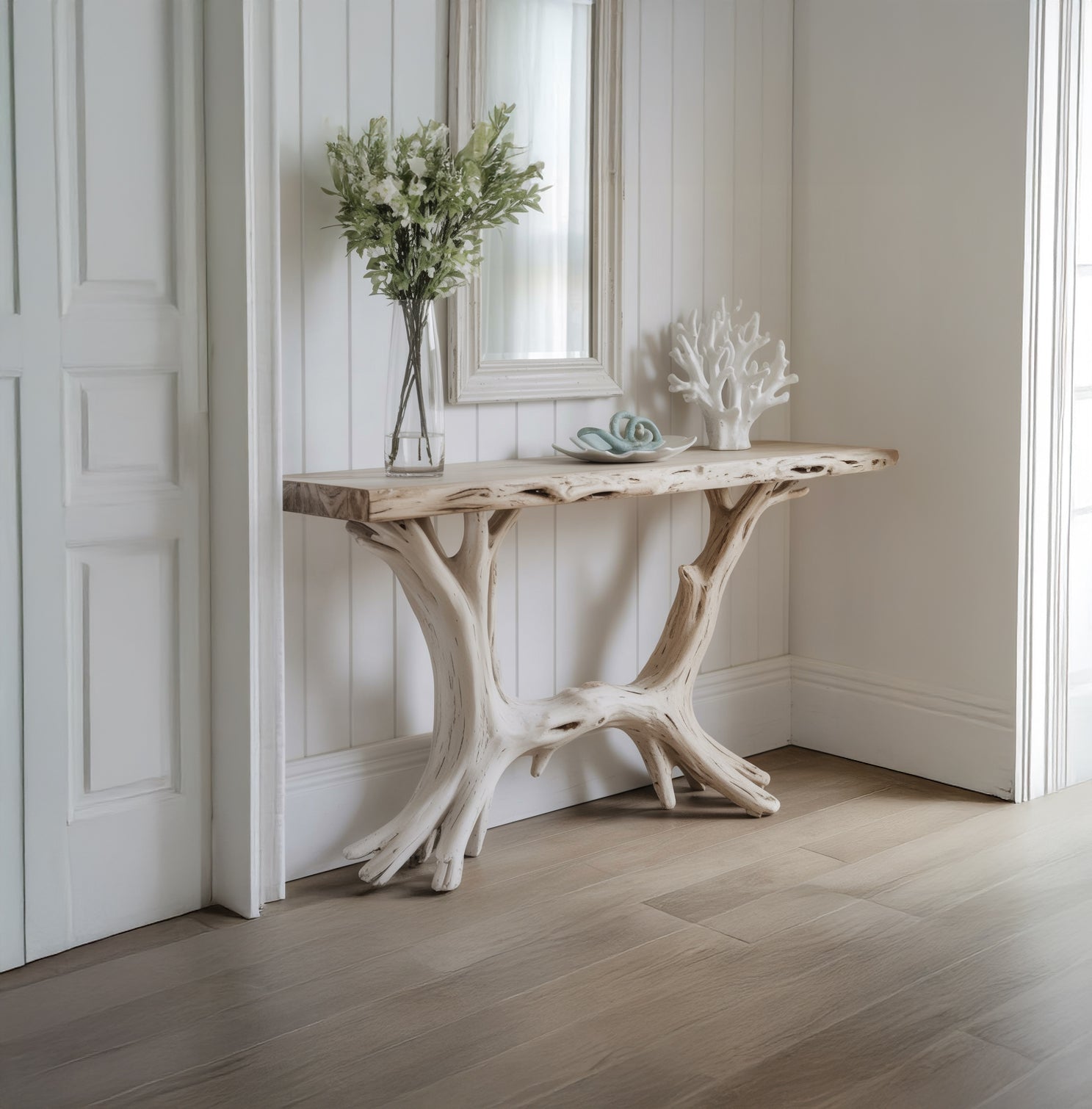
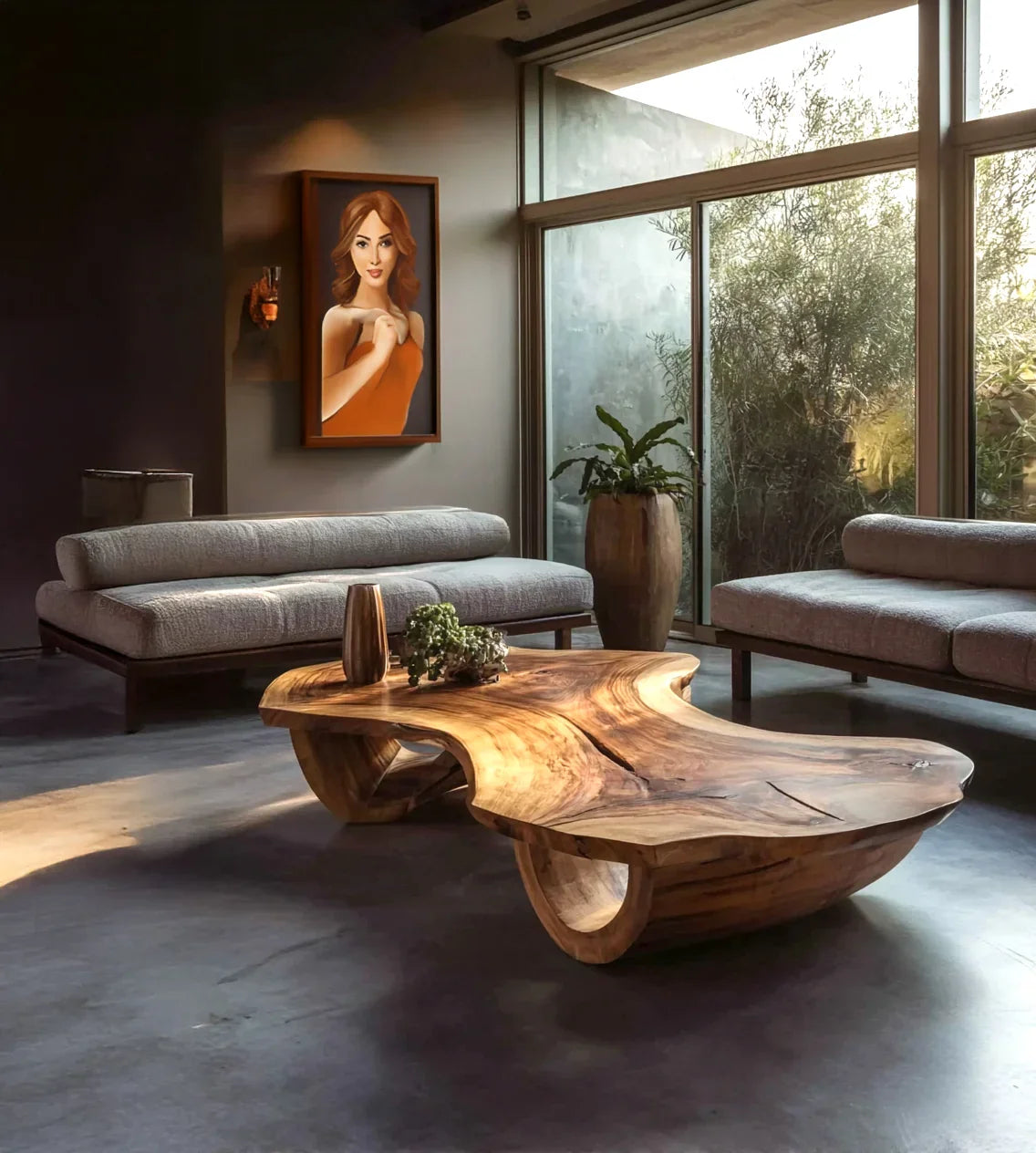
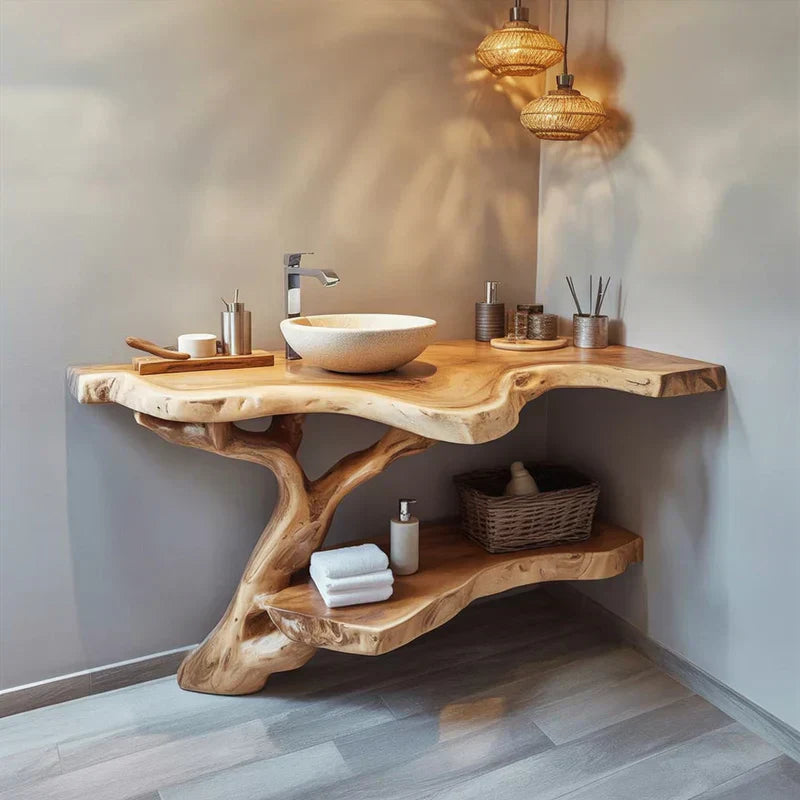
This is where Ashdeco's woodworking heritage shows most dramatically. The sculptural tree base vanity features a live edge countertop supported by hand-carved wooden legs shaped to resemble natural tree trunks and branches.
The tree base isn't a found piece of wood - it's solid wood, hand-carved by artisans to replicate organic tree forms. Each curve, knot, and taper is sculpted intentionally. The result is a vanity that looks like it grew in place but functions with the precision of custom cabinetry.
Why it's trending in 2026:
- Biophilic design (bringing nature indoors) continues to dominate interior trends
- Instagram and Pinterest have made sculptural furniture a top search category
- Homeowners are investing more in bathrooms as daily wellness spaces
Practical considerations:
- Heavier than standard floating vanities - professional installation recommended
- Tree base legs touch the floor (hybrid floating/freestanding design)
- Countertop still mounts to wall for stability
- Made to order with custom dimensions available
3. Modern Floating Vanity with Drawer - Clean Lines, Real Wood

Best for: Contemporary bathrooms, couples who need actual storage
Price range: $1,678-$2,200
Sizes: 30"W to 54"W, depth options from 15" to 24"
Not everyone wants a rustic statement piece. The modern floating vanity with drawer proves that solid wood can look sleek. Clean rectangular lines, smooth surfaces, and functional drawer storage - but built from the same handcrafted solid wood as every Ashdeco piece.
What makes this different from IKEA:
- Solid wood vs. particle board with laminate
- Live edge detailing on the countertop edge (subtle but distinctive)
- Handcrafted construction - no two grain patterns identical
- Weight capacity far exceeds mass-produced alternatives
- Will not swell, peel, or delaminate in bathroom humidity
Size guide:
| Bathroom Size | Recommended Vanity Width | Best Configuration |
|---|---|---|
| Powder room (under 30 sq ft) | 24-30" | Single sink, wall-mounted shelf |
| Small full bath (30–50 sq ft) | 30-36" | Single sink with drawer |
| Standard bath (50–80 sq ft) | 36-48" | Single or double sink |
| Master bath (80+ sq ft) | 48-60"+ | Double sink, full storage |
4. Rustic Farmhouse Floating Vanity - Warm and Timeless

Best for: Farmhouse, cottage, or transitional bathrooms
Price range: $800-$1,800
Sizes: Custom widths available
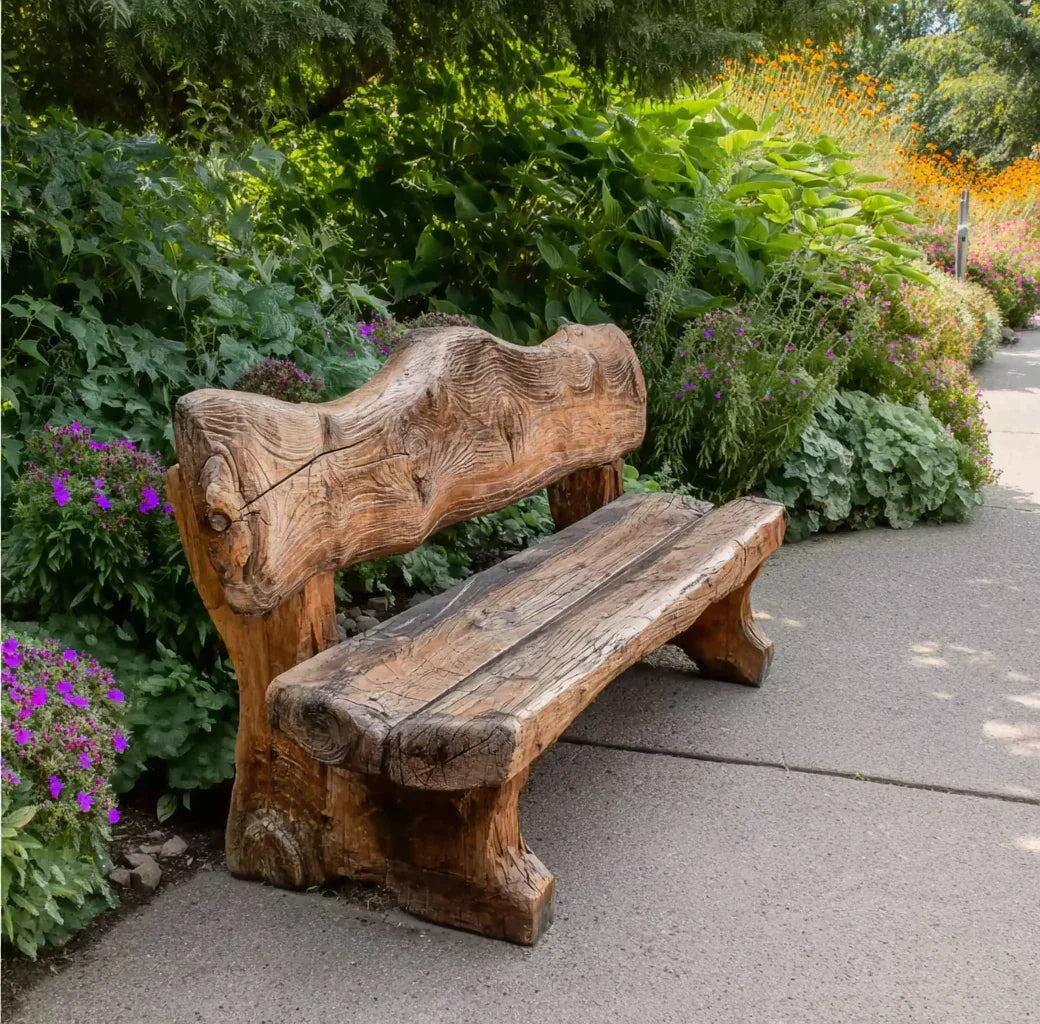
The farmhouse floating vanity brings barn-door aesthetics to the bathroom - distressed wood finishes, visible hardware, and a deliberately imperfect surface that looks better with age.
Why farmhouse style endures:
Farmhouse isn't a trend - it's a permanent category in American interior design. While specific elements rotate (shiplap is cooling, natural wood is heating), the core farmhouse principle of warm, textured, handmade-feeling spaces remains the most popular residential style in the US.
Key features:
- Distressed or natural wood finish
- Open shelf below countertop for basket storage
- Pairs with apron-front (farmhouse) sinks
- Works with both wall-mounted faucets and standard deck-mount
5. Reclaimed Wood Floating Vanity - Sustainability Meets Character

Best for: Eco-conscious homeowners, coastal or industrial-style bathrooms
Price range: $600-$1,500
The reclaimed wood vanity uses wood with a previous life - each piece carries the marks, nail holes, and patina of its history. This isn't a distressing technique applied to new wood. It's genuine aged timber given a second purpose.
Why choose reclaimed:
- Environmental impact - no new trees harvested
- Character that can't be faked - real age marks, real history
- Each piece is genuinely unique (not "unique" as a marketing term)
- Often denser and harder than new-growth wood
Floating Vanity Size Guide - Getting the Dimensions Right
For a deeper dive into height standards, our bathroom vanity height guide covers comfort, ADA, and child-friendly options. Choosing the wrong vanity size is the most common bathroom renovation mistake. Too wide and it crowds the room. Too narrow and it looks like an afterthought. Here's how to get it right.
The Measurement Method
Step 1: Measure your wall width. The vanity should occupy 60-80% of the wall it sits on. A 48-inch wall calls for a 30-36 inch vanity. A 72-inch wall can handle 48-60 inches. For a deeper dive, see our article on how to mount floating shelves — step-by-step guide.
Step 2: Check clearance. Leave at least 4 inches from each side wall and 21 inches of clear floor space in front of the vanity (building code minimum). 24-30 inches of clearance is more comfortable.
Step 3: Determine depth. Standard vanity depth is 18-21 inches. For small bathrooms, consider a 15" depth model - you lose some counter space but gain significant floor area. We cover this in more detail in our how tall is a bathroom vanity? standard heights explained guide.
Step 4: Set height. Floating vanities let you choose. The ADA-compliant height is 34-36 inches from floor to countertop. Standard comfort height is 30-34 inches. For children's bathrooms, 28-30 inches works well.
Standard Floating Vanity Dimensions
| Size Category | Width | Depth | Height | Best For |
|---|---|---|---|---|
| Compact | 24-30" | 15-18" | 30-34" | Powder rooms, half baths |
| Standard | 30-42" | 18-21" | 30-36" | Full bathrooms, guest baths |
| Large | 42-54" | 20-24" | 30-36" | Master bathrooms |
| Double | 54-72"+ | 20-24" | 30-36" | Shared master bathrooms |
Sink Compatibility
Not all sinks work with all vanity sizes. Here's the breakdown:
| Sink Type | Minimum Vanity Width | Notes |
|---|---|---|
| Vessel sink (sits on top) | 24" | Most flexible - works with shelf-style vanities |
| Undermount sink | 30" | Requires countertop overhang |
| Drop-in sink | 27" | Needs cutout - solid wood handles this well |
| Wall-mounted sink | N/A | No vanity needed - but you lose all storage |
Pro tip: Vessel sinks pair perfectly with live edge floating shelves because the sink sits on top of the slab. No cutout needed, which preserves the natural wood edge - and simplifies installation significantly.
Solid Wood vs. Engineered Materials - Why It Matters in Bathrooms
Bathrooms are the hardest environment in your home for furniture. Steam, splashing water, humidity swings from 40% to 90% - materials that work fine in a living room fail spectacularly in a bathroom.
The Particle Board Problem
Most vanities under $500 use particle board with a laminate or veneer surface. In a dry room, this works for years. In a bathroom:
- Water penetration through edges causes swelling within 6-12 months
- Laminate peeling starts at corners and sink cutouts
- Mold growth inside the particle board is invisible but inevitable
- Structural failure - the mounting screws pull through swollen board
We've seen customers replace particle board vanities every 2-3 years. At $400 each plus installation costs, that's over $2,000 in a decade.
The Solid Wood Advantage
Properly sealed solid wood handles bathroom conditions differently:
- Dimensional stability - quality hardwood expands and contracts predictably without failing
- Moisture resistance - a waterproof seal prevents water penetration. If the seal is damaged, wood dries out and recovers. Particle board doesn't.
- Mounting strength - screws hold firmly in solid wood for decades. The mounting system is only as strong as the material it's in.
- Repairability - scratches, water marks, and surface damage can be sanded and refinished. Try that with laminate.
| Factor | Particle Board + Laminate | Solid Wood (Sealed) |
|---|---|---|
| Lifespan in bathroom | 2-4 years | 10-20+ years |
| Water damage recovery | Irreversible swelling | Dries and recovers |
| Mold resistance | Low (absorbs moisture internally) | High (sealed surface, dense core) |
| Mounting reliability | Screws loosen over time | Screws hold for decades |
| Refinishable | No | Yes - sand and reseal |
| Cost over 10 years | $1,200-$2,000+ (3-5 replacements) | $800-$2,000 (one purchase) |
How to Install a Floating Bathroom Vanity
Floating vanity installation is a moderate DIY project - achievable for handy homeowners but worth hiring a professional if you're uncomfortable with wall-stud work. Here's what's involved:
What You Need
- Stud finder
- Level (4-foot or laser)
- Drill with masonry bits (if tile backsplash)
- Heavy-duty lag screws (typically included with Ashdeco vanities)
- Two people (solid wood vanities are heavy)
Installation Steps
1. Locate wall studs. This is non-negotiable. A floating vanity holding a stone sink and running water can weigh 100-200 lbs. Drywall anchors alone will fail. You need at least two wall studs.
2. Mark your height line. Use a level to draw a perfectly horizontal line at your desired vanity height. Even a 1-degree tilt will be visible and will cause water to pool unevenly.
3. Install the mounting bracket. Most floating vanities use either a French cleat (a beveled strip that locks together) or heavy-duty L-brackets. Secure to studs with lag screws.
4. Hang the vanity. With a helper, lift the vanity onto the mounting bracket. Check level again. Secure with additional screws if the design requires it.
5. Connect plumbing. Run supply lines and drain through the wall or through the vanity bottom. Wall-mounted plumbing looks cleanest with floating vanities.
6. Seal the wall connection. Apply a thin bead of clear silicone where the vanity meets the wall. This prevents water from running behind the vanity.
Estimated time: 2-4 hours for experienced DIYers. Professional installation typically runs $200-$500 depending on plumbing complexity.
Common Installation Mistakes
- Skipping stud finding - drywall anchors will eventually fail under weight
- Not checking level - even small tilts create visible water pooling
- Ignoring plumbing location - plan drain and supply line routing before mounting
- Over-tightening screws - especially with softwoods, over-torquing splits the wood
Floating Vanity Trends for 2026
Bathroom design evolves slowly - people renovate bathrooms every 10-15 years, so trends have long tails. Here's what's defining floating vanity style in 2026:
Natural wood finishes are replacing painted vanities. The all-white bathroom is giving way to warm wood tones. Homeowners want to see and feel the grain, not hide it under paint. This drives demand for solid wood vanities that showcase the material.
Live edge is moving from kitchens to bathrooms. Live edge countertops started in kitchens, then dining tables, and now they're the fastest-growing vanity style. The organic edge profile pairs surprisingly well with modern fixtures.
Vessel sinks over undermount. Vessel sinks sit on top of the vanity surface, which means no cutout needed. This preserves the full beauty of a live edge or natural wood surface and simplifies installation.
Biophilic design elements. Sculptural tree bases, organic curves, and natural textures are appearing in bathroom design as part of the broader biophilic movement - designing spaces that connect inhabitants with nature.
Customization over off-the-shelf. Homeowners increasingly want vanities sized to their specific bathroom rather than choosing from standard 24"/30"/36" options. Made-to-order solid wood vanities answer this directly.
How to Care for a Solid Wood Floating Vanity
A properly maintained solid wood vanity will outlast your bathroom's tile, fixtures, and paint - often by decades. The maintenance is simpler than you'd expect:
Daily: Wipe down the surface after use to prevent water spots. A soft cloth takes 10 seconds.
Weekly: Clean with a damp cloth and mild soap. Avoid harsh chemicals - bleach, ammonia, and abrasive cleaners damage wood finishes.
Every 6 months: Inspect the waterproof seal. Look for areas where water beads differently - this indicates seal wear. Touch up with a wood-safe waterproof sealant.
Every 2-3 years: Apply a fresh coat of waterproof sealant to the entire surface. This is the single most important maintenance step and takes about 30 minutes.
What to avoid:
- Leaving standing water on the surface
- Placing hot styling tools directly on wood
- Using abrasive scrubbing pads
- Chemical drain cleaners that splash
Choosing Your Floating Bathroom Vanity
The right floating vanity transforms a bathroom from a functional room into a space you actually enjoy. The decision comes down to three questions: What style fits your home? What size fits your bathroom? And what material will survive decades of daily use?
For style, 2026 favors natural - live edge, organic textures, visible grain. For size, measure your wall, apply the 60-80% rule, and check clearances. For material, solid wood outperforms everything else in bathroom conditions when properly sealed.
Every floating vanity in the Ashdeco collection is handcrafted by Vietnamese artisans from solid wood - sealed for waterproofing, mold resistance, and termite protection. With 95+ designs ranging from minimal shelf vanities to sculptural tree-base statement pieces, and custom sizing available on every model, you'll find the exact fit for your bathroom.
Free shipping on all orders. 5% off with code ASHDECO5.