







Quick view
- Quick Reference: Table Heights at a Glance
- Why 28–30 Inches Became the Standard Dining Table Height
- Standard Dining Table Height (28–30 Inches)
- Counter Height Tables (34–36 Inches)
- Bar / Pub Height Tables (40–42 Inches)
- The 10–12 Inch Clearance Rule (This Is What Actually Matters)
- ADA-Compliant & Wheelchair-Accessible Table Heights
- Special Cases Beyond the Standard Range
- Does Table Shape Change the Height?
- Dining Bench Height vs. Table Height
- Common Mistakes When Choosing Dining Table Height
- How to Measure and Choose the Right Height for Your Space
- FAQ
- Related Dining Table Guides
- The Bottom Line
Shop this guide
Handcrafted Dining Tables, made to order in solid wood.
 Round Solid Wood Pedestal Dining Table Handcrafted Solid Wood Center Table
From $1,345.00
Round Solid Wood Pedestal Dining Table Handcrafted Solid Wood Center Table
From $1,345.00
 Round Bistro Dining Table, Small Kitchen Breakfast Table, Compact Circular Dining Table
From $1,022.00
Round Bistro Dining Table, Small Kitchen Breakfast Table, Compact Circular Dining Table
From $1,022.00
 Organic Modern Live Edge Solid Wood Dining Table - Handcrafted Slab Table with Dual Storage Pedestals
From $6,800.0010% off at checkout
Organic Modern Live Edge Solid Wood Dining Table - Handcrafted Slab Table with Dual Storage Pedestals
From $6,800.0010% off at checkout
 Round Solid Wood Dining Table with Architectural Spider Pedestal Base
From $1,254.00
Round Solid Wood Dining Table with Architectural Spider Pedestal Base
From $1,254.00
 Flowing Pedestal Solid Wood Round Dining Table - Japandi Living Sculpture
From $5,850.0010% off at checkout
Flowing Pedestal Solid Wood Round Dining Table - Japandi Living Sculpture
From $5,850.0010% off at checkout
 Sculptural Pedestal Solid Wood Round Dining Table - Organic Modern Centerpiece
From $5,850.0010% off at checkout
Sculptural Pedestal Solid Wood Round Dining Table - Organic Modern Centerpiece
From $5,850.0010% off at checkout
Standard Dining Table Height: How Tall Should Your Table Be? (2026 Guide)
Sit down at a dining table with the wrong height and you'll notice immediately - knees jammed into the underside, elbows sticking out like you're trying to take off. Get the dining table height right and you forget the table's even there. That's the point.
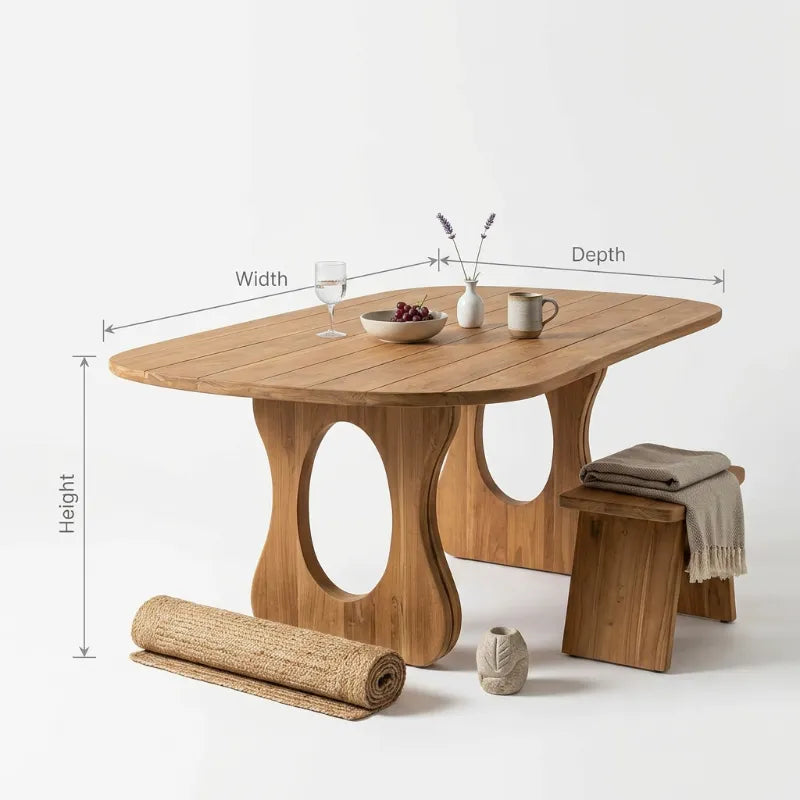
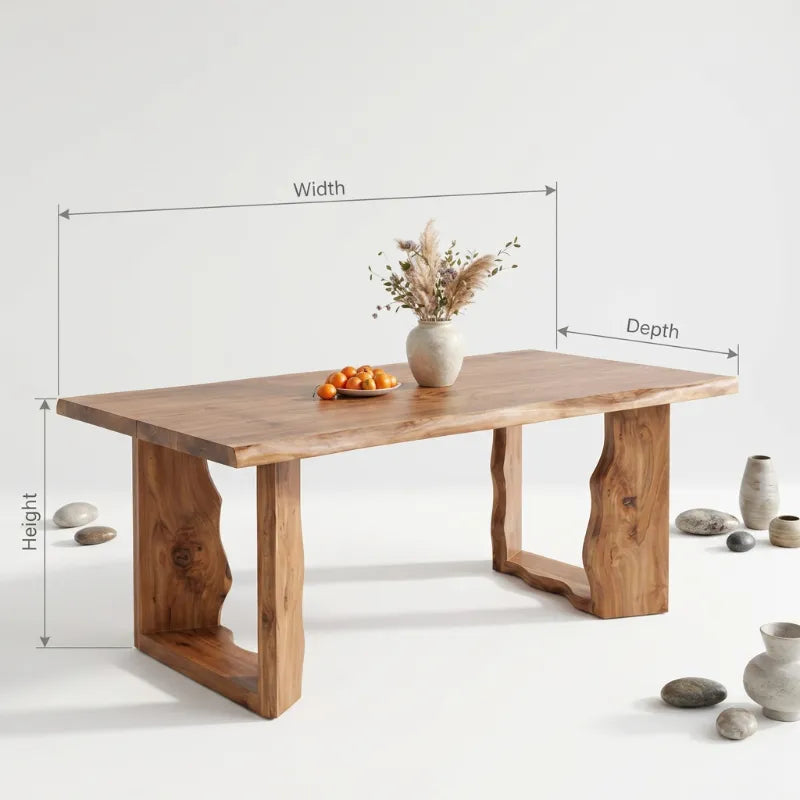
The short answer: standard dining table height is 28 to 30 inches (71–76 cm) from the floor to the tabletop surface. This pairs with dining chairs that have a 17 to 19 inch seat height, leaving the golden 10 to 12 inch clearance between your thighs and the table bottom.
But that's just the baseline. If you're choosing between a counter-height island table, a bar-height entertaining setup, or an accessible table for a family member in a wheelchair - the math changes. And most guides skip that part entirely.
This guide covers all three table height categories, the clearance rule that actually matters, ADA requirements, and how to match any table with the right seating - with exact numbers, not guesswork. If you're also working out the right footprint for your room, see our dining table size guide - height and length are two different problems, and this article only covers the first one.

Quick Reference: Table Heights at a Glance
Before diving into the details, here's the full picture:
| Category | Table Height | Chair/Stool Height | Best For |
|---|---|---|---|
| Standard Dining | 28–30" (71–76 cm) | 17–19" seat | Everyday meals, formal dining, families |
| Counter Height | 34–36" (86–91 cm) | 24–26" stool | Kitchen islands, casual dining, open-plan spaces |
| Bar / Pub Height | 40–42" (102–107 cm) | 28–30" stool | Home bars, entertaining, small apartments |
The number that ties all of this together: 10 to 12 inches of clearance between seat surface and table bottom. That's the measurement that determines whether a meal is comfortable or miserable. We'll get into why in a moment.

Why 28–30 Inches Became the Standard Dining Table Height
The 28–30 inch dining table height didn't come from nowhere. It's the result of decades of furniture design and ergonomics research.
The core principle is the 90-90-90 rule: when seated properly, your hips, knees, and elbows should all rest at approximately 90-degree angles. This keeps your body in a neutral position that doesn't strain your back, shoulders, or wrists during a meal.
Here's how the math works:
- Average adult seated popliteal height (floor to underside of thigh) is about 17 to 19 inches - which is why dining chair seats cluster in this range.
- To achieve a ~90-degree elbow angle with forearms resting on the table surface, the tabletop needs to sit at roughly 28 to 30 inches for someone seated in an 18-inch chair.
- The gap between chair seat and table bottom - the leg clearance - should be 10 to 12 inches. This gives enough room for thighs without making the table feel too high relative to your torso.
Furniture ergonomics research generally points to the same conclusion: the 30-inch standard positions your elbows at roughly a 90-degree angle when seated in a standard 18-inch-high chair - the sweet spot for comfortable eating posture, with forearms resting on the table at an elbow angle of about 90 to 100 degrees.
If the table is too low, you hunch forward. Too high, and your shoulders lift while your elbows flare out. Either way, dinner gets uncomfortable fast.


Standard Dining Table Height (28–30 Inches)
This is what you'll find in most dining rooms, and for good reason.
Height range: 28–30 inches from floor to tabletop
Pairs with: dining chairs with 17–19 inch seat heights
Clearance: 10–12 inches between seat and table bottom
Why Some Tables Are 28" and Others 30"
Within the standard range, you'll see variation:
- 28-inch tables tend to lean traditional or farmhouse. They feel slightly lower and more grounded - great for households with young kids or shorter adults.
- 30-inch tables are the modern benchmark. They create a more formal presence and pair well with higher-end chair designs.
Most mass-produced dining tables land at exactly 30 inches because it's the easiest number to design around and fits the widest range of body types. If you're buying a solid wood dining table, you'll find most models at 29 or 30 inches - and if you want to confirm a table is genuinely solid wood before you buy, our guide to checking solid wood construction covers exactly what to look for.
Best Use Cases
- Traditional dining rooms
- Family dinners where people sit for extended periods
- Holiday meals, entertaining, formal gatherings
- Households with mixed ages (kids through elderly)

Counter Height Tables (34–36 Inches)
Counter height tables sit about 6 inches above standard dining height literally level with your kitchen counter.
Height range: 34–36 inches
Pairs with: counter stools with 24–26 inch seat heights
Clearance: still 10–12 inches
Pros
- Casual, relaxed vibe - great for everyday breakfast and quick meals
- Kitchen islands naturally work at this height
- Visually opens up small spaces because the higher sightline makes the room feel less blocked
- Keeps the cook at the island at eye level with seated guests
Cons
- Not ideal for young children - feet dangle, no back support on most counter stools
- Less comfortable for long, multi-course meals
- Elderly or mobility-limited people may have trouble climbing onto stools
- Usually requires a footrest ring on the stool (which not all stools have)
Best Use Cases
- Kitchen islands and peninsulas
- Breakfast nooks in open-plan homes
- Casual entertaining where people drift in and out
- Small apartments where the dining area doubles as a workspace
If you're planning height-matched storage for the same kitchen - open shelving above a counter-height island, for instance - our kitchen shelf spacing and height guide covers how to coordinate shelf height with counter and seating height so nothing feels cramped.

Don't miss
These pieces qualify for 10% off orders over $2,000. Applied automatically at checkout.
10% off
Organic Modern Live Edge Solid Wood Dining Table - Handcrafted Slab Table with Dual Storage Pedestals
From $6,800.00
10% off at checkout
10% off
Flowing Pedestal Solid Wood Round Dining Table - Japandi Living Sculpture
From $5,850.00
10% off at checkout
10% off
Sculptural Pedestal Solid Wood Round Dining Table - Organic Modern Centerpiece
From $5,850.00
10% off at checkout
 10% off
Organic Live Edge Solid Wood Dining Table with Sculptural River Legs
From $4,180.00
10% off at checkout
10% off
Organic Live Edge Solid Wood Dining Table with Sculptural River Legs
From $4,180.00
10% off at checkout
Bar / Pub Height Tables (40–42 Inches)
The tallest category of dining furniture. These are the tables you see in pub settings, home bars, and trendy restaurant patios.
Height range: 40–42 inches
Pairs with: bar stools with 28–30 inch seat heights
Clearance: 10–12 inches
Pros
- Creates a social, energetic atmosphere - people naturally lean in and engage
- Space-efficient: a small bar-height table takes up less visual floor space
- Great for drinks, appetizers, and casual snacking
- Makes a small room feel bigger by pushing the sightline up
Cons
- Definitely not comfortable for long meals - the stool posture gets tiring
- Accessibility is a real concern; these are essentially unusable for wheelchair users
- Kids under 10 typically can't use them safely
- Footrest is mandatory, not optional
Best Use Cases
- Home bars and wet bars
- Entertainment areas in basements or game rooms
- Studio apartments with minimal floor space
- Outdoor patio entertaining

The 10–12 Inch Clearance Rule (This Is What Actually Matters)
If you remember one thing from this guide, make it this:
Table height minus chair seat height should equal 10 to 12 inches.
That's your clearance - the space between the top of the seat and the bottom of the table (or apron, more on that below). This is the single number that determines whether seating is comfortable.
Why 10–12 Inches?
This range accommodates the average adult thigh thickness while still allowing the elbows to rest at that ~90-degree angle. Here's what happens outside this range:
- Less than 10 inches: Your thighs press against the table bottom. You'll shift constantly. Dinner becomes a balancing act.
- More than 12 inches: The table feels too high relative to your seated position. You're reaching up to eat, which strains shoulders and upper back over time.
The Apron Problem Nobody Talks About
Here's the catch: clearance is measured to the lowest point under the table - which is often the apron (the wooden frame running under the tabletop), not the tabletop itself.
A table with a 30-inch surface height and a 3-inch apron effectively gives you only 27 inches of clearance space. Paired with an 18-inch chair, that's just 9 inches of clearance - one inch below the comfort minimum. This is why pedestal tables often feel roomier: no apron means the full table height is available for legroom.
Clearance Quick-Reference
| Chair Seat Height | Min Table Height (10" clearance) | Ideal Table Height (11" clearance) | Max Table Height (12" clearance) |
|---|---|---|---|
| 17" | 27" | 28" | 29" |
| 18" | 28" | 29" | 30" |
| 19" | 29" | 30" | 31" |
| 24" (counter stool) | 34" | 35" | 36" |
| 26" (tall counter stool) | 36" | 37" | 38" |
| 28" (bar stool) | 38" | 39" | 40" |
| 30" (tall bar stool) | 40" | 41" | 42" |
ADA-Compliant & Wheelchair-Accessible Table Heights
If you're designing a dining space that needs to accommodate wheelchair users, the numbers shift - and these aren't recommendations, they're legal requirements under the ADA Standards for Accessible Design (2010).
Per ADA Section 902 (Dining Surfaces and Work Surfaces) and Section 306 (Knee and Toe Clearance):
- Table surface height: 28 to 34 inches above the finish floor (Section 902.3)
- Knee clearance: minimum 27 inches high, 30 inches wide, and 19 inches deep (Section 306.3)
- Toe clearance: minimum 9 inches above the floor, extending at least 17 inches deep under the surface (Section 306.2)
- Children's dining/work surfaces have a separate, lower range: 26 to 30 inches (Section 902.4.2) - this applies specifically to tables designed for children's use, not general adult accessibility.
In practice, this means an accessible dining table should:
- Have a surface between 28 and 34 inches, positioned toward the lower end (28–30 inches) if the table will also serve seated adults without mobility aids
- Provide open space underneath - no aprons, crossbars, or pedestals that block knee access
- Be at least 30 inches wide at the knee-clearance zone
If you're outfitting a restaurant, hotel, or any public dining space, these aren't optional. For home use, following these guidelines ensures any family member or guest using a wheelchair can sit comfortably at the table.

Special Cases Beyond the Standard Range
Children's Dining Tables
Kids' tables run 20 to 24 inches depending on age group:
- Toddlers (1–3): 18–20 inches
- Preschool (3–5): 20–22 inches
- Early elementary (5–8): 22–24 inches
If you have kids using the main dining table, consider a booster seat that brings their effective seat height up - otherwise they're eating at shoulder level.
Extra-Tall People (6'4" and Above)
For someone over 6'4", a standard 28–30 inch table can feel cramped. Solutions:
- Custom tables at 31–33 inches
- Standard table paired with taller chairs (19–20 inch seat height)
- Pedestal base design to maximize whatever clearance is available
Petite Households
If most adults in your home are under 5'4", the upper end of the standard range (30 inches) may feel slightly high. A 28-inch table or a standard table paired with 17-inch seat chairs can make a noticeable comfort difference.
Does Table Shape Change the Height?
No - standard height applies equally to round, rectangular, square, and oval tables. But shape affects how the height feels, and it affects how many people actually fit around it. See our dining table seating capacity guide for exact sizes by shape and number of guests.
- Pedestal tables (single central support): more flexible legroom because there's no apron or corner legs to navigate. Check out our pedestal vs. leg base comparison for the full breakdown.
- Rectangular tables with aprons: apron thickness directly reduces effective clearance - measure to the apron, not the top.
- Glass-top tables: same physical height, but the visual lightness makes them feel lower and more open.
- Round tables: no corners means easier access from any seating position, effectively making the height more forgiving.

Dining Bench Height vs. Table Height
If you're using a dining bench instead of individual chairs, the same clearance rule applies - but with one twist.
Standard dining bench seat height is 17 to 19 inches, matching dining chair heights. The 10–12 inch clearance gap between bench seat and table bottom is unchanged.
Important caveat: if your bench has a thick cushion, measure the seat height when someone is sitting on it. Cushions compress 1 to 2 inches under weight, which means the effective clearance increases slightly. Factor that in before deciding whether a bench works with your table.

Common Mistakes When Choosing Dining Table Height
These are the errors we see most often - and most of them are avoidable:
- Buying table and chairs separately without checking the clearance. A 30-inch table with a 20-inch chair seat leaves only 10 inches - fine on paper, but if that table has a 2-inch apron, you're down to 8 inches. Uncomfortable.
- Ignoring apron thickness. The apron is the hidden clearance killer. Always measure to the lowest point under the table, not the surface.
- Mixing counter-height tables with standard chairs (or vice versa). This is the most common online ordering mistake. A 36-inch table with an 18-inch chair gives you 18 inches of clearance - way too much. You'd be reaching up to eat.
- Not accounting for thick seat cushions. A "19-inch" chair with a 2-inch cushion that compresses to 1 inch under weight changes the equation.
- Forgetting footrests for bar and counter seating. Without a footrest ring or bar, feet dangle, circulation drops, and comfort vanishes within 15 minutes.
- Ordering online without measuring your current setup first. If you have existing chairs, measure them. If you have an existing table, measure its height and apron. Don't guess.
How to Measure and Choose the Right Height for Your Space
Don't skip this section - it takes five minutes and saves you from buying the wrong table.
Step 1: Measure your existing chairs (if you're keeping them).
Measure from the floor to the top of the seat surface. Then subtract 1–2 inches for cushion compression. This is your effective seat height.
Step 2: Apply the 10–12 inch clearance rule.
Add 10 to 12 inches to your effective seat height. That's your ideal table height range. If you're buying a new chair too, work the math in reverse: table height minus 10 to 12 inches = ideal chair seat height.
Step 3: Account for the apron.
If the table has an apron or crossbar under the surface, measure from the floor to the bottom of that apron. This is the real clearance point. Subtract the chair seat height from this number - not the tabletop height.
Step 4: Consider who uses the table most.
Tall household? Lean toward 30 inches or above. Short adults or young kids? 28 inches may be better. Mixed ages? The middle ground (29 inches) covers the most people.
Step 5: Check the room proportions.
In a room with 8-foot ceilings, a 30-inch table feels proportional. In a room with 10-foot or higher ceilings, a taller table (or counter height) can help fill the vertical space and make the room feel balanced. If you're also sizing the table's footprint to the room, the dining table size guide walks through that math separately.
Step 6: Test before buying if possible.
Sit in your current chair and hold a tape measure at 28, 29, and 30 inches. The difference is subtle but real. Your body will tell you which feels right.
FAQ
Is 30 inches too tall for a dining table?
No. 30 inches is the most common standard dining table height and works for the majority of adults. It pairs perfectly with 18–19 inch chair seats, giving 11–12 inches of clearance. If everyone in your household is under 5'4", you might prefer 28 inches - but 30 inches isn't "too tall" by any standard.
Can you use dining chairs at a counter-height table?
No. A counter-height table (34–36 inches) with a standard dining chair (17–19 inch seat) gives 15–19 inches of clearance - far too much. You'd be reaching upward to eat, which strains shoulders and neck. Counter-height tables need counter stools (24–26 inch seat height).
What is the standard height for a dining room table?
The standard dining table height is 28 to 30 inches (71–76 cm) from the floor to the tabletop. 30 inches is the most common single measurement.
How much space should be between a chair seat and table?
10 to 12 inches. This is the ergonomic clearance range that allows comfortable thigh room while keeping your elbows at a neutral 90-degree angle.
Are counter-height tables better for small kitchens?
They can be. Counter-height tables create a more open sightline in a small space, making the room feel less crowded. But they trade long-meal comfort for visual space - fine for quick breakfasts, less ideal for hosting.
What table height works best for wheelchair users?
Per ADA guidelines: 28 to 34 inches surface height (positioned toward 28–30 inches for shared adult/wheelchair use), with minimum 27 inches of knee clearance underneath, 30 inches wide, and 19 inches deep. Open base design (no aprons or crossbars) is essential.
Related Dining Table Guides
- Dining Table Size Guide - how to measure your room and find the right table length and width
- Dining Table Seating Capacity - exact sizes by shape for 2 to 10+ guests
- Pedestal vs. Leg Base - which base style gives you more usable legroom
- How to Check If a Table Is Real Solid Wood - before you buy, not after
- Coffee Table Dimensions Guide - for the rest of the room
- Kitchen Shelf Spacing & Height Guide - coordinating shelf height with counters and seating
The Bottom Line
For most people, a 28 to 30 inch dining table paired with a 17 to 19 inch chair is the answer. The magic number is the gap between them: 10 to 12 inches of clearance.
If you're outfitting a kitchen island, counter height (34–36 inches) gives you that casual, open feel. For a home bar or entertainment area, bar height (40–42 inches) creates the social atmosphere.
And if accessibility is a requirement, stick to the ADA range of 28–34 inches (leaning toward 28–30 inches for shared adult use) with proper knee clearance underneath - no aprons, no obstacles.
Whatever height you choose, measure your chairs first, account for the apron, and test the clearance before committing. Your back will thank you.
Looking for a solid wood dining table that gets the height right? Browse our handcrafted dining collection - every table is built at the standard 28–30 inch height for universal comfort.