



















Quick view
- Types of Wood Benches by Room and Use Case
- Solid Hardwood vs Softwood vs Reclaimed vs Composite
- Wood Species Guide for Benches
- Size Guide: How to Choose the Right Bench Dimensions
- Weight Capacity: What Your Bench Should Hold
- Live Edge vs Straight Edge Bench Comparison
- How Ashdeco Artisans Craft Each Bench
- Care and Maintenance: Indoor vs Outdoor
- Modern Wood Bench Styles and Design Trends for 2026
- Why a Handcrafted Bench Becomes a Family Heirloom
- How to Choose the Right Wooden Bench: Decision Framework
- Frequently Asked Questions About Wooden Benches
- Choose a Bench Built for Generations
Shop this guide
Handcrafted Benches, made to order in solid wood.
 Christmas edit
Handcrafted Rustic Solid Wood Bench - Natural Log Seating for Garden & Patio
From $1,553.00
Christmas edit
Handcrafted Rustic Solid Wood Bench - Natural Log Seating for Garden & Patio
From $1,553.00
 Christmas edit
Live Edge Wooden Entryway Bench – Solid Wood Hallway Bench with Shelf
From $1,050.00
Christmas edit
Live Edge Wooden Entryway Bench – Solid Wood Hallway Bench with Shelf
From $1,050.00
 Christmas edit
Handcrafted Walnut Bench – Organic Sculptural Mid-Century Design
From $2,327.0010% off at checkout
Christmas edit
Handcrafted Walnut Bench – Organic Sculptural Mid-Century Design
From $2,327.0010% off at checkout
 Christmas edit
Solid Walnut Sculptural Bench, Mid-Century Modern Organic Entryway Seating
From $1,876.00
Christmas edit
Solid Walnut Sculptural Bench, Mid-Century Modern Organic Entryway Seating
From $1,876.00
 Christmas edit
Handcrafted Sculptural Wood Bench – Modern Organic Curved Entryway Bench
From $2,060.0010% off at checkout
Christmas edit
Handcrafted Sculptural Wood Bench – Modern Organic Curved Entryway Bench
From $2,060.0010% off at checkout
 Christmas edit
Organic Live Edge Solid Wood Halloween Sculptural Bench
From $2,234.0010% off at checkout
Christmas edit
Organic Live Edge Solid Wood Halloween Sculptural Bench
From $2,234.0010% off at checkout

A wooden bench is the most honest piece of furniture you can own. No upholstery to hide behind, no veneer to peel - just solid wood, shaped by hand, doing its job decade after decade. But not every wooden bench is built to last, and the difference between one that wobbles after two years and one your grandchildren fight over comes down to material, construction, and craftsmanship choices you make at purchase.
This guide covers everything you need to choose a solid wood bench with confidence: which wood species hold up best, how to size a bench for your specific room, the real difference between live edge and straight edge designs, what weight capacities to expect, and how handcrafted construction from skilled artisans produces a bench that mass-produced furniture simply can't match. Whether you need a wood bench indoor for your entryway or a weatherproof seat for the garden, every decision point is covered below.
Types of Wood Benches by Room and Use Case
A wooden bench serves a fundamentally different purpose depending on where you place it. An entryway bench needs shoe storage clearance and a comfortable seat height for pulling on boots. A dining bench needs to tuck under a table and support sustained sitting. Matching the bench type to the room is the first decision - and the one that prevents expensive regret.

Entryway Benches
The entryway bench is the workhorse of the home - the piece that gets sat on, piled with bags, and kicked with muddy shoes more than any other seat in the house. A good entryway bench sits 17-19 inches tall (standard seat height for pulling on shoes), runs 36-48 inches wide for most foyers, and leaves at least 8 inches of clearance underneath for shoe storage.
Open-bottom designs work best here because they let you slide shoe benches or baskets underneath without the visual clutter of a closed cabinet. Solid hardwood handles the daily abuse - car keys dropped, wet umbrellas leaned against legs, kids climbing on and off dozens of times a day. Softwood or composite benches in entryways show dents and wear marks within months.
For narrow entryways under 40 inches wide, a slim-profile bench at 12-14 inches deep prevents the space from feeling cramped. Wider foyers (60+ inches) can handle a deeper bench at 16-18 inches, often paired with a back or armrests for a more substantial statement.
Dining Benches
Dining benches have surged in popularity because they seat more people than individual chairs in the same linear space. A 60-inch dining bench comfortably seats three adults - try doing that with chairs. The trade-off is that dining benches need to match your table height precisely: the seat should sit 10-12 inches below the tabletop for comfortable eating posture.
Standard dining table height is 29-30 inches, so your dining bench seat should land between 17 and 19 inches. Backless designs tuck completely under the table when not in use, freeing up floor space in tight dining rooms. If you want a bench with a back, account for an extra 4-6 inches of clearance behind the bench so chairs on the opposite side can still pull out.
Weight capacity matters most for dining benches. Three adults sitting simultaneously means the bench needs to support 500-600 lbs comfortably. This is where solid hardwood construction becomes non-negotiable - particleboard benches have been known to crack under sustained dining load.
Garden and Outdoor Benches
Outdoor wooden benches face UV radiation, rain, humidity swings, and temperature changes that indoor furniture never encounters. The wood species you choose for an outdoor bench is arguably more important than the design. Teak, acacia, and white oak resist rot and insect damage naturally; pine and poplar will deteriorate within 2-3 seasons without aggressive sealing.
A garden bench typically runs wider (48-60 inches) and deeper (18-22 inches) than an indoor bench to provide genuine lounging comfort. Slat-style seats with 1/8-inch gaps between boards allow rainwater to drain rather than pool, which dramatically extends the bench's life. Solid-seat outdoor benches look stunning but require annual sealing and should be stored or covered during winter.
Placement matters for outdoor benches too. Position them on a hard surface - stone pavers, concrete, or composite decking - rather than directly on soil or grass. Ground contact traps moisture against the legs and accelerates rot, even on rot-resistant species. If you do want a bench on grass (a classic garden look), use small stone or concrete pads under each leg to create an air gap between the wood and the soil surface.
Backrest height on garden benches ranges from 14 to 18 inches above the seat. Higher backs (16-18 inches) provide genuine head and shoulder support for extended lounging. Lower backs (14-15 inches) offer lumbar support while maintaining a sleeker profile. For couples who read or relax outdoors regularly, a contoured backrest - slightly curved to match the natural arc of the spine - transforms a bench from occasional seating into a primary outdoor living spot.
Bedroom End-of-Bed Benches
The end-of-bed bench (sometimes called a bedroom bench or footboard bench) serves three purposes: a place to sit while dressing, a landing pad for throw pillows at night, and a visual anchor that gives the bed a "finished" look. The ideal width is 2-6 inches narrower than your bed frame so it doesn't extend past the mattress edges.
For a queen bed (60 inches wide), aim for a bench between 48 and 56 inches. For a king (76 inches), look for 54-72 inches. Height should be level with or slightly below the top of your mattress - typically 18-22 inches for modern platform beds, 20-24 inches for higher box-spring setups.
Upholstered tops over a solid wood frame are popular for bedroom benches, but an all-wood bench with a smooth, hand-sanded seat is easier to maintain and won't trap dust mites or pet hair the way fabric does.
Style-wise, the end-of-bed bench is one of the most visible pieces in the bedroom - it's the first thing you see when you walk through the door. A handcrafted solid wood bench in walnut or acacia adds warmth and texture to bedrooms that lean too heavily on soft fabrics and neutral colors. The natural grain creates visual interest at the foot of the bed without competing with the headboard for attention. For a cohesive look, match the bench wood species or finish to your nightstands or dresser.
Solid Hardwood vs Softwood vs Reclaimed vs Composite
The material your wooden bench is made from determines how long it lasts, how much weight it holds, and how it ages. Solid hardwood benches outlast every other option - typically 50+ years with basic care - while composite benches rarely survive a decade. Here's a straightforward comparison of each material category.

| Material | Lifespan | Weight Capacity | Dent Resistance | Price Range |
|---|---|---|---|---|
| Solid Hardwood (walnut, oak, acacia, teak) | 50-100+ years | 500-800 lbs | High | $300-$1,200 |
| Softwood (pine, cedar, spruce) | 10-25 years | 300-500 lbs | Low | $100-$400 |
| Reclaimed Hardwood | 30-80 years | 400-700 lbs | High | $400-$1,500 |
| Composite / Engineered (MDF core, veneer top) | 3-8 years | 200-350 lbs | Very low | $60-$250 |
Why Solid Hardwood Wins for Benches
Benches take directional force that other furniture doesn't. When someone sits down on a bench, the load transfers through the seat into the legs at angles that stress joints and fasteners. Solid hardwood handles this stress because the continuous wood grain absorbs and distributes force along its natural structure. MDF and particleboard have no grain structure - force hits the compressed fibers and, over time, causes them to separate.
A solid wood bench also improves with age. The grain deepens, the patina develops warmth, and small marks from daily use add character rather than damage. A composite bench, by contrast, can't be refinished. Once the veneer chips or the MDF swells from moisture, it's trash.
The Case for (and Against) Reclaimed Wood
Reclaimed wood benches carry a story - old barn beams, salvaged factory floors, decommissioned ship planks. The wood is often old-growth hardwood with tighter grain than anything commercially available today, which makes it exceptionally strong. The downside: inconsistent material quality. Nail holes, hidden metal fragments, and uneven moisture content can create structural weak points if the builder doesn't carefully inspect and prepare each board.
A skilled artisan can work around these issues and turn reclaimed material into something extraordinary. A mass-production factory can't - they don't inspect individual boards. If you're buying a reclaimed wood bench, buy from a maker who hand-selects each piece of lumber.
Why Composite Benches Fail
Composite benches (MDF, particleboard, or plywood with veneer) dominate the sub-$200 market. They look fine in the product photo. They feel light and hollow when they arrive. Within 18-24 months, the joints loosen because fasteners gradually pull out of compressed fiber. Humidity causes edges to swell and peel. The veneer chips at contact points.
The math doesn't favor composite either. A $150 composite bench that lasts 5 years costs $30/year. A $500 solid hardwood bench that lasts 50 years costs $10/year - and you can refinish it multiple times, pass it to your kids, or sell it as a vintage piece. Solid wood is cheaper in every meaningful timeframe.
There's also the environmental angle. Composite furniture is effectively disposable - it can't be recycled, refinished, or repurposed once it fails. It goes straight to landfill. A solid wood bench, even at the end of a hypothetically long life, can be repurposed as a garden planter, sanded and refinished for another room, or disassembled for the lumber. Buying solid hardwood isn't just better for your home - it produces dramatically less waste over its entire lifecycle.


Wood Species Guide for Benches
Not all solid hardwood is equal. Each wood species has a distinct Janka hardness rating (measuring resistance to dents), grain pattern, color, and suitability for indoor versus outdoor use. Choosing the right species for your bench is choosing how it will look, feel, and perform for decades.

Acacia (Janka Hardness: 1,750-2,300 lbf)
Acacia is the unsung hero of bench-building. With a Janka hardness rating that rivals or exceeds most premium hardwoods, acacia resists dents and scratches better than walnut or oak. The grain is dramatic - swirling, interlocking patterns that make each board visually unique. Color ranges from honey gold to deep chocolate brown, often within the same plank.
Acacia grows fast and abundantly in Southeast Asia, making it more affordable than teak or walnut without sacrificing durability. Vietnamese artisans have worked with acacia for generations - it's one of the region's signature bench-building woods. It takes hand-carving beautifully, holding crisp detail in sculpted legs and decorative edges. For a handmade wood bench that balances beauty, strength, and value, acacia is hard to beat.
Acacia's interlocking grain also makes it exceptionally resistant to splitting along the edges - a common failure point on benches made from straight-grained woods. This quality is especially important for narrow bench seats (12-14 inches deep) where edge grain takes the brunt of sitting pressure. The natural color variation within acacia boards means even a simple, unadorned bench has visual depth and movement that single-tone woods like maple can't achieve without staining.
Teak (Janka Hardness: 1,070 lbf)
Teak is the gold standard for outdoor wooden benches. It contains natural oils (oleoresins) that repel water, resist insect damage, and prevent fungal growth without any applied finish. A teak bench left completely unfinished will develop a silver-gray patina over 6-12 months of outdoor exposure - and it's still structurally sound decades later. Park benches in London from the 1940s are still holding up. That's teak.
The trade-off is price. Genuine teak (Tectona grandis) is expensive because mature trees take 40-80 years to reach harvestable size. Plantation teak from Southeast Asia offers a more sustainable and affordable alternative to old-growth teak, though the grain is slightly less dense. For outdoor use specifically, teak remains the single best investment.
Walnut (Janka Hardness: 1,010 lbf)
American black walnut is the luxury choice for indoor wooden benches. The deep chocolate-brown color with purple undertones looks stunning in modern interiors, mid-century designs, and transitional spaces. Walnut's grain is straight and open, which gives it an understated elegance that busier woods can't replicate.
Walnut is softer than acacia or oak, so it's better suited for a wood bench indoor where it won't face constant impact. It machines and carves cleanly, making it ideal for handcrafted benches with sculpted details. A walnut bench darkens slightly with age and UV exposure, developing a richer tone that walnut enthusiasts consider a feature, not a flaw.
One underappreciated quality of walnut: it's one of the few domestic hardwoods that looks stunning without any stain. Most furniture woods need staining to achieve the color customers want. Walnut's natural chocolate-brown tone is the finish color - all it needs is a clear oil or lacquer to protect the surface and enhance depth. For buyers who prefer a natural, chemical-minimal finish on their wooden bench, walnut delivers the aesthetic without the additives.
Oak (Janka Hardness: 1,290-1,360 lbf)
White oak and red oak are the workhorses of American furniture making. White oak (Janka 1,360) has closed pores that make it naturally water-resistant - it's the wood used to build whiskey barrels, which tells you how well it handles moisture. Red oak (Janka 1,290) has open pores, making it better suited for indoor use but more prone to water absorption outdoors.
Oak's grain is bold and pronounced, with distinctive ray flecks in quarter-sawn cuts. It takes stain well, so it can be finished in a wide range of colors from natural blonde to espresso. For a modern wood bench with a Scandinavian or farmhouse aesthetic, white oak is the go-to species.
Species Comparison at a Glance
| Species | Janka (lbf) | Best For | Indoor/Outdoor | Price Tier |
|---|---|---|---|---|
| Acacia | 1,750-2,300 | Entryway, dining, general use | Both (with finish) | $300–$600 |
| Teak | 1,070 | Outdoor, garden, patio | Both (excels outdoor) | $800–$1,500 |
| Walnut | 1,010 | Bedroom, living room, statement pieces | Indoor only | $500–$900 |
| White Oak | 1,360 | Dining, entryway, Scandinavian style | Both (with finish) | $500–$900 |
| Red Oak | 1,290 | Dining, farmhouse, traditional | Indoor only | $250–$500 |
Size Guide: How to Choose the Right Bench Dimensions
A wooden bench that's the wrong size for its space will always feel off - too cramped, too imposing, or too awkward to use comfortably. The right dimensions depend on where the bench is going and how many people need to sit on it. These measurements eliminate guesswork.

Length by Seating Capacity
The standard rule: allow 20-24 inches of width per seated adult. That means a 48-inch bench seats two comfortably, a 60-inch bench seats three, and a 72-inch bench handles four. These numbers assume backless benches; benches with backs seat slightly fewer because the armrest or back posts consume 2-3 inches on each end.
| Bench Length | Adults Seated | Best Room |
|---|---|---|
| 36 inches | 1-2 | Narrow entryway, small bedroom |
| 48 inches | 2 | Standard entryway, mudroom, end-of-bed (queen) |
| 60 inches | 3 | Dining table, large entryway, end-of-bed (king) |
| 72 inches | 3-4 | Long dining table, porch, garden |
Depth and Seat Height Standards
Bench seat depth ranges from 12 to 20 inches. Shallow benches (12-14 inches) work best in tight spaces like hallways and narrow entryways. Standard depth (15-17 inches) suits most uses. Deep benches (18-20 inches) feel more like sitting on a couch - great for garden benches where you want to lean back and relax, less practical for dining benches where you need to reach the table.
Seat height follows a universal ergonomic range of 17-19 inches for most adults. Below 17 inches and getting up becomes difficult for anyone over 60. Above 19 inches and shorter users' feet dangle, which causes thigh pressure and discomfort during long sitting. If you're pairing a bench with a dining table, measure the table height and subtract 10-12 inches to find your ideal seat height.
Clearance and Spacing Rules
Leave 36 inches of clearance behind a dining bench so people can step over the bench to sit down. In an entryway, leave at least 30 inches between the bench and any opposite wall or furniture piece so people can walk past. For end-of-bed benches, maintain 24-30 inches between the bench and the nearest dresser or wall so drawers can open fully.
Ceiling height affects bench perception too, especially in entryways with 8-foot ceilings. A tall bench with a high back can make a low-ceiling entry feel claustrophobic. In these spaces, stick with backless benches or low-back designs (under 30 inches total height) to maintain visual openness. In rooms with 9-10+ foot ceilings, taller bench designs with backs and arms look proportional and add visual weight that prevents the room from feeling cavernous.
A console table behind a sofa follows similar clearance rules - and the principles carry over when positioning a bench in living areas or hallways where traffic flow matters.
Don't miss
These pieces qualify for 10% off orders over $2,000. Applied automatically at checkout.
10% off
Handcrafted Walnut Bench – Organic Sculptural Mid-Century Design
From $2,327.00
10% off at checkout
10% off
Handcrafted Sculptural Wood Bench – Modern Organic Curved Entryway Bench
From $2,060.00
10% off at checkout
10% off
Organic Live Edge Solid Wood Halloween Sculptural Bench
From $2,234.00
10% off at checkout
 10% off
Handcrafted Solid Wood Artistic Wood Bench – Soft Organic Wave Silhouette
From $2,534.00
10% off at checkout
10% off
Handcrafted Solid Wood Artistic Wood Bench – Soft Organic Wave Silhouette
From $2,534.00
10% off at checkout
Weight Capacity: What Your Bench Should Hold
Weight capacity is the specification most bench buyers overlook and most budget manufacturers underreport. A solid wood bench should support a minimum of 500 lbs for a standard two-person design. Three-person dining benches should handle 600-800 lbs. Here's what determines those numbers - and why the construction method matters more than the wood species alone.

Contemporary Sculptural Bench with Flowing Curved Design – Minimalist Accent
How Joinery Determines Capacity
The legs and seat of a wooden bench are only as strong as the joints connecting them. Mortise-and-tenon joinery - where a protruding piece (tenon) fits tightly into a corresponding hole (mortise) - is the gold standard. This joint type distributes force through wood-to-wood contact across a large surface area. A properly fitted mortise-and-tenon joint can hold thousands of pounds before failure.
Dowel joints are a step down: two holes drilled in mating pieces with a wooden dowel bridging them. Adequate for lighter-duty benches, but the small contact area means less load distribution. Pocket screws and cam-lock fasteners (the connection type used in most flat-pack furniture) are the weakest option. They rely on a single metal fastener gripping into end grain or compressed fiber, and they loosen with repeated loading.
When Ashdeco artisans craft a bench, they use traditional joinery techniques that have supported weight for centuries. Each joint is hand-fitted for a precise, gap-free connection. This is the structural advantage of a handcrafted wood bench over a factory-assembled one: the artisan adjusts each joint individually rather than relying on machine tolerances that allow for slight looseness.
Cross-Bracing and Stretchers
A stretcher (horizontal bar connecting the legs at a lower point) dramatically increases a bench's weight capacity and prevents racking - the side-to-side wobble that eventually loosens joints. An H-stretcher (connecting all four legs in an H pattern) is the most stable configuration. A box stretcher (connecting legs in a rectangle) is nearly as strong and visually lighter.
Benches without stretchers rely entirely on the seat-to-leg joints for stability. This design looks cleaner and more modern, but requires thicker legs (at least 2 × 2 inches for hardwood) and reinforced joints to achieve the same capacity. If you're buying a stretcher-free solid wood bench, verify that the joints are mortise-and-tenon or heavy-duty dowel - not pocket screws.
Weight Capacity by Design Type
| Bench Design | Typical Capacity | Key Structural Feature |
|---|---|---|
| 4-leg with H-stretcher | 600-800 lbs | Maximum cross-bracing, distributed load |
| 4-leg without stretcher | 400-600 lbs | Relies on joint strength, needs thick legs |
| Trestle base | 500-700 lbs | Wide base distributes weight, very stable |
| Slab with pedestal legs | 400-600 lbs | Thick slab carries load, minimal joint stress |
| Live edge slab on hairpin legs | 300-450 lbs | Metal legs strong but small contact area with slab |
Live Edge vs Straight Edge Bench Comparison
The edge profile of a wooden bench determines more than just aesthetics - it affects price, durability, maintenance, and how the bench fits into your space. A live edge bench preserves the tree's natural outer contour, including bark traces, undulations, and organic curves. A straight edge bench has clean, milled sides that create uniform dimensions. Both can be extraordinary; the right choice depends on your room and style.

Handcrafted Wooden Bench – Live Edge Slab Console Table for Rustic Home Decor

Ashdeco Entryway Bench – Handmade Live Edge Solid Wood with Shoe Rack
What Makes Live Edge Special
A live edge bench is, by definition, one-of-a-kind. No two trees produce the same outer contour, so every live edge bench has a unique silhouette. The natural curves, bark inclusions, and width variations create visual drama that straight-milled furniture can't replicate. In a room with clean, modern lines - white walls, minimal décor, geometric lighting - a live edge bench acts as the organic counterpoint that makes the whole space feel alive.
Live edge benches typically use thick slab construction (2-3 inches minimum) because the seat needs enough mass to maintain structural integrity along the irregular edge. This thickness gives them a substantial, grounded presence. They tend to pair best with simple base designs - hairpin legs, trestle bases, or solid wood pedestals - that let the slab remain the visual focus.
The preparation of a live edge is itself an art form. The artisan must decide how much bark to preserve, how deep to stabilize voids and cracks with epoxy or butterfly keys, and how aggressively to sand the natural edge. Too much intervention and the "live" character disappears. Too little and the bark flakes off within months. Vietnamese woodworkers who specialize in live edge work develop an intuition for each slab - understanding where the wood wants to be left alone and where it needs reinforcement. This is nature-sculpted furniture in the truest sense: a collaboration between the tree's growth pattern and the artisan's eye.
When Straight Edge Is the Better Choice
Straight edge benches offer predictable dimensions, which matters in spaces where the bench needs to fit precisely. A dining bench that tucks under a table needs uniform depth and consistent edges so everyone's plate is the same distance from the table edge. An entryway bench against a wall needs a flat back edge so it sits flush without wobbling on irregular curves.
Straight edge doesn't mean boring. A well-crafted straight edge bench showcases the wood's grain, figure, and color across a clean, uninterrupted surface. Craftmanship shows in perfectly square corners, smooth chamfered edges, and seamless grain matching across joined boards. Handcrafted wood benches with straight edges demonstrate a different kind of artisan skill - precision and refinement rather than preserved wildness.
Cost and Maintenance Comparison
| Factor | Live Edge | Straight Edge |
|---|---|---|
| Price premium | 20-40% higher (slab selection, bark stabilization) | Standard pricing |
| Maintenance | Bark edges may need resealing every 2-3 years | Standard refinishing every 5-10 years |
| Fit flexibility | Irregular width - needs flexible space planning | Uniform width - precise fit guaranteed |
| Style match | Modern, rustic, bohemian, organic | Any style - traditional to ultra-modern |
| Uniqueness | Every piece is one-of-a-kind | Consistent - can be matched in sets |
How Ashdeco Artisans Craft Each Bench
The difference between a handcrafted wood bench and a factory-produced one isn't just about aesthetics - it's structural. Mass production optimizes for speed and cost. Artisan production optimizes for strength, beauty, and longevity. Here's what goes into building a solid wood bench by hand, step by step.

Wood Selection and Seasoning
Every Ashdeco bench starts with raw hardwood lumber that's been kiln-dried to 6-8% moisture content. This matters because wood moves - it expands and contracts with humidity changes. Wood that hasn't been properly dried will warp, crack, or split after delivery, especially when it moves from a tropical workshop to a climate-controlled American home.
The artisan hand-selects boards for each bench based on grain pattern, color consistency, and structural integrity. Boards with hidden knots, checks (internal cracks), or inconsistent grain direction get rejected. This individual inspection is something assembly-line factories simply don't do - their machines process boards in bulk, and defects only appear after the customer unpacks the box.
Modular Carving and Assembly
Ashdeco benches are built using a modular approach: legs, seat slabs, stretchers, and decorative elements are carved as separate components, then assembled. This isn't just an artistic choice - it's an engineering one. Carving each part individually allows the artisan to follow the grain direction of that specific piece of wood, maximizing strength.
A bench leg carved from a single piece of wood with the grain running vertically (along the leg's length) is dramatically stronger than one cut across the grain. Factory-produced benches often cut multiple parts from a single board regardless of grain direction to minimize waste. Artisans orient each cut deliberately, sacrificing material efficiency for structural performance.
The sculpting process for decorative elements - curved aprons, tapered legs, chamfered edges - is done with hand tools and hand-guided power tools. Vietnamese artisans train for years in wood sculpting and carving techniques that give handcrafted wood benches their distinctive, nature-sculpted character. Each curve and contour is shaped by hand rather than stamped by a CNC router, which means subtle variations that give every bench its own personality.
Finishing and Quality Control
After assembly, each bench goes through multiple rounds of hand sanding - from coarse (80 grit) through fine (220+ grit) - to create a surface that feels silk-smooth without obscuring the natural wood grain. The finish is typically a hand-rubbed natural oil, lacquer, or polyurethane coat applied in thin layers with drying time between each pass.
Before any bench ships, it's load-tested, inspected for finish consistency, and checked for joint tightness. This final quality gate is where the artisan model pays off: the same person who built the bench inspects it. They know every joint they cut, every board they selected, and every potential weak point. That's a level of accountability that factory QC inspectors - checking products they didn't build - can't match.
The entire process - from raw lumber selection to boxed, ready-to-ship bench - takes significantly longer than factory production. A single artisan might spend 20-40 hours on a bench that a factory produces in 45 minutes. But those hours show in the result. The joints are tighter, the surfaces are smoother, the proportions are more refined, and the bench as a whole carries a presence that machine-made furniture lacks. When you run your hand across the seat of a handcrafted bench, you can feel the difference - literally. The hand-sanded surface has a warmth and depth that machine-sanded surfaces, with their perfectly uniform scratch patterns, don't achieve.
Care and Maintenance: Indoor vs Outdoor
A solid wood bench is low-maintenance, not no-maintenance. The care it needs depends almost entirely on whether it lives indoors or outdoors. Get this right, and your wooden bench will look better at 20 years old than the day it arrived.

Indoor Bench Care
A wood bench indoor requires surprisingly little upkeep. Dust weekly with a soft, dry cloth or microfiber - this prevents grit from scratching the finish over time. For deeper cleaning, use a barely damp cloth (wrung out so no water drips) and wipe in the direction of the grain. Never use all-purpose household cleaners, ammonia, or bleach solutions on finished wood - they strip the protective coat and dry out the surface.
Every 6-12 months, apply a thin coat of furniture oil or paste wax to maintain the finish. Howard Feed-N-Wax and Tried & True Danish Oil are both excellent options. Apply with a soft cloth, let it absorb for 15-20 minutes, then buff off the excess. This replenishes the oils that protect the wood from drying, cracking, and losing its luster.
The biggest enemy of an indoor wooden bench is direct sunlight. UV rays bleach wood fibers and cause uneven fading. If your bench sits near a window, use curtains or UV-filtering window film to prevent direct exposure during peak sun hours. Rotate cushions or decorative items periodically so fading stays even.
Outdoor Bench Care
Outdoor wooden benches need a protective finish renewed annually - even naturally weather-resistant species like teak and acacia. Without protection, UV exposure grays the wood surface (this is cosmetic, not structural) and moisture cycles cause micro-cracking over years.
For teak benches, you have two choices: let the natural gray patina develop (many people prefer this look) or apply teak oil/sealer twice a year to maintain the golden-brown color. If you choose the patina route, the bench is essentially zero-maintenance - just clean it with mild soap and water once a season.
For other hardwood species outdoors, apply a UV-resistant exterior wood sealer (Penofin, Cabot Australian Timber Oil, or spar urethane) every 12-18 months. Clean the bench first with a wood brightener to remove grayness, let it dry 48 hours, then apply two thin coats of sealer. This takes about 30 minutes of active work plus drying time.
In winter or extended rainy seasons, cover outdoor benches with breathable furniture covers. Avoid plastic tarps - they trap moisture underneath and promote mold growth. If you can store the bench in a covered area (garage, covered porch, shed) during the harshest months, the bench will last dramatically longer.
Repairing Minor Damage
One of the greatest advantages of a solid wood bench is repairability. Scratches, dents, water rings, and worn finish - issues that trash a composite bench - are fixable on solid wood.
- Light scratches: Rub with a walnut meat (the nut, not the wood) - the natural oils fill and disguise surface scratches on darker woods. For lighter woods, use a matching wood filler crayon.
- Dents: Place a damp cloth over the dent and press a hot iron on top for 10-15 seconds. The steam swells the compressed wood fibers back to their original position. Works on unfinished or lightly finished surfaces.
- Water rings: Apply a paste of baking soda and non-gel toothpaste, rub gently with a soft cloth, and wipe clean. For stubborn rings, use 0000 steel wool with furniture oil.
- Worn finish: Sand lightly with 220-grit sandpaper, wipe clean, and reapply your original finish (oil, wax, or polyurethane). A solid wood bench can be refinished 10-15 times over its lifetime.
Modern Wood Bench Styles and Design Trends for 2026
The modern wood bench has evolved far beyond the basic plank-on-four-legs design. Today's bench designs blend clean contemporary lines with the warmth and texture of natural wood, creating pieces that function as both seating and sculptural décor. Here are the styles defining 2026.

Handcrafted Curved Wood Bench – Modern Solid Wood Entryway Seating
Minimalist Slab Benches
The minimalist slab bench strips the design down to its essence: a thick, hand-finished plank of solid hardwood on simple legs. No decorative carving, no embellishments - the wood's natural grain and figure are the design. These benches work in modern, Scandinavian, and Japandi interiors where visual quietness is the goal.
The key to pulling off a minimalist slab bench is material quality. When there's nowhere for the eye to rest except the wood itself, any defect - inconsistent color, filler-patched knots, sloppy sanding - becomes glaring. This is where handcrafted construction by skilled artisans shines. Each board is selected for figure and consistency, sanded by hand to perfection, and finished to highlight the natural character of the wood.
Slab thickness typically ranges from 1.5 to 3 inches. Thinner slabs (1.5-2 inches) create a lighter, more delicate look suited for entryways and bedrooms. Thicker slabs (2.5-3 inches) project solidity and permanence - ideal for living rooms and dining spaces where the bench serves as a focal point. The edge treatment on a slab bench also matters: a sharp 90-degree edge reads as contemporary and precise, while a softly rounded (eased) edge feels warmer and more inviting to sit on.
Japandi and Scandinavian Influence
Japandi style (Japanese minimalism meets Scandinavian warmth) has been the dominant design trend for three years, and it's still going strong in 2026. Japandi benches feature low profiles, light-colored wood (white oak, ash, or natural maple), rounded edges, and exposed joinery that celebrates the construction rather than hiding it.
Exposed wedged tenons (where the tenon extends through the opposite side and is locked with a small wedge) are a signature Japandi bench detail. They're structurally sound and visually honest - you can literally see how the bench is built. This transparency appeals to buyers who value authenticity and craftsmanship over mass-market uniformity.
Color palette matters in Japandi design. The wood finish should stay natural or use a matte, barely-there seal that preserves the raw look. High-gloss lacquer or heavy stains contradict the Japandi philosophy of letting materials speak for themselves. A natural oil finish on white oak - bringing out the subtle golden tone without adding artificial color - is the benchmark. Ashdeco's artisans excel at this kind of restrained finishing, where the skill is in knowing when to stop rather than adding more layers.
Mixed Materials: Wood and Metal
Wood benches with metal bases - hairpin legs, U-shaped steel frames, industrial pipe - continue to be popular in modern and industrial-style interiors. The contrast between warm, organic wood and cool, precise metalwork creates visual tension that makes the bench a focal point. A thick walnut slab on matte black steel legs is a modern wood bench that works in virtually any room.
For the best results, pair a wood species with bold grain (acacia, walnut, or live edge oak) with a minimal metal base that doesn't compete visually. The wood should be the star; the metal is the supporting cast. Browse Ashdeco's handcrafted wood bench collection to see how this balance plays out in practice.
Why a Handcrafted Bench Becomes a Family Heirloom
A handmade wood bench isn't just a piece of furniture - it's a time capsule. Unlike mass-produced items that depreciate the moment you open the box, a handcrafted solid wood bench gains character, story, and sentimental value with every passing year. Here's why these pieces outlast generations while factory furniture fills landfills.

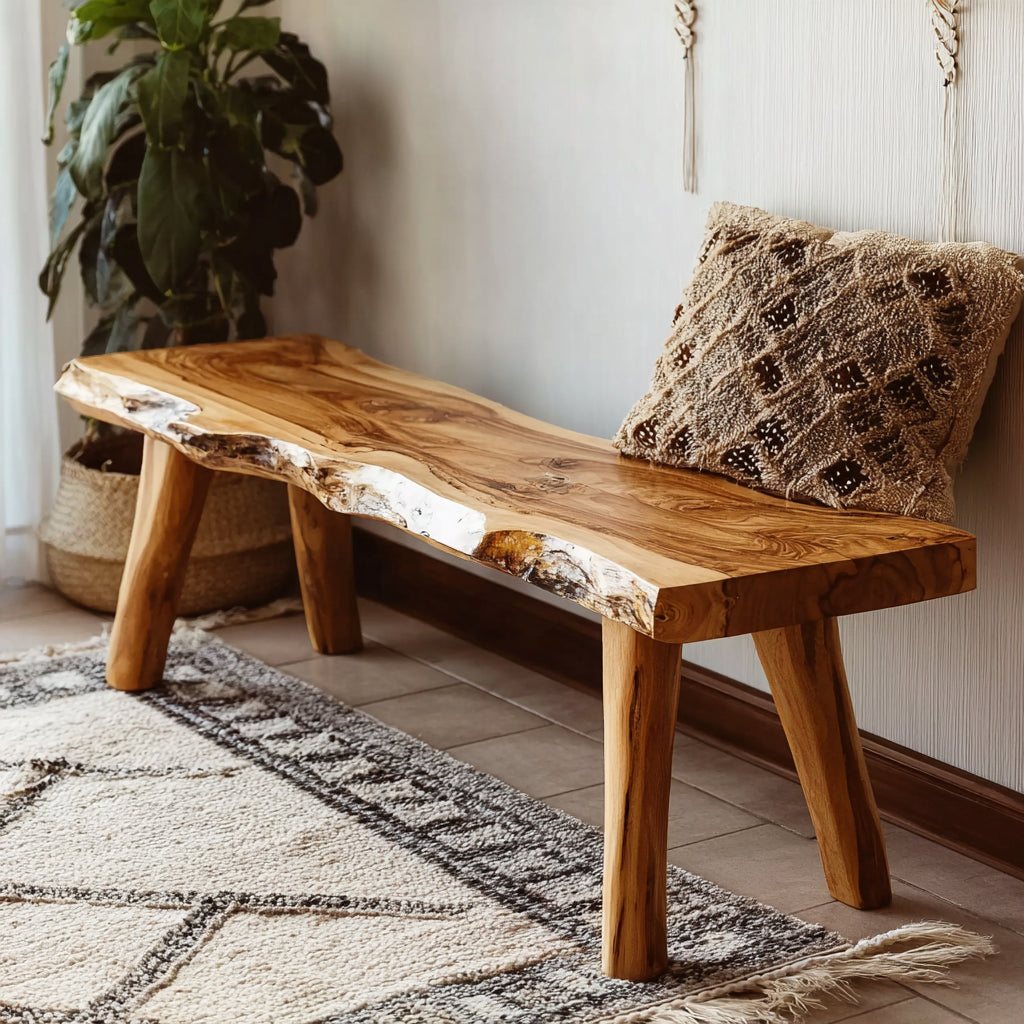
Rustic Solid Wood Bench – Handmade Live Edge Seat for Entryway, Living Room, Bedroom
Built to Be Repaired, Not Replaced
When a leg on a mass-produced bench breaks, you throw out the bench. The cam-lock fittings won't re-tighten, the particleboard won't accept new screws, and replacement parts don't exist. When a leg on a handcrafted solid wood bench loosens - which might happen after 15-20 years - a woodworker can reglue the mortise-and-tenon joint, shim it if needed, and the bench is good for another two decades.
Solid wood can be disassembled, repaired, refinished, and even modified. A bench made in 1960 can be shortened to fit a new entryway in 2026, refinished to match a new kitchen, or reupholstered with a new cushion. Try modifying a 60-year-old IKEA product. (You can't - they stopped making the hardware 55 years ago.)
The Economics of Heirloom Furniture
Let's do the math on generational value. A family that buys a $150 composite bench every 7 years spends approximately $640 over 30 years (accounting for disposal fees and replacement shopping time). A $600 handcrafted solid wood bench bought once lasts those same 30 years and beyond - and it's an asset with resale value, not a liability headed for the curb.
Handcrafted wood benches from recognized artisan traditions hold or increase their value over time. A well-maintained solid hardwood bench from a skilled maker can sell for 50-100% of its original price after 20+ years. Vintage handcrafted furniture is a thriving market - people actively seek out pieces with history, patina, and authentic craftsmanship.
The Intangible Value: Stories and Memories
A bench sits at the center of daily life in a way that dressers and bookshelves don't. It's where your kid sits to tie their shoes every morning. Where you sit to read the mail. Where your family gathers for holiday photos. Over years, a bench accumulates memories - and when it's well-built from beautiful wood, with visible grain and hand-shaped details, it becomes inseparable from the family narrative.
This is what Vietnamese artisans understand deeply: furniture isn't just functional, it's relational. Each handcrafted bench carries the intention and skill of the person who built it, and that human touch creates an emotional connection that factory furniture simply cannot replicate. When your children ask about that bench, you'll have a story to tell - not just a receipt to reference.
There's a reason antique handcrafted furniture commands prices far above its original cost while mass-produced furniture from the same era has long since disappeared. The market recognizes what the eye and hand already know: something made by a skilled human with care and intention holds a quality that no machine can inject. A handcrafted wood bench from Ashdeco isn't just a purchase - it's the beginning of a provenance that grows richer with every year in your family.
How to Choose the Right Wooden Bench: Decision Framework
With all the variables covered - room type, wood species, dimensions, edge profile, style - here's a practical decision framework to narrow your choice. Answer these five questions in order, and you'll eliminate 90% of the options that aren't right for your space.

The Five-Question Framework
- Indoor or outdoor? This determines your wood species shortlist. Outdoor narrows you to teak, acacia, or white oak. Indoor opens up walnut, red oak, and any hardwood.
- Which room? Entryway benches need shoe clearance and durability. Dining benches need table-height matching and 500+ lb capacity. Bedroom benches need to match bed width. Garden benches need weather resistance and deep seats.
- How many people need to sit? Multiply the number of adults by 22 inches to get your minimum bench length.
- What style does the room call for? Modern and minimalist → slab bench or Japandi design. Rustic or farmhouse → trestle base with visible grain. Industrial → wood slab on metal legs. Organic or bohemian → live edge.
- What's your lifespan expectation? If you want 5-10 years, softwood or entry-level hardwood is fine. If you want 30+ years or an heirloom piece, invest in solid hardwood with traditional joinery - a handcrafted bench from artisans who build for permanence.
Quick-Pick Recommendations by Scenario
| Your Scenario | Recommended Bench | Key Specs |
|---|---|---|
| Entryway, family of 4 | 48" acacia bench, open bottom | 18" seat height, 14" depth, 500 lb capacity |
| Dining table seating, 3 adults | 60" oak bench, backless, with stretcher | 18" seat height, 16" depth, 700 lb capacity |
| Queen bed end-of-bed | 52" walnut bench, straight edge | 20" seat height, 15" depth, 400 lb capacity |
| Garden patio, couple | 60" teak bench with back | 18" seat height, 20" depth, 600 lb capacity |
| Modern apartment statement piece | 48" live edge acacia on hairpin legs | 17" seat height, 14-18" depth, 400 lb capacity |
| Mudroom / shoe bench | 42" acacia or oak, shelf underneath | 18" seat height, 14" depth, 500 lb capacity |
Frequently Asked Questions About Wooden Benches
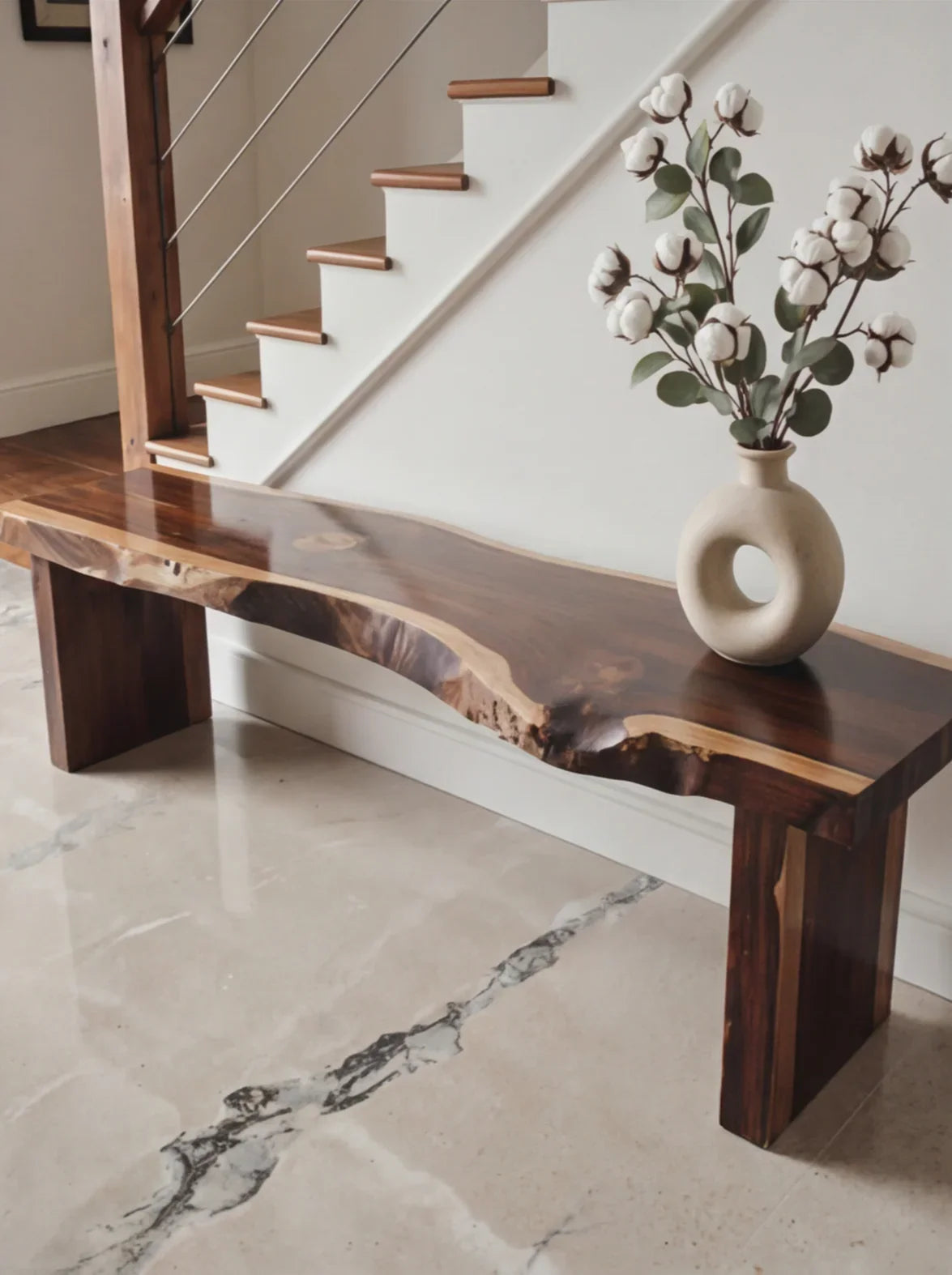
Live Edge Solid Wood Bench – Handmade Rustic Entryway Table
What is the best wood for an indoor bench?
For a wood bench indoor, walnut and white oak are the top choices. Walnut offers rich dark tones and straight grain that suits modern interiors. White oak provides excellent hardness (Janka 1,360), water resistance, and versatility with stains. Acacia is the best value option - harder than both at 1,750+ Janka - with dramatic grain patterns that make each bench unique.
How long does a solid wood bench last?
A properly built solid wood bench lasts 50-100+ years with basic care. The key factors are wood species (hardwood outlasts softwood 3-4x), joinery type (mortise-and-tenon far exceeds screws and dowels), and finish maintenance (oil or seal every 6-18 months depending on indoor/outdoor use). Many handcrafted benches become heirlooms passed across three or more generations.
What weight can a wooden bench hold?
A solid hardwood bench with traditional joinery typically supports 500-800 lbs, depending on design. Four-leg benches with H-stretchers handle the most weight (600-800 lbs). Benches without stretchers or with metal hairpin legs typically support 300-500 lbs. Always check the manufacturer's stated capacity, and choose mortise-and-tenon joinery for maximum load-bearing performance.
Is a live edge bench worth the extra cost?
Live edge benches typically cost 20-40% more than straight edge equivalents because each slab requires individual selection, stabilization of the natural edge, and more careful finishing. The value is in uniqueness - no two live edge benches are identical. If you want a one-of-a-kind statement piece for a modern or rustic interior, the premium is justified. For dining or purely functional use, straight edge offers better value.
How do I care for a wooden bench outdoors?
Outdoor wooden benches need UV-resistant sealer applied every 12-18 months (teak benches can go unsealed if you prefer the silver-gray patina). Clean seasonally with mild soap and water. Cover with breathable furniture covers during harsh weather. Avoid plastic tarps - they trap moisture. Store under cover in winter if possible. Even weather-resistant species like teak benefit from seasonal maintenance for cosmetic longevity.
What's the difference between a handmade wood bench and a factory bench?
A handmade wood bench is built by skilled artisans who hand-select each board, orient grain for maximum strength, cut joints individually for tight fit, and hand-finish every surface. Factory benches use machine-cut parts with loose tolerances, often from composite materials, assembled with cam-locks or pocket screws. The result: handcrafted benches are structurally stronger, last 5-10x longer, and develop character with age instead of deteriorating.
What size bench do I need for my dining table?
Measure your dining table length and subtract 12 inches - that's your maximum bench length so it doesn't extend past the table edges. For seat height, subtract 10-12 inches from your table height (standard tables are 29-30 inches, so bench seat height should be 17-19 inches). Allow 22 inches of bench length per seated adult to calculate capacity. A 60-inch bench seats three adults comfortably.
Can I use a wooden bench as a coffee table?
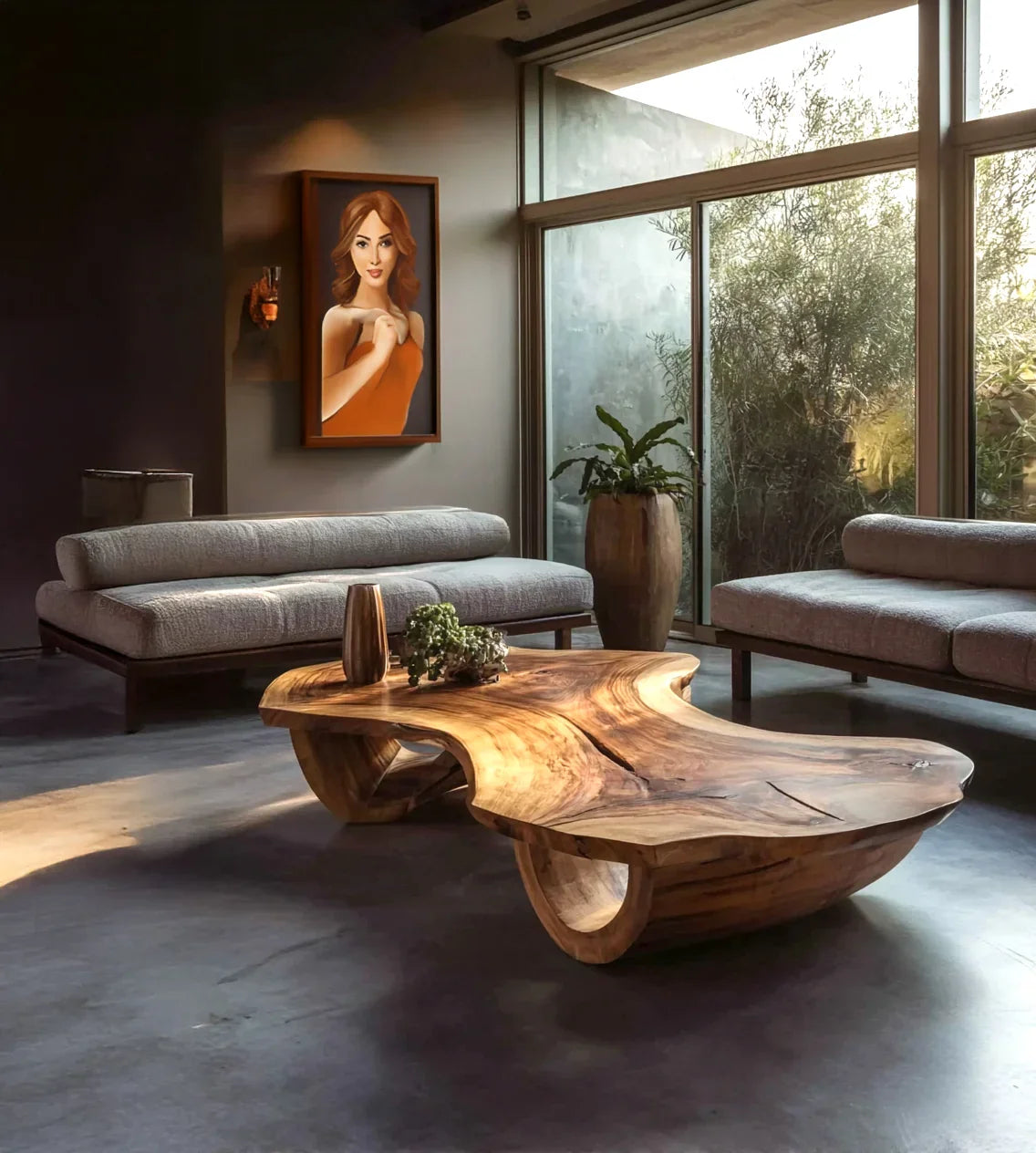
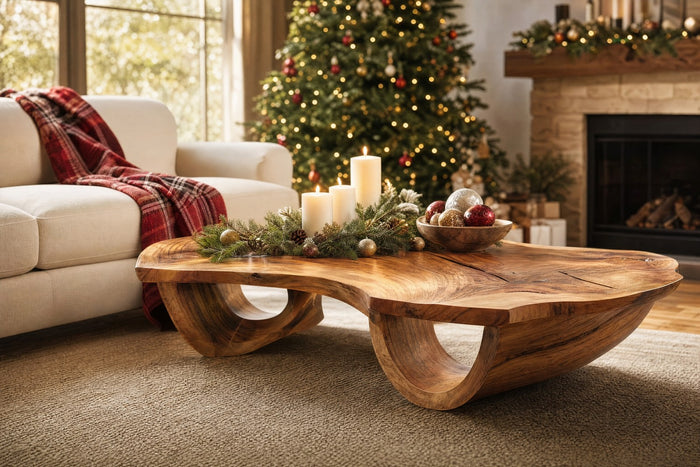
Yes - using a wooden bench as a coffee table is a popular design move, especially with live edge or slab-style benches. Standard coffee table height is 16-18 inches, and many bench seat heights fall in that range. The wider surface and organic shape create a more interesting coffee table than a conventional rectangular one. Just ensure the wood is sealed and protected against drink condensation and spills.
Choose a Bench Built for Generations
A wooden bench is one of the simplest pieces of furniture you can own - and simplicity demands quality. There's nowhere to hide subpar materials, weak joints, or careless finishing on a bench. Every flaw shows. Every strength shows too.
That's why choosing a solid wood bench, handcrafted by artisans who understand both the material and the craft, is the single most important decision in this entire guide. The right bench doesn't just furnish a room - it anchors it, serves your family daily, and gets better with every year it spends in your home.
Explore Ashdeco's full collection of handcrafted wood benches - each one built from solid hardwood by Vietnamese artisans, designed to last not just your lifetime, but your children's too.