Fireplace Mantel Depth: Standard Sizes and How to Pick Yours
Fireplace mantel depth is the measurement people skip and then regret. Everyone measures width first - it is the number you see on a product page - but depth is what decides whether the shelf looks like architecture or like a plank someone screwed to the wall. It also decides how much clearance you legally need above the firebox.
Standard mantel depth is 6-10 inches, with 7-8 inches being the most common range for a typical residential fireplace. Go shallower and you are limited to candles and photo frames. Go deeper and you need more vertical clearance above the firebox, whether the fire is real or electric.
As a handmade furniture brand that builds mantels at a fixed 8" depth, this is the question we get asked most after "how wide."
Quick Answer: Standard Fireplace Mantel Depth
| Fireplace size | Typical depth | Why |
|---|---|---|
| Small (30-32" opening) | 6-8" | Deeper shelves overwhelm a small firebox and small room |
| Medium (34-38" opening) | 8-10" | The most common depth for standard living rooms |
| Large (40"+ opening) | 10-12" | Matches the visual scale of a bigger fireplace wall |
| Electric / decorative surround | 6-8" | No fire clearance penalty, so depth is a styling choice |
If you only remember one number: 8 inches is the depth that works on the widest range of fireboxes without triggering extra clearance requirements. That is also why it is the depth we build at across all our mantel widths.
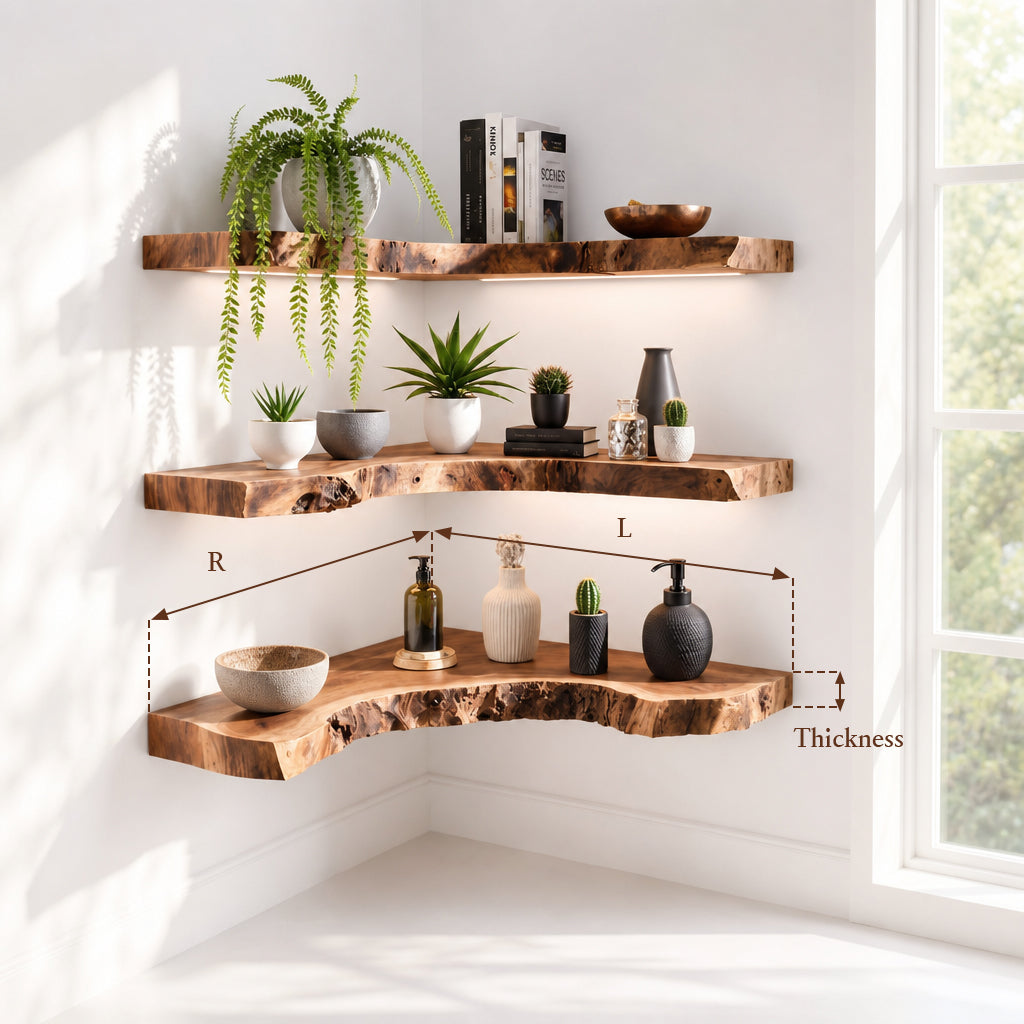
Full width, height, and thickness numbers are in the fireplace mantel size guide. This article is just the depth question, in detail.

Why Depth Matters More Than People Think
Width gets the attention because it is the number that has to fit the wall. Depth is the number that quietly controls three other things at once:
- How much you can display. A 5" deep shelf holds a candle and a photo. An 8" shelf holds a vase, a stack of books, and a leaning frame without anything hanging off the front edge.
- How much clearance you need above the firebox. This is the one people miss. Depth and fire clearance are directly linked - deeper mantel, more vertical space required above the opening.
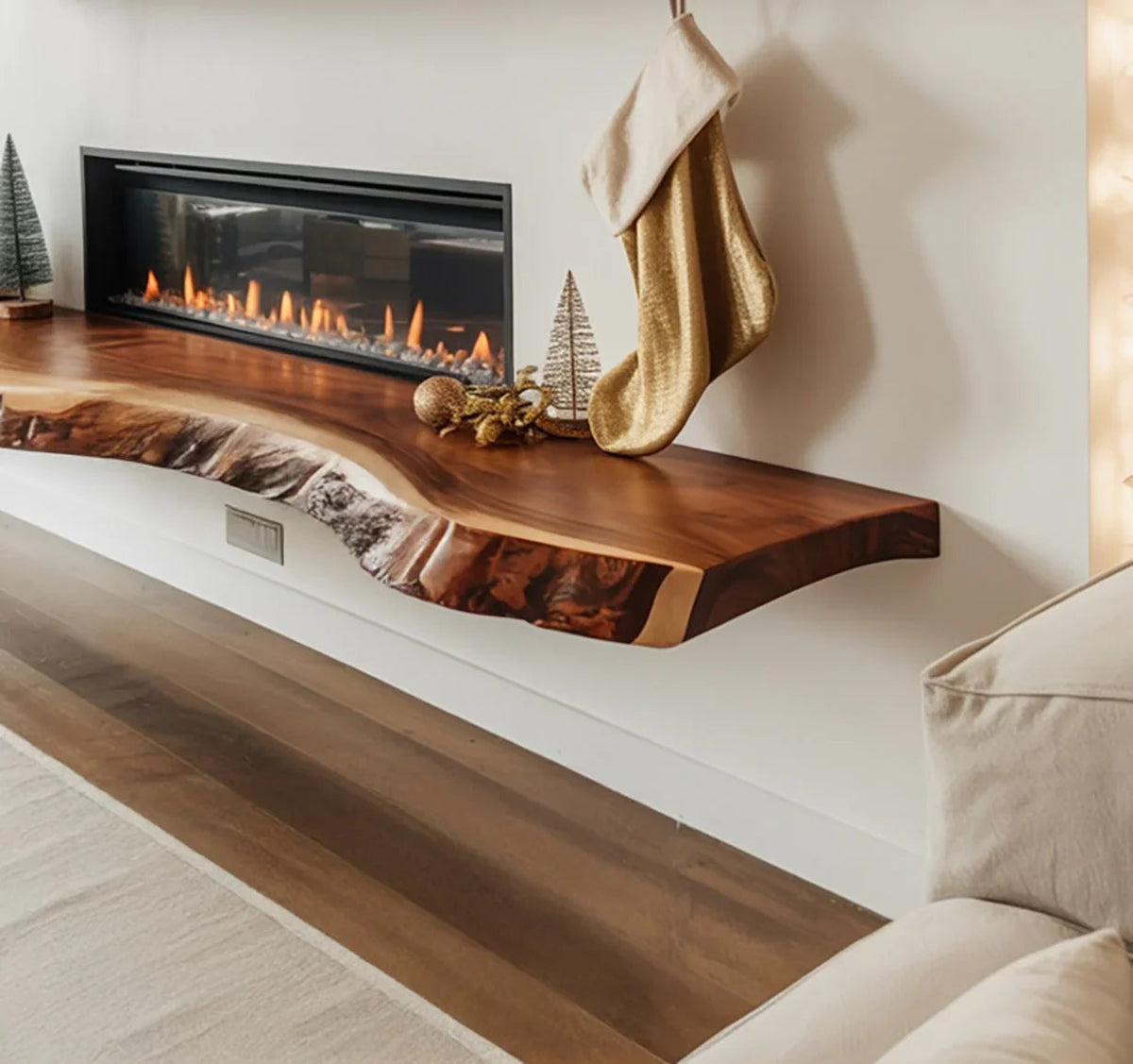
- How the mantel reads visually. A thin, shallow shelf looks like an afterthought on a stone or brick surround. A thicker, deeper beam reads as a real architectural element.
Get the depth right and the other two problems solve themselves. Get it wrong and you either can't style the shelf or you've mounted it too close to the fire.

Standard Depth Ranges, Explained
6-8 inches: The safe, most common range
This is where most residential mantels land, and it is the depth we use across every Ashdeco mantel width from 30" to 79". At 8", you get:
- Enough surface for a real vignette - not just a single candle
- A depth that keeps the standard 12" clearance recommendation from ballooning into something unworkable
- A proportion that looks right on both a 30" firebox and a 60" one
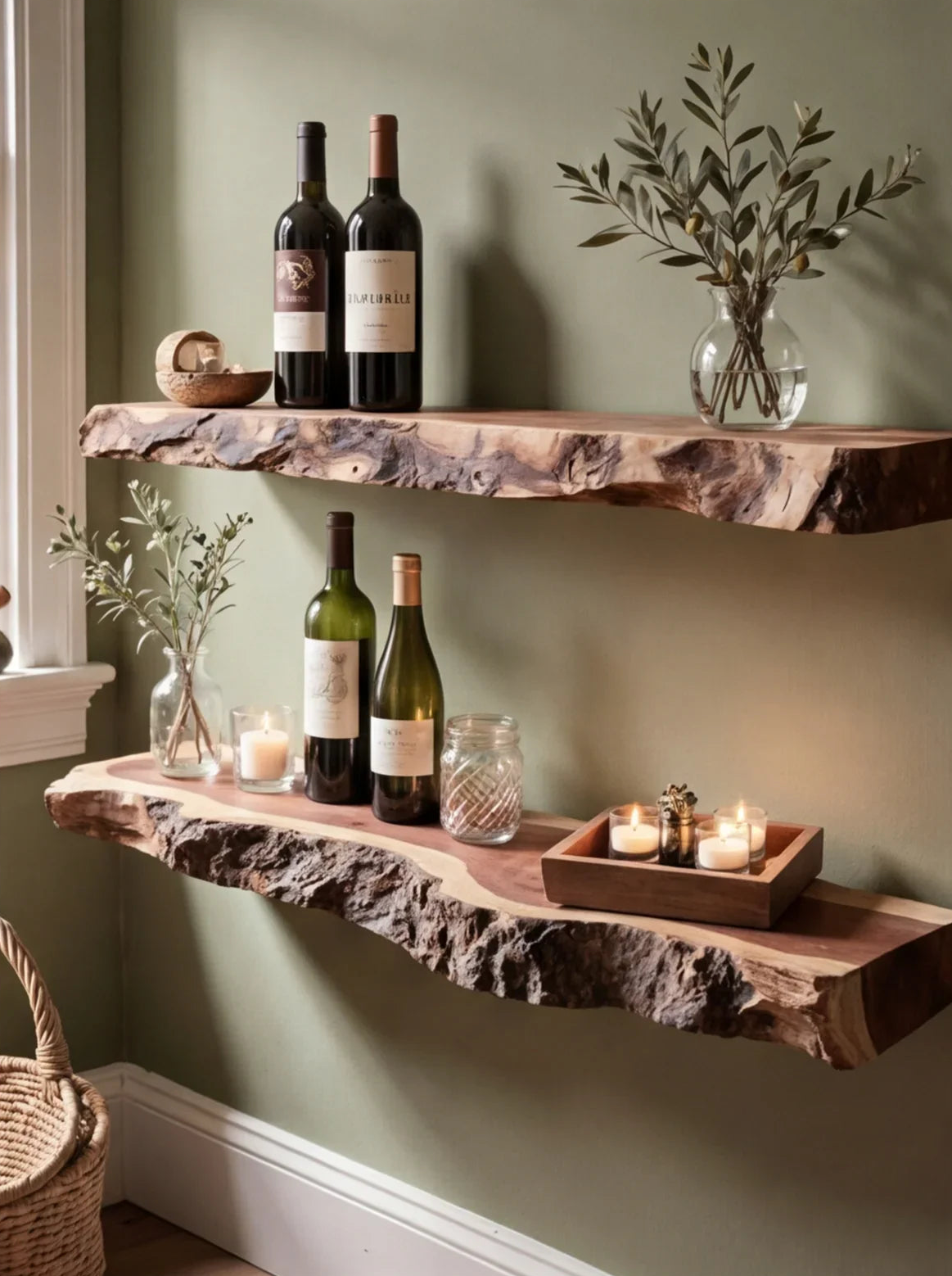
If you are replacing a thin, sagging shelf or a bare MDF ledge, jumping to 8" is usually the single biggest visual upgrade you can make without changing the surround at all. See it applied to an actual shelf in our sustainable solid wood fireplace mantel, which holds this depth across its entire size range.
8-10 inches: For medium-to-large fireplaces
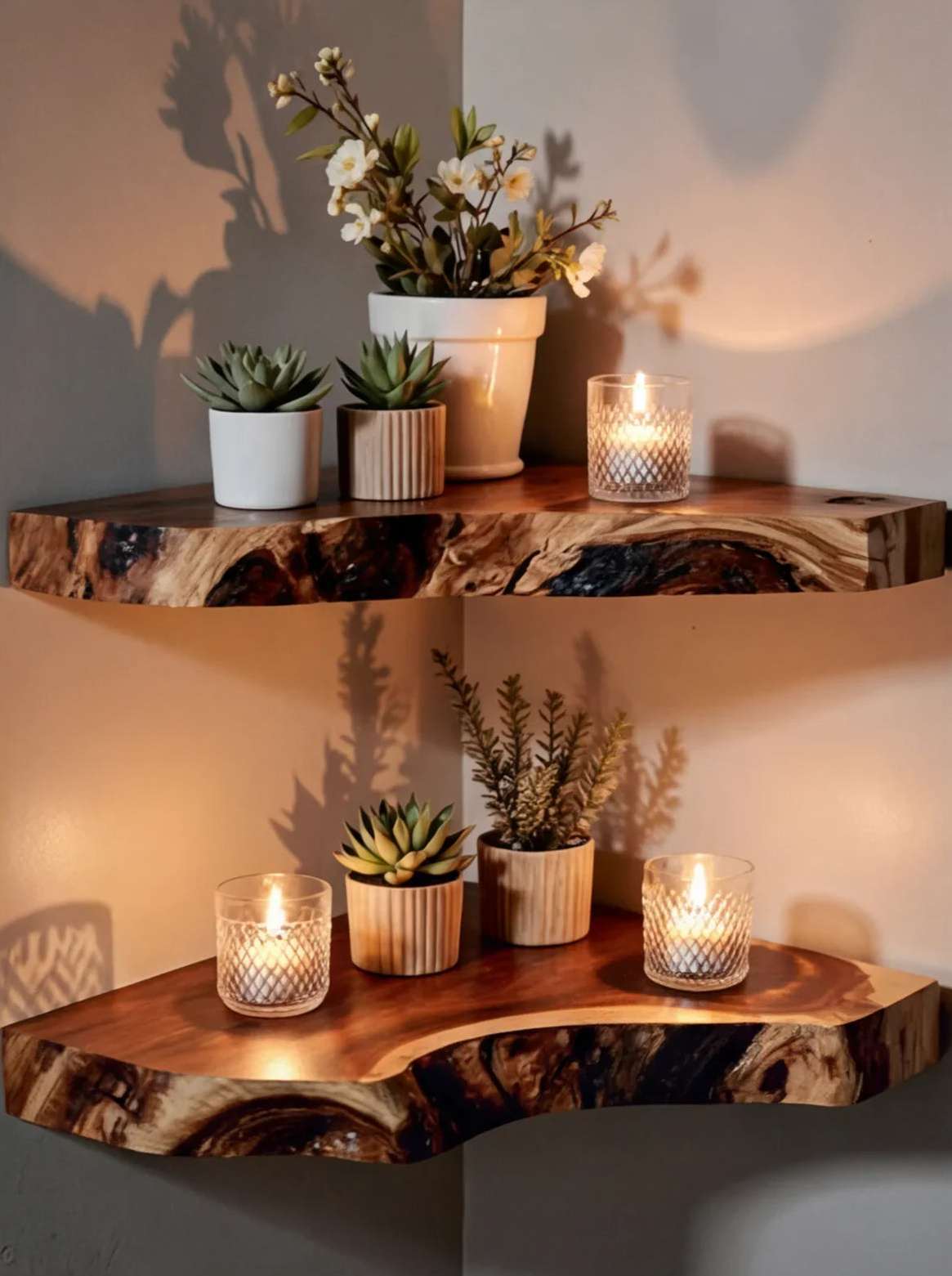
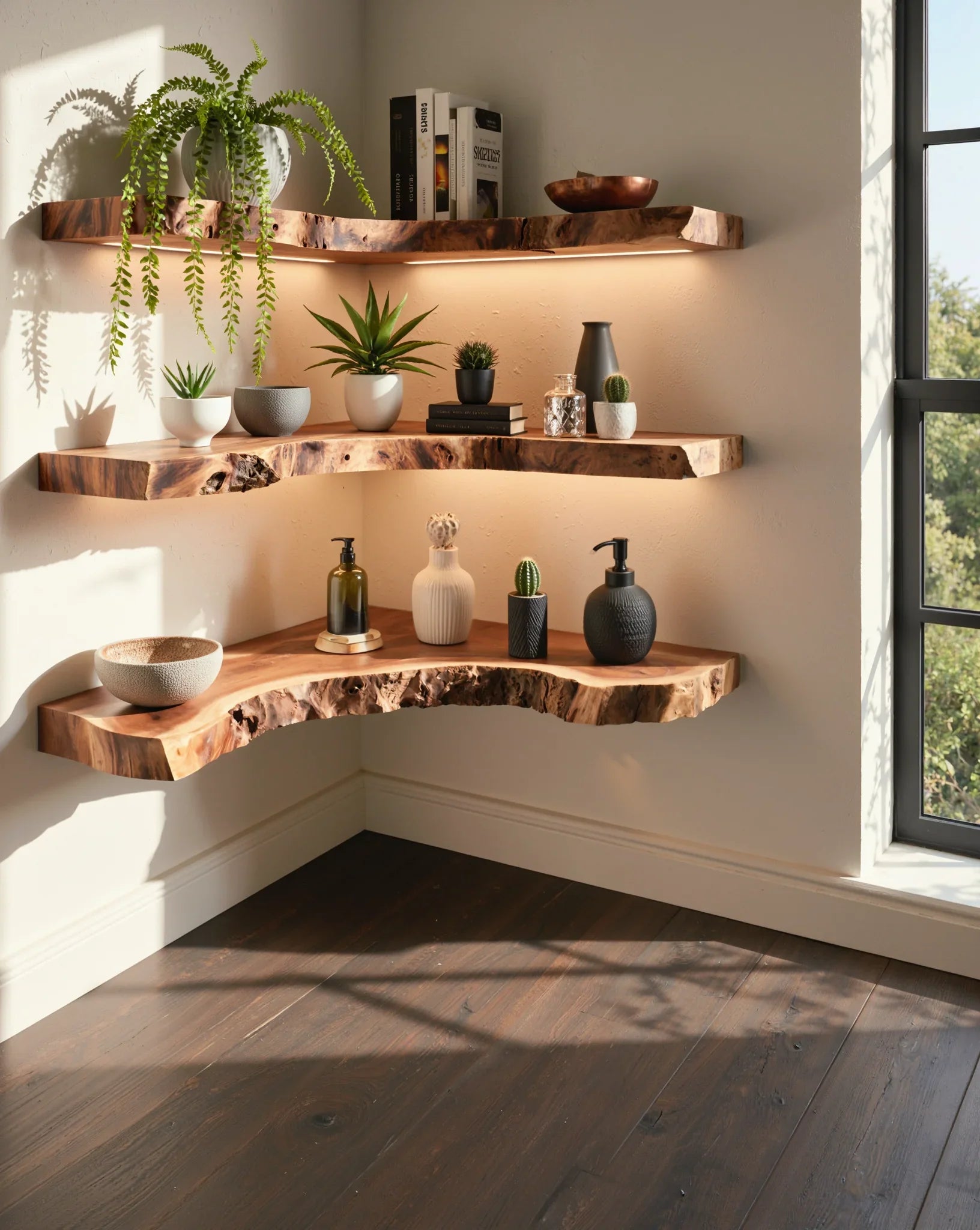
Once your firebox opening is 36" or wider, an 8-10" depth keeps the mantel from looking like a strip next to the mass of the fireplace wall. This is also the range where a live-edge or rough-sawn face starts to look intentional instead of accidental - there's enough material for the grain and edge character to read from across the room.
The tradeoff: at this depth, clearance above the firebox needs to go up too. Confirm the number for your fireplace type before you commit to it (see the clearance section below).
10-12+ inches: Large fireplaces and statement walls
This depth belongs on 40"+ fireboxes, vaulted-ceiling great rooms, or anywhere the mantel is meant to be the visual anchor of the room, not a supporting shelf. It requires the most clearance and the strongest wall connection - a deep mantel is a longer cantilever, and cantilevers put more stress on whatever is holding them up. Weight and mounting math for deeper shelves is covered in how much weight a fireplace mantel can hold.
Most homes do not need this depth. If you are unsure, 8-10" almost always looks more considered than going maximal.

Depth and Fire Clearance: The Part You Cannot Skip
This is the rule that makes fireplace mantel depth different from a regular floating shelf: the deeper it projects, the higher above the firebox it has to sit, if it is a combustible material like wood.
The commonly cited planning relationship:
| Mantel depth (projection) | Commonly cited minimum clearance above firebox |
|---|---|
| 1.5" | 6" (absolute floor - never go closer) |
| 2" | 8" |
| 4" | 10" |
| 6" (standard) | 12" |
| 8" | 14" |
| 10" | 16" |
| 12" | 18" |
Treat this table as planning guidance, not a code citation - exact ratios vary by jurisdiction and inspector. The one number every source agrees on: a combustible wood mantel never sits closer than 6 inches from the firebox opening, full stop.
Two things change the math:
- Gas and electric fireplaces often allow reduced clearance versus wood-burning units. Always check the manufacturer's spec sheet - it overrides general guidance.
- Decorative, non-working fireplaces have no heat clearance requirement at all. Depth becomes a pure styling decision.
Full breakdown of height, clearance formulas, and mounting height is in mantel on fireplace: exact height, clearance & decor rules.

How Depth Affects What You Can Actually Put on the Shelf
A mantel that is too shallow fights you every time you decorate it.
| Depth | Realistic styling capacity |
|---|---|
| 4-5" | One candle, one small frame. Anything else hangs off the edge. |
| 6-7" | A small vase, 2-3 frames, modest greenery. |
| 8" | A real vignette: vase, stacked books, a leaning mirror, seasonal decor - all sitting flat, nothing overhanging. |
| 10-12" | Room to layer front-to-back: taller pieces against the wall, shorter ones in front, without crowding. |
If you keep loading a mantel and things keep tipping forward or hanging off the lip, the shelf is too shallow for what you are trying to do with it - not a styling mistake. For general seasonal arrangement ideas that work well at 8" depth, see decorations on fireplace mantels: 7 rules for every season.
Depth vs. Weight Capacity
Depth and weight capacity are connected, and not in the direction people assume. A deeper mantel is not automatically stronger - it is a longer lever arm, which means the same weight puts more stress on the wall connection than it would on a shallower shelf.
Practical takeaway: keep the heaviest objects toward the back third of the shelf, closer to the wall, regardless of depth. The math on studs, rods, and realistic working loads is in how much weight can a fireplace mantel hold.
Matching Depth to Your Fireplace Size
Use your firebox opening width as the starting point, then adjust for room scale:
- 30-32" opening (small/bedroom fireplaces): 6-8" depth. Anything deeper overwhelms the opening and the room.
- 34-38" opening (the most common size in North American homes): 8-10" depth. This is the sweet spot most people should default to.
- 40"+ opening (great rooms, vaulted ceilings): 10-12" depth to match the scale of the wall.
If your fireplace is decorative or electric, you can size depth purely on styling needs and skip the clearance math entirely.
For the complete width, height, and thickness picture alongside depth, use the fireplace mantel size guide. For wall-by-wall mounting instructions once you've picked a depth, see how to install a fireplace mantel.
Ashdeco's Depth Standard
Every Ashdeco fireplace mantel is a consistent 8" deep, across every width from 30" to 79". That is not a limitation - it is the depth that works on small, medium, and most large fireboxes without forcing you into extreme clearance requirements, while still being deep enough for real styling: books, ceramics, a leaning mirror, seasonal decor.
Solid hardwood, kiln-dried, hand-finished. If your current mantel is a thin, hollow ledge, an 8" solid wood replacement is usually the single upgrade that makes the whole fireplace wall look intentional.
Shop fireplace shelves and live edge mantel shelves, including the rustic wooden fireplace mantel and floating live edge fireplace mantel shelf.
One depth, built to work on almost any firebox
Every Ashdeco mantel ships at a consistent 8" depth - solid hardwood, kiln-dried, hand-finished, in 6 widths from 30" to 79".
Shop Fireplace Shelves → Shop Live Edge Mantels →FAQ
What is the standard depth of a fireplace mantel?
6 to 10 inches, with 7-8 inches being the most common depth for a typical residential fireplace. Ashdeco mantels are a consistent 8" deep across all widths.
How deep should a fireplace mantel shelf be?
For most homes, 8 inches is the depth that balances styling room with reasonable fire clearance requirements. Small fireplaces can go shallower (6-8"); large fireplaces or statement walls can go deeper (10-12").
Does fireplace mantel depth affect fire safety clearance?
Yes. The deeper a combustible (wood) mantel projects from the wall, the more vertical clearance it needs above the firebox opening. A 6" deep mantel is commonly cited at 12" of clearance; deeper mantels need meaningfully more. Confirm exact numbers with your local building code or fireplace manufacturer.
Is a deeper mantel always better?
No. Deeper mantels need more fire clearance, put more stress on the wall connection as a longer cantilever, and can overwhelm a small firebox. Match depth to your firebox size, not to what looks biggest in a photo.
Can I use a different depth for an electric fireplace mantel?
Yes. Electric and decorative fireplaces have far less strict (or no) heat clearance requirements, so depth becomes mostly a styling and proportion decision. Always confirm with the unit's manual first.
Depth is the dimension that decides both how the mantel looks and how close it can safely sit to the fire. Get your firebox width and fireplace type first, then let those numbers set the depth - not the other way around.