





















Quick view
Shop this guide
Handcrafted Cat Tree Tower, made to order in solid wood.
 Hollow Tunnel Cave Sisal Scratching Cat Tree Tower in Sculpted Solid Wood
From $1,532.00
Hollow Tunnel Cave Sisal Scratching Cat Tree Tower in Sculpted Solid Wood
From $1,532.00
 Multi Tier Sculpted Botanical Canopy Cat Tree Tower in Matte Finished Solid Wood
From $1,765.00
Multi Tier Sculpted Botanical Canopy Cat Tree Tower in Matte Finished Solid Wood
From $1,765.00
 Sculptural Spiral Solid Wood Cat Tree Tiered Modern Feline Lounger
From $2,217.0010% off at checkout
Sculptural Spiral Solid Wood Cat Tree Tiered Modern Feline Lounger
From $2,217.0010% off at checkout
 Nature Inspired Branch Solid Wood Corner Cat Tree Tower Condo
From $1,854.00
Nature Inspired Branch Solid Wood Corner Cat Tree Tower Condo
From $1,854.00
 Live Edge Slice Tiered Solid Wood Cat Tree Freestanding Multi Level Perch
From $1,732.00
Live Edge Slice Tiered Solid Wood Cat Tree Freestanding Multi Level Perch
From $1,732.00
 Artisanal Solid Wood Sculptural Tree Cat Tower & Multi-Tier Botanical Display Perch Stand
From $2,076.0010% off at checkout
Artisanal Solid Wood Sculptural Tree Cat Tower & Multi-Tier Botanical Display Perch Stand
From $2,076.0010% off at checkout
How to Choose the Right Cat Tree Based on Your Cat's Age
You wouldn't buy the same shoes for a toddler and a grandparent. So why buy the same cat tree for a kitten and a senior?
Cats change dramatically as they age. A bouncy four-month-old needs an entirely different setup from a ten-year-old cat with stiff joints. Yet most buyers pick one generic cat tree and hope it works for every life stage. It rarely does.
This guide breaks down exactly what cats need at each age - and how to choose a cat tree that matches your cat's current stage, from playful kitten to dignified senior.

Why Your Cat's Age Matters When Choosing a Cat Tree
A cat tree isn't just furniture - it's your cat's personal playground, scratching post, observation tower, and safe space all in one. But the features that make a great tree for one life stage can actually be harmful for another.
Here's the reality:
- Kittens are clumsy, curious, and still developing coordination. A tree that's too tall or has gaps that are too wide is a genuine injury risk.
- Adult cats are at their physical peak. They want height, challenge, and durability - especially if you have more than one.
- Senior cats deal with arthritis, reduced mobility, and lower body temperature. A tree that forces big jumps or puts them too high off the ground becomes unusable.
Quick overview of how needs shift across life stages:
| Life Stage | Age Range | Primary Need | Ideal Height |
|---|---|---|---|
| Kitten | 0–12 months | Safety, small steps, enclosed spaces | 30–50" |
| Adult | 1–7 years | Height, challenge, durability | 59–80"+ |
| Senior | 7+ years | Easy access, low steps, warmth | 24–40" |
Note the difference between kitten and senior heights: Kittens can handle up to 50" because they're building climbing skills and their small bodies recover quickly from minor missteps. Seniors need a much lower profile - 24–40" max - because joint pain and reduced balance make any fall potentially serious. A kitten learning to climb is very different from a senior struggling to climb.

Cat Trees for Kittens (0–12 Months)
Your kitten is adorable, energetic, and completely unaware of personal safety. They will attempt jumps they can't make, climb things they can't descend, and chew on anything that moves.
Choosing the right cat tree during this stage sets the foundation for good habits - and keeps them out of the vet's office.
What Kittens Need From a Cat Tree
Short, safe climbs. Kittens haven't developed full jumping coordination until around six months. Before that, they misjudge distances constantly. A tree with platforms spaced 8–12 inches apart lets them practice climbing without risking a dangerous fall.
Enclosed hideaways. Small kittens feel exposed and vulnerable. A cubby or enclosed den gives them a retreat when they're overwhelmed - which happens more often than you'd think with a new environment.
Soft scratching surfaces. Kittens need to scratch to learn the behavior, but their claws are delicate. Sisal that's too rough or posts that are too tall can discourage scratching altogether.
Non-toxic materials. Kittens chew. Everything. If your tree uses adhesives, painted wood, or low-grade carpet fibers, your kitten will ingest some of it. Stick to natural, untreated materials.
Key Features to Look For
| Feature | Why It Matters |
|---|---|
| Height under 50" | Keeps falls manageable while kittens develop coordination |
| Platform spacing 8–12" | Small legs need shorter steps between levels |
| At least one enclosed cubby | Creates a safe retreat for overwhelmed kittens |
| Sisal-wrapped posts (soft grade) | Gentle on developing claws, teaches scratching early |
| Anti-slip surfaces | Kittens slip easily; textured platforms prevent accidents |
| Rounded edges | No sharp corners at kitten head-height |
What to Avoid
- Tall towers (60"+). A kitten falling from that height can fracture a leg or damage their spine.
- Wide gaps between platforms. If a kitten can't comfortably step or hop between levels, they'll either get stuck or attempt a risky jump.
- Carpet-covered platforms. Kittens will pull at loose threads and potentially swallow fibers.
- Wobbly or lightweight bases. An energetic kitten climbing vigorously can tip a poorly weighted tree.
When to Upgrade
Most kittens outgrow their first tree between 8–12 months as they gain size, strength, and confidence. Signs it's time to upgrade: your cat easily reaches the top without effort, they start jumping past the tree entirely, or they seem bored with the available platforms.



Cat Trees for Adult Cats (1–7 Years)
This is your cat's prime. They're confident, active, and - if you're honest - probably running your household. An adult cat's cat tree needs to keep up with their energy and give them what they actually want: height, territory, and a good vantage point.
What Adult Cats Need
Real height. Adult cats think vertically. A 59–80 inch tree gives them the elevation they crave for surveying their domain. Tall breeds like Bengals and Abyssinians will push for even more.
Multiple platforms at different levels. Cats in multi-cat households especially need options. If there's only one perch, there will be conflict. Three or more platforms at varying heights lets each cat claim their preferred spot.
Durable scratching posts. An adult cat scratches daily - sometimes hourly. Sisal-wrapped posts need to be thick (3–4 inches diameter minimum) and tightly wound to survive months of use.
Stability under dynamic load. This is the part most buyers miss. When a cat jumps onto a platform, the impact force is significantly higher than their static body weight - and that repeated stress is what causes cheap trees to wobble, crack, or collapse over time. A well-built tree needs to handle those dynamic loads day after day without rocking.
Key Features to Look For
| Feature | Recommendation |
|---|---|
| Height | 59–80" for most breeds; 80"+ for active breeds (Bengal, Savannah) |
| Platform spacing | 14–18" for average cats; 12–14" for heavier breeds |
| Platform size | Minimum 14" × 14"; 18" × 18"+ for large breeds |
| Scratching posts | 3–4" diameter sisal, full-height wrapping |
| Base weight | Heavy enough to resist rocking; wall-anchor for trees over 60" |
| Material | Solid wood > plywood > particleboard (for durability and stability) |
By Energy Level, Not Just Age
Not all adult cats are the same. A seven-year-old British Shorthair that sleeps 18 hours a day has very different needs from a three-year-old Bengal that runs parkour at 2 AM.
- Low-energy adults (Persians, British Shorthairs, older rescues): A 59-inch tree with wider, cushioned platforms is plenty. They want height for the view, not the workout.
- Moderate-energy adults (Birmans, Scottish Folds, most domestic shorthairs): A 70-inch tree with mixed platform sizes gives them options without overwhelming the room.
- High-energy adults (Bengals, Abyssinians, Siamese): Go tall - 80 inches or more. Add varied textures, multiple scratching zones, and if possible, wall-mounted extensions.
What to Avoid
- Particleboard construction. It looks fine in photos but sags, swells, and crumbles under adult cat weight within months.
- Narrow perches. An adult cat needs enough room to lie down comfortably, not just perch.
- Single-post designs. They're unstable for anything but the smallest cats.
- Trees under 40" for active cats. They'll ignore it and climb your curtains instead.

Cat Trees for Senior Cats (7+ Years)
This is where most cat owners get it wrong. Their cat stops using the tree, and they assume the cat "just doesn't like climbing anymore." In reality, the tree has become physically difficult or painful to use.
Degenerative joint disease (arthritis) is common in senior cats and becomes more prevalent with age - a cross-sectional radiographic study found evidence of the condition in the large majority of cats examined, including many showing no obvious outward symptoms (Lascelles BD, Henry JB 3rd, Brown J, et al. "Cross-sectional study of the prevalence of radiographic degenerative joint disease in domesticated cats." Veterinary Surgery, 2010;39(5):535–544. PubMed). That changes everything about what furniture they can comfortably use.
What Senior Cats Need
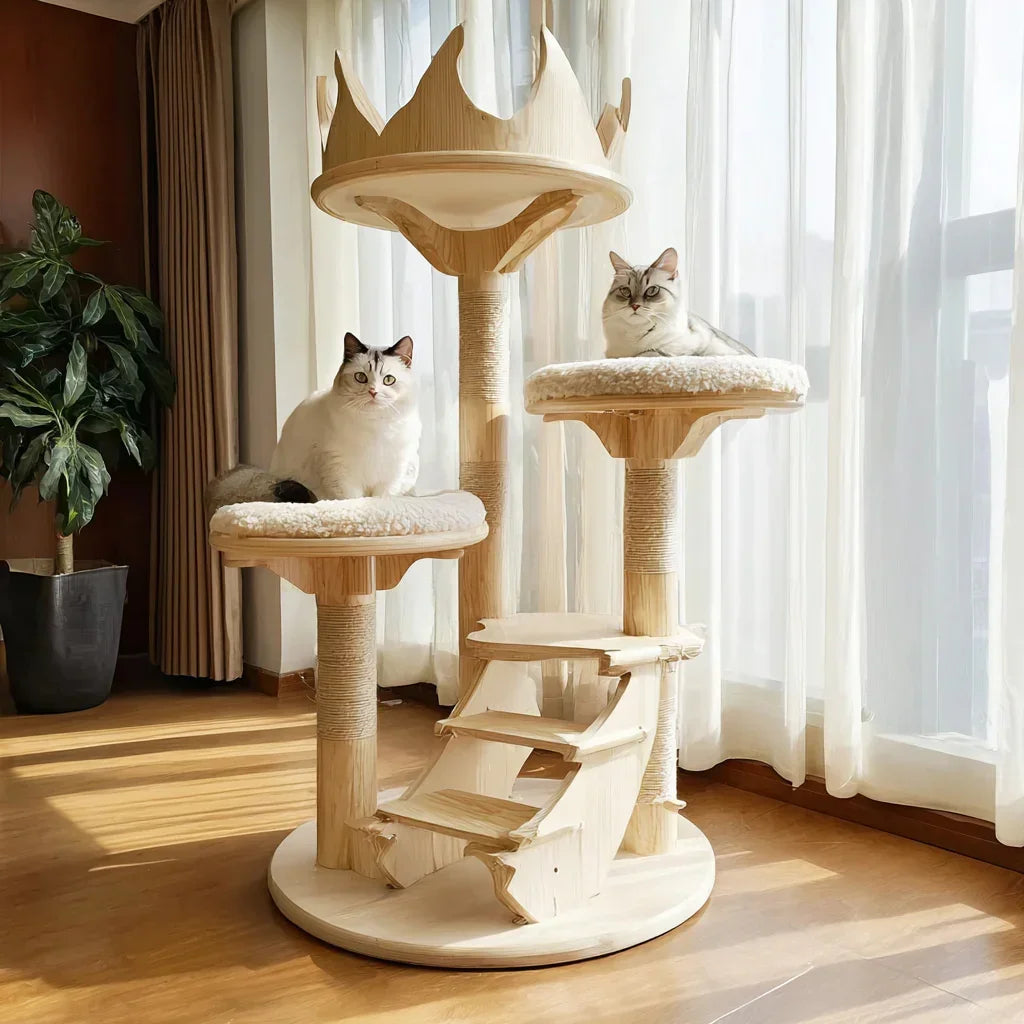
Easy access is everything. A senior cat with arthritis can't make the same 16-inch vertical jumps they managed at age three. Platform spacing needs to shrink to 10–12 inches, or better yet - include a ramp or staircase design.
Lower maximum height. Senior cats still want elevation, but 24–40 inches is their comfort zone. Anything higher requires jumps that stress aging joints and creates anxiety about getting back down.
Warmth and comfort. Older cats have difficulty regulating body temperature. A platform with soft, warm material (faux fur, fleece-lined) near a heat source or sunny window becomes their favorite spot.
Gentle scratching surfaces. Senior cats still need to scratch - it maintains claw health and stretches muscles. But sisal that's too aggressive can hurt aging paw pads. Look for medium-grade sisal or carpet-wrapped options that are easier on sensitive paws.
Key Features to Look For
| Feature | Recommendation |
|---|---|
| Maximum height | 24–40" - low enough for safe, comfortable access |
| Platform spacing | 10–12" - short steps, no big jumps |
| Access method | Ramp or staircase preferred over direct jumps |
| Platform surface | Soft, warm materials (faux fur, fleece); thick cushioning |
| Scratch post | Medium-grade sisal or soft carpet, lower height |
| Location | Place near warmth (radiator, sunny window, heated pad) |
What's the Best Cat Tree Material for Senior Cats with Arthritis?
This is one of the most common questions from senior cat owners, and the answer matters more than most guides acknowledge. Solid wood is ideal for senior cats - and here's why:
- Stability. Arthritic cats are less steady on their feet. A solid wood tree doesn't wobble when they climb, which reduces anxiety and prevents slips.
- Temperature. Wood holds ambient warmth better than metal-frame or particleboard trees, especially in air-conditioned rooms.
- Smooth surfaces. Unlike carpet or rough sisal, polished wood won't irritate sensitive paws or snag aging fur.
- Durability. Senior cats use their furniture gently, but a solid wood tree will still be there years later if you get another cat or if your senior surprises you with a second wind.
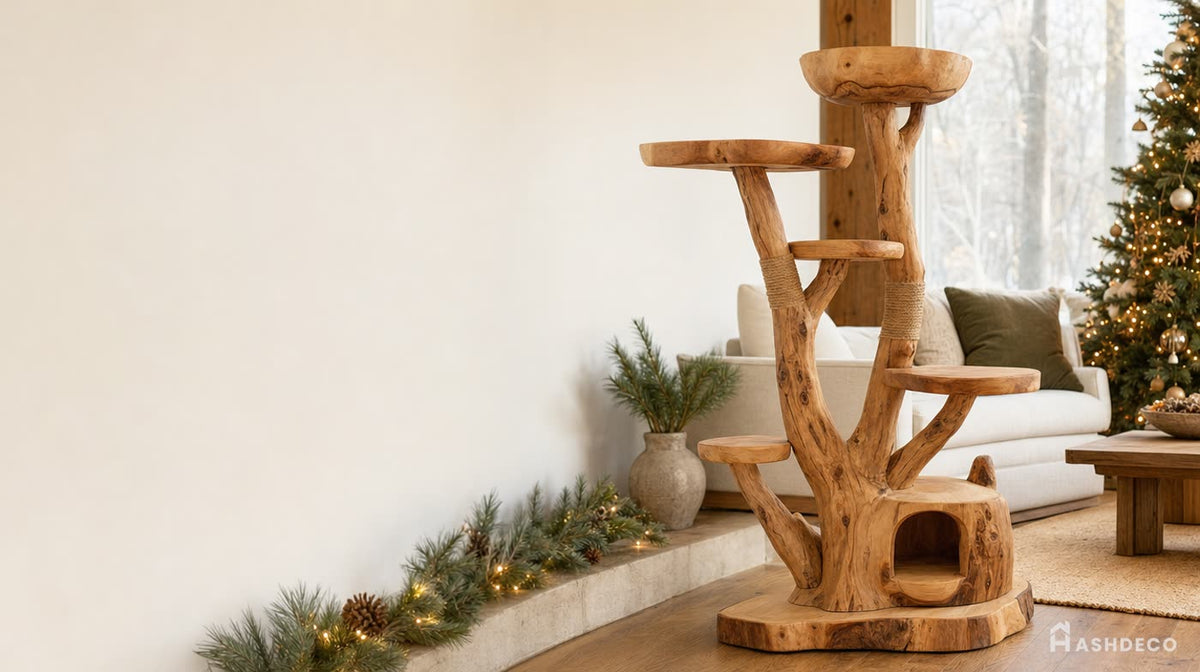
Ashdeco's solid wood cat trees are hand-carved from single pieces of natural wood, creating smooth, organic platforms that are gentle on senior cat paws while providing the stability aging joints need. The natural wood finish blends into home decor and stays warm to the touch exactly what older cats gravitate toward.
What to Avoid
- Tall trees (60"+). Falls from this height can cause serious injuries in senior cats fractures, head trauma, or simply the fear that prevents them from using the tree again.
- Wide platform gaps (> 16"). Senior cats can't make these jumps reliably anymore.
- Slick surfaces. Polished metal or glossy plastic platforms are slip hazards for cats with reduced grip strength.
- Cold materials. Metal frames and thin particleboard get cold and stay cold senior cats will avoid them.
Signs Your Cat's Current Tree Is Too Hard for Them
- They climb up but seem hesitant or meow from the top (can't figure out how to get down)
- They've stopped using upper platforms entirely
- They sleep at the base of the tree instead of on it
- You notice stiffness or limping after climbing sessions
- They've started sleeping on the floor or furniture instead
If you see any of these, it's time to reassess. A tree that was perfect at age three may be actively harmful at age ten.

Don't miss
These pieces qualify for 10% off orders over $2,000. Applied automatically at checkout.
10% off
Sculptural Spiral Solid Wood Cat Tree Tiered Modern Feline Lounger
From $2,217.00
10% off at checkout
10% off
Artisanal Solid Wood Sculptural Tree Cat Tower & Multi-Tier Botanical Display Perch Stand
From $2,076.00
10% off at checkout
 10% off
Sculptural Hand-Carved Tree Solid Wood Wall-Mounted Cat Climbing Tower with Dual House Condos & Display Shelves
$3,012.00
10% off at checkout
10% off
Sculptural Hand-Carved Tree Solid Wood Wall-Mounted Cat Climbing Tower with Dual House Condos & Display Shelves
$3,012.00
10% off at checkout
 10% off
Sculptural Hand-Carved Tree Solid Wood Cat Tower & Multi-Tier Luxury Feline Climbing Tree with Tunnel Condo Base
From $2,654.00
10% off at checkout
10% off
Sculptural Hand-Carved Tree Solid Wood Cat Tower & Multi-Tier Luxury Feline Climbing Tree with Tunnel Condo Base
From $2,654.00
10% off at checkout
Multi-Cat Homes: One Tree for Different Ages
If you have cats at different life stages say, a new kitten and a seven-year-old resident cat one tree needs to serve both. Here's how to make it work:
Choose a tree with graduated levels. Look for designs that have lower platforms (10–12" spacing) for the senior cat and higher platforms (16–18" spacing) for the adult. The key is making every level accessible to whoever needs it.
Add a ramp or steps. A modular ramp attachment gives seniors and kittens access to mid-level platforms without forcing big jumps.
Don't let one cat dominate. In multi-cat homes, the most confident cat claims the highest perch. Make sure there are alternative spots at similar heights so other cats aren't pushed out.
Consider two trees. If space and budget allow, a shorter tree for the senior/kitten plus a taller tree for the adult gives each cat their ideal setup without compromise.

Quick Reference: Cat Tree Features by Age
Here's the full comparison at a glance:
| Feature | Kitten (0–12m) | Adult (1–7y) | Senior (7y+) |
|---|---|---|---|
| Ideal max height | 30–50" | 59–80"+ | 24–40" |
| Platform spacing | 8–12" | 14–18" | 10–12" |
| Access style | Short hops, steps | Direct jumps | Ramp or short steps |
| Scratch post | Soft sisal | Thick sisal (3–4") | Medium sisal, lower height |
| Platform surface | Anti-slip, soft | Firm, spacious | Warm, cushioned |
| Enclosed spaces | Essential (safe retreat) | Optional | Helpful (warmth retreat) |
| Stability priority | High (prevent tipping) | Highest (dynamic load) | Highest (joint insecurity) |
| Material preference | Non-toxic, chew-safe | Durable solid wood | Smooth solid wood, warm |
🐾 Find the Perfect Tree for Your Cat's Life Stage

Whether you're setting up a safe first tree for a kitten or finding a gentle, accessible perch for a senior, the right cat tree makes a real difference in your cat's daily comfort.
Ashdeco's cat trees are handcrafted from solid natural wood - stable enough for aging joints, warm to the touch for senior cats, and beautifully sculpted to complement your home.
FAQ
When should I switch my kitten's cat tree?
Most kittens are ready for an adult-sized tree between 8–12 months. Signs include: easily reaching the top platform, jumping past the tree, or showing boredom with current features. Upgrade when the tree no longer challenges them - not when they've already outgrown it.
How do I know if my cat is too old for their current tree?
Watch for hesitation before jumping, sleeping at the base instead of on platforms, meowing from elevated spots (can't get down), or visible stiffness after climbing. If any of these appear, it's time to switch to a senior-friendly setup.
Can I use the same cat tree for a kitten and a senior cat?
Yes but only if the tree has graduated levels with both low-access platforms (10–12" spacing) for the senior and slightly higher options for the kitten. Avoid single-height or tall-only designs.
What's the safest cat tree height for older cats?
24–40 inches maximum. At this height, even a fall is unlikely to cause injury, and the elevation is enough for a senior cat to feel they have a vantage point without requiring risky jumps.
Do kittens need scratching posts?
Absolutely. Kittens start scratching at 3–4 weeks old. A scratching post during this stage teaches them where to scratch (not the couch) and maintains healthy claw development. Choose soft-grade sisal that's gentle on young paws.
This guide is part of Ashdeco's cat furniture resource library. For related reading:
- Cat Tree Weight & Stability Guide - understanding weight capacity and base stability
- Best Cat Trees for Large Cats 2026 - comprehensive guide for big breeds
- Shop all cat trees →