





















Quick view
- Why 60 Inches? (The Goldilocks Bench Size)
- Where a 60 Inch Storage Bench Works Best
- What Fits in a 60" Storage Bench? (By Storage Type)
- 60 Inch vs 48 Inch vs 72 Inch: Which Bench Size Do You Need?
- Weight Capacity & Durability for a 60 Inch Bench
- Material Matters: Solid Wood vs MDF vs Metal
- 60 Inch Storage Bench Dimensions (Standard Ranges)
- Styling Tips: What to Put On Top
- FAQ
- Find Your Perfect 60 Inch Bench
Shop this guide
Handcrafted Benches, made to order in solid wood.
 Christmas edit
Handcrafted Rustic Solid Wood Bench - Natural Log Seating for Garden & Patio
From $1,553.00
Christmas edit
Handcrafted Rustic Solid Wood Bench - Natural Log Seating for Garden & Patio
From $1,553.00
 Christmas edit
Live Edge Wooden Entryway Bench – Solid Wood Hallway Bench with Shelf
From $1,050.00
Christmas edit
Live Edge Wooden Entryway Bench – Solid Wood Hallway Bench with Shelf
From $1,050.00
 Christmas edit
Handcrafted Walnut Bench – Organic Sculptural Mid-Century Design
From $2,327.0010% off at checkout
Christmas edit
Handcrafted Walnut Bench – Organic Sculptural Mid-Century Design
From $2,327.0010% off at checkout
 Christmas edit
Solid Walnut Sculptural Bench, Mid-Century Modern Organic Entryway Seating
From $1,876.00
Christmas edit
Solid Walnut Sculptural Bench, Mid-Century Modern Organic Entryway Seating
From $1,876.00
 Christmas edit
Handcrafted Sculptural Wood Bench – Modern Organic Curved Entryway Bench
From $2,060.0010% off at checkout
Christmas edit
Handcrafted Sculptural Wood Bench – Modern Organic Curved Entryway Bench
From $2,060.0010% off at checkout
 Christmas edit
Organic Live Edge Solid Wood Halloween Sculptural Bench
From $2,234.0010% off at checkout
Christmas edit
Organic Live Edge Solid Wood Halloween Sculptural Bench
From $2,234.0010% off at checkout
60 Inch Storage Bench: Will It Fit Your Space? Size & Use Guide
Five feet. That's exactly 60 inches. And it turns out to be the most useful width you can buy for a storage bench - not too cramped, not so big it eats your room. But whether a 60 inch storage bench actually fits your space depends on three things: the room you put it in, the storage type inside, and the clearance you leave around it.
This guide breaks down exactly where a 60-inch bench works, what fits inside each storage style, how it stacks up against 48-inch and 72-inch alternatives, and the dimension ranges you'll actually find on the market. If you're standing in your entryway or bedroom wondering "will this bench fit?" - the answer is below.
Why 60 Inches? (The Goldilocks Bench Size)
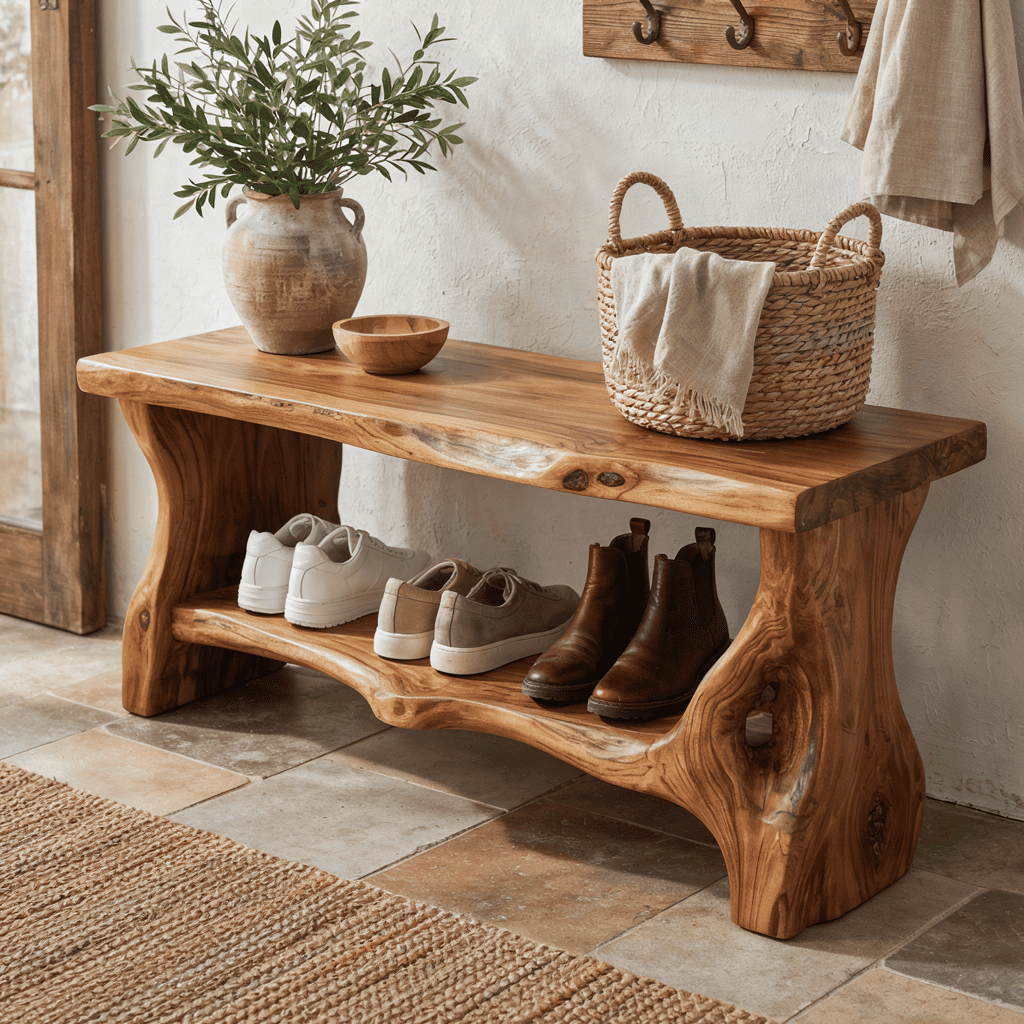
Here's what makes 60 inches special: it's wide enough for three adults to sit shoulder-to-shoulder (roughly 18–20 inches per person), long enough to span the foot of a queen bed with a few inches to spare on each side, and compact enough to sit under most windows without blocking the sill.
Go down to 48 inches and you lose that third seat. Go up to 72 inches and you suddenly need six feet of unbroken wall - which most entryways and bedrooms don't have. At 60 inches, you hit the sweet spot between capacity and real-world space constraints.
That's why a 60 inch entryway bench is one of the most commonly searched sizes. It's the size that actually fits the spaces people have.
Where a 60 Inch Storage Bench Works Best
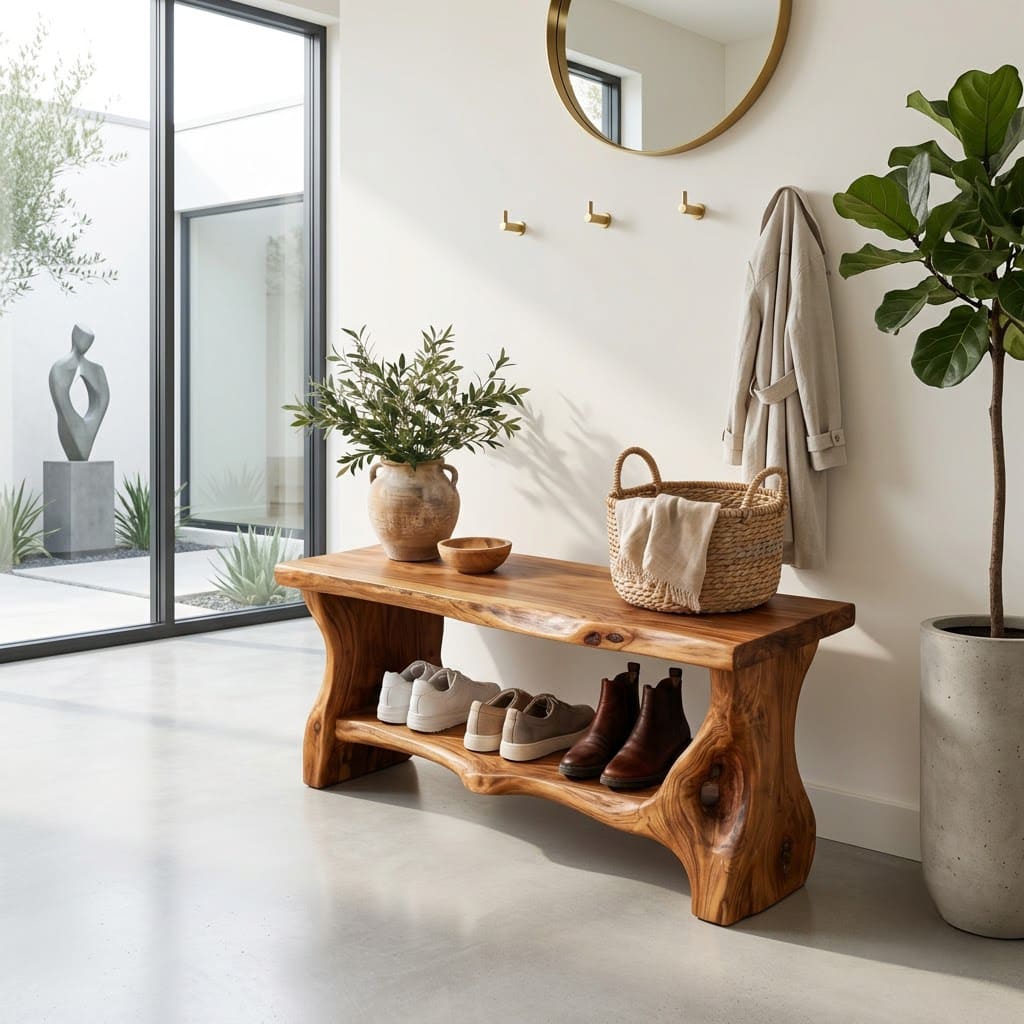
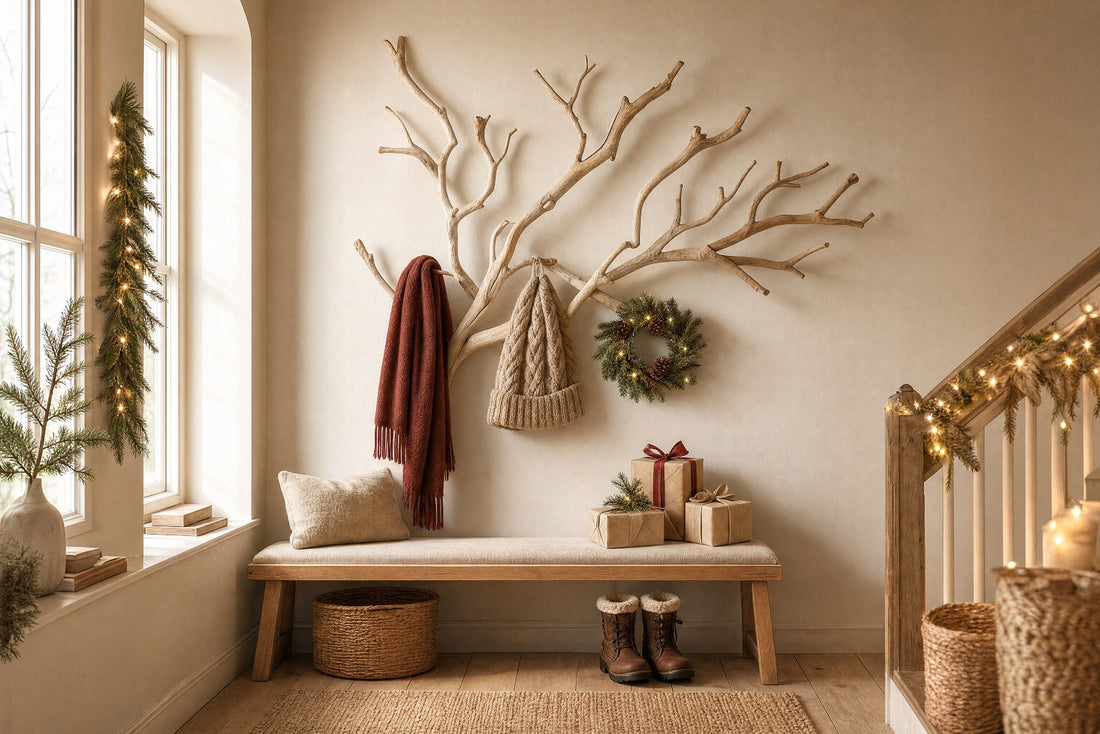
Entryway / Mudroom (3-4 Person Household)
For a family of three or four, a 60 inch bench with storage at the front door does more than any single-purpose piece could. Everyone gets a seat. Shoes tuck underneath. Coats can hang from a wall-mounted rack above it.
The math: 60 inches gives each person roughly 20 inches of seating width - comfortable enough that nobody's elbowing their neighbor. Beneath the seat, you can fit about 10–14 pairs of adult shoes on a single shelf (depending on shoe size), or 6–8 pairs with a second shelf stacked above.
Measure your entryway wall first. A good rule of thumb is to leave at least 6 inches of clearance on each side of the bench so it doesn't feel wedged in. That means you need a minimum of 72 inches (6 feet) of wall space for a comfortable fit. If your entryway is narrower than that, consider a 48-inch model instead.
If you're also thinking about coat storage above the bench, check out our guide on coat rack with shoe storage entryway setups that combine both functions.
Foot of a Queen Bed (Bedroom Storage)
A standard queen mattress is 60 inches wide. So a storage bench at the foot of a queen bed aligns perfectly with the mattress edge - clean, intentional, no awkward overhang.
Here's the practical part: a storage bench at the foot of the bed replaces the need for an ottoman or decorative trunk that just sits there looking pretty. With a lift-top or drawer-style bench, you get hidden storage for extra blankets, off-season clothes, or pillows you rotate through the year.
Clearance tip: Leave at least 24–30 inches between the bench and the bed frame so you can open the storage compartment and walk around comfortably. If your room is tight, a slimmer 14–16 inch depth works better than the standard 18-inch depth.
Under a Window (Living Room or Dining)
Most residential windows in the US are between 48 and 72 inches wide. A 60 inch bench fills the gap under a standard 60-inch double-hung window beautifully - close to the wall without blocking natural light from either side.
When you place a 60 inch bench for living room comfort under a window, it serves two purposes: extra seating when guests arrive, and storage for things you want nearby but out of sight (board games, placemats, throw pillows). The key measurement here is bench height relative to the window sill. You want the bench top to sit at least 2–4 inches below the sill so it doesn't interfere with the window frame or radiator below.
End of a Dining Table (Extra Seating)
A 60-inch bench paired with a dining table adds 3 extra seats at the head or foot of the table - way more than the single chair it replaces. This is especially useful for holiday dinners or when the kids have friends over.
Make sure your dining table height and bench height are compatible. Standard dining tables sit at 29–30 inches, so a bench seat height of 17–19 inches works best. If the bench is too tall (over 20 inches), people's knees hit the tabletop. Too short (under 16 inches) and sitting feels like crouching.
For more on dining furniture sizing, see our dining table shapes and sizes guide.


What Fits in a 60" Storage Bench? (By Storage Type)
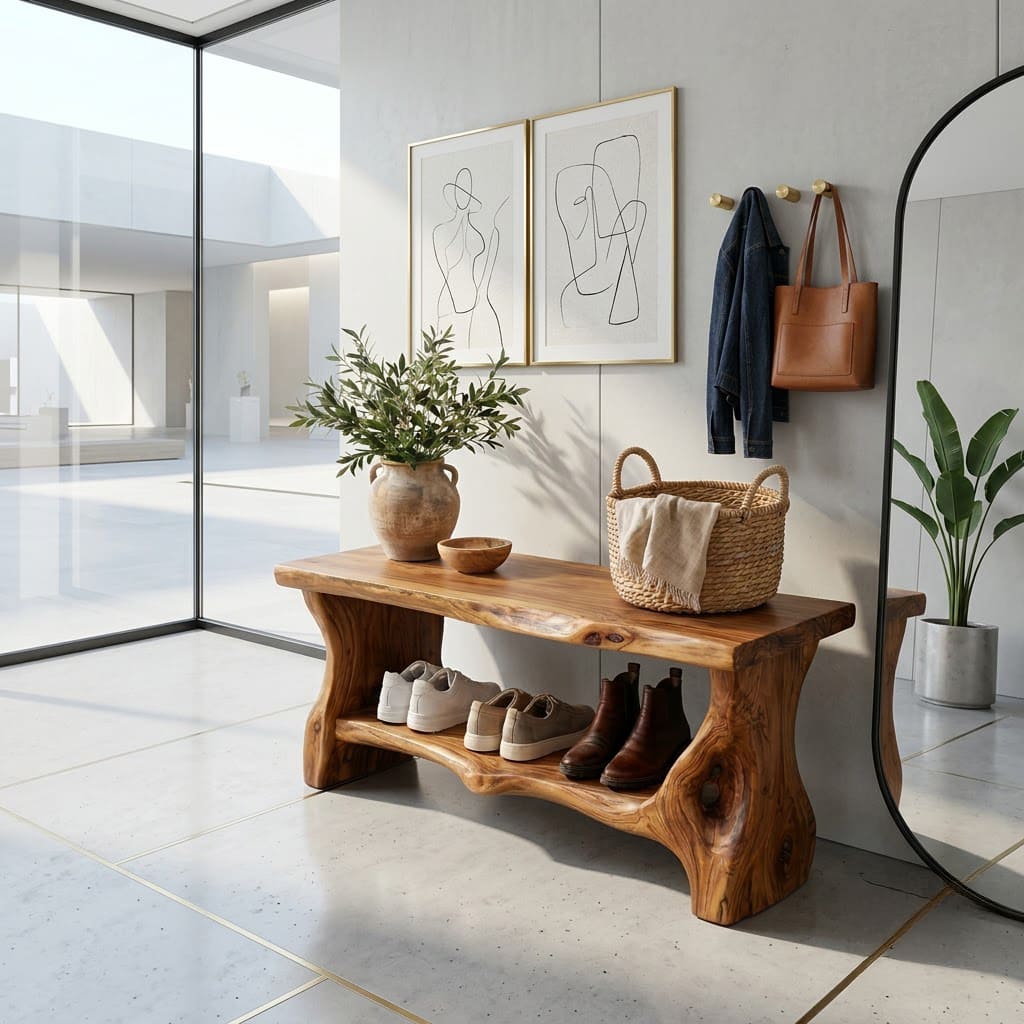
Not all storage benches store the same things the same way. The storage mechanism inside a 60 inch storage bench determines what you can actually keep in it - and that's the detail most buyer's guides skip.
Lift-Top Compartment (Blankets, Pillows, Seasonal Items)
Lift-top benches have a hinged seat that opens upward to reveal one large compartment underneath. Think of it like a trunk built into your bench.
Typical capacity: A 60 × 18 × 18 inch lift-top compartment gives you roughly 19,440 cubic inches (about 11.25 cubic feet) of storage before accounting for wall thickness - figure closer to 9–10 usable cubic feet once you subtract the material thickness of the box itself. That holds:
- 4–6 standard throw blankets (folded)
- 3–4 bed pillows
- 2 medium-sized storage bins (roughly 12 × 18 inches each)
- Or about 12 pairs of shoes if you're using it in an entryway
The downside? Everything is in one big bin. If you want to grab the pair of shoes at the bottom, you're moving blankets to get there. Lift-top is best for seasonal items, bulk storage, and things you don't access daily.
Open Cubby Shelves (Shoes, Baskets, Books)
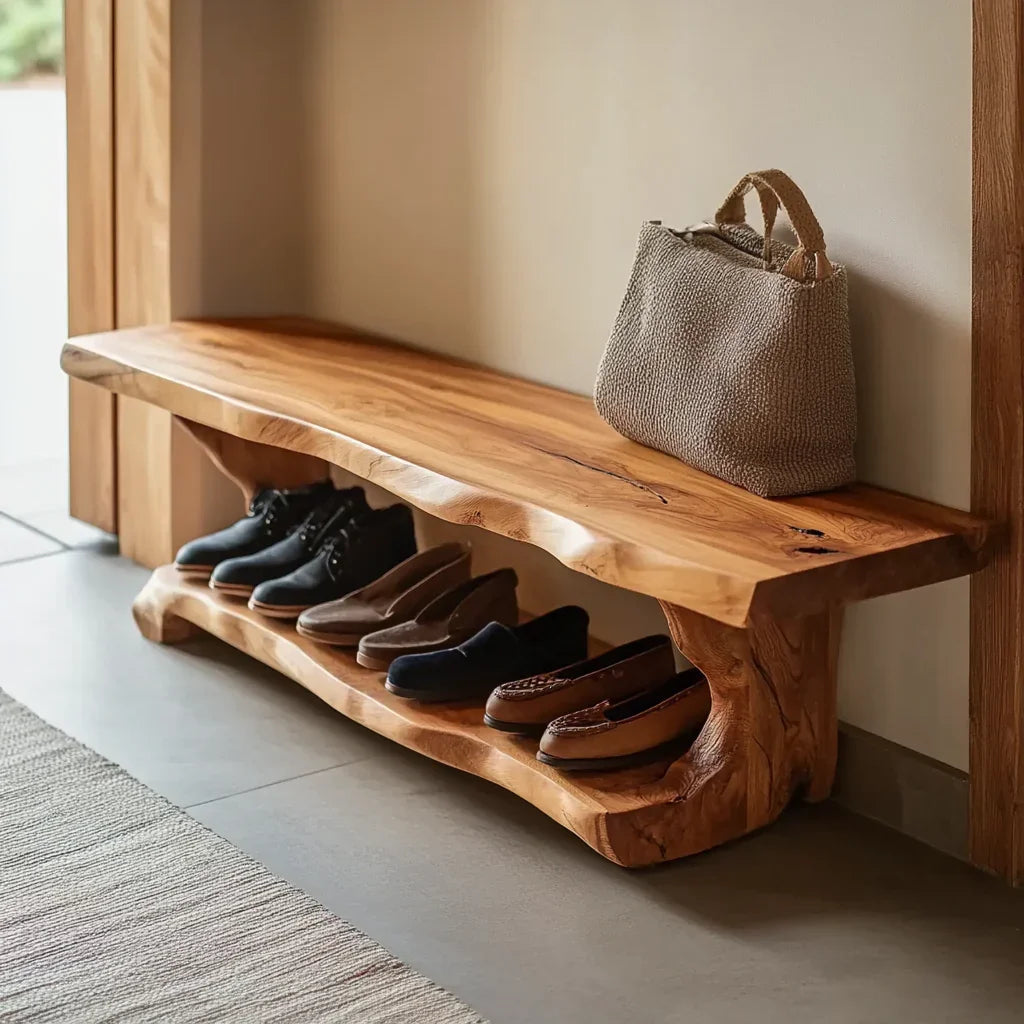
Open-shelf benches - like the shoe benches in the Ashdeco shoe bench collection - have exposed tiers beneath the seat. Each shelf is typically 7–10 inches tall.
What fits per shelf on a 60-inch bench:
- Single shelf: 10–14 pairs of adult shoes
- Two-tier shelf: 6–8 pairs per tier (12–16 total)
- With decorative baskets: 2–3 medium woven baskets per shelf
- As a bookshelf (living room use): 20–30 paperback books
Open shelves win on speed of access. You see everything at a glance and grab what you need without opening a lid. The tradeoff is visual clutter - if your shoes aren't organized, everyone sees the mess. A good entryway bench with shoe storage keeps things tidy while keeping them accessible.
Drawer-Style (Organized Small Items)
Drawer-style storage benches have one or more pull-out drawers beneath the seat. This is the most organized option - you can use dividers, and everything has its own compartment.
Typical drawer layout on a 60-inch bench:
- 1 wide drawer (58 inches): good for folded blankets or a single row of shoes
- 2 medium drawers (each ~28 inches): gloves/scarves in one, shoes in the other
- 3 small drawers (each ~18 inches): keys/wallet/mail in the top, small accessories below
Drawer benches are ideal for entryways where you want a clean look without visible shoes, or for bedrooms where the bench doubles as a dresser extension. They cost more than open-shelf benches (more hardware, more labor), but the organization payoff is real.
60 Inch vs 48 Inch vs 72 Inch: Which Bench Size Do You Need?
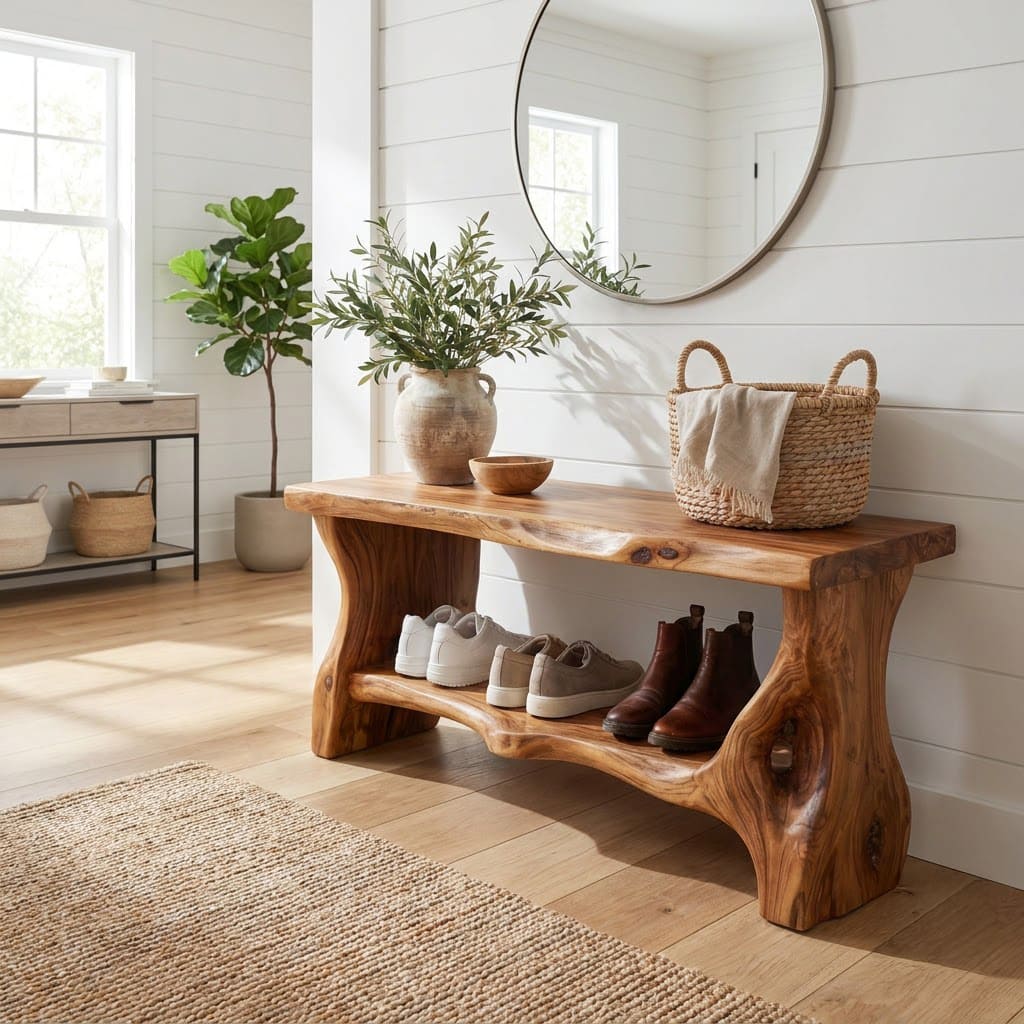
This is the question most buyers actually have. Here's a direct comparison so you can decide without guessing:
| Feature | 48 Inch Bench | 60 Inch Bench | 72 Inch Bench |
|---|---|---|---|
| Seating capacity | 2 people | 3 people | 3–4 people |
| Shoe capacity (open shelf) | 8–10 pairs | 12–16 pairs | 16–20 pairs |
| Fits under standard window | Yes (most) | Yes (most) | Sometimes |
| Foot of queen bed | Narrower (6" gap each side) | Flush with mattress | Overhangs 6" each side |
| Minimum wall space needed | 60 inches | 72 inches | 84 inches |
| Best for | Small entryway, apartment | Average household (3–4 people) | Large families, wide foyers |
Minimum wall space assumes 6 inches of clearance on each side of the bench (bench width + 12"), consistent across all three sizes.
The 48-inch bench is the right call for tight spaces - studio apartments, narrow hallways, or small bedrooms. If your entryway wall is less than 5 feet wide, stop here and go with 48 inches.
The 72-inch bench is for big families and spacious foyers. It seats four, holds the most shoes, and makes a statement. But it also demands seven feet of wall space, which rules out about half of US entryways.
The 60 inch bench sits in the middle. It works for most homes, most families, and most rooms. That's not a coincidence - it's the size manufacturers standardize on for a reason.
For a deeper dive on sizing across all bench types, check our shoe bench dimensions guide.
Don't miss
These pieces qualify for 10% off orders over $2,000. Applied automatically at checkout.
10% off
Handcrafted Walnut Bench – Organic Sculptural Mid-Century Design
From $2,327.00
10% off at checkout
10% off
Handcrafted Sculptural Wood Bench – Modern Organic Curved Entryway Bench
From $2,060.00
10% off at checkout
10% off
Organic Live Edge Solid Wood Halloween Sculptural Bench
From $2,234.00
10% off at checkout
 10% off
Handcrafted Solid Wood Artistic Wood Bench – Soft Organic Wave Silhouette
From $2,534.00
10% off at checkout
10% off
Handcrafted Solid Wood Artistic Wood Bench – Soft Organic Wave Silhouette
From $2,534.00
10% off at checkout
Weight Capacity & Durability for a 60 Inch Bench
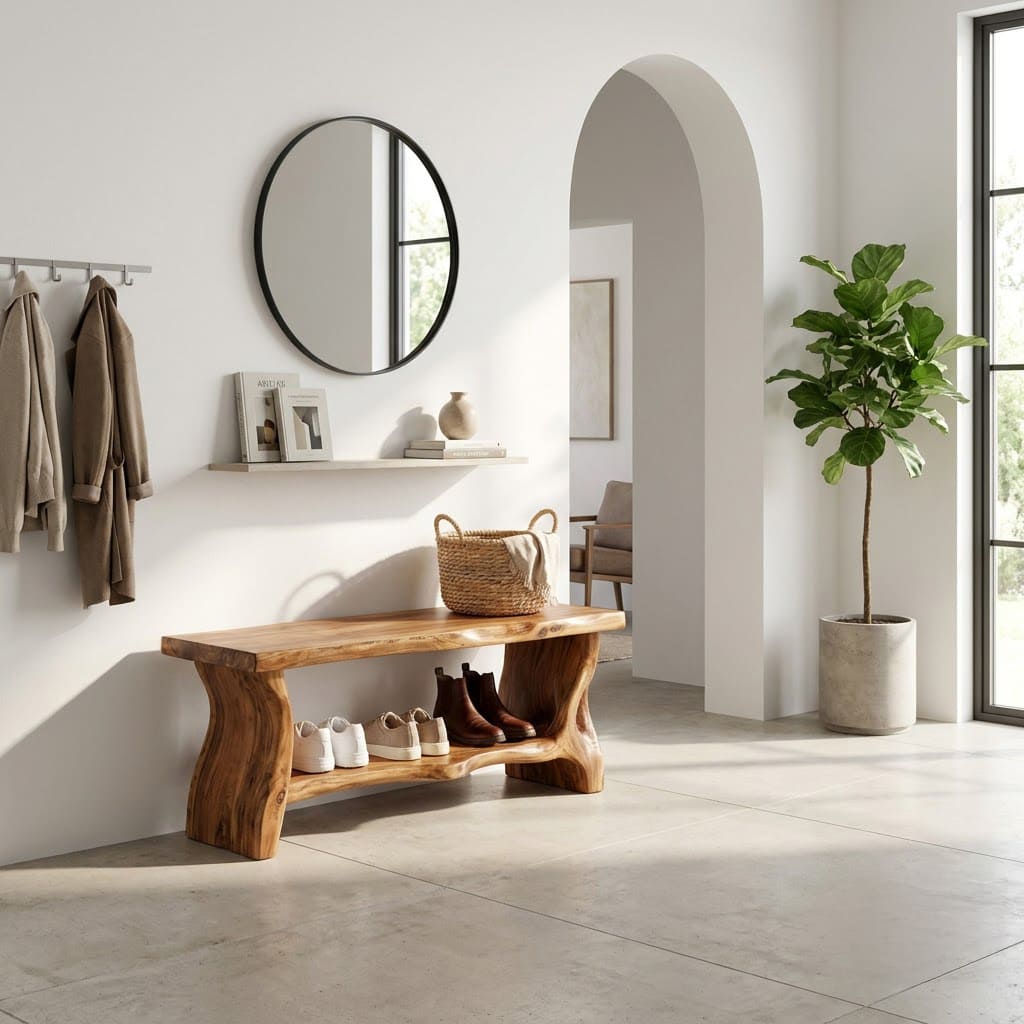
A 60-inch bench spans five feet without center support on most designs. That means the weight capacity depends heavily on construction quality and material.
Typical weight capacities by construction type:
- Solid hardwood (oak, walnut, maple): 400–600 lbs distributed across the seat
- Solid wood with center support leg: 500–700 lbs
- MDF/engineered wood: 250–350 lbs
- Metal frame with wood seat: 350–500 lbs
For a 3-person household where each person weighs around 180–200 lbs, you need at least 540–600 lbs of total capacity. That's near the top of the range for a standard solid wood bench without center support - if three adults will realistically sit on it at once regularly, look for a design with a center support leg (500–700 lbs) rather than assuming any "solid wood" listing clears the bar. A cheap MDF bench from a big-box store won't get close either way.
If you plan to sit on the bench daily - putting on shoes, getting dressed, helping kids get ready - invest in solid wood. The upfront cost is higher, but a handcrafted solid wood bench lasts 20–30 years. A particleboard bench lasts 2–3 before the joints start loosening and the surface chips.
Material Matters: Solid Wood vs MDF vs Metal
The material of your 60 inch bench affects three things: weight capacity, appearance over time, and price. Here's the honest breakdown:
Solid Wood
Solid hardwood - oak, walnut, maple, acacia - is the gold standard for storage benches. It's heavy, it's strong, and it develops character as it ages. A live edge solid wood bench looks better at year five than it did on delivery day.
Pros: Highest weight capacity (400–600+ lbs), beautiful natural grain, repairs easily (sanding, re-oiling), lasts decades, no off-gassing.
Cons: Higher upfront cost ($800–$2,500+), heavier to move (60–120 lbs for a 60-inch bench).
MDF / Engineered Wood
Medium-density fiberboard benches are the budget option. They look decent in photos but don't hold up to daily use. The veneer peels. The screw holes strip. The edges swell when humidity hits.
Pros: Low cost ($150–$400), lightweight (30–50 lbs).
Cons: Low weight capacity (250–350 lbs), doesn't age well, repairs are nearly impossible, often contains formaldehyde binders.
Metal Frame with Wood Seat
Metal-frame benches combine an iron or steel frame with a wooden seat. They're popular in industrial and modern farmhouse styles. The frame is strong but the overall capacity depends on how well the seat attaches to the frame.
Pros: Good weight capacity (350–500 lbs), industrial aesthetic, often more affordable than all-solid-wood.
Cons: Can feel cold/harsh in cozy spaces, metal can scratch floors, joints between metal and wood can loosen over time.
For a 60 inch bench with storage you'll use daily, solid wood is the material that pays off over time. Explore the handcrafted solid wood bench collection to see what real craftsmanship looks like.
60 Inch Storage Bench Dimensions (Standard Ranges)
When a listing says "60 inch bench," that only tells you the width. Here are the other dimensions you need to check:
| Dimension | Typical Range | What It Means |
|---|---|---|
| Width | 58–62 inches | The "60 inch" label; actual varies by 1–2 inches depending on finish and style |
| Depth | 14–20 inches | How far the bench sticks out from the wall; 16–18" is standard |
| Seat Height | 17–20 inches | Standard seating height; 18" is the sweet spot for most adults |
| Total Height | 18–36 inches | Depends on backrest; backless benches are 18–22", benches with backs go higher |
| Internal Storage Height | 6–14 inches | Shelf clearance inside; 7–8" fits most shoes, 10"+ fits boots |
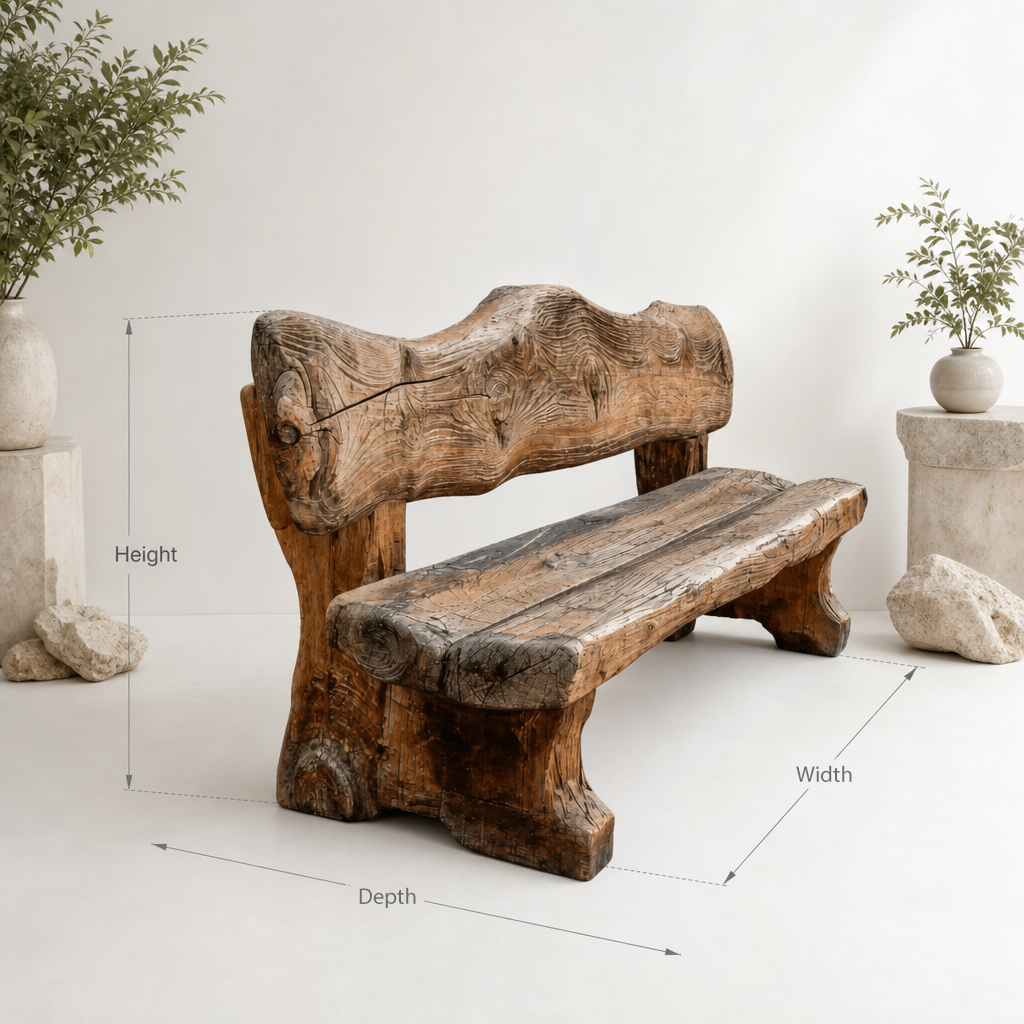
When measuring your space, always measure width, depth, and height. It's easy to focus on width alone and discover too late that a 19-inch-deep bench blocks your hallway traffic.
If you're shopping for a bench and wondering about specific sizes, our shoe bench buying guide walks through the full decision process from measuring to material selection.
Styling Tips: What to Put On Top
A 60 inch storage bench looks best when the top surface is styled intentionally - not covered, not bare. Here are three proven setups:
Entryway: A small tray for keys and mail on one end, a slim vase or candle in the center, and nothing on the other end (keeps a clear drop zone for bags). The tray keeps small items from rolling off and signals "this is where keys go."
Bedroom (foot of bed): A folded throw blanket draped casually across one-third of the bench, maybe a small decorative object on the opposite end. Less is more here - the bench is functional furniture, not a display shelf.
Living room (under window): Two matching plants in small pots (one on each end) with open space in the middle. The plants add life without blocking the view through the window above.
One rule that works everywhere: leave at least two-thirds of the bench top clear. The bench's primary job is seating. If you cover the whole surface with decor, people won't want to sit on it.
FAQ
Is 60 inches wide enough for 3 people to sit?
Yes. At 60 inches, each person gets about 20 inches of seating width. The average adult shoulder width is 16–18 inches, so three people fit comfortably. Kids need even less space (about 12–14 inches each), so a family with two adults and two children can fit on a 60 inch bench with room to spare.
The key factor is armrests. Benches with armrests on both ends reduce the usable seating width by about 3–4 inches total. If you're buying specifically for 3-person seating, choose a bench without armrests or with only one armrest.
What depth is best for a 60 inch storage bench?
For seating-only benches: 14–16 inches is comfortable. For storage benches: 16–18 inches is the sweet spot. Here's why:
A seat depth of 16–18 inches gives enough room to sit comfortably (most adults' thighs are about 18 inches long) while also providing enough internal depth for storage bins, shoe racks, or folded items. Anything deeper than 18 inches starts to feel bulky in a room and protrudes too far into walkways.
If your entryway or hallway is narrow (less than 36 inches of walking clearance after the bench is placed), lean toward 14–16 inches depth.
Can a 60 inch bench support heavy items?
It depends on the construction. A solid hardwood 60 inch storage bench with proper joinery (mortise and tenon, dowels, or metal brackets) supports 400–600 lbs distributed across the seat. That's enough for three adults sitting simultaneously in most cases, though if all three are on the heavier end of average, a center-support design gives you more margin.
For storing heavy items inside the bench - cast iron cookware, toolboxes, large water jugs - check the internal shelf weight rating separately. A solid wood shelf spanning 58 inches (the internal width of a 60-inch bench) with a center support holds about 40–60 lbs. Without center support, plan for 25–35 lbs per shelf.
If you need heavy-duty storage, look for benches with a center support leg or reinforced shelf brackets. Avoid MDF or particleboard for anything over 25 lbs of internal load.
Find Your Perfect 60 Inch Bench
A 60 inch storage bench is the most versatile size you can buy. It fits under windows, aligns with queen beds, seats three people, and holds enough stuff to make a real difference in your daily routine. The question isn't whether 60 inches is the right size - it's whether your space has the 72 inches of wall (60-inch bench plus 6-inch clearance on each side) to accommodate it.
Measure your wall. Pick your storage type. Choose solid wood if you want it to last. The right bench is waiting.
Ready to find your 60 inch bench?
Browse Ashdeco's handcrafted solid wood shoe bench collection - open-shelf, drawer, and lift-top styles in oak, walnut, and acacia, each built by Vietnamese artisans to hold real daily use for decades.
Shop Shoe Benches →Also read our entryway bench with shoe storage guide for more on pairing benches with the rest of your entryway setup.