




















Quick view
- Why an Entryway Bench With Shoe Storage Changes Everything
- Hidden vs Open Storage: The Fundamental Choice
- Width Guide: Matching Bench Size to Your Entryway
- Seating Comfort: a Flat Surface
- Material Quality: The Hidden Difference Between $100 and $400 Benches
- Features Worth Paying For (and Features That Don't Matter)
- Frequently Asked Questions
Shop this guide
Handcrafted Bathroom Vanities, made to order in solid wood.
 Sculpted Tree Trunk Solid Wood Bathroom Vanity with Integrated Circular Mirror Frame and Dual Drawers
From $3,276.0010% off at checkout
Sculpted Tree Trunk Solid Wood Bathroom Vanity with Integrated Circular Mirror Frame and Dual Drawers
From $3,276.0010% off at checkout
 Curved Floating Solid Wood Bathroom Vanity Sculptural Wall Mounted Washstand
From $1,843.00
Curved Floating Solid Wood Bathroom Vanity Sculptural Wall Mounted Washstand
From $1,843.00
 Curved Arch Solid Wood Bathroom Vanity Freestanding Four Drawer Washstand
From $2,365.0010% off at checkout
Curved Arch Solid Wood Bathroom Vanity Freestanding Four Drawer Washstand
From $2,365.0010% off at checkout
 Sculptural Tree Trunk Solid Wood Bathroom Vanity Organic Live Edge Storage Console
From $2,154.0010% off at checkout
Sculptural Tree Trunk Solid Wood Bathroom Vanity Organic Live Edge Storage Console
From $2,154.0010% off at checkout
 Sculpted Branch Pedestal Solid Wood Bathroom Vanity Organic Live Edge Washstand
From $1,432.00
Sculpted Branch Pedestal Solid Wood Bathroom Vanity Organic Live Edge Washstand
From $1,432.00
 Floating Live Edge Solid Wood Bathroom Vanity Wall Mounted Storage Cabinet
From $2,316.0010% off at checkout
Floating Live Edge Solid Wood Bathroom Vanity Wall Mounted Storage Cabinet
From $2,316.0010% off at checkout
Why an Entryway Bench With Shoe Storage Changes Everything
The entryway is the most used doorway in your home, and it's usually the least organized. Shoes pile up by the door. Coats land on whatever surface is closest. Keys disappear. The problem isn't that people are messy - it's that most entryways don't have the right furniture to handle the daily traffic.
An entryway bench with shoe storage solves two problems simultaneously: it provides seating for putting on and removing shoes, and it stores those shoes in a contained space rather than scattered across the floor. It's the difference between an entryway that looks chaotic every evening and one that stays organized without effort.
But choosing the right bench-and-storage combo requires more thought than picking the first option you see online. Width, storage type, seating comfort, and material quality all determine whether the bench works for your household or becomes another frustration.
Hidden vs Open Storage: The Fundamental Choice
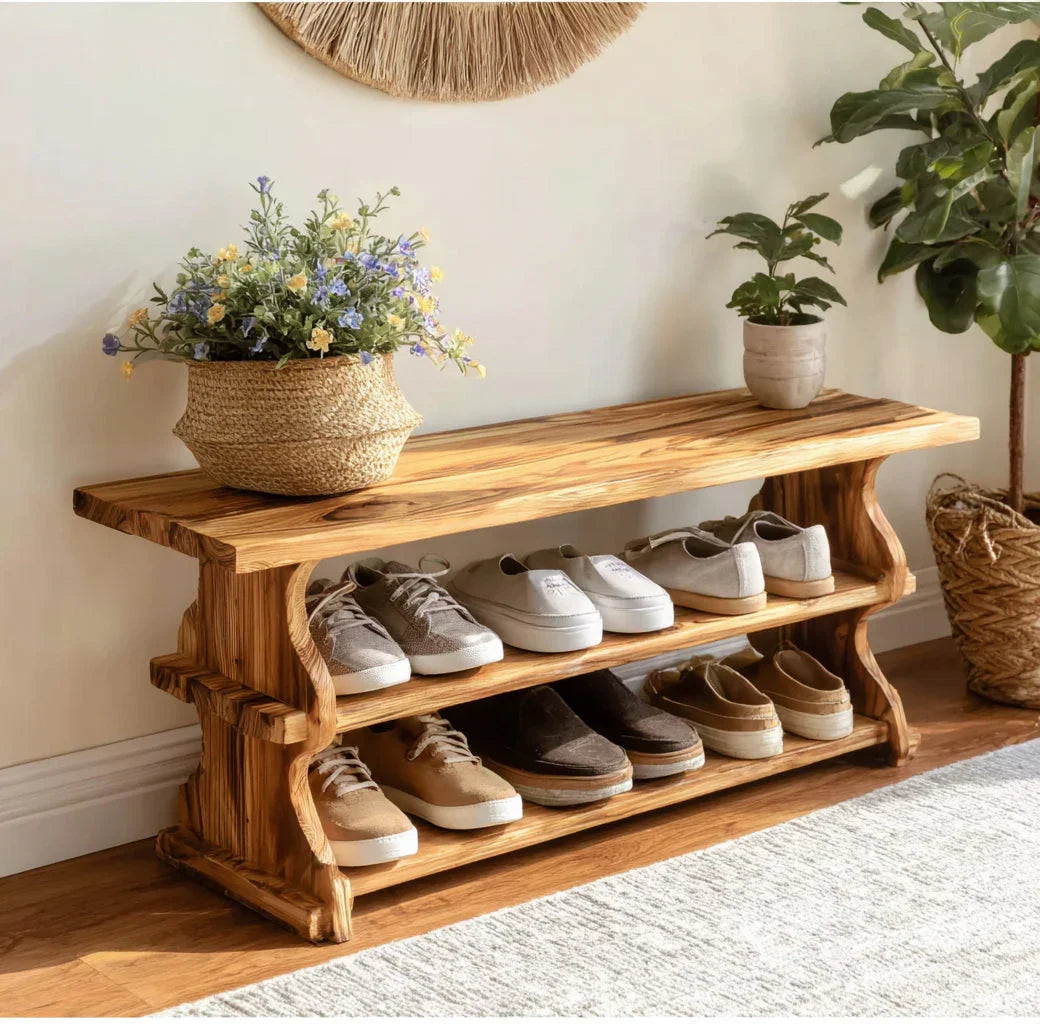
Open Shelf Storage
Shoes sit on exposed tiers beneath the seat. Everything is visible - you see every pair at a glance and grab what you need instantly.
Advantages:
- Fastest access - no doors to open, no drawers to pull
- Airflow keeps shoes dry after rain or snow
- Visually reminds household members to put shoes away (empty slots are obvious)
- Lower price point since there are fewer components and hardware
Disadvantages:
- Every pair is visible, including worn-out sneakers and muddy boots
- Dust settles on shoes that aren't worn frequently
- Pets can pull shoes off open shelves (dog owners know this pain)
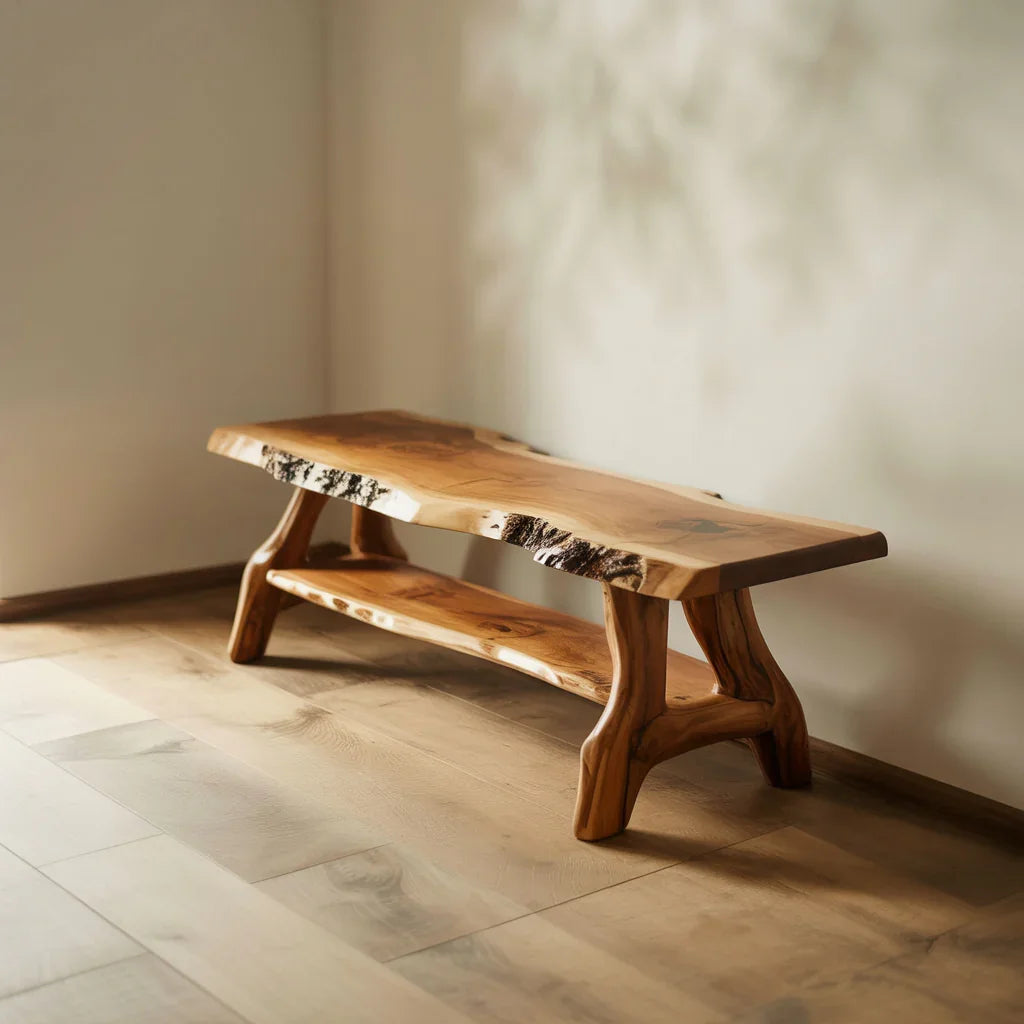
Hidden Storage (Doors, Drawers, Tilt-Out)
Shoes are concealed behind doors, in pull-out drawers, or in tilt-out compartments. The bench looks clean regardless of what's stored inside.
Advantages:
- Clean visual appearance - guests see a bench, not a shoe pile
- Protects shoes from dust, pet hair, and sunlight fading
- Tilt-out designs maximize storage density (shoes stack at an angle)
- Works in formal entryways or apartments where the door opens directly into living space
Disadvantages:
- Shoes must be dry before closing doors , trapped moisture causes odor and mildew
- Hinges, slides, and latches are failure points. Cheap hardware wears out in 1-2 years.
- Slightly slower access than open shelves
- Higher price due to additional components
Hybrid Storage
Some entryway benches combine both , an open bottom shelf for daily-use shoes and a closed upper compartment or drawer for less frequently worn pairs. This is often the most practical design because it accommodates both quick access and long-term storage in one piece.


Width Guide: Matching Bench Size to Your Entryway
An entryway bench with shoe storage that's too wide blocks traffic flow. One that's too narrow doesn't hold enough shoes or provide comfortable seating. Here's how to get the width right:
| Entryway Width | Recommended Bench Width | Seating Capacity | Shoe Capacity |
|---|---|---|---|
| Under 3 feet | 24 inches | 1 person | 4-6 pairs |
| 3-5 feet | 36 inches | 1-2 people | 6-9 pairs |
| 5-7 feet | 42-48 inches | 2 people | 9-14 pairs |
| 7+ feet (mudroom) | 48-72 inches | 2-3 people | 14-20+ pairs |
Critical measurement: Leave at least 30 inches of clearance between the front edge of the bench and the opposite wall or door. This is the minimum for a person to stand in front of the bench comfortably while putting on shoes.

Seating Comfort: a Flat Surface
A bench that's uncomfortable to sit on defeats the purpose. You'll end up standing to put on shoes and the bench becomes an expensive shoe rack. Here's what affects comfort:
Seat Height
The standard comfortable seat height is 17-19 inches from the floor to the top of the seat surface. This works for adults of average height (5'4"-6'0"). Taller users benefit from 19-20 inches. Shorter users or children are more comfortable at 15-17 inches.
Seat Depth
A seat depth of 14-18 inches allows you to sit with your thighs supported without the edge cutting into the backs of your knees. Benches shallower than 13 inches feel like perching on a ledge , functional but not comfortable for more than 30 seconds.
Seat Width Per Person
Each seated person needs at least 18-20 inches of width. A 36-inch bench seats two people tightly; 42 inches gives two people comfortable space. If people frequently sit together to get ready, size up.
Surface Material
Flat solid wood is the most practical seat surface for an entryway. It's easy to wipe clean, doesn't absorb dirt, and won't stain from damp clothing. Upholstered tops feel softer but trap dirt, pet hair, and moisture , a poor fit for the highest-traffic spot in your home.
If you want cushioning, use a removable seat pad with a washable cover. This gives you the comfort of upholstery with the ability to clean it regularly , or remove it entirely during muddy seasons.

Don't miss
These pieces qualify for 10% off orders over $2,000. Applied automatically at checkout.
10% off
Sculpted Tree Trunk Solid Wood Bathroom Vanity with Integrated Circular Mirror Frame and Dual Drawers
From $3,276.00
10% off at checkout
10% off
Curved Arch Solid Wood Bathroom Vanity Freestanding Four Drawer Washstand
From $2,365.00
10% off at checkout
10% off
Sculptural Tree Trunk Solid Wood Bathroom Vanity Organic Live Edge Storage Console
From $2,154.00
10% off at checkout
10% off
Floating Live Edge Solid Wood Bathroom Vanity Wall Mounted Storage Cabinet
From $2,316.00
10% off at checkout
Material Quality: The Hidden Difference Between $100 and $400 Benches
Walk through any furniture marketplace and you'll find entryway benches at every price point , from $80 flat-pack specials to $500+ handcrafted pieces. The photographs often look identical. The difference is entirely in what you can't see in a product photo: the material.
Engineered Wood (MDF, Particle Board)
Most benches under $200 are made from MDF or particle board wrapped in wood-grain laminate or veneer. These materials are fine for bedroom nightstands that see light use. For entryway furniture that handles wet shoes, daily sitting impact, and seasonal humidity swings, they're a poor match.
The failure pattern is consistent: edges chip from shoe impact, shelves sag under shoe weight within 6-12 months, and any water exposure , from wet shoes, spilled drinks, or mopping , causes irreversible swelling.
Solid Wood
Solid wood benches from makers like Ashdeco , where Vietnamese artisans build each piece from real ash or walnut , handle entryway conditions because the material itself is designed for them. Wood has been used for bench-making for centuries, and the joinery techniques (mortise-and-tenon, dovetail) create connections stronger than the wood itself.
A solid wood shoe bench develops character with age , the grain darkens slightly, minor dings become part of the patina, and the piece looks better at year five than year one. Try saying that about laminated particle board.
Features Worth Paying For (and Features That Don't Matter)
Worth It:
- Adjustable shelf heights , accommodate boots, heels, and flat shoes without wasting vertical space
- Bottom shelf clearance , at least 3 inches of gap between the floor and the lowest shelf for sweeping and vacuuming
- Back panel or wall-mount option , prevents shoes from being pushed off the back of open shelves
- Rounded seat edges , no sharp edge pressing into the backs of your thighs while seated
Not Worth It:
- Built-in coat hooks on the bench itself , coats hanging over the bench block seating access. Mount hooks on the wall above instead.
- Decorative legs on MDF benches , ornamental legs screwed into particle board pull out under lateral stress. Either get solid wood legs joined properly or a frameless design.
- Shoe-specific dividers , rigid dividers lock you into specific shoe sizes. Open compartments are more versatile.

Frequently Asked Questions
What's the difference between a shoe bench and an entryway bench with shoe storage?
Functionally, they're the same thing , a bench with built-in shoe storage for use near the front door. "Shoe bench" emphasizes the storage function, while "entryway bench with shoe storage" emphasizes the seating function. When shopping, search both terms to see the full range of options available.
How deep should an entryway bench be?
14-18 inches is the ideal depth for an entryway bench. This provides comfortable seating without protruding too far into the walkway. For narrow entryways, stay closer to 14 inches. For mudrooms with more space, 18 inches provides more comfortable seating and deeper shelves for larger shoes.
Can I use an entryway bench with shoe storage in a mudroom?
Yes, but choose materials carefully. Mudrooms see more moisture, dirt, and temperature variation than indoor entryways. Solid wood with a protective finish handles these conditions well. MDF and particle board deteriorate quickly in mudroom environments due to humidity and direct water exposure from wet shoes and boots.
How do I keep an entryway bench organized with kids?
Assign each child specific cubbies or shelf sections. Label them with names or colors. Keep the system simple , kids are more likely to put shoes away if they have a clearly designated spot that's easy to reach. Open shelves work better than doors for children because there's one less step between taking off shoes and putting them away.
Should I choose a bench with or without a backrest?
For entryway use, a backless bench is usually better. Backrests add depth (pushing the bench further from the wall), block wall space that could be used for hooks or a mirror, and make the bench harder to slide under a console table if you're combining furniture pieces. The bench is for brief sitting , tying shoes and pulling on boots , not extended lounging.