Shoe Bench for Entryway: Does Yours Hold 300+ lbs?
Choosing the right shoe bench for entryway use comes down to more than looks. The best pick fits your traffic flow, holds the number of pairs your household actually owns, and survives years of wet shoes, dropped bags, and daily sitting without falling apart. This guide walks through the styles, sizes, and materials that separate a shoe bench you'll still be using in ten years from one you'll be replacing next winter.
What Makes a Shoe Bench Different From a Regular Bench
A shoe bench serves two purposes that a regular entryway bench can't. It gives you somewhere to sit while pulling on boots or tying laces, and it stores shoes in a way that keeps them off the floor. A standard bench handles the sitting part but leaves shoes piled underneath in a disorganized heap. A shoe rack handles storage but forces you to stand while getting ready.
Put simply, a shoe bench is a piece of entryway furniture that combines a sit-down seat with built-in shoe storage underneath - shelves, cubbies, or drawers sized to keep pairs off the floor while you put your shoes on.
The combination matters more than it seems. Without a dedicated spot for shoes, entryways accumulate clutter fast - pairs scattered across the floor, mud tracked deeper into the house, and the daily scramble of "where's my other shoe?" before heading out the door. A shoe bench for entryway use solves all of this in one piece of furniture.
But not all shoe benches are equal. The material, shelf configuration, and dimensions determine whether yours actually works for your space or becomes another piece of furniture you tolerate rather than enjoy.

Shoe Bench Styles: Which One Fits Your Space
Open Shelf Shoe Bench
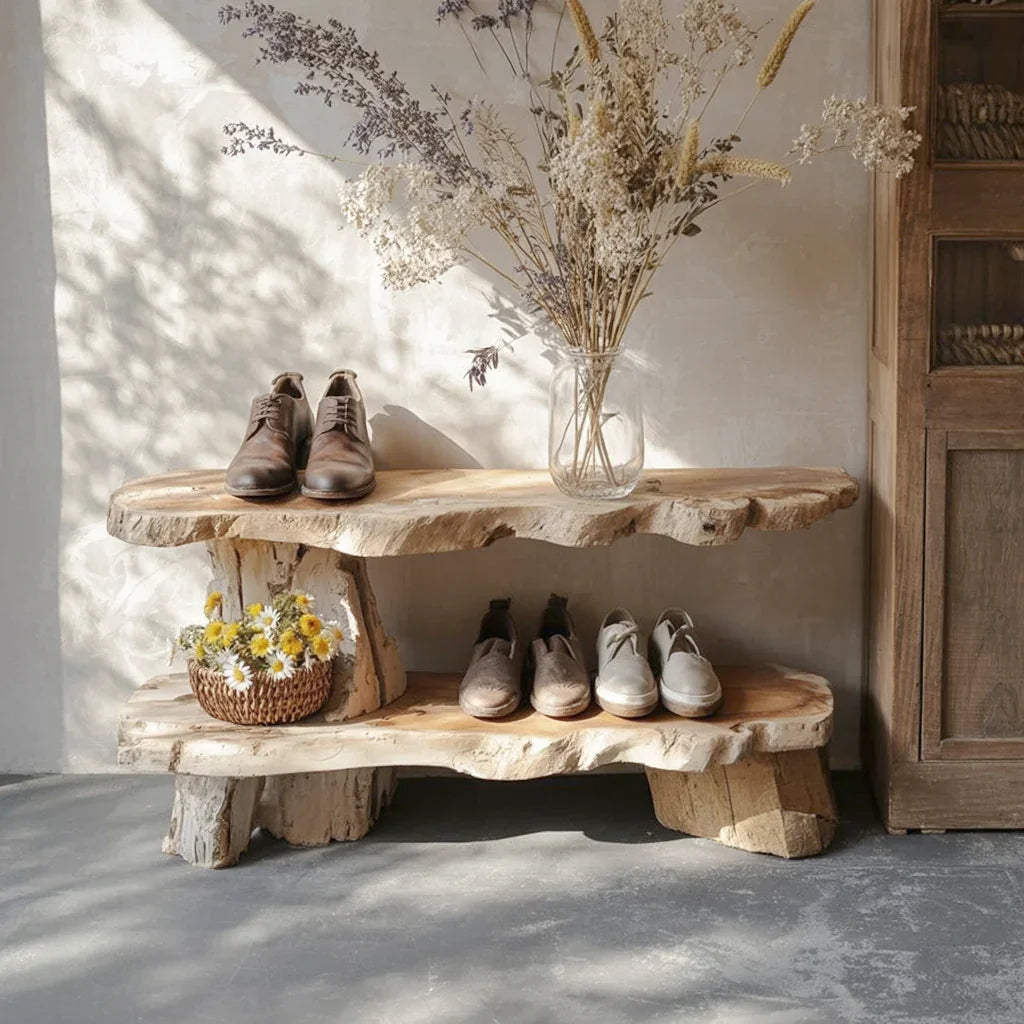
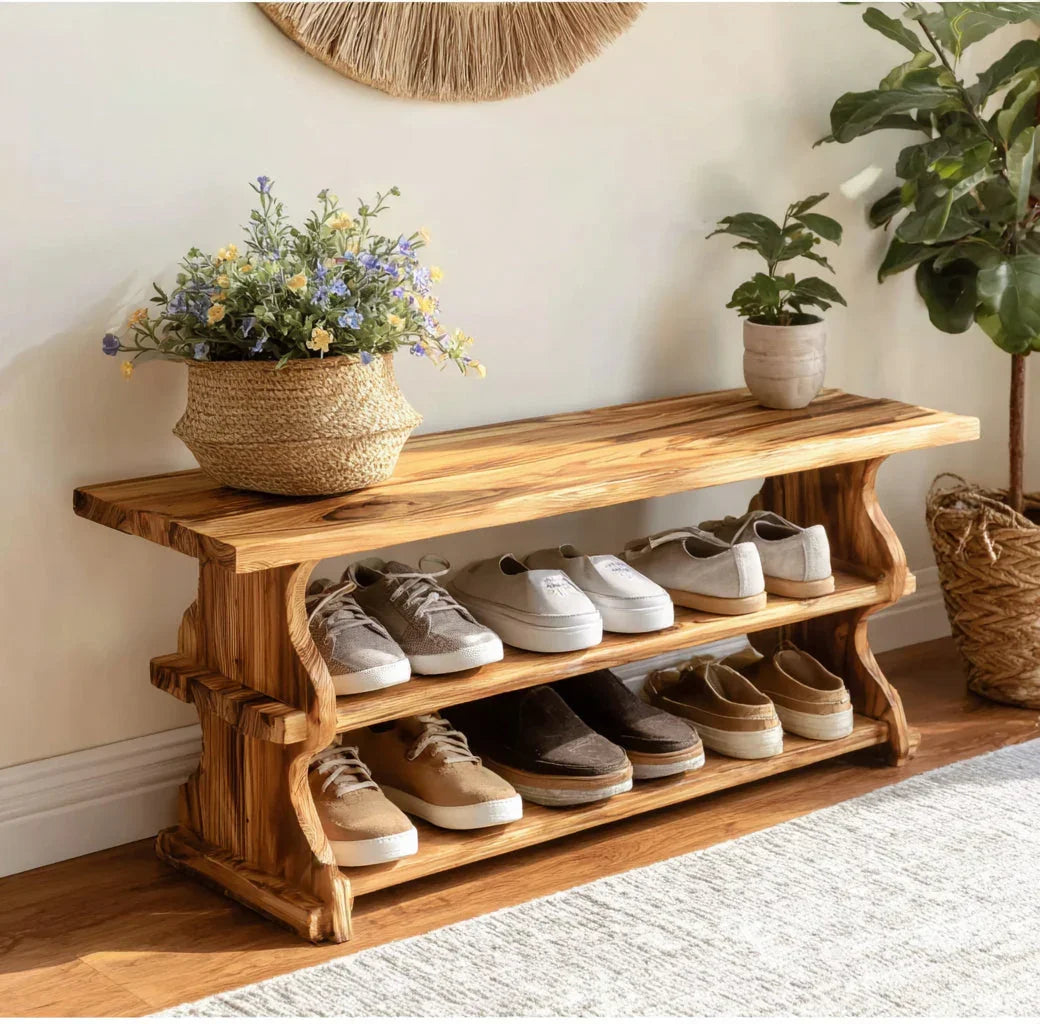
The most common design. Two or three open tiers below the seat hold shoes visibly. You see everything at a glance, grab what you need quickly, and shoes get airflow to dry after wet weather.
- Capacity: 6-9 pairs on two tiers, 9-12 pairs on three tiers
- Best for: Families who need quick access, mudrooms where shoes get wet regularly
- Drawback: Visible clutter - mismatched shoes, dirty soles, and worn sneakers are all on display
Browse Ashdeco's open shelf shoe benches handcrafted from solid wood
Closed Cabinet Shoe Bench
Shoes hide behind doors or pull-out drawers. The entryway looks clean regardless of how many shoes are inside. Some designs use tilt-out compartments that maximize storage density.
- Capacity: 8-15 pairs depending on cabinet depth and number of compartments
- Best for: Formal entryways, apartments where the front door opens directly into the living space
- Drawback: Shoes need to be dry before storing. Trapped moisture causes odor and can warp cheap materials over time.
See our closed cabinet shoe bench collection for entryways that need a cleaner look.
Cubby-Style Shoe Bench
Individual cubbies for each pair, arranged in a grid. Some cubbies face forward, others are angled. Each person in the household gets their own section.
- Capacity: 6-12 pairs, one pair per cubby
- Best for: Families with kids - each person gets assigned cubbies, teaching organization habits early
- Drawback: Tall boots don't fit standard cubbies. Cubby dimensions are fixed, so oversized shoes may not work.

Storage Capacity: How Many Pairs Do You Actually Need to Store
Before choosing a shoe bench, count the shoes that need to live near the front door - not your entire shoe collection. Most households rotate 2-4 pairs per person seasonally. A family of four needs space for 8-16 pairs of everyday shoes near the entryway.
| Household Size | Pairs to Store | Recommended Bench |
|---|---|---|
| 1-2 people | 4-8 pairs | 2-tier, 24-36 inches wide |
| 3-4 people | 8-16 pairs | 3-tier, 36-48 inches wide |
| 5+ people | 15-25 pairs | Cabinet-style or double bench, 48+ inches |
For a deeper breakdown of capacity by shoe type - sneakers, boots, heels - see our full shoe bench buying guide.
Shoe Benches for Households With Kids and Pets
If you have a dog or cat, factor that into your bench choice too. Look for a bottom shelf with at least 4 inches of clearance so muddy paws don't scuff the shoes above it, and a solid wood or sealed finish that wipes clean instead of absorbing tracked-in dirt. Many households also use one end of the bench - or a hook mounted beside it - to hang a leash, so it's within reach on the way out the door.
Boot storage note: Tall boots take roughly twice the vertical space of regular shoes. If your household includes winter boots, rain boots, or riding boots, plan for taller tiers or a separate boot section. Standard shelf spacing of 6 inches won't accommodate anything above ankle height.
Sizing Your Shoe Bench for Different Entryways
Narrow Entryways (Under 4 Feet Wide)
Tight spaces need a bench that doesn't block traffic flow. Keep the bench depth under 14 inches and width between 24-36 inches. A shallow two-tier design with an open shelf works best , you can sit to put on shoes without the bench protruding into the walkway.
In hallway-style entryways, mount a shoe bench against the wall opposite the door. This keeps the door swing clear and creates a natural landing zone as you walk in.
In very tight hallways, pairing a shallow bench with a row of wall hooks above it is often the better combination than a bulkier cabinet - hooks handle coats and bags without adding floor depth, while the bench underneath stays dedicated to shoes.
Standard Entryways (4-6 Feet Wide)
Most homes fall in this range, and it's the sweet spot for shoe benches. A 36-48 inch bench fits comfortably with room to walk past. You can use a deeper design (16-18 inches) that accommodates larger shoes and provides a more comfortable seat.
Large Foyers and Mudrooms
With generous space, consider an L-shaped configuration or a longer bench (48-60+ inches) that seats two people. Mudrooms especially benefit from a combination: shoe bench for daily pairs plus a separate boot tray for wet or muddy footwear.

Material Comparison: What Your Shoe Bench Is Made Of Matters
Shoe benches take abuse. People drop onto them, wet shoes drip on shelves, kids kick the sides. The material determines how long the bench lasts under real-world conditions.
Solid Wood
The most durable option by a wide margin. Solid wood handles weight, moisture exposure (when properly sealed), and daily impact without structural failure. A solid wood entryway bench with shoe storage can last decades , the finish might need refreshing, but the structure stays sound.
Weight capacity is inherently higher because wood has consistent density throughout, not a hollow or compressed interior. Most solid wood benches handle 250-400 lbs of seating weight without concern.
MDF and Particle Board
The material behind most budget shoe benches. MDF (medium-density fiberboard) is compressed wood fibers bonded with resin. It's smooth, cheap, and heavy , but fragile in ways that matter for shoe storage. Water exposure causes MDF to swell irreversibly. The bottom shelf, where wet shoes sit, is the first to fail.
Particle board is even less durable. Shelves sag under weight within months, and any chip in the laminate coating exposes the raw material to moisture damage.
Metal Frame with Wood Shelves
A hybrid design that's gaining popularity. Steel or iron frames provide structure while wood shelves (or wood-look shelves) hold the shoes. These are lightweight and industrial-looking.
The risk: welds on cheap metal benches crack under repeated stress. The seating surface is often a thin wood slat that flexes. Check for welded (not bolted) joints and solid wood slats rather than thin plywood if going this route.
Upholstered Seat Benches
Some shoe benches add a padded, fabric-topped seat over a wood or MDF frame. They're more comfortable to sit on, but the fabric is the weak point in an entryway: it picks up dirt from pants and bags, and spills or wet coats can soak through to the cushion underneath. If you like the look, choose a bench with a removable, washable seat cover rather than a permanently upholstered top - and keep in mind that entryways see more than shoes. Bags, backpacks, and mail often get set down on the bench seat too, so the surface needs to hold up to more than just sitting.

Why Solid Wood Outperforms Mass-Produced Alternatives
Most shoe benches sold online are dropshipped or factory-assembled from MDF with a wood-grain vinyl wrap. They photograph well but deteriorate quickly under real use , particularly in entryways where moisture, temperature swings, and heavy daily use are constant.
Handcrafted solid wood shoe benches from workshops like Ashdeco , where Vietnamese artisans build each piece from real ash, walnut, or oak , start with a fundamental material advantage. Solid wood doesn't delaminate, doesn't swell from shoe moisture, and develops a patina over years that actually looks better with age. The joinery (mortise-and-tenon, dovetail) adds structural integrity that factory dowel-and-cam-lock construction can't match.
The price difference exists, but the math works in solid wood's favor when you factor replacement cycles. A $150 MDF shoe bench replaced every 2-3 years costs more over a decade than a $350 solid wood entryway bench with shoe storage that lasts 15+ years.
If budget is the main constraint, an affordable entryway bench with a shoe rack doesn't have to mean MDF. Look for solid wood pieces in the $250-$350 range - the sweet spot where price stays reasonable but you're not paying the premium of rarer woods like walnut. Ash and pine benches typically sit in this range and still deliver the durability solid wood is known for.
Handcrafted in Vietnam
A shoe bench built to outlast wet shoes, kicked-in doors, and busy mornings
Solid ash, walnut, and oak - joined with real mortise-and-tenon construction, not dowels and glue. Rated for 300+ lbs of everyday use and built to last 15+ years in a working entryway.
Shop solid wood entryway bench with shoe storage →What to Check Before Buying a Shoe Bench
- Measure your entryway first. Door swing clearance, wall-to-wall width, and depth from wall to traffic path. A bench that's 2 inches too deep blocks the natural walkway and gets pushed aside within a week.
- Check shelf spacing. Standard men's shoes need about 6 inches of vertical clearance per tier. Boots need 12-14 inches. Adjustable shelves are ideal but rare in shoe benches.
- Test the seat height. Standard bench seat height is 17-19 inches, matching typical chair height. Too low and adults struggle to stand up; too high and feet dangle awkwardly while tying shoes.
- Look at the bottom shelf clearance. The gap between the bottom shelf and the floor determines cleaning difficulty. At least 3 inches of clearance lets you sweep or vacuum underneath without moving the bench.
- Weight rating matters. A 200 lb person sitting down creates momentary force exceeding their body weight. The bench needs to handle at least 300 lbs to account for dynamic load , the weight of shoes on shelves.

Frequently Asked Questions
How wide should a shoe bench be for a standard entryway?
For a standard entryway (4-6 feet wide), a shoe bench between 36-48 inches wide provides enough storage for a family of 3-4 while leaving room to walk past. In narrow entryways under 4 feet, stick to 24-36 inches.
Can a shoe bench hold winter boots?
Standard shoe bench tiers (6 inches tall) won't fit tall boots. Look for designs with at least one tier that's 12-14 inches tall, or choose an open-shelf design where you can place boots sideways on the bottom tier.
How do I prevent shoe odor in a closed shoe bench?
Always let shoes dry before storing them in a closed cabinet. Add cedar blocks or activated charcoal sachets to each compartment , both absorb moisture and odor without chemicals. Open-shelf designs avoid this problem entirely since shoes get constant airflow.
Is solid wood worth the extra cost for a shoe bench?
For entryway use, yes. Shoe benches face water exposure from wet shoes, heavy daily use, and impact from sitting. MDF swells from moisture and particle board sags under weight. Solid wood handles all three stresses and lasts significantly longer , typically 10-20 years versus 2-4 years for engineered alternatives. Compare solid wood shoe benches here.
What's the ideal seat height for a shoe bench?
17-19 inches is standard and works for most adults. This matches typical dining chair height and makes it comfortable to sit, bend to tie shoes, and stand back up. If household members are particularly tall (over 6'2"), consider 19-20 inches.
Should I get a shoe bench with a cushion?
Cushions add comfort but create maintenance. Fabric cushions absorb dirt from clothing and are difficult to clean in an entryway setting. If you want cushioning, choose a removable, washable cover rather than a permanently attached upholstered top. For a low-maintenance option, a smooth solid wood seat with a throw pillow works well , you can toss the pillow in the wash regularly.
What are the benefits of a Shoe Bench for Entryway with seating?
A shoe storage bench with seating solves two entryway problems at once: it gives you a stable place to sit while putting on or taking off shoes, and it keeps those shoes off the floor in a dedicated spot underneath. That combination reduces clutter, makes it easier for kids and seniors to get shoes on safely, and creates a natural "landing zone" near the door instead of shoes scattered across the entryway.
Can a shoe storage bench be used in rooms other than the entryway?
Yes. While entryways are the most common spot, a shoe storage bench works just as well in a bedroom or closet for everyday shoe rotation, in a mudroom for boots and outdoor gear, or in a garage as a transition point before heading outside. The same features that make it useful by the front door - seating plus organized storage - apply anywhere shoes tend to pile up.