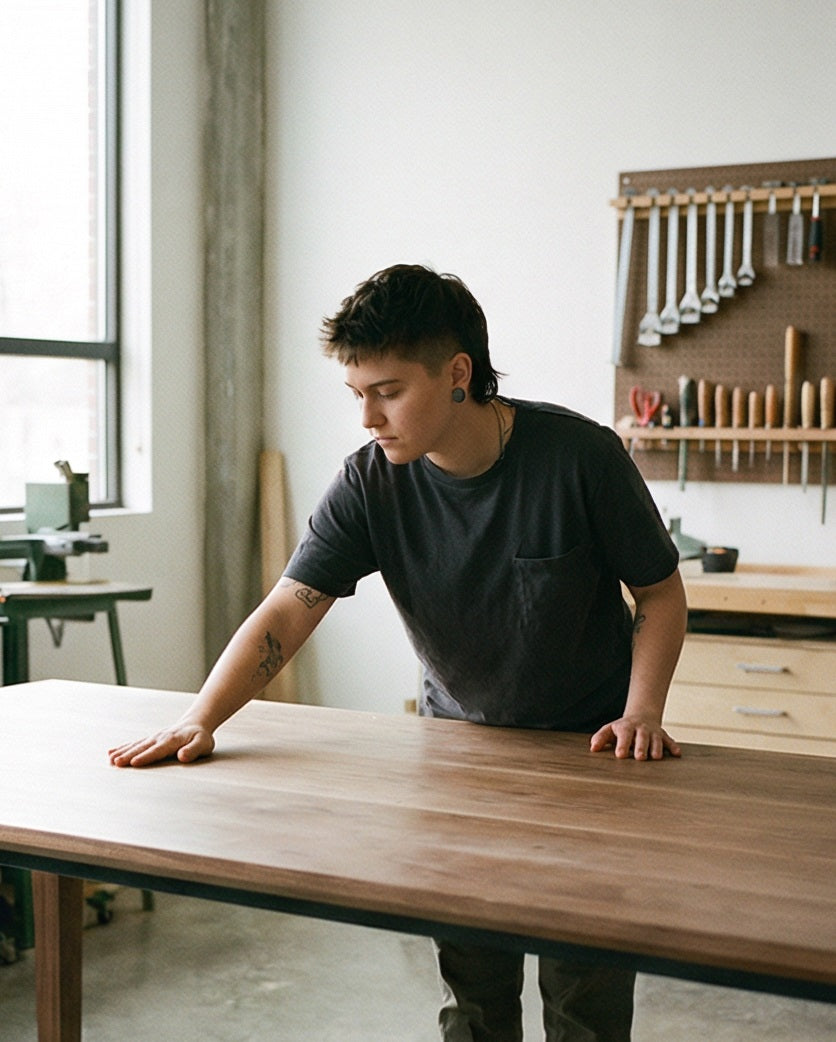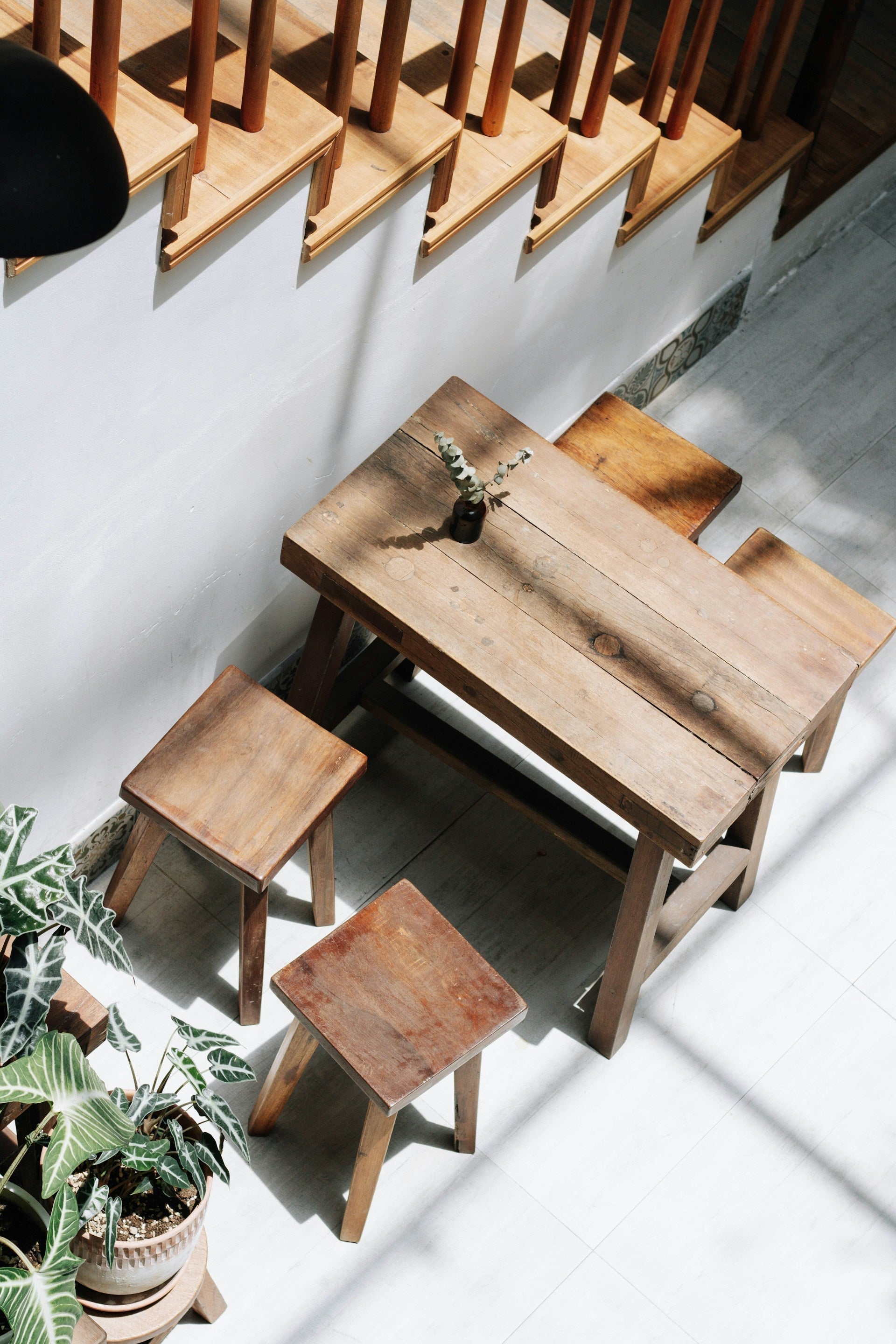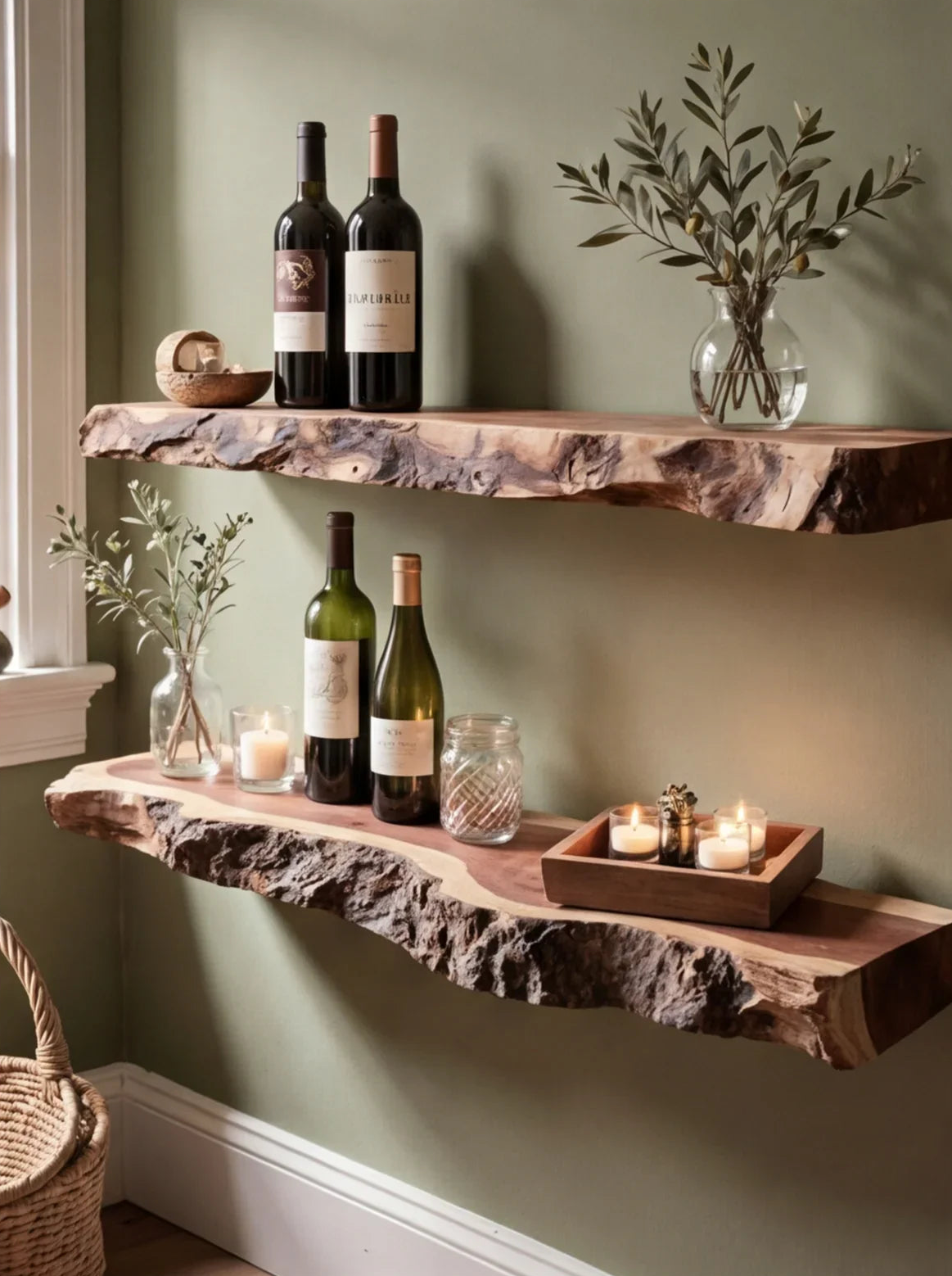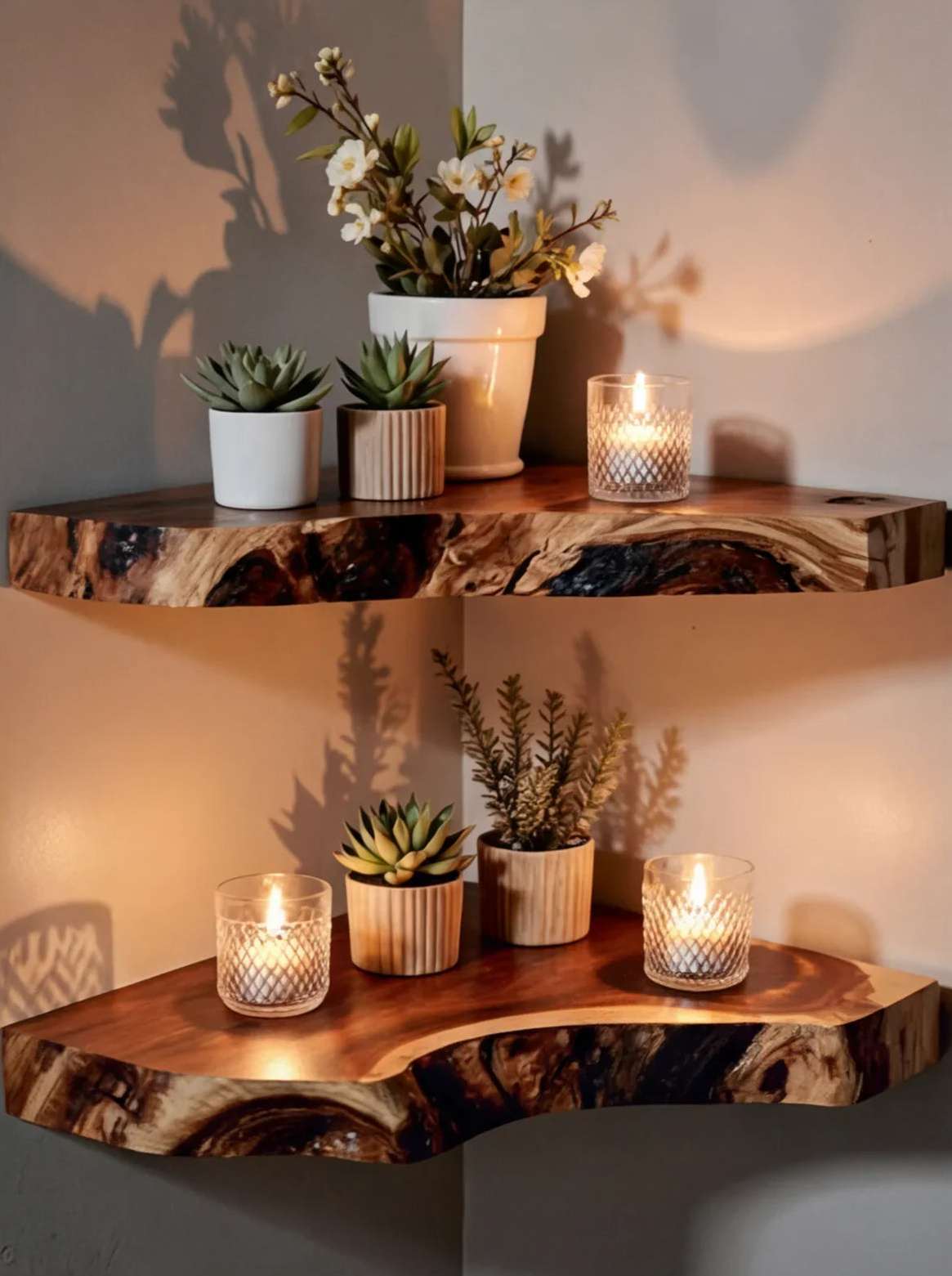
Ever wondered how wood furniture is made - from a rough plank to a finished table or shelf? The journey from raw lumber to a piece you use daily involves selection, drying, cutting, shaping, joinery, finishing, and quality checks. Here is a behind-the-scenes look at the furniture making process, with a focus on how Ashdeco's Vietnamese artisans do it by hand.

Step 1 - Lumber Selection
Every piece of wood furniture starts with choosing the right wood. Wood craftsmanship begins before a single cut is made. The artisan evaluates:
- Species: Walnut, oak, acacia, and ash each offer different strength, grain patterns, and workability.
- Grain direction: Straight grain is more stable. Interlocked grain offers visual interest but requires more skill to work.
- Moisture content: Wood should be dried to 6% to 8% moisture for indoor furniture.
- Defects: Knots, checks, and splits are evaluated. Some add character; others compromise structure.
Ashdeco's artisans source sustainably harvested hardwoods and inspect every board before it enters the workshop.
Step 2 - Drying and Acclimation
Fresh-cut lumber contains too much moisture for furniture. It must be dried through kiln-drying or air-drying to prevent warping, cracking, and shrinking after the piece is built.
- Kiln drying: Controlled heat and airflow reduce moisture in days to weeks. More predictable results.
- Air drying: Stacked in a covered area for months to years. Slower but gentler on the wood.
After drying, the lumber acclimates to the workshop environment before cutting begins.

Step 3 - Cutting and Shaping
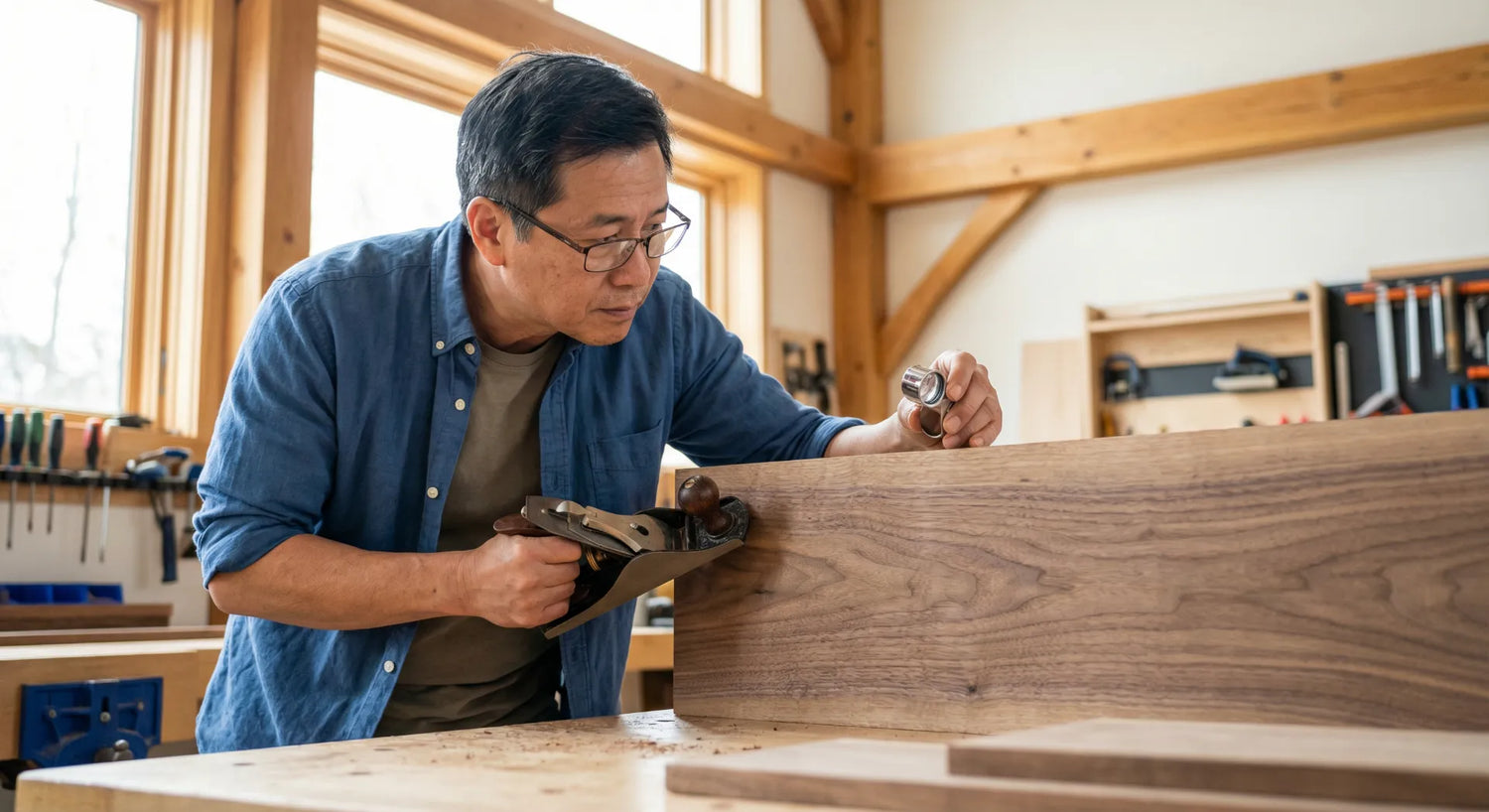
Rough lumber is cut to approximate dimensions, then planed flat and squared on all edges. For Ashdeco's hand-carved pieces, this is where the artisan's skill really shows:
- Templates and patterns guide the initial cuts
- Hand tools and chisels shape curves, edges, and decorative elements
- Each piece is sculpted - not just assembled from flat panels
- The wood's natural features guide the design
This is the fundamental difference between hand-carved furniture and factory-made pieces. Factory furniture uses CNC machines to cut identical shapes from sheets. Hand-carved furniture is sculpted by an artisan who responds to the wood.
Step 4 - Joinery
Joinery is how pieces of wood connect to each other - and it is the single biggest factor in whether furniture lasts 5 years or 50. Common joinery methods include:
- Mortise-and-tenon: A projecting tenon fits into a receiving mortise. Extremely strong and used for thousands of years. This is Ashdeco's primary joinery method.
- Dovetail: Interlocking fan-shaped cuts. Commonly used in drawers for pull resistance.
- Dowel joints: Cylindrical wooden pins join two pieces. Strong but less visible than other methods.
- Cam locks and screws: Used in flat-pack furniture. Convenient but loosens over time and cannot be retightened indefinitely.
Ashdeco uses mortise-and-tenon joinery because it creates joints that actually tighten as wood ages and settles. No metal hardware means no rust, no stripped threads, no loosening screws.

Step 5 - Assembly and Modular Design
Ashdeco's furniture uses modular assembly - pieces are designed to fit together precisely using the joinery cut in the previous step. This approach allows:
- Flat-pack shipping without sacrificing structural integrity
- Easy assembly at home without special tools
- Disassembly and reassembly for moving
- Replacement of individual parts if needed
Unlike flat-pack furniture that uses disposable cam locks, Ashdeco's modular joints are the same mortise-and-tenon connections used in traditional woodworking. They hold tighter with each assembly.
Step 6 - Finishing
Finishing protects the wood and enhances its appearance. Steps typically include:
- Sanding: Progressive grits from 120 to 320 create a smooth surface.
- Staining (optional): Adds color while allowing grain to show through.
- Sealing: Oil, lacquer, or polyurethane protects against moisture and wear.
- Final buffing: A hand-rubbed finish creates a natural sheen.
Ashdeco's artisans hand-finish each piece, adjusting the process to the specific wood species and the product's intended use - a tree bookshelf gets a different finish treatment than a coffee table that will hold hot mugs.

Factory-Made vs Handcrafted - The Real Difference
| Factor | Factory/Dropship | Ashdeco Handcrafted |
|---|---|---|
| Material | MDF, particleboard, veneer | Solid hardwood |
| Joinery | Cam locks, staples, glue | Mortise-and-tenon |
| Finishing | Machine-sprayed | Hand-rubbed |
| Uniqueness | Identical units | Each piece unique |
| Lifespan | 3 to 7 years | 20+ years |
| Repairability | Difficult to impossible | Easily repaired |
Frequently Asked Questions
How long does it take to make handcrafted wood furniture?
Depending on complexity, a single piece can take days to weeks. Drying the lumber alone can take weeks. Quality handcrafted furniture is never rushed.
Why is handmade furniture more expensive?
Materials (solid hardwood vs MDF), labor (skilled artisan vs machine), and time (days vs minutes per piece). You are paying for durability, uniqueness, and craftsmanship that lasts decades.
What is the strongest type of wood joinery?
Mortise-and-tenon joinery is widely considered the strongest. It has been used for thousands of years in furniture, timber framing, and even ancient architecture. The joint gets tighter as wood seasons.
See the Craft in Every Piece
Explore Ashdeco's tree bookshelves and coffee tables to see Vietnamese craftsmanship firsthand - each piece hand-carved from solid wood.