



















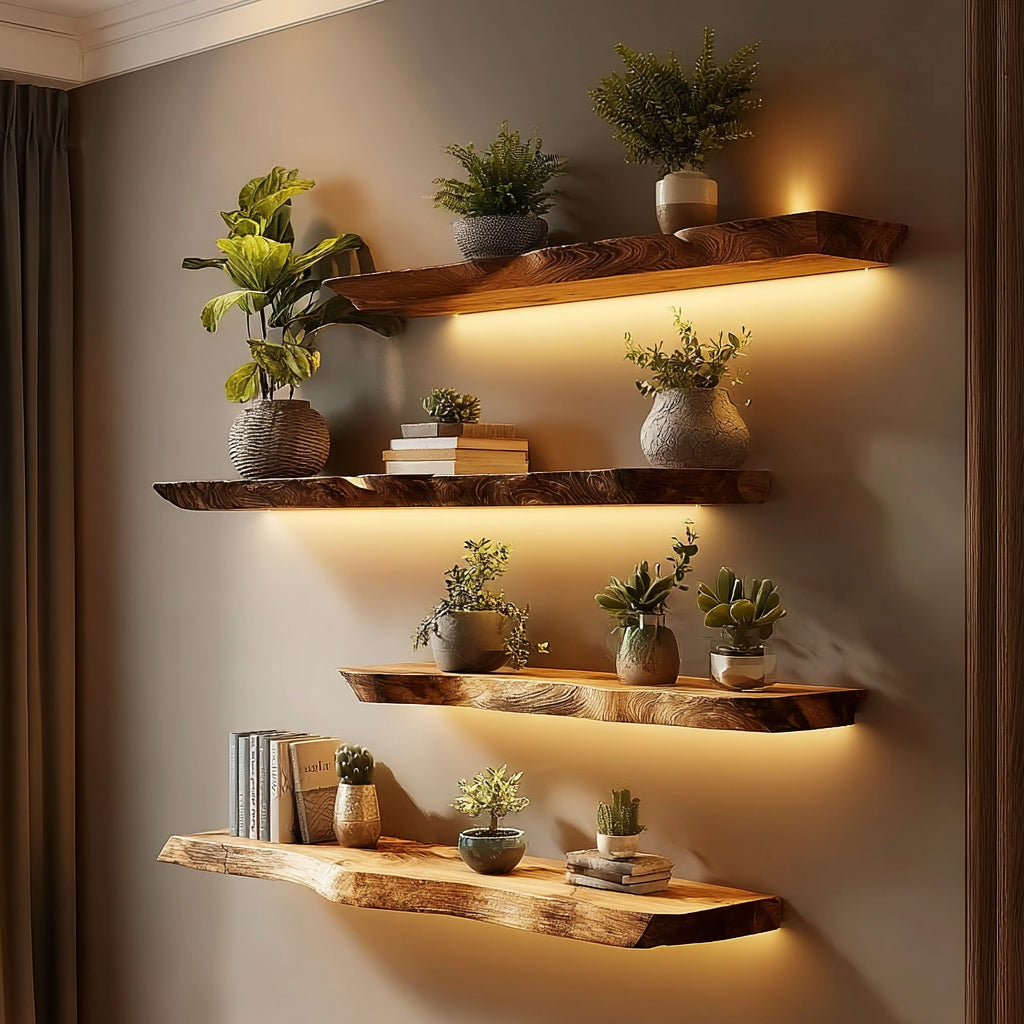
Quick view
- 1. Follow the Rule of Three
- 2. Lean Art Instead of Hanging It
- 3. Use Books as Building Blocks
- 4. Add Trailing Plants
- 5. Create a Color Story
- 6. Mix Materials and Textures
- 7. Leave Breathing Room
- 8. Use Odd Numbers
- 9. Vary Heights Dramatically
- 10. Style Corner Shelves Differently
- 11. Create a Bookshelf Moment with Tree Shelves
- 12. Layer Objects Front to Back
- 13. Use Mushroom Shelves for Single-Object Display
- 14. Incorporate Personal Objects
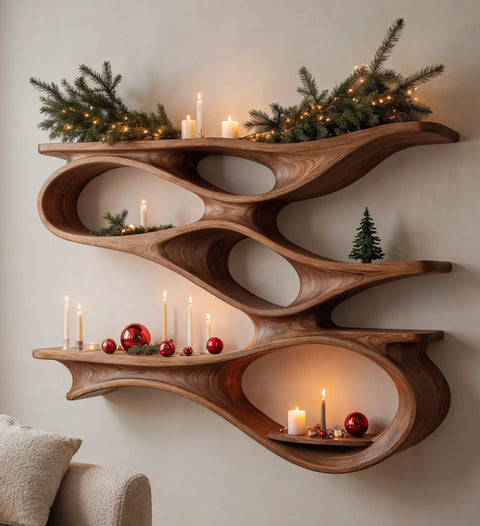
- 15. Rotate Seasonally
- 16. Use Baskets and Boxes for Hidden Storage
- 17. Play with Symmetry and Asymmetry
- 18. Light Your Shelves
- 19. Don't Forget Scale
- 20. Break the Rules Sometimes
- The Shelf Styling Starter Formula
- Frequently Asked Questions
Shop this guide
Handcrafted Floating Shelves, made to order in solid wood.
 Sculptural Overlapping Circular Solid Wood Wall Shelf with Multi Tier Display
From $1,354.00
Sculptural Overlapping Circular Solid Wood Wall Shelf with Multi Tier Display
From $1,354.00
 Mountain Landscape Relief Solid Wood Floating Shelf Live Edge Display Ledge
From $1,154.00
Mountain Landscape Relief Solid Wood Floating Shelf Live Edge Display Ledge
From $1,154.00
 Enchanted Forest Circular Wall Shelf - Round Carved Timber Mushroom Portal
From $1,023.00
Enchanted Forest Circular Wall Shelf - Round Carved Timber Mushroom Portal
From $1,023.00
 Cottagecore Arched Wood Wall Niche - Hand-Carved Fairy Mushroom Alcove Shelf
From $1,356.00
Cottagecore Arched Wood Wall Niche - Hand-Carved Fairy Mushroom Alcove Shelf
From $1,356.00
 Sculptural Hand-Carved Mushroom Solid Wood Corner Floating Shelf & Biomorphic Wall Display Ledge
From $345.00
Sculptural Hand-Carved Mushroom Solid Wood Corner Floating Shelf & Biomorphic Wall Display Ledge
From $345.00
 Sculptural Hand-Carved Mushroom Solid Wood Floating Shelves & Biomorphic Wall Display Ledges
From $345.00
Sculptural Hand-Carved Mushroom Solid Wood Floating Shelves & Biomorphic Wall Display Ledges
From $345.00
Living room shelf styling is where most people freeze up. You've got the beautiful shelves on the wall, a pile of objects on the floor, and absolutely no idea how to make it look like the photos you saved on Pinterest. The good news? Shelf decor in the living room follows learnable rules. Once you understand the principles behind great shelf styling, arranging your objects stops feeling like guesswork and starts feeling like play.
Here are 20 designer-tested ideas to get your shelves looking intentional.
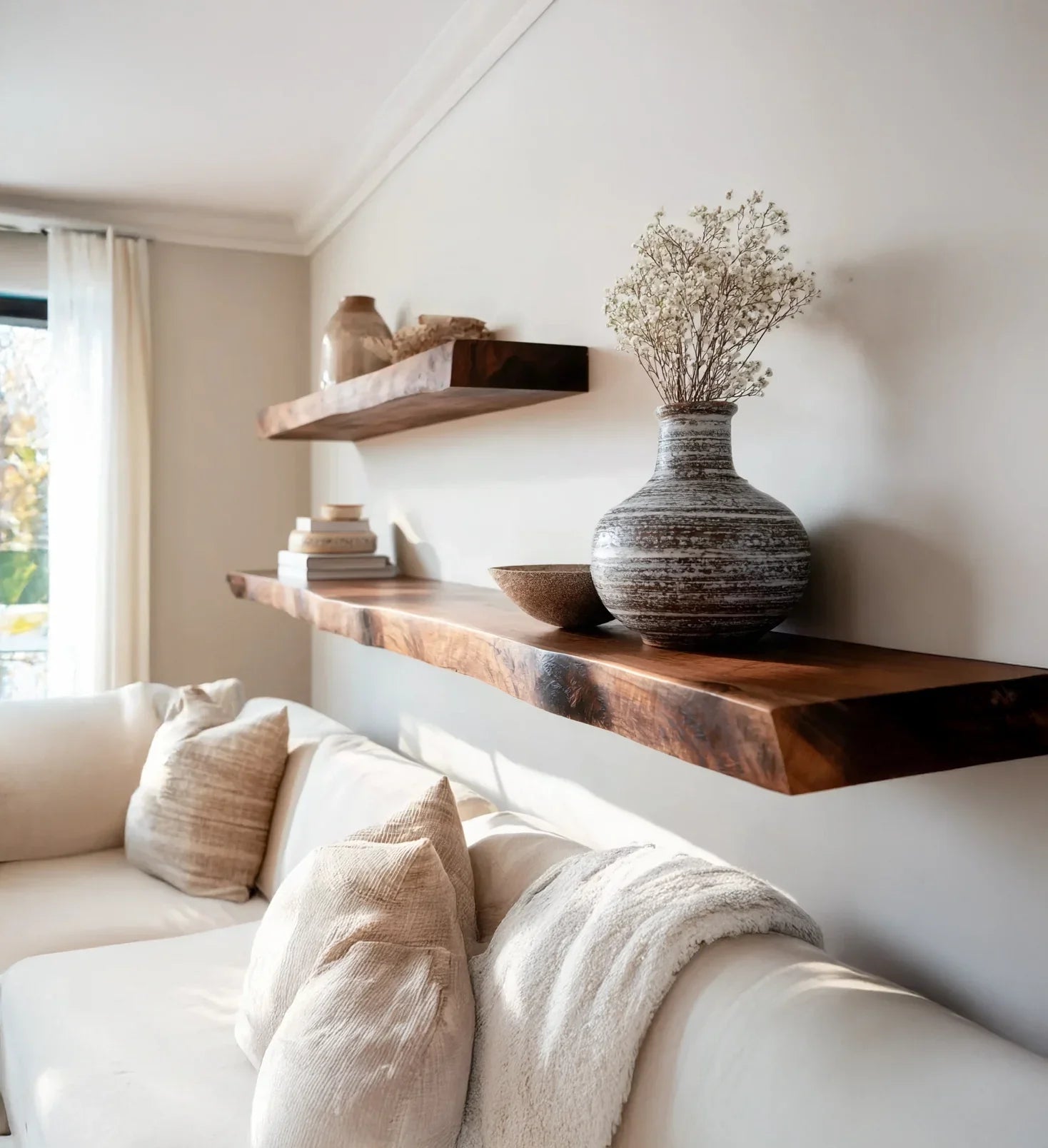
Handmade Live Edge Wooden Floating Shelves - Rustic Wall Decor
• Solid Wood Floating Shelves - from $39
• Corner Floating Shelves - from $35
• Mushroom Floating Shelves - from $29
1. Follow the Rule of Three
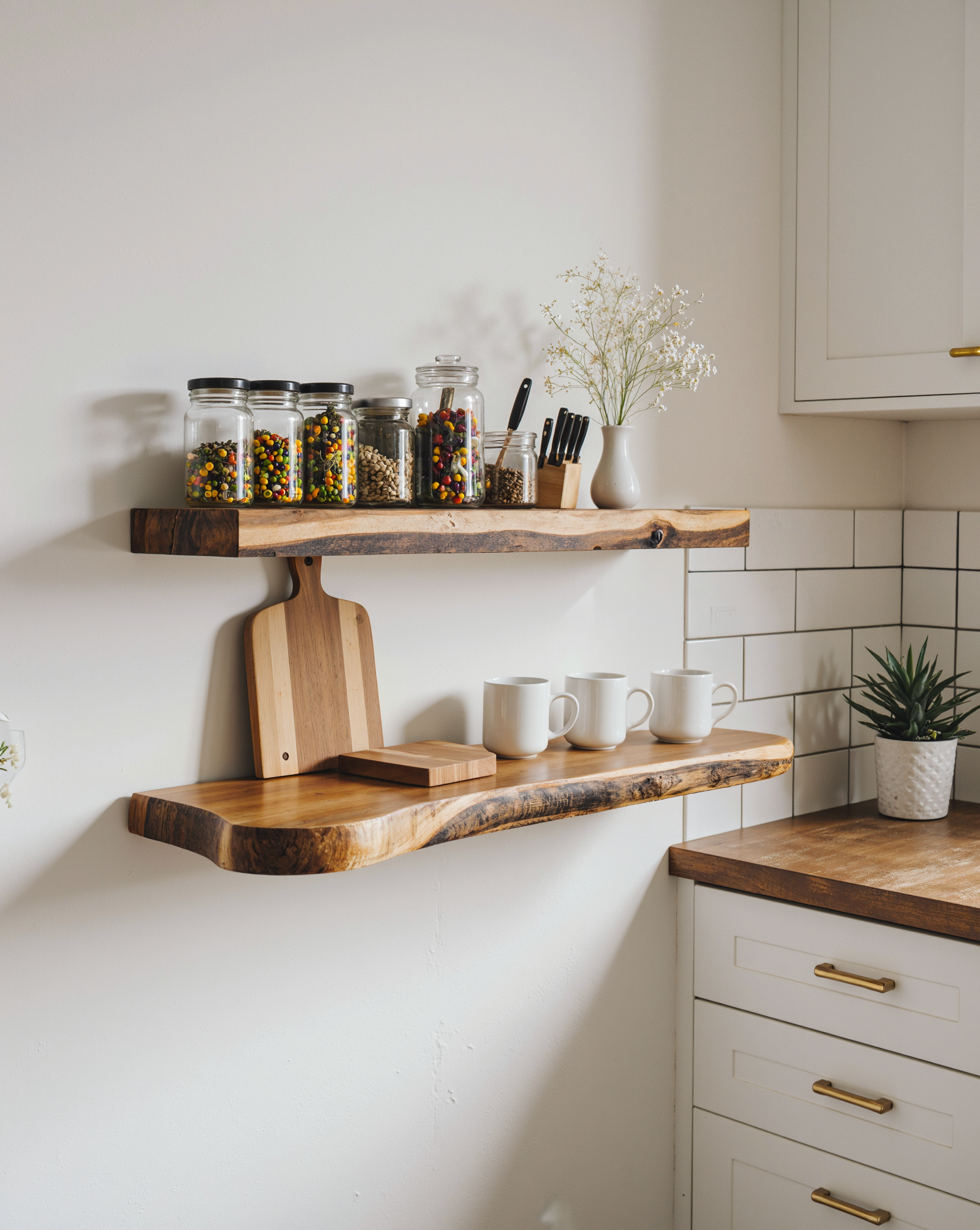
Group objects in clusters of three with varying heights. A tall object (vase, candlestick), a medium object (small plant, ceramic bowl), and a short object (stacked books, small frame) create a composition that naturally feels balanced.
This works on any shelf, any style. It's the single most reliable shelf styling technique.
2. Lean Art Instead of Hanging It
Lean a framed print or small canvas against the wall on a floating shelf. This creates a casual, gallery-like feel and lets you swap art easily without new nail holes. For a deeper dive, see our article on floating shelf above bed ideas.
Layer a smaller frame in front of a larger one for depth. The overlap creates visual interest that flat, side-by-side placement can't match.
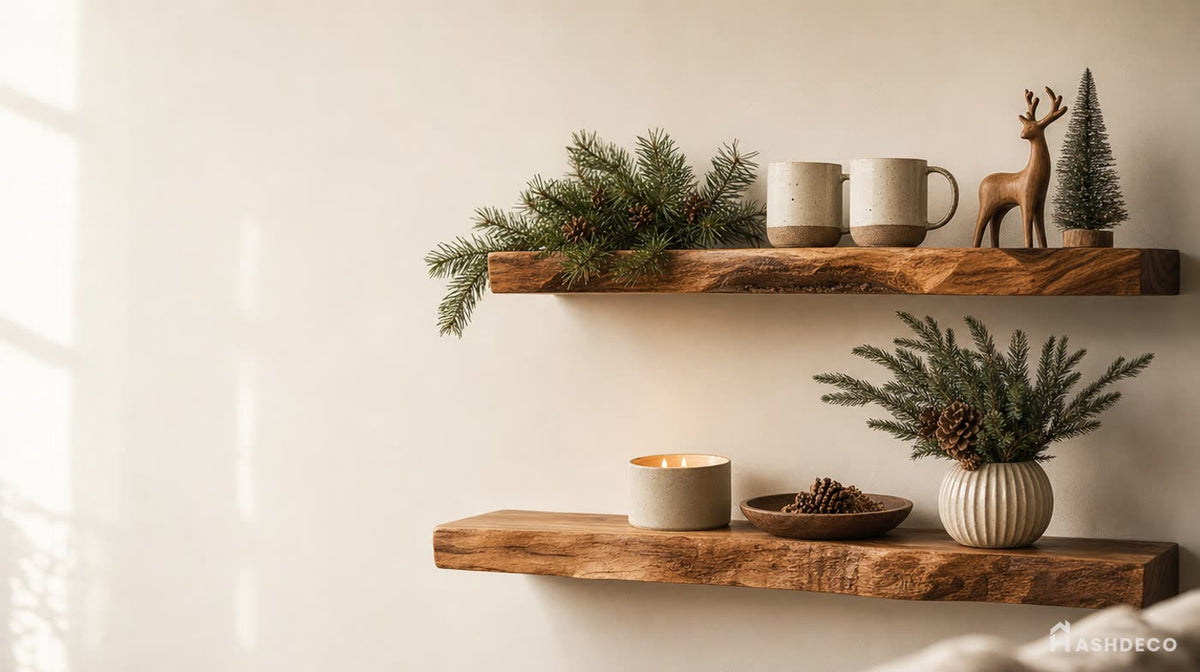


3. Use Books as Building Blocks
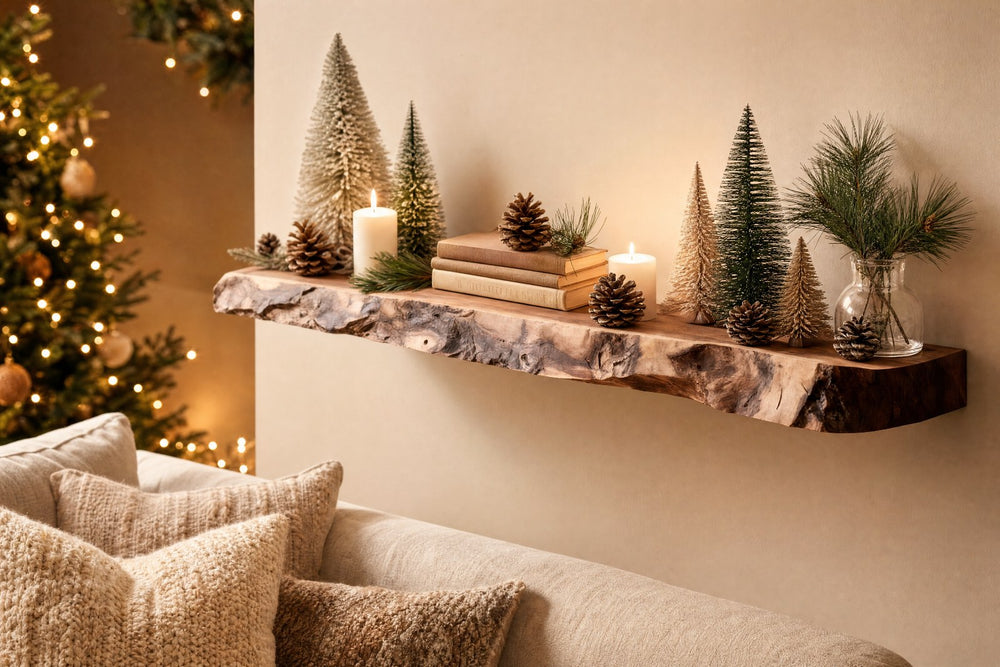
Stack books horizontally to create height platforms for smaller objects. A small plant sitting on a stack of two or three books looks more intentional than a plant sitting directly on the shelf.
Vary the orientation too - some horizontal stacks, some vertical groupings. According to Architectural Digest, mixing book orientations is the easiest way to add visual rhythm to shelves.

Live Edge Floating Shelves - Handmade Solid Wood Rustic Wall Shelf Decor
"The best-styled shelves look effortless because they follow invisible rules. Learn the rules, then forget them - your instincts will take over."
4. Add Trailing Plants
A trailing pothos, string of pearls, or philodendron cascading over the edge of a shelf adds life and movement. Position trailing plants at the end of a shelf or on a higher shelf so the vines can drape freely.
One trailing plant per shelf grouping is enough. More than that and the shelves start looking like a greenhouse rather than a designed display.
Don't miss
These pieces qualify for 10% off orders over $2,000. Applied automatically at checkout.
5. Create a Color Story
Choose two or three colors and repeat them across all your shelves. A blue ceramic vase on one shelf, a blue book spine on another, and a blue candle on a third creates visual cohesion.
This doesn't mean everything matches - it means the eye finds patterns and the arrangement feels intentional.
6. Mix Materials and Textures
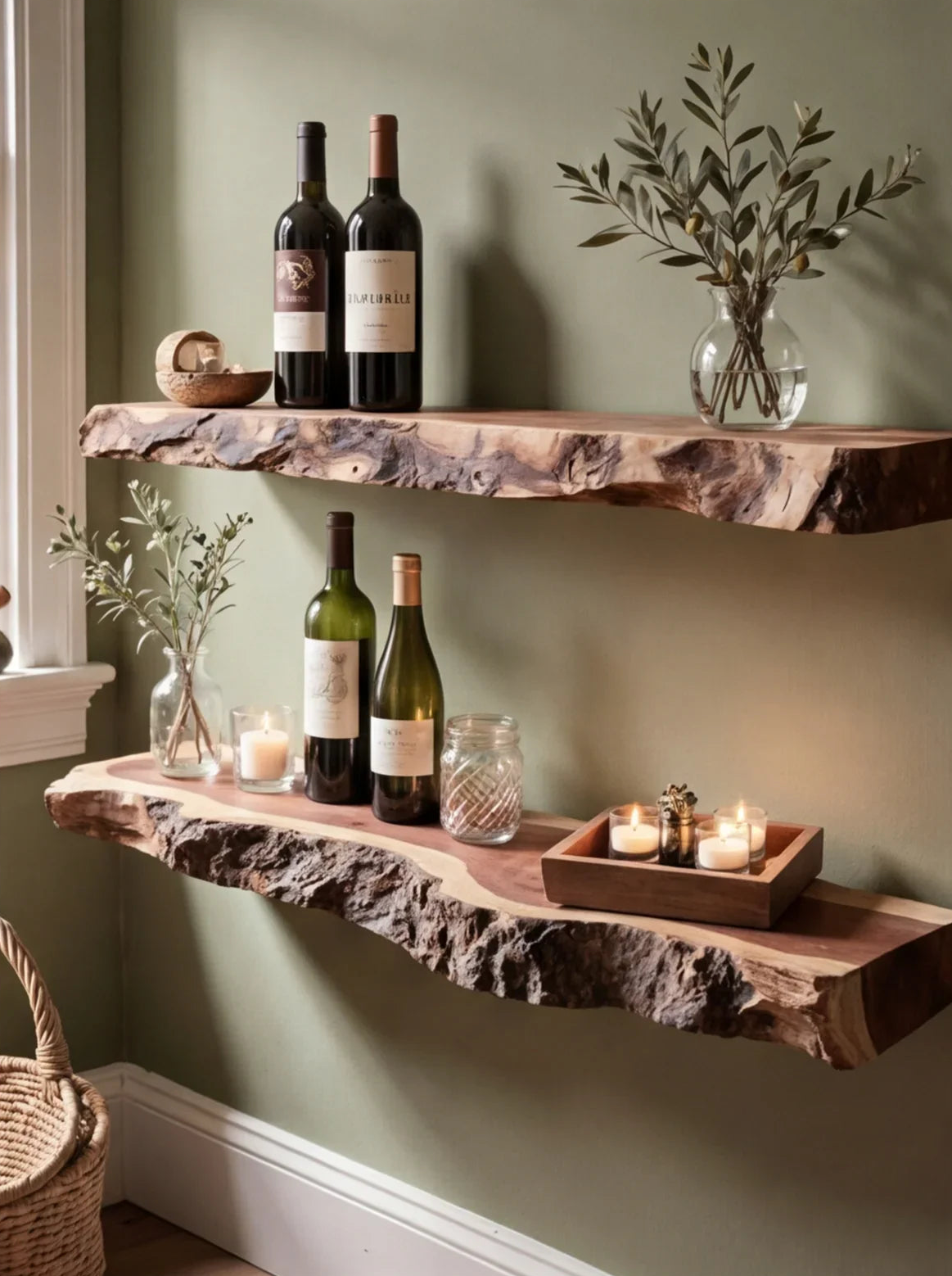
Combine ceramic, wood, glass, metal, and woven textures across your shelves. A smooth ceramic vase next to a rough-textured basket next to a glossy framed photo creates tactile variety.
Natural wood shelves from solid wood floating shelf collections provide a beautiful warm base that complements almost any material placed on them. We cover this in more detail in our staggered floating shelves guide guide.
7. Leave Breathing Room
This is the hardest rule. Leave at least 30% of each shelf empty. Negative space is what separates a styled shelf from a cluttered one.
If every inch is filled, nothing stands out. The empty space directs the eye to the objects you've chosen.
8. Use Odd Numbers
Beyond groups of three, odd numbers in general look better than even numbers. Five small frames look more dynamic than four. Three candles look more interesting than two.
Even numbers feel static and formal. Odd numbers create slight tension that makes the arrangement feel alive.
9. Vary Heights Dramatically
Don't just vary heights slightly. Create real contrast. A tall vase next to a low stack of books next to a medium plant creates movement. If everything is roughly the same height, the shelf reads as a flat line.
The height variation should be visible from across the room - subtle differences get lost at distance.
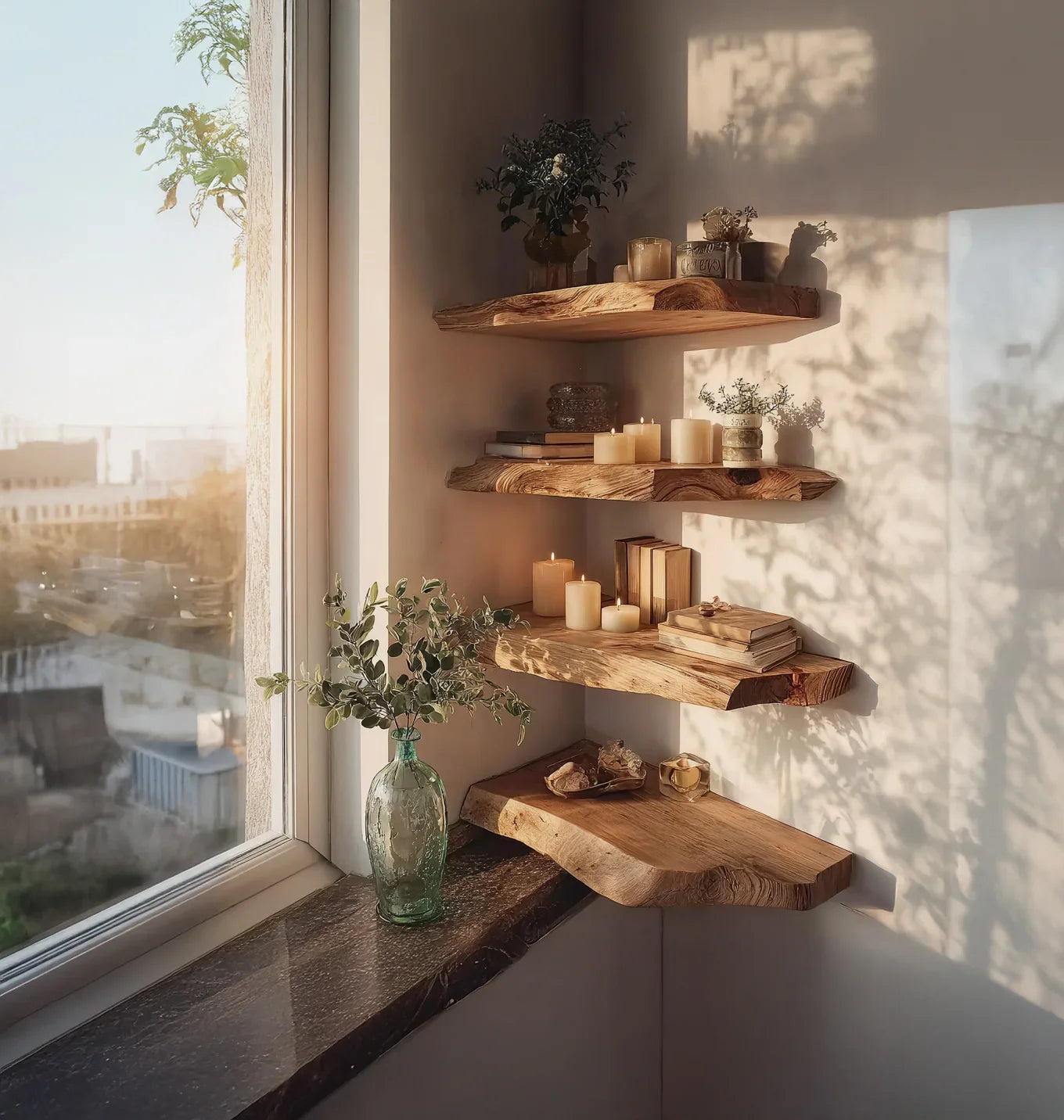
10. Style Corner Shelves Differently
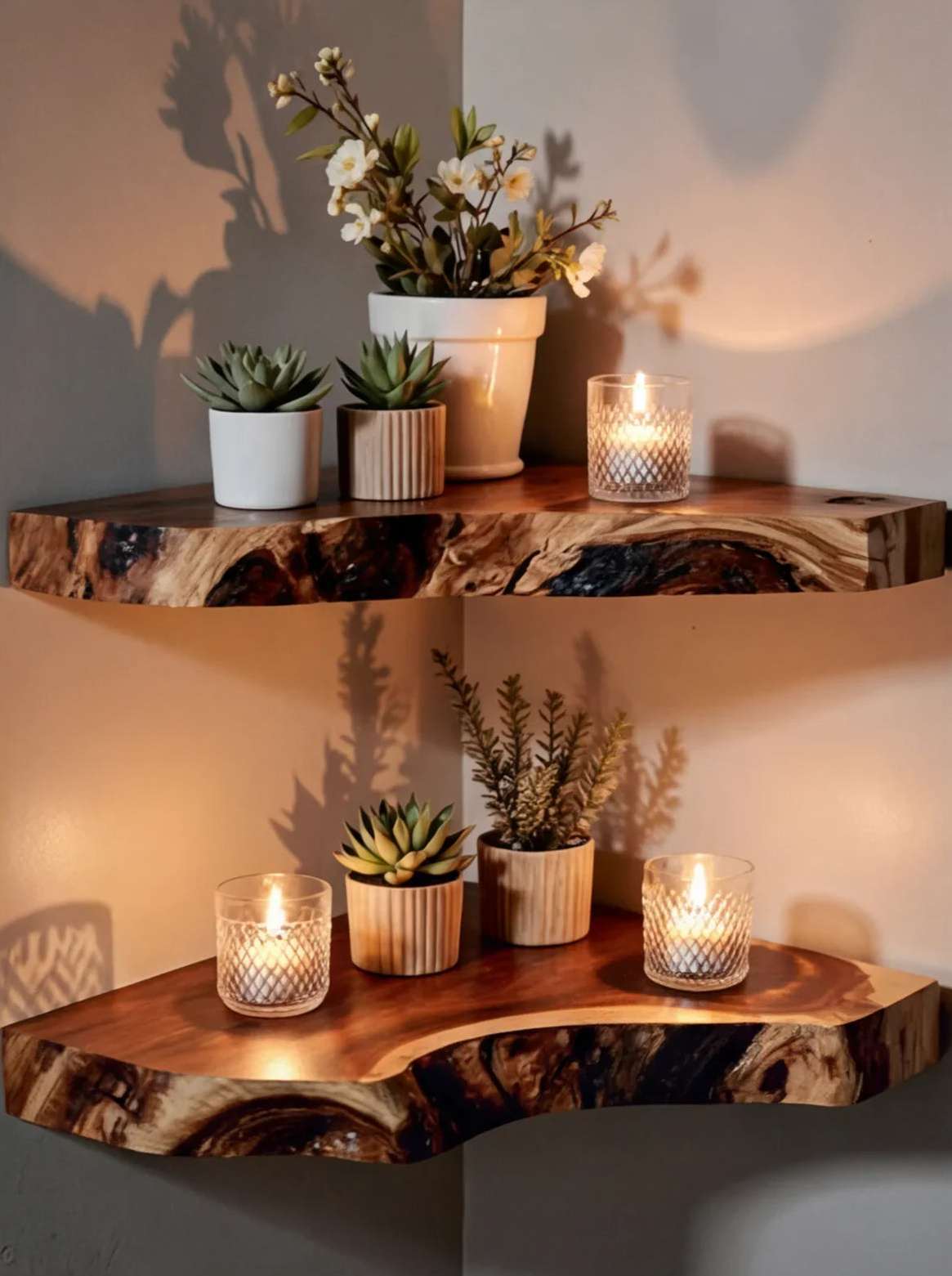
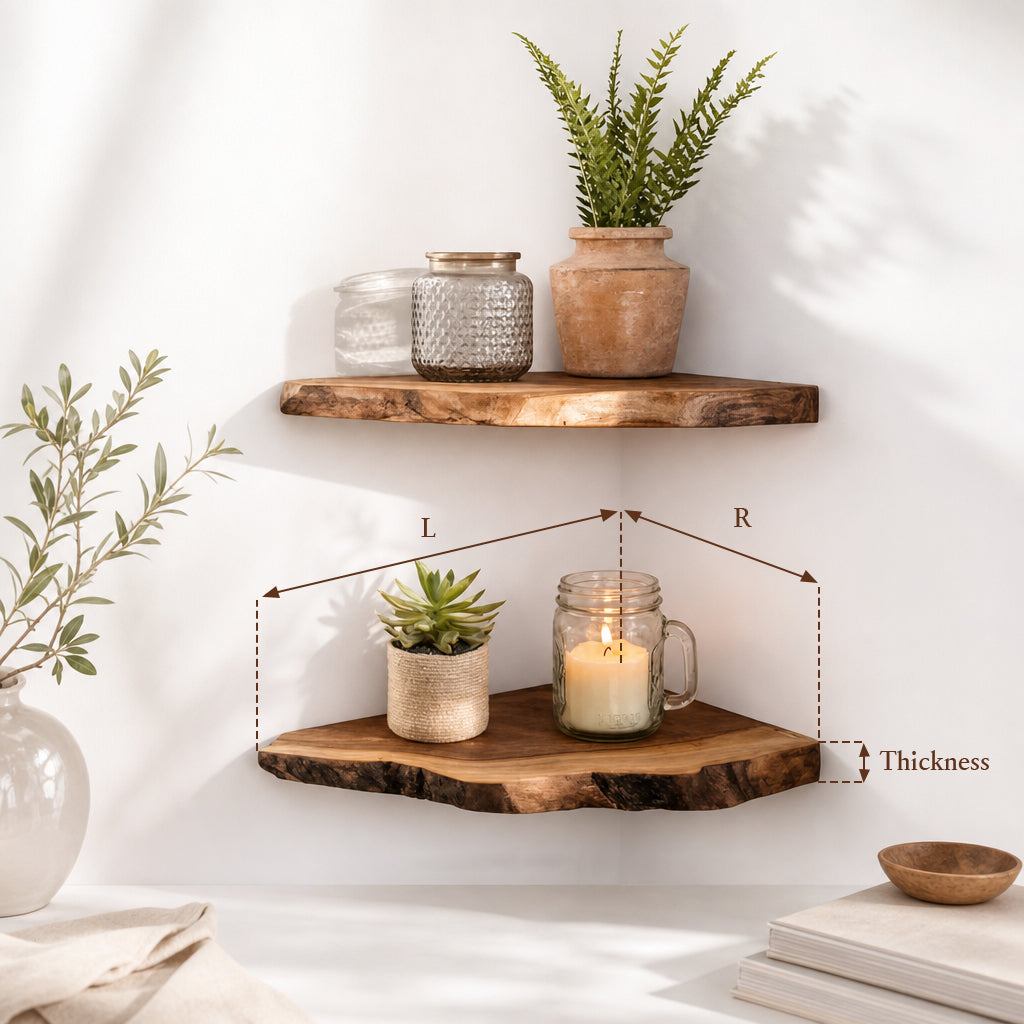
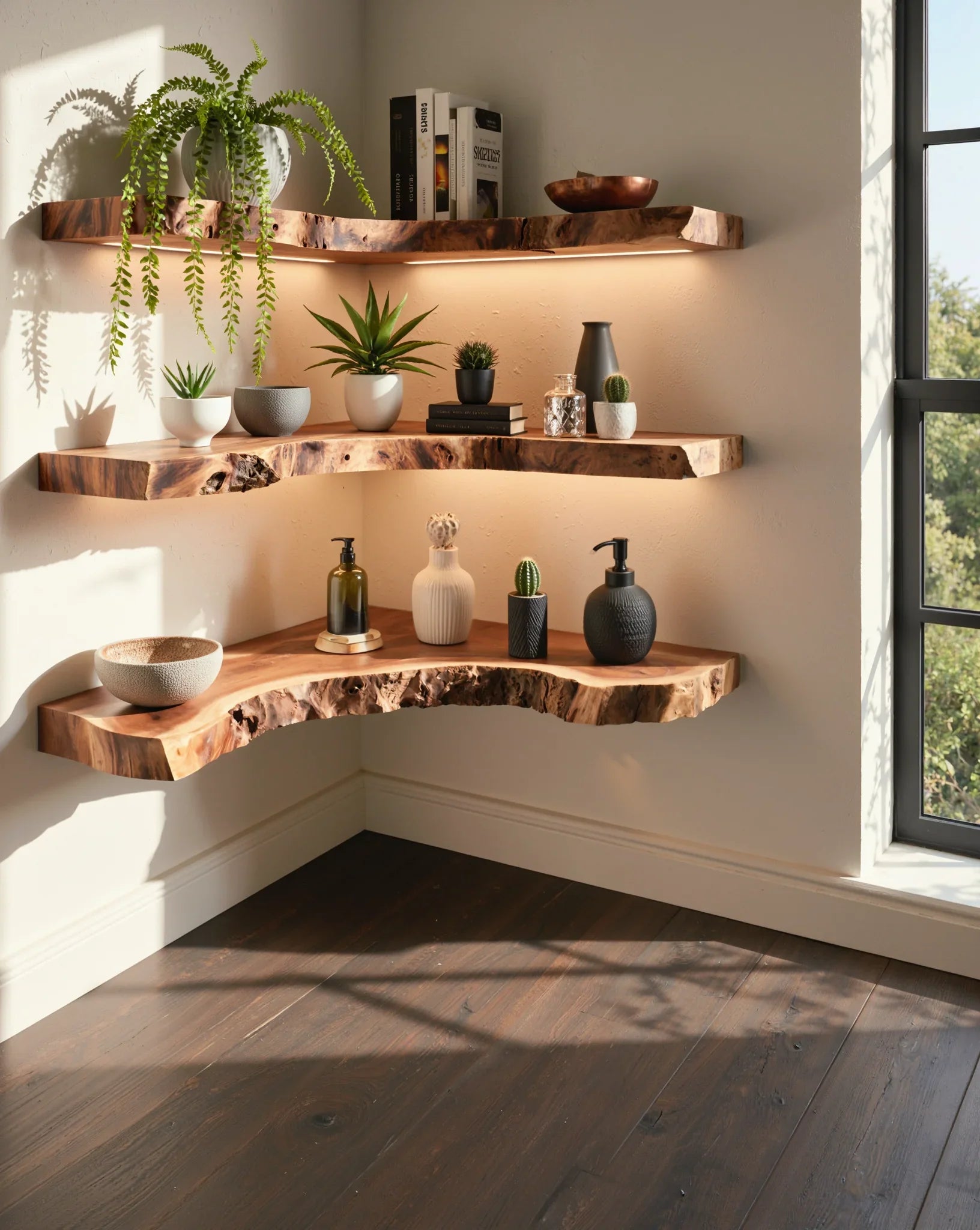
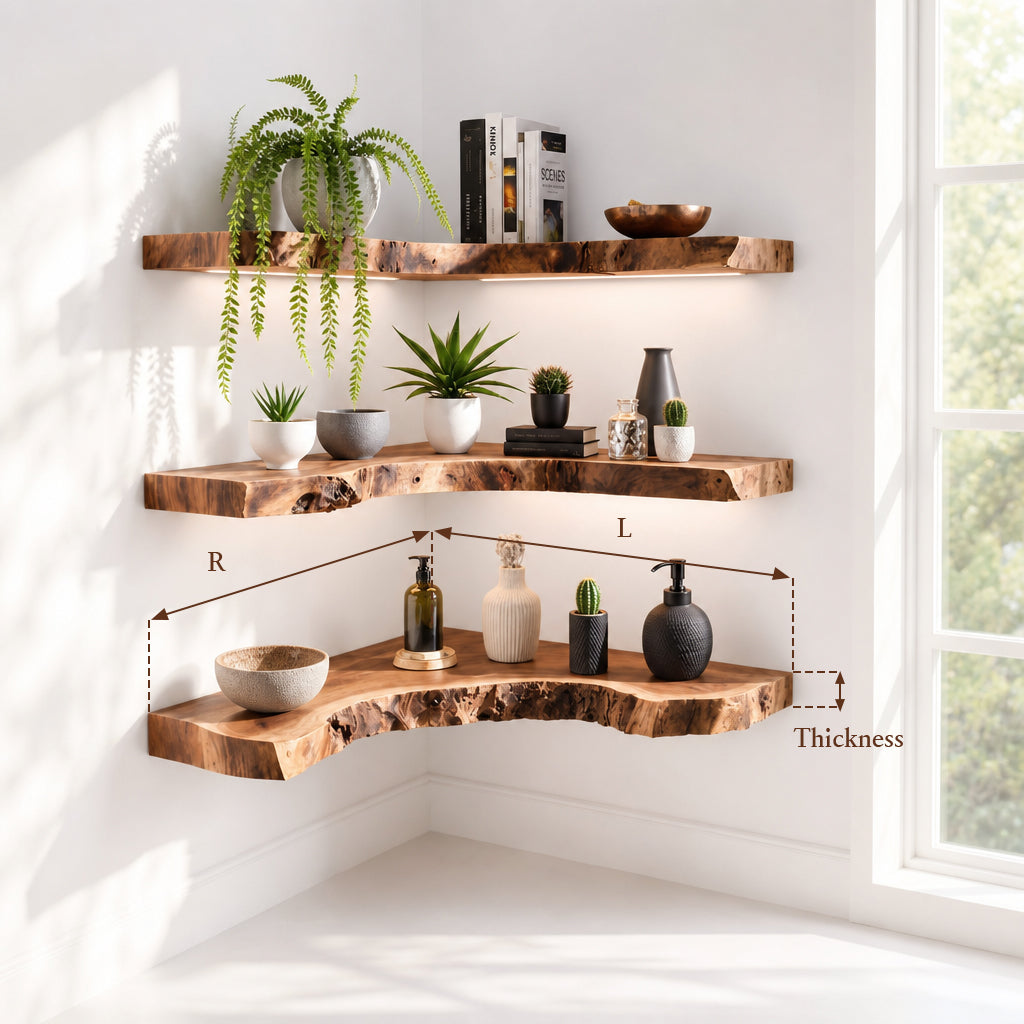
Corner floating shelves have unique geometry that calls for different styling. The triangular surface works best with a single focal object - a small plant, a sculptural object, or a candle. Don't try to create complex arrangements. Our floating shelves ideas article walks through the specifics.
Corner shelves in natural wood add warmth to forgotten corners while maximizing wall space that would otherwise go unused.
Live Edge Floating Shelves - Handmade Solid Wood Rustic Wall Shelf Decor
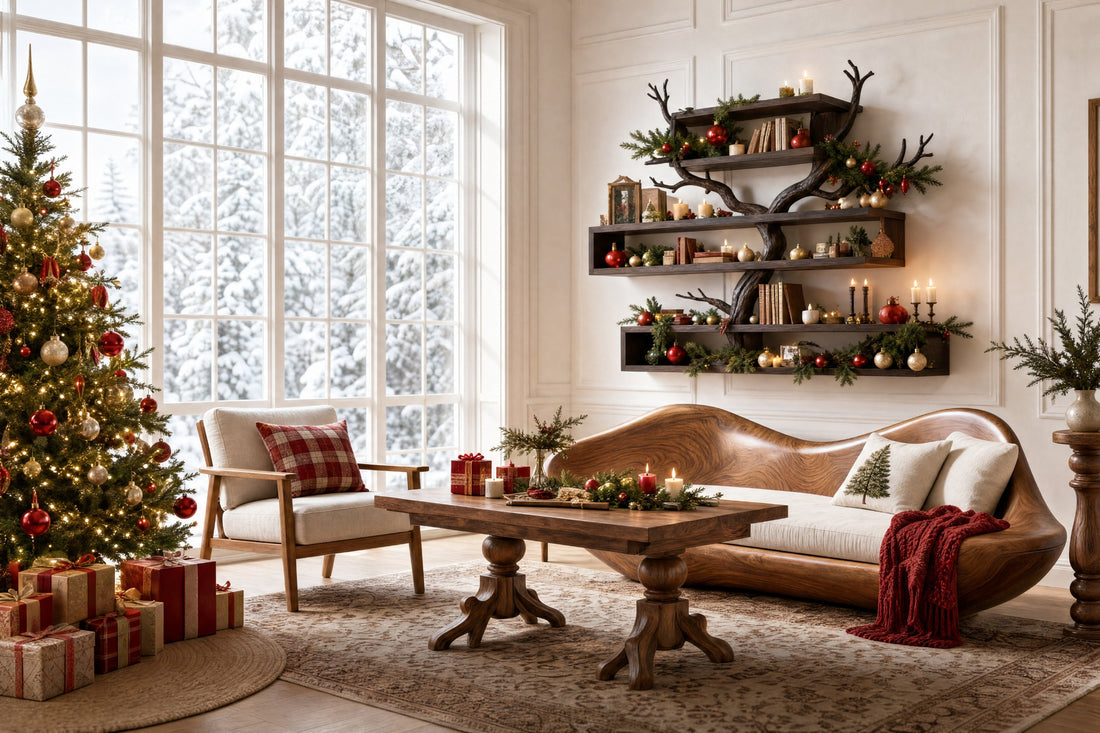
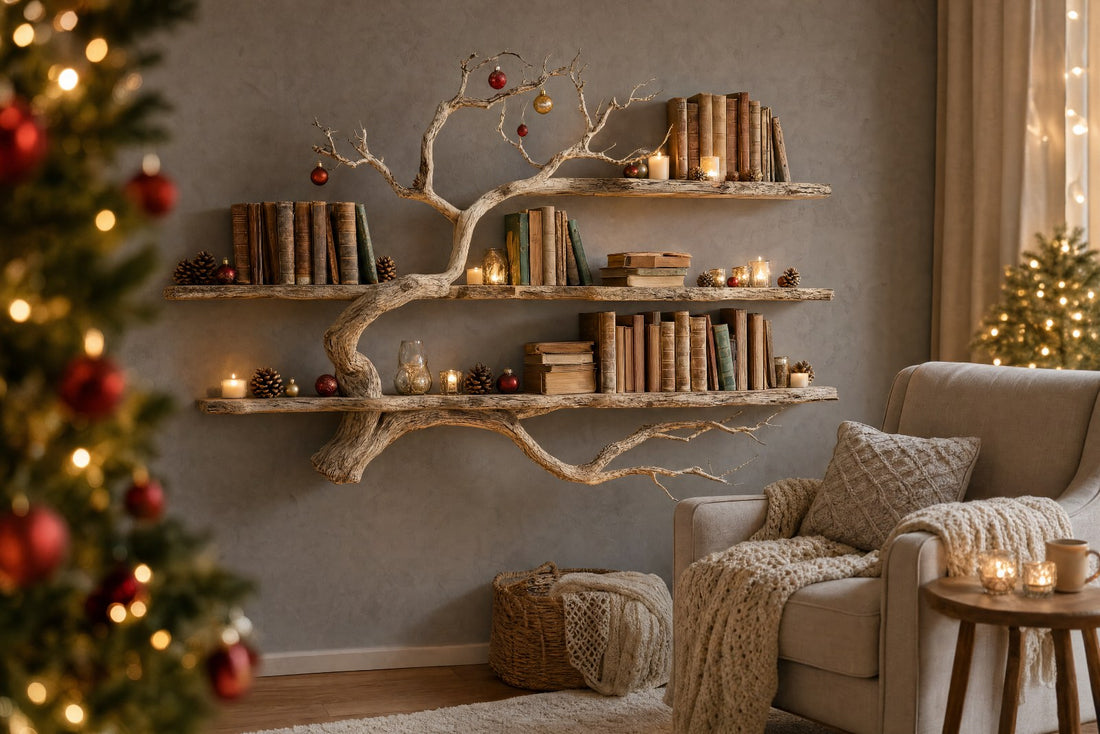
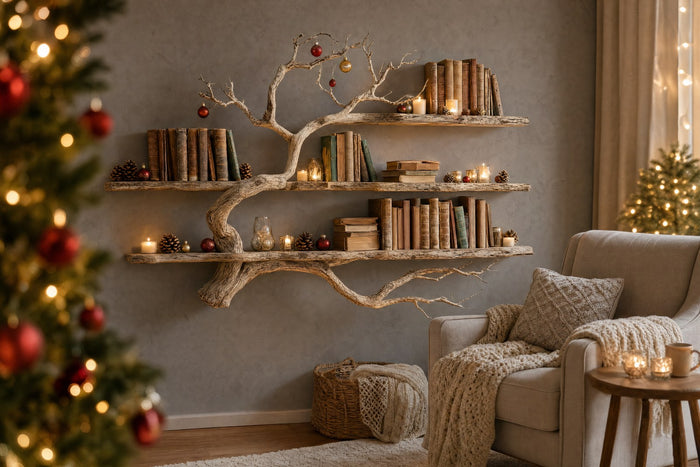
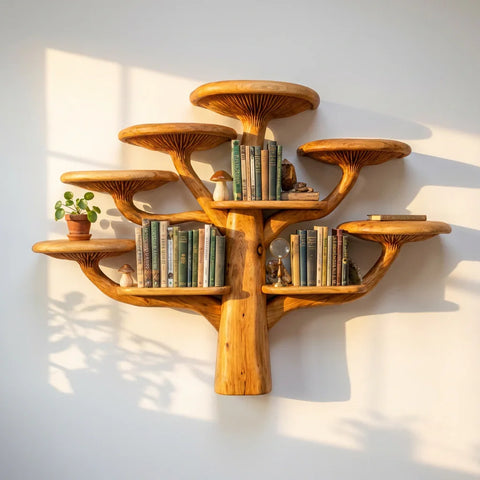
11. Create a Bookshelf Moment with Tree Shelves
A tree bookshelf offers a different styling canvas entirely. Each branch is its own mini shelf, creating a vertical composition that naturally avoids the "flat line" problem.
Alternate between books and decorative objects on different branches. The asymmetric form of the tree does half the design work for you.
12. Layer Objects Front to Back
Don't place everything flat against the wall. Layer objects front to back - a tall frame in back, a small object in front, overlapping slightly.
This depth creates dimension that makes shelves look professional rather than amateur.
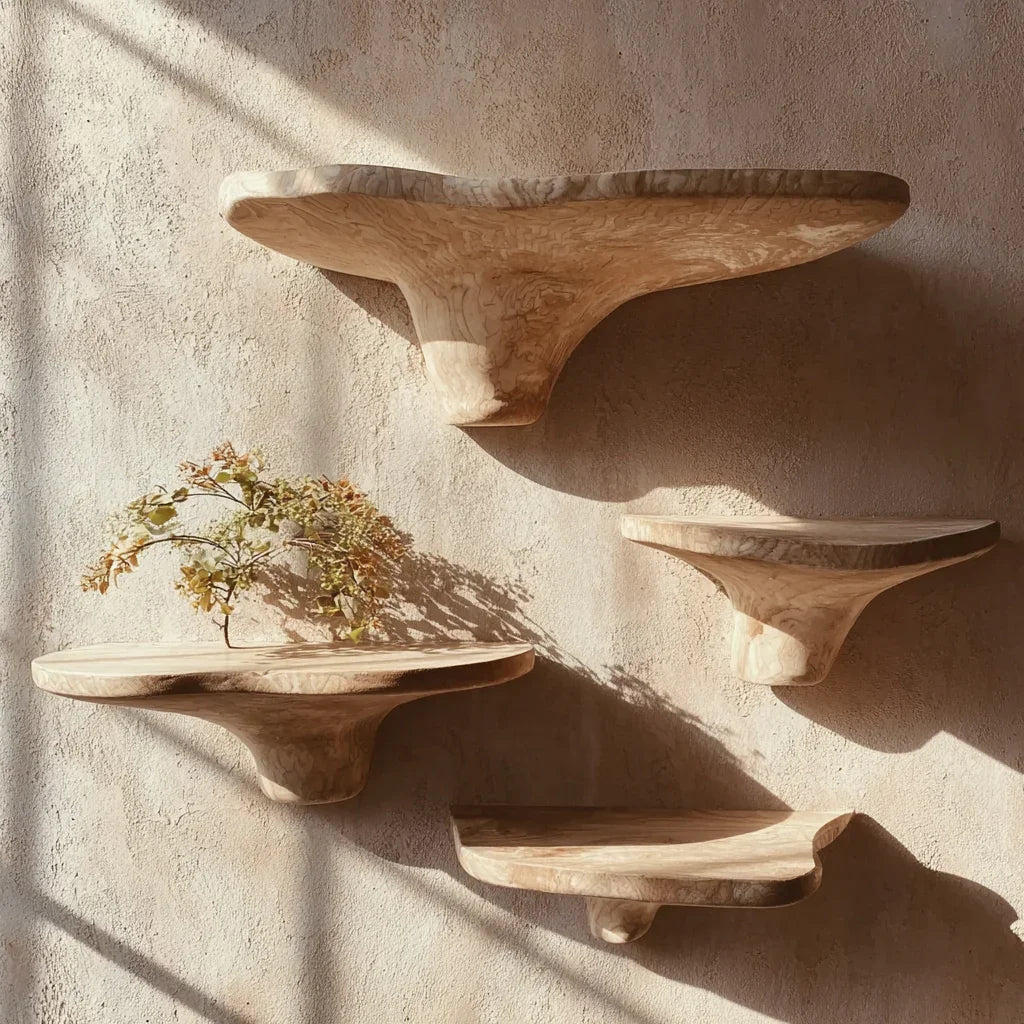
13. Use Mushroom Shelves for Single-Object Display
Mushroom floating shelves are designed for one perfect thing. Their organic, curved shape is a statement on its own - add a single succulent, a small ceramic, or a candle and you're done.
Group two or three mushroom shelves at different heights on the same wall for a whimsical, nature-inspired installation.
14. Incorporate Personal Objects
The most interesting shelves include at least one personal item - a travel souvenir, a family photo, a vintage find. These objects create conversation and give the shelves a soul that purely decorative items can't.
15. Rotate Seasonally
Swap a few items each season to keep shelves feeling fresh. Spring: add fresh greenery and lighter ceramics. Fall: bring in amber glass, dried florals, and deeper tones. The bones stay the same; the accents shift.
"Style your shelves, then remove one thing from each grouping. What's left will almost always look better."
16. Use Baskets and Boxes for Hidden Storage
Not everything on a shelf needs to be visible. Woven baskets and decorative boxes add texture while hiding small items - remotes, chargers, odds and ends.
17. Play with Symmetry and Asymmetry
Symmetrical arrangements (matching items on each side) feel formal and calming. Asymmetrical arrangements feel dynamic and creative. Choose based on your room's vibe.
Most designers prefer asymmetry for living rooms - it feels more natural and collected.
18. Light Your Shelves
Small puck lights or LED strips behind objects create a gallery-like glow. This is especially effective for evening ambiance and draws attention to your styled shelves.
19. Don't Forget Scale
Large shelves need larger objects. Small shelves need restraint. A tiny figurine on a 36-inch shelf looks lost. A massive vase on a 12-inch shelf looks cramped. According to Better Homes & Gardens, matching object scale to shelf size is the most common styling mistake people make.
20. Break the Rules Sometimes
The most beautiful shelf moments often come from breaking a rule - an unexpectedly large object, a perfectly centered single item, or shelves left intentionally bare. Rules give you confidence. Breaking them gives you personality.
Rustic Mushroom Floating Shelves with Hidden Brackets - Artisanal Wood Home Decor
The Shelf Styling Starter Formula
Not sure where to begin? Use this formula per shelf:
- Anchor: One larger item (leaned art, tall vase)
- Stack: Horizontal books as a platform
- Object: Something sculptural or ceramic on the book stack
- Green: A small plant or trailing vine
- Space: Leave 30% empty
Apply this to each shelf, varying the arrangement, and you'll have a gallery-worthy wall. Elle Decor uses a nearly identical formula in their editorial styling guides.
---
Frequently Asked Questions
How many items should go on a floating shelf?
For a standard 24-36 inch shelf, three to five objects is the sweet spot. This includes books counted as one grouped item. Less than three looks sparse; more than five risks clutter. Always leave at least 30% of the shelf surface empty.
What's the best way to style shelves without books?
Use a mix of ceramics, plants, candles, and personal objects. Without books as building blocks, height variation becomes even more important. Use varying vase heights, small risers, or stacked objects to create visual rhythm.
How do I style shelves above a TV?
Keep it simple - the shelves should complement the TV, not compete with it. A single floating shelf with a leaned frame, a small plant, and one decorative object works well. Avoid anything too visually busy that will distract from the screen.
Should floating shelves match the furniture in the room?
Not necessarily match, but harmonize. Shelves in a similar wood tone (warm walnut with warm oak furniture, for example) create cohesion. Contrasting tones (light ash shelves on dark walls) create drama. Both work - just be intentional.