



















Quick view
- What Makes a Driftwood Floor Lamp Different From Regular Floor Lamps?
- Why Driftwood Floor Lamps Are Having a Moment Right Now
- How Driftwood Floor Lamps Are Actually Made (The Real Process)
- Where to Put a Driftwood Floor Lamp (Room-by-Room)
- Driftwood Floor Lamp With Shelves: Two Functions, One Piece
- Handcrafted vs. Factory-Made: What You're Actually Paying For
- How to Choose the Right Driftwood Floor Lamp for Your Space
- Caring for a Driftwood Floor Lamp
- Frequently Asked Questions
- Find Your Piece
Shop this guide
Handcrafted Lamps for Modern Homes, made to order in solid wood.
 Christmas edit
Rustic Driftwood Floor Lamp – Handmade Solid Wood Standing Light for Home Décor
From $1,220.00
Christmas edit
Rustic Driftwood Floor Lamp – Handmade Solid Wood Standing Light for Home Décor
From $1,220.00
 Christmas edit
Driftwood Wall Sconce - Handcrafted Rustic Wooden Wall Lamp
From $650.00
Christmas edit
Driftwood Wall Sconce - Handcrafted Rustic Wooden Wall Lamp
From $650.00
 Christmas edit
Rustic Driftwood Floor Lamp with Shelves – Handmade Wooden Standing Light
From $2,350.0010% off at checkout
Christmas edit
Rustic Driftwood Floor Lamp with Shelves – Handmade Wooden Standing Light
From $2,350.0010% off at checkout
 Christmas edit
Twisted Vine Wooden Floor Lamp - Handcrafted Driftwood Standing Light With Leaf Shade
From $1,280.00
Christmas edit
Twisted Vine Wooden Floor Lamp - Handcrafted Driftwood Standing Light With Leaf Shade
From $1,280.00
 Christmas edit
S-Curve Wooden Floor Lamp - Driftwood Standing Light With Dual Glow Openings
From $1,480.00
Christmas edit
S-Curve Wooden Floor Lamp - Driftwood Standing Light With Dual Glow Openings
From $1,480.00
 Christmas edit
Dual Nursery Mushroom Floor Lamp with Gill Glow Caps
From $1,680.00
Christmas edit
Dual Nursery Mushroom Floor Lamp with Gill Glow Caps
From $1,680.00
What Makes a Driftwood Floor Lamp Different From Regular Floor Lamps?
Walk into any furniture store and you'll find rows of identical floor lamps stamped out of the same factory mold. Same metal pole, same generic shade, same forgettable design. A driftwood floor lamp is the opposite of that.
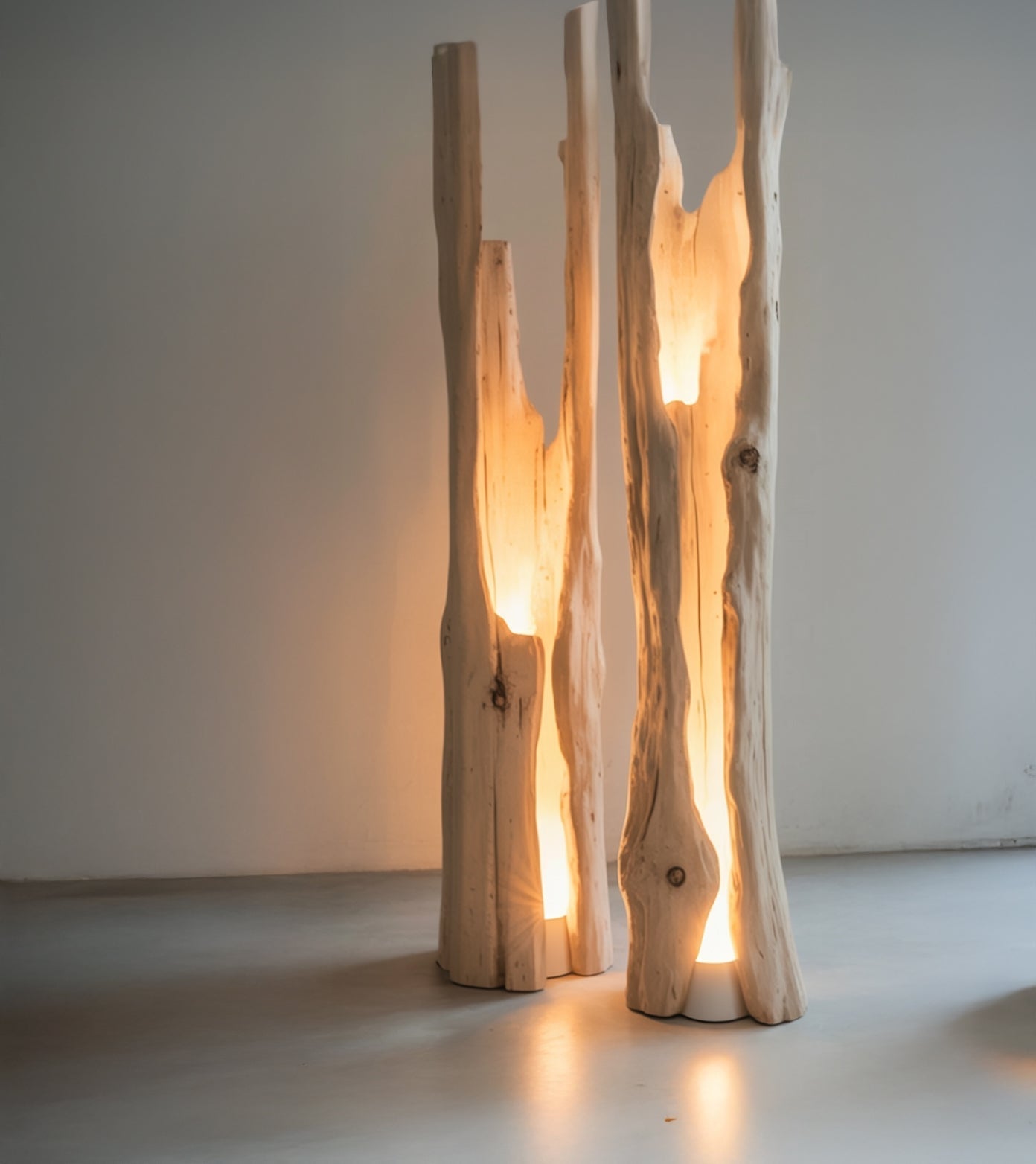
Each piece starts as raw, weathered wood, shaped by water, wind, and time long before any craftsman gets involved. The wood already has character: knots, curves, splits, bark remnants.
No two pieces look alike because no two pieces of driftwood are alike. That's not marketing speak. It's just how wood works.
At Ashdeco, our artisans in Vietnam select each piece of driftwood by hand, then spend hours cleaning, stabilizing, and wiring it into a functional lamp. The base isn't manufactured. It's assembled around the natural shape of the wood itself.
Some pieces twist upward. Others branch out sideways. The wood decides the form, and the craftsman works with it.
The result? A floor lamp that doubles as sculpture. Something guests actually walk up to and touch.

Why Driftwood Floor Lamps Are Having a Moment Right Now
If you've been scrolling Pinterest or Instagram home accounts lately, you've probably noticed: natural materials are everywhere. Raw wood, stone, linen, rattan. The polished chrome-and-glass look from five years ago feels dated.
Driftwood fits right into this shift. It reads "organic" without trying too hard. It works with Scandinavian minimalism, coastal farmhouse, wabi-sabi, even mid-century modern if the piece has the right lines.
The versatility comes from the wood itself: neutral tones, irregular shapes that somehow feel intentional in any setting.
There's also a practical angle. People are spending more on fewer pieces that actually mean something to them, rather than filling rooms with disposable furniture. A handcrafted driftwood lamp, one that took an artisan days to build, fits that mindset in a way a $40 Target floor lamp never will.


How Driftwood Floor Lamps Are Actually Made (The Real Process)
Most websites selling driftwood lamps won't tell you much about how they're made. Here's what actually goes into one, at least the way our workshop in Vietnam does it.
Sourcing the wood
Not all driftwood works for lamps. The pieces need to be structurally sound (no soft rot), large enough to serve as a lamp base (typically 4-6 feet for a floor lamp), and interesting enough in shape to stand on their own visually. Our craftsmen source from riverbeds and coastal areas, selecting pieces that have been naturally seasoned by water exposure.
Cleaning and stabilizing
Raw driftwood carries bacteria, salt, insects, and loose bark. Each piece gets scrubbed, sometimes pressure-washed, then kiln-dried to kill any remaining organisms. After that, the wood gets sealed with a clear coat that preserves the natural color and texture while preventing future deterioration. Skip this step and you'll have bugs in your living room within six months.
Wiring and assembly
This is the tricky part. The electrical wiring has to run through or alongside the wood without looking like an afterthought. Our artisans drill channels following the wood's natural grooves when possible, hiding the cord inside the piece. The socket and switch get mounted at the top, and the whole thing gets tested before shipping.
Total time per lamp: roughly 3-5 days from raw wood to finished piece. That's one lamp. Not a batch of 500.

Where to Put a Driftwood Floor Lamp (Room-by-Room)
Living room — next to the sofa
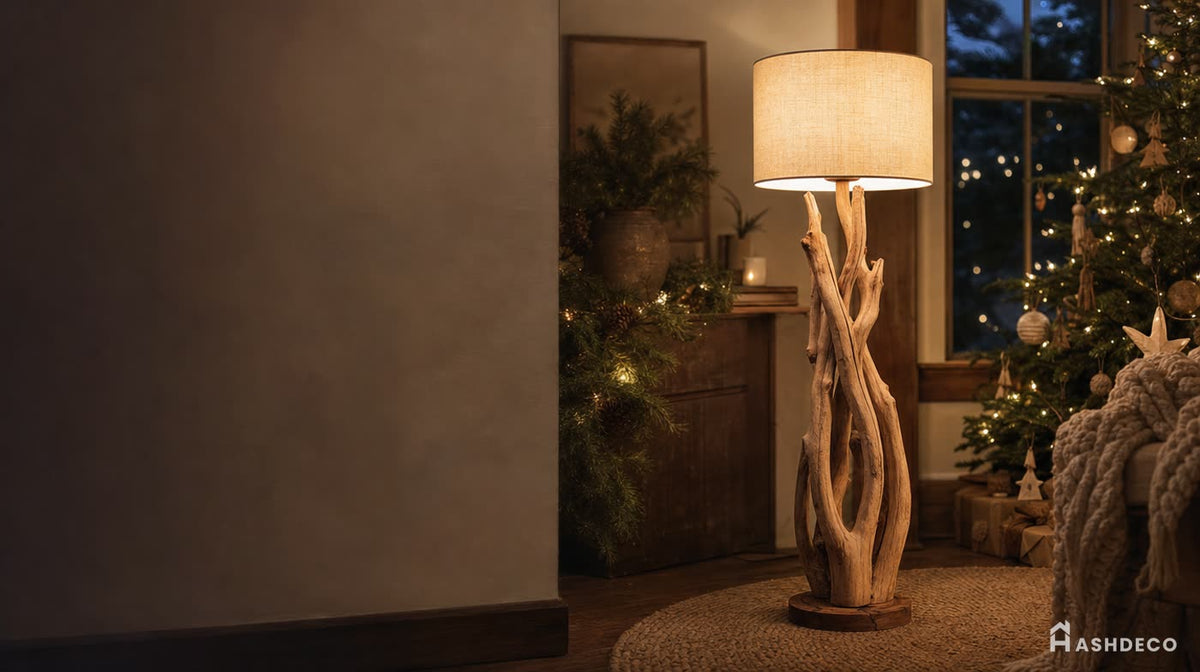
The most popular spot for good reason. A driftwood floor lamp beside a sofa creates a reading nook that feels warm without overhead lighting. The irregular shape of the wood adds visual weight to an otherwise plain corner. If your living room skews modern, the organic form of driftwood keeps things from feeling sterile.
Bedroom — beside the bed
Driftwood lamps throw softer, warmer light than most floor lamps because the natural wood absorbs and diffuses some of it. Paired with a linen shade, you get the kind of ambient glow that actually helps you wind down. Plus, the height of a floor lamp means the light source is above eye level when you're lying down, so there's less glare than a table lamp on a nightstand.
Entryway or hallway
A tall driftwood lamp in the entryway is an immediate conversation piece. Visitors see it before they see anything else. If your entryway is narrow, look for a piece with a vertical orientation rather than one that branches out wide. Pair it with a solid wood console table and you've got an entryway that looks like you hired a designer.
Home office
Floor lamps in offices tend to be boring by default. A driftwood piece breaks that pattern. Position it behind or beside your desk for task lighting that doesn't come from a fluorescent panel. The natural wood also helps soften a room full of screens and tech equipment.

Don't miss
These pieces qualify for 10% off orders over $2,000. Applied automatically at checkout.
10% off
Rustic Driftwood Floor Lamp with Shelves – Handmade Wooden Standing Light
From $2,350.00
10% off at checkout
 10% off
Rustic Driftwood Floor Lamp with Side Table – Solid Wood Standing Light with Rattan Shade
From $2,350.00
10% off at checkout
10% off
Rustic Driftwood Floor Lamp with Side Table – Solid Wood Standing Light with Rattan Shade
From $2,350.00
10% off at checkout
 10% off
Authentic Hand-Carved Solid Wood Twisted Floor Lamp - Sculptural Timber Column with Fabric Shade
From $2,280.00
10% off at checkout
10% off
Authentic Hand-Carved Solid Wood Twisted Floor Lamp - Sculptural Timber Column with Fabric Shade
From $2,280.00
10% off at checkout
 10% off
Authentic Hand-Carved Solid Wood Abstract Floor Lamp - Sculptural Biomorphic Accent Light
From $2,280.00
10% off at checkout
10% off
Authentic Hand-Carved Solid Wood Abstract Floor Lamp - Sculptural Biomorphic Accent Light
From $2,280.00
10% off at checkout
Driftwood Floor Lamp With Shelves: Two Functions, One Piece
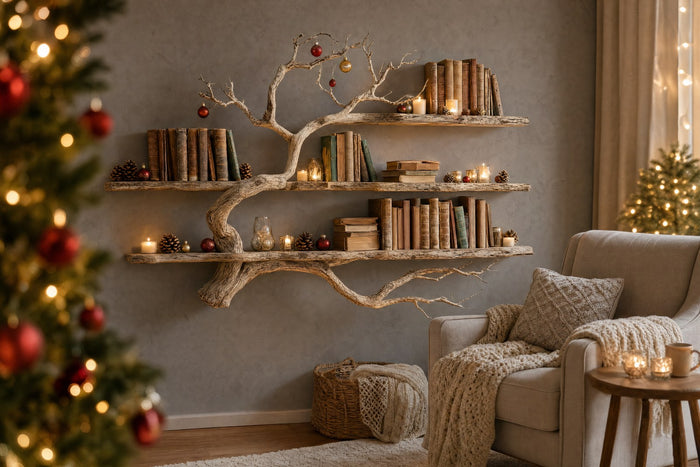
Some driftwood floor lamps come with built-in shelves, usually 2-3 small platforms integrated into the natural branches of the wood. Ashdeco's driftwood floor lamp with shelves uses the existing branch structure as shelf supports, so it looks intentional rather than bolted on.

These work especially well in small apartments where floor space is limited. You get ambient lighting, display storage (books, plants, a candle), and a sculptural accent from a single piece that takes up about 18 inches of floor space. That's less than most side tables.
Fair warning: the shelf surfaces follow the natural contour of the wood, so they're not perfectly flat. A small succulent or a paperback sits fine. A full coffee mug is a gamble. Know what you're working with.
Handcrafted vs. Factory-Made: What You're Actually Paying For
You can find "driftwood" floor lamps on Amazon for $80-$120. Worth knowing what that gets you.
Most budget driftwood lamps use composite materials shaped and painted to look like driftwood. Some use real wood pieces, but they're mass-cut into uniform shapes and assembled on an identical metal frame. The "driftwood" part is decorative, not structural.
A handcrafted driftwood floor lamp, the kind where the wood actually forms the body of the lamp, starts around $300-$500 and goes up from there depending on the size and complexity of the piece. Here's what that extra cost covers:
- Material selection: An artisan spent time finding the right piece of wood, not pulling from a pallet of pre-cut stock
- Structural work: The wood is load-bearing, not decorative. It needs to be properly stabilized and balanced
- One-off design: Your lamp doesn't have an identical twin in someone else's living room
- Longevity: Properly sealed solid wood lasts decades. Composite wood chips and warps within a few years, especially near a heat source
Is the handcrafted version worth 3-4x the price? If you're buying a lamp to fill a corner and forget about it, probably not. If you want a piece that people actually notice and that holds up for 15+ years, then yes.
How to Choose the Right Driftwood Floor Lamp for Your Space
A few things to think about before you buy:
Height. Floor lamps generally range from 58 to 72 inches. For reading light next to a sofa, aim for 60-64 inches, where the bottom of the shade should be roughly at eye level when seated.
Base width. Driftwood bases tend to be wider and more irregular than standard lamp bases. Measure your available floor space and add 4-6 inches of buffer on each side. You don't want the lamp competing with furniture for space.
Shade style. Linen and burlap shades pair naturally with driftwood. Drum shades (wide, cylindrical) give a modern look. Tapered shades lean more traditional.
White or cream shades let more light through; darker shades create more focused, moody lighting.
Light direction. Some driftwood lamps point the light upward (ambient), some point it down (reading), and some do both. Think about what you'll actually use the lamp for before getting drawn in by how the base looks.
Wood tone. Driftwood ranges from nearly white (sun-bleached coastal pieces) to dark brown (river-sourced hardwoods). Match the wood tone to your existing furniture, or go deliberately contrasting. A pale driftwood lamp against dark walnut furniture can look striking.
Caring for a Driftwood Floor Lamp
Good news: driftwood lamps are low maintenance. The wood is already weathered, so it's not going to change much over time. A few basics:
- Dust with a dry soft cloth every couple weeks. Don't use wet cloths or spray cleaners, as moisture can penetrate the seal over time.
- Keep away from direct heat sources (radiators, heating vents). The wood is stable but extreme dry heat can cause cracking.
- If the finish starts looking dull after several years, a light coat of furniture wax brings back the natural luster. Don't varnish over the existing seal.
- Check the wiring annually, same as you would any lamp. Driftwood doesn't affect electrical safety, but it's good practice.
Frequently Asked Questions
Are driftwood floor lamps safe?
Yes, when properly built. The wood is kiln-dried to remove moisture and sealed to prevent deterioration. Electrical wiring runs through drilled channels or heat-resistant conduit along the wood surface.
Any reputable maker (Ashdeco included) tests every lamp before shipping. The key safety factor is using the correct wattage bulb. LED bulbs are ideal because they produce minimal heat.
How tall should a driftwood floor lamp be?
Most driftwood floor lamps range from 58 to 72 inches. For a sofa reading lamp, 60-64 inches works best, where the shade should sit at roughly eye level when you're seated. For ambient lighting, any height that fits the space works.
Can I use a driftwood floor lamp outdoors?
Not recommended for permanent outdoor use. Even sealed driftwood will degrade with constant exposure to rain and UV light. Covered porches or screened sunrooms work if the lamp isn't in direct rain, but bring it inside during storms. For true outdoor lighting, look at weather-rated fixtures instead.
How do I clean driftwood?
Dry dusting with a soft cloth handles regular maintenance. For deeper cleaning, use a slightly damp (not wet) cloth and let the wood air-dry completely before turning the lamp on. Avoid spray cleaners, furniture polish, and anything with silicone. These can damage the sealant and leave residue in the wood's natural grooves.
Why are handcrafted driftwood lamps more expensive than store-bought ones?
Time, mostly. A factory lamp takes minutes to assemble from pre-cut parts. A handcrafted driftwood lamp takes 3-5 days, from sourcing and cleaning the wood to wiring, balancing, and finishing.
Each piece is one-of-a-kind, which means the artisan can't rely on templates or repetitive motions. You're paying for craftsmanship and uniqueness, not a brand name.
Find Your Piece
A driftwood floor lamp isn't just lighting. It's a piece of wood that spent years being shaped by natural forces, then got a second life as something functional and beautiful in your home. Every scratch, curve, and knot tells part of that story.
Ashdeco's handcrafted driftwood floor lamps are made by Vietnamese artisans who work with the wood's natural form rather than forcing it into a mold. Each one is different.
Browse the collection and see which piece speaks to you. If you need help picking the right size or shade for your space, reach out. We're happy to talk wood.