Can a 90s Living Room Work in a Small Apartment? (Square-Foot Test)
The 90s living room aesthetic was never designed for 400-square-foot studio apartments. It was born in an era of suburban family homes - sectionals the size of a small car, entertainment centers swallowing entire walls, and coffee tables you could practically eat dinner on (and people did).
So when someone asks whether a 90s living room can work in a small apartment, the honest answer is: yes, but not if you try to recreate a 1995 suburban den in a 400-square-foot space. The warmth, the wood tones, the tactile comfort of 90s interior design - those translate beautifully. The oversized furniture, the full matching sets, the cluttered display shelves - those don't.
This guide is about making it work in a small space specifically. Not general "how to mix 90s furniture" advice you've seen before - actual square-foot math, layout strategies, and furniture sizing rules so your 90s aesthetic living room feels intentional, not crammed.

Will a 90s Living Room Actually Work in a Small Apartment?
Short answer: yes. The 90s design aesthetic had something modern minimalist apartments desperately lack - warmth. That warm honey oak coffee table, the chunky knit throw, the amber glow from a ceramic table lamp, the way natural wood grain catches afternoon light - these are the elements worth preserving.
The trick is treating the 90s aesthetic as a mood, not a museum recreation. You're not rebuilding your grandparents' den. You're pulling the feeling - tactile, grounded, lived-in - and fitting it into a space that demands every inch count.
Browse the full 90s aesthetic collection to see which pieces fit the compact-scale approach described below.

The Real Problem Isn't the Style - It's the Square Footage Math
Here's the reality check most 90s design articles skip: furniture footprint.
A typical 1990s living room setup included:
- 3-seat sofa: ~87 in wide x 35 in deep - ~21 sq ft
- Loveseat: ~59 in wide x 35 in deep - ~14.5 sq ft
- Coffee table: ~47 in x 24 in - ~7.75 sq ft
- Two end tables: ~20 in x 20 in each - ~5.4 sq ft
- Entertainment center: ~71 in wide x 18 in deep - ~8.7 sq ft
Total furniture footprint: ~57.5 sq ft - and that's before walking clearance.
Now put that in a small apartment living zone of maybe 110-160 sq ft. Your furniture alone eats 35-50% of the floor. Add the 24-inch minimum walking path around each piece, and you've got no usable space left.
The solution isn't abandoning the 90s room aesthetic entirely. It's scaling down the furniture while keeping the DNA: warm wood, chunky proportions (just smaller ones), natural textures, and that unpolished, lived-in character.
3 Layout Strategies for a 90s Living Room Under 430 Square Feet
Strategy 1: The Corner Anchor (L-Shape Layout for Rectangular Rooms)
Best for: rectangular living rooms 10 ft x 13 ft or larger
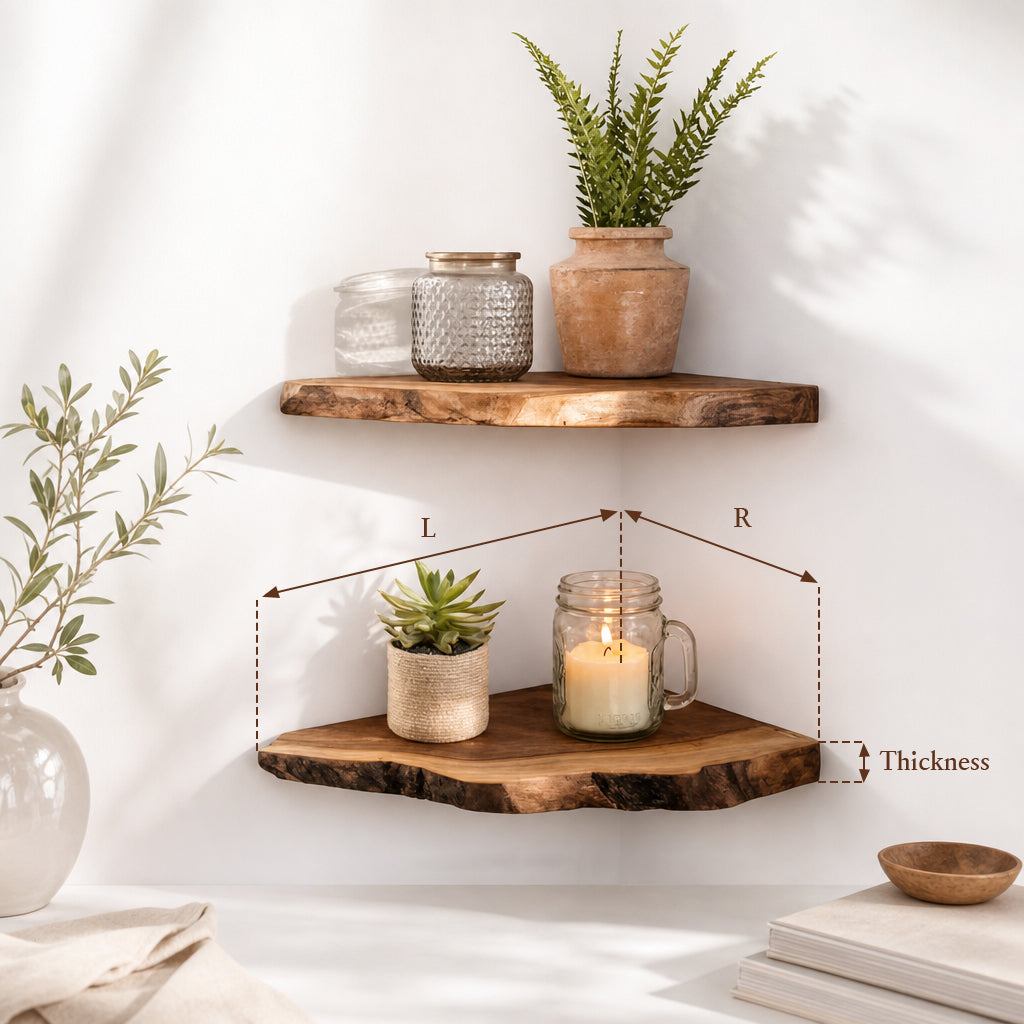
Push your main seating - a compact 90s-style loveseat or apartment sofa - into the corner. Place a slim coffee table in front (depth no more than 18 in). Mount a floating shelf on the longest available wall for display and storage.
The math:
- Loveseat (59 in x 31 in) in corner = ~13 sq ft
- Coffee table (31 in x 16 in) in front = ~3.5 sq ft
- Walking clearance along open wall: 24-35 in pathway = clear access
- Floating shelf on wall = zero floor footprint
This layout gives you the 90s living room aesthetic - warm wood surface, cozy seating, display shelf for curated objects - while leaving 60-70% of the floor open. That's the difference between a room that breathes and one that feels like storage.
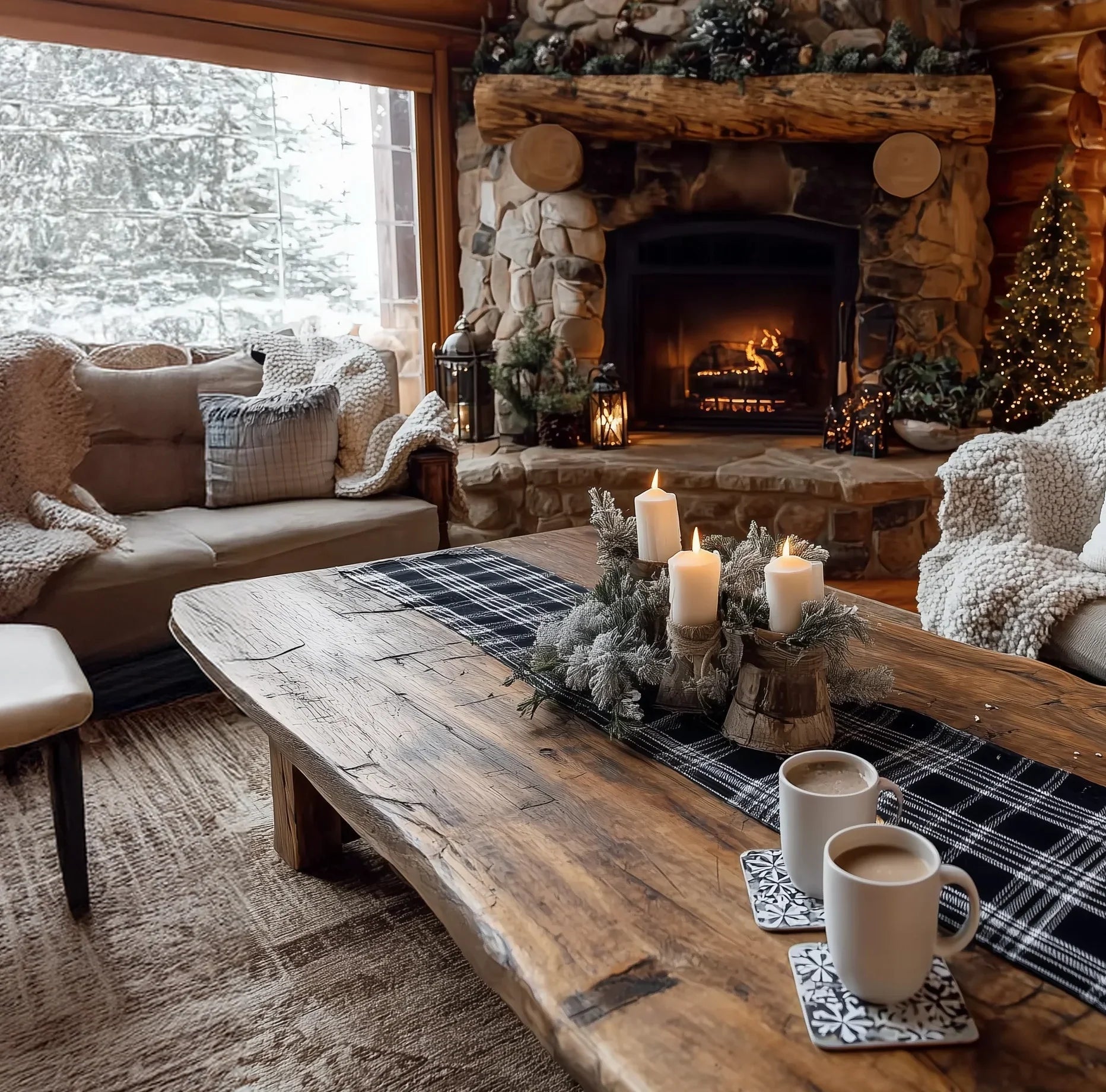
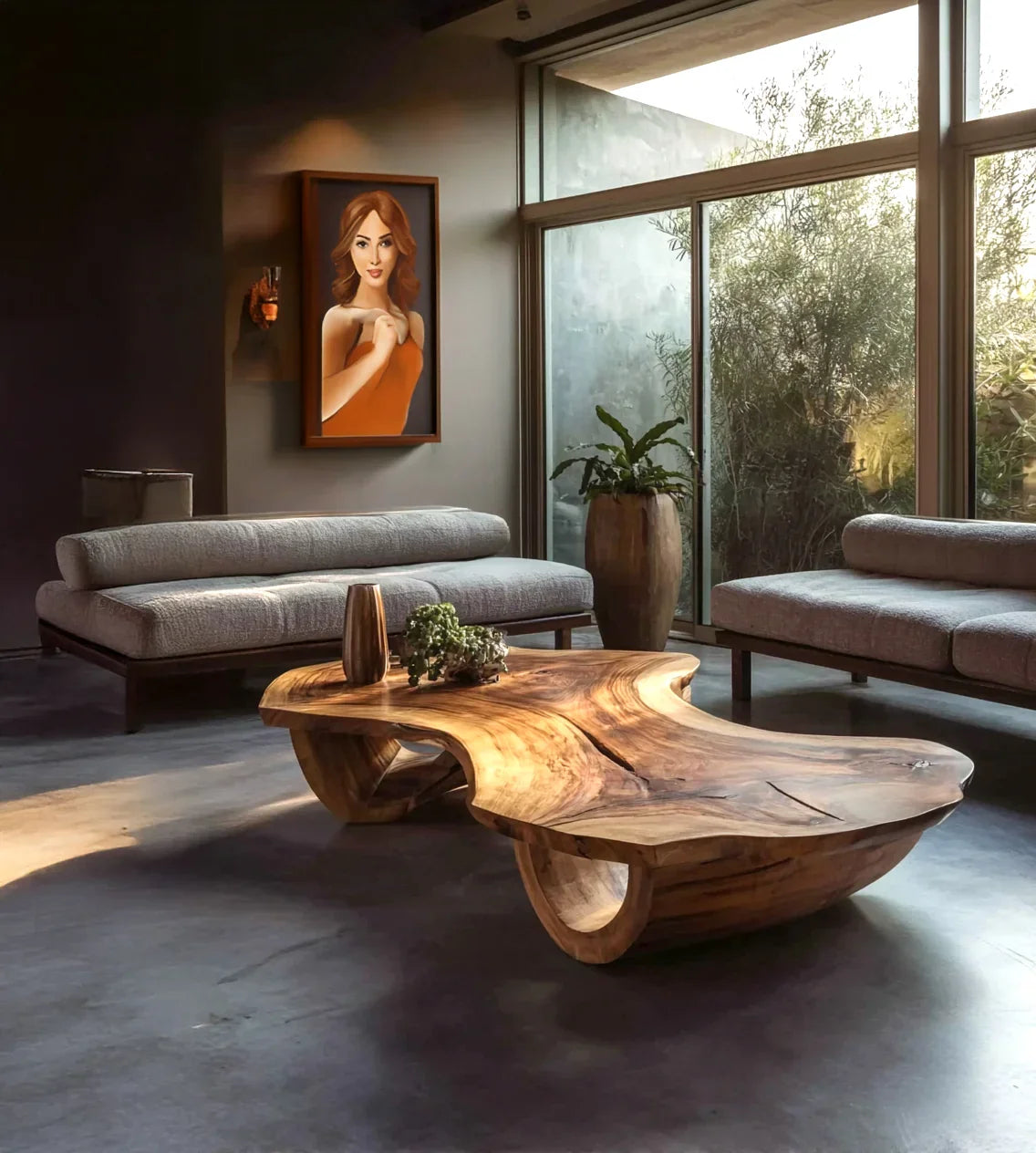
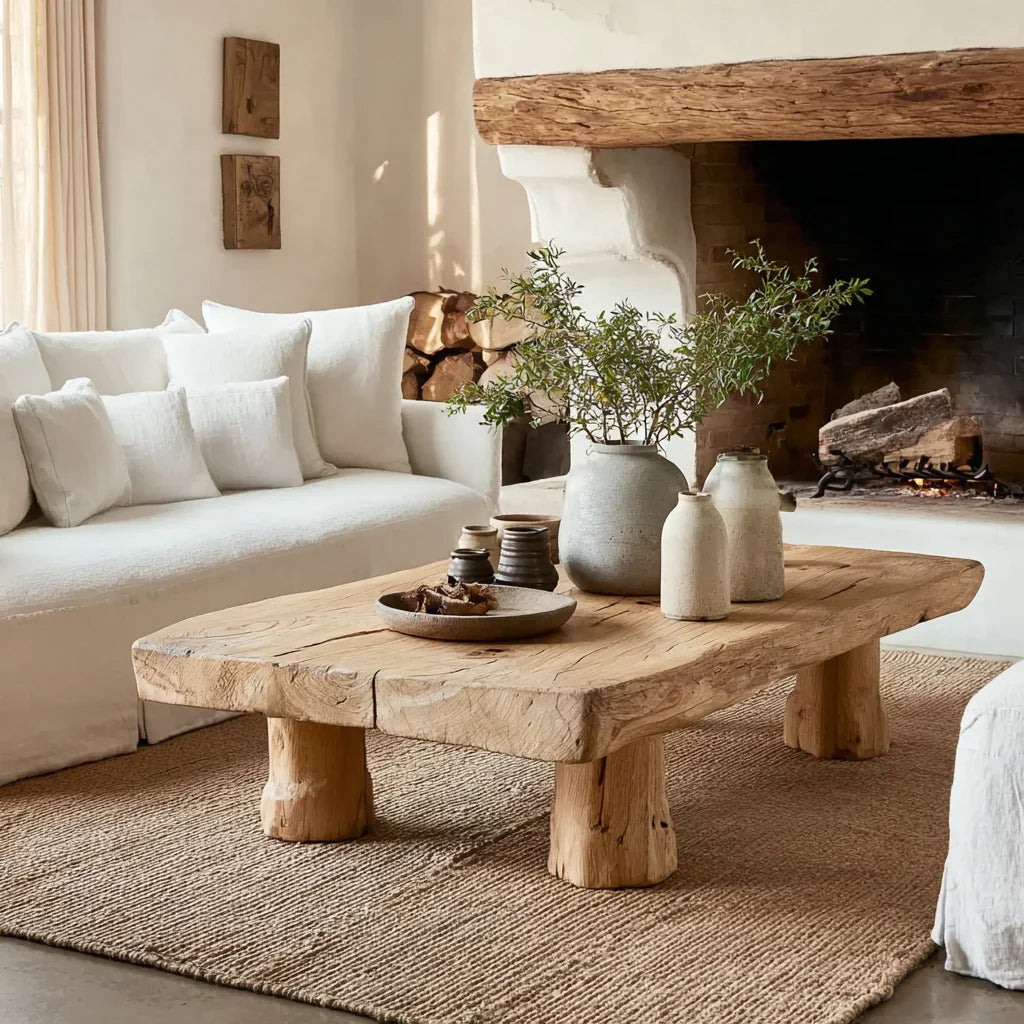
A live edge coffee table anchors this setup perfectly. Ashdeco's 90s aesthetic collection includes handcrafted solid wood coffee tables that bring that warm, tactile 90s furniture feel in proportions that fit smaller spaces.

Strategy 2: The Split Zone (Studio Apartment - Living + Dining in One Room)
Best for: open-plan studios where the living area shares space with dining or sleeping
Use a narrow console table or floating shelf as a visual divider. Place your 90s couch facing one direction (toward the TV or window), and a small dining table or desk behind it.
The math:
- Visual divider (console or shelf): ~12 in deep x 31-39 in wide = ~2.6-3.2 sq ft
- Living zone: 6.5-10 ft deep from divider wall
- Dining zone: 5-6.5 ft deep behind divider
- Minimum clear passage between zones: 31 in
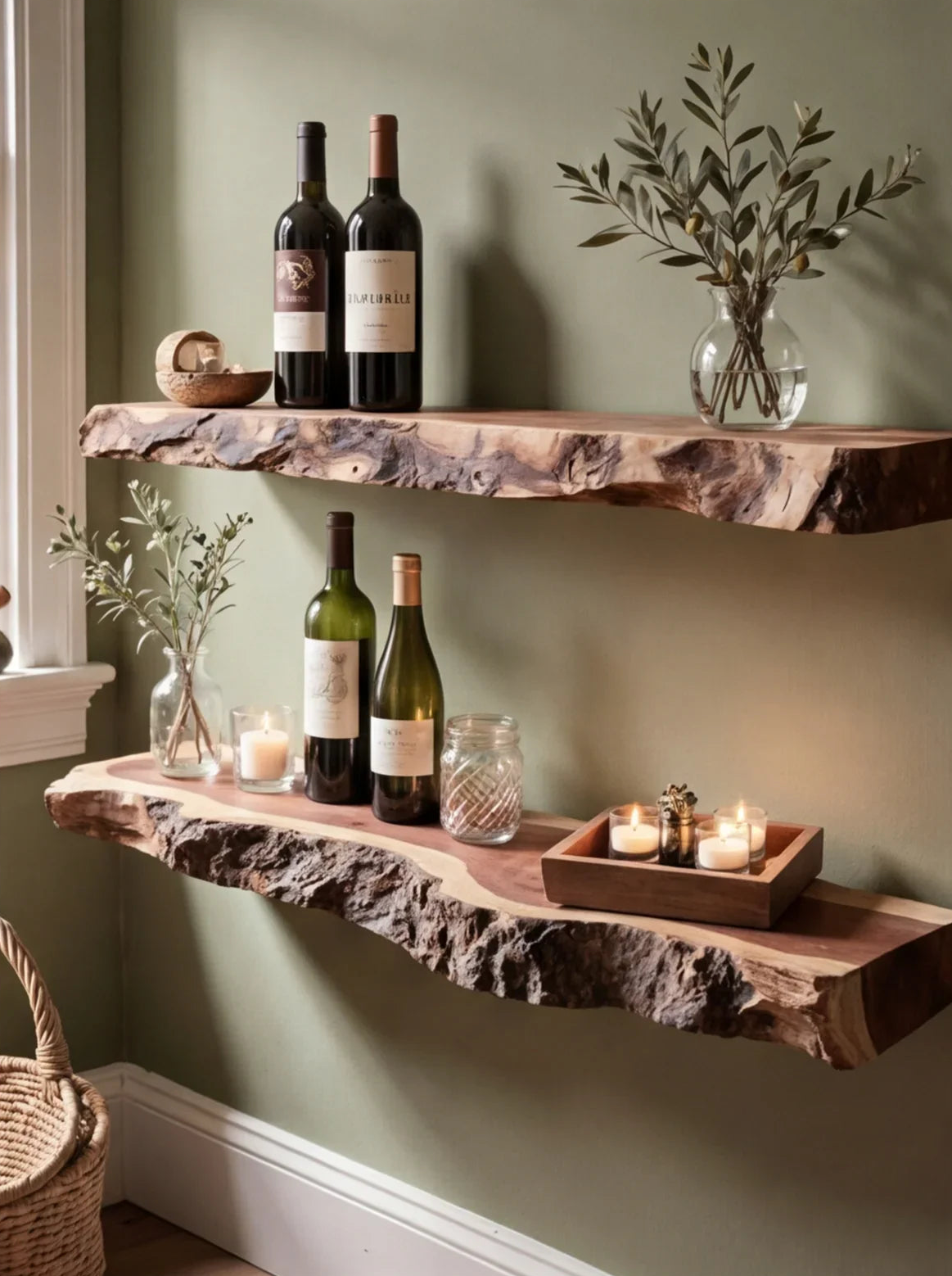
The key here is the divider - it creates psychological separation without a physical wall. A floating bar shelf works beautifully here: it defines the boundary, adds 90s warm wood character, and gives you display space for books, candles, or a small plant - the kind of layered, textured styling that made 90s room aesthetic feel so inviting.

Strategy 3: The Wall-Hugger (Ultra-Narrow Living Rooms Under 8 Feet Wide)
Best for: long, narrow rooms common in older apartment buildings
Every piece of furniture goes against a wall. The center of the room stays completely open. A slim-profile coffee table sits between the sofa and the opposite wall - but the depth is critical: no more than 18 inches, so the remaining walking path stays above 24 inches.
The math:
- Room width: 8 ft 2 in (98 in)
- Sofa depth: 31 in against one wall
- Coffee table depth: 16 in against opposite wall
- Remaining passage: 98 - 31 - 16 = 51 in - plenty of clearance
If the room is even narrower - say 7 ft 3 in - you may need to skip the coffee table entirely and use a wall-mounted shelf at sofa-arm height as a surface for your drink or remote. Wall-mounted furniture is your best friend in ultra-narrow spaces: it gives you the 90s design aesthetic warmth without stealing any floor space at all.
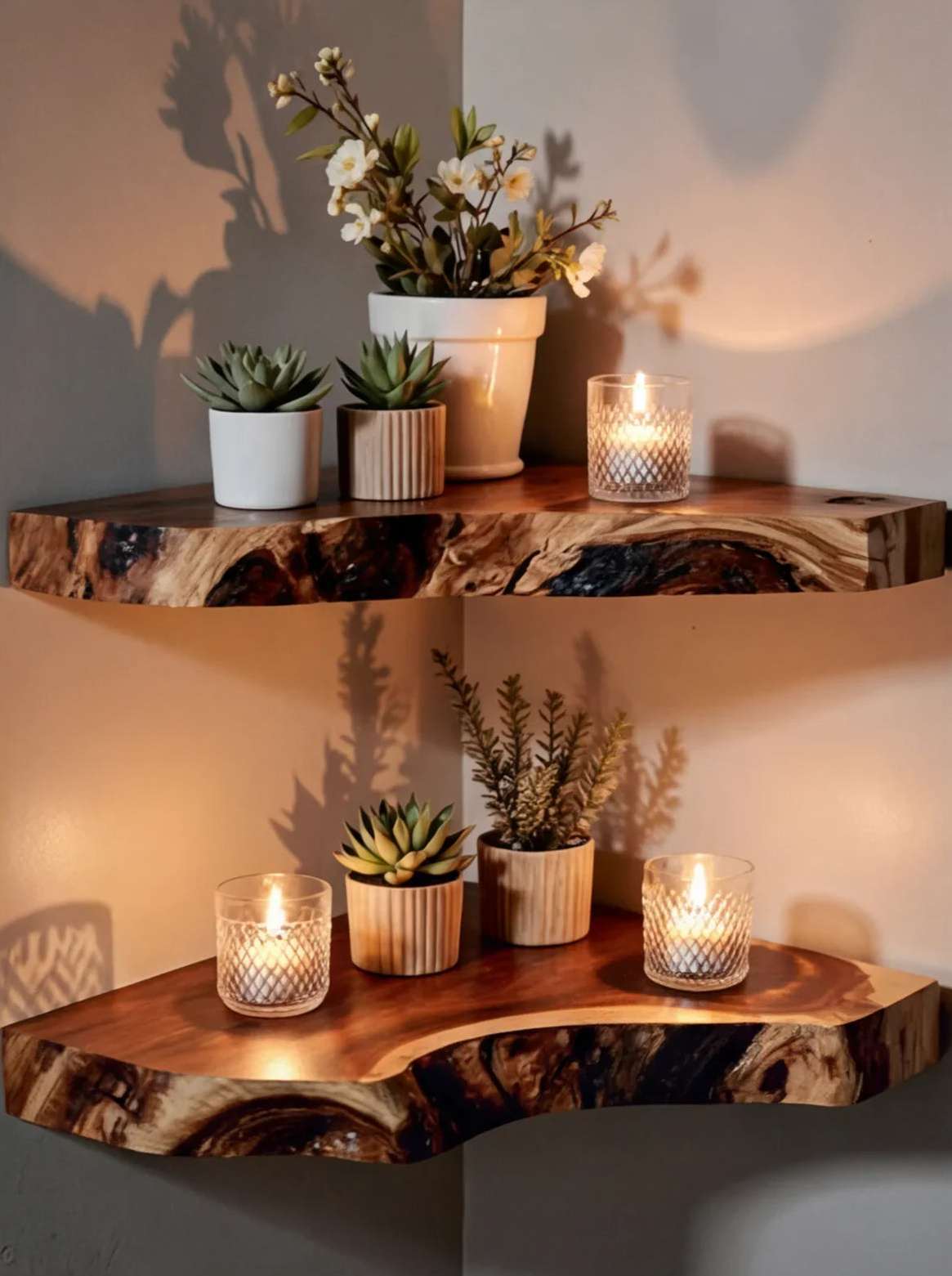
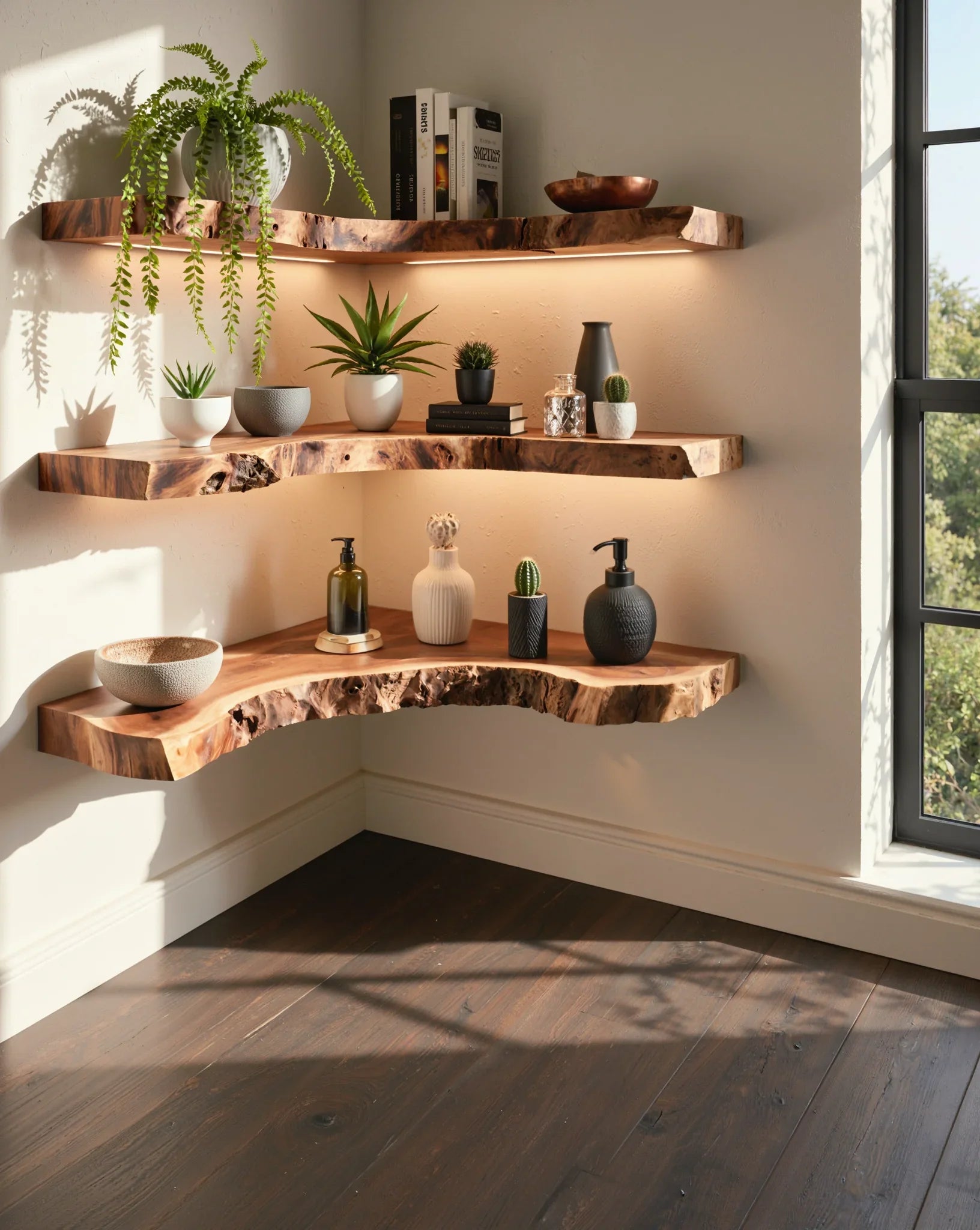
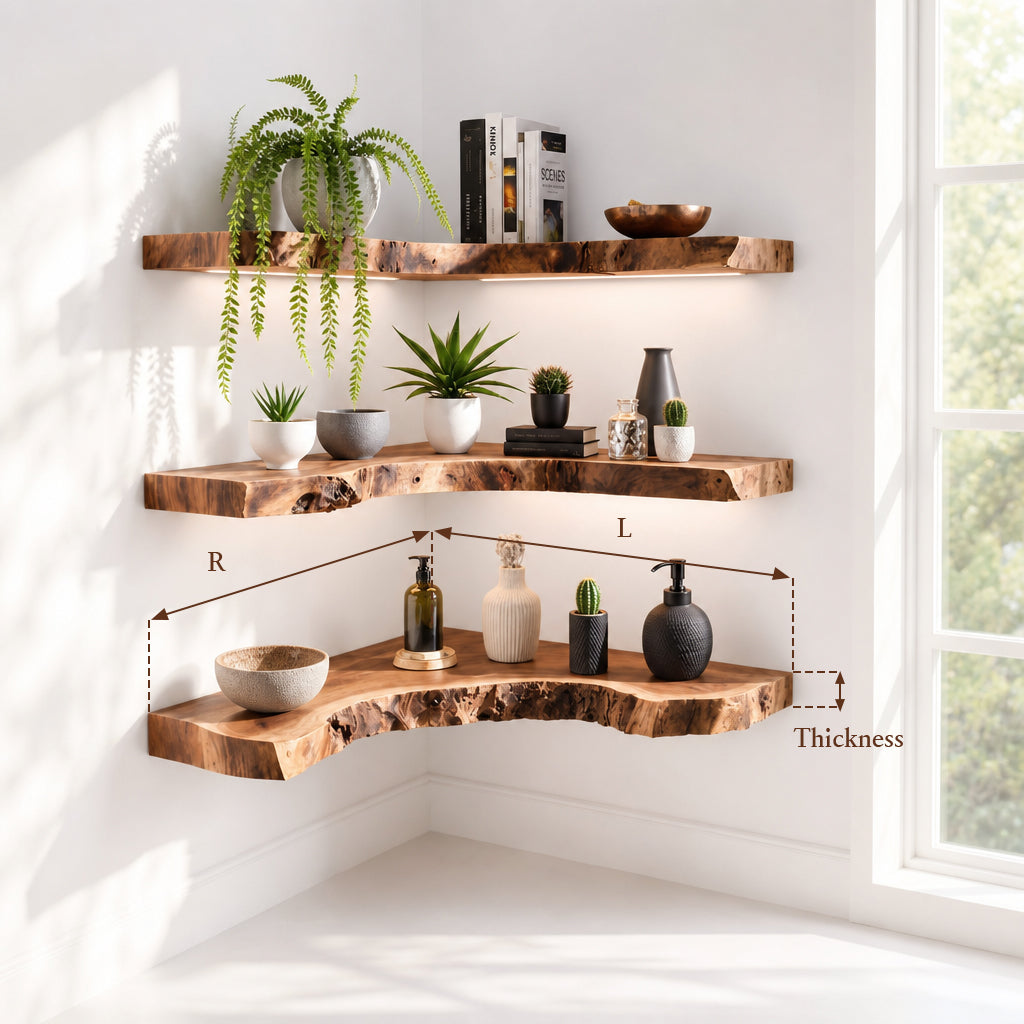
Ashdeco's floating shelves come in multiple sizes and wood species - walnut for rich dark tones, acacia for striking grain patterns - and they mount flush to the wall with concealed brackets, taking up zero floor space.

Furniture Sizing Guide for Small 90s Spaces
Getting the 90s retro furniture look in a small apartment comes down to choosing the right scale. Here's a quick reference for maximum dimensions that still leave walking clearance in a typical small living room (110-160 sq ft):
| Piece | Max Width | Max Depth | Notes |
|---|---|---|---|
| Sofa / loveseat | 59-71 in | 31 in | Skip the 87-in+ full sofa |
| Coffee table | 35-39 in | 16-18 in | Slim depth is critical |
| Side table | 16-20 in | 16 in | Only if space allows |
| Bookshelf / shelf unit | 24 in wide | 12 in deep | Go tall (71 in), not wide |
| Floor lamp | 12 in base diameter | - | Corner placement, not center |
| Console / divider | 31-39 in | 10-12 in | Visual zone separator |
A few notes on why these numbers matter:
The 24-inch walking rule is the minimum comfortable passage for one person. If your layout creates any gap narrower than that, you'll feel it every time you squeeze past the coffee table. Aim for 35 inches where possible.
Tall and narrow beats short and wide in small spaces. A shelf that's 71 inches tall and 24 inches wide gives you the same storage as a 35-inch-tall, 47-inch-wide unit - but uses half the floor space and draws the eye upward, making the room feel taller. This is a classic small-space trick that fits perfectly with 90s home decor sensibility, where tall display shelves full of books, records, and objects were everywhere.
Corner placement is free real estate. A floor lamp or accent chair in the corner adds character without reducing any walking path. Corners are dead space in a small room - use them.
For pieces that fit these proportions while keeping the 90s furniture DNA - live edge details, solid hardwood construction, warm wood tones - the 90s aesthetic collection includes floating shelves, coffee tables, and driftwood floor lamps all handcrafted to work in real homes, not just showroom floors.

Color and Material Rules for Small 90s Rooms
The 1990s interior design palette was warm - honey oak, amber, walnut, olive green, burnt orange, deep burgundy. But in a small apartment, warmth and dark don't mean the same thing.
Rule: One warm wood anchor, not a wood-walled cave.
Pick one or two pieces in warm wood - a coffee table, a floating shelf - and let them be the warmth anchors. If every surface in a small room is wood-toned (wood floor + wood table + wood shelf + wood cabinet), the space shrinks visually by a noticeable margin. The contrast between warm wood and lighter walls is what makes the wood feel special, not suffocating.
Rule: Jewel-tone accent on ONE item, not the walls.
The 90s loved jewel tones - emerald, sapphire, ruby. In a small living room, painting the walls deep burgundy will make the ceiling feel lower. Instead, put that jewel tone on one thing: a throw pillow, a small accent chair, or a ceramic lamp. The 90s couch you're building around can stay neutral - the accent piece pops, the room stays bright.
Rule: Natural texture over pattern density.
90s decor was pattern-heavy - floral upholstery, geometric rugs, printed curtains. In a small space, layering three bold patterns creates visual noise that makes the room feel smaller. Instead, pick one pattern (a rug or a throw) and pair it with solid-color pieces. The tactile, natural textures of 90s design - chunky knit, raw wood grain, woven rattan - give you the era's feeling without the visual clutter.

What Not to Do in a Small 90s Living Room
Full matching furniture sets. A sofa + loveseat + coffee table + end tables + entertainment center in matching wood = a showroom, not a home. In a small space, it's suffocating. Pick one hero piece, build around it.
Oversized sectionals in rooms under 130 sq ft. If your sectional takes up more than half the room, it's too big. Period. A compact 59-71 in loveseat gives you the 90s seating comfort without consuming every available inch.
Heavy drapes plus dark walls plus dark floors. This combination absorbs light and shrinks perceived space by an estimated 25-30%. If you love the moody 90s vibe, get it from furniture and textiles, not paint and curtains.
More than three decorative objects on visible surfaces. The 90s aesthetic was layered and collected - but a small apartment shelf with twelve objects looks cluttered, not curated. Pick three: a small plant, a book, one sculptural piece. That's the 90s feeling without the 90s hoarding.
Small Apartment 90s Living Room Checklist
Before you buy anything, run through this:
- Measure the room first. Know your exact dimensions - length, width, door swing radius, window placement.
- Pick one anchor seating piece. A compact 90s-style sofa or loveseat (59-71 in max width).
- Choose one warm wood surface. A live edge coffee table or a solid wood floating shelf - this is your 90s home decor anchor.
- Add one lighting statement. A floor lamp in the corner or a ceramic table lamp - warm light, not overhead.
- Include one or two textile accents. A 90s-pattern throw or a jewel-tone pillow - texture without bulk.
- Verify walking clearance. Every pathway at least 24 inches minimum. If it's less, remove something.
- Count visible decorative objects. Three max per surface. Edit before you accumulate.
When you follow these steps, you get the 90s living room aesthetic - warm, textured, personal - in a space that actually functions. Not a recreation of 1995. A translation of it.
Frequently Asked Questions
What's the smallest room a 90s living room aesthetic can actually work in?
Around 100-110 sq ft is the practical floor. Below that, you're better off picking one anchor piece (a coffee table or a floating shelf) and skipping the full seating-plus-storage layout entirely. The Wall-Hugger strategy above is built for exactly this size range.
Can I fit a 90s-style sectional in a small apartment?
Usually not without it swallowing the room. A full sectional easily runs 100+ inches on the long side - more than half the width of a typical small living room. Swap it for a compact loveseat (59-71 in) plus one accent chair, which gets you the same lounging capacity in a fraction of the footprint.
How much of my floor should furniture actually cover?
Aim for 35-50% of the floor at most, walking clearance included. If you tape out your furniture footprint (see the math above) and it eats more than half the room, something needs to be scaled down or cut.
Does a small 90s living room have to avoid dark colors completely?
No - dark and jewel tones work fine in small doses. The rule isn't "no dark colors," it's "no dark colors on large surfaces." Keep walls and floors light, and let one item (a chair, a lamp, a throw) carry the deep burgundy or emerald. Full dark walls plus dark furniture is what actually shrinks a small room.
What's the single best piece to start with?
A warm wood coffee table or a floating shelf. Both give you the honey-oak, tactile warmth that defines the era, and neither commits you to a full room overhaul - you can build the rest of the space around just one of these.
Can a studio apartment pull off the 90s living room aesthetic without looking cluttered?
Yes, if you treat the whole studio as one zone instead of trying to replicate a separate living room. Use the Split Zone strategy above - a single divider piece (console or floating shelf) does double duty defining the space and carrying the 90s warmth, without adding extra furniture the room doesn't have space for.

Find pieces that fit this approach.
Handcrafted solid wood floating shelves, live edge coffee tables, and driftwood floor lamps - all built to bring that warm, grounded 90s feeling into real homes, not just Pinterest boards.
Shop the 90s Aesthetic Collection ->