
Quick view
- First, decide what a record player stand with speakers means in your room
- Checklist item 1: Make sure your record player stand with speakers is wide enough
- Checklist item 2: Depth can ruin a record player stand with speakers faster than width
- Checklist item 3: Watch vibration before you think about looks
- Checklist item 4: Check weight capacity as a full system
- Checklist item 5: Cable management matters more than buyers expect
- Checklist item 6: Think about speaker height and ear level
- A quick sizing reality check for a record player stand with speakers
- Real Ashdeco pieces worth comparing
- When separate speaker stands make more sense than a record player stand with speakers
- My plain-English buying advice
- Final checklist for choosing a record player stand with speakers
Shop this guide
Handcrafted Floating Shelves, made to order in solid wood.
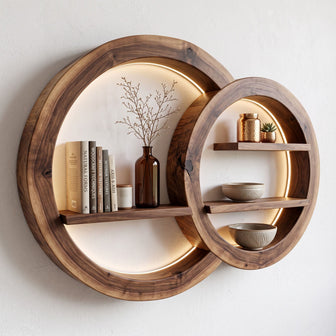
 Sculptural Overlapping Circular Solid Wood Wall Shelf with Multi Tier Display
From $1,354.00
Sculptural Overlapping Circular Solid Wood Wall Shelf with Multi Tier Display
From $1,354.00
 Mountain Landscape Relief Solid Wood Floating Shelf Live Edge Display Ledge
From $1,154.00
Mountain Landscape Relief Solid Wood Floating Shelf Live Edge Display Ledge
From $1,154.00
 Enchanted Forest Circular Wall Shelf - Round Carved Timber Mushroom Portal
From $1,023.00
Enchanted Forest Circular Wall Shelf - Round Carved Timber Mushroom Portal
From $1,023.00
 Cottagecore Arched Wood Wall Niche - Hand-Carved Fairy Mushroom Alcove Shelf
From $1,356.00
Cottagecore Arched Wood Wall Niche - Hand-Carved Fairy Mushroom Alcove Shelf
From $1,356.00
 Sculptural Hand-Carved Mushroom Solid Wood Corner Floating Shelf & Biomorphic Wall Display Ledge
From $345.00
Sculptural Hand-Carved Mushroom Solid Wood Corner Floating Shelf & Biomorphic Wall Display Ledge
From $345.00
 Sculptural Hand-Carved Mushroom Solid Wood Floating Shelves & Biomorphic Wall Display Ledges
From $345.00
Sculptural Hand-Carved Mushroom Solid Wood Floating Shelves & Biomorphic Wall Display Ledges
From $345.00
A lot of people shopping for a record player stand with speakers picture one clean setup: turntable in the middle, speakers nearby, records below, everything in one spot. I get the appeal. It looks tidy and saves floor space while making a listening corner feel finished.
Still, a nice photo can hide a bad setup.
If the stand is too narrow, your speakers end up pressed against the turntable. If the top is too shallow, the speaker feet sit too close to the edge. If the cabinet is sturdy but the layout is wrong, vibration can travel into the stylus and muddy the sound. That matters more than most buyers expect.
So this guide is a practical buyer checklist for anyone comparing a record player stand with speakers. No roundup. No generic best-of list. Just the things worth checking before you spend money on a turntable station that also has to work with speakers.
If you want to browse Ashdeco's current styles first, start here: Record Player Stands.
First, decide what a record player stand with speakers means in your room
This is where buyers get tripped up.
Sometimes a record player stand with speakers means both speakers sit on the top surface. Sometimes it means the stand has side compartments or lower shelves that can hold speakers. Sometimes it means the stand anchors the setup while the speakers sit on their own stands nearby.
Those layouts ask very different things from the furniture.
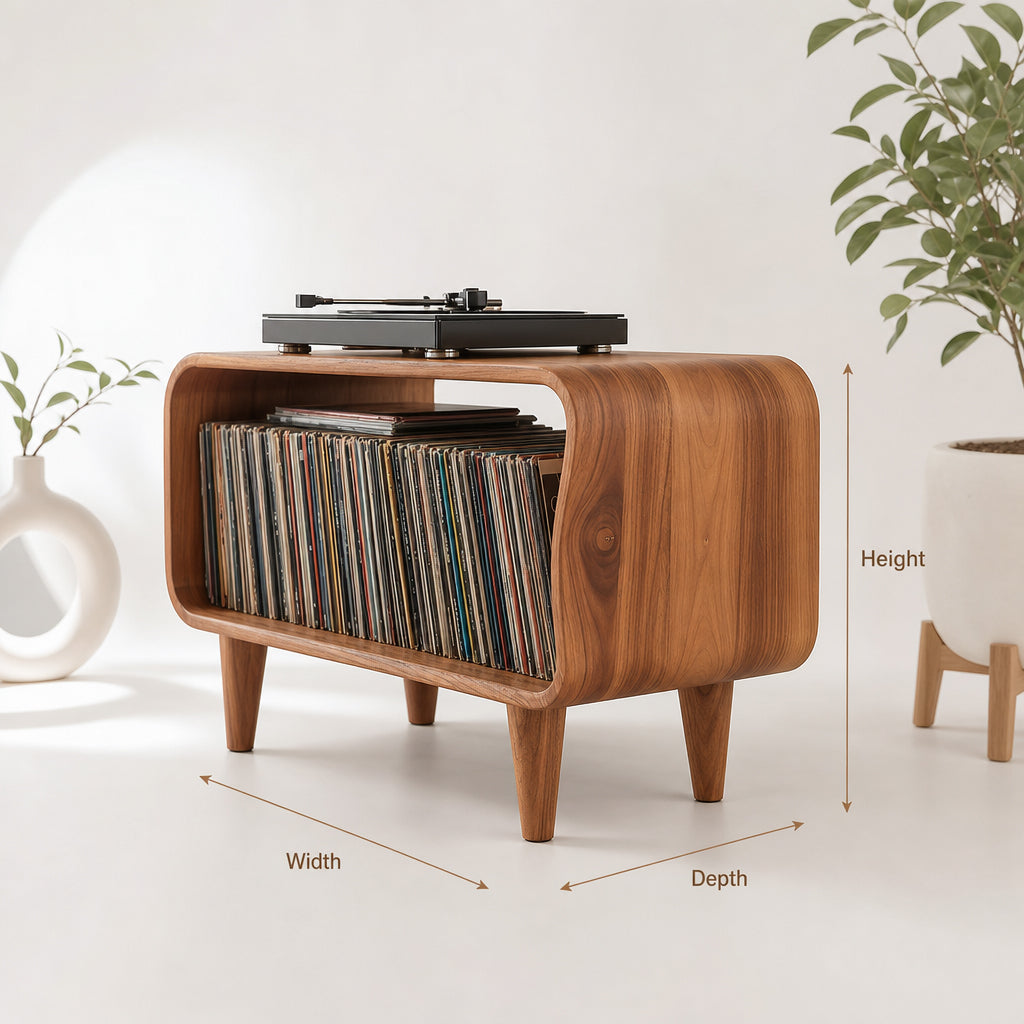
For example, Ashdeco sizes on current product pages include widths such as 28, 32, 39, 40, plus 47 inches, while many stands are 14 inches deep and about 22 to 26 inches high. Those dimensions are useful, though they do not mean every size works for every speaker setup.
A 14-inch depth is usually fine for many turntables. It can get tight for larger bookshelf speakers, especially if the cabinet sits close to the wall and the speakers need some breathing room behind them.
That is why it helps to think about the whole setup before you fall for a finish or a storage layout.
Checklist item 1: Make sure your record player stand with speakers is wide enough
Width is the first filter.
Many turntables need roughly 17 to 18 inches of surface width. A pair of bookshelf speakers can easily need another 10 to 14 inches each, and sometimes more once you account for a little space between components. Put that together and a narrow stand can turn into a cramped setup fast.
Here is the simple way to check it:
- Measure your turntable footprint
- Measure each speaker footprint
- Add a little gap between components
- Add extra space if your speaker cables stick straight out
If your stand is 28 inches wide, it may hold the turntable well, but full left-right speaker placement on the same top is usually a stretch. At 39 or 40 inches, you have more options, though speaker size still matters. At 47 inches, you are finally in a range where some buyers can fit a turntable and compact speakers on top without it looking forced.
Even then, "it fits" and "it fits well" are different things.
If the speakers sit right beside the turntable with almost no air between them, the setup may look packed and sound worse than expected. Give yourself margin. Furniture always feels smaller once the gear is actually in place.


Checklist item 2: Depth can ruin a record player stand with speakers faster than width
Depth gets less attention than width, but it matters just as much.
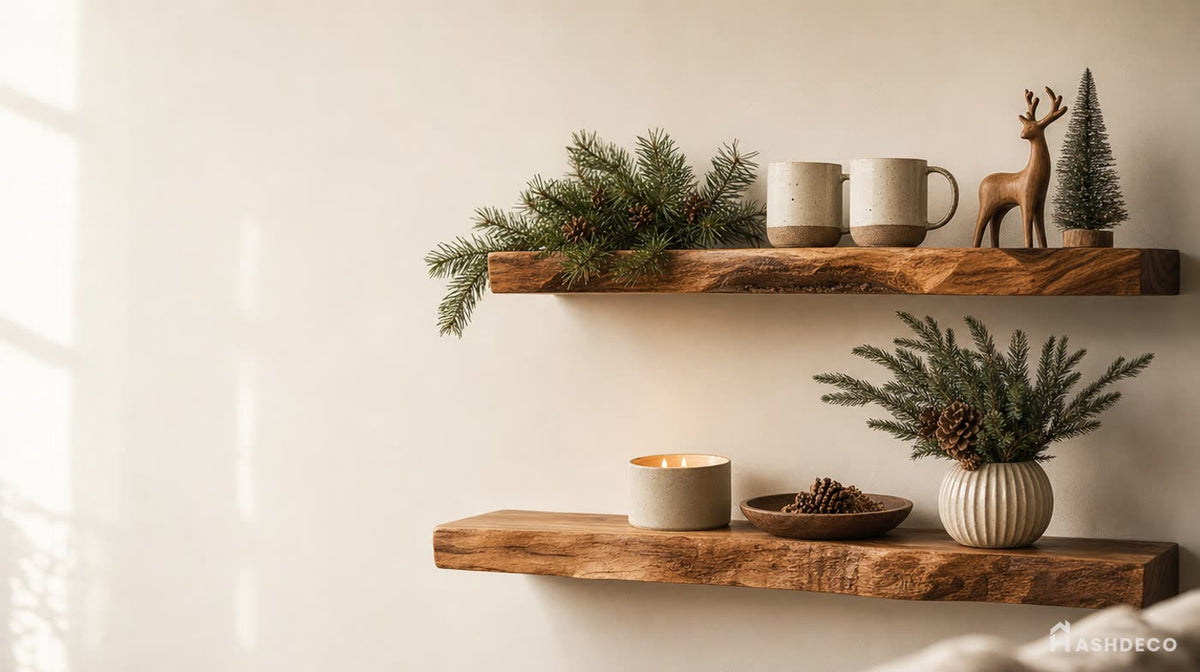
Several Ashdeco stands in this category are 14 inches deep. That works for many record player setups, especially if your turntable has a compact base. The catch is speaker placement.
A lot of bookshelf speakers are deeper than people realize. Some are around 9 to 11 inches deep. Others push past that. Once you add a rear cable connection, and sometimes a rear bass port, your real depth need grows.
Here is what I would check before buying:
- Speaker cabinet depth
- Plug clearance behind the speaker
- Distance from the wall
- Whether the speaker has a rear port
If your speakers are deep and rear-ported, placing them on a 14-inch-deep stand right against the wall can cause two problems at once. The speaker may sit too close to the edge. The bass can also get thick and messy because the cabinet cannot breathe properly.
For a lot of buyers, width looks like the headline issue. In practice, depth often decides whether the layout feels easy or annoying.
Checklist item 3: Watch vibration before you think about looks
This is the big one.
Putting speakers on the same furniture as your turntable can send vibration through the stand and into the turntable. From there it can reach the stylus. That can blur detail, soften bass definition, add a hazy character, or in worse cases cause feedback when you turn the volume up.
Solid wood furniture helps because it feels more stable than flimsy flat-pack pieces. Ashdeco's stands are handcrafted by Vietnamese artisans and built from solid wood. Each piece carries its own grain pattern plus small natural variation. That makes the furniture side of the equation strong. Even so, a well-made cabinet cannot erase poor speaker placement.
If you want speakers on the same stand, check these points:
- Keep as much space as you can between speakers and turntable
- Use isolation pads or isolation feet under the speakers
- Make sure the stand sits level and does not rock
- Be realistic about listening volume
This is also where your habits matter. If you mainly play records at moderate volume in a living room, a shared stand may work fine. If you like higher volume, heavier bass, very long listening sessions, or a more precise stereo image, separate speaker stands often make more sense.
Ashdeco product pages list general load guidance of about 66 lbs for a shelf and about 110 to 176 lbs for the console table, depending on the design. That tells you the furniture can carry serious weight. It does not mean your speaker location is automatically the best acoustic choice.
Don't miss
These pieces qualify for 10% off orders over $2,000. Applied automatically at checkout.
Checklist item 4: Check weight capacity as a full system
People often ask whether a stand can hold a turntable. Usually yes. The better question is whether it can hold your whole setup comfortably.
Think beyond the deck itself. Your total load might include the turntable, an amp, powered speakers, records on lower shelves, and small accessories. A heavy solid wood cabinet can handle much more than a random side table, but you should still map the load across the piece.
I would split the check into two parts.
Top surface load
The top may need to support the turntable plus one or two speakers, depending on layout. If your speakers are hefty, do not assume all the weight should sit on the outer corners without checking the design.
Shelf and compartment load
If you place speakers on lower shelves, watch the shelf limit closely. Ashdeco lists about 66 lbs for a shelf. That is enough for many bookshelf speakers, though it still depends on the pair, the shelf span, how the weight is distributed, and whether other gear shares that surface.
When in doubt, lighter on shelves and heavier on the main cabinet frame is the safer bet.
Checklist item 5: Cable management matters more than buyers expect
A setup can have good furniture and nice gear yet still look sloppy because the back side was an afterthought.
For a record player stand speakers setup, you may have power cords, speaker wire, RCA cables, and maybe a ground wire depending on the turntable. If the stand gives you no clean cable route, the area behind it can turn into a knot fast.
Look for enough room to run cables without pinching them. This ties directly to cabinet back design.
Open back vs closed back
An open back is often easier if you run a receiver, powered speakers, an amp, or other electronics that create heat. It also makes cable routing simpler.
A closed back can look cleaner from the front and sides, but you want enough cable openings and enough air around warm components. Heat buildup is not great for electronics, and a packed cabinet is frustrating to live with.
If your setup includes powered speakers or an amp inside the furniture, I would lean toward more airflow and easier access.
Checklist item 6: Think about speaker height and ear level
This is one reason some all-on-one layouts disappoint.
When speakers sit low on a shelf, or too close to the turntable surface, the listening position can feel off. Tweeters often sound better when they land closer to ear height at your usual chair or sofa position.
That does not mean a stand-mounted setup cannot work. It means you should look at the room honestly.
If your stand height is around 22 to 26 inches, and your speakers sit on top, the final tweeter height may be fine for seated listening with compact bookshelf models. If the speakers go on a lower shelf, that is a different story. The sound can lose some focus unless the speakers are angled well and the seat distance is forgiving.
This is where separate stands win a lot of arguments. They let you place the speakers where they sound right, then let the furniture do what furniture should do.
A quick sizing reality check for a record player stand with speakers
Let's make this practical.
Ashdeco currently offers widths like 28, 32, 39, 40, plus 47 inches. Many pieces are 14 inches deep.
Here is how I would read those sizes for speaker use:
- 28 to 32 inches: good for a turntable-first setup; speakers usually belong elsewhere
- 39 to 40 inches: possible for compact speakers if you measure carefully and keep expectations reasonable
- 47 inches: best chance for on-stand speaker placement, especially with smaller bookshelf speakers and some breathing room
- 14-inch depth: workable for many turntables, but always double-check speaker depth and cable clearance
That is why a wider record player furniture with speaker shelf idea sounds good on paper but still needs real measurements from your gear.
If you are still early in the search, Ashdeco's general collection page is the best place to compare styles and footprints: Record Player Stands.
You can also look at the broader buyer guide here if you want a furniture overview before narrowing to speaker layouts: Best Record Player Stands Solid Wood 2026.
For buyers who care more about built-in vinyl organization than speaker placement, this guide covers that angle: Record Player Stand With Storage Guide.
Real Ashdeco pieces worth comparing
If you want examples instead of abstract sizing talk, a few Ashdeco models help show the range.
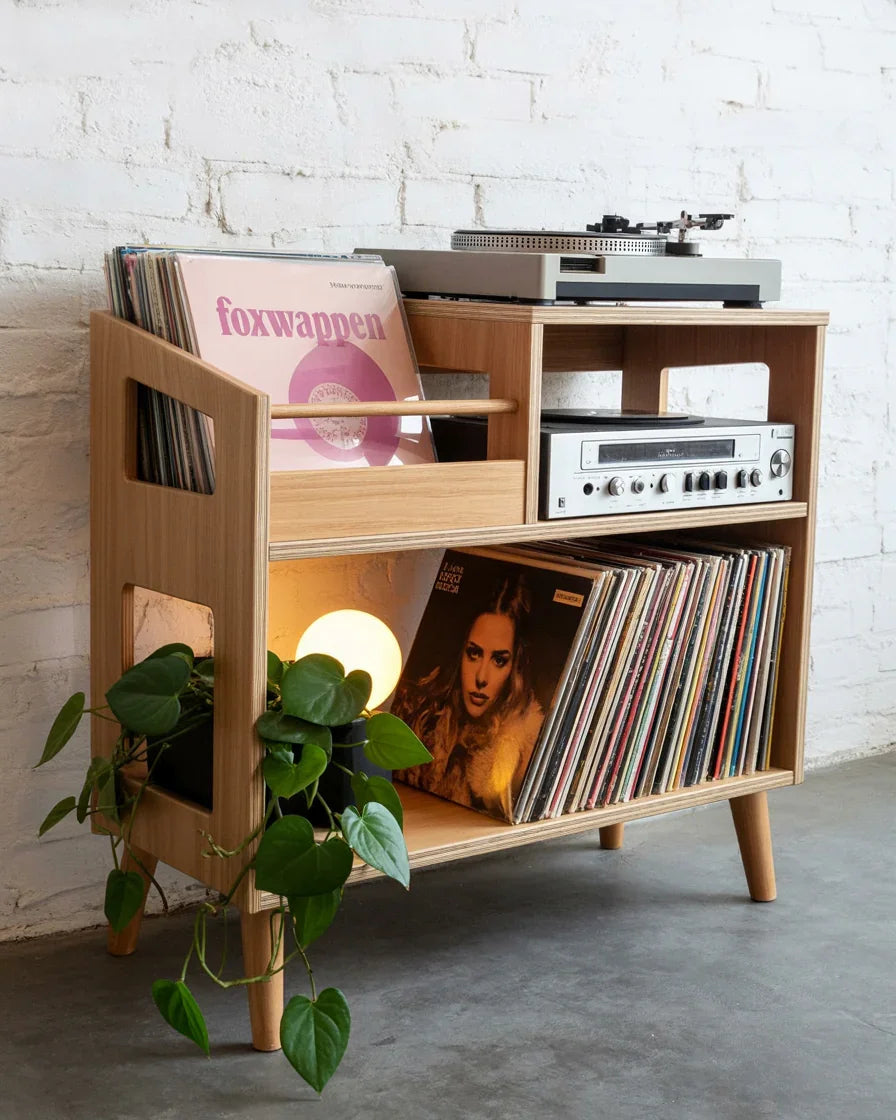
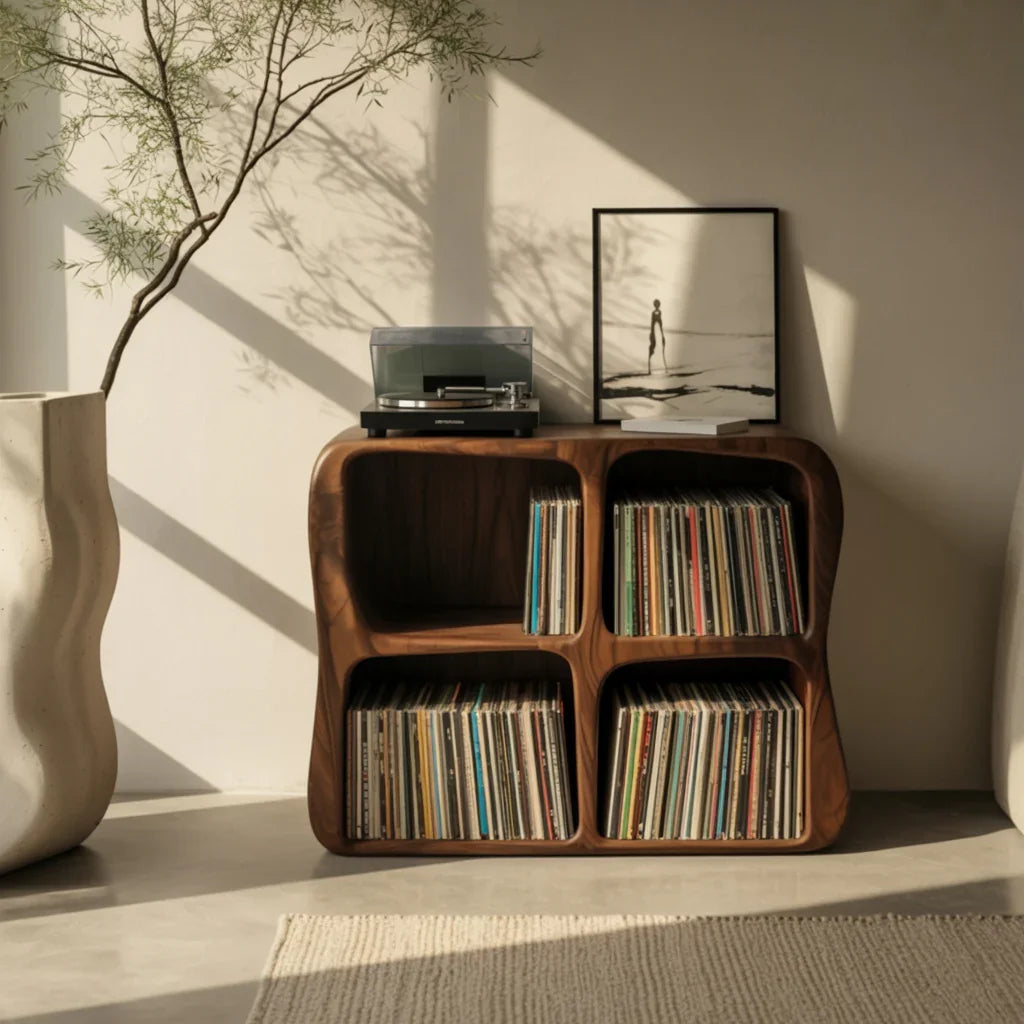
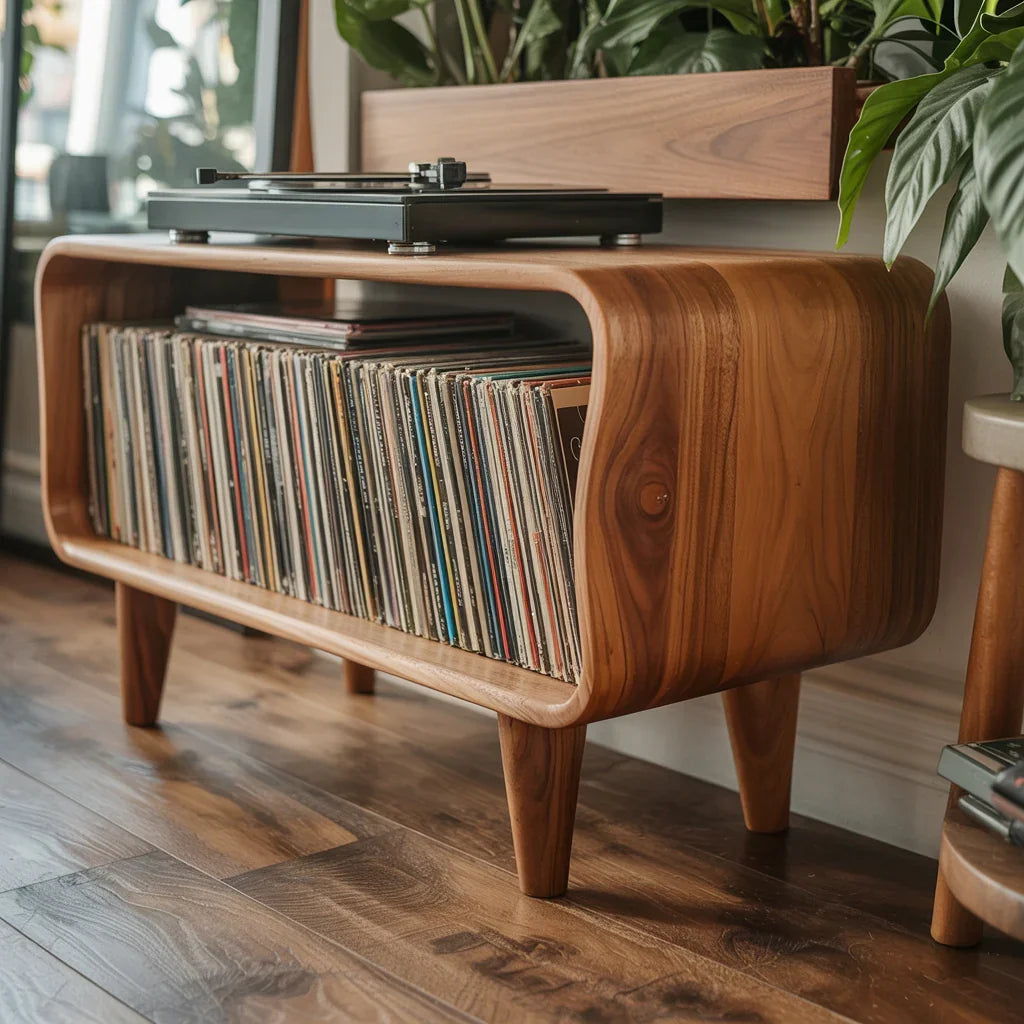
The Mid-Century Modern Record Player Stand with Vinyl Storage starts at $950 and reaches $1,680 depending on size and finish. That makes it a useful reference point if you want a cleaner footprint and need to check whether your speakers will really fit on top.
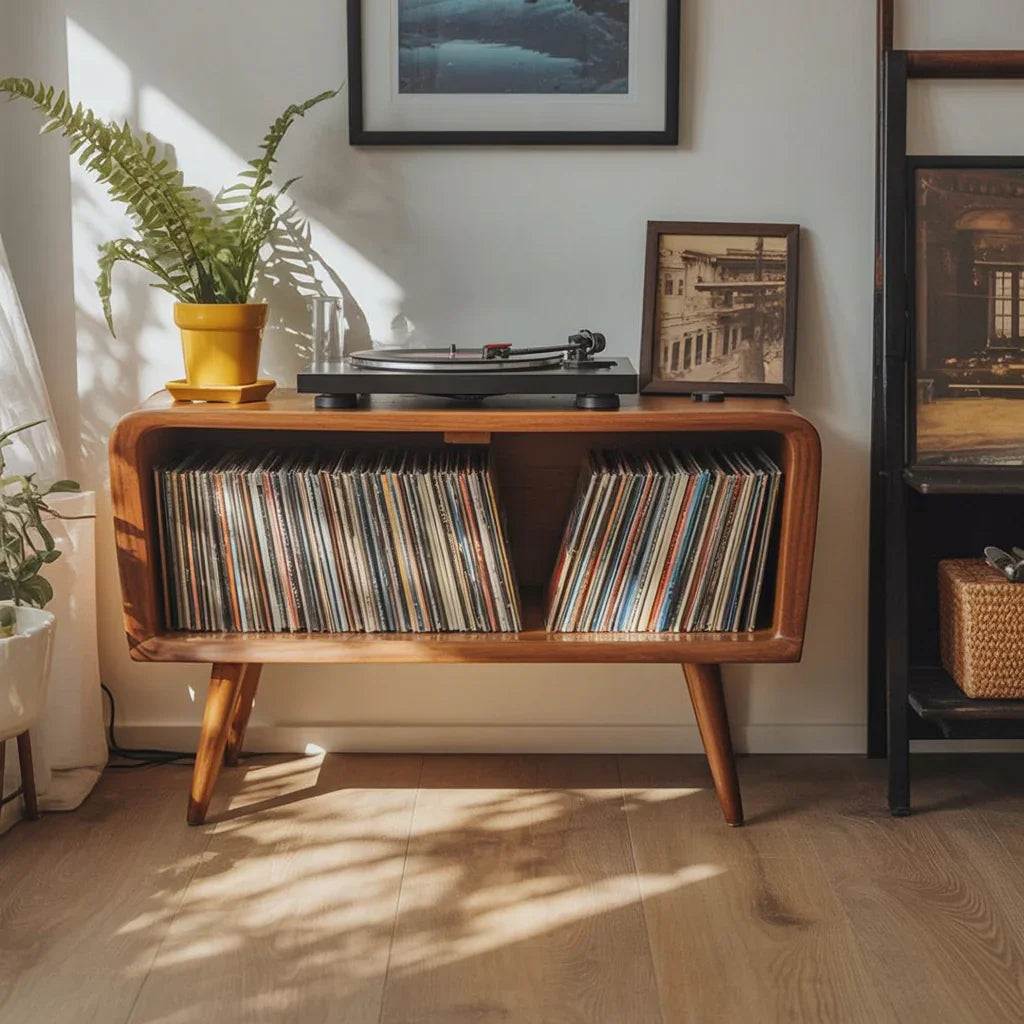
The Media Cabinet Record Player Stand with Vinyl Storage runs from $1,070 to $1,787. This style is worth a look if you care about a broader cabinet feel and want to think through cable routing or equipment placement inside the piece.
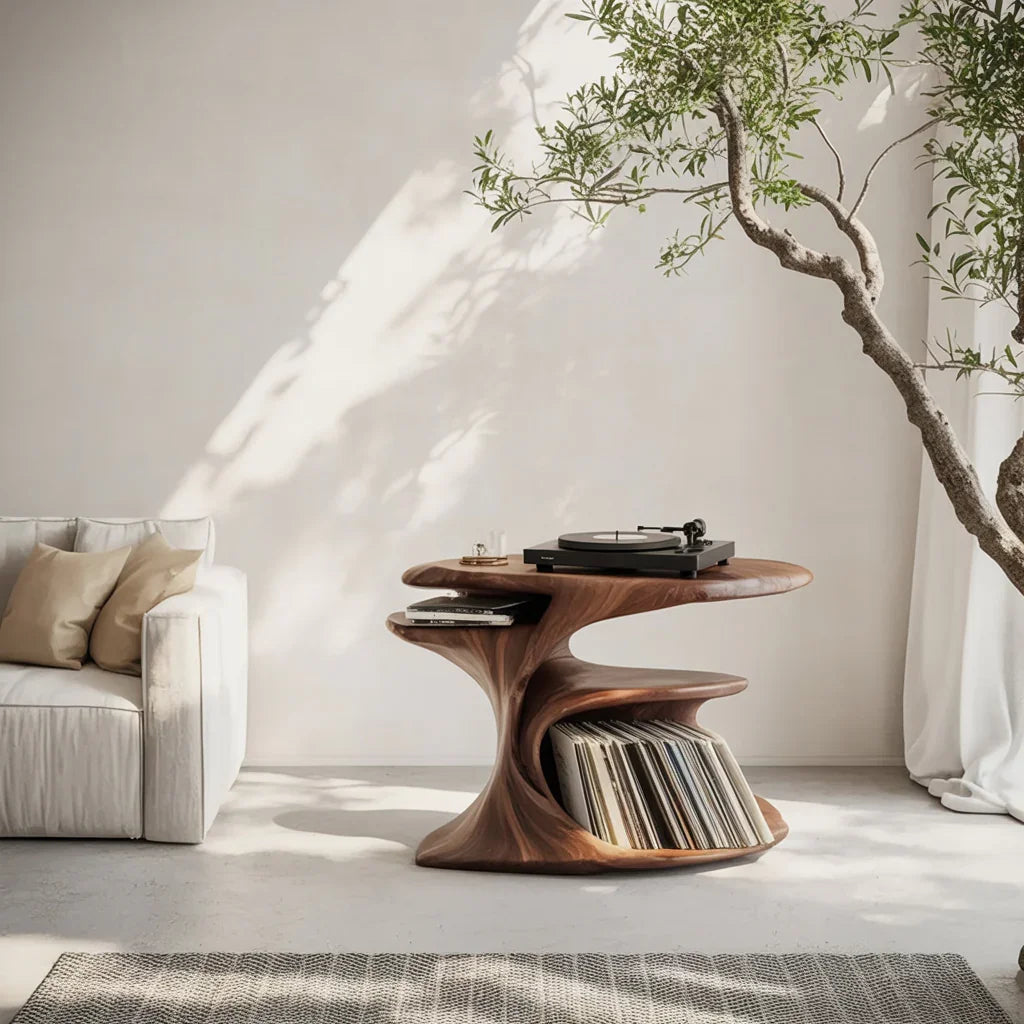
If you want a wider farmhouse look, the Farmhouse Turntable Station with Storage ranges from $2,136 to $2,916. That kind of model can make more sense for buyers building a larger record player stand with speakers setup in a living room instead of a tight apartment corner.
Handmade Wooden Record Player Stand with Vinyl Storage
Solid Wood Record Player Stand with Vinyl Storage, Mid-Century
You could also compare the Handmade Wooden Record Player Stand with Vinyl Storage or the Solid Wood Record Player Stand with Vinyl Storage, Mid-Century if you want a stronger sense of how Ashdeco handles handcrafted solid wood furniture across different styles.
If you are weighing a record player stand with speakers against a more flexible setup, those product pages also make it easier to compare widths and storage layouts before you commit.
When separate speaker stands make more sense than a record player stand with speakers
Sometimes the smartest purchase is a beautiful record player stand plus separate speaker stands nearby.
I would lean that way if any of these sound like you:
- You already own medium or large bookshelf speakers
- You listen at higher volume and care about clean playback
- Your speakers need more distance apart than the cabinet allows
- Your room lets you place speakers a little wider for a better stereo image
This setup usually gives you more freedom with placement. It also cuts vibration transfer and improves your odds of getting the sound right on the first try.
It can also make the furniture choice easier. Instead of forcing the stand to do every job, you can choose the best handcrafted solid wood piece for the turntable. Then you can plan around records, room layout, speaker placement, cable paths, and listening position separately.
Ashdeco's appeal here is pretty straightforward: solid wood construction, handcrafted work by Vietnamese artisans with unique grain patterns. These are pieces that feel like real furniture instead of temporary audio racks. The brand also carries a 4.9-star rating across 387 reviews, which helps if you want some reassurance before buying in this price range.
Speaking of price, the line covers a wide span depending on style and size. In the current brief, examples range from about $950 to $3,300 across Mid-Century options, farmhouse designs, media cabinet styles, and larger solid wood builds. That gives buyers room to choose based on layout and finish instead of forcing one format on every room.
My plain-English buying advice
If you want the short version, here it is.
Buy a shared setup only when the measurements clearly work, the speakers are not too deep, you have a plan for vibration control, room fit looks comfortable, the layout still leaves enough breathing room, and speaker placement does not crowd the turntable. If any of that feels tight, a record player stand with speakers is probably not the best choice for your room, and separate speaker stands are usually the better call.
A good turntable stand speaker placement plan should feel easy to live with. You should be able to change a record, reach the controls, route the cables cleanly, keep things stable, adjust speaker position, and listen without hearing the furniture fight back.
That is the real test.
Final checklist for choosing a record player stand with speakers
Save this in your phone notes or keep it handy while you shop:
- Confirm stand width against your exact turntable and speaker footprints
- Confirm speaker depth, rear port clearance, wall distance, plug space, cable bend room, and outlet reach
- Check top and shelf weight limits for the full system load
- Decide whether open-back airflow or a cleaner closed-back look fits your setup better
- Plan cable routes before the furniture arrives
- Think honestly about vibration and volume level
- Check whether tweeter height will work from your usual listening seat
- If the layout feels forced, move the speakers onto their own stands
That last point saves people a lot of regret.
A record player stand with album storage can be great furniture. A record player stand with speakers can also be great furniture. The best result comes from respecting what your audio gear needs, then choosing a piece that supports that setup instead of squeezing it.