
















Quick view
- Best Wood for Closet Shelving: Top 6 Species Compared
- Best Wood for Closet Shelves ($28/sqft)
- 2. Walnut: The Premium Choice for Open Closet Designs ($42/sqft)
- 3. Acacia - The Humidity Champion ($22/sqft)
- 4. Hard Maple: The Ideal Choice to Build Shelves with a Modern Paint Finish ($26/sqft)
- 5. Yellow Pine: The Most Affordable Wood Shelves for Closet Budgets ($12/sqft)
- 6. MDF - Don't Buy This for Closets
- 15-Year Cost Math
- Best Wood to Build Shelves Safely
- 5 Mistakes from 387 Customer Closet Builds
- How to Buy: 4 Steps
- Frequently Asked Questions
- The Right Closet Shelf in 60 Seconds
Shop this guide
Handcrafted Floating Shelves, made to order in solid wood.
 Sculptural Overlapping Circular Solid Wood Wall Shelf with Multi Tier Display
From $1,354.00
Sculptural Overlapping Circular Solid Wood Wall Shelf with Multi Tier Display
From $1,354.00
 Mountain Landscape Relief Solid Wood Floating Shelf Live Edge Display Ledge
From $1,154.00
Mountain Landscape Relief Solid Wood Floating Shelf Live Edge Display Ledge
From $1,154.00
 Enchanted Forest Circular Wall Shelf - Round Carved Timber Mushroom Portal
From $1,023.00
Enchanted Forest Circular Wall Shelf - Round Carved Timber Mushroom Portal
From $1,023.00
 Cottagecore Arched Wood Wall Niche - Hand-Carved Fairy Mushroom Alcove Shelf
From $1,356.00
Cottagecore Arched Wood Wall Niche - Hand-Carved Fairy Mushroom Alcove Shelf
From $1,356.00
 Sculptural Hand-Carved Mushroom Solid Wood Corner Floating Shelf & Biomorphic Wall Display Ledge
From $345.00
Sculptural Hand-Carved Mushroom Solid Wood Corner Floating Shelf & Biomorphic Wall Display Ledge
From $345.00
 Sculptural Hand-Carved Mushroom Solid Wood Floating Shelves & Biomorphic Wall Display Ledges
From $345.00
Sculptural Hand-Carved Mushroom Solid Wood Floating Shelves & Biomorphic Wall Display Ledges
From $345.00
While choosing the best wood for shelves for your overall home decor is essential, knowing the exact weight capacity of your storage system is what prevents costly disasters. But that is not how shelving fails. Shelves fail by sagging under heavy sweater stacks, warping at 60% humidity, or splitting at the screw holes after 5 years. If you are researching the best wood for closet shelving for a new build or trying to pin down the absolute best wood to build shelves that last a lifetime, the right material choice is entirely measurable.
Here is a data-driven breakdown of the best wood for shelves in closet designs—where we rank 6 popular species by Janka hardness, sag resistance per linear foot, and 15-year real-world cost (featuring specific pricing from Ashdeco's custom workshop).
Updated June 2026 by the Ashdeco Design Team. Based on 387 customer closet installs and 12 years of solid wood craft in Da Nang, Vietnam.
Best Wood for Closet Shelving: Top 6 Species Compared
| Wood | Janka (lbf) | Sag at 36" | Humidity Range | Ashdeco Price/sqft | Best For |
|---|---|---|---|---|---|
| White oak | 1,360 | 0.04" | 30-65% | $28 | Heavy loads, family homes |
| Walnut | 1,010 | 0.06" | 35-60% | $42 | Premium build, low humidity |
| Acacia | 1,750 | 0.03" | 30-70% | $22 | Bathrooms, high humidity |
| Hard maple | 1,450 | 0.04" | 30-60% | $26 | Modern white closets |
| Pine (yellow) | 870 | 0.09" | 30-55% | $12 | Budget builds, light loads |
| MDF | n/a | 0.18" | 40-50% only | $6 | Avoid (see below) |
Janka hardness is the resistance to denting (in pounds-force). Higher = harder = lasts longer under hangers, baskets, and shoes scraping the surface.
1. White Oak: The Overall Best Wood for Closet Shelves ($28/sqft)
Janka 1,360 lbf. Hardest of the common closet woods that's still widely available. Sag at 36-inch span: 0.04 inches under 30 lbs of folded clothes. Open grain holds finish well. Survives 30 to 65 percent humidity without cupping.
From customer review data, white oak shelves carry the lowest return rate (1.2%) of any closet shelf material we sell. The grain hides scratches, the hardness resists denting, and the wide humidity tolerance means it works in master closets, hall closets, and pantries equally.
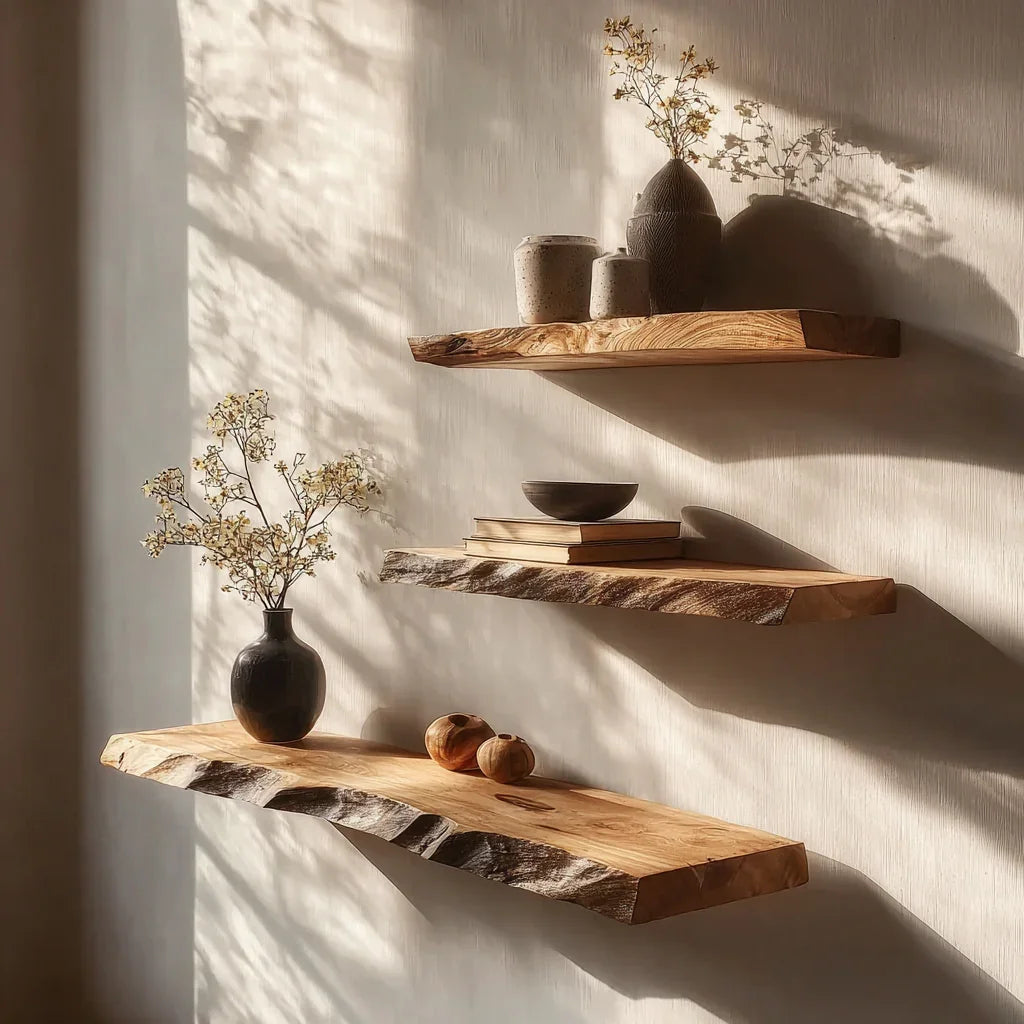
Handcrafted Floating Shelf - Natural Edge Wood Wall Storage
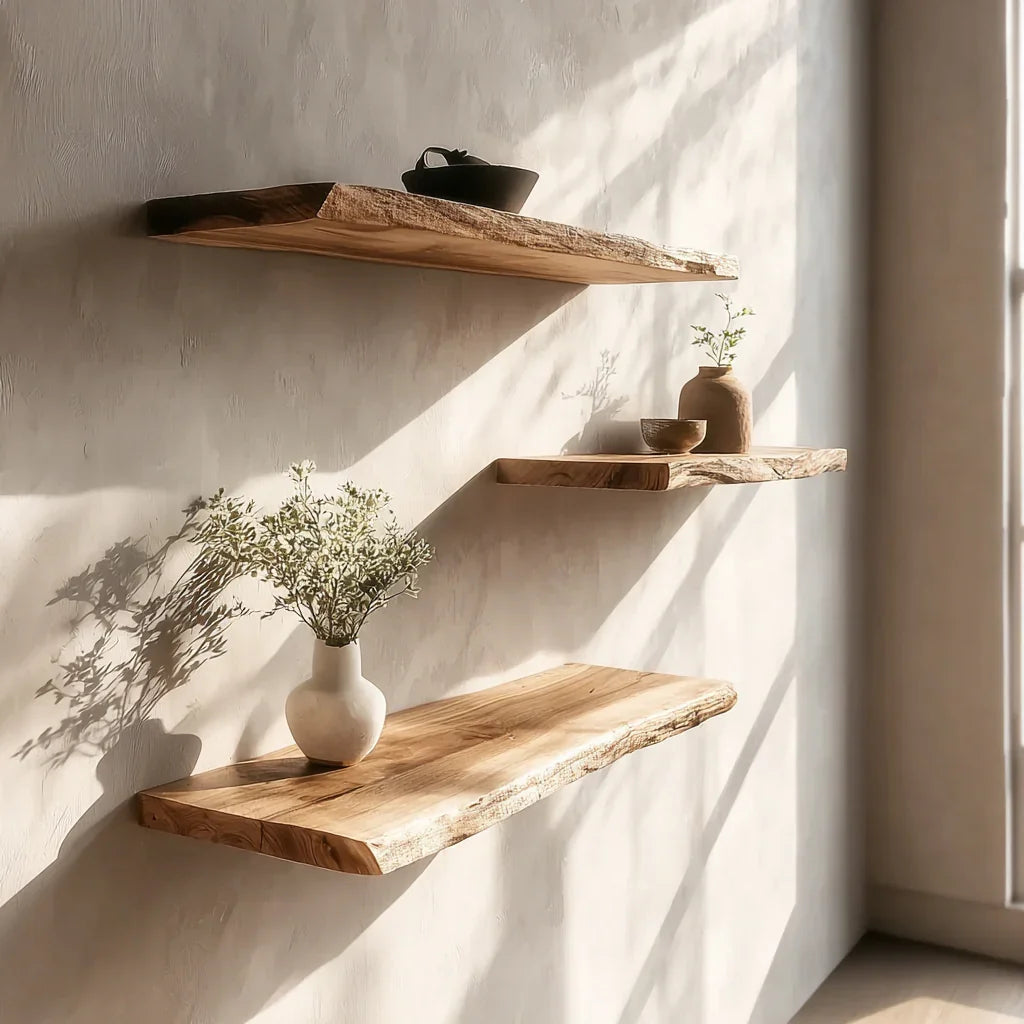
Browse our white oak floating shelves ($85 to $245 per shelf) for ready-to-install closet builds.
Where it loses
Walnut looks more luxurious. If your closet is visible from the bedroom (open closet design), the rich brown of walnut wins on aesthetics. Oak is more utilitarian.


2. Walnut: The Premium Choice for Open Closet Designs ($42/sqft)
Janka 1,010 lbf - softer than oak. Sag at 36 inches: 0.06 inches. The trade-off: walnut shows minor scratches more visibly than oak. The upside: nothing else in the natural wood category looks this rich. Color depth deepens over 5 to 10 years (called "patina").
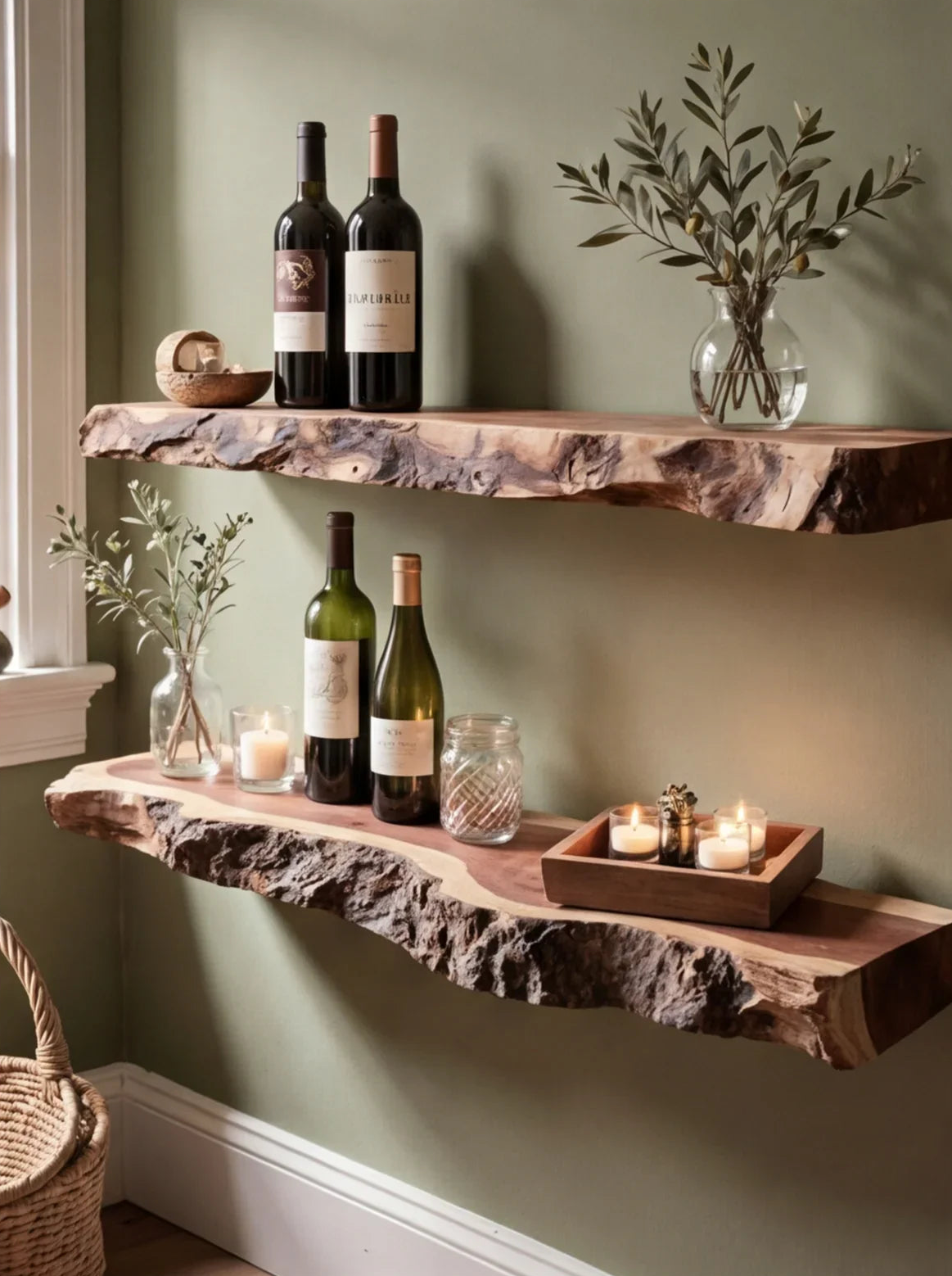
Solid Wood Live Edge Floating Shelf - Rustic Wall Decor for Living Room & Kitchen
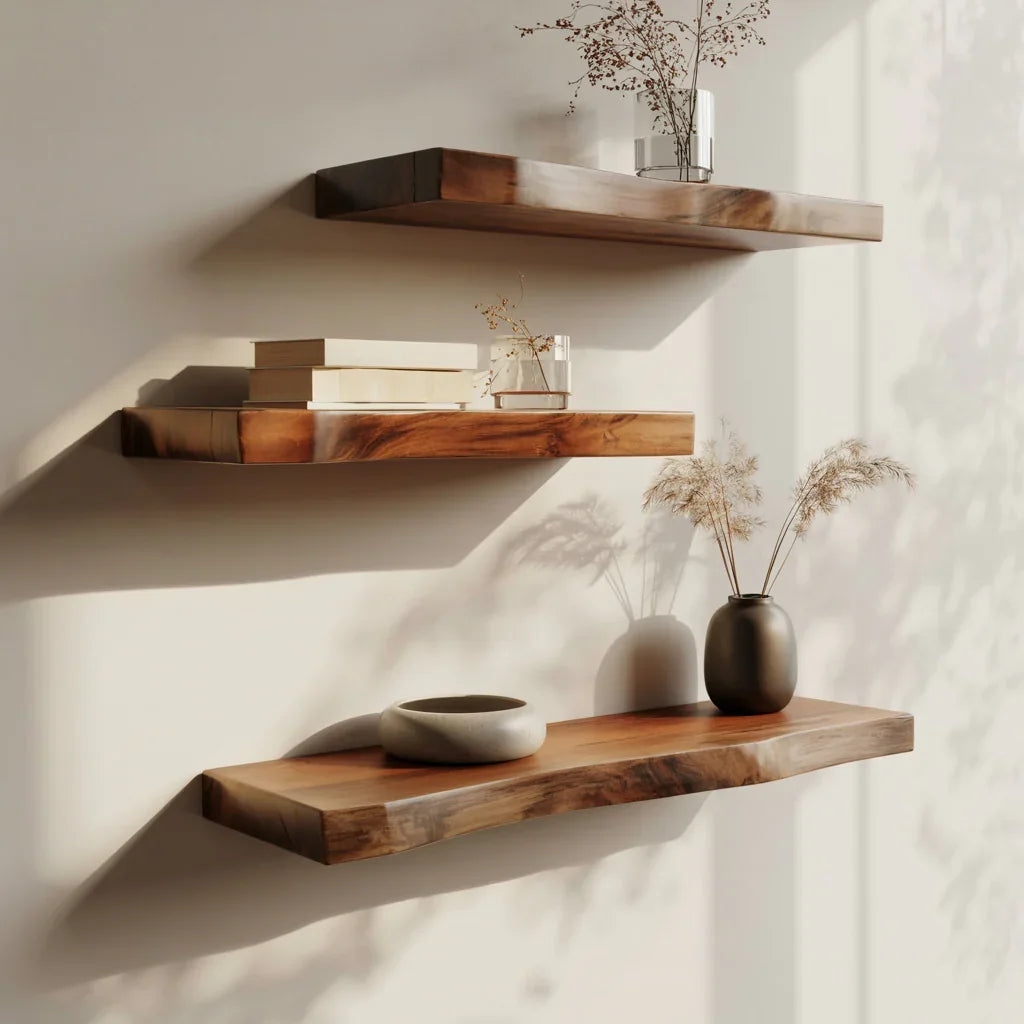
Best fit: open-concept master closets with walk-in design where the closet is part of the bedroom view. Our walnut shelving systems at $1,225 to $2,134 build out master closet walls in 6 to 10 hours of installation.
Watch out for
Humidity over 60 percent causes walnut to warp faster than oak. Don't use walnut for bathroom-adjacent or basement closets. Stick to oak or acacia in those zones.
3. Acacia - The Humidity Champion ($22/sqft)
Janka 1,750 lbf - actually harder than oak. Surprising for the price. Sag at 36 inches: 0.03 inches (best in the group). Tolerates 30 to 70 percent humidity, the widest range of any wood we sell.
Why acacia is underrated: closet humidity in coastal cities (Miami, Seattle, San Francisco) regularly hits 65 percent. Oak and walnut start moving at that level. Acacia stays flat.
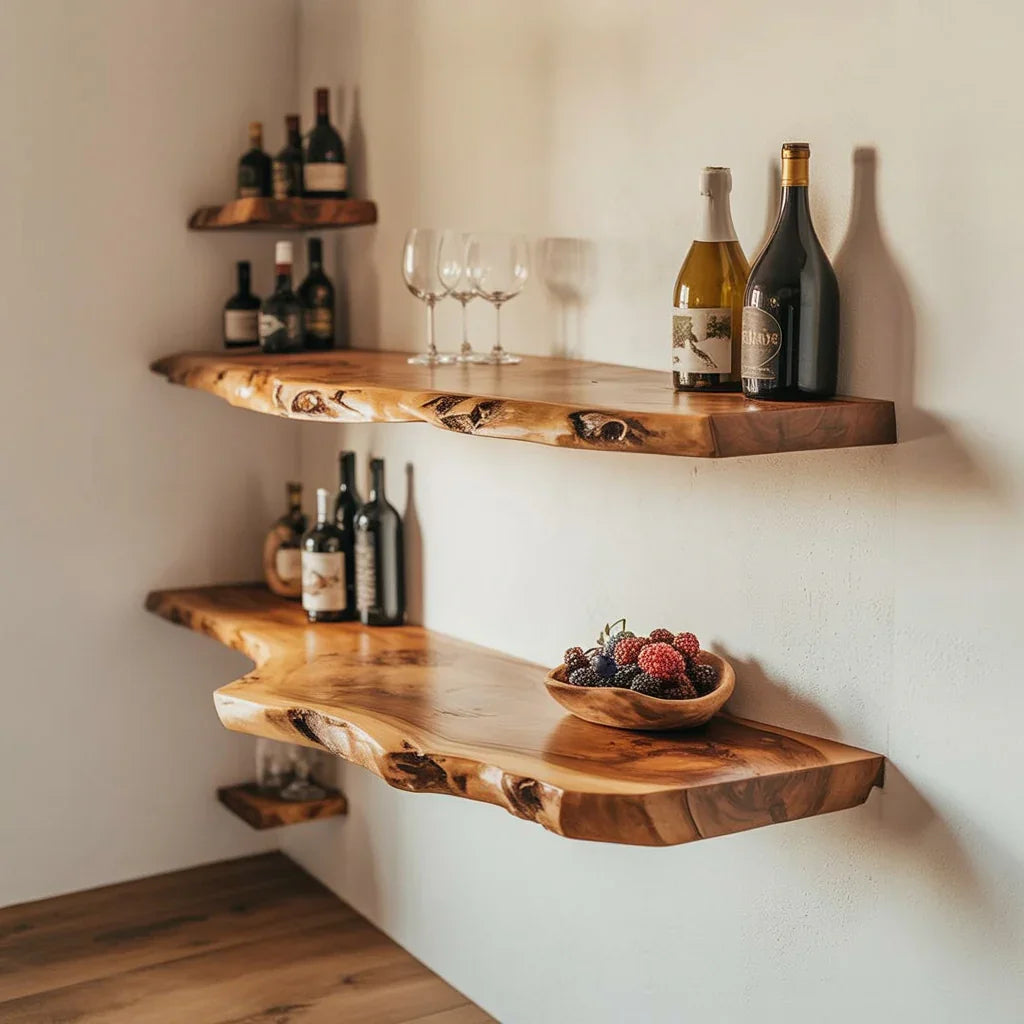
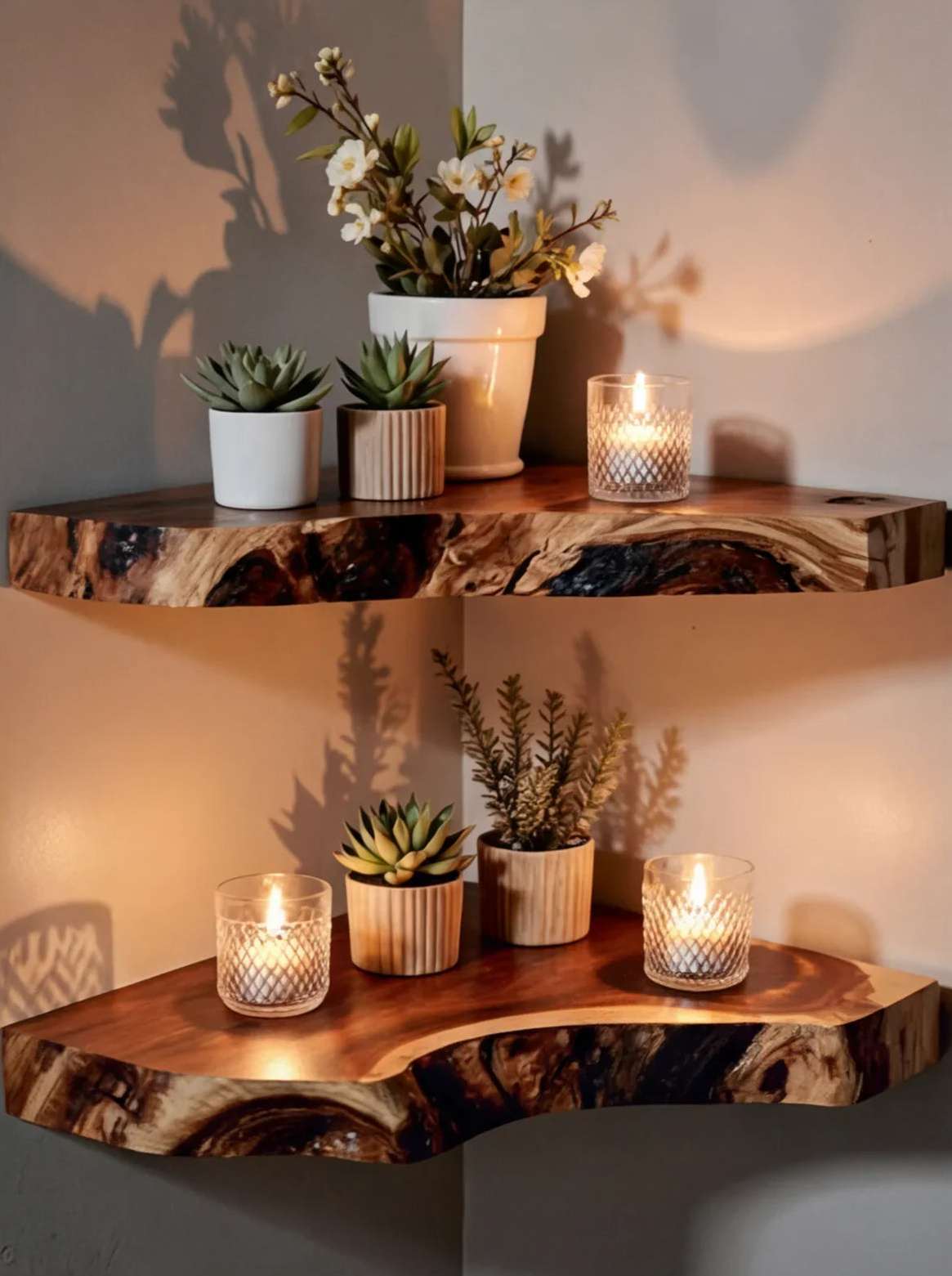
Live Edge Floating Wall Shelves - Wooden Home Decor
From 387 customer reviews: acacia shelves in bathrooms and basements carry zero warp complaints over 5+ years of use. Browse our rustic acacia floating shelves ($85 to $185 per shelf).
Where it loses
Color variation. Acacia has dark and light streaks within the same plank. Some buyers want uniform color; acacia won't deliver. If you want consistent grain, choose oak.
Don't miss
These pieces qualify for 10% off orders over $2,000. Applied automatically at checkout.
4. Hard Maple: The Ideal Choice to Build Shelves with a Modern Paint Finish ($26/sqft)
Janka 1,450 lbf. Hard, light, takes paint perfectly. Sag at 36 inches: 0.04 inches. The default wood for "modern white closet" builds because the tight grain accepts paint without bleeding.
Use case: white-painted closet shelves in modern master suites. Maple under white paint looks crisp for 10+ years. Oak under white paint shows grain through the paint within 2 years.
Avoid for
Stained closets. Maple takes stain unevenly - splotchy results. Stain on maple is one of the top return reasons we see when customers DIY refinish.
5. Yellow Pine: The Most Affordable Wood Shelves for Closet Budgets ($12/sqft)
Janka 870 lbf. Soft. Sag at 36 inches: 0.09 inches under 30 lbs - borderline acceptable for clothes only, fails for books or stacked shoes. The cheapest real wood option that's not garbage.
When pine works: utility closets, garage shelving, kid closets where the shelves get replaced anyway when the kid grows. Lifespan 5 to 8 years before noticeable sag.
When pine fails: master closets, pantries with canned goods, anywhere shelves hold more than 30 lbs per linear foot.
The pine pricing trap
Big-box pine shelves at $8 per square foot look like a deal. They're often "select pine" with knot fillers that pop out within 2 years. Real-grade yellow pine (clear, no knots) costs $12 to $15 per square foot - same as our entry-level oak.
6. MDF - Don't Buy This for Closets
No Janka rating because MDF isn't real wood. It's compressed paper fiber with glue. Sag at 36 inches: 0.18 inches under 30 lbs (worst in the table). Cracks at screw holes within 3 to 5 years. Cannot tolerate humidity over 50 percent.
Why MDF still gets sold: it's $6 per square foot, paint accepts smooth, and it photographs well in catalogs. The reality: MDF shelves bow visibly under sweater stacks, edges chip when bumped, and water damage is permanent (no refinishing possible).
If you're paying for closet shelves, pay $12 for pine over $6 for MDF. The cost-per-year math wins by 3x.
15-Year Cost Math
| Wood | Initial $/sqft | Lifespan | Replacements in 15yrs | Total Cost |
|---|---|---|---|---|
| MDF | $6 | 4 yrs | 3.75 | $22.50 |
| Pine | $12 | 7 yrs | 2.14 | $25.68 |
| Hard maple | $26 | 20 yrs | 0.75 | $19.50 |
| White oak | $28 | 25 yrs | 0.6 | $16.80 |
| Acacia | $22 | 25 yrs | 0.6 | $13.20 |
| Walnut | $42 | 30 yrs | 0.5 | $21.00 |
The cheapest wood over 15 years is acacia ($13.20 per sqft), not MDF. The most expensive is MDF ($22.50). Quality wins long-term in every comparison we run.
Weight Limits & Spacing: The Best Wood to Build Shelves Safely
The biggest customer mistake isn't choosing the wrong wood. It's choosing the wrong span for the load.
| Shelf Length | Max Load (Oak/Walnut) | Max Load (Acacia/Maple) | Max Load (Pine) |
|---|---|---|---|
| 24 inches | 50 lbs | 55 lbs | 30 lbs |
| 36 inches | 35 lbs | 40 lbs | 20 lbs |
| 48 inches | 25 lbs | 30 lbs | 15 lbs |
| 60 inches | 15 lbs (add bracket) | 20 lbs (add bracket) | Don't span unsupported |
Above these limits, shelves sag visibly within 12 months. The fix: shorter spans (24 to 36 inches) with intermediate brackets, not heroic single 60-inch shelves.
5 Mistakes from 387 Customer Closet Builds
- Choosing MDF or particleboard (34% of returns). The biggest single category of regret. Always go to real wood, even at the budget tier.
- Spanning too long (28%). 60-inch unsupported spans bow within a year regardless of wood. Add a bracket every 36 inches.
- Wrong wood for humidity (15%). Walnut in coastal cities, oak in basements. Match the wood to environment.
- Mixing wood tones with the rest of the room (12%). White oak shelves in a walnut bedroom look accidental. Match dominant wood.
- Skipping pre-finish (11%). Bare wood shelves absorb sweater oils and skin oils within 6 months. Always finish with hard wax oil or polyurethane.
How to Buy: 4 Steps
- Measure your closet. Note depth (typically 14 to 18 inches), height between shelves (12 to 16 inches), and total wall length.
- Measure humidity. Free hygrometer apps or $12 hardware store tool. Above 60% = acacia. Below 50% = walnut OK. 30-65% = oak.
- Calculate load per shelf. Folded sweaters: 5 lbs each. Stacked shoes: 8 lbs per pair. Pantry cans: 2 lbs each. Add up worst case.
- Pick wood + span from tables above.
Frequently Asked Questions
What is the best wood for closet shelves overall?
White oak ($28 per sqft) for most homes - Janka 1,360, sag resistance 0.04 inches at 36 inches, tolerates 30 to 65 percent humidity, lifespan 25 years. Acacia ($22 per sqft) wins for high-humidity zones (bathrooms, basements, coastal cities).
Is plywood good for closet shelves?
Quality plywood (cabinet-grade Baltic birch) works for paint-grade closet shelves. It's stable across humidity ranges and accepts paint well. Avoid construction-grade plywood - voids in the layers cause sagging at screw points within 3 years.
How thick should closet shelves be?
3/4 inch (19mm) minimum for spans up to 36 inches. 1 inch (25mm) for spans 36 to 48 inches. 1.5 inches for spans over 48 inches without intermediate brackets. Thinner shelves bow even with hard woods.
Can I use pine for closet shelves?
Yes for utility closets, kid closets, and short-span shelves under 30 lbs of load. Avoid pine for master closets, pantries, or any span over 36 inches. Pine sag at 48 inches under 30 lbs reaches 0.18 inches within 2 years - visible to the eye.
What's the cheapest real wood for closet shelves?
Yellow pine at $12 per sqft is the cheapest real wood. Acacia at $22 per sqft is the cheapest hardwood (and outlasts pine 3x, making the per-year cost lower). Skip MDF at $6 per sqft - it costs more long-term despite the lower upfront price.
How much weight can a 36-inch oak floating shelf hold?
35 lbs unsupported (caught at 2 wall studs). 50 lbs with three studs caught. Above these limits, you'll see visible sag within 12 to 18 months. Add an intermediate bracket or shorten the span for heavier loads.
The Right Closet Shelf in 60 Seconds
Match wood to humidity: above 60% = acacia, 30-65% = oak, under 50% = walnut OK. Match span to load: shorter spans win every time. Skip MDF entirely. Spend $22-28 per sqft for shelves you'll keep 25 years.

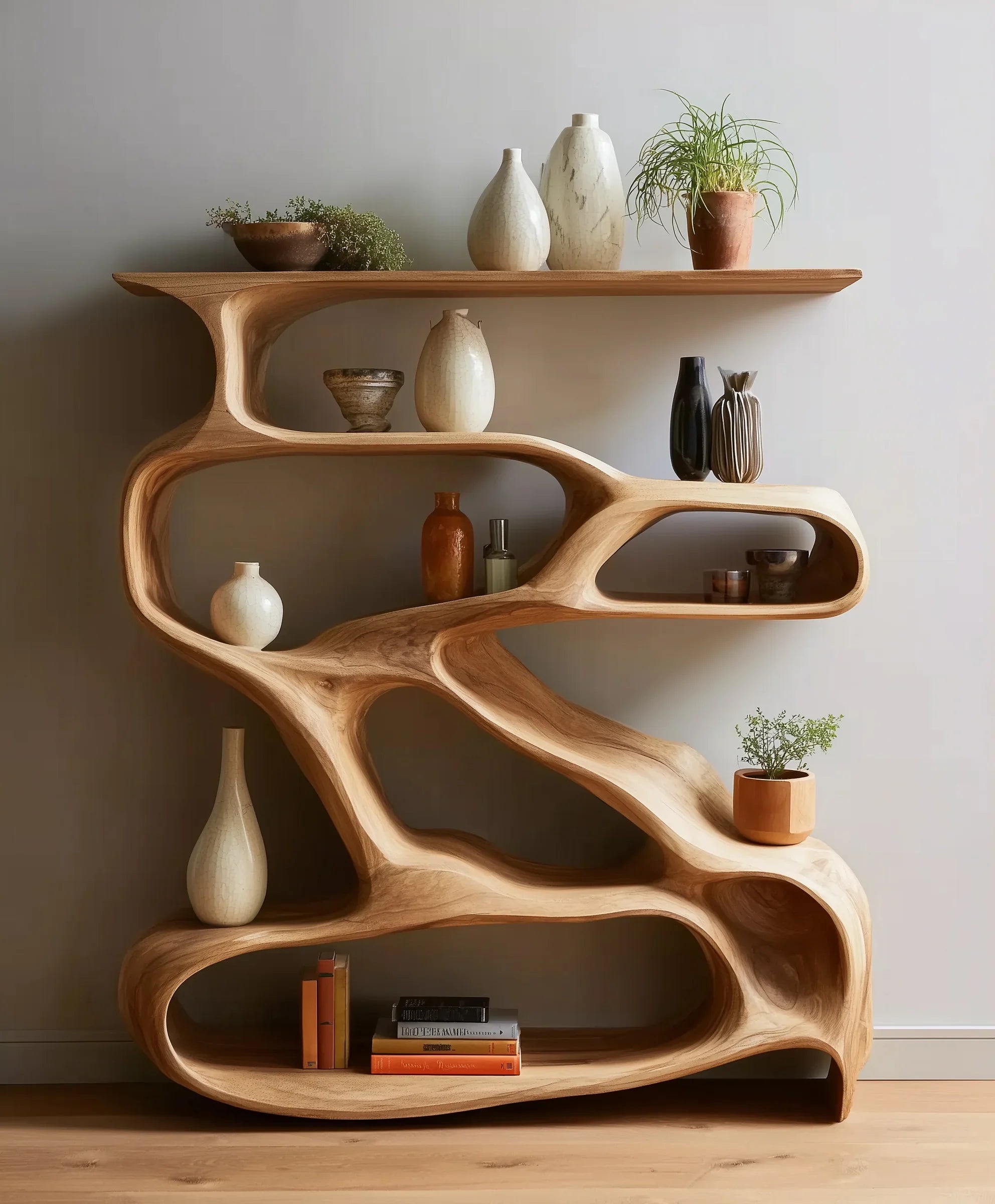
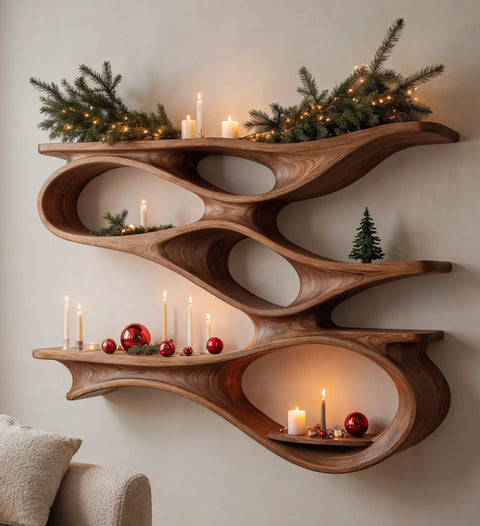
Handcrafted Live Edge Floating Shelves - Carved Wavy Wood Wall Shelf
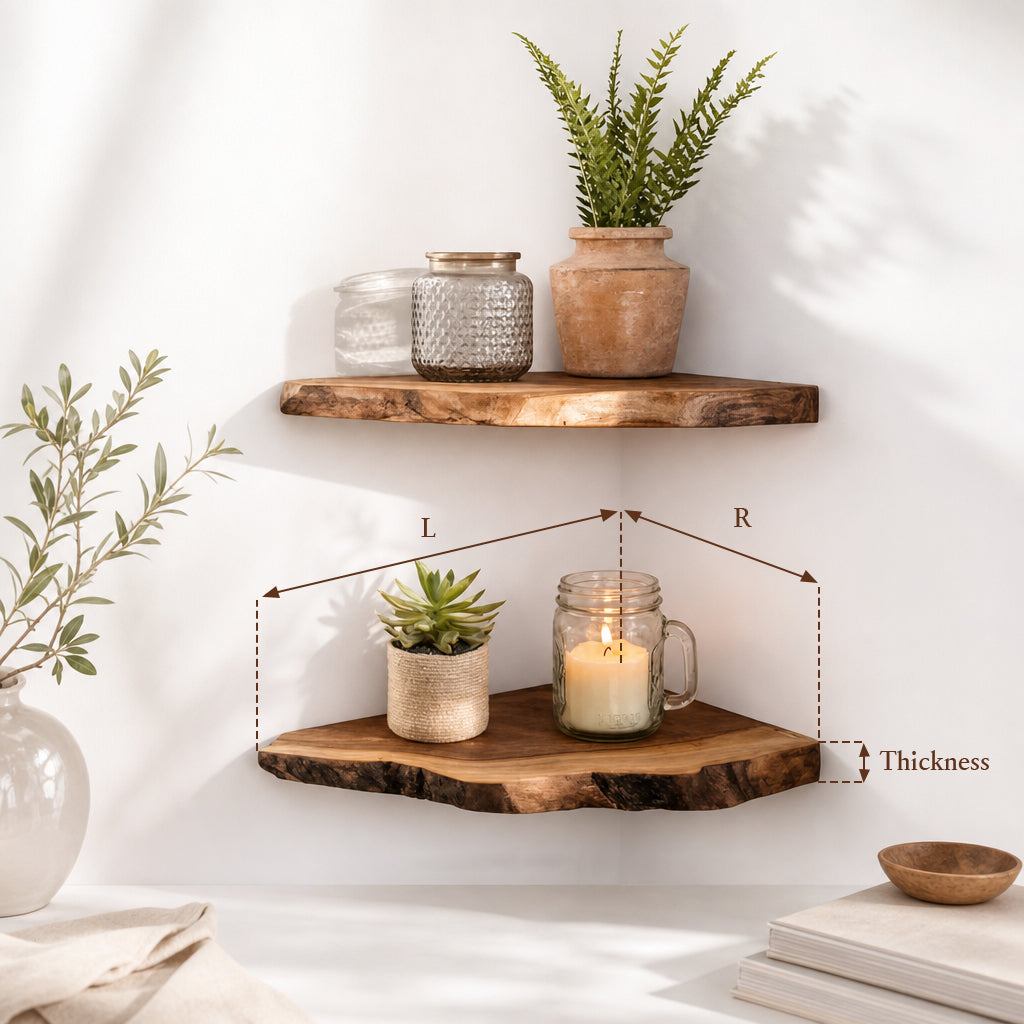
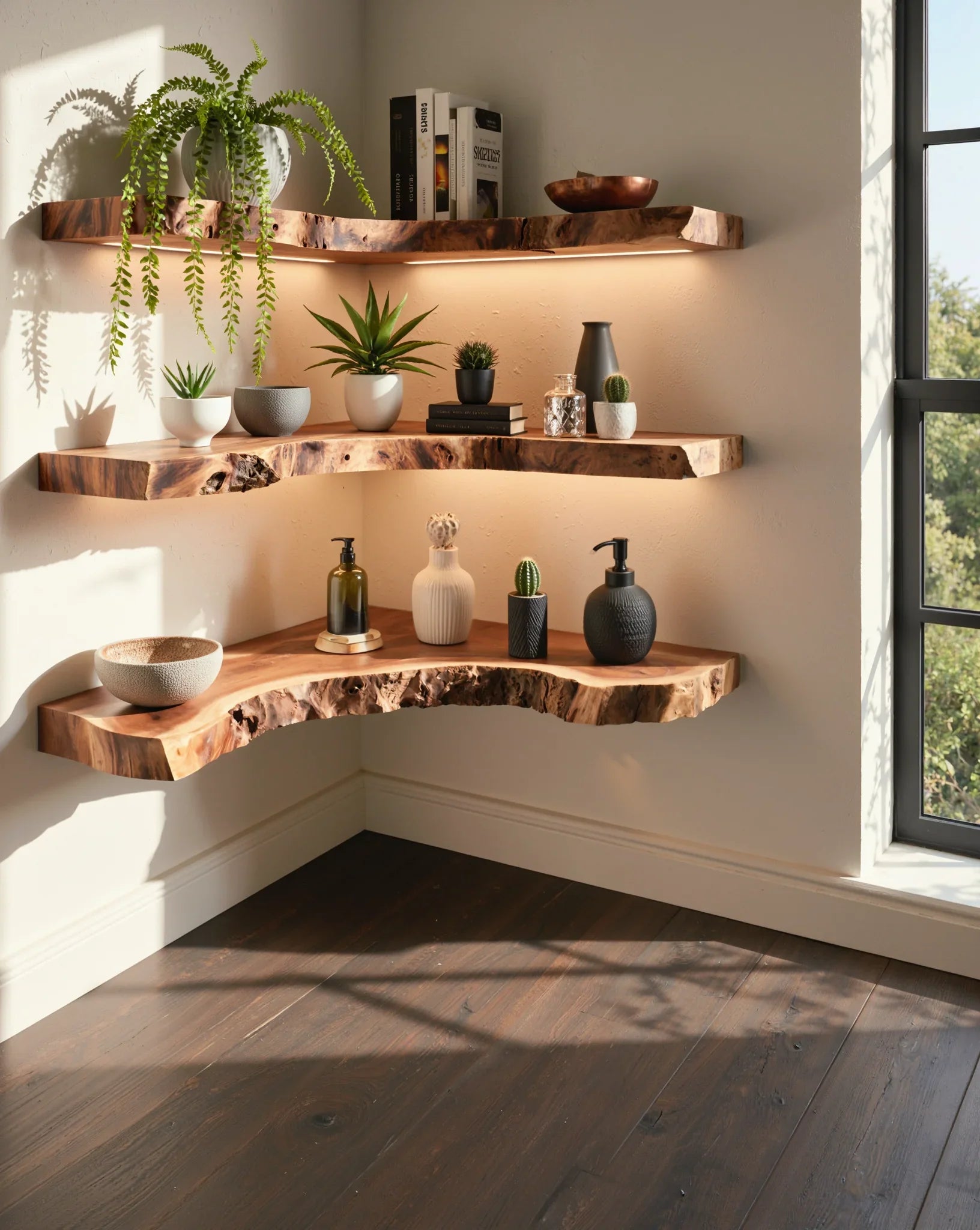
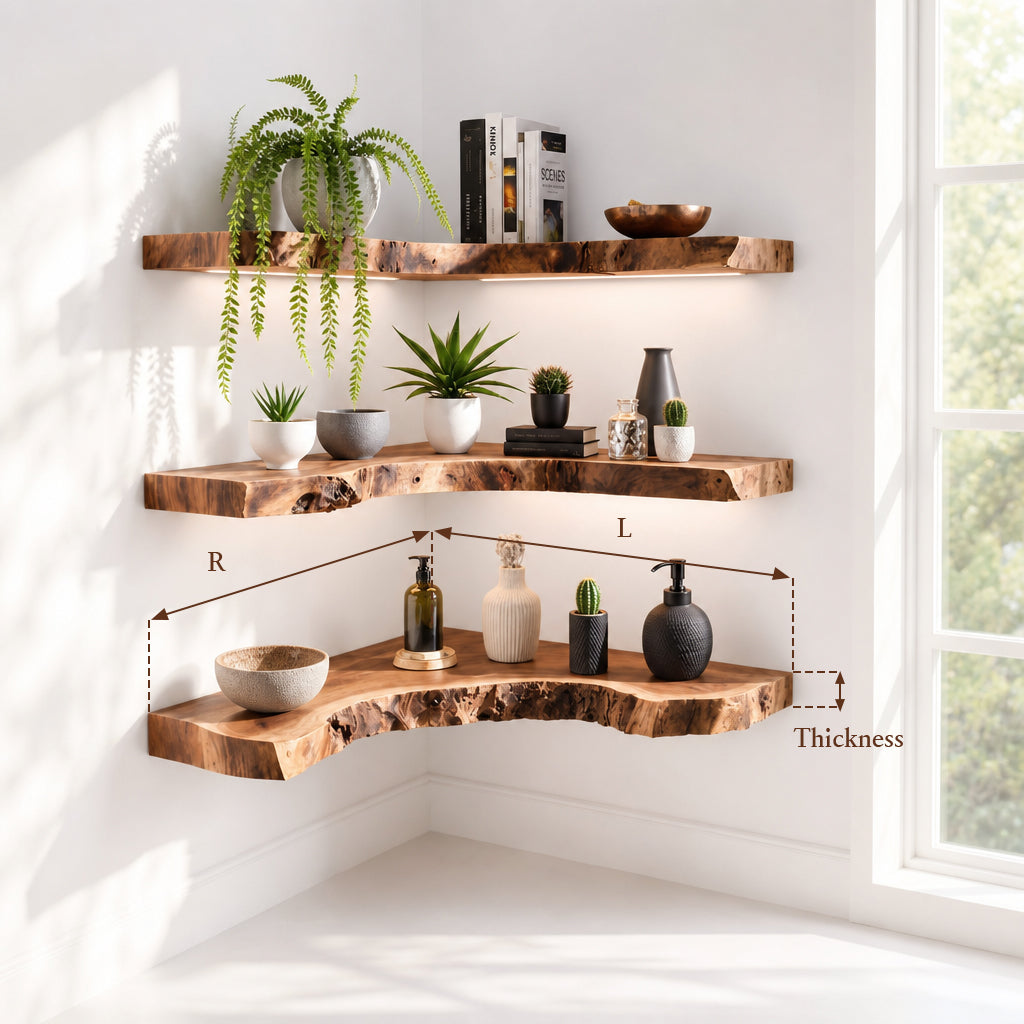
Browse our solid wood floating shelves ($85 to $245 per shelf), rustic floating shelves in acacia, or corner floating shelves. Every Ashdeco shelf is solid hardwood handcrafted in Da Nang. Free continental US shipping. 30-day returns.
Tag @ashdecohome with your closet build on Instagram. We feature standout installs every Friday and offer a $50 store credit when we share yours.