

Quick view
- What furniture is actually made of (and why most people can't tell)
- Particle board: the $150 table that costs you $500
- MDF: the middle ground that's still not close
- Engineered wood: the marketing word that means "not solid"
- Solid wood: what 20 years of daily use actually does
- The cost math that changes the conversation
- How to tell what you're buying before it arrives
- When cheaper materials make sense (honestly)
- Frequently asked questions
Shop this guide
Handcrafted Coffee Tables, made to order in solid wood.
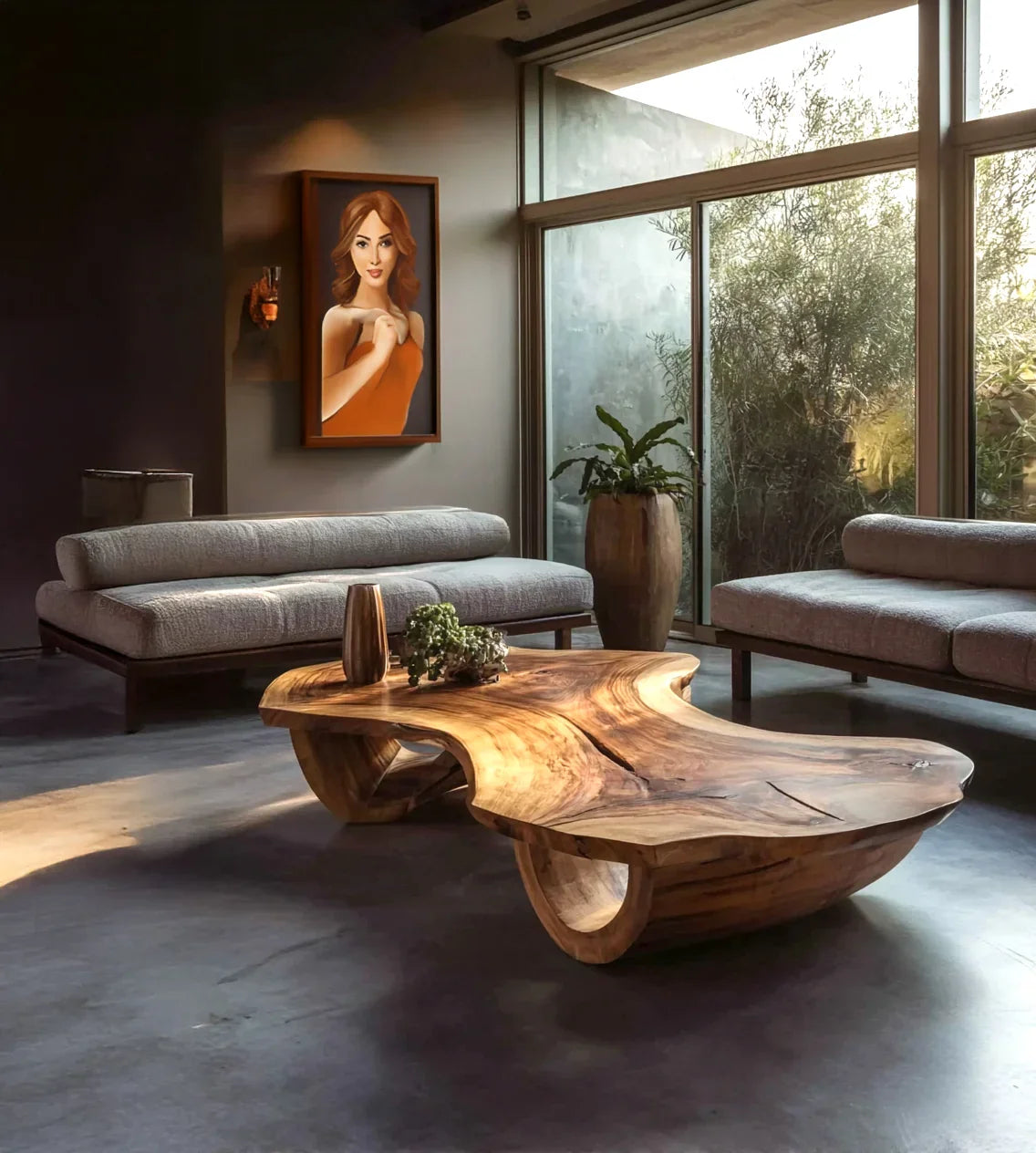
 Round Biomorphic Solid Wood Coffee Table Sculptural Hollowed Center Table
From $2,156.0010% off at checkout
Round Biomorphic Solid Wood Coffee Table Sculptural Hollowed Center Table
From $2,156.0010% off at checkout
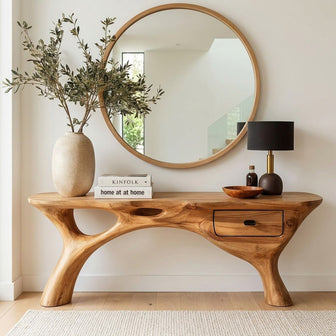
 Curved Biomorphic Solid Wood Coffee Table Monolithic Organic Low Table
From $1,789.00
Curved Biomorphic Solid Wood Coffee Table Monolithic Organic Low Table
From $1,789.00
 Christmas edit
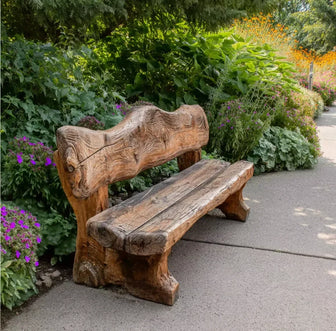
Handcrafted Live-Edge Solid Wood Christmas Coffee Table with Monolithic Tree-Trunk Stump Pedestal Base & Natural Slab Top
From $2,176.0010% off at checkout
Christmas edit
Handcrafted Live-Edge Solid Wood Christmas Coffee Table with Monolithic Tree-Trunk Stump Pedestal Base & Natural Slab Top
From $2,176.0010% off at checkout
 Modern Handcrafted Solid Wood Square Plinth Coffee Table with Open Storage & Architectural Block Pillars
From $1,567.00
Modern Handcrafted Solid Wood Square Plinth Coffee Table with Open Storage & Architectural Block Pillars
From $1,567.00
 Modern Handcrafted Solid Wood Plinth Coffee Table with Cantilevered Top, Storage Cubby & Drawer
From $1,865.00
Modern Handcrafted Solid Wood Plinth Coffee Table with Cantilevered Top, Storage Cubby & Drawer
From $1,865.00
 Sculptural Hand-Carved Tree Root Round Solid Wood Coffee Table & Sprawling Branch Base
From $2,212.0010% off at checkout
Sculptural Hand-Carved Tree Root Round Solid Wood Coffee Table & Sprawling Branch Base
From $2,212.0010% off at checkout
What furniture is actually made of (and why most people can't tell)
You search "coffee table" on Amazon. The listings say "wood." Some say "solid wood." Some say "manufactured wood" or "engineered wood." The photos all look the same: a brown table in a staged living room.
Behind those photos are four materials with very different lifespans. One holds up for decades. Another might not survive a single move.
Here's what each one actually is and how to tell them apart before the delivery truck shows up.

Particle board: the $150 table that costs you $500
Particle board is wood that's already been destroyed once. Sawdust, wood chips, and shavings get mixed with synthetic resin and pressed into flat panels under heat. The result looks uniform and smooth, which makes it perfect for wrapping in a printed laminate that photographs like real wood.
A particle board coffee table typically costs $100-$250 and weighs 15-25 lbs.
Here's what the next three years look like:
Months 1-6. Fine. The table works. The laminate surface cleans easily. You're satisfied with the purchase. At this stage, particle board and solid wood are hard to tell apart in daily use.
Months 7-14. The first ring stain. Someone set a cold glass down without a coaster. The condensation found a laminate seam, seeped in, and swelled the particle board underneath. That white ring is permanent. The material expanded and won't go back. You can't sand it out because there's nothing solid underneath to sand into.
Months 15-24. Edges peel. The laminate wrap lifts at corners where hands grip the table. Dust and moisture get under the loose edge, accelerating the separation. Gluing it back holds for a week, maybe two.
Months 24-36. Fasteners loosen. The cam locks and dowels that hold the legs strip out because particle board doesn't grip threads after the material has expanded and contracted through a few seasons. The table wobbles. You tighten the screws. They strip again.
After 3 years, you're shopping for a replacement. You spend another $150-$200. Three years later, the cycle repeats. Over a decade, you've spent $500-$700 on tables that each lasted about as long as a car lease.


MDF: the middle ground that's still not close
Medium-density fiberboard is particle board's better-looking cousin. Wood fibers (finer than particle board's chips) are pressed with resin into dense, smooth panels. MDF is heavier than particle board, takes paint well, and has a consistent surface that works for certain applications.
MDF coffee tables typically cost $150-$400 and weigh 20-35 lbs.
Where MDF falls apart (literally) is moisture. MDF absorbs water faster than particle board. One spill that sits for 30 minutes can swell the surface permanently. A Reddit user in r/woodworking put it clearly: "The first time someone scratches the finish, water will get in and ruin the table."
MDF can't be refinished. You can't sand through a water stain and re-oil the surface because there's no grain underneath, just compressed fiber. Once the surface is damaged, the damage is permanent.
The advantage over particle board: MDF holds screws better, sags less under load, and has a smoother surface for painting. If you're building a painted bookshelf for a dry room, MDF is fine. For a coffee table that handles daily drinks, food, kids, and guests? It's a matter of time.
Engineered wood: the marketing word that means "not solid"
"Engineered wood" appears in thousands of product listings. It sounds technical and sophisticated. It means the material was manufactured rather than cut from a tree.
Engineered wood includes: particle board, MDF, plywood, laminated veneer lumber, and oriented strand board. The term itself tells you nothing about quality because it covers everything from cheap particle board to construction-grade plywood.
When a furniture listing says "engineered wood" without specifying which type, assume particle board. If it were plywood or something better, they'd say so — the vagueness is intentional.
Related terms to watch: "manufactured wood" = same thing. "Composite wood" = same thing. "Solid manufactured wood" = an oxymoron. "Wood" alone = could mean anything, including cardboard with a photo of wood printed on it.
DutchCrafters, an Amish furniture company, filmed themselves cutting open a particle board coffee table. Inside the laminate wrap and thin layer of particle board was a honeycomb cardboard interior. Not even solid particle board all the way through.

Handmade Live Edge Coffee Table — from $1,220
Don't miss
These pieces qualify for 10% off orders over $2,000. Applied automatically at checkout.
10% off
Round Biomorphic Solid Wood Coffee Table Sculptural Hollowed Center Table
From $2,156.00
10% off at checkout
10% off
Handcrafted Live-Edge Solid Wood Christmas Coffee Table with Monolithic Tree-Trunk Stump Pedestal Base & Natural Slab Top
From $2,176.00
10% off at checkout
10% off
Sculptural Hand-Carved Tree Root Round Solid Wood Coffee Table & Sprawling Branch Base
From $2,212.00
10% off at checkout
 10% off
Sculptural Oval Solid Wood Coffee Table with Continuous Infinity Wave Base
From $2,176.00
10% off at checkout
10% off
Sculptural Oval Solid Wood Coffee Table with Continuous Infinity Wave Base
From $2,176.00
10% off at checkout
Solid wood: what 20 years of daily use actually does
Solid wood means the entire piece is cut from a tree. No layers, no filler. The board is one continuous piece of wood with visible grain that runs end to end.
A solid hardwood coffee table weighs 40-80 lbs depending on size and species. You notice the weight when you first set it down, and you notice it again when the table doesn't budge every time someone bumps into it.
Here's how solid wood ages:
Year 1-2. Scratches happen. Someone drags a ceramic mug across the surface. With solid wood, you sand the scratch out with 220-grit sandpaper in five minutes, re-oil the spot, and it's gone. On particle board, sanding goes straight through the laminate into sawdust.
Year 3-5. The wood develops patina. The surface darkens slightly from light exposure and hand oil. Edges wear smooth from daily contact. This isn't damage. It's the wood recording your life. Antique dealers pay more for pieces with genuine patina because it can't be faked.
Year 10-20. The table looks different from when you bought it, but it works the same way. The joints are tight because solid wood grips fasteners permanently. The finish has hardened. You've probably re-oiled it a few times, which takes about ten minutes every year or two.
Year 20+. Your table is now older than some of your friends' marriages. It still works. You could refinish it completely, sand it back to bare wood and start over, and it would look new again. That option doesn't exist with any manufactured material.
The cost math that changes the conversation
A solid wood coffee table from our collection starts at $1,060. The most popular range sits between $1,200 and $1,500. That's a real number, and it makes the $150 particle board table look attractive in the moment.
But run the numbers across time:

Particle board path. $150 table, replaced every 3 years. Over 20 years that's 6-7 tables, $900-$1,050 in purchase price alone. Add $30-$50 disposal each time because most municipalities charge for furniture pickup. Add the hours spent shopping for each replacement. Real total lands around $1,100-$1,400.
Solid wood path. $1,200 table, used for 20+ years. Maintenance runs about $8 every couple years for mineral oil. Total: around $1,250. And if you sell it after 20 years, solid wood furniture holds 30-60% of its value secondhand. Net cost could end up under $800.
The particle board path costs about the same or more. You just pay in smaller chunks, and at the end of 20 years you don't own anything worth keeping.
How to tell what you're buying before it arrives
Product photos won't help. A laminate-wrapped particle board table photographs identically to a solid wood table with the right lighting and angle. Here are four checks that actually work.
Check the weight. Shipping weight is listed on most product pages. A 48 x 24-inch solid hardwood coffee table weighs 40-70 lbs. The same dimensions in particle board: 15-25 lbs. If the table weighs less than 30 lbs at that size, it's not solid wood.
Read past the first adjective. "Solid wood" = the entire piece is wood. "Wood" alone = meaningless. "Engineered wood" = manufactured, likely particle board. "Wood veneer" = real wood on the outside, something else inside. "Solid manufactured wood" = doesn't exist as a real category.
Look at the edges. Real wood shows end grain at cut edges, the growth rings visible in cross-section. Particle board shows a uniform, speckled texture. MDF shows a smooth, dense cross-section with no visible grain. If product photos never show the edge or underside, ask the seller for a photo. A solid wood maker will send one. A particle board seller will change the subject.
Test the price against raw material cost. Solid hardwood (walnut, oak, acacia) costs $8-15 per board foot as lumber. A coffee table top uses 6-10 board feet. Raw material alone: $50-150. Add legs, joinery, finishing, labor, and shipping — the floor for a genuine solid wood coffee table is around $500-600 for a small, simple design. Handcrafted pieces with live edge profiles or custom work cost more. If a "solid wood" table costs $150, the math doesn't add up. It might be using a cheap softwood like rubberwood, or the "solid wood" claim applies only to the legs.
When cheaper materials make sense (honestly)
Particle board and MDF aren't always wrong. Context matters.
Temporary housing. You're in a 12-month lease and don't want to move heavy furniture. A light, cheap table fills the gap. Sell it or donate it when you leave.
Kids under 5. Toddlers attack surfaces with forks and toy hammers. A $150 table you can replace without stress beats a $1,200 table that gives you anxiety every time a crayon comes out. Solid wood is actually easier to repair (crayon comes off with mineral spirits, scratches sand out), but the psychological comfort of a disposable surface matters for some parents.
You change style often. If you redecorate every 2-3 years and want a different look each time, committed investment in a single table doesn't match your approach.
Storage or utility. A workbench, a garage table, a table for a storage room. If appearance and longevity aren't the point, cheap materials do the job.
If none of these apply to you, and you're furnishing a room you plan to live in for years, the math and the material science both point the same direction.
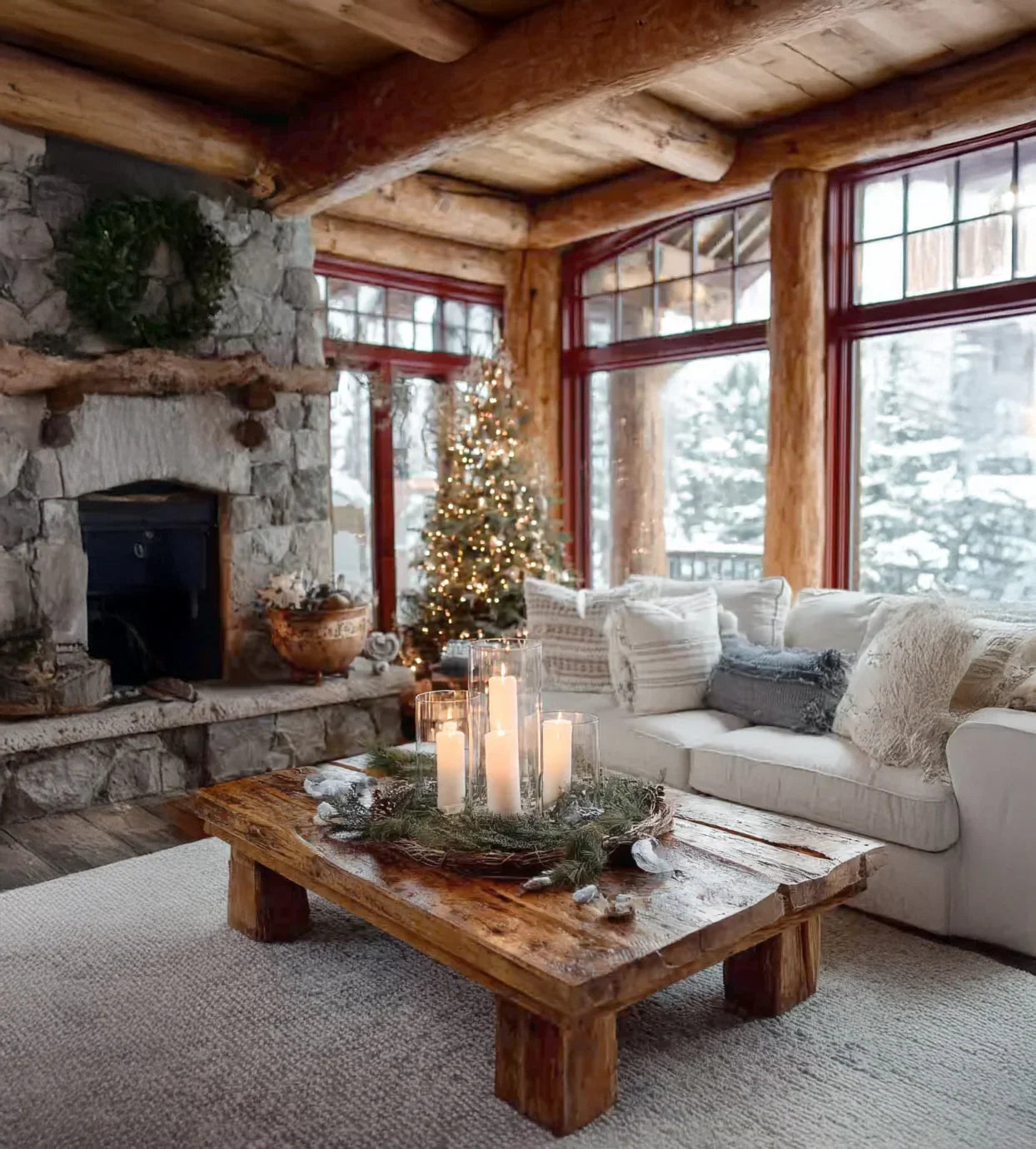
Our coffee table collection is solid hardwood with live edge profiles, made by Vietnamese woodworkers. If you want to see what the grain and edges look like up close, the product pages have detailed photos.
Frequently asked questions
How long does particle board furniture actually last?
With regular daily use: 2-5 years before structural issues (wobbling, fastener failure, swelling) make it unusable. In a low-traffic room with careful use: up to 7-10 years. The variable is moisture exposure — one significant spill or a humid climate can cut the lifespan dramatically.
Can you waterproof particle board?
You can seal the surface with polyurethane or laminate, which is what manufacturers already do. But the seams, edges, screw holes, and any scratch that breaks the surface all become entry points for moisture. Once water reaches the particle board core, sealing the outside won't reverse the swelling. The material is fundamentally moisture-absorbent.
What's the best wood species for a coffee table?
Walnut, white oak, and acacia are the top three for coffee tables. Walnut has rich dark tones naturally (no stain needed) and resists denting well. White oak is the hardest of the three, excellent for households with heavy use. Acacia has dramatic grain patterns and strong moisture resistance, making it practical for kitchens or humid climates.
Is veneer furniture bad?
Not necessarily. High-quality veneer on a plywood core can last 10-20 years and offers the look of expensive wood at a lower price. The problem is cheap veneer on a particle board core — that's the configuration that peels and swells within a few years. Ask what the core material is. Plywood core = decent. Particle board core = same problems as bare particle board, just with a prettier surface for a while.
How can I tell if my current furniture is solid wood?
Knock on it. Solid wood sounds dense and resonant, particle board sounds hollow and flat. Check the bottom or back (less finished areas often reveal the core material). Look at the edges of shelves or the underside of tabletops for end grain. If you see uniform, speckled material without grain lines, it's manufactured.
Is "handmade" furniture always better than factory-made?
Not automatically. "Handmade" means a person shaped the piece using hand tools and judgment. It means grain direction was considered, joints were fitted individually, and finish was applied by hand. Factory furniture is consistent and efficient but treats every unit identically regardless of the wood's natural characteristics. The quality difference depends on the craftsperson — a skilled artisan making handmade furniture produces something a factory cannot replicate. A hobbyist with poor technique might not.