
















Quick view
- Why corner tree bookshelves work better in small spaces than many standard bookcases
- What problem a corner tree bookshelf actually solves
- Best rooms for a corner tree bookshelf
- What buyers usually get wrong
- How handcrafted solid wood changes the result
- Example of when this category makes sense
- When a corner tree bookshelf is the wrong choice
- Honest downsides
- My recommendation
- FAQ
Shop this guide
Handcrafted Tree Bookshelf, made to order in solid wood.
 Christmas edit
Corner Tree Floating Bookshelf – Driftwood Branch Wall Mounted Hanging Shelf, Artistic Corner Furniture Decoration
From $901.00
Christmas edit
Corner Tree Floating Bookshelf – Driftwood Branch Wall Mounted Hanging Shelf, Artistic Corner Furniture Decoration
From $901.00
 Christmas edit
Handcrafted Wooden Tree Wall Shelf – Rustic Branch Bookshelf
From $1,087.00
Christmas edit
Handcrafted Wooden Tree Wall Shelf – Rustic Branch Bookshelf
From $1,087.00
 Christmas edit
Solid Wood Floating Corner Shelf – Driftwood Branch Wall Shelf
From $789.00
Christmas edit
Solid Wood Floating Corner Shelf – Driftwood Branch Wall Shelf
From $789.00
 Christmas edit
Tree Bookshelf – Rustic Wooden Book Tree Shelf, Wall-Mounted Natural Wood Décor
$2,099.0010% off at checkout
Christmas edit
Tree Bookshelf – Rustic Wooden Book Tree Shelf, Wall-Mounted Natural Wood Décor
$2,099.0010% off at checkout
 Christmas edit
Handcrafted Solid Wood Nursery Decor & Kids' Library
$2,834.0010% off at checkout
Christmas edit
Handcrafted Solid Wood Nursery Decor & Kids' Library
$2,834.0010% off at checkout
 Christmas edit
Floating Bookshelf – Tree Branch Wall-Mounted Bookcase for Rustic Home Decor
From $1,000.00
Christmas edit
Floating Bookshelf – Tree Branch Wall-Mounted Bookcase for Rustic Home Decor
From $1,000.00
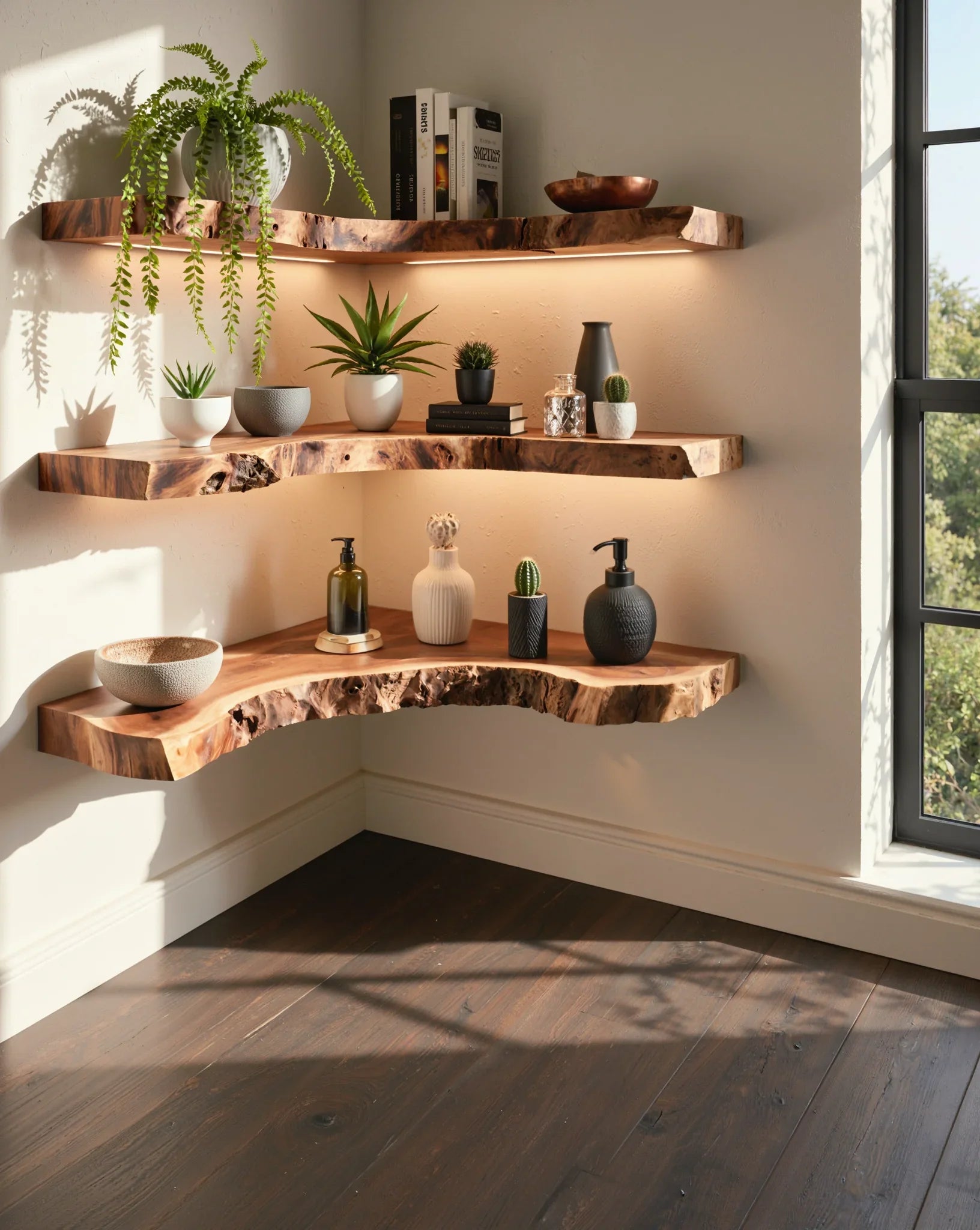
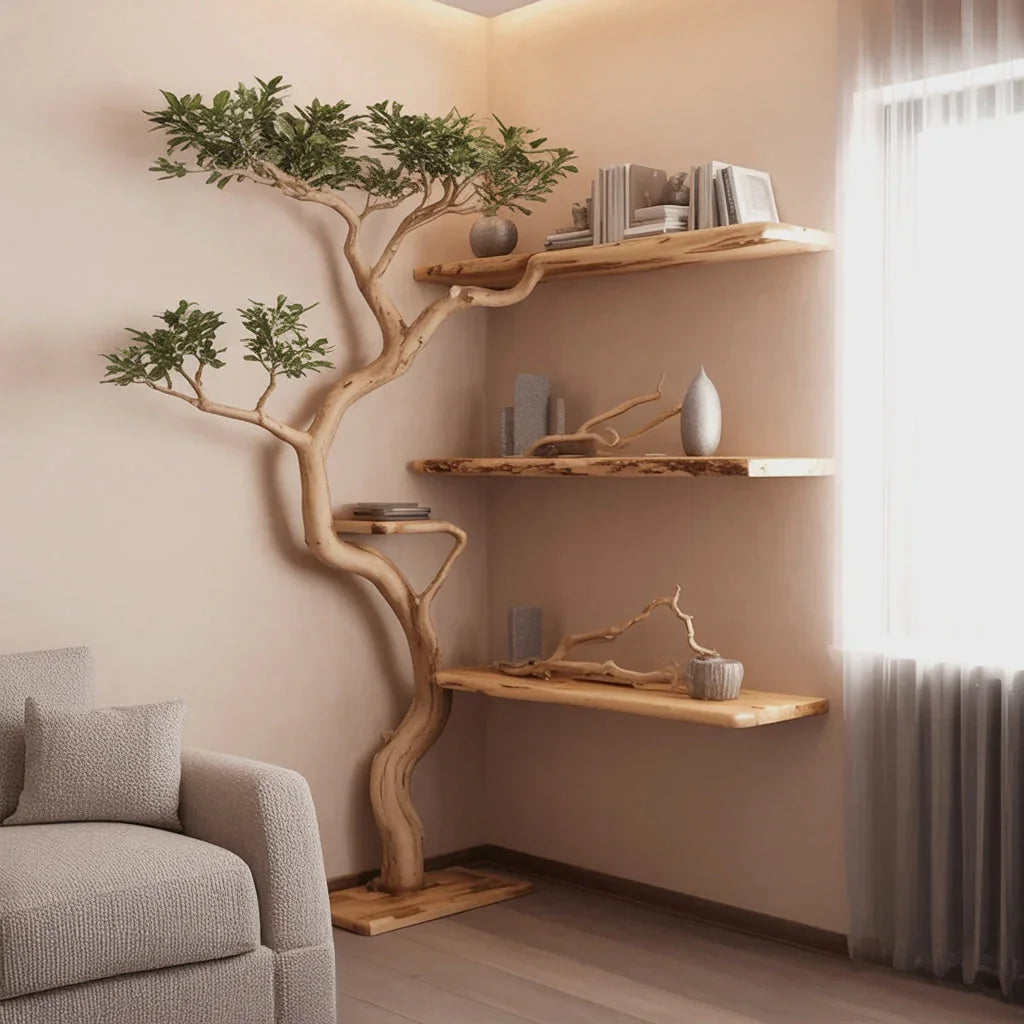
A corner tree bookshelf sounds like a niche idea until you are dealing with a room that has no obvious place for storage. That is why this category works. It uses vertical space, turns an ignored corner into something useful, and gives small rooms a way to hold books without dragging a bulky standard bookcase across the wall.
This guide is about what actually makes a corner tree bookshelf work in small spaces, where it fits best, and when buyers should choose something simpler instead.
Why corner tree bookshelves work better in small spaces than many standard bookcases
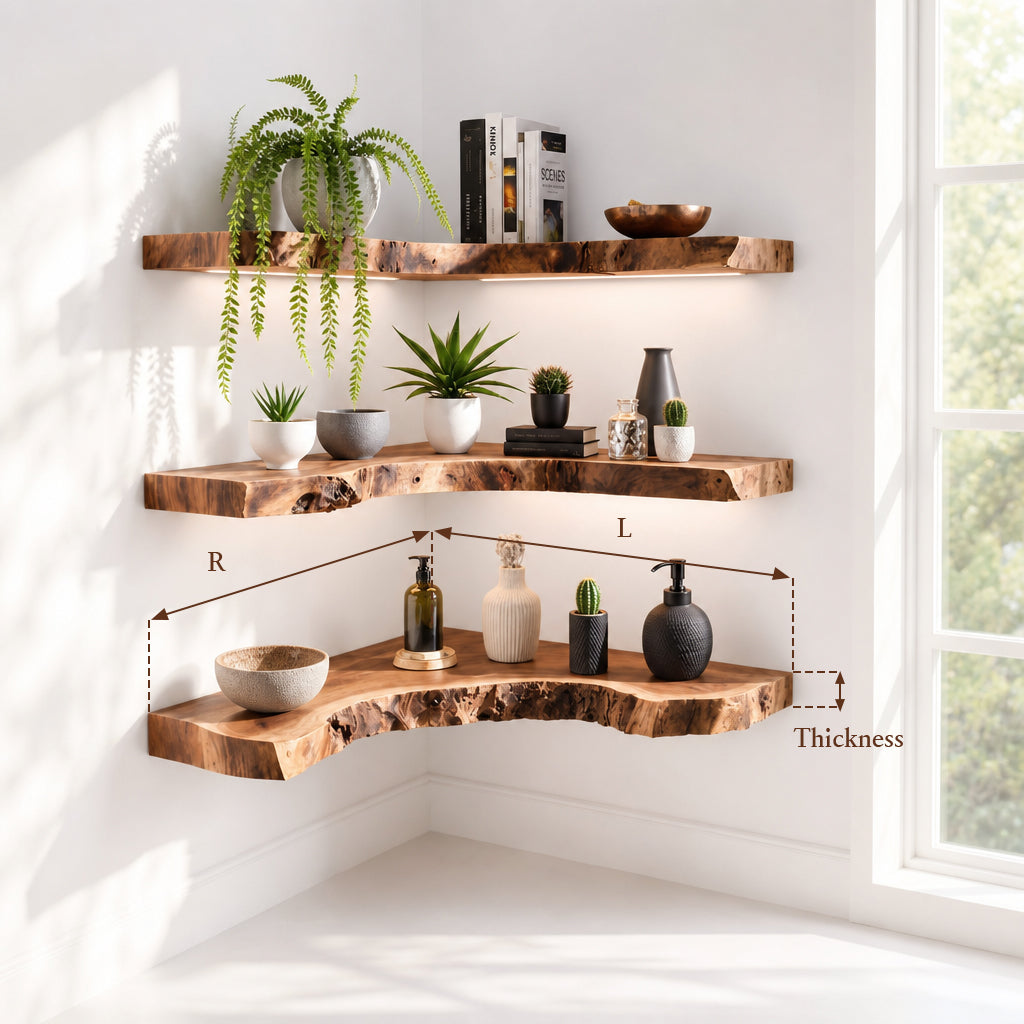
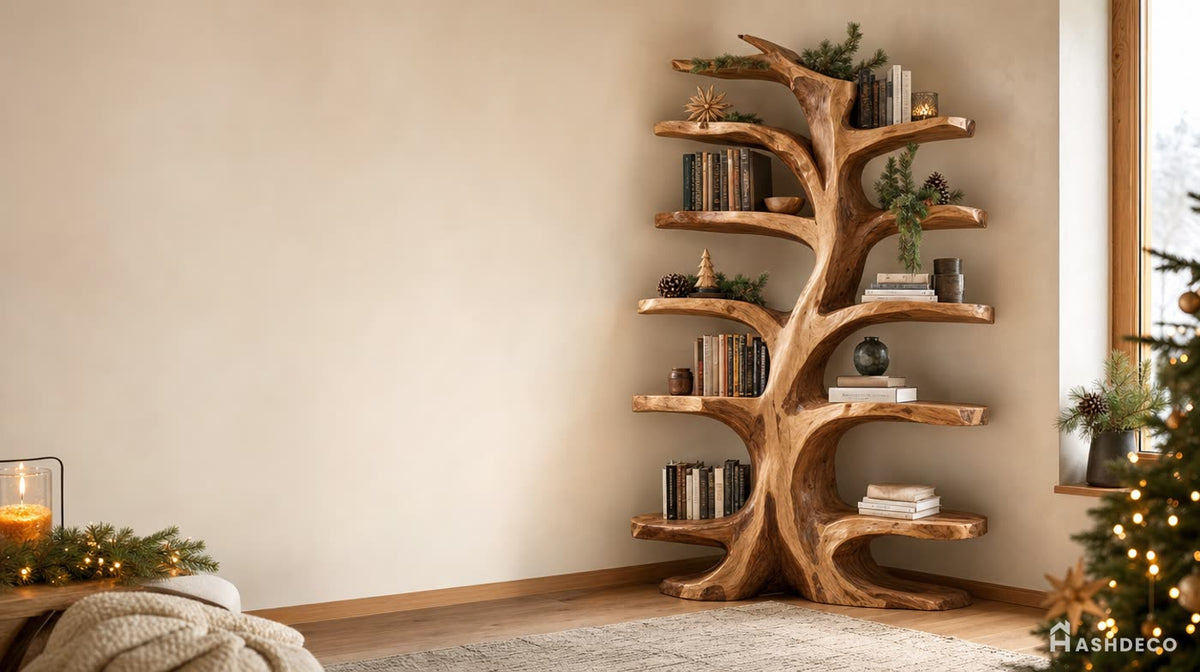
A corner tree bookshelf works in small spaces because it takes advantage of wall junctions that often stay underused. Instead of asking for a wide, flat run of wall, it builds upward and outward from a tighter footprint. That makes it useful in apartments, narrow living rooms, reading corners, and bedrooms where a rectangular bookcase can feel too heavy for the room.
The main win is not only storage. It is storage that does not flatten the room visually.
What problem a corner tree bookshelf actually solves
Many buyers think they need more shelving, but what they really need is better use of awkward floor space. Corners are often too small for full furniture pieces and too visible to leave empty. A corner tree bookshelf solves that by giving you vertical display and storage without demanding the width of a standard bookcase.
That matters most in rooms where every foot of open floor changes how the space feels. In a tight layout, a piece that saves width can matter more than one that technically holds more books.


Best rooms for a corner tree bookshelf
The best rooms for a corner tree bookshelf are the ones where straight wall storage feels too blunt. Living rooms, bedrooms, home offices, and reading corners are the easiest fit. In those spaces, the piece acts as both storage and visual structure, which is why buyers often prefer it over a plain shelf tower.
| Room | Why it works | What to watch |
|---|---|---|
| Living room | Fills a dead corner without widening the layout | Keep nearby seating from feeling crowded |
| Bedroom | Adds vertical storage where floor space is limited | Check door swing and bedside clearance |
| Home office | Creates display space without using desk wall area | Avoid overfilling with mixed clutter |
| Reading corner | Keeps books close without needing a large bookcase | Match scale to the chair and lamp nearby |
What buyers usually get wrong
The biggest mistake is treating a corner tree bookshelf like a regular storage unit. It is not meant to replace a full library wall. It works best when the buyer wants a smaller footprint, visible display, and enough book storage for a room zone rather than an entire collection.
The second mistake is buying only for visual drama. Yes, the shape matters. But the real value is that the angled structure makes a corner feel intentional instead of accidental.
If your room needs broader storage, a more conventional option from the tree bookshelf collection may make more sense.
Don't miss
These pieces qualify for 10% off orders over $2,000. Applied automatically at checkout.
10% off
Tree Bookshelf – Rustic Wooden Book Tree Shelf, Wall-Mounted Natural Wood Décor
$2,099.00
10% off at checkout
10% off
Handcrafted Solid Wood Nursery Decor & Kids' Library
$2,834.00
10% off at checkout
 10% off
Authentic Hand-Carved Solid Wood Tree Bookshelf Daybed - Sculptural Lounge Library
From $3,587.00
10% off at checkout
10% off
Authentic Hand-Carved Solid Wood Tree Bookshelf Daybed - Sculptural Lounge Library
From $3,587.00
10% off at checkout
 10% off
Rustic Tree Shaped Wooden Bookshelf with Branch Design for Living Room or Home Library
$2,145.00
10% off at checkout
10% off
Rustic Tree Shaped Wooden Bookshelf with Branch Design for Living Room or Home Library
$2,145.00
10% off at checkout
How handcrafted solid wood changes the result
A corner tree bookshelf made from solid wood feels very different from a thin factory shelf. The carved structure gives the piece enough presence to hold a corner on its own, which matters in rooms where lightweight furniture can feel temporary or forgettable. When done well, the piece reads as part storage solution and part room anchor, but the storage function still has to come first.
Ashdeco's pieces are handcrafted by Vietnamese artisans, so the shape is more sculpted than the average flat-pack shelf. That matters most in a corner, where the furniture is exposed from multiple angles instead of only head-on.
Example of when this category makes sense
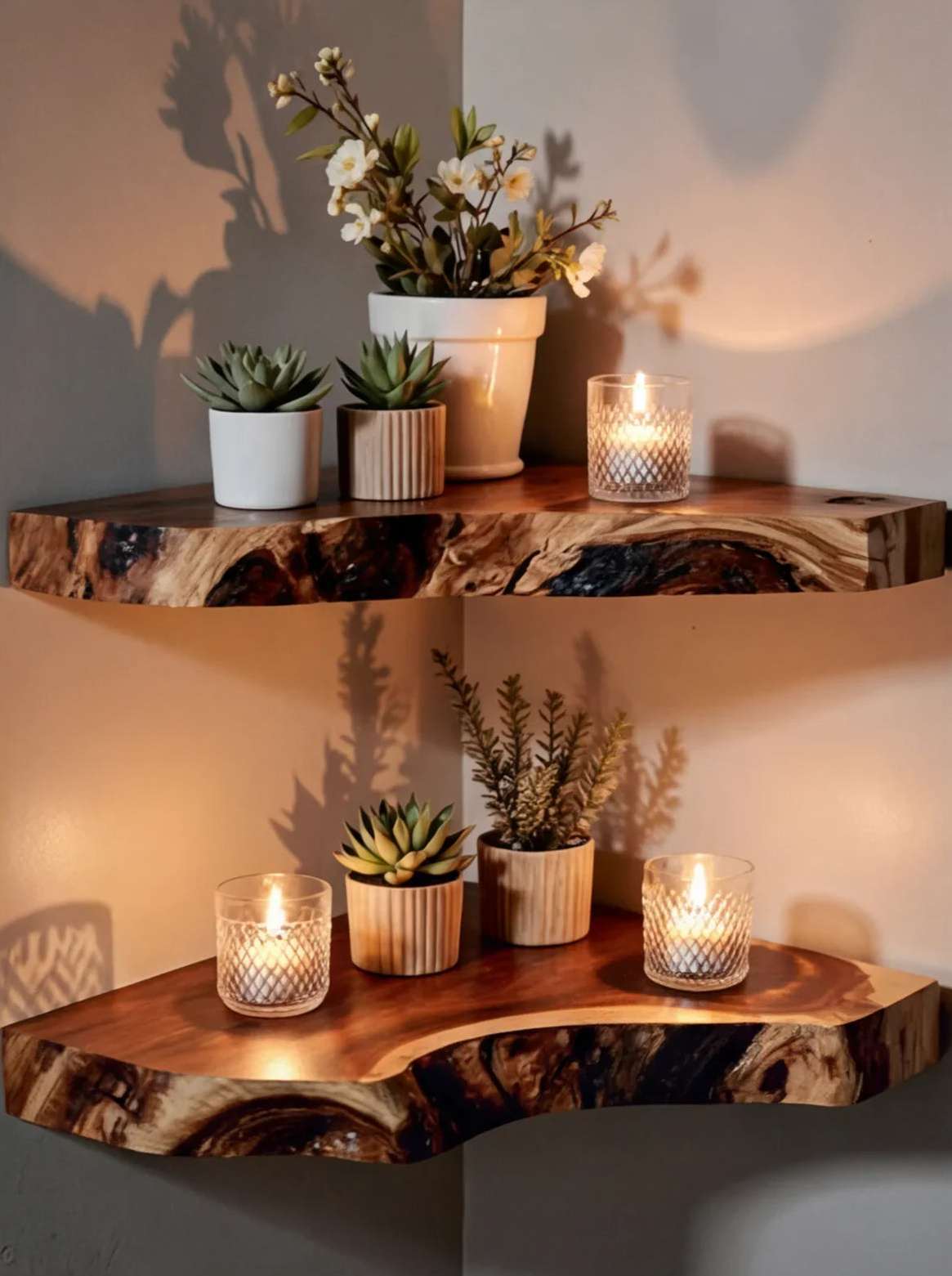
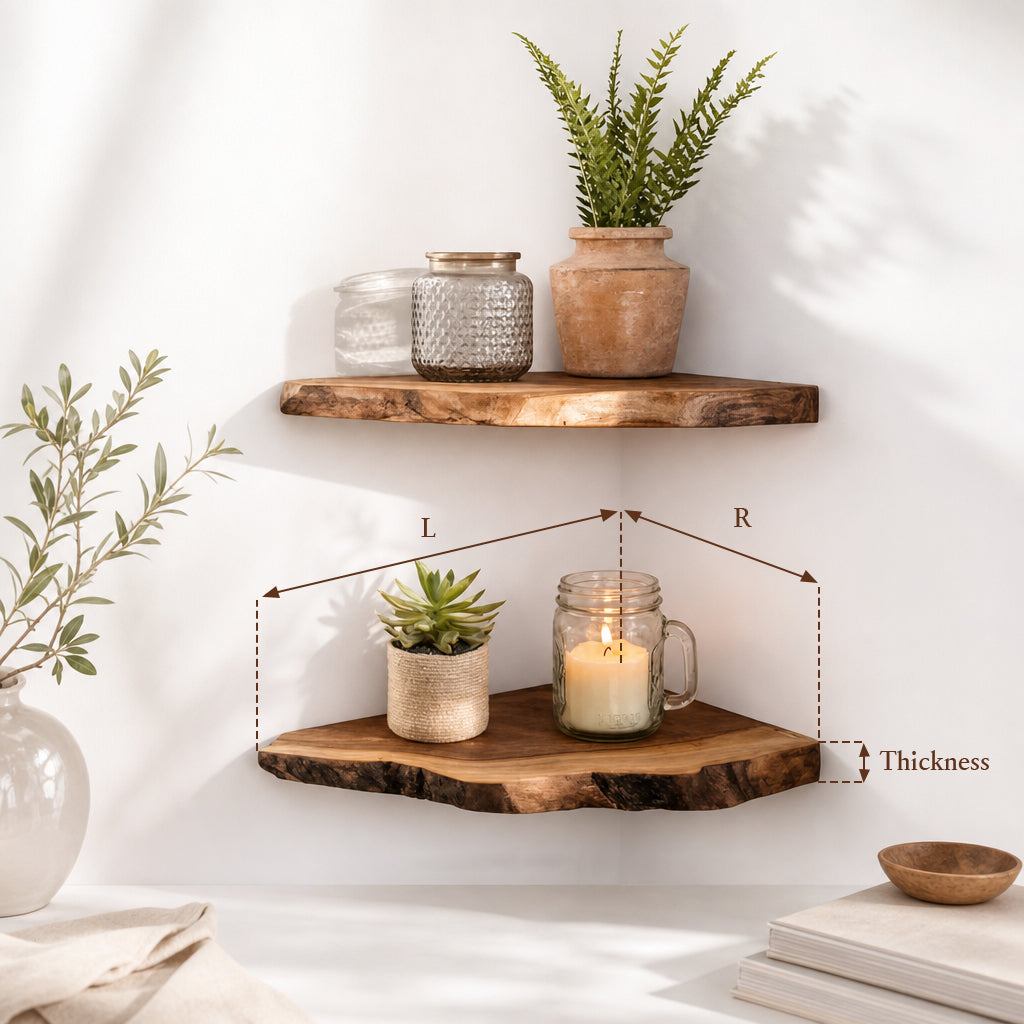
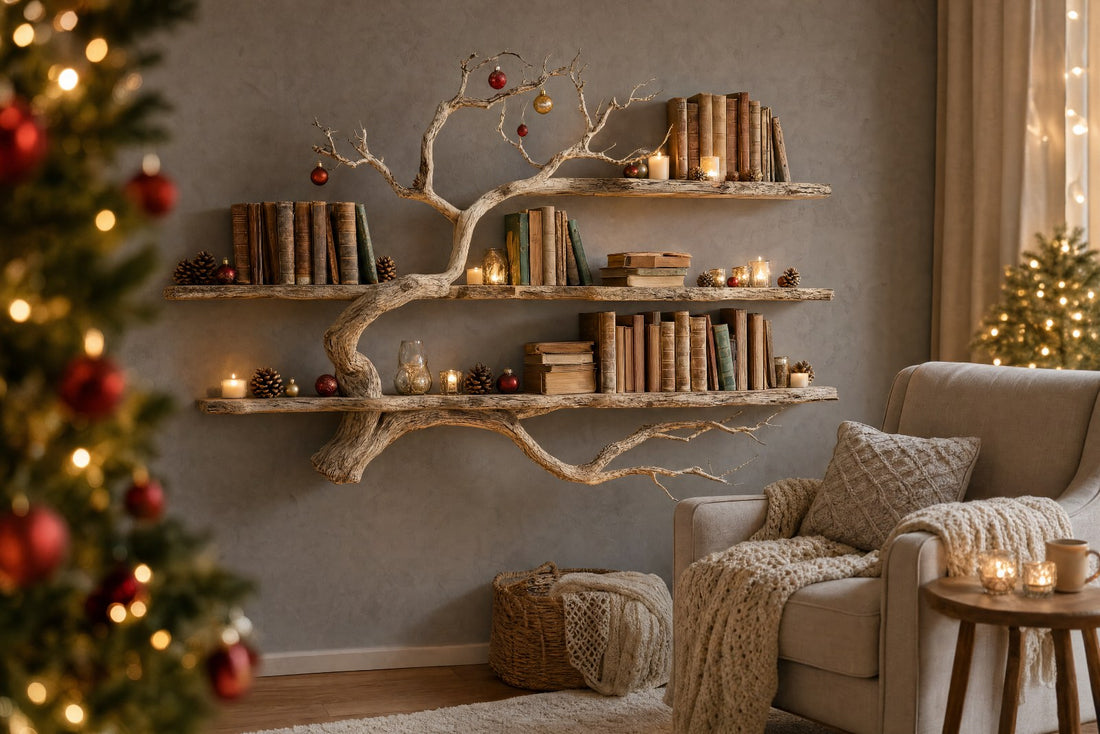
The Corner Tree Floating Bookshelf is a good fit when you want a narrow footprint and a more artistic structure without losing usefulness. It works best for buyers who want books, decor, or framed objects in a corner that would otherwise stay empty.

If you are comparing this with more standard wall storage, also look at floating shelves and ask whether you need display storage, closed visual balance, or simply more linear shelf space.
When a corner tree bookshelf is the wrong choice
This category is the wrong choice if you need maximum storage density, not better corner use. It is also less ideal if the room already has a lot of sculptural furniture competing for attention. In those cases, a cleaner shelf shape or a standard bookcase may perform better.
It is also not the best answer for buyers who want fully hidden storage. A corner tree bookshelf is visible by nature. That visibility is part of the appeal and part of the tradeoff.
Honest downsides
A corner tree bookshelf will not hold as much as a full-width standard bookcase. Buyers who expect it to replace a large wall unit usually end up disappointed. The piece works best as smart corner storage, not as maximum-capacity storage.
There is also more style commitment here than with a plain shelf. That is a strength when the room needs character, but a downside if you are trying to keep everything visually neutral.
My recommendation
If your room has a dead corner and you want storage that feels more intentional than a plain shelf tower, this category is worth considering. If your real problem is volume, skip the romantic angle and choose broader shelving instead.
That is the cleanest way to think about it. A corner tree bookshelf is best when the room needs smarter use of space, not just more places to stack books.
FAQ
Are corner tree bookshelves good for small apartments?
Yes, especially when the apartment has awkward corners and limited wall space. They use vertical storage without needing the width of a standard bookcase.
Do corner tree bookshelves hold a lot of books?
They can hold a useful amount, but they are not the best choice for maximum storage density. They work better as targeted room storage than as a full library solution.
What room is best for this kind of bookshelf?
Living rooms, reading corners, and bedrooms are usually the strongest fit because the piece can add both function and visual structure without overwhelming the space.
Are they better than standard bookcases?
Not in every case. They are better when you need to use a corner efficiently. Standard bookcases are better when you need straightforward storage volume.
Why does material matter here?
Because the bookshelf is visible from several angles, material and shape affect the whole room. Solid wood gives the piece more presence and a more finished look than thin factory shelving.