


















Quick view
- What Makes a Tree Bookshelf Different from Regular Shelving
- Wall-Mounted Tree Bookshelf: Best for Small Spaces
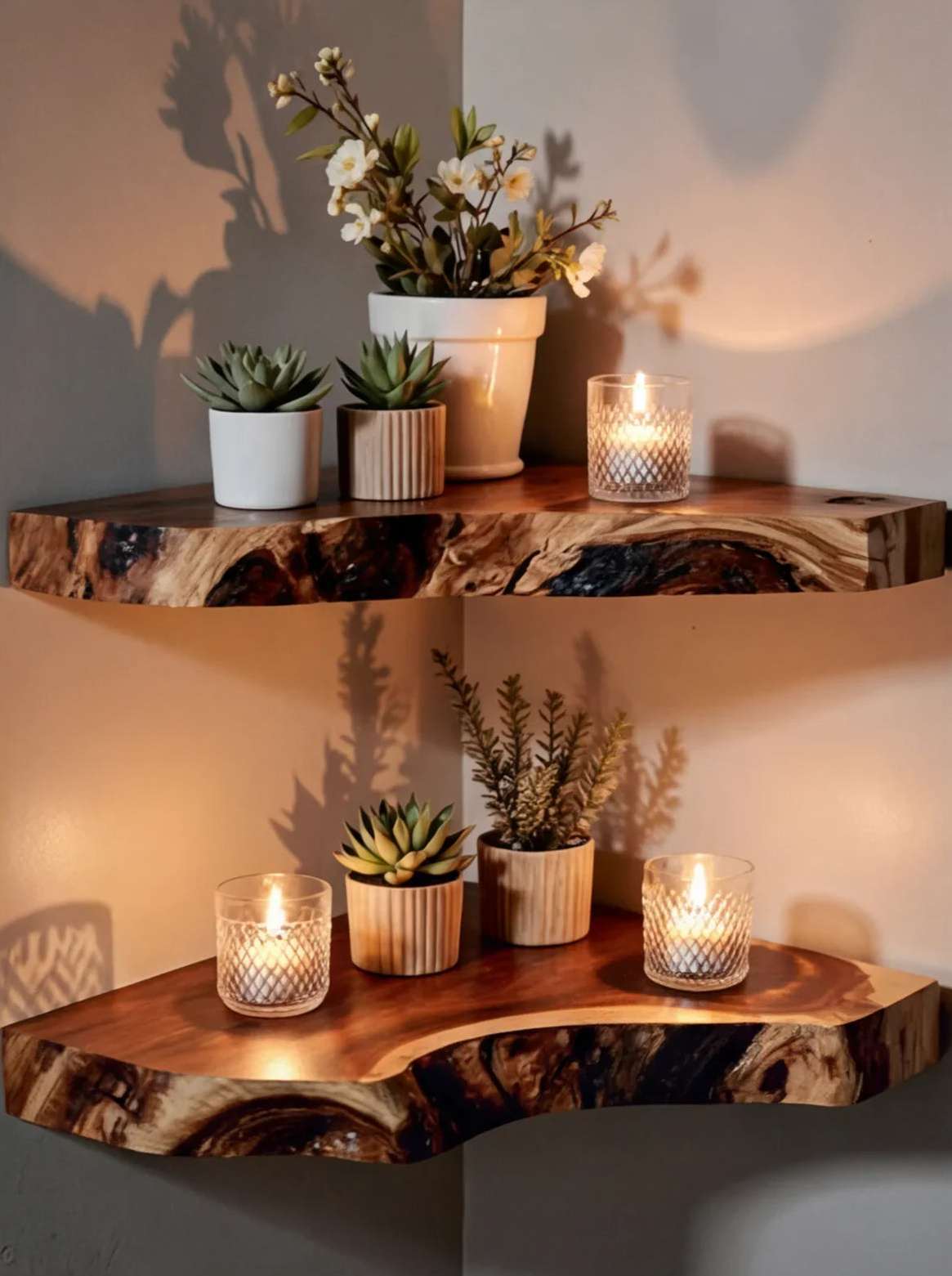
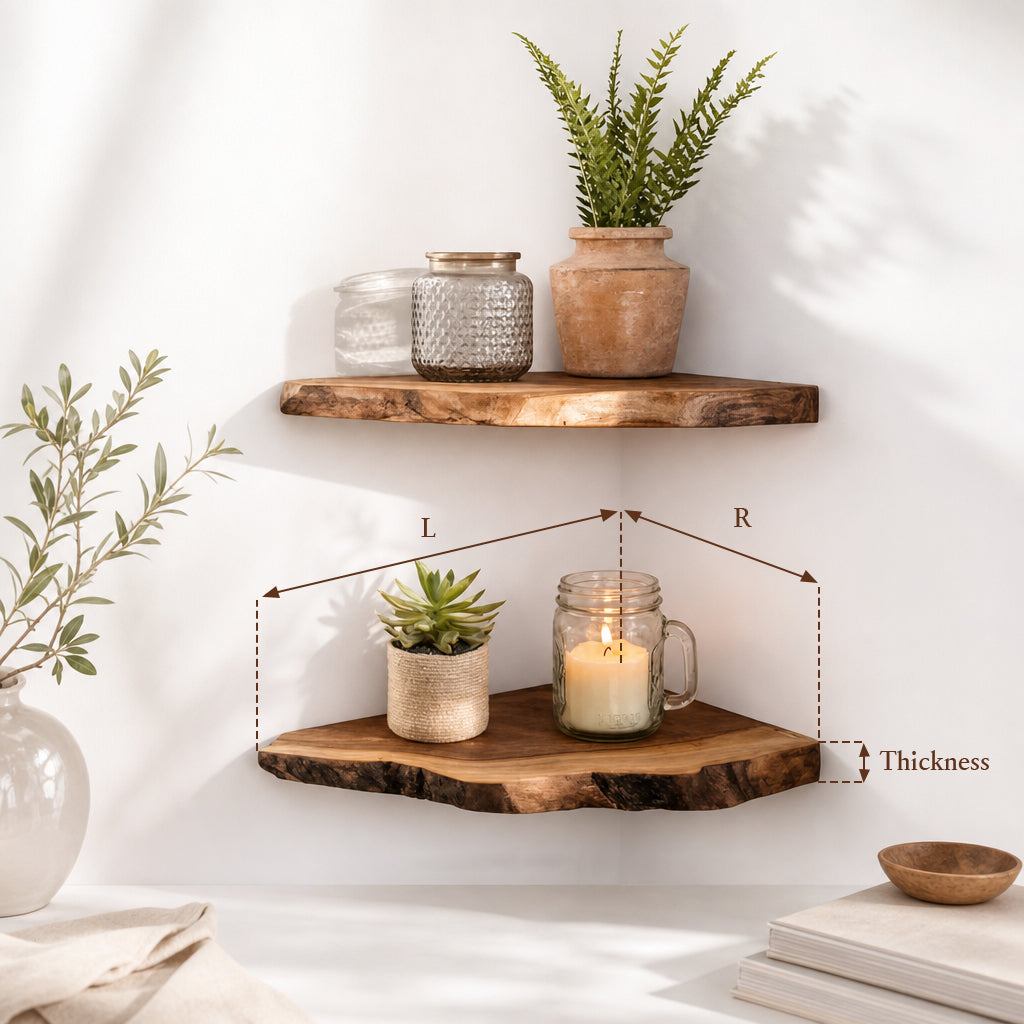
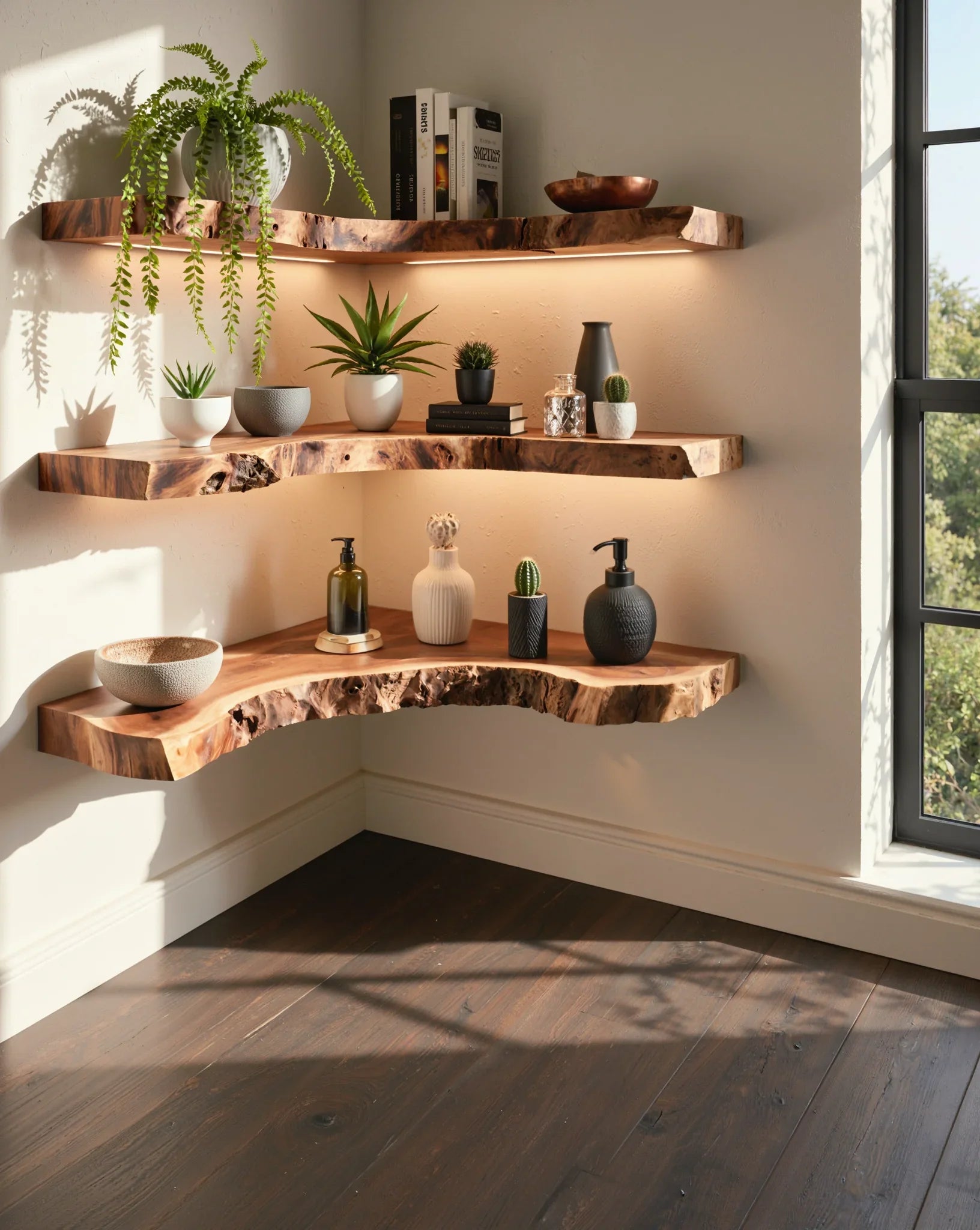
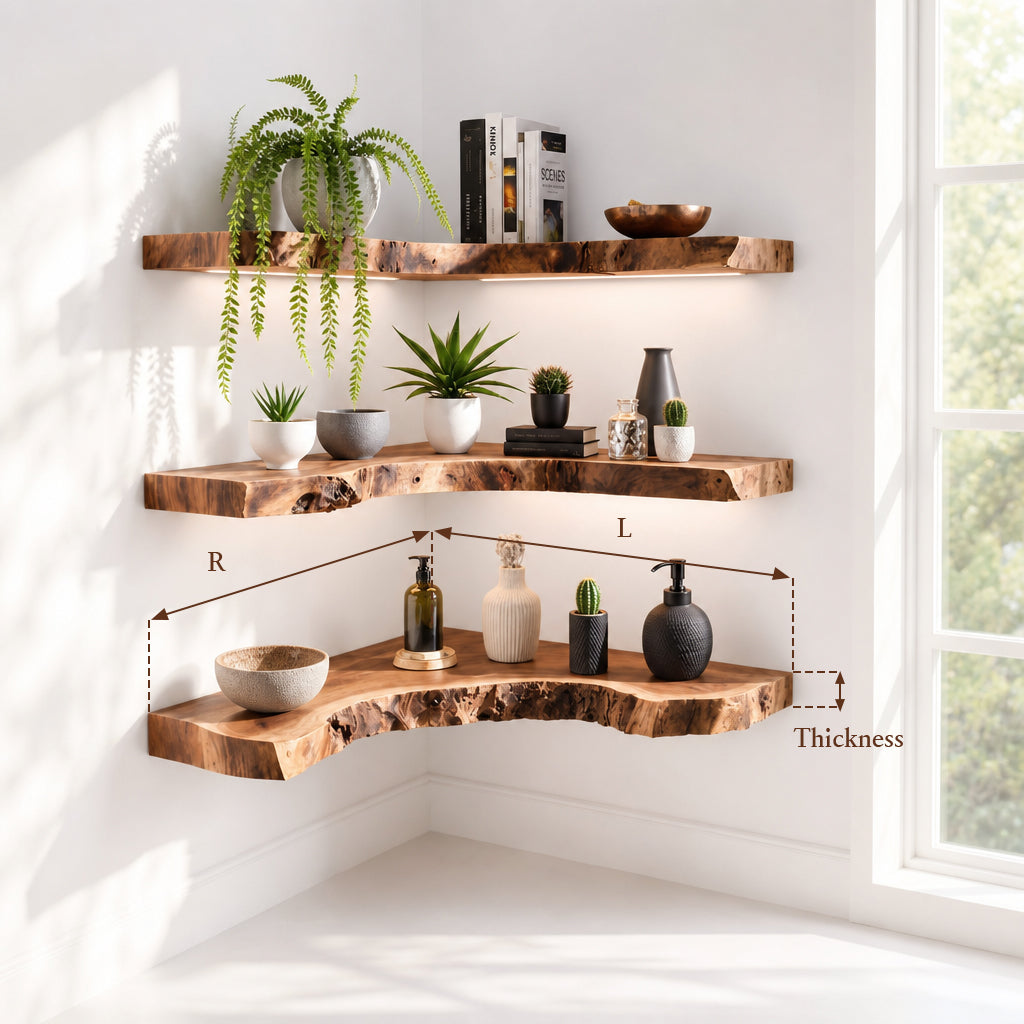
- Corner Tree Bookshelf: Using Space Most People Waste
- Freestanding Tree Bookshelf: Maximum Flexibility
- Solid Wood vs MDF Tree Bookshelves: The Honest Comparison
- What to Look for When Buying a Tree Bookshelf
- Best Rooms for a Tree Bookshelf
- How Handcrafted Tree Bookshelves Are Made
- How to Mount a Wall Tree Bookshelf
- Frequently Asked Questions
Shop this guide
Handcrafted Tree Bookshelf, made to order in solid wood.
 Christmas edit
Corner Tree Floating Bookshelf – Driftwood Branch Wall Mounted Hanging Shelf, Artistic Corner Furniture Decoration
From $901.00
Christmas edit
Corner Tree Floating Bookshelf – Driftwood Branch Wall Mounted Hanging Shelf, Artistic Corner Furniture Decoration
From $901.00
 Christmas edit
Handcrafted Wooden Tree Wall Shelf – Rustic Branch Bookshelf
From $1,087.00
Christmas edit
Handcrafted Wooden Tree Wall Shelf – Rustic Branch Bookshelf
From $1,087.00
 Christmas edit
Solid Wood Floating Corner Shelf – Driftwood Branch Wall Shelf
From $789.00
Christmas edit
Solid Wood Floating Corner Shelf – Driftwood Branch Wall Shelf
From $789.00
 Christmas edit
Tree Bookshelf – Rustic Wooden Book Tree Shelf, Wall-Mounted Natural Wood Décor
$2,099.0010% off at checkout
Christmas edit
Tree Bookshelf – Rustic Wooden Book Tree Shelf, Wall-Mounted Natural Wood Décor
$2,099.0010% off at checkout
 Christmas edit
Handcrafted Solid Wood Nursery Decor & Kids' Library
$2,834.0010% off at checkout
Christmas edit
Handcrafted Solid Wood Nursery Decor & Kids' Library
$2,834.0010% off at checkout
 Christmas edit
Floating Bookshelf – Tree Branch Wall-Mounted Bookcase for Rustic Home Decor
From $1,000.00
Christmas edit
Floating Bookshelf – Tree Branch Wall-Mounted Bookcase for Rustic Home Decor
From $1,000.00
What Makes a Tree Bookshelf Different from Regular Shelving
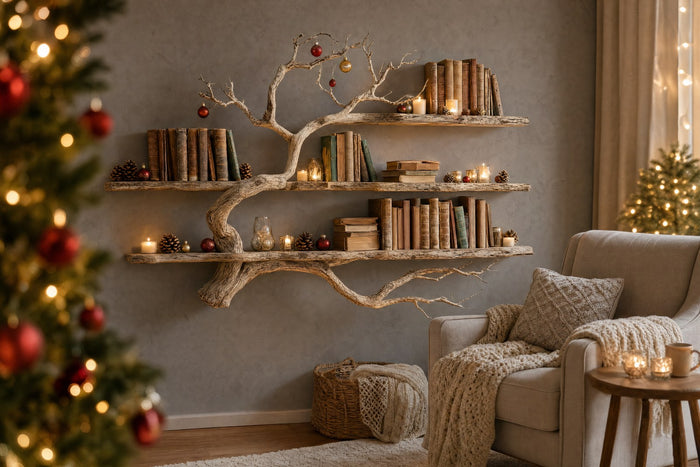
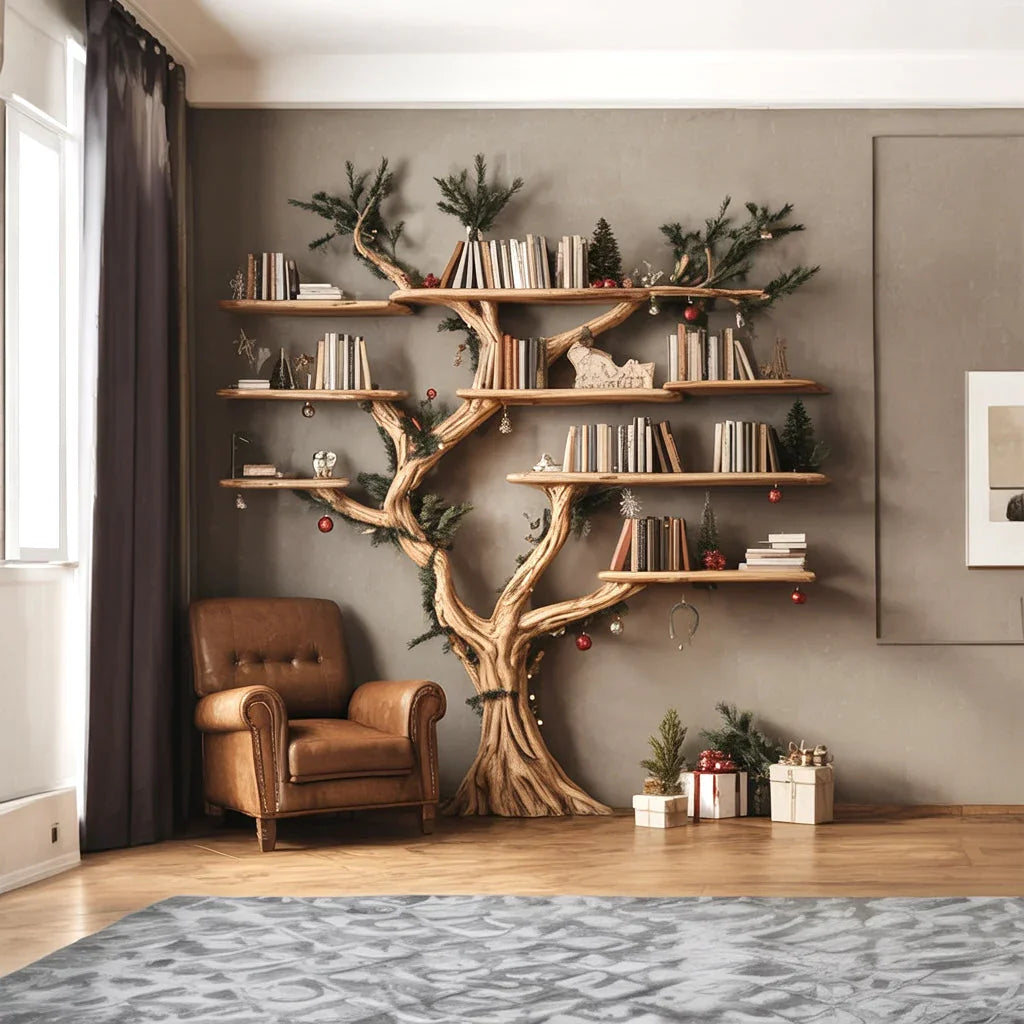
A tree bookshelf mimics the organic shape of a tree trunk and branches. The branches function as shelves, creating an asymmetric, nature-inspired storage unit that doesn't look like it came from a flat-pack catalog.
There are three main types:
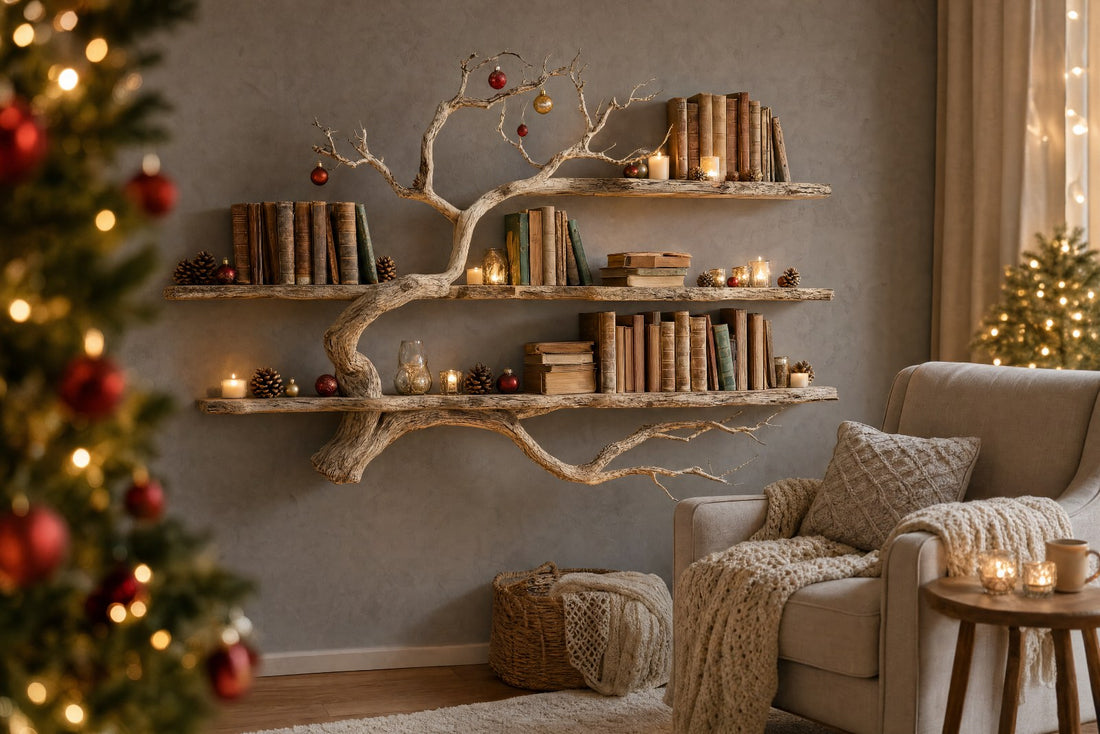
- Wall-mounted tree shelves — attached directly to the wall, branches extend outward to hold books and decor. Floor stays completely clear.
- Corner tree bookshelves — designed to fit into room corners, maximizing dead space. Branches spread along two walls.
- Freestanding tree bookshelves — standalone pieces that sit on the floor. No wall mounting required. Easy to move but take up floor space.
The best versions are carved from solid wood — each branch shaped by hand, then assembled into a modular structure. That's what separates a real tree bookshelf from a printed-MDF imitation: the grain, the weight, the slight imperfections that prove a human made it.
Wall-Mounted Tree Bookshelf: Best for Small Spaces
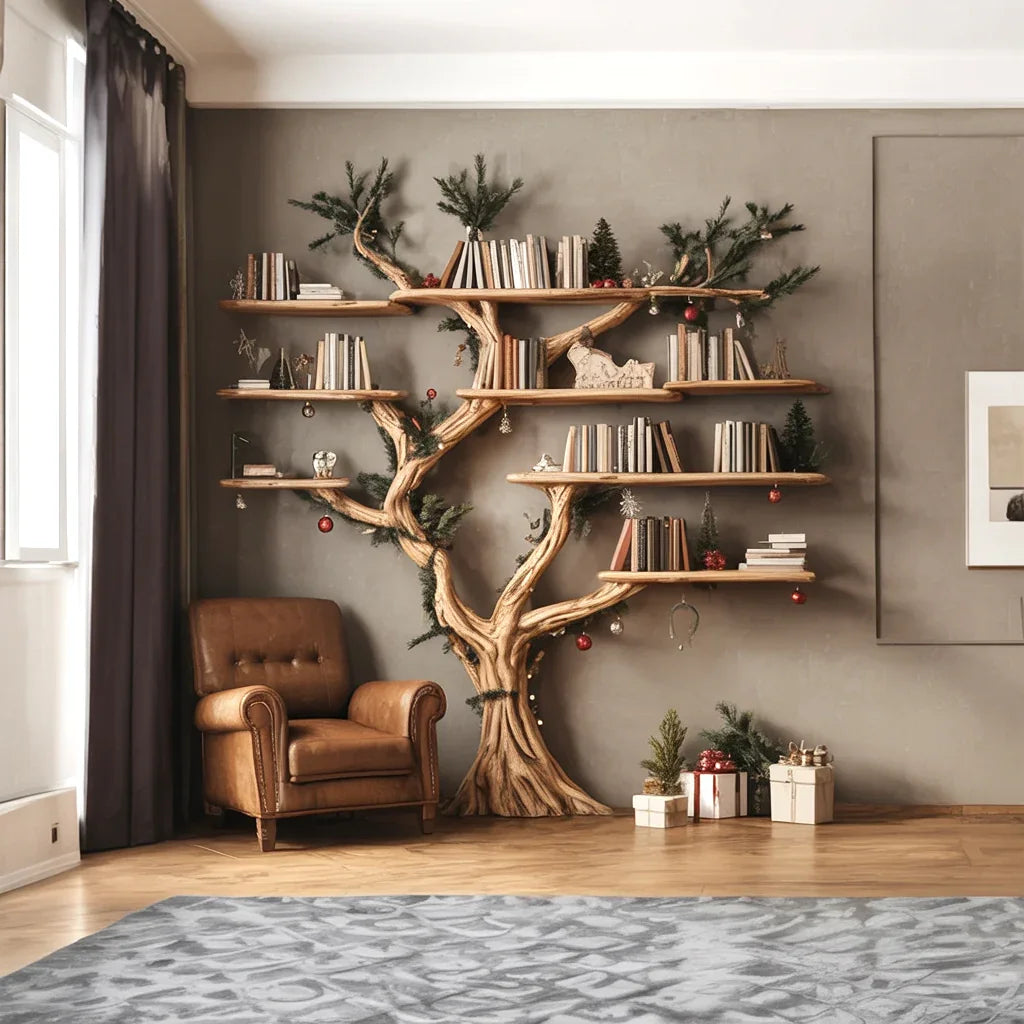
If your floor space is limited , apartment, studio, narrow hallway , a wall-mounted tree shelf is the smartest choice.
Why it works: The entire unit hangs from the wall. Nothing touches the floor. You get vertical storage without sacrificing a single square foot of living space. In a 10x12 foot room, that matters.
What to check before buying:
- Wall construction. You need studs or solid blocking. Drywall anchors alone won't hold a loaded bookshelf.
- Weight capacity. A solid wood wall tree bookshelf with books can weigh 30-60 pounds. Make sure your mounting hardware matches.
- Branch depth. Most wall tree shelves have branches 6-10 inches deep. Standard paperbacks need about 6 inches. Coffee table books need 10+.
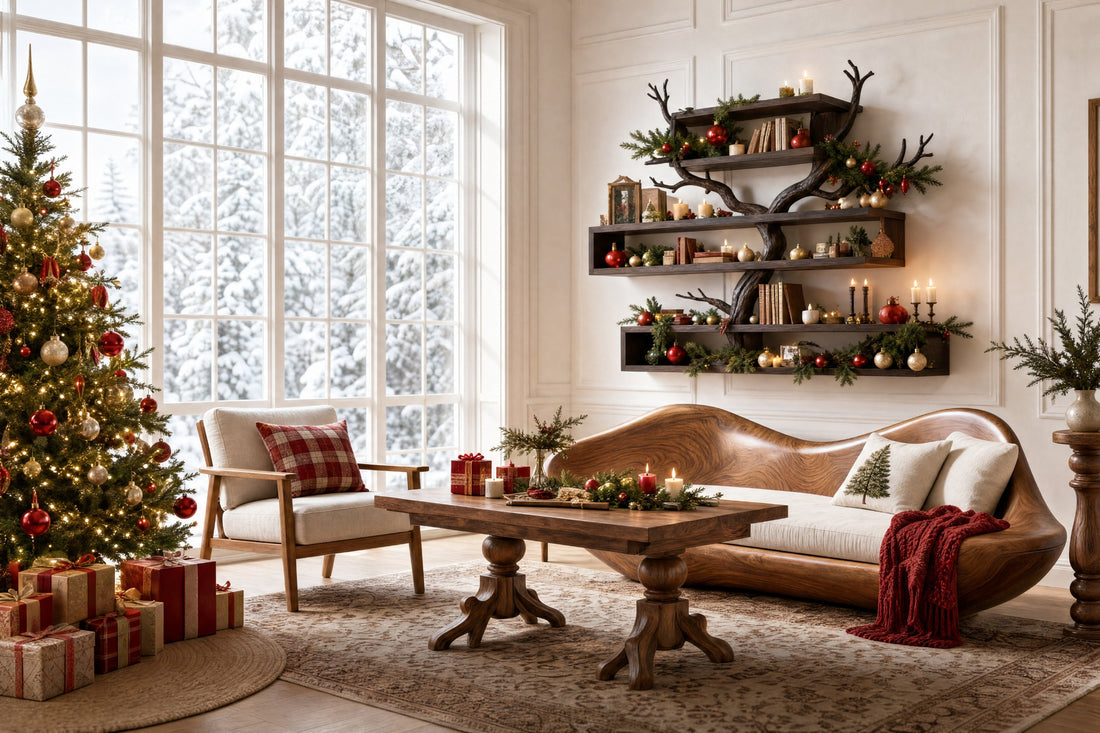
Styling tip: Wall-mounted tree shelves look best when you don't overload them. Leave some branches empty or use them for small plants and objects. The negative space is part of the design , fill every branch and it just looks cluttered.


Corner Tree Bookshelf: Using Space Most People Waste
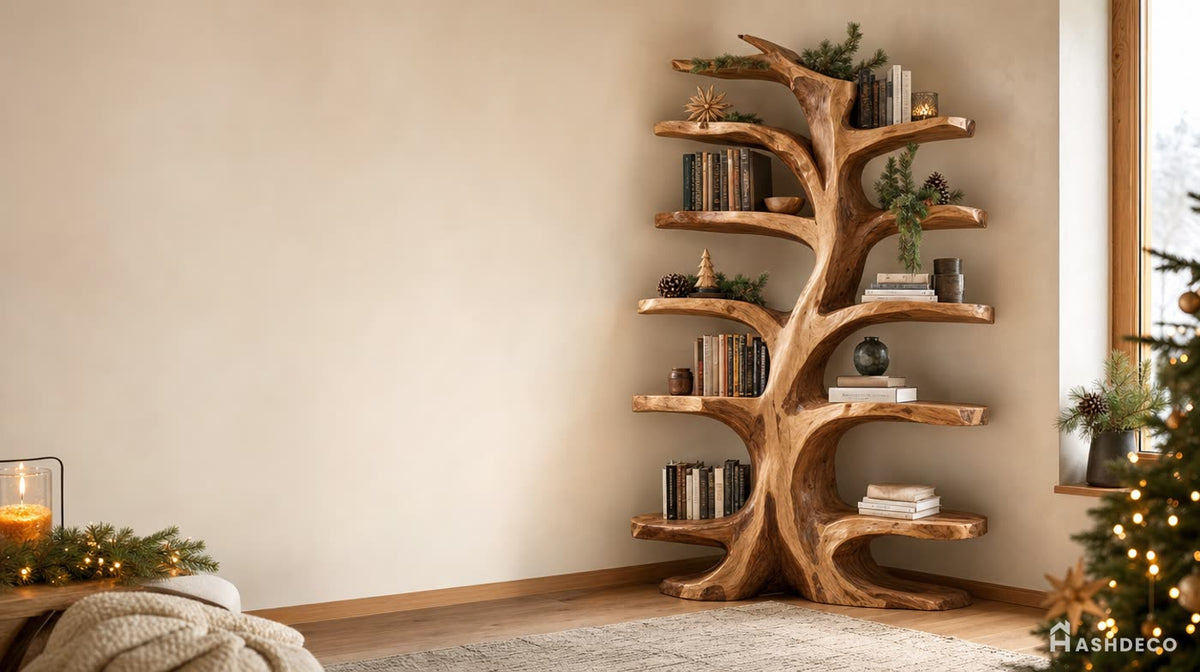
Room corners collect dust. Or they get a sad little plant that nobody waters. A corner tree bookshelf turns that dead space into the most interesting part of the room.
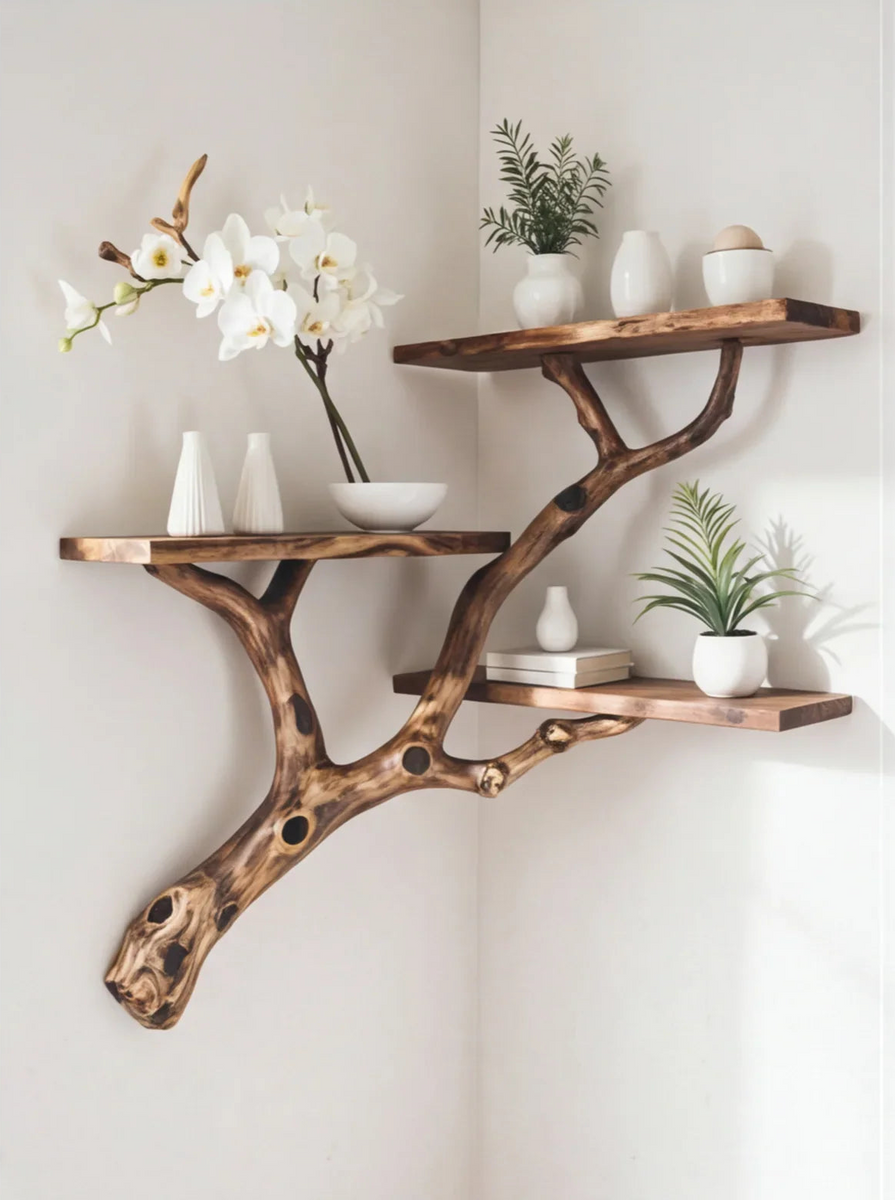
Why corners work so well for tree shelves: Tree branches naturally spread outward. In a corner, branches extend along two walls, creating a wider display than a flat-wall mount. The visual effect is bigger than the actual footprint.
Size guide for corners:
| Room Size | Recommended Height | Branch Spread |
|---|---|---|
| Small bedroom/office | 3-4 feet | 18-24 inches |
| Standard living room | 5-6 feet | 24-36 inches |
| Large room / high ceiling | 7-8 feet | 36-48 inches |
Pro tip: Corner tree bookshelves work especially well in rooms with vaulted or high ceilings. A tall tree design draws the eye upward and makes the ceiling feel intentional rather than empty.
Freestanding Tree Bookshelf: Maximum Flexibility
Don't want to drill into your walls? Renting and can't modify the space? A freestanding tree bookshelf gives you the same organic look without any wall damage.
Pros:
- No installation , just place and load
- Easy to move between rooms
- Works as a room divider in open floor plans
- No wall strength requirements
Cons:
- Takes floor space (typically 18-24 inch base)
- Needs a flat, level surface
- Can tip if overloaded on one side , look for weighted bases
Freestanding models range from small tabletop designs (2-3 feet) to full floor-to-ceiling pieces (7+ feet). For stability, the taller the tree, the wider the base should be.
Don't miss
These pieces qualify for 10% off orders over $2,000. Applied automatically at checkout.
10% off
Tree Bookshelf – Rustic Wooden Book Tree Shelf, Wall-Mounted Natural Wood Décor
$2,099.00
10% off at checkout
10% off
Handcrafted Solid Wood Nursery Decor & Kids' Library
$2,834.00
10% off at checkout
 10% off
Authentic Hand-Carved Solid Wood Tree Bookshelf Daybed - Sculptural Lounge Library
From $3,587.00
10% off at checkout
10% off
Authentic Hand-Carved Solid Wood Tree Bookshelf Daybed - Sculptural Lounge Library
From $3,587.00
10% off at checkout
 10% off
Rustic Tree Shaped Wooden Bookshelf with Branch Design for Living Room or Home Library
$2,145.00
10% off at checkout
10% off
Rustic Tree Shaped Wooden Bookshelf with Branch Design for Living Room or Home Library
$2,145.00
10% off at checkout
Solid Wood vs MDF Tree Bookshelves: The Honest Comparison
This is where most people get burned. An MDF tree bookshelf from a big box store costs $80-150. A solid wood version costs $200-800. Three times the price , is it worth it?
Short answer: yes. Here's why:
| Factor | Solid Wood | MDF / Particleboard |
|---|---|---|
| Weight (stability) | Heavy , stays put | Light , tips easier |
| Durability | Decades with basic care | 2-5 years before sagging |
| Humidity resistance | Natural moisture resistance | Swells and warps when wet |
| Repairability | Can sand, refinish, repair | Damage is permanent |
| Appearance over time | Develops character (patina) | Peels, chips, fades |
| Environmental impact | Biodegradable, renewable | Contains formaldehyde resins |
| Resale value | Holds value, vintage appeal | Worth nothing used |
The $80 MDF bookshelf is cheap because it's designed to be disposable. If you move it twice, one of the branches will snap at the joint because MDF has zero structural flexibility. Try fixing that with wood glue , it doesn't hold.
Solid hardwood tree bookshelves aren't just more durable. They sound different when you knock on them, feel different when you touch them, and look completely different after five years. Wood gets better. MDF gets worse.
What to Look for When Buying a Tree Bookshelf
1. Construction Method
Best: Individual branches carved from solid wood, then assembled modularly. Each piece fits together with joinery (dowels, mortise and tenon) rather than just screws.
Acceptable: Solid wood with some metal bracket support. Still durable, just less elegant construction.
Avoid: MDF with printed wood-grain texture. Hollow branches. Visible staple marks. If the product photos don't show close-up grain detail, there's a reason.
2. Wood Species
- Acacia , beautiful grain patterns, naturally moisture-resistant, medium hardness. Great all-around choice.
- Teak , premium durability, naturally oily (resists water), expensive.
- Walnut , dark, rich color. Softer than acacia but striking.
- Pine , affordable, light-colored. Dents easily but takes stain well.
- Mango wood , sustainable (harvested from fruit-bearing trees past production), unique grain.
3. Finish Quality
A good finish protects the wood and enhances the grain without hiding it. Look for natural oil or wax finishes (let you feel the wood texture), matte or satin polyurethane (more protection, slight sheen). Avoid thick glossy lacquer , it hides the wood and chips over time. Look for certifications from the Forest Stewardship Council (FSC) to ensure sustainable sourcing.
4. Weight Capacity Per Branch
Most solid wood tree bookshelves hold 10-20 pounds per branch. A standard hardcover book weighs about 1.5 pounds. So one branch holds 6-13 books comfortably. Always check the manufacturer's listed capacity. If they don't list one, ask. If they can't answer, that tells you something.
Best Rooms for a Tree Bookshelf
Living Room
The obvious choice. A tree bookshelf in the living room becomes the focal point without trying. Place it next to a reading chair or behind a sofa. Mix books with small decor , a plant on one branch, a photo frame on another, books filling the rest.
Home Office
A tree shelf behind your desk in video calls is the kind of background that makes people ask about it. Functional and visually interesting , better than a plain shelf or a bare wall.
Kids' Room / Nursery
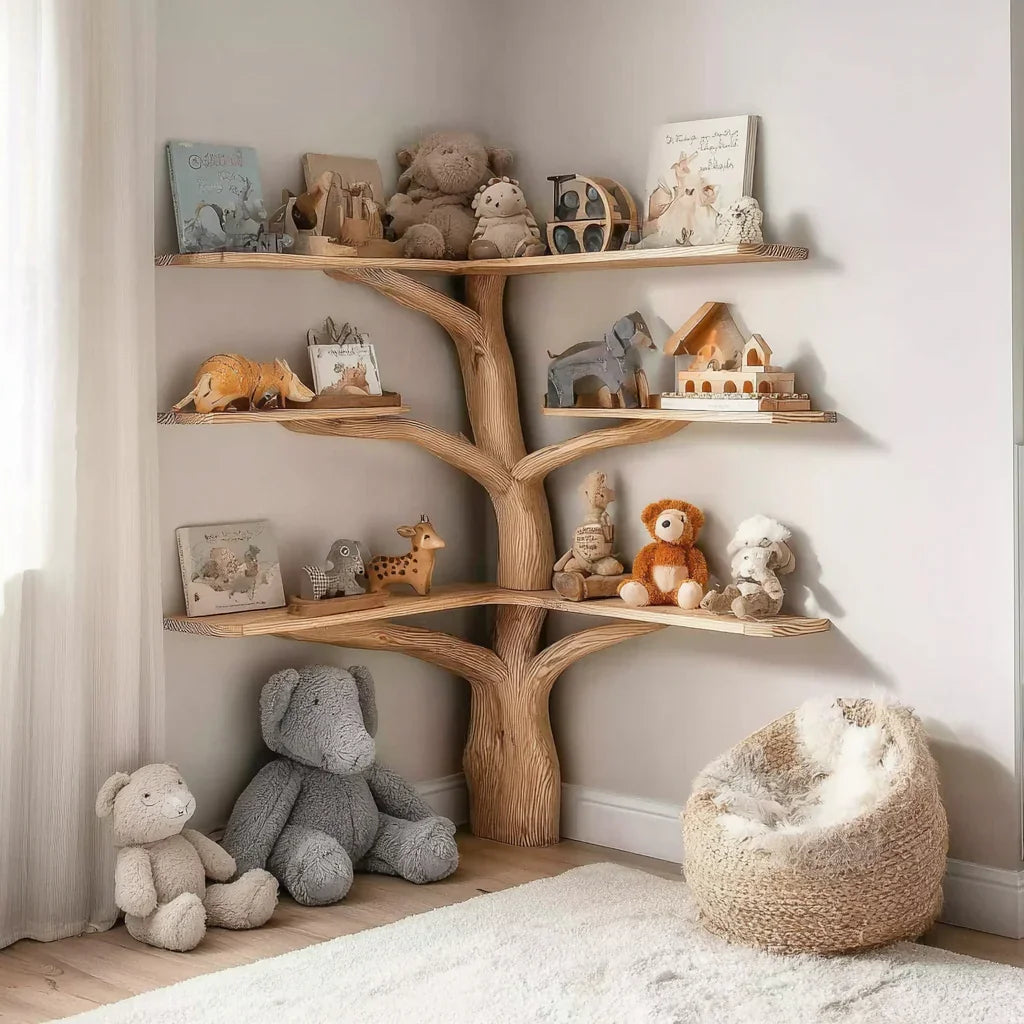
Kids love tree bookshelves. The organic shape makes story time feel like an adventure. Choose lower-profile models so kids can reach their own books. Rounded branch edges are important for safety.
Bedroom
A small wall-mounted tree shelf replaces a traditional nightstand. Mount it next to the bed at arm height , keeps your current read, phone, and a small plant within reach without taking floor space.
Entryway
A narrow tree shelf by the front door holds keys, sunglasses, mail, and a small plant. It's the first thing guests see and immediately signals that this home has personality.
How Handcrafted Tree Bookshelves Are Made
Factory tree bookshelves are stamped from molds , every unit identical. Handcrafted versions follow a completely different process:
- Wood selection. Artisans choose wood pieces with interesting grain patterns, knots, and natural variations.
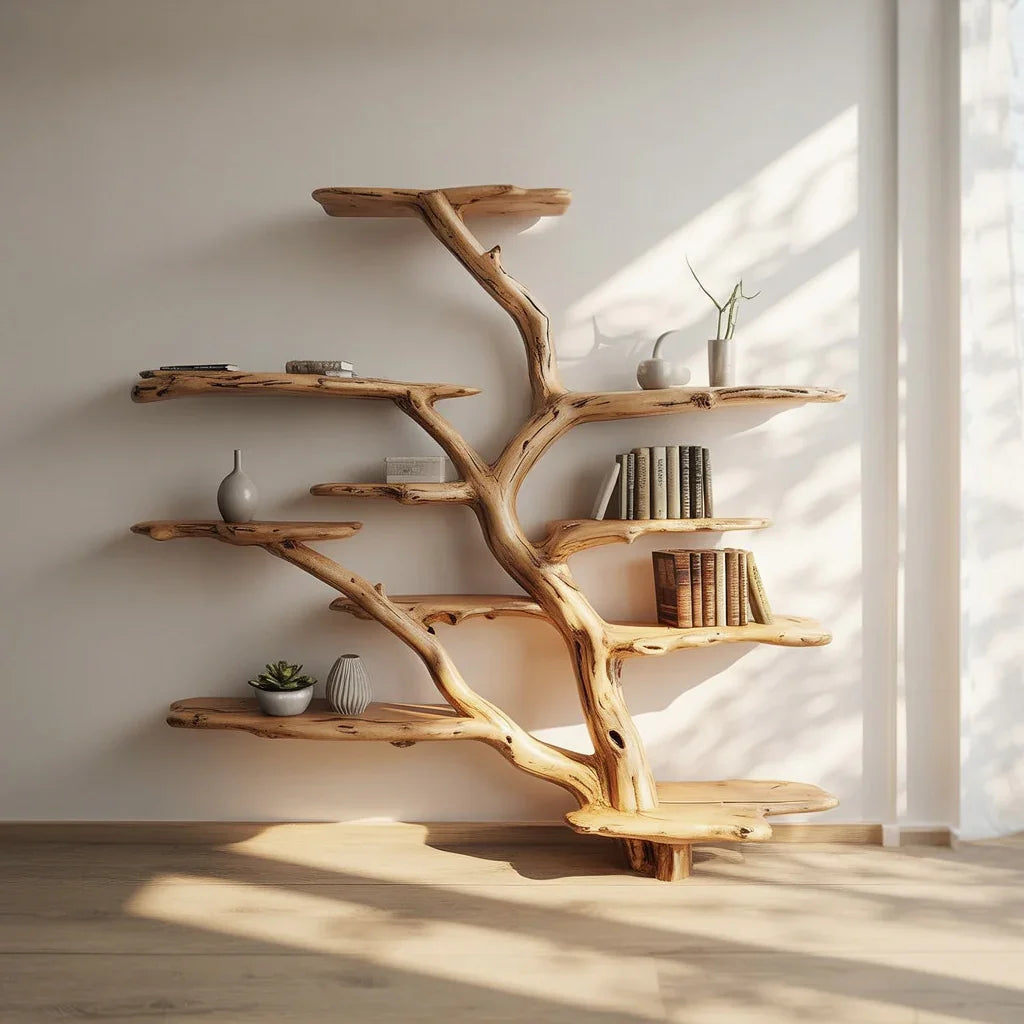
- Trunk carving. The main trunk is shaped from a solid piece , hand tools remove material to create the organic tree form.
- Branch shaping. Each branch is carved separately, following the natural direction of the wood grain for maximum strength.
- Modular assembly. Branches attach to the trunk with precision joinery. The modular design allows flat shipping without sacrificing structural integrity.
- Finishing. Multiple coats of natural oil or sealant protect the wood while preserving its texture and color.
At Ashdeco, Vietnamese artisans handcraft every tree bookshelf from solid wood. No two pieces are identical because no two pieces of wood are identical. The knots, grain direction, and color variations in each shelf are what make it yours , not a copy of ten thousand others sitting in a warehouse.
How to Mount a Wall Tree Bookshelf
Tools needed: Stud finder, level, drill, lag screws or heavy-duty wall anchors, pencil.
Steps:
- Find your studs. Mark at least two , tree bookshelves need multiple anchor points.
- Hold the shelf (or its mounting bracket) against the wall. Use a level to check alignment. Mark screw holes with a pencil.
- Pre-drill into the studs. Use lag screws for the strongest hold.
- Mount the bracket or cleat first, then hang the shelf.
- Load gradually , add books over a few days rather than all at once. This lets you spot any settling.
Critical: Never mount a tree bookshelf into drywall alone. The combined weight of wood + books will pull the anchors out within weeks.
Frequently Asked Questions
How much weight can a tree bookshelf hold?
A solid wood tree bookshelf typically holds 10-20 pounds per branch, with a total capacity of 50-150 pounds depending on size, wood species, and mounting method. Wall-mounted versions transfer weight to wall studs, so the limiting factor is your wall construction. Freestanding models hold more total weight since the floor bears the load, but individual branch capacity remains similar.
Are tree bookshelves good for small rooms?
Tree bookshelves are excellent for small rooms, especially wall-mounted and corner designs. A wall-mounted tree shelf uses zero floor space while providing vertical storage. Corner tree bookshelves use space that typically goes unused. For rooms under 100 square feet, a 3-4 foot wall-mounted tree bookshelf adds storage without making the room feel smaller.
What is the difference between a tree bookshelf and a tree bookcase?
A tree bookshelf typically refers to an open branch design where items sit on individual branches , more decorative, less enclosed storage. A tree bookcase is a larger, more enclosed unit with multiple shelves contained within a tree-shaped frame. Bookshelves work better for display and light storage. Bookcases hold more books but have a bigger footprint.
How do you style a tree bookshelf without it looking cluttered?
The key is leaving 30-40% of branch space empty. Mix books with small objects , a succulent, a candle, a small frame , rather than filling every branch with books. Group books by color or size for visual coherence. Place heavier items on lower branches and lighter decor higher up. The tree shape itself is decorative, so negative space is part of the design.
Is solid wood better than MDF for a tree bookshelf?
Solid wood is significantly better for tree bookshelves. The branch joints in tree designs bear substantial stress from weight at the ends . MDF cracks at these stress points within 1-3 years. Solid hardwood has natural grain strength that distributes weight along the branch length. Wood also develops a patina over time that improves appearance, while MDF only degrades. For a piece meant to display prominently in your home, the material quality is visible every day.
Where should I put a tree bookshelf?
The most popular locations are living room walls (focal point), home office backgrounds (great for video calls), children's rooms (accessible height for kids), and entryways (key and mail storage). Corner models work in any room with an unused corner. Wall-mounted versions work anywhere you have access to wall studs. Consider traffic patterns , place tree bookshelves where people naturally pause or sit, not in high-traffic walkways where branches might get bumped.