



















Quick view
Shop this guide
Handcrafted Floating Shelves, made to order in solid wood.
 Sculptural Overlapping Circular Solid Wood Wall Shelf with Multi Tier Display
From $1,354.00
Sculptural Overlapping Circular Solid Wood Wall Shelf with Multi Tier Display
From $1,354.00
 Mountain Landscape Relief Solid Wood Floating Shelf Live Edge Display Ledge
From $1,154.00
Mountain Landscape Relief Solid Wood Floating Shelf Live Edge Display Ledge
From $1,154.00
 Enchanted Forest Circular Wall Shelf - Round Carved Timber Mushroom Portal
From $1,023.00
Enchanted Forest Circular Wall Shelf - Round Carved Timber Mushroom Portal
From $1,023.00
 Cottagecore Arched Wood Wall Niche - Hand-Carved Fairy Mushroom Alcove Shelf
From $1,356.00
Cottagecore Arched Wood Wall Niche - Hand-Carved Fairy Mushroom Alcove Shelf
From $1,356.00
 Sculptural Hand-Carved Mushroom Solid Wood Corner Floating Shelf & Biomorphic Wall Display Ledge
From $345.00
Sculptural Hand-Carved Mushroom Solid Wood Corner Floating Shelf & Biomorphic Wall Display Ledge
From $345.00
 Sculptural Hand-Carved Mushroom Solid Wood Floating Shelves & Biomorphic Wall Display Ledges
From $345.00
Sculptural Hand-Carved Mushroom Solid Wood Floating Shelves & Biomorphic Wall Display Ledges
From $345.00
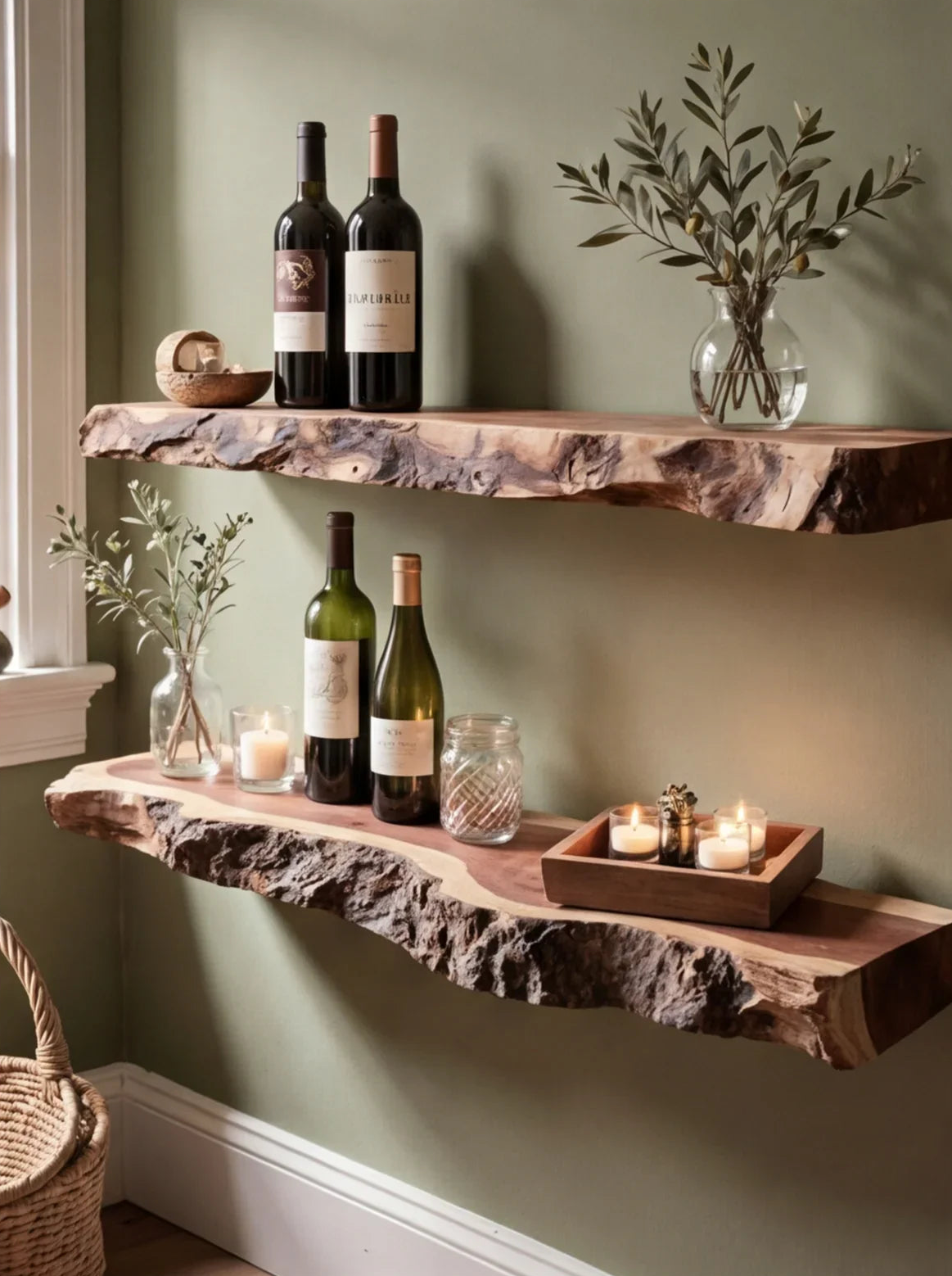
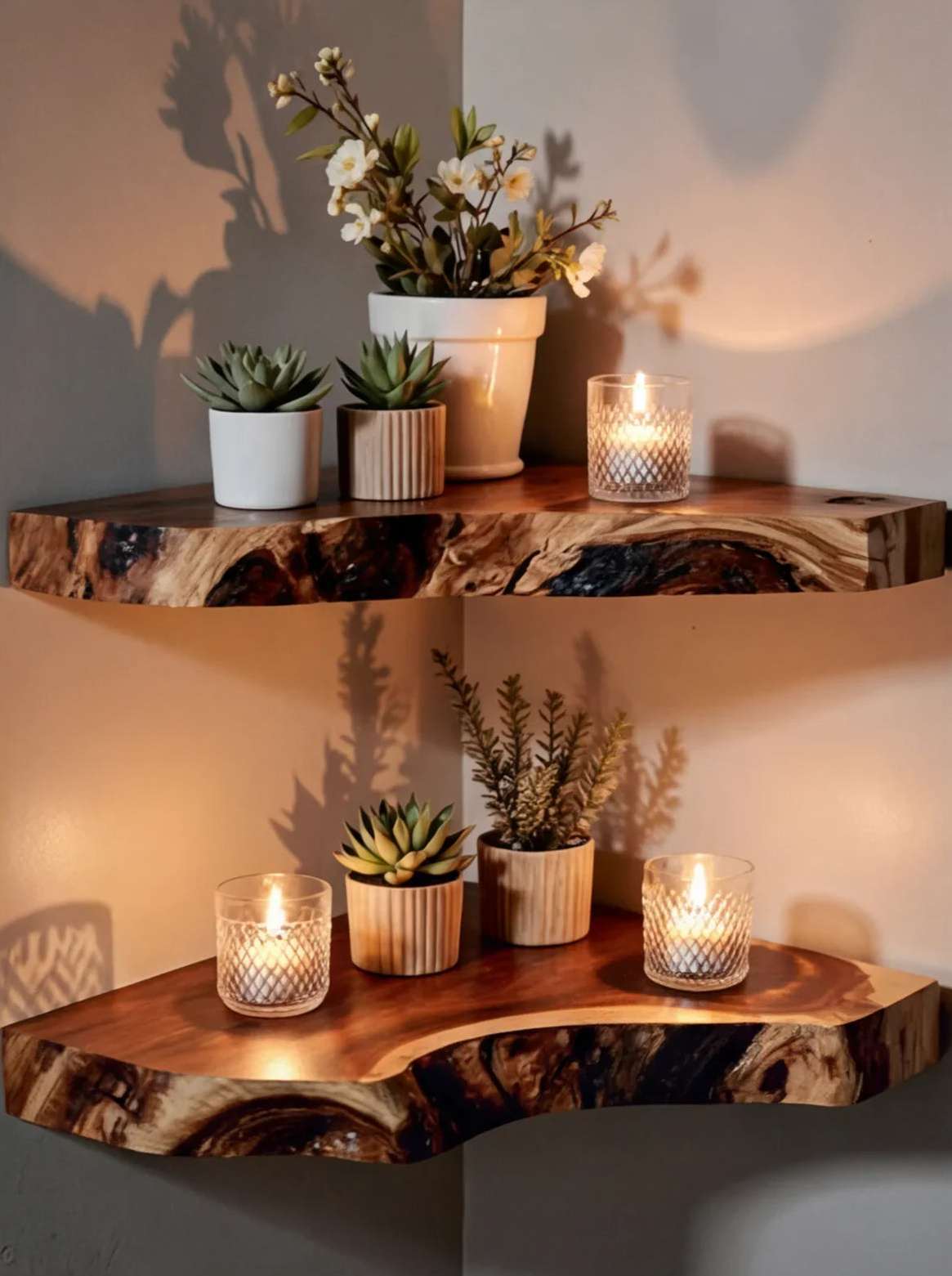
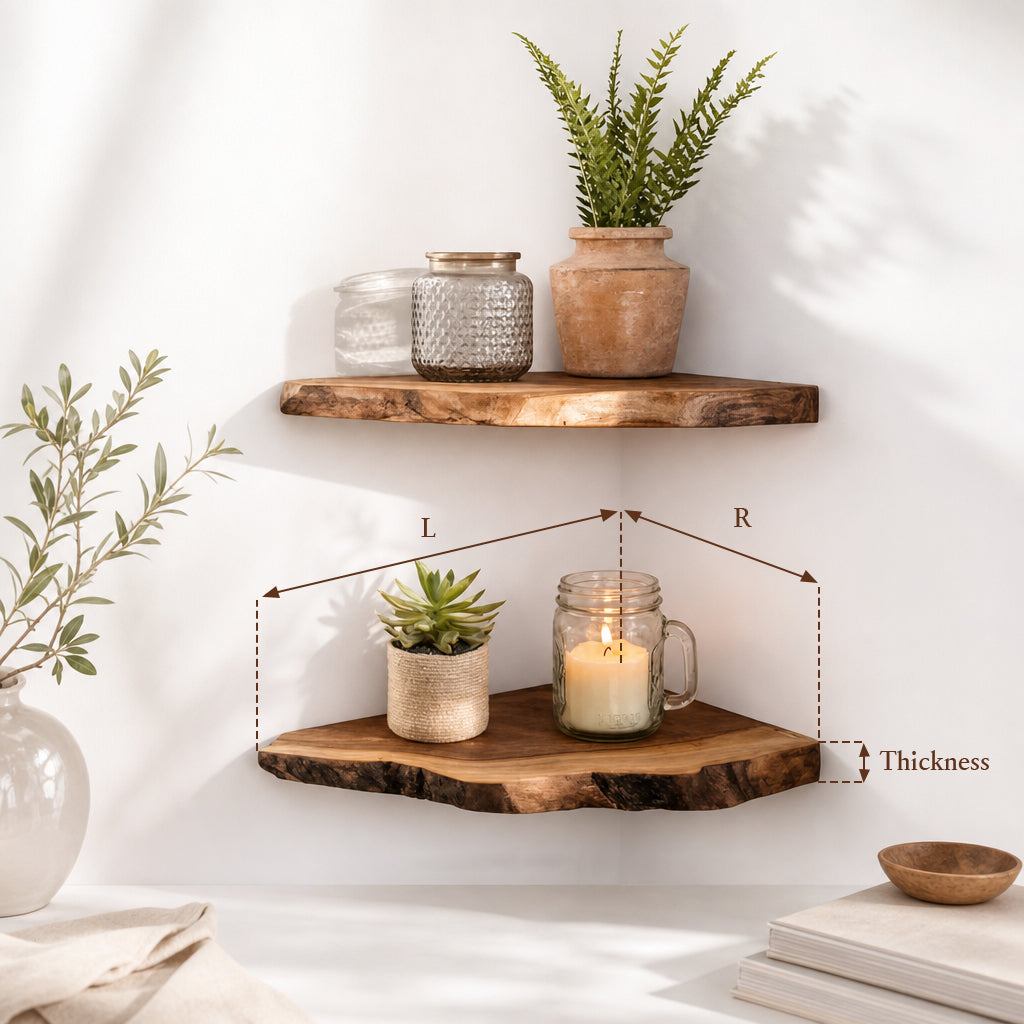
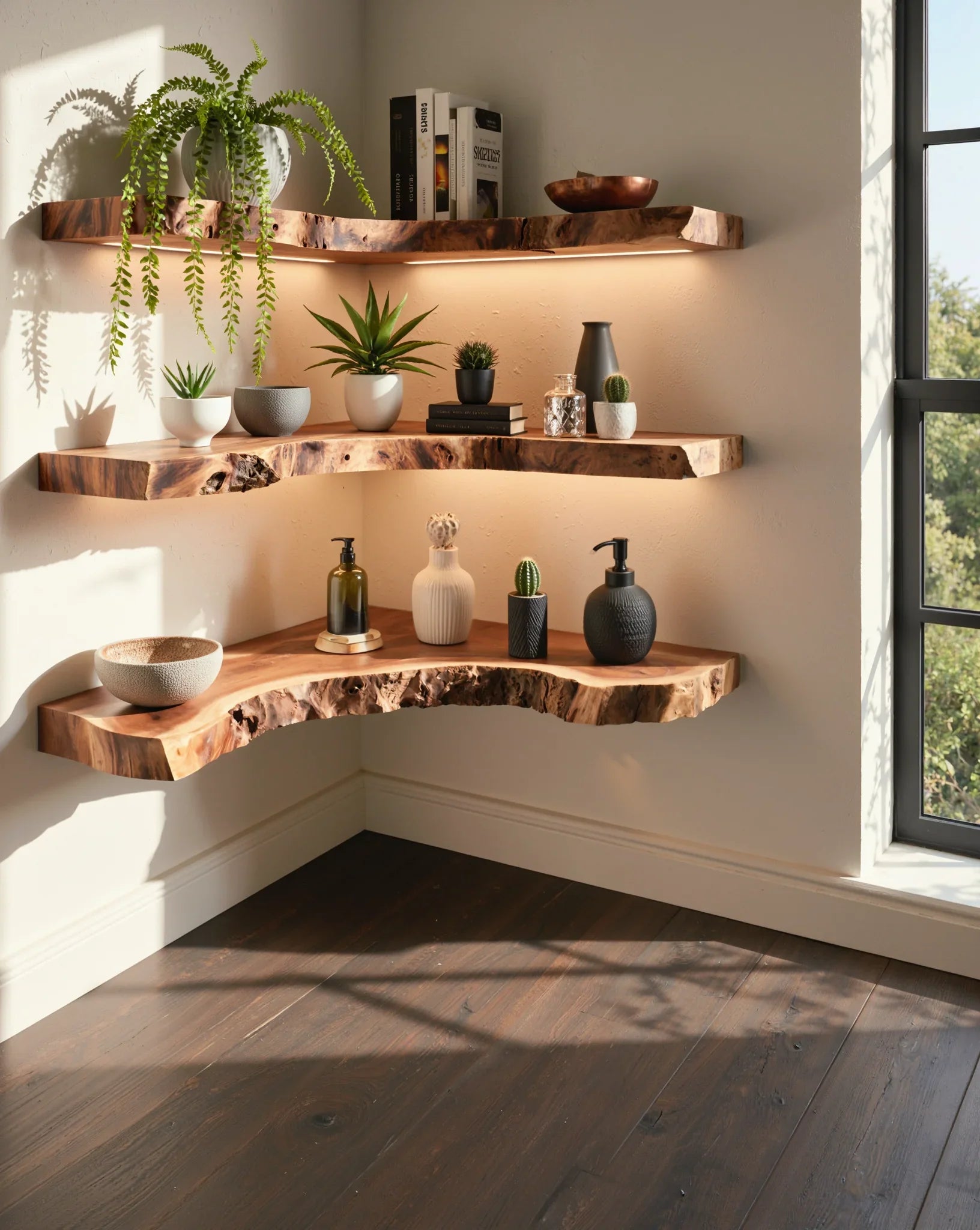
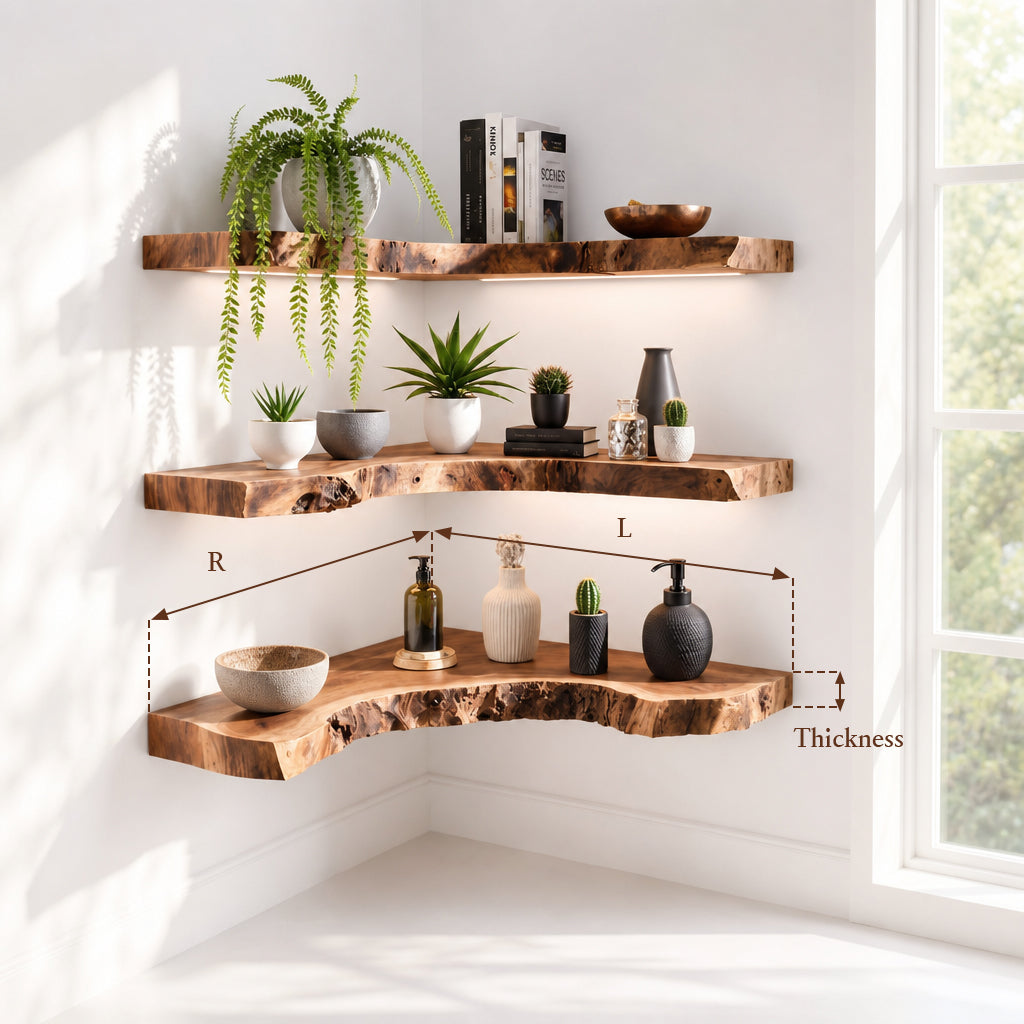
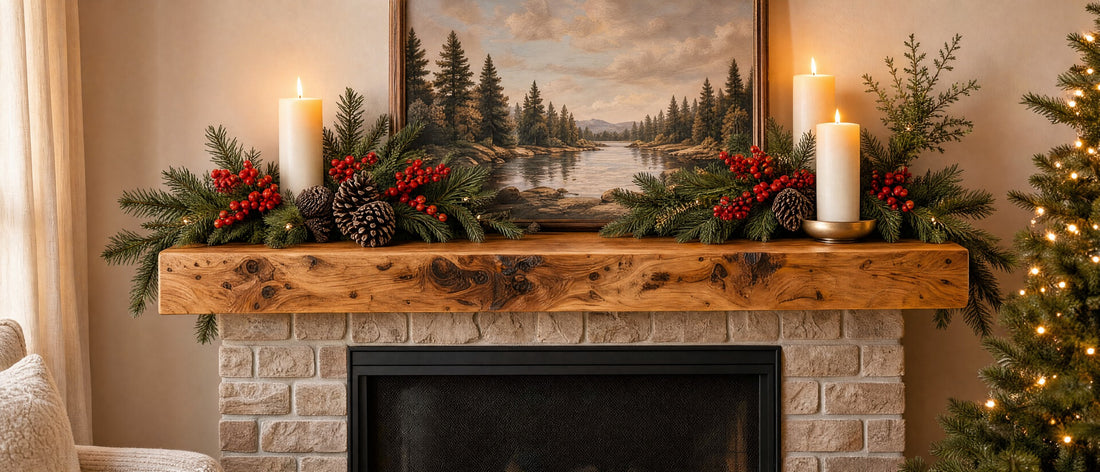
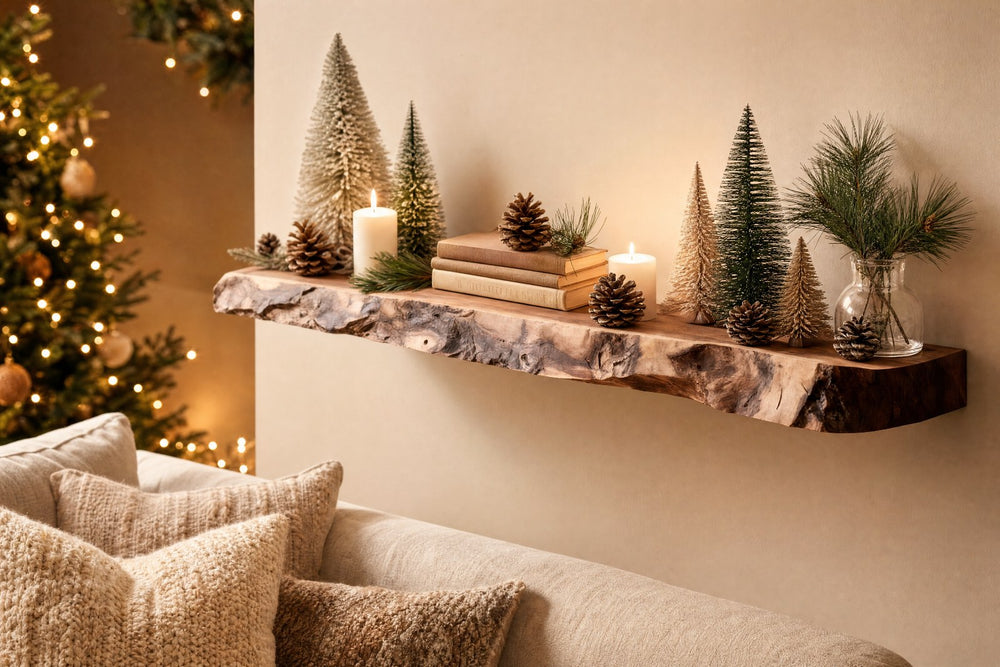
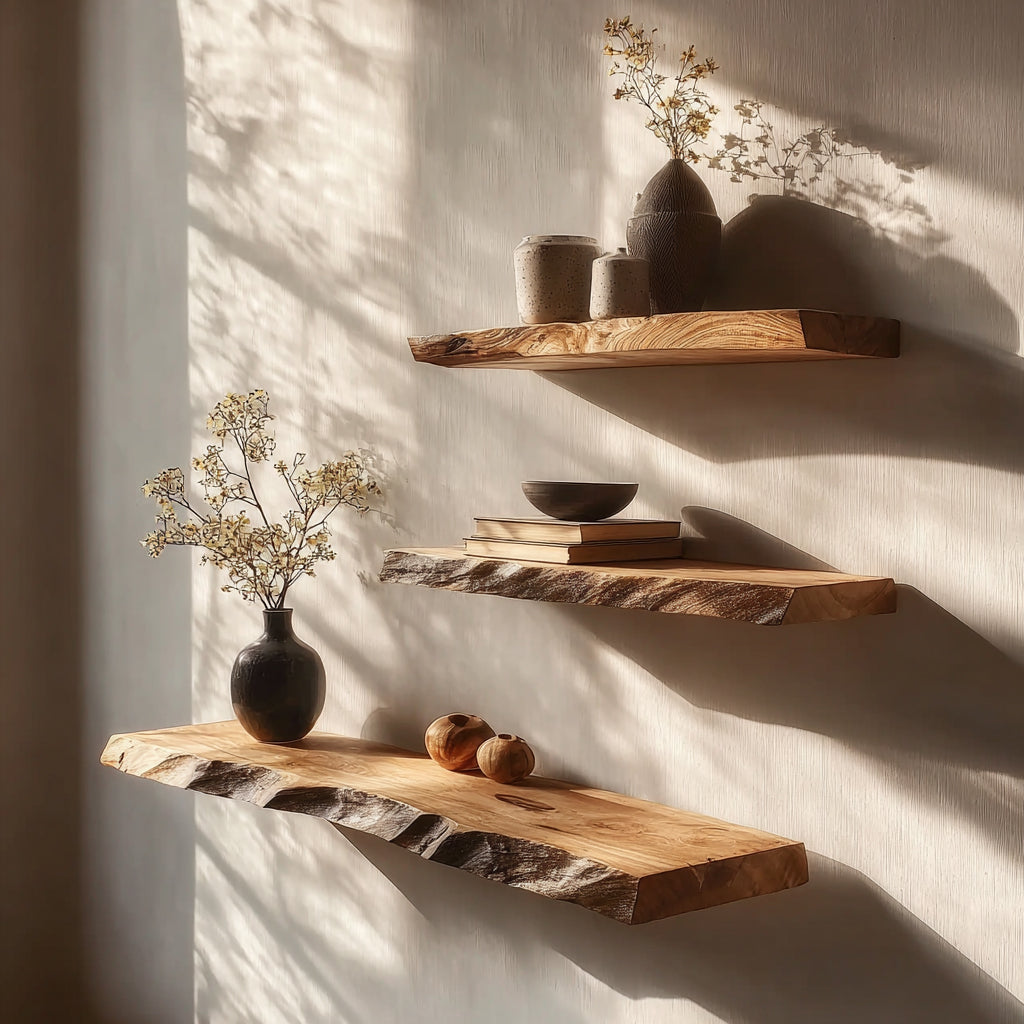
A live edge floating shelf keeps the natural, irregular edge of the tree along one or both sides of the plank. Where a standard shelf has straight, milled edges, a live edge shelf has the organic contour the tree grew with - bark texture, curves, knots, and all.
It's the simplest way to bring raw nature into a room. One plank, one wall, and the room changes completely.

What Makes Live Edge Different
The Edge Itself
A standard shelf is a rectangle. Predictable, clean, invisible. A live edge shelf is shaped by how the tree grew. No two are identical. The edge might curve gently along 4 feet, or undulate with dramatic waves. Knots appear where branches once grew. The bark may be preserved or stripped to reveal the cambium layer underneath.
Visual Weight
Live edge shelves have more visual presence than standard shelves because the eye follows the irregular edge. A straight shelf blends into the wall. A live edge shelf draws attention. This makes it ideal as a solo statement piece rather than one shelf in a row of many.
Connection to Origin
Every live edge shelf is literally a slice of a specific tree. The grain pattern, the edge contour, the knots - they're a record of that tree's life. Wind patterns, drought years, branch locations are all visible in the wood. It's natural history on your wall.

Types of Live Edge Floating Shelves
| Type | Description | Best For |
|---|---|---|
| Single live edge | One natural edge, one straight edge | Clean rooms where you want a touch of nature |
| Double live edge | Both edges natural | Maximum rustic impact, statement pieces |
| Bark-on | Original bark preserved with sealant | Ultra-rustic, cabin, farmhouse |
| Bark-off (sanded) | Bark removed, edge sanded smooth | Modern-rustic, family-friendly (no rough edges) |
| Waney edge | Sapwood visible, lighter color at edge | Two-tone effect, visual interest |


Best Wood Species for Live Edge Shelves
| Wood | Color | Hardness (Janka) | Character | Price |
|---|---|---|---|---|
| Acacia | Golden to dark brown | 1,750 | Dramatic grain, high contrast | $$ |
| Walnut | Rich chocolate brown | 1,010 | Elegant, fine grain | $$$ |
| Oak | Light to medium brown | 1,290 | Classic, prominent grain | $$ |
| Maple | Cream to light tan | 1,450 | Subtle grain, clean look | $$ |
| Cherry | Reddish brown (deepens with age) | 950 | Warm, ages beautifully | $$$ |
Ashdeco floating shelves are crafted from solid hardwoods selected for grain character and edge profile. Each live edge shelf is hand-finished with natural oil that enhances the wood's natural color and protects the irregular edge.

Where to Use Live Edge Floating Shelves
Living Room - Solo Statement
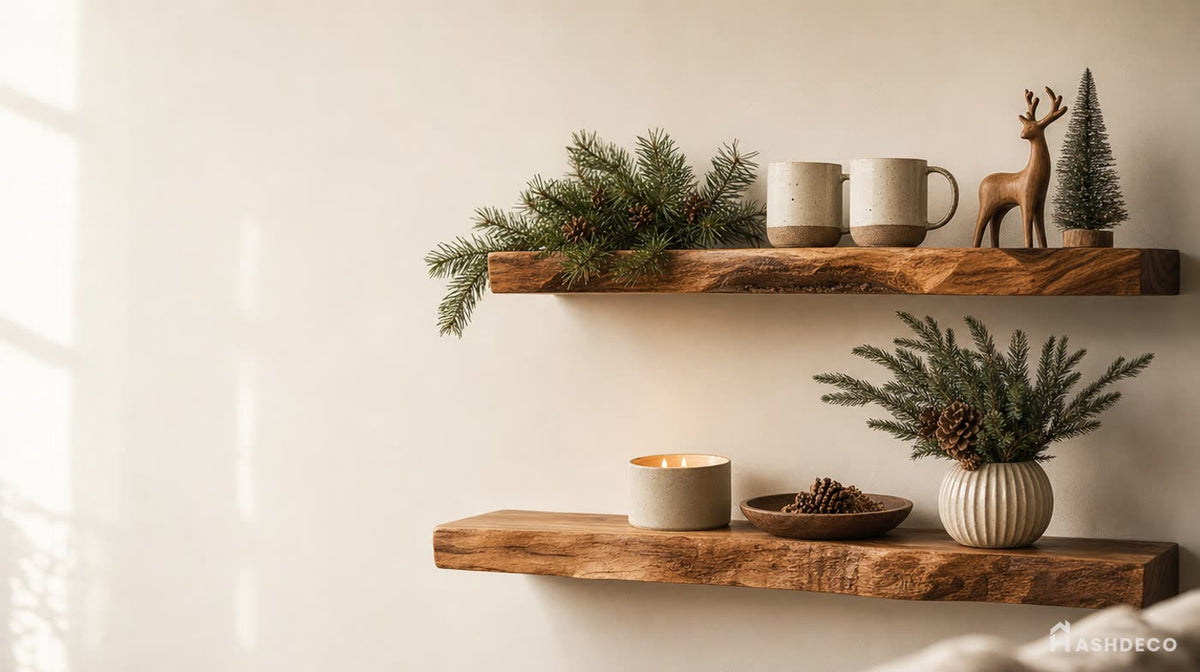
One long live edge shelf (48-72") on a feature wall. Keep styling minimal: 3-5 objects max. The shelf itself is the star. A trailing plant at one end, a stack of art books in the middle, a candle at the other end.
Kitchen - Above Counter
A live edge shelf above the kitchen counter replaces a sterile upper cabinet with warm, natural character. Hold cooking oils, a herb plant, and your favorite cookbooks. The natural edge softens the hard lines of kitchen countertops and appliances. See also: Floating Shelves for Kitchen.
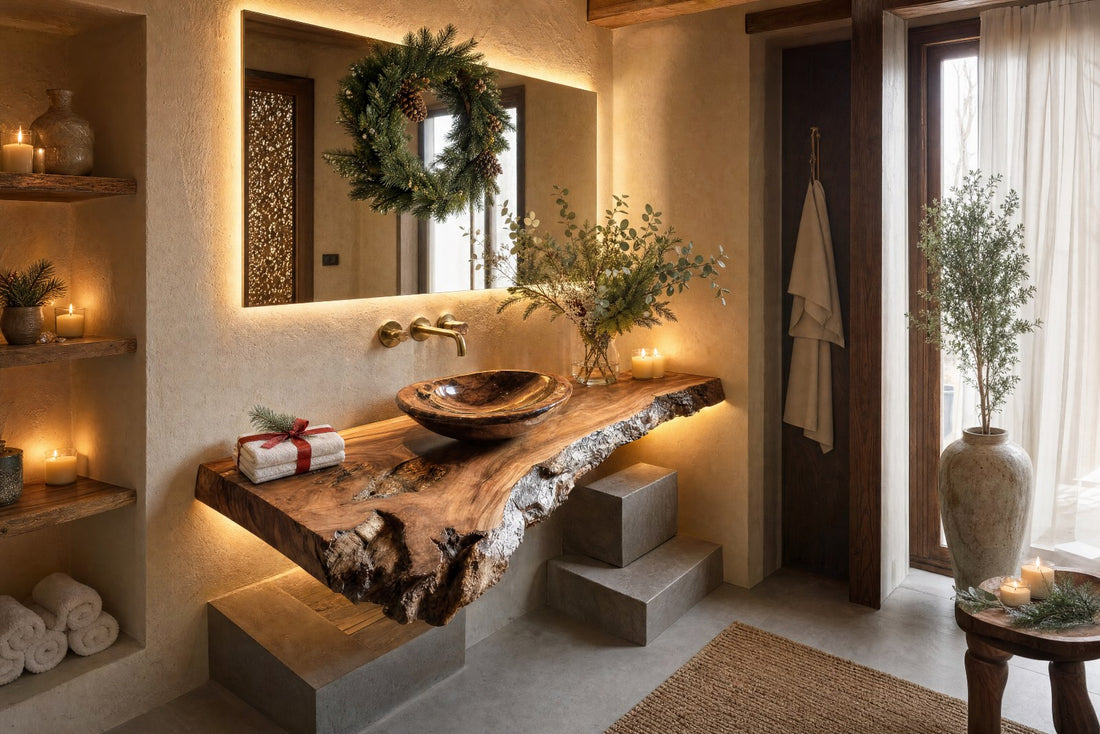
Bathroom - Vanity Shelf
A small live edge shelf (24-36") above the bathroom vanity. Holds daily items in matching containers. The natural edge adds spa-like organic warmth. Use oil-finished hardwood for moisture resistance. More ideas: Floating Shelves for Bathroom.
Bedroom - Headboard Shelf
Mount a live edge shelf at headboard height. Functions as a headboard and nightstand combined. Phone, book, small lamp, alarm clock. The natural edge above your head is the last thing you see at night and the first thing in the morning.
Entryway - Landing Shelf
A 36-48" live edge shelf at 48" height in the entryway. Drop zone for keys, wallet, sunglasses. Pair with hooks below for coats. The natural wood makes a warm first impression.

Don't miss
These pieces qualify for 10% off orders over $2,000. Applied automatically at checkout.
Mounting a Live Edge Shelf
Live edge shelves are typically thicker (1.5-3") and heavier than standard shelves. Mounting needs to account for this:
- French cleat: Best for heavy live edge slabs. Distributes weight evenly. The cleat hides behind the shelf completely.
- Hidden rod brackets: Steel rods insert into drilled holes on the shelf's back edge. Clean look, but limited to shelves under 30 lbs.
- Heavy-duty L-brackets: Visible but strong. Use decorative iron brackets to make them a feature rather than hiding them.
Always mount into studs. A 48" live edge slab weighs 10-20 lbs before adding items. With books and decor: 25-40 lbs total. Drywall alone cannot hold this.
Caring for Live Edge Wood
- Dusting: Weekly with soft cloth. Follow the grain direction, especially along the natural edge where dust collects in crevices.
- Oil maintenance: Every 6-12 months, apply a thin coat of natural furniture oil (tung oil, Danish oil, or mineral oil). Wipe on, let absorb 15 minutes, wipe off excess. 20-minute job that extends shelf life by years.
- Bark edge care: If bark is preserved, check annually for loosening. A thin bead of wood glue under lifting bark sections keeps it attached. Or let it naturally shed for a smoother look over time.
- Avoid: Direct sunlight (causes uneven fading), heat vents (causes cracking), and harsh chemicals (strip the oil finish).
Frequently Asked Questions
Is live edge furniture more expensive?
Yes, typically 20-40% more than a standard milled shelf of the same wood species. The premium covers: wood waste (irregular edges mean less usable lumber per tree), hand-finishing the natural edge, and the selection process (not every slab has an attractive edge profile).
Will the bark fall off over time?
It can. Bark-on finishes are sealed to prevent this, but over years some bark may loosen. This is natural and doesn't affect the shelf structurally. You can re-glue it or let it shed naturally, revealing the smooth cambium layer underneath, which is beautiful in its own right.
Is live edge just a trend?
Live edge furniture has been used for centuries (Japanese wabi-sabi, Arts and Crafts movement). The current popularity spike started around 2015 and shows no sign of fading because it's rooted in the broader, permanent shift toward natural materials in interior design. It's not a trend - it's a return to material honesty.
Can I make my own live edge shelf?
If you have woodworking tools and access to raw lumber, yes. You need: a kiln-dried slab (critical - green wood warps), a planer or belt sander, finish (oil or polyurethane), and mounting hardware. The wood slab alone costs $50-200 depending on species and size. Time: 4-8 hours for a beginner.
How thick should a live edge shelf be?
1.5" minimum for shelves up to 36" long. 2-3" for shelves 36-72" long. Thicker slabs resist sagging and have more visual presence. Thin live edge shelves (under 1") look fragile and bend under load.
Shop Live Edge Shelves
- All Floating Shelves
- Tree Bookshelves
- Coffee Tables (live edge options)
- Console Tables
Each piece is unique. Handcrafted by Vietnamese artisans. Free US shipping.