



















Quick view
- The Living Room Corner Problem
- Where to Place Corner Shelves in a Living Room
- Choosing the Right Size for Your Living Room
- What to Display on Living Room Corner Shelves
- Design Rules for Living Room Corner Shelves
- Corner Shelves vs. Other Living Room Corner Solutions
- Installation Tips for Living Rooms
- Why Handcrafted Shelves Make a Difference in Living Rooms
- Frequently Asked Questions
Shop this guide
Handcrafted Trending, made to order in solid wood.
 Christmas edit
Handcrafted Live Edge Floating Bar Shelf – Rustic Solid Wood Wall Shelf for Kitchen or Bar
From $167.00
Christmas edit
Handcrafted Live Edge Floating Bar Shelf – Rustic Solid Wood Wall Shelf for Kitchen or Bar
From $167.00
 Christmas edit
Rustic Corner Wall Shelf – Natural Live Edge Wood Floating Shelf for Candles and Plants
From $176.00
Christmas edit
Rustic Corner Wall Shelf – Natural Live Edge Wood Floating Shelf for Candles and Plants
From $176.00
 Christmas edit
Rustic Live Edge Floating Vanity – Handmade Wooden Bathroom Shelf with Brackets
From $180.00
Christmas edit
Rustic Live Edge Floating Vanity – Handmade Wooden Bathroom Shelf with Brackets
From $180.00
 Christmas edit
Rustic Teak Root Wood Corner Shelf - Floating Corner Shelf Decor
From $176.00
Christmas edit
Rustic Teak Root Wood Corner Shelf - Floating Corner Shelf Decor
From $176.00
 Christmas edit
Live Edge Corner Floating Shelf – Handcrafted Solid Wood Wall Shelf
From $140.00
Christmas edit
Live Edge Corner Floating Shelf – Handcrafted Solid Wood Wall Shelf
From $140.00
 Christmas edit
Custom Wood Coat Rack – Driftwood Wall Mount Clothes Rack with Unique Hooks
From $697.00
Christmas edit
Custom Wood Coat Rack – Driftwood Wall Mount Clothes Rack with Unique Hooks
From $697.00
The Living Room Corner Problem
Every living room has at least one corner that just sits there, collecting dust or hiding behind furniture pushed awkwardly into the gap. It's wasted real estate in the most visible room of your home. And the usual solutions - a floor lamp, a fake plant, a decorative basket - are placeholder moves. They fill the space without adding function or style. Better Homes & Gardens offers creative ideas for decorating awkward living room corners.
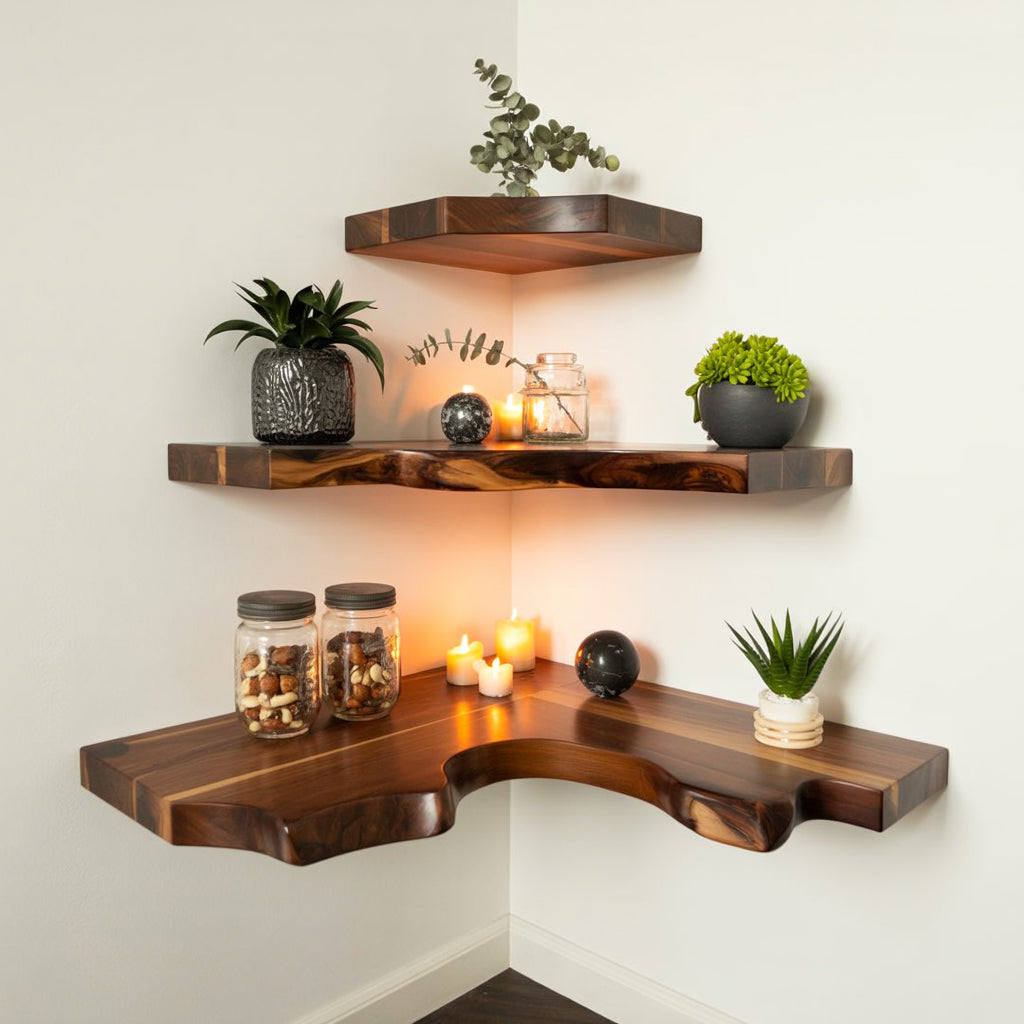
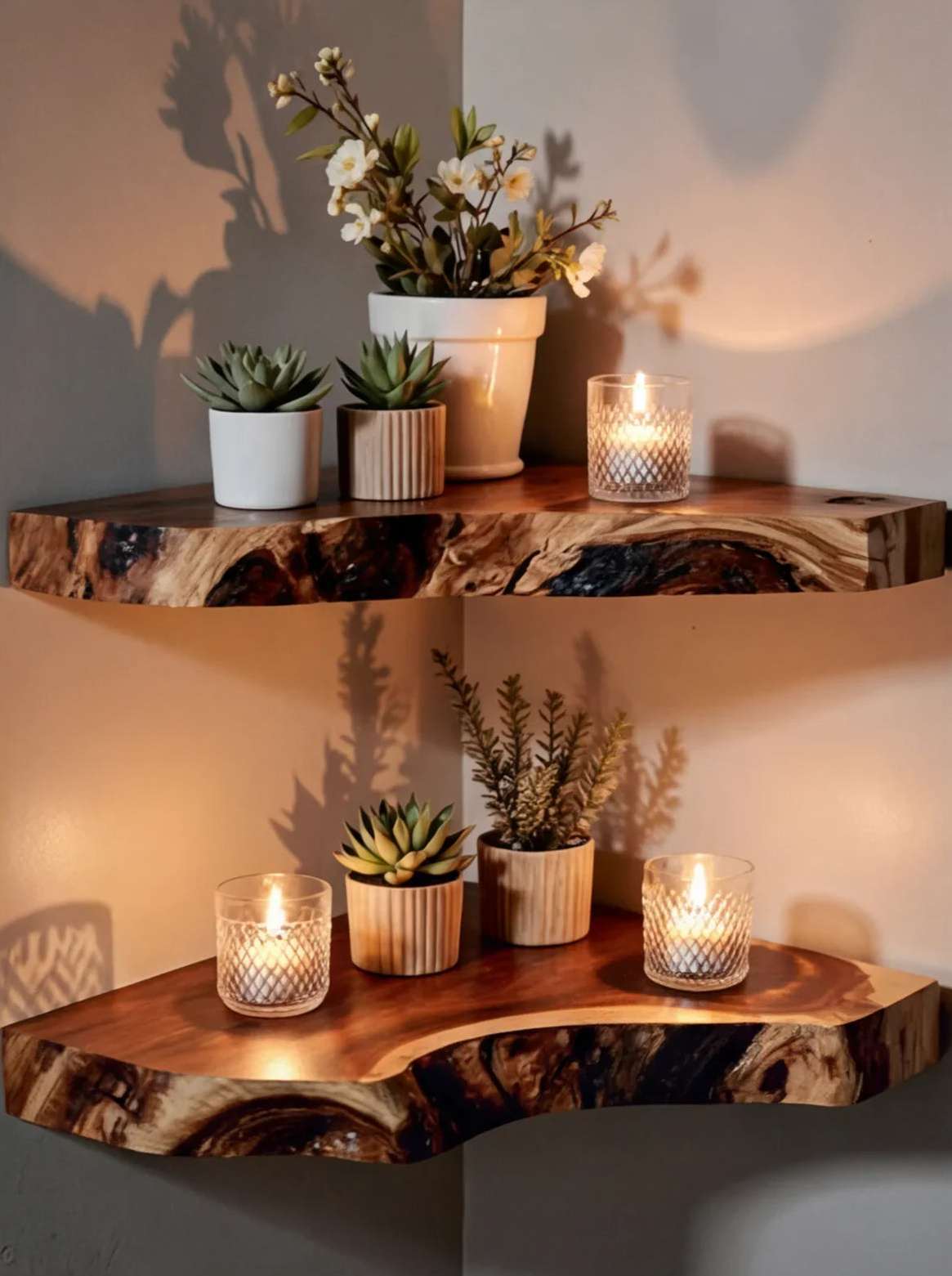
Corner shelves change the equation. They mount directly into the corner walls, turning dead vertical space into usable display, storage, or design real estate. And because they're floating, they don't block foot traffic or make the room feel smaller.
But not every corner shelf setup works in a living room. This guide covers what actually works - the right sizes, the right placement, and what to put on them so your corners pull their weight in the room.

Where to Place Corner Shelves in a Living Room
Not all living room corners are equal. Where you mount your shelves determines whether they look intentional or like an afterthought.
Beside the TV or Media Wall
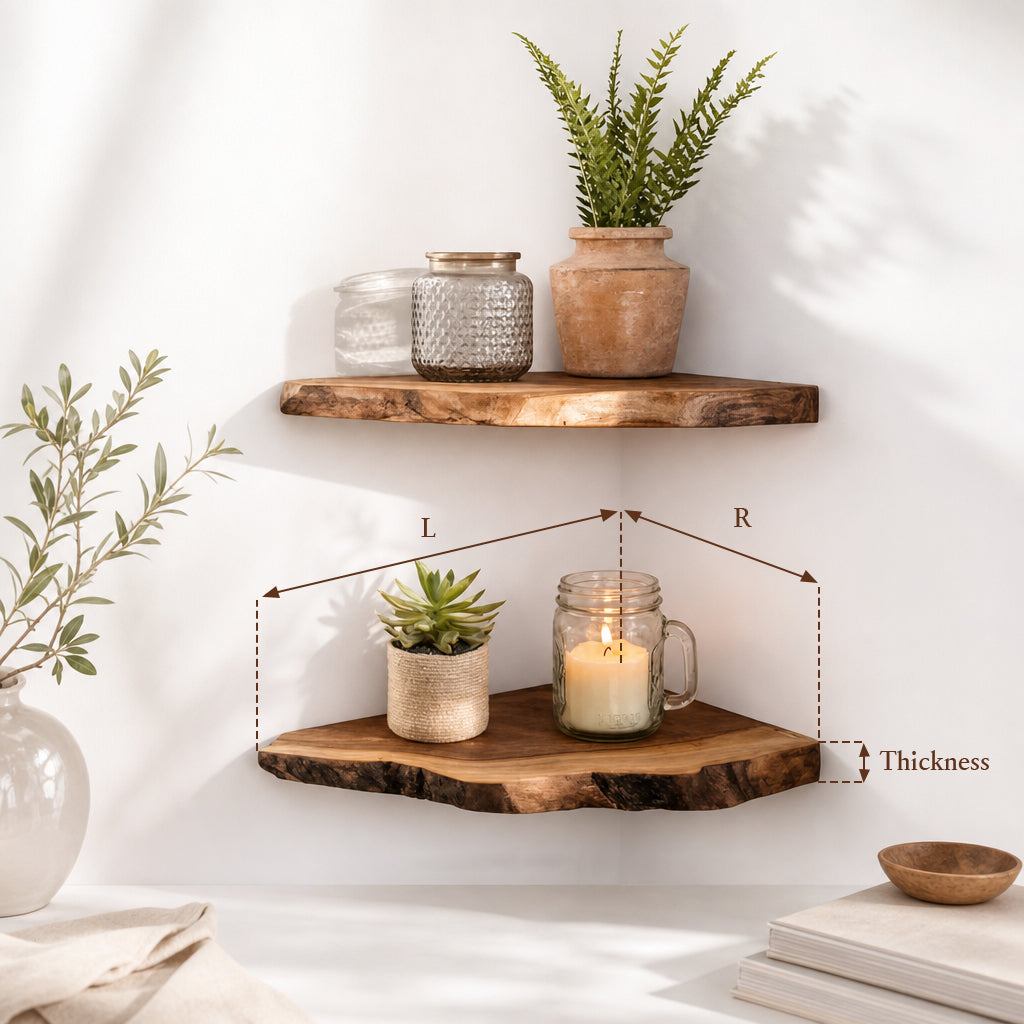
This is the most popular spot, and for good reason. The corner next to a TV wall is usually bare , too narrow for a bookcase, too visible for a random basket. A set of 2-3 corner floating shelves here creates a visual extension of the media wall. Use them for small speakers, a trailing plant, remote controls, or decorative objects that complement the TV area without competing with it.
Flanking a Window
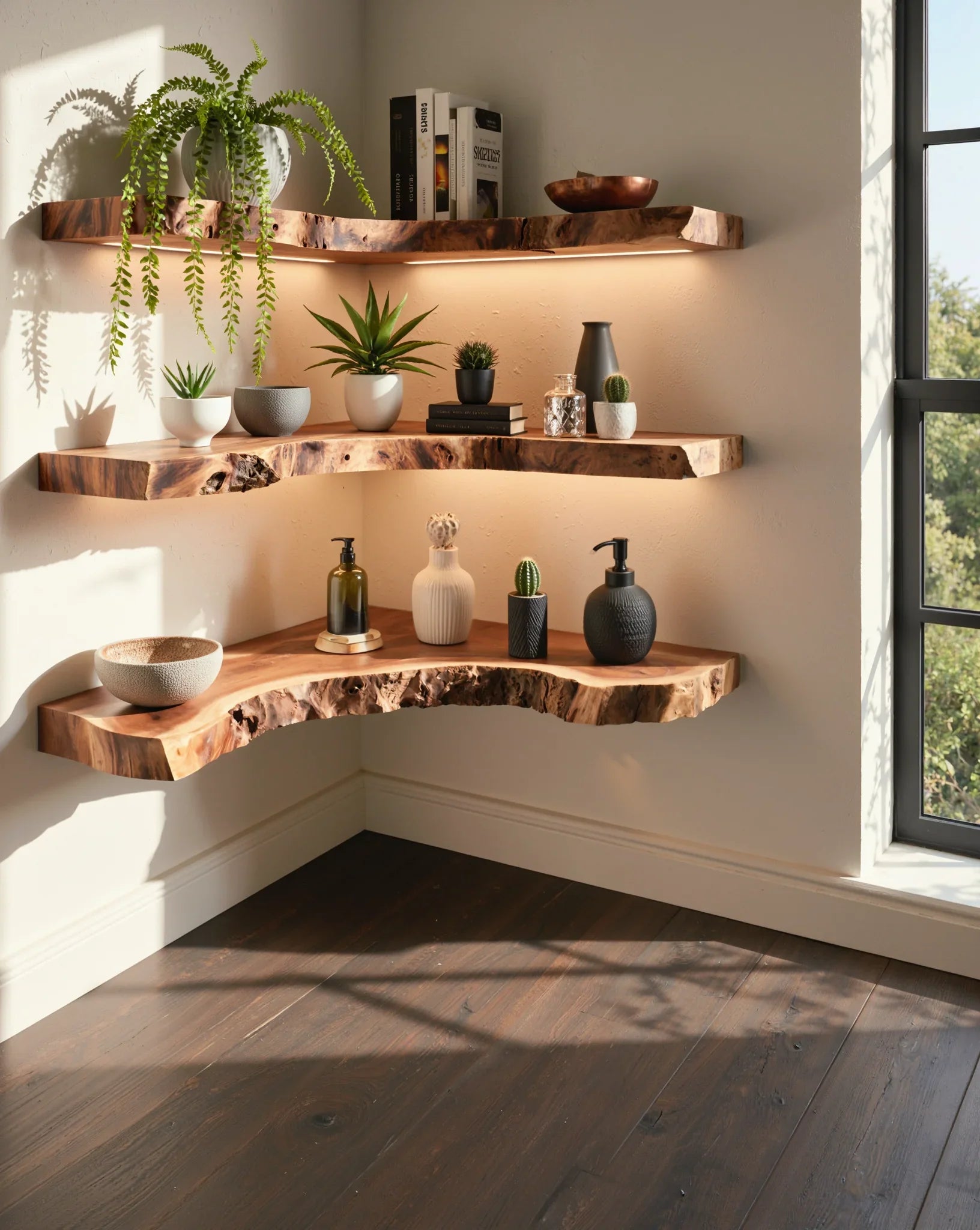
If a window sits near a corner, shelves on the adjacent wall create a natural frame. The light from the window highlights whatever you display. This works especially well with plants , the natural light feeds them, and the shelves create a layered, garden-like effect.
Behind or Beside the Sofa
The corner behind a sectional sofa or beside a loveseat is often trapped , too far from the main wall to hang art, too close to the seating to put anything on the floor. Corner shelves mounted at standing height (55-65 inches) put decor at eye level when seated on the sofa, which makes them part of the room's visual flow rather than something you look up or down at.
The "Awkward" Corner
Some living rooms have corners created by architectural features , a fireplace that juts out, a half-wall divider, or an oddly placed closet. These create tight corners that standard furniture ignores. Corner shelves are built for exactly these spots. They follow the angles instead of fighting them.


Choosing the Right Size for Your Living Room
Living rooms can handle bigger corner shelves than bedrooms or bathrooms. But "bigger" doesn't mean "biggest." The right size depends on your room and what you're using the shelves for.
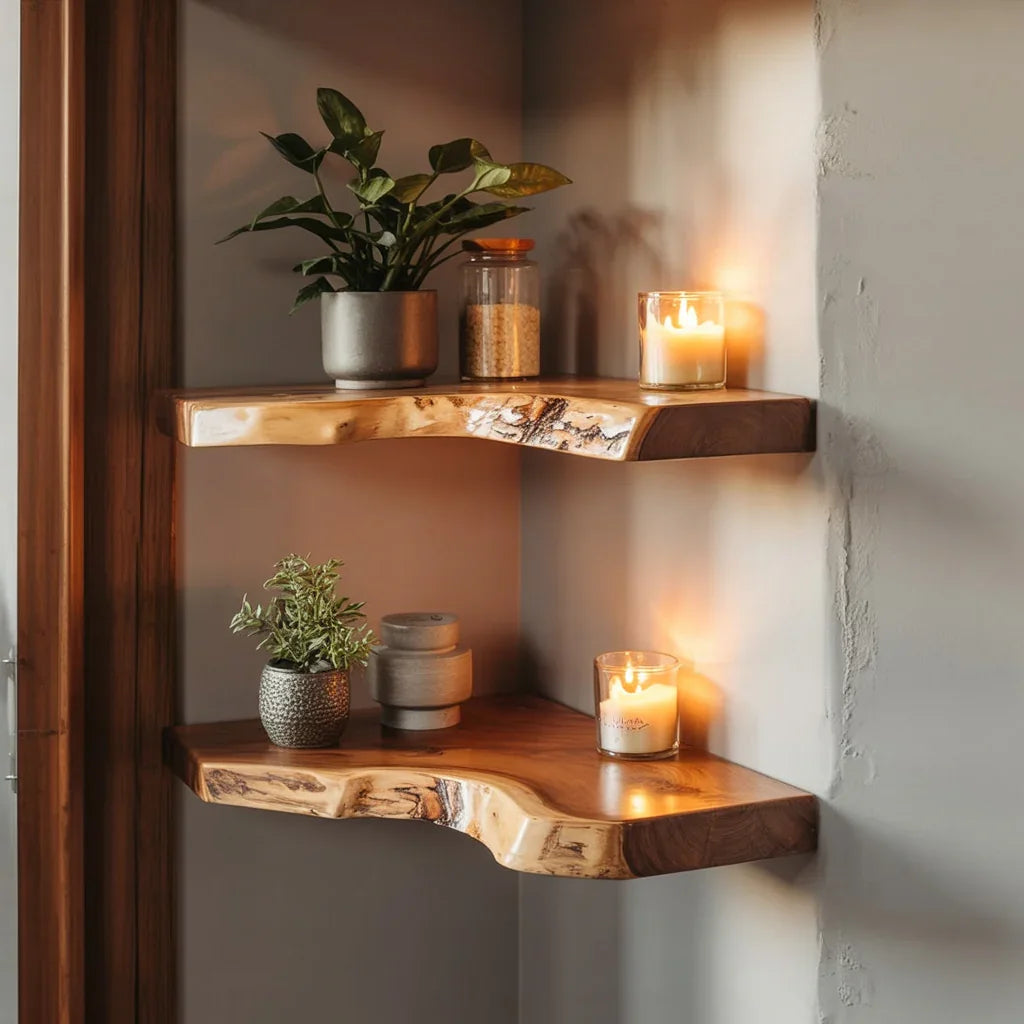
| Living Room Size | Recommended Shelf Size | Number of Shelves |
|---|---|---|
| Small (under 150 sq ft) | 6" - 8" sides | 2-3 |
| Medium (150-250 sq ft) | 8" - 10" sides | 3-4 |
| Large (250+ sq ft) | 10" - 12" sides | 3-5 |
A common mistake is going too small in a large room. A single 6-inch shelf in a big living room corner looks like an afterthought. Scale the shelves to the room , the shelf should feel like it belongs there, not like it's clinging to the wall for survival. Get expert installation advice from This Old House.
What to Display on Living Room Corner Shelves
The "what goes on them" question is where most people stall. Here are combinations that actually work in living rooms:
The Gallery Corner
Use shelves to display small art prints (leaned, not hung), framed photos, and sculptural objects. This creates a mini gallery in a space too small for a proper gallery wall. Keep each shelf to 2-3 items max, and vary the heights.
The Plant Corner
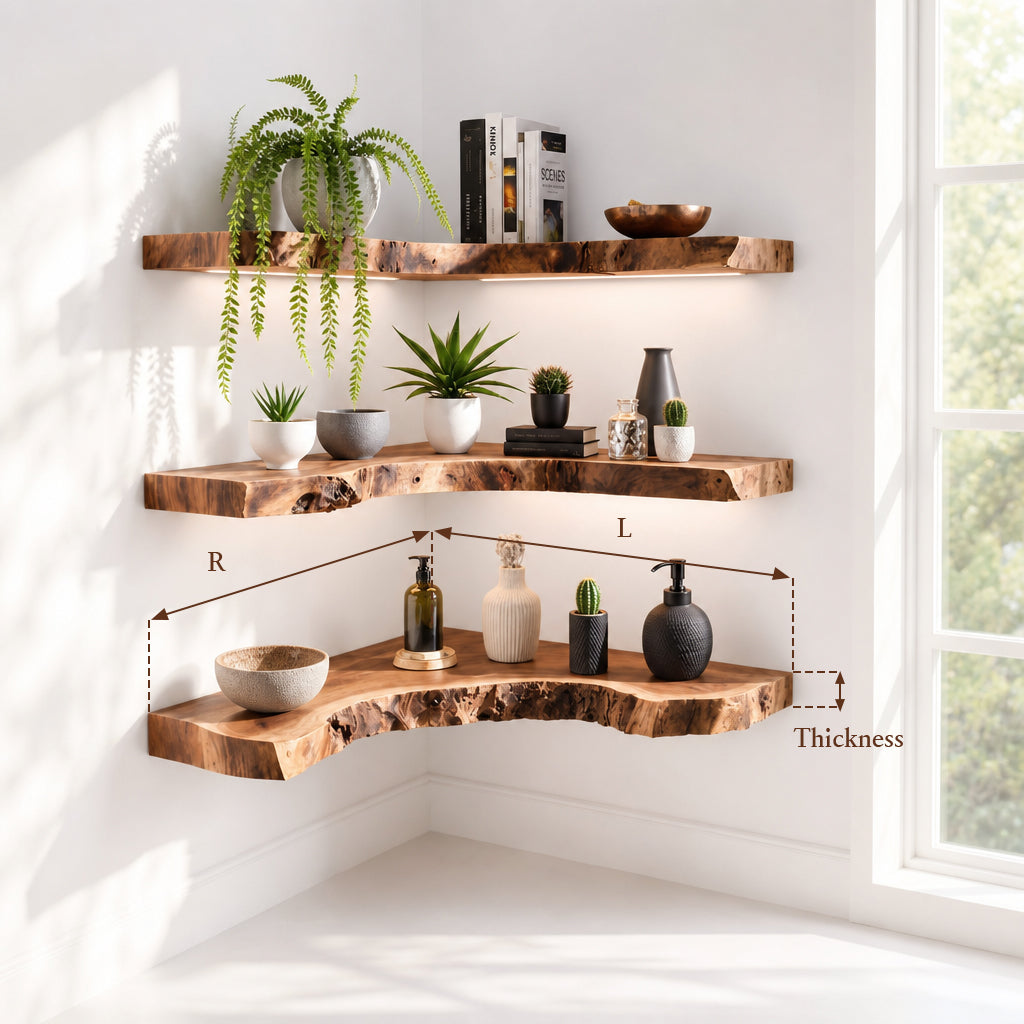
Stacked corner shelves with trailing and upright plants creates a vertical garden effect. Good living room options: pothos (trailing), snake plant (upright), string of pearls (trailing), or small ferns. The mix of hanging and standing foliage makes the corner feel alive.
The Functional Corner
Not everything needs to be decorative. Corner shelves near the sofa can hold:
- A Bluetooth speaker
- A small tray for remotes and charging cables
- Your current reading stack
- Candles (both decorative and functional)
- A small clock
This approach works well in smaller living rooms where every surface needs to earn its place.
The Curated Mix
The most natural-looking approach combines function and decoration. A book stack next to a plant next to a small framed photo. Each shelf tells a slightly different story, but they share a color palette and feel cohesive as a group.

Don't miss
These pieces qualify for 10% off orders over $2,000. Applied automatically at checkout.
 10% off
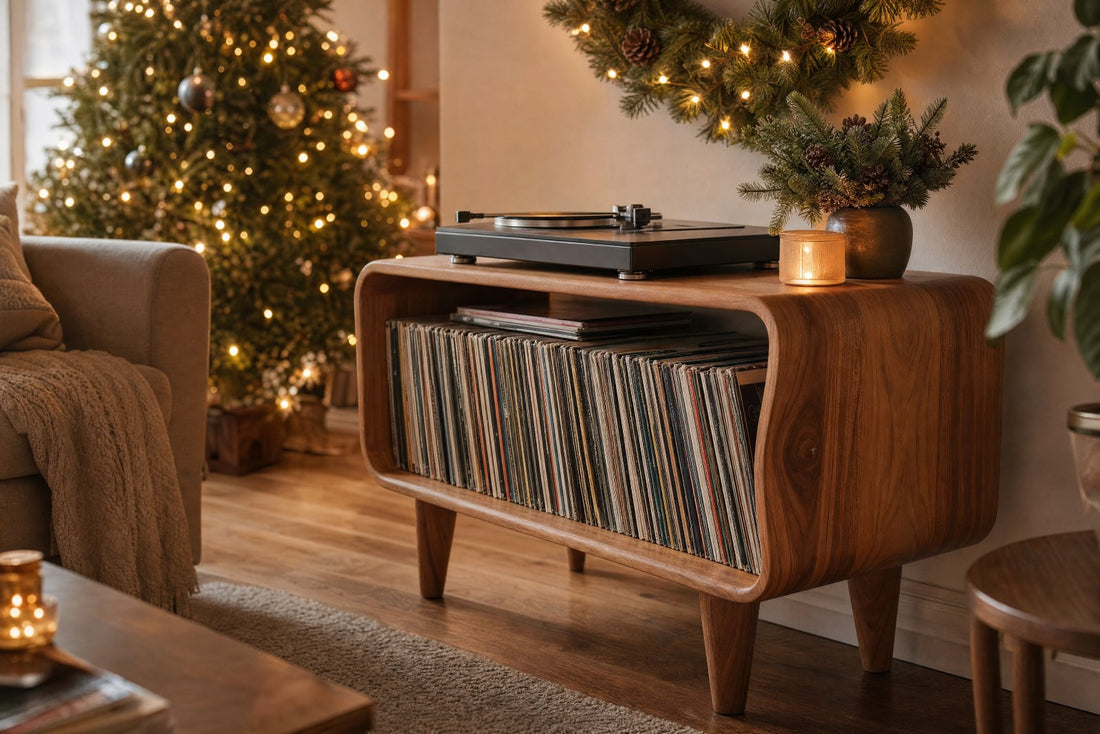
Solid Wood Turntable Stand – Rustic Record Player Cabinet with Farmhouse Storage
From $2,036.00
10% off at checkout
10% off
Solid Wood Turntable Stand – Rustic Record Player Cabinet with Farmhouse Storage
From $2,036.00
10% off at checkout
 10% off
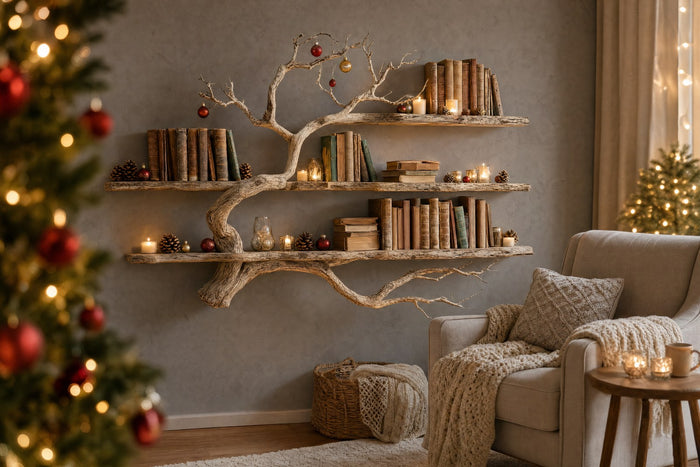
Tree Bookshelf – Rustic Wooden Book Tree Shelf, Wall-Mounted Natural Wood Décor
$2,099.00
10% off at checkout
10% off
Tree Bookshelf – Rustic Wooden Book Tree Shelf, Wall-Mounted Natural Wood Décor
$2,099.00
10% off at checkout
 10% off
Live Edge L-Shaped Desk – Handmade Solid Wood Corner Desk for Home Office
From $2,340.00
10% off at checkout
10% off
Live Edge L-Shaped Desk – Handmade Solid Wood Corner Desk for Home Office
From $2,340.00
10% off at checkout
 10% off
Handcrafted Walnut Bench – Organic Sculptural Mid-Century Design
From $2,327.00
10% off at checkout
10% off
Handcrafted Walnut Bench – Organic Sculptural Mid-Century Design
From $2,327.00
10% off at checkout
Design Rules for Living Room Corner Shelves
Match the Room's Existing Style
Corner shelves should feel like part of the room, not an add-on. This means matching wood tones to existing furniture (or deliberately contrasting , dark shelves on a white wall, for example). If your living room has warm oak furniture, walnut shelves will clash. Go with a matching oak tone or a complementary natural finish.
Create Visual Balance
If you have shelves in one corner, consider adding something to the opposite corner , even if it's just a floor lamp or plant. Balanced rooms feel complete; one decorated corner and one empty corner feels unfinished.
Don't Overload
This applies everywhere but matters most in living rooms because these shelves are always visible. Fill each shelf about 60-70%. The empty space is part of the design , it lets each item breathe and keeps the corner from looking like a storage unit.
Use Odd Numbers
Three shelves looks better than two or four. Three items per shelf looks better than two or four. Odd numbers create natural visual flow. This isn't a strict rule, but it works reliably.
Corner Shelves vs. Other Living Room Corner Solutions
How do corner floating shelves compare to other options?
- Corner bookshelf (floor-standing): Holds more stuff but takes up floor space and looks bulky. Best for dedicated book storage; corner floating shelves win on aesthetics and space efficiency.
- Corner table / plant stand: Good for one item (a lamp, a large plant). Limited to floor level. Corner shelves multiply your display space vertically.
- Tall corner cabinet: Maximum storage but heavy visual presence. Works in large rooms; overwhelms small ones. Corner shelves offer a lighter, more open feel.
- Hanging macramé / wall planters: A valid alternative for plant-only displays. Corner shelves are more versatile , they hold anything, plants.
For most living rooms, floating corner shelves hit the best balance of form, function, and space efficiency. They do enough without doing too much.

Installation Tips for Living Rooms
Height Matters
The center of your shelf arrangement should be at or slightly above eye level , about 57-63 inches from the floor. This puts the display in the natural sightline when you're standing or entering the room. If your primary view is from the sofa (seated), drop everything down by about 6-8 inches.
Use a Level
In living rooms, shelves are visible from every angle. Even a small tilt is noticeable. Use a spirit level or laser level during installation. This sounds obvious, but it's the #1 reason DIY shelf installations look "off."
Plan the Layout First
Before drilling, tape the shelf positions on the wall with painter's tape. Live with it for a day. Look at the layout from the sofa, from the doorway, from the kitchen. Adjust before you commit. Moving a shelf means new holes.
Why Handcrafted Shelves Make a Difference in Living Rooms
Your living room is the most-seen room in your home. Everything in it gets noticed , including the quality of your shelves. Mass-produced floating shelves from big-box stores have flat, uniform finishes and lightweight construction that reads as "budget" from across the room.
Handcrafted solid wood shelves from Ashdeco carry a different weight , literally and visually. The natural grain variations, the hand-finished surfaces, and the solid construction are visible from any distance. These are shelves that make people ask "where did you get those?" instead of blending into the background.
Each piece is made by Vietnamese artisans who work with the wood's natural character rather than against it. That means subtle grain patterns, warm tonal variations, and the kind of quality that factory production lines can't replicate at any price point.
Frequently Asked Questions
What are the best corner shelves for a living room?
Solid wood floating corner shelves in the 8-12 inch range work best for living rooms. They're large enough to hold meaningful items but small enough to look proportional. Look for shelves with hidden bracket mounting for a clean floating appearance, and choose a wood finish that matches or complements your existing furniture.
How do I decorate a corner in my living room?
Start with 2-4 corner floating shelves mounted at eye level. Display a mix of items , plants, books, small art, personal objects , using the rule of three on each shelf. Keep 30-40% of each shelf empty for visual breathing room. Match your display items to the room's color palette for a cohesive look.
How high should living room corner shelves be?
Center the shelf arrangement at 57-63 inches from the floor for a standing-height display. For a seated viewing angle (when the primary view is from the sofa), lower the arrangement so the center is at about 50-55 inches. The bottom shelf should be at least 36 inches from the floor to avoid kicking distance.
Are corner shelves strong enough for living room use?
Solid wood corner shelves with bracket mounting into studs hold 20-30 pounds each , more than enough for books, plants, ceramic objects, and electronics. Avoid MDF or particle board for anything heavier than lightweight decor. The key is proper mounting: always hit at least one stud per wall side.
What should I not put on living room shelves?
Avoid heavy electronics (full-size receivers, large speakers), anything requiring cables that hang visibly, items with strong odors (certain candles in enclosed corners), and anything so personal or fragile that it makes you anxious when guests are near. Living room shelves should be functional and enjoyable, not a source of stress.
Can I use corner floating shelves in a living room with textured walls?
Yes. Textured drywall, plaster, and even brick walls work with floating shelves. The mounting method may need adjustment , toggle bolts for plaster, masonry anchors for brick , but the shelves themselves work on any wall surface. The textured background can actually add visual interest behind the shelf display.
Put Your Living Room Corners to Work
Don't let your best vertical real estate sit empty. Ashdeco's handcrafted corner floating shelves are made from solid wood by Vietnamese artisans , designed to look right in your living room and hold up for years. Browse the collection and find the size and finish that fits your space.