



















Quick view
- Building a Reading Nook with Corner Floating Shelves
- Why Corner Shelves Work Better Than Bookcases for Reading Nooks
- How Much Weight Do Corner Shelves Need to Hold Books?
- The Best Corner Layout for Maximum Book Storage
- Setting Up Your Reading Nook: Step by Step
- Styling Tips: Books + Decor on Corner Shelves
- Why Solid Wood Matters for Book Shelves
- Frequently Asked Questions
Shop this guide
Handcrafted Floating Shelves, made to order in solid wood.
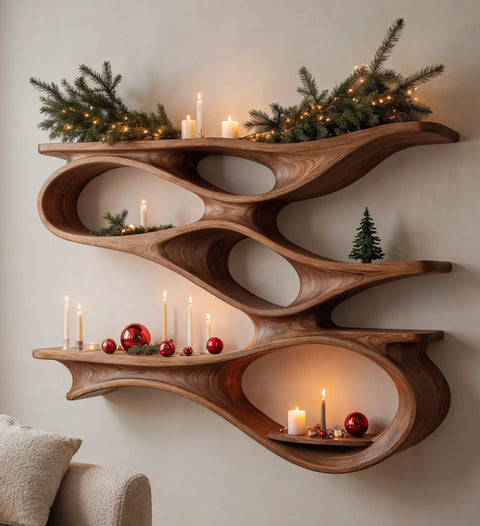
 Sculptural Overlapping Circular Solid Wood Wall Shelf with Multi Tier Display
From $1,354.00
Sculptural Overlapping Circular Solid Wood Wall Shelf with Multi Tier Display
From $1,354.00
 Mountain Landscape Relief Solid Wood Floating Shelf Live Edge Display Ledge
From $1,154.00
Mountain Landscape Relief Solid Wood Floating Shelf Live Edge Display Ledge
From $1,154.00
 Enchanted Forest Circular Wall Shelf - Round Carved Timber Mushroom Portal
From $1,023.00
Enchanted Forest Circular Wall Shelf - Round Carved Timber Mushroom Portal
From $1,023.00
 Cottagecore Arched Wood Wall Niche - Hand-Carved Fairy Mushroom Alcove Shelf
From $1,356.00
Cottagecore Arched Wood Wall Niche - Hand-Carved Fairy Mushroom Alcove Shelf
From $1,356.00
 Sculptural Hand-Carved Mushroom Solid Wood Corner Floating Shelf & Biomorphic Wall Display Ledge
From $345.00
Sculptural Hand-Carved Mushroom Solid Wood Corner Floating Shelf & Biomorphic Wall Display Ledge
From $345.00
 Sculptural Hand-Carved Mushroom Solid Wood Floating Shelves & Biomorphic Wall Display Ledges
From $345.00
Sculptural Hand-Carved Mushroom Solid Wood Floating Shelves & Biomorphic Wall Display Ledges
From $345.00
Building a Reading Nook with Corner Floating Shelves
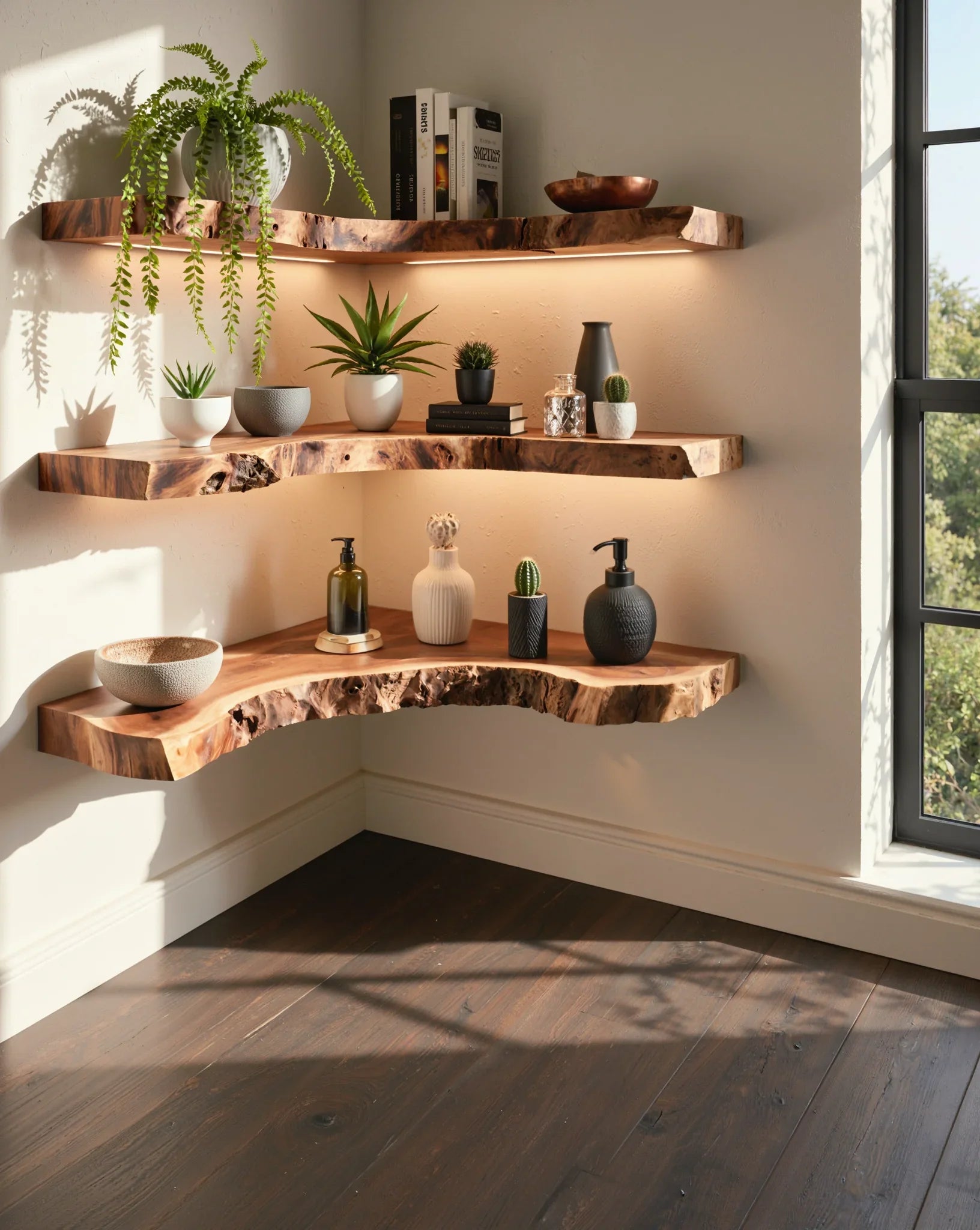
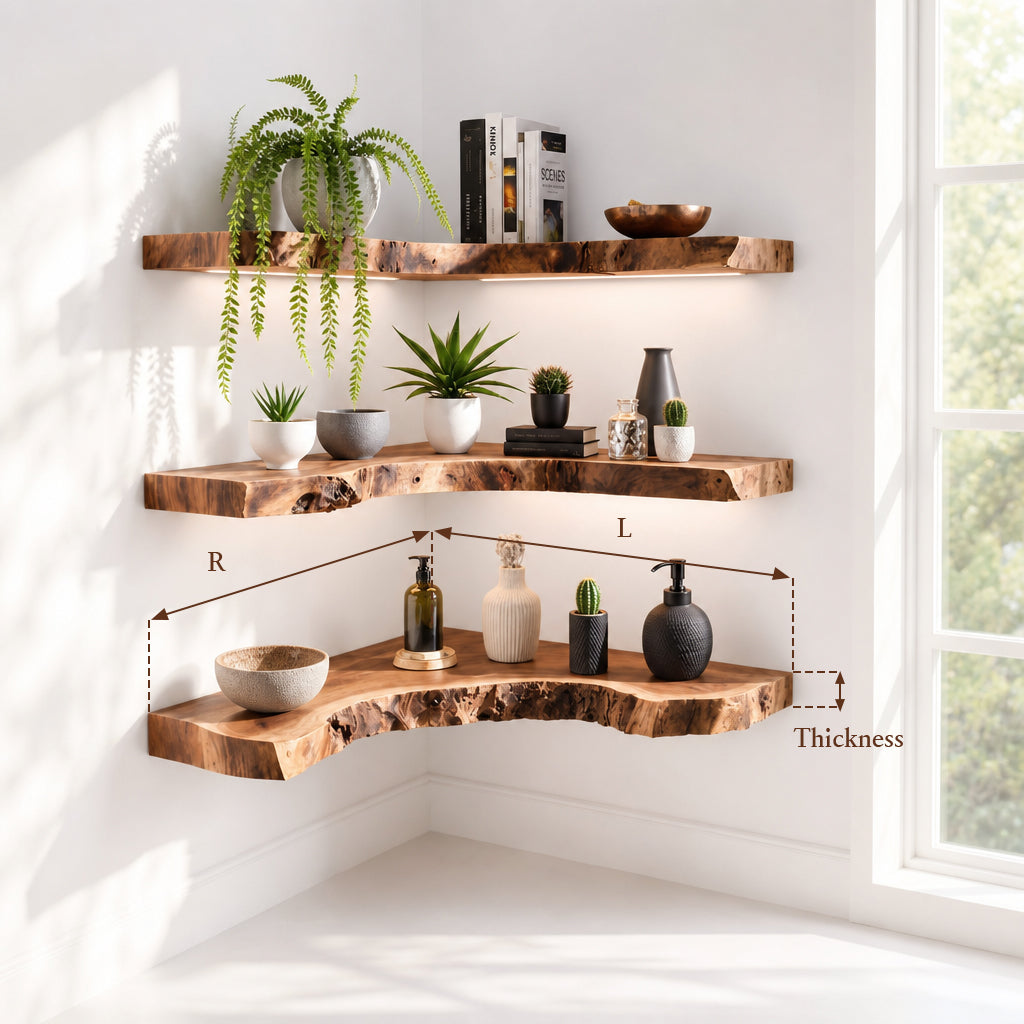
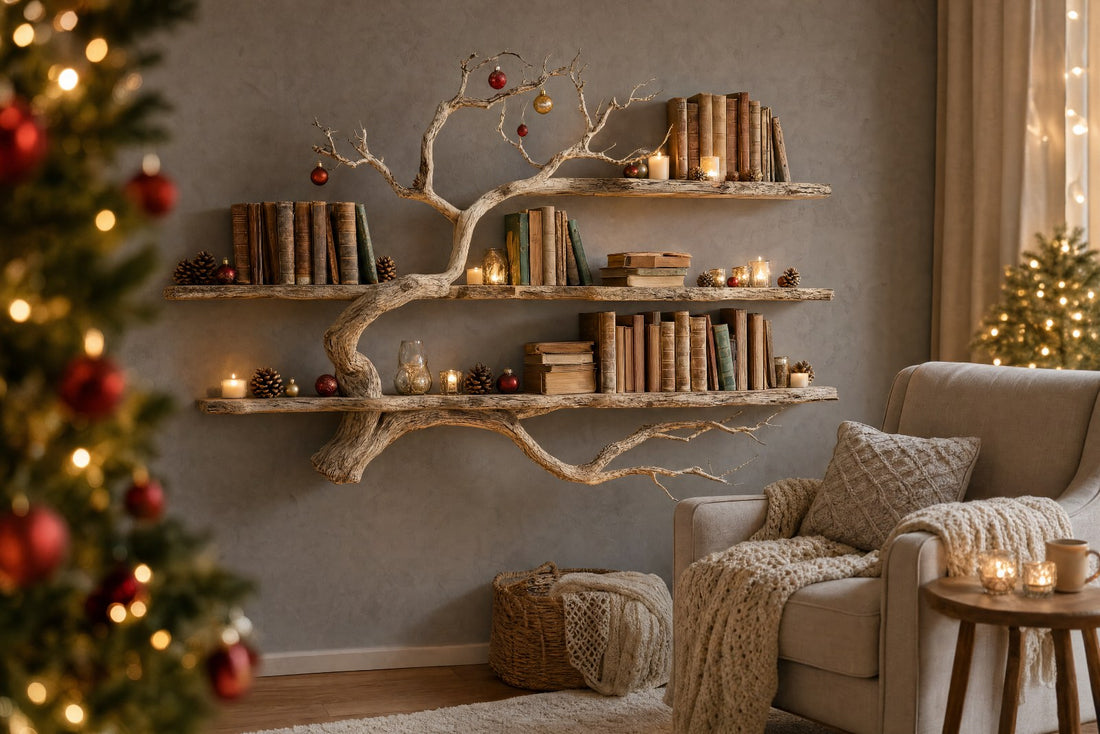
A reading nook doesn't need a dedicated room or a window seat with custom cushions. All you really need is a comfortable corner, good light, and somewhere to keep your books within arm's reach. Corner floating shelves are one of the best tools for this - they mount into the corner walls, hold real weight, and keep the floor clear for a chair, cushions, or a small rug. Architectural Digest showcases beautifully designed reading nooks for book lovers.
This guide covers how to set up a practical reading nook using corner shelves: how many you need, what weight they should handle for books, the best layout for maximizing book storage in a corner, and how to make the whole setup look like it belongs in your home rather than a college dorm.
Why Corner Shelves Work Better Than Bookcases for Reading Nooks
Traditional bookcases are great if you have wall space. In a corner reading nook, they create problems:
- They block the corner: A bookcase against one wall leaves the other wall bare, and the corner itself becomes dead space behind the furniture.
- They eat floor space: Even a slim bookcase is 8-12 inches deep and takes up square footage you need for seating.
- They feel heavy: A large bookcase in a small nook makes the space feel cramped rather than cozy.
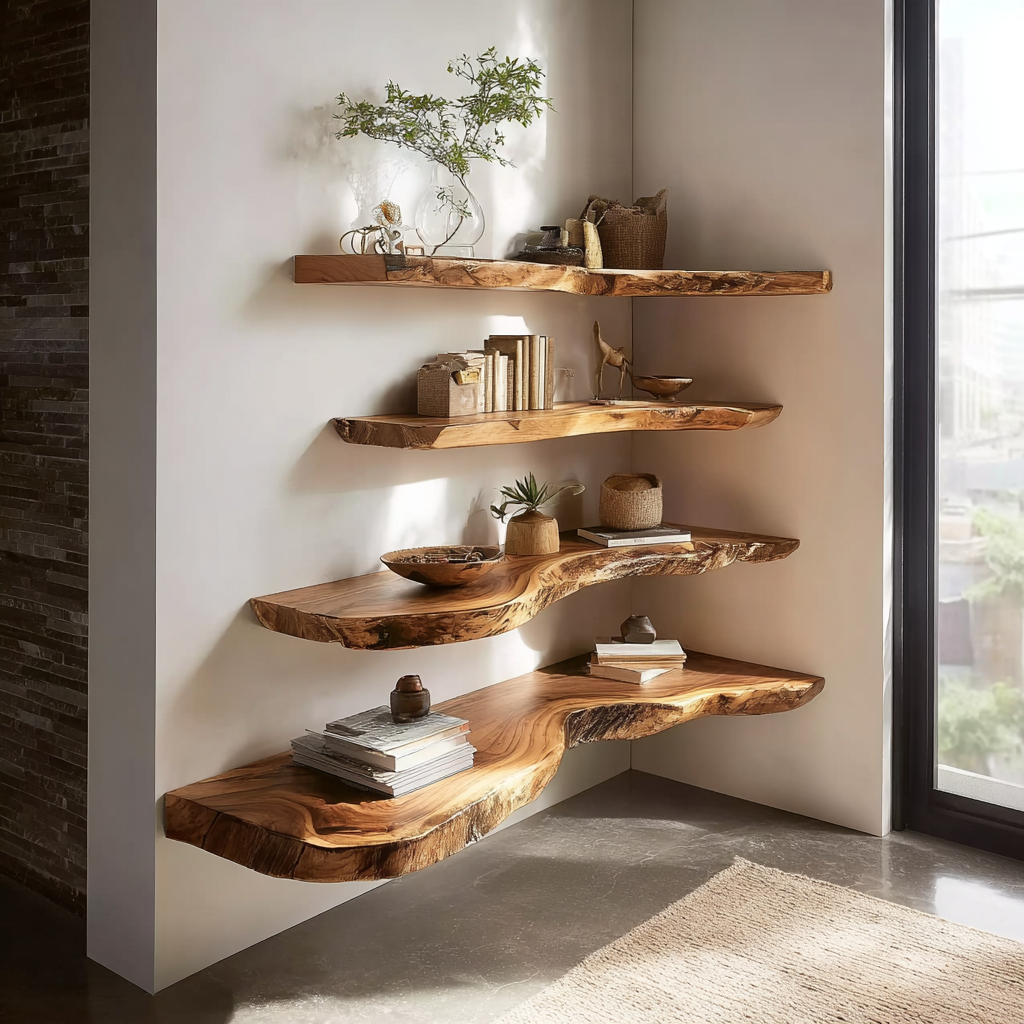
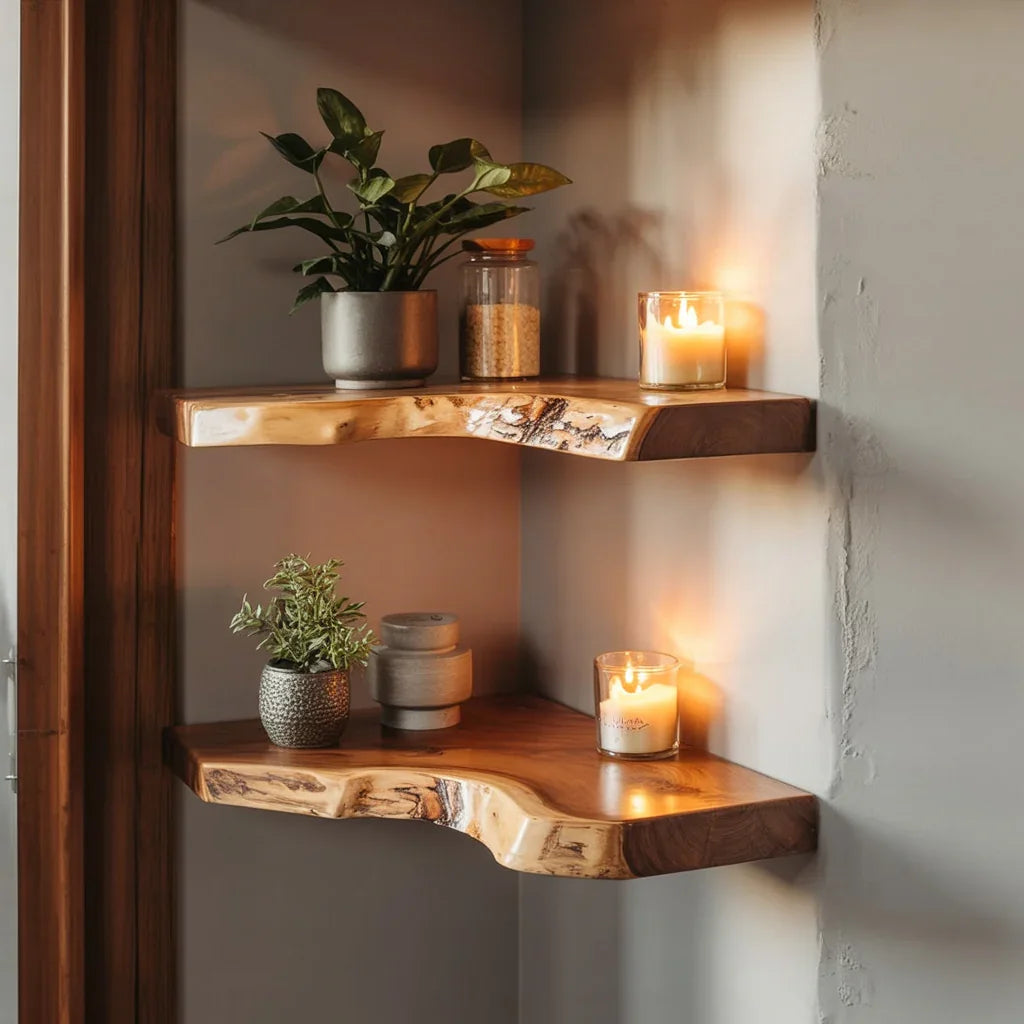
Corner floating shelves solve all three issues. They mount where the walls meet - the exact spot bookcases can't reach - and they don't touch the floor. Your seating goes underneath, your books go above, and the corner that was doing nothing becomes the anchor of the whole nook.



How Much Weight Do Corner Shelves Need to Hold Books?
Books are heavy. This is the single most important factor when choosing corner shelves for a reading nook, and it's where cheap shelves fail.
Here are real numbers:
| Book Type | Average Weight | Books Per 10" Shelf | Total Weight |
|---|---|---|---|
| Paperback novels | 0.5 - 0.8 lbs | 8 - 12 | 4 - 10 lbs |
| Hardcover fiction | 1.0 - 1.5 lbs | 6 - 8 | 6 - 12 lbs |
| Coffee table / art books | 2.0 - 4.0 lbs | 3 - 5 | 6 - 20 lbs |
| Textbooks | 2.5 - 5.0 lbs | 3 - 4 | 8 - 20 lbs |
A fully loaded corner shelf holding hardcovers needs to support at least 15-20 pounds. Most mass-produced floating shelves top out at 10-15 pounds, which means they'll sag or pull away from the wall under a real book collection.
The solution: Solid wood corner shelves with concealed bracket mounting into wall studs. This combination , real wood (not MDF) plus proper hardware into framing , reliably holds 25-30 pounds per shelf. That's enough for a row of hardcovers with room to spare.
The Best Corner Layout for Maximum Book Storage
A single corner shelf holds a handful of books. A well-planned stack of shelves creates a proper mini-library. Here's how to lay it out:
Vertical Stack: 4-5 Shelves
Mount 4-5 shelves in the same corner, spaced 10-14 inches apart vertically. The spacing depends on your books:
- Paperbacks only: 10-11 inches between shelves
- Mix of paperbacks and hardcovers: 11-12 inches
- Hardcovers and tall art books: 13-14 inches
Start the bottom shelf at about 30-36 inches from the floor if you're placing a chair underneath, or 48 inches if you want to keep the lower wall clear. The top shelf should be reachable without a step stool , about 72-76 inches from the floor for most people.
Shelf Size for Books
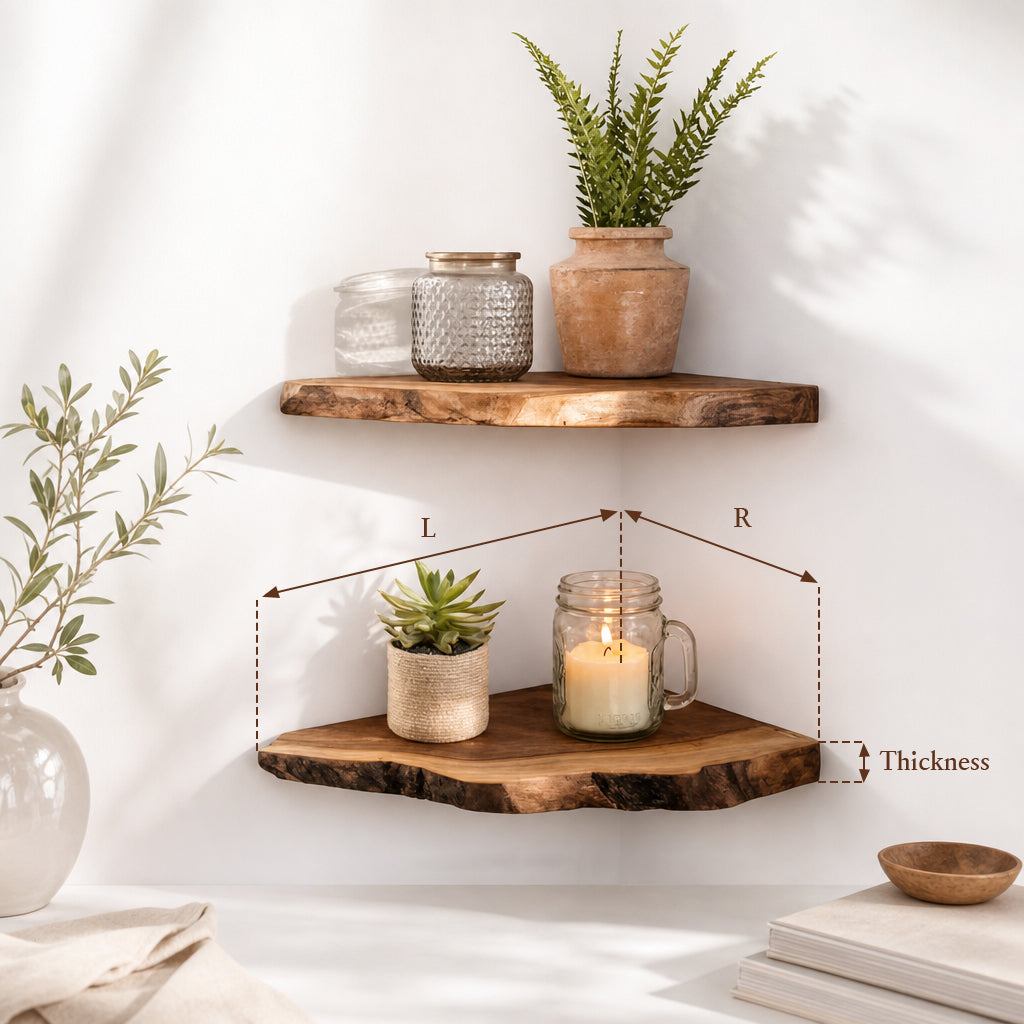
For a reading nook, go with the largest corner shelf that fits your space. An 8-inch side holds paperbacks well. A 10-12 inch side accommodates hardcovers and gives you room for a small plant or bookend alongside the books. The triangular shape of a corner shelf means the deepest point (at the corner) is about 40% wider than the sides, which is perfect for stacking a few books spine-out.
Don't miss
These pieces qualify for 10% off orders over $2,000. Applied automatically at checkout.
Setting Up Your Reading Nook: Step by Step
Step 1: Pick Your Corner
The best reading nook corners have:
- Natural light nearby (a window within arm's reach is ideal)
- Access to an outlet (for a reading lamp when it gets dark)
- Enough floor space for a chair or floor cushion (roughly 3x3 feet minimum)
- Walls that can take screws (drywall with studs, plaster, or concrete)
Step 2: Mount Your Corner Shelves
Use a stud finder to locate the wall framing. In corners, there's usually a stud on each side within a few inches of where the walls meet , this is structural, so it's reliable for mounting. Install the brackets level (a laser level helps here), then slide the shelves on. Follow corner shelf building tutorials at Family Handyman.
Step 3: Arrange Your Books
A few arrangement options that work well on corner shelves:
- Spine-out row: Traditional library style. Works best on larger shelves (10"+). Line books up along one side of the shelf.
- Stacked flat: Stack 3-5 books horizontally at the corner point. Good for oversized books or creating a pedestal for a small object on top.
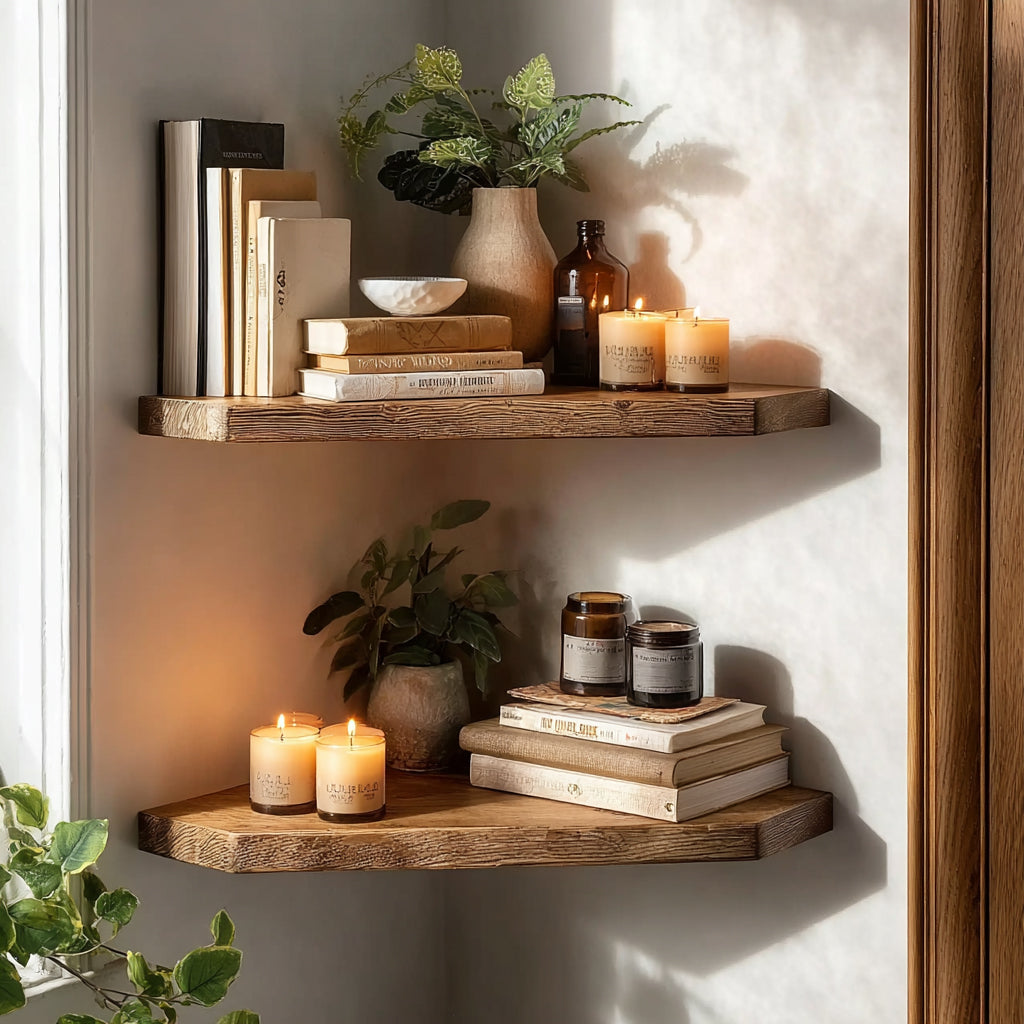
- Mixed: A row of spine-out books on one side, a flat stack at the corner, and a small plant or object at the other end. This is the most visually interesting approach.
Step 4: Add Comfort and Lighting
The shelves are the storage backbone. The rest of the nook needs:
- Seating: An armchair, bean bag, floor cushion, or even a folded blanket on the floor
- Light: A clip-on reading lamp, a floor lamp, or a wall-mounted swing-arm light
- Warmth: A throw blanket draped over the chair. This is functional (reading sessions get cold) and visual (it softens the space).
Styling Tips: Books + Decor on Corner Shelves
A reading nook doesn't have to be 100% books. In fact, mixing in a few non-book items makes the shelves look more curated and less like overflow storage.
Here's a formula for a 5-shelf reading nook:
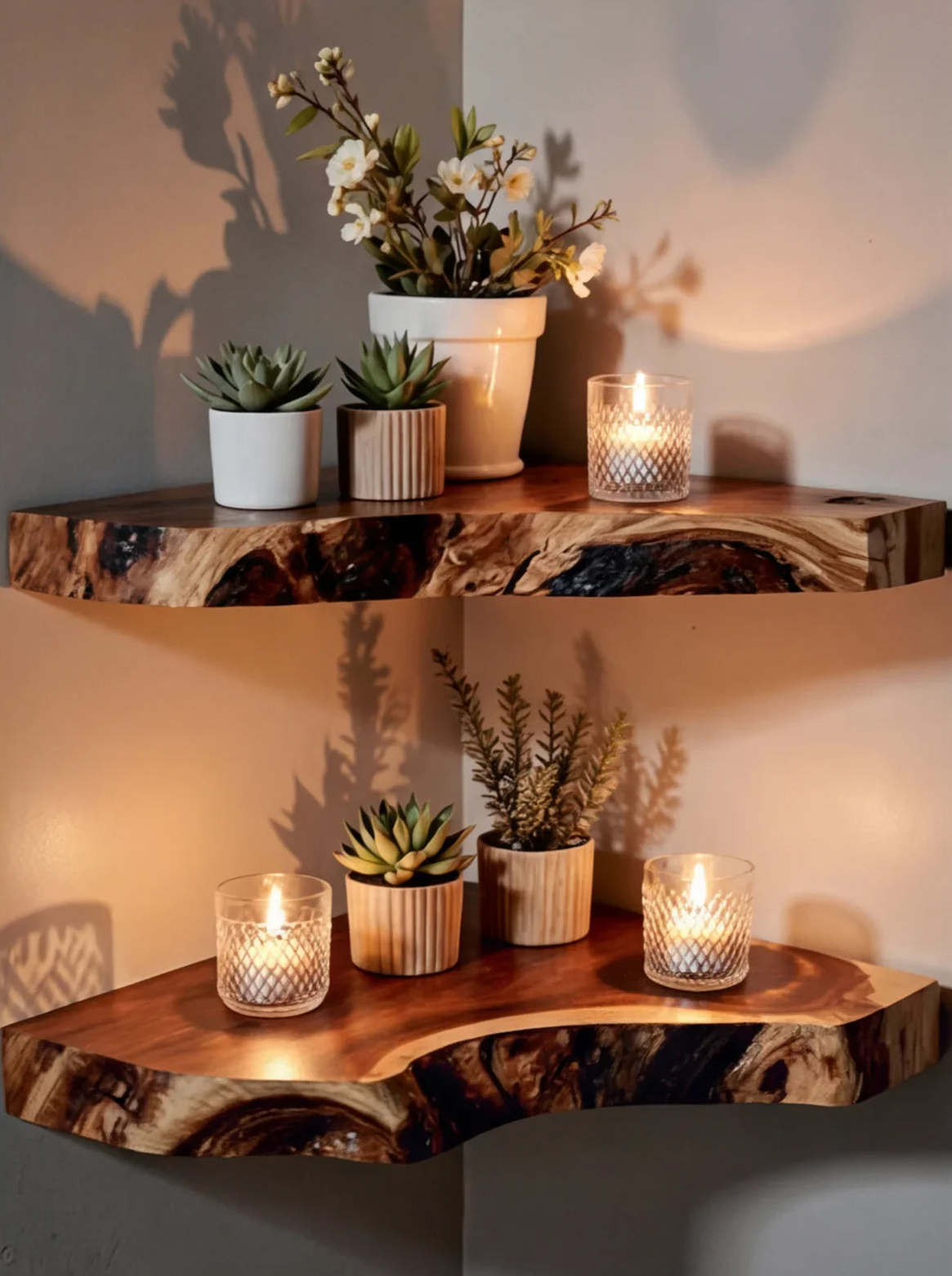
- Shelves 1-3: Primarily books, with one small object per shelf (plant, candle, small framed photo)
- Shelf 4: Mix of books and decorative items , a ceramic mug holding pencils, a small clock, a favorite object
- Shelf 5 (top): A trailing plant, a single art print leaned against the wall, or a decorative object. Less functional, more visual , it caps the arrangement.
Color tip: Organize some shelves by book cover color for a cohesive look, or face some book covers outward instead of showing spines. This works especially well with beautiful cover art.
Why Solid Wood Matters for Book Shelves
MDF and particle board shelves are fine for lightweight decor. For books, they're a problem. Here's why:
Sag: MDF bends under sustained weight. A shelf loaded with books will develop a visible bow within 6-12 months. The shelf doesn't break , it just slowly warps and never goes back to flat.
Moisture sensitivity: MDF absorbs humidity and swells. In a reading nook near a window (where you're likely to have one), temperature and humidity fluctuations accelerate the warping.
Solid wood holds flat. A properly mounted solid wood shelf maintains its shape under load for years. Hardwoods like oak and walnut are particularly resistant to bowing. This matters when you're stacking 15+ pounds of books on a single floating shelf.
Ashdeco's corner floating shelves are made from solid wood by Vietnamese artisans. Each shelf is hand-finished with attention to grain direction and structural integrity , the kind of details that factory production skips but that determine whether your shelf stays straight under a pile of novels.
Frequently Asked Questions
How many books can a corner floating shelf hold?
A solid wood corner shelf with 10-inch sides holds approximately 8-12 paperbacks or 6-8 hardcovers when arranged spine-out. The corner point (deepest part of the shelf) can hold 3-5 books stacked flat. Total weight capacity for a solid wood shelf mounted into studs is typically 25-30 pounds.
Will floating shelves sag with books over time?
MDF and particle board shelves will sag. Solid wood shelves mounted into studs with proper brackets hold their shape under normal book loads for years. The key factors are material (solid wood, not engineered wood) and mounting (studs, drywall anchors).
What size corner shelf is best for books?
10-12 inch sides work best for books. An 8-inch shelf holds paperbacks but feels tight for hardcovers. Anything under 8 inches is better suited for small decor items. For a dedicated reading nook, go with the largest size your corner can accommodate.
How far apart should I space book shelves on a wall?
11-12 inches between shelves works for most book collections. This accommodates standard hardcovers (typically 9-10 inches tall) with a small gap above. For oversized books or art books, increase to 13-14 inches. For paperbacks only, you can tighten to 10 inches.
Can I create a reading nook in a small apartment?
Yes , small apartments are actually ideal for reading nooks because corners are everywhere and usually unused. You need roughly 3x3 feet of floor space for seating and 3-5 corner floating shelves above. The floating design keeps the floor clear, making the nook feel open rather than cramped.
Do I need to mount into studs for book shelves?
For book-loaded shelves, yes. Drywall anchors alone typically support 15-25 pounds per anchor, but book weight adds up fast and the sustained load can pull anchors loose over months. Mounting into at least one stud per wall side gives you reliable, long-term support. Use a stud finder , there's almost always a stud within a few inches of the corner.
Build Your Reading Nook
Start with shelves that can handle the weight. Ashdeco's handcrafted corner floating shelves are made from solid wood , no MDF, no particle board. Each piece is built by Vietnamese artisans and designed to hold your library without sagging. Pick your wood, pick your finish, and start stacking books.