Does Your Wine Rack's Wood Actually Affect Your Wine?
Search "best wood for wine rack" and you'll find plenty of articles claiming certain woods "improve" or "affect the flavor" of your wine. Let's be precise about what's actually true.
A wine barrel changes wine flavor because the wine sits inside the wood for months or years, absorbing tannins and compounds directly. A wine rack is different - your bottles are sealed, and the wood of the rack never touches the wine itself. So no, your walnut wine rack isn't going to make your Cabernet taste different from how it would taste on a metal rack.
What is true: the wood you choose for a wine rack affects how well your wine is preserved and protected while it sits there - especially if you're aging bottles rather than drinking them within a few weeks. That happens through three physical mechanisms, not through flavor transfer. Here's how each one works, and which wood handles it best.
For bottle dimensions and rack depth, see our how deep should a wooden wine rack be guide (article 1 in this series). For room-by-room sizing, see our wooden wine rack dimensions guide (article 5). For the full buying process, see our wooden wine rack buying guide.
As a handmade furniture brand, we build wine holders from solid hardwood - walnut, acacia, teak, and reclaimed wood - each suited to a different storage situation. See our full wine holder collection for the complete range.

The 3 mechanisms that actually matter (and why)
1. Vibration dampening - protects wine that's aging, not just sitting
Constant low-level vibration (from a nearby fridge, dishwasher, or even foot traffic on the same floor) can disturb wine as it ages, particularly reds that develop sediment over years. Dense, heavy wood absorbs and dampens vibration far better than a light rack that transmits every tremor straight to the bottles.
This matters far more if you're holding bottles for 2+ years than if you're cycling through a bottle a week. For fast turnover, skip ahead - vibration dampening won't move the needle.
Density ranking (denser = better vibration dampening):
- Acacia: 700-850 kg/m³ (very dense)
- Teak: 630-720 kg/m³ (dense)
- Walnut: 610-670 kg/m³ (dense)
- Reclaimed wood: varies by source species - ask what the reclaimed stock originally was before assuming density
2. Odor exposure through the cork - real, but only in specific conditions
This is the one legitimate way wood can reach the wine - indirectly, through the cork, and only under specific conditions: bottles stored horizontally for years, cork in prolonged contact with a strongly aromatic wood. This is exactly why wine cellar guides warn against untreated cedar - its aromatic oils are pungent enough to migrate through a cork over time. It's a niche risk, but it's the one place the "wood affects wine" claim has real teeth.
For everyday wine racks - bottles standing upright or resting briefly before drinking - this isn't a concern. It becomes relevant only for dedicated long-term storage.
Grain tightness (tighter = less odor transfer risk):
- Teak: tight grain, naturally low-odor
- Walnut: tight grain, naturally low-odor
- Acacia: moderate grain - fine for display and short-to-medium storage
- Reclaimed wood: depends on source - reclaimed cedar or pine carries more risk than reclaimed oak
3. Structural stability - keeps the cork from drying out
A cork needs to stay in contact with wine (or at least stay humid) to avoid drying and letting in air. If a rack's joints loosen or the wood warps over time, bottles can shift out of their resting angle. Solid, well-built hardwood holds its shape for years; cheap engineered wood or thin softwood doesn't.
This is less about species and more about construction quality - but density and grain stability both contribute to how well a piece holds up.

Wood comparison: matched to what actually matters for storage
| Wood | Vibration dampening | Odor/cork risk | Best for | Ashdeco piece |
|---|---|---|---|---|
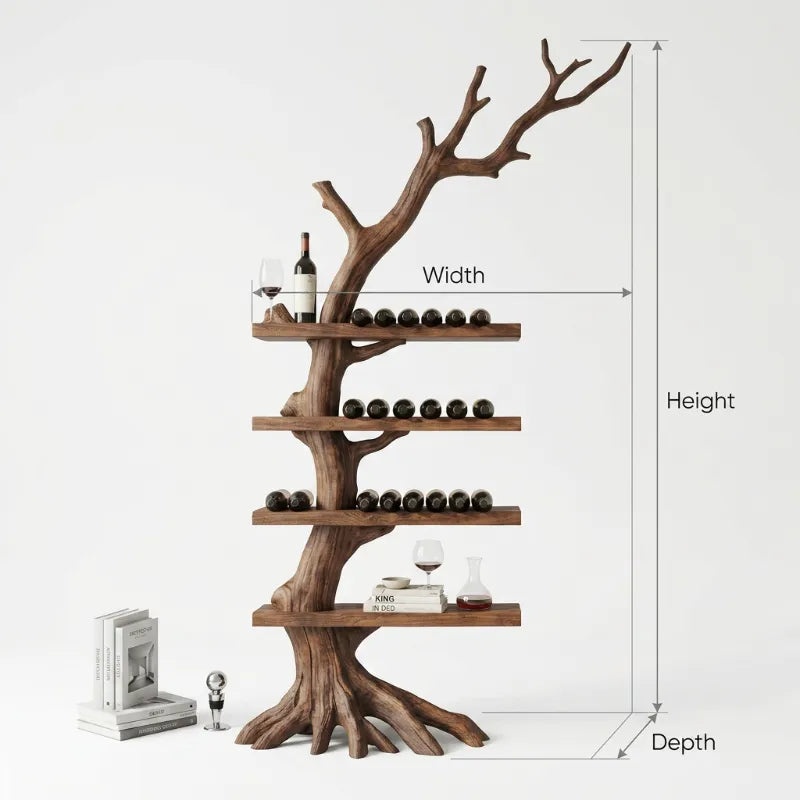
| Acacia | Excellent (densest) | Low-moderate | Display pieces, sculptural racks, short-to-medium term | Tree Trunk Wine Rack - $472 |
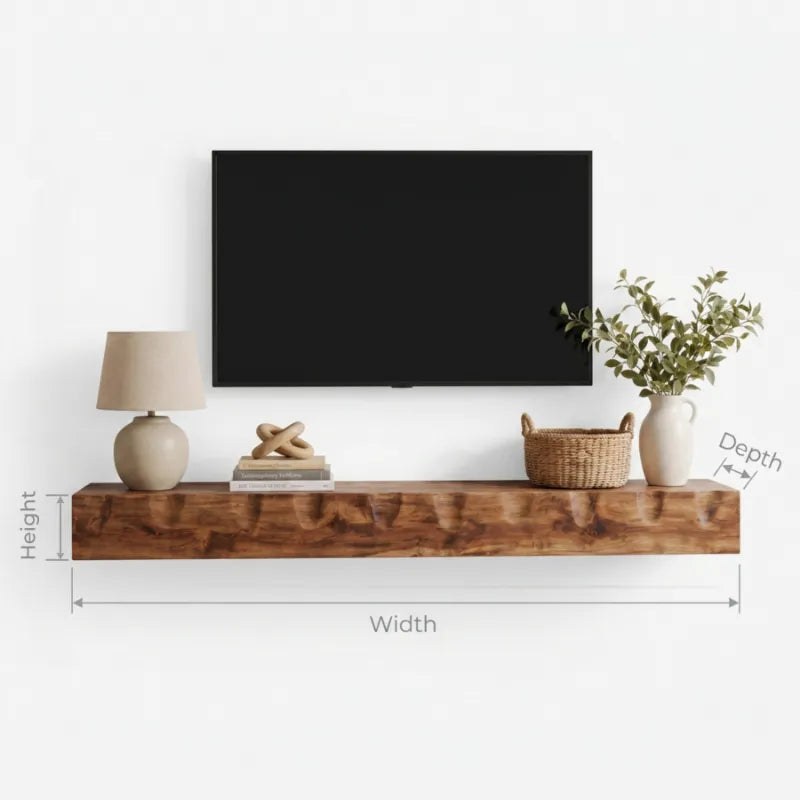
| Teak | Good | Very low (tight grain, naturally low-odor) | Kitchens, humid spots, long-term horizontal storage | Live Edge Wooden Wine Rack Shelf - $740 |
| Walnut | Good | Very low (tight grain) | Dedicated wine storage, collections you're aging | Rustic Solid Wood Wine Bottle Holder - Mid Century - $1,780 |
| Reclaimed wood | Varies by source | Varies - verify species | Farmhouse aesthetic, sustainability priority, short-term display | Farmhouse Wine Holder - $1,012 |
Acacia: the display piece
Acacia is the densest of the four, with bold two-tone grain that makes it the most visually dramatic option. It dampens vibration better than anything else on this list, but its grain runs moderate rather than tight - fine for a rack that's mostly on display and gets cycled through regularly, less ideal if you're horizontally aging bottles for a decade.
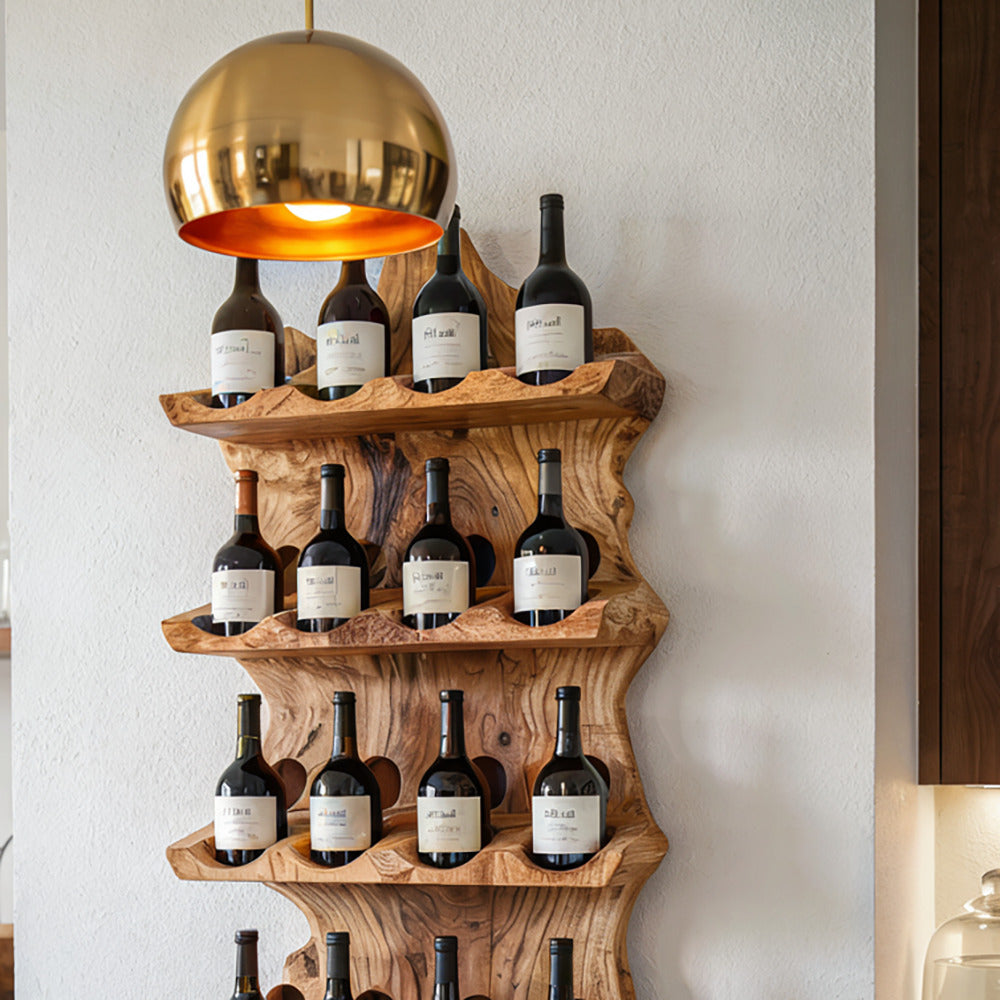
Our tree trunk wine rack is hand-carved with integrated bottle slots and a glass holder - a freestanding sculptural piece more than a "storage" rack, which fits acacia's strengths.

Teak: the practical, low-risk choice
Teak's tight grain and naturally low-odor profile make it the safest choice if odor-through-cork is a genuine concern for you - plus it's naturally water- and moisture-resistant, so it holds up in kitchens near sinks and dishwashers without needing frequent resealing.
Our live edge wooden wine rack shelf is wall-mounted, which also helps - shelving off the floor reduces exposure to foot-traffic vibration.

Walnut: the one for a real collection
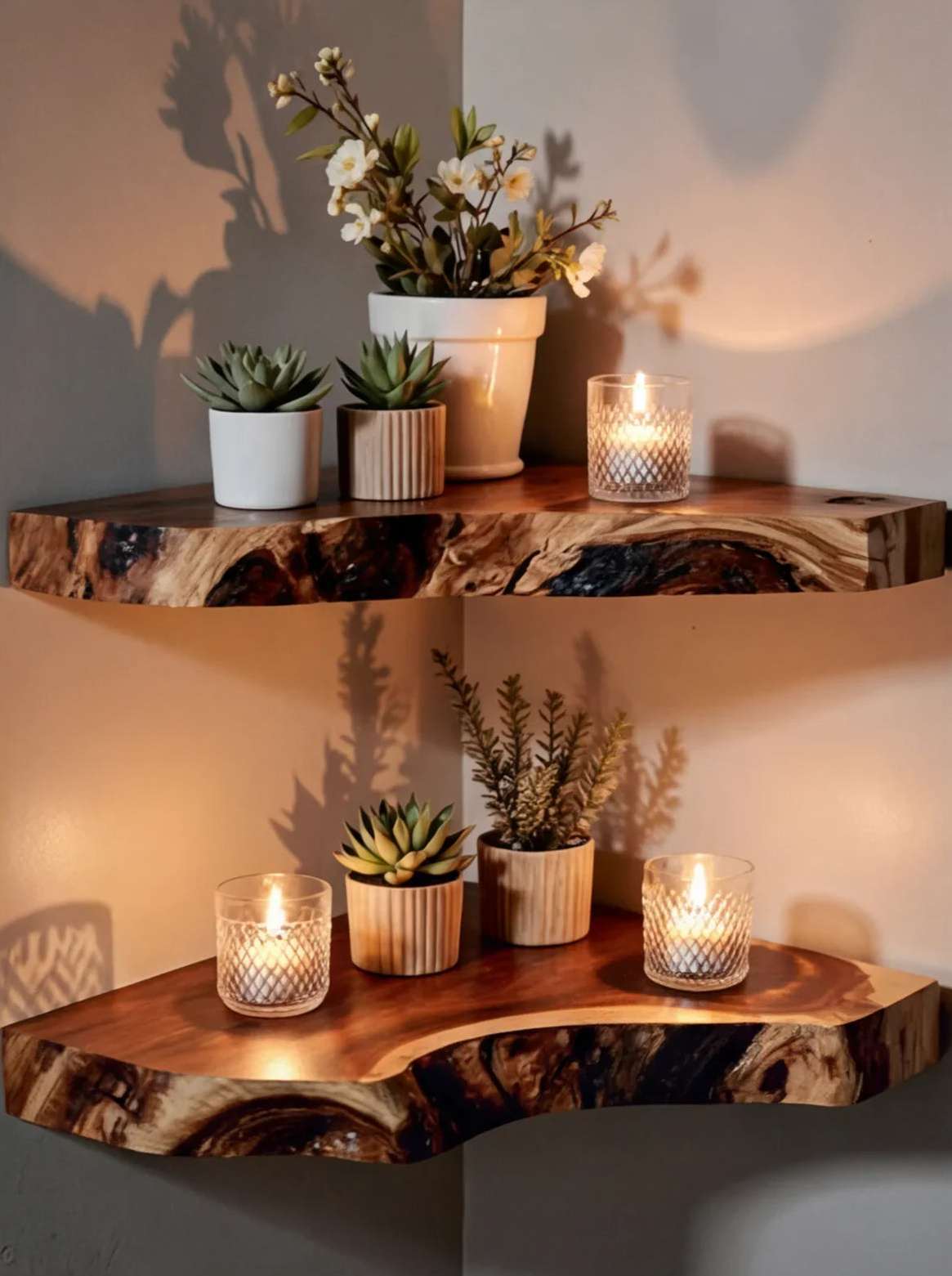
If you're actually aging wine rather than just displaying bottles, walnut is the strongest all-around pick: dense enough to dampen vibration well, tight-grained enough to minimize any cork exposure risk, and it looks the part in a dining room or dedicated bar area.
Our Mid Century wine bottle holder also comes with an LED-backlit option, which is worth flagging: keep any wine you're actually aging out of direct light exposure regardless of the rack material - light degrades wine faster than almost anything else, wood species included.

Reclaimed wood: check what it actually is
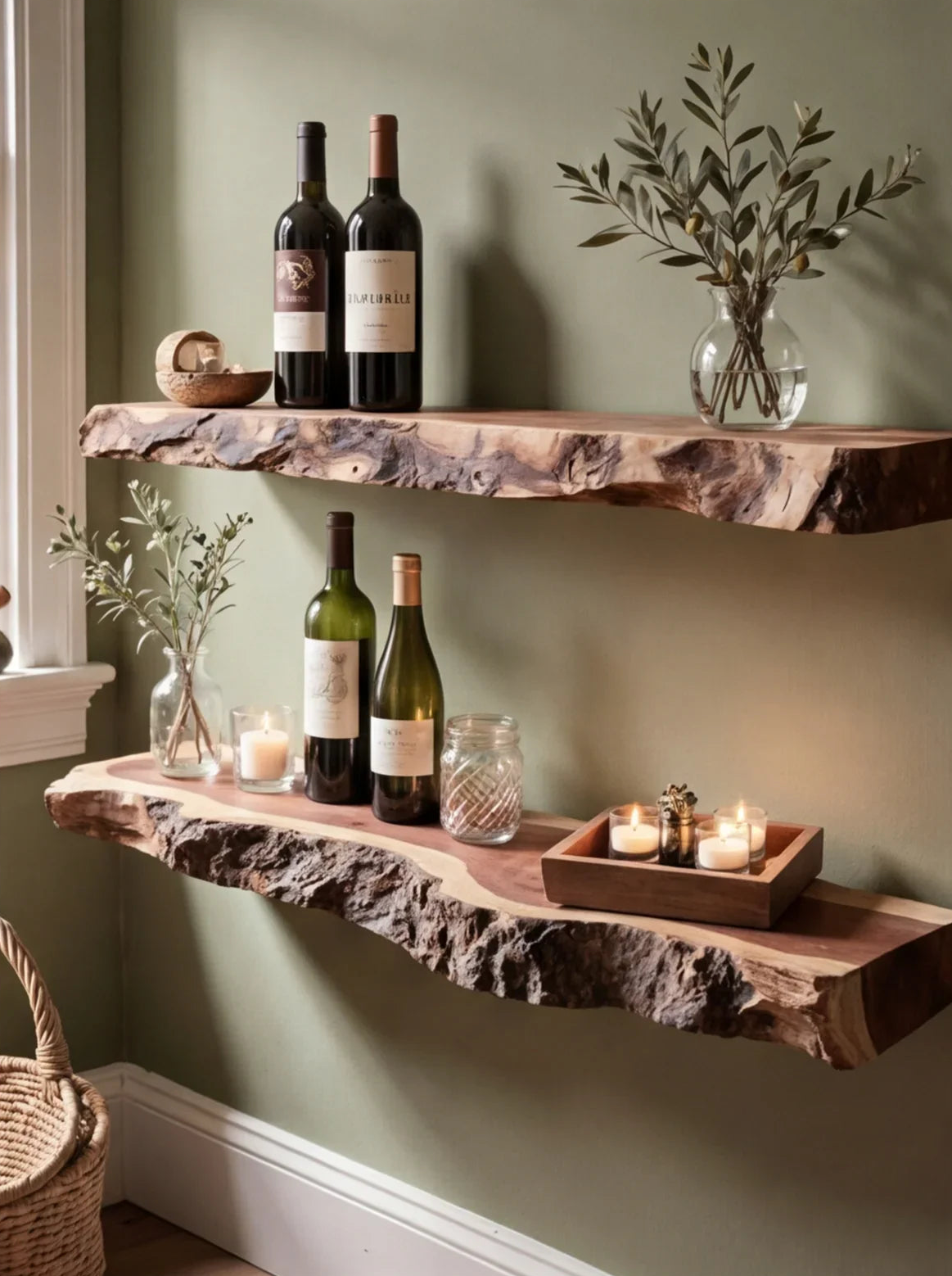
"Reclaimed wood" isn't a species - it's a sourcing story. The actual properties depend entirely on what the reclaimed lumber originally was (often pine, oak, or fir from old barns and structures). Before assuming a reclaimed piece has any particular vibration or odor performance, ask what species the reclaimed stock is. If it's reclaimed cedar or pine, treat it like fresh-cut cedar or pine for storage purposes - fine for short-term display, not ideal for years-long horizontal aging.
Our farmhouse wine holder leans into the reclaimed aesthetic for kitchens and casual dining spaces - a strong pick if you're prioritizing character and sustainability over long-term cellaring performance.
Woods to avoid for long-term wine storage
Untreated cedar: the textbook example of odor transfer - its aromatic oils are strong enough to migrate through cork over months of contact. Fine for short-term display, a real risk for anything you're aging.
Pine: too soft (400-500 kg/m³) to dampen vibration meaningfully, and bottle-slot openings wear and loosen within a year of regular use.
MDF / particleboard: absorbs moisture, swells, and can warp out of shape - which throws off bottle resting angle and, over time, can dry out corks.
Fir / spruce: softwoods under 500 kg/m³ - same vibration problem as pine.
None of these matter much if you're buying a rack purely for display, or cycling through bottles within weeks. They matter if you're holding wine for years.
How to tell if a wood wine rack is actually solid hardwood
1. Ask for the species name. A listing that just says "wood" without naming the species is very likely MDF or a soft, low-density wood.
2. Check the weight. Dense hardwood is heavy - a 6-bottle rack should weigh roughly 8-12 lbs empty. A surprisingly light rack is softwood or engineered wood.
3. Look at the grain. Tight, consistent grain lines indicate genuine hardwood. Open, uneven, or painted-over grain often hides softwood or MDF.
4. Check the bottle slots. They should feel smooth and snug, not rough or already loose. Rough, oversized holes are a sign of soft wood that wears quickly.

Buying checklist
1. Be honest about your use case - are you displaying/cycling bottles, or actually aging a collection for years? This determines how much the species choice matters.
2. For display/short-term: acacia or reclaimed wood are both fine - prioritize the look you want.
3. For long-term aging: walnut or teak, for tighter grain and lower odor risk. Keep bottles out of direct light regardless of rack material.
4. Verify the species is named on the product listing - if it isn't, that's a red flag.
5. If buying reclaimed wood, ask what species it originally was - the sourcing story doesn't tell you the physical properties.
Starting points: Tree Trunk Wine Rack (acacia), Live Edge Wooden Wine Rack Shelf (teak), Mid Century Wine Bottle Holder (walnut), Farmhouse Wine Holder (reclaimed), full wine holder collection, wooden wine rack buying guide.
FAQ
Does the wood of a wine rack actually change how wine tastes?
No - not directly. Your bottles are sealed, so the rack's wood never touches the wine. This is different from a wine barrel, where wine sits inside the wood for months and absorbs compounds directly. A rack's wood affects preservation (vibration, cork exposure, stability), not flavor.
What's the best wood for storing wine long-term?
Walnut or teak - both have tight grain (low odor-transfer risk through the cork) and enough density to dampen vibration well. Acacia and reclaimed wood are better suited to display pieces and shorter-term storage.
Is cedar bad for wine storage?
Untreated cedar, yes - for long-term storage. Its aromatic oils are strong enough to migrate through a cork over months of contact. It's a real, well-documented risk in wine cellar design, not a myth.
Does a heavier wine rack actually protect the wine better?
For aging wine, yes, to a meaningful degree - denser wood dampens vibration better, which matters for bottles developing sediment over years. For bottles you'll drink within weeks, this doesn't make a practical difference.
How do I know if a wood wine rack is genuine solid hardwood?
Check that the species is named specifically, weigh it (dense hardwood is heavy), inspect the grain (tight and consistent), and check the bottle slots (smooth, snug, not rough or oversized).