


















Quick view
- Why Non-Toxic Cat Furniture Matters More Than Most Cat Owners Realize
- The Problem with Most Mass-Market Cat Furniture Materials
- Why a Non-Toxic Cat Tree Means Solid Wood, Not Just "Natural"
- Design Benefits of Natural Cat Furniture
- Natural Cat Furniture and Cats: What They Actually Prefer
- How to Identify Truly Non-Toxic Cat Furniture
- No particle board. No carpet. No off-gassing.
- Natural Cat Furniture for Different Spaces
- Common Questions About Natural Cat Furniture
- Choosing Natural Cat Furniture for Your Home
Shop this guide
Handcrafted Cat Tree Tower, made to order in solid wood.
 Hollow Tunnel Cave Sisal Scratching Cat Tree Tower in Sculpted Solid Wood
From $1,532.00
Hollow Tunnel Cave Sisal Scratching Cat Tree Tower in Sculpted Solid Wood
From $1,532.00
 Multi Tier Sculpted Botanical Canopy Cat Tree Tower in Matte Finished Solid Wood
From $1,765.00
Multi Tier Sculpted Botanical Canopy Cat Tree Tower in Matte Finished Solid Wood
From $1,765.00
 Sculptural Spiral Solid Wood Cat Tree Tiered Modern Feline Lounger
From $2,217.0010% off at checkout
Sculptural Spiral Solid Wood Cat Tree Tiered Modern Feline Lounger
From $2,217.0010% off at checkout
 Nature Inspired Branch Solid Wood Corner Cat Tree Tower Condo
From $1,854.00
Nature Inspired Branch Solid Wood Corner Cat Tree Tower Condo
From $1,854.00
 Live Edge Slice Tiered Solid Wood Cat Tree Freestanding Multi Level Perch
From $1,732.00
Live Edge Slice Tiered Solid Wood Cat Tree Freestanding Multi Level Perch
From $1,732.00
 Artisanal Solid Wood Sculptural Tree Cat Tower & Multi-Tier Botanical Display Perch Stand
From $2,076.0010% off at checkout
Artisanal Solid Wood Sculptural Tree Cat Tower & Multi-Tier Botanical Display Perch Stand
From $2,076.0010% off at checkout
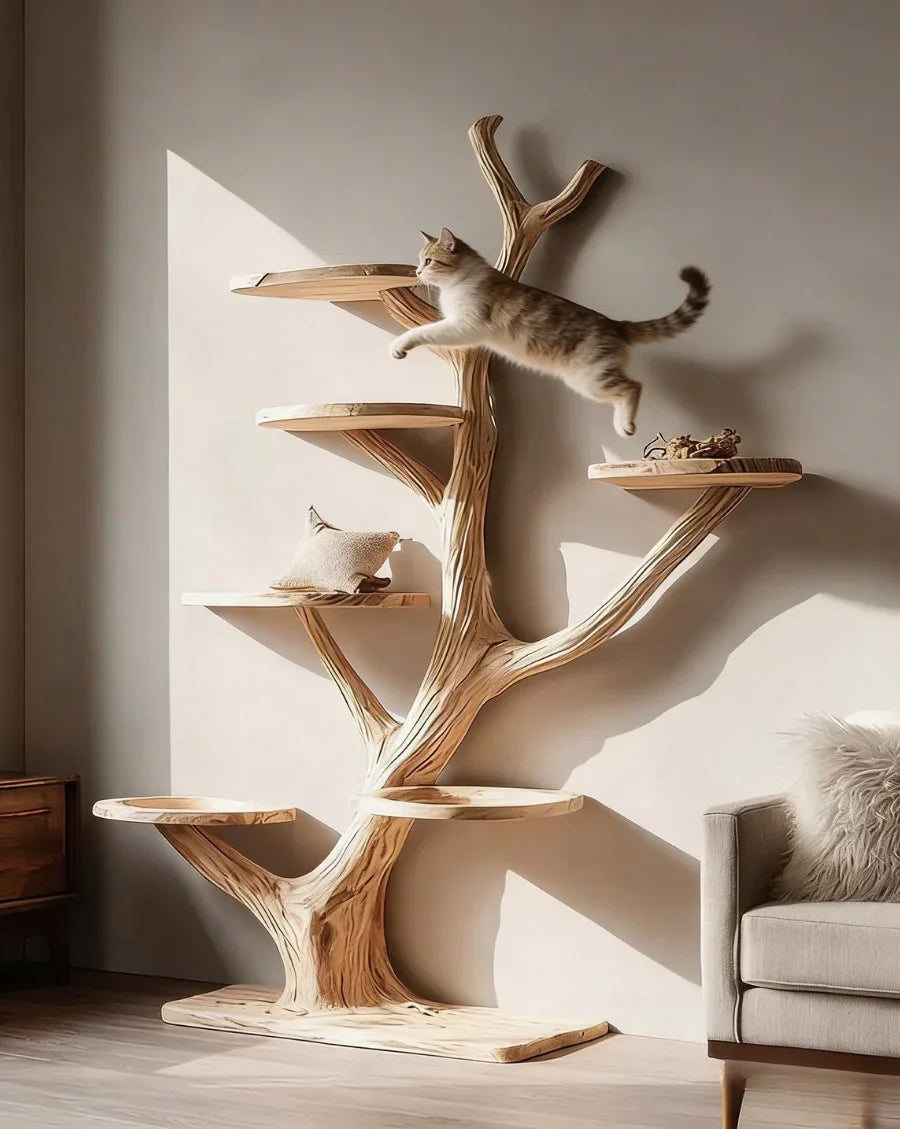
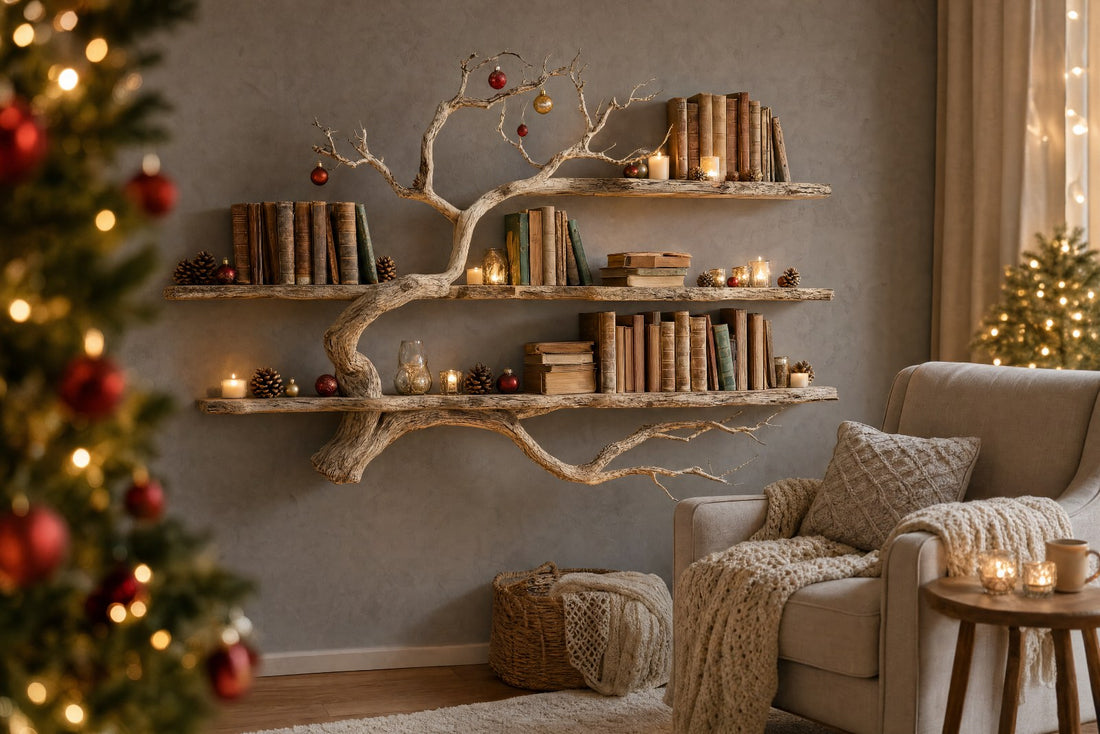
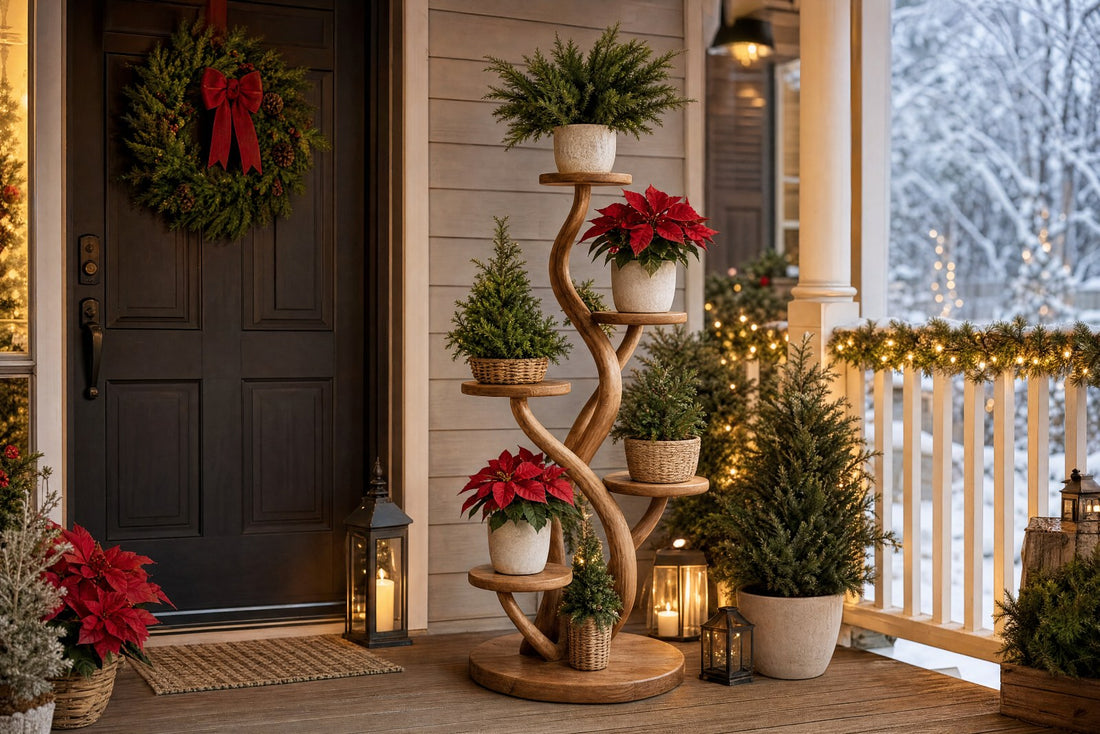
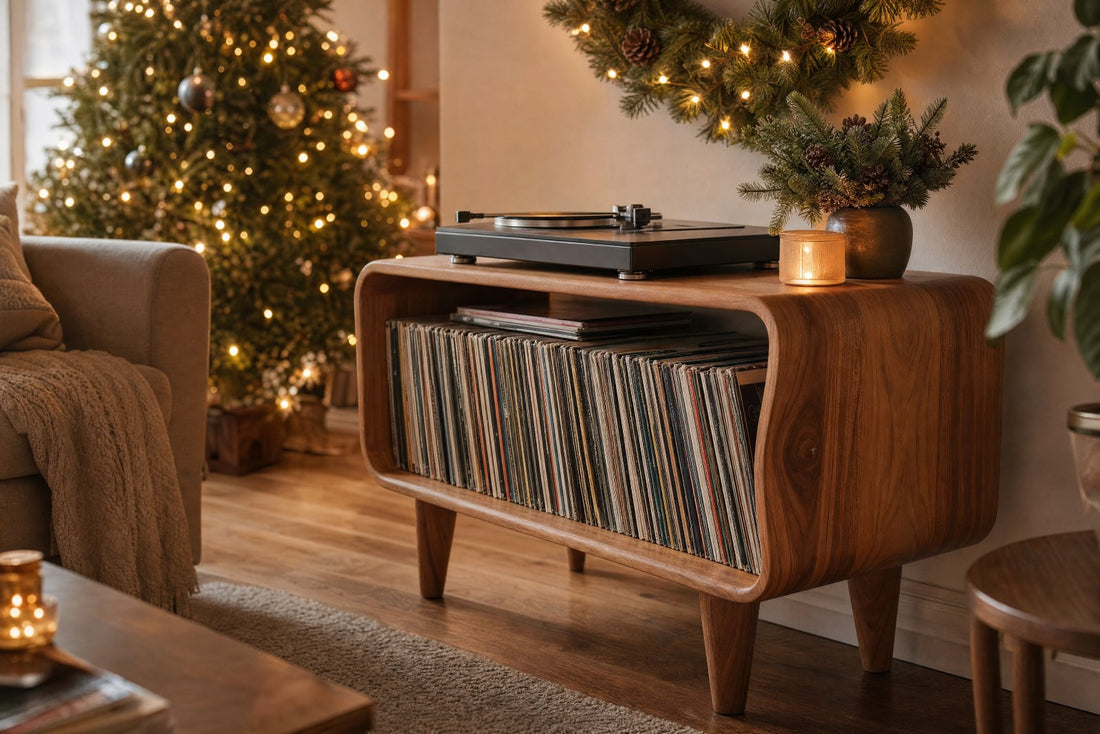
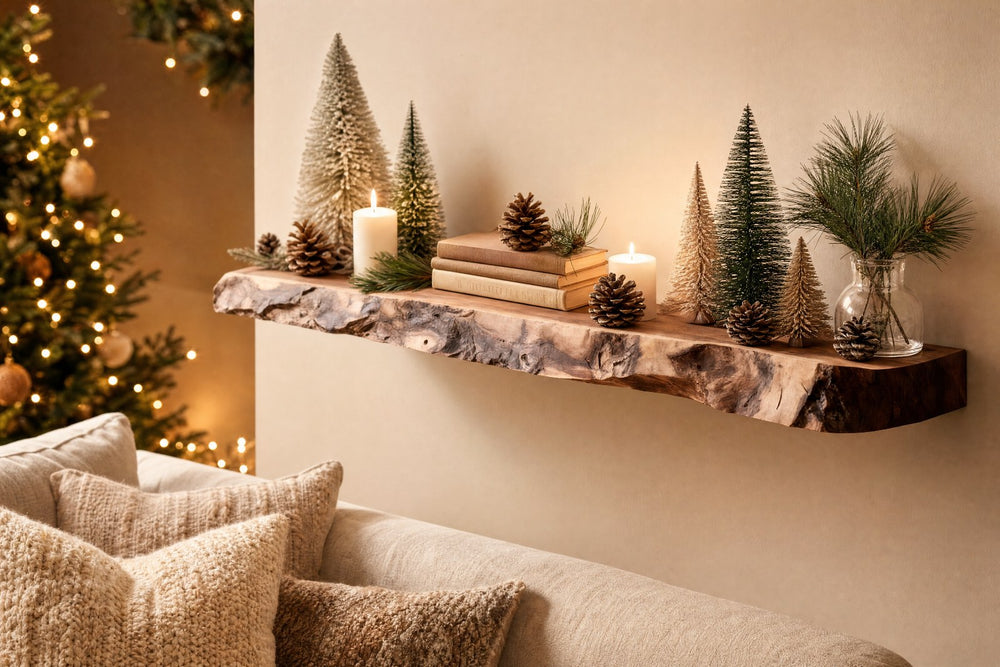
Cat furniture has come a long way from the carpeted cat trees of the past. Today, natural cat furniture is designed to look like real furniture - solid wood, sculptural, and built to last decades, not months. In this guide, we walk through 7 designer pieces that prove cat furniture can be just as beautiful as the rest of your home.
Why Non-Toxic Cat Furniture Matters More Than Most Cat Owners Realize
This is the core argument for natural cat furniture: it is furniture that happens to be for cats, not a product category designed primarily around reducing costs. Cats benefit from durable materials and thoughtful construction, while owners benefit from pieces that last for years and fit naturally into modern interiors rather than looking like temporary pet products.
Handcrafted natural cat furniture takes this further. Well-made pieces often prioritize solid hardwood construction, fewer synthetic materials, and more durable finishes. The result is furniture that is built for long-term use, easier maintenance, and a design that feels intentional within the home.

Wooden Cat Tower Cat Tree Pet Furniture For Home Decor And Gift For Her
The Problem with Most Mass-Market Cat Furniture Materials
 The standard cat furniture at pet stores is particle board wrapped in carpet. This is a cost-driven design: particle board is cheap, carpet covers the particle board and makes it look acceptable, and the whole thing ships flat in a box. The result looks fine in the store and fails in two to three years.
The material problems with standard cat furniture are specific.
Particle board cores are made from wood particles compressed with resin binders. The resins used include formaldehyde-based adhesives in many cases, which off-gas over time - especially when the piece is new. Cats sleeping on these surfaces are breathing formaldehyde at close range, repeatedly, over the lifetime of the piece.
Carpet wrapping traps hair, dander, and skin cells in a way that solid wood does not. The carpet is also treated with fire retardants in many jurisdictions, and these chemicals are documented respiratory irritants. Cats scratch the carpet as part of normal scratching behavior, which means they are actively exposing themselves to whatever is in the fabric treatment.
Adhesive layers between particle board and veneer, between different layers of particle board, and in the assembly joints are another source of chemical off-gassing. The adhesive bond between a carpet and a particle board base is not permanent under the stress of cat scratching - it delaminates over time, which is why carpet starts peeling off cat trees after a year.
Plywood with formaldehyde cores is the upgrade from particle board but still not clean. Oriented strand board and formaldehyde-bonded plywood are common in mid-range cat furniture. They are better structurally but still carry the formaldehyde problem.
The alternatives exist and they are not exotic. Solid hardwood - oak, walnut, hevea - is a natural material with no added formaldehyde, no off-gassing, and no carpet treatment chemicals. It is the material that furniture has been made from for centuries. The fact that it is not standard in cat furniture is a cost decision, not a material limitation.
Ashdeco builds all cat furniture from solid hardwood with no fabric components and finishes that are food-contact safe. This is not a marketing claim - it is the result of using the same material standards for cat furniture as for dining tables and desks.
What Does "Formaldehyde-Free" Actually Mean for a Cat Tree?
Formaldehyde-free means no urea-formaldehyde or phenol-formaldehyde resins were used anywhere in the construction - not just in the visible surface, but in the core material and the adhesive holding it together. Solid hardwood is formaldehyde-free by nature because there's no binder resin involved; the wood is one continuous piece, not compressed fibers glued together. Particle board, MDF, and most plywood cannot make this claim honestly, regardless of what finish is applied on top.


Why a Non-Toxic Cat Tree Means Solid Wood, Not Just "Natural"

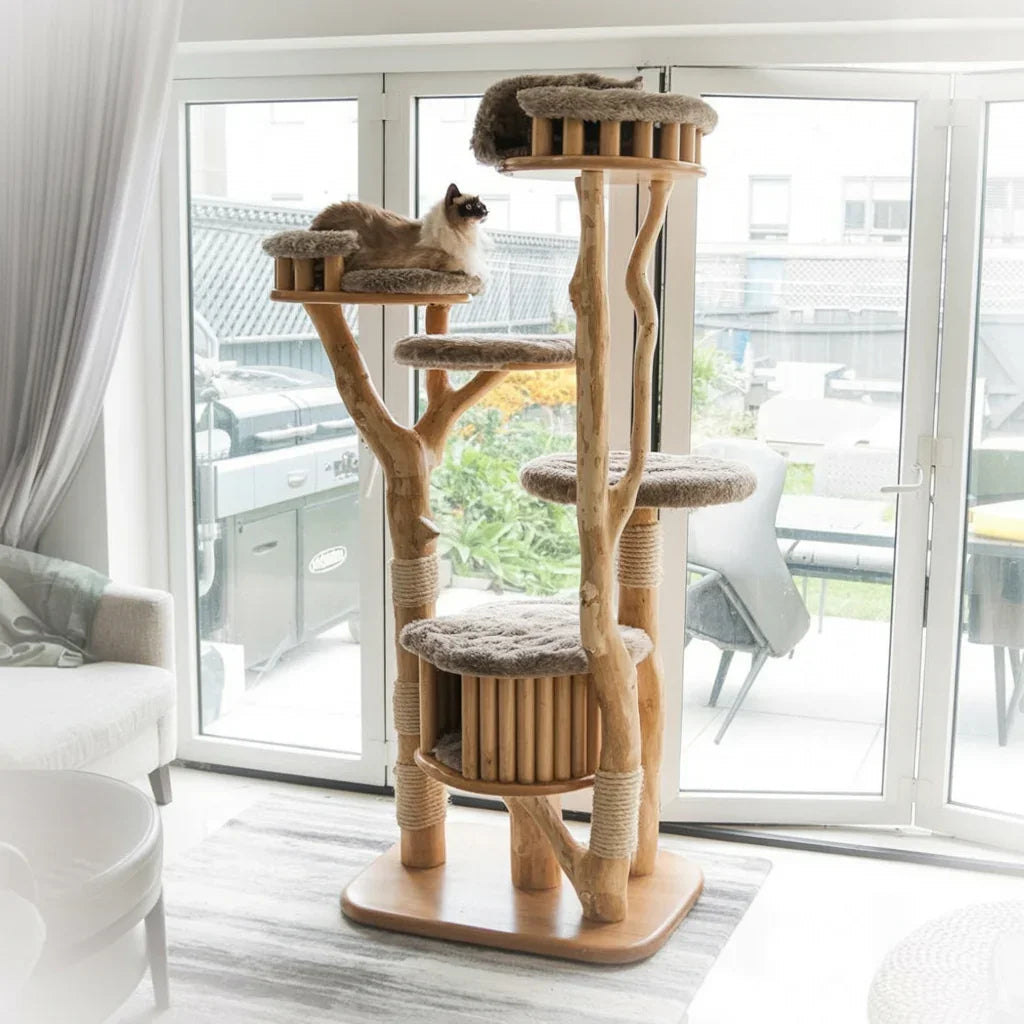
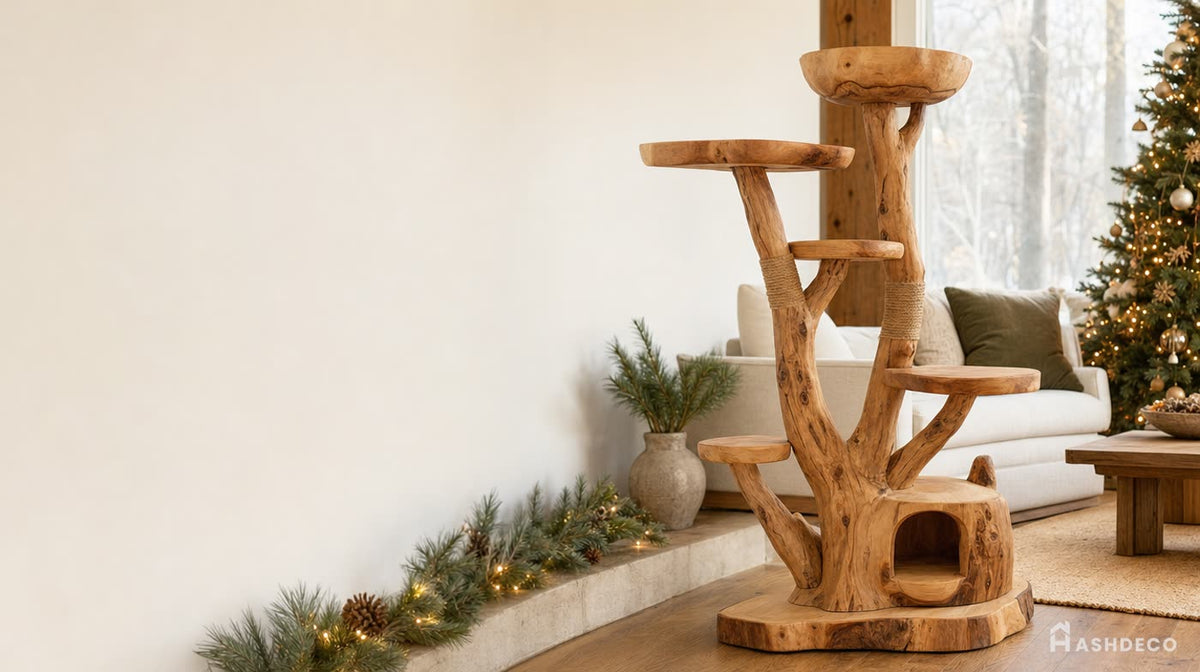
Solid Wood Sculptural Cat Climbing Condo for Living Room Decor
Three things make solid wood the healthier choice for cats: the material itself, the construction method, and the surface finish.
The material is inherently non-toxic in its solid form. Wood does not off-gas formaldehyde. Hardwood species used in furniture - oak, walnut, maple - have been used for food-contact surfaces for centuries. When finished with food-safe oils or lacquers, they are appropriate for items that go in mouths, which cats do with every surface they touch.
The construction eliminates the adhesive layers that cause off-gassing. Solid wood components are joined with mechanical fasteners - bolts, screws, and mortise and tenon joinery - rather than glue. This means no adhesive bond between dissimilar materials, no delamination risk, and no chemical off-gassing from adhesive layers.
The surface on solid wood cat furniture is the wood itself. Cats scratch wood as a natural behavior - the material provides the right texture for claw maintenance and marking. There is no fabric to shred, no finish to ingest, and no surface that traps and holds the allergens and bacteria that accumulate in carpeted surfaces.
For households with cats that have respiratory sensitivities, skin allergies, or chemical sensitivities, switching to solid wood cat furniture is not a luxury. It is the first environmental change to make. The difference in the cat's respiratory health and coat quality is often visible within weeks.
The benefit extends to the household air quality. A cat tree that off-gasses formaldehyde is adding to the volatile organic compounds in your home air continuously. Solid wood furniture adds nothing to the air quality equation - it is carbon-neutral in the home.
Design Benefits of Natural Cat Furniture

Beyond health, natural cat furniture has design benefits that matter in homes where the cat tree lives in the living room rather than a utility room.
Solid wood cat furniture looks like furniture. The handcrafted process produces organic tree-like forms that are visually interesting and intentionally designed. A cat tree from Ashdeco looks like it belongs next to a sofa or in a reading corner because it is built to the same design standards as the other furniture in the room.
The modular nature of quality cat trees - trunk sections, branches, and platforms assembled together - means the form can be configured for the specific space. A tall narrow tree for a tight corner. A wide-spreading tree for a larger room. The same craftsmanship that produces the organic form allows customization that a flat-pack product cannot offer.
The surface quality is also higher. Solid wood can be finished to different levels of smoothness, from a light matte that preserves the natural texture to a satin finish that feels more refined. The finish on a quality cat tree is consistent throughout, which means the color and texture match across all components.
Fabric-wrapped cat furniture shows its age quickly. The carpet fades, shows wear patterns from cat claws, traps hair in ways that are difficult to clean, and eventually develops an odor that is impossible to fully remove. Solid wood shows age as patina - the surface develops character rather than looking worn.
The lack of fabric also eliminates the primary odor source in cat furniture. Cat urine and the bacterial load from normal use accumulates in carpet in a way that solid wood does not. Wipe a solid wood cat tree with a damp cloth and the surface is clean. Shampoo a carpeted cat tree and some of the odor remains in the padding.
Ashdeco's cat trees are solid wood throughout, with sisal for designated scratching sections and natural wood surfaces everywhere else. The result is a piece that looks good for years and is easy to keep clean.
Don't miss
These pieces qualify for 10% off orders over $2,000. Applied automatically at checkout.
10% off
Sculptural Spiral Solid Wood Cat Tree Tiered Modern Feline Lounger
From $2,217.00
10% off at checkout
10% off
Artisanal Solid Wood Sculptural Tree Cat Tower & Multi-Tier Botanical Display Perch Stand
From $2,076.00
10% off at checkout
 10% off
Sculptural Hand-Carved Tree Solid Wood Wall-Mounted Cat Climbing Tower with Dual House Condos & Display Shelves
$3,012.00
10% off at checkout
10% off
Sculptural Hand-Carved Tree Solid Wood Wall-Mounted Cat Climbing Tower with Dual House Condos & Display Shelves
$3,012.00
10% off at checkout
 10% off
Sculptural Hand-Carved Tree Solid Wood Cat Tower & Multi-Tier Luxury Feline Climbing Tree with Tunnel Condo Base
From $2,654.00
10% off at checkout
10% off
Sculptural Hand-Carved Tree Solid Wood Cat Tower & Multi-Tier Luxury Feline Climbing Tree with Tunnel Condo Base
From $2,654.00
10% off at checkout
Natural Cat Furniture and Cats: What They Actually Prefer

Handcrafted Wooden Cat Tree Tower – Solid Wood Multi-Level
The question of what cats prefer is sometimes raised when discussing cat furniture materials. Do cats prefer carpet to wood? The answer is nuanced and based on cat scratching behavior research.
Cats scratch to maintain their claws, mark territory visually, and stretch their muscles. The surface they prefer for scratching is one that provides the right resistance and texture. Wood provides excellent resistance - it is firm enough for effective scratching without being so hard that the claw bounces off.
Carpet does not provide the same scratching feedback. Cats that scratch carpet frequently are often under-stimulated or have a scratching post that is not tall enough or sturdy enough. Moving to a solid wood post often results in more satisfying scratching behavior, which means the cat scratches more purposefully and less destructively on other furniture.
The stability of the cat tree matters more than the material for whether the cat uses it. A carpet-wrapped cat tree that wobbles when the cat climbs it is less attractive than a stable solid wood tree that does not move. The mass and rigidity of solid wood produces a more satisfying climbing and scratching experience.
Height is another factor. Solid wood cat trees tend to be taller because the material can support the height structurally. Cats prefer height - it gives them a sense of security and territory. A taller solid wood tree is more attractive to most cats than a shorter, wobblier carpet tree.
Cats that live in homes with solid wood furniture throughout are often observed to use solid wood cat furniture more readily because it feels like an extension of their environment rather than a separate pet product.
How to Identify Truly Non-Toxic Cat Furniture

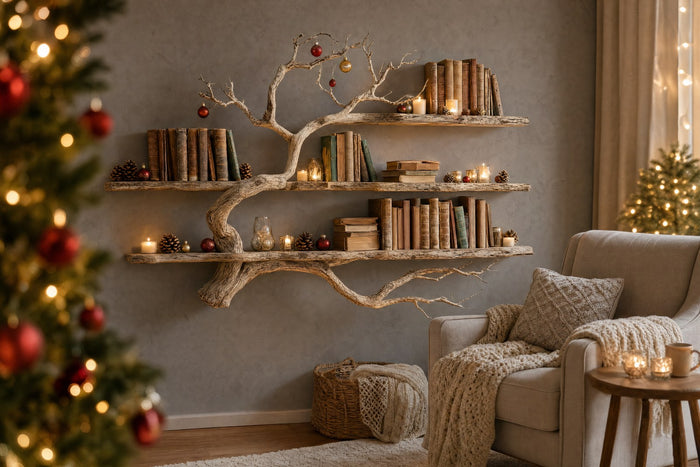
Rustic Cat Tree Bookshelf Style Pet Stand Living Room
The non-toxic claim is used broadly in the cat furniture market. Here is how to verify it before buying.
Ask about the core material. If the product description says wood, particle board, MDF, or engineered wood without specifying solid hardwood, assume it is not non-toxic. Particle board and MDF are made with formaldehyde binders regardless of what the surface finish is.
Ask about finishes. Food-safe oil finishes and water-based lacquers are safe for cats. Solvent-based finishes and oil-based polyurethane with drying agents can off-gas. If the finish is not described, ask. Reputable brands specify their finishes because it is a selling point.
Check for fabric components. Carpet, faux fur, and fabric wraps are sources of chemical treatments and allergens. If the cat furniture has fabric anywhere, it is not fully non-toxic - the fabric treatment chemicals are present on every surface the cat touches.
Verify the construction method. Bolted and screwed assembly uses mechanical fasteners without adhesive. If the product uses glue joints - common in particle board assembly - there is adhesive in the piece regardless of what the surface coating is.
Look for third-party certifications. Some finishes carry certifications for food-contact safety or low-VOC standards. These are verifiable claims that support the non-toxic designation.
Ashdeco cat furniture is solid hardwood throughout, finished with food-safe oil, assembled with mechanical fasteners, and free of all fabric components. This is the combination that produces genuinely non-toxic cat furniture.
Natural Cat Furniture for Different Spaces

Handmade Wooden Cat Tree Tower – Solid Wood Multi-Level Rustic Cat Furniture
Natural cat furniture works in every room in the house. The design challenge is matching the tree form and scale to the specific space.
Living rooms are the most common placement for solid wood cat trees. A tall sculptural tree near a window gives cats the height and entertainment they need while functioning as a furniture piece in the room design. Ashdeco's cat trees are designed for this use - the organic tree form and considered proportions make them look intentional rather than like pet furniture.
Bedrooms work well with shorter cat trees or wall-mounted shelves. A solid wood cat shelf at 48 to 60 inches off the floor gives a cat a elevated sleeping spot without dominating the bedroom. The solid wood surface is easy to keep clean and does not trap the allergens that accumulate in fabric pet beds.
Home offices are increasingly common as work-from-home has become permanent. A cat tree near the desk keeps the cat present without putting them on the keyboard. Solid wood is appropriate here because the piece needs to look professional in a workspace setting - it is furniture that happens to be for cats.
Nurseries and children's rooms are a strong application for natural cat furniture. Infants and cats together require attention to material safety. Solid wood cat trees with non-toxic finishes are safe in spaces where chemical off-gassing is a concern. The organic tree form also fits well with children's room themes that use natural materials.
Outdoor enclosed spaces like screened porches work with solid wood cat trees if the wood species and finish are appropriate for intermittent outdoor exposure. Solid hardwoods handle outdoor conditions better than softwoods. Ask the manufacturer about outdoor suitability before placing a cat tree on an uncovered porch.
Common Questions About Natural Cat Furniture
Is a solid wood cat tree actually non-toxic?
Yes, if it's genuinely solid hardwood with no fabric and a food-safe finish. The "non-toxic" label gets used loosely in pet product marketing, so the real test is the construction: no particle board core, no carpet, no glue-only joints, and a finish that's safe if the cat licks or chews it. Ashdeco's cat trees meet all four of these - solid hardwood throughout, food-safe oil finish, mechanical fasteners, zero fabric.
Is solid wood cat furniture more expensive?
Yes, typically two to three times the cost of a mass-market carpet-wrapped cat tree. However, the math changes over time. A $200 particle board cat tree that needs replacing every two to three years costs $600 to $900 over six years. A $2,000 solid wood cat tree that lasts ten years costs less per year and does not end up in a landfill.
Do cats scratch solid wood furniture more than carpet?
Cats scratch to mark territory and maintain their claws. Solid wood provides good resistance for scratching and cats respond well to it. If your cat is scratching your furniture, the issue is usually that there is not a satisfactory scratching surface nearby, not the material of the available surfaces. A solid wood scratching post or cat tree near the area they are scratching often redirects the behavior.
Can solid wood cat furniture be used outdoors?
Some solid wood species and finishes are appropriate for covered outdoor spaces. Teak and white oak are naturally weather-resistant hardwoods. Most interior hardwood species need to be protected from direct rain and prolonged humidity. Ask the manufacturer about outdoor use before placing a cat tree on an uncovered porch or patio.
How do I clean a solid wood cat tree?
Wipe with a dry or slightly damp cloth. For deeper cleaning, a mild soap and water solution works without damaging the finish. Solid wood surfaces do not harbor bacteria the way carpet does, so routine cleaning is straightforward. Do not use harsh chemicals or abrasive cleaners on natural wood finishes.
Are the finishes on natural cat furniture safe for cats that chew?
Food-safe oil finishes - tung oil, linseed oil, food-grade mineral oil - are safe if a cat chews the surface. The finish is the same as what is used on cutting boards and wooden utensils. Avoid cat furniture with lacquer or varnish finishes if your cat has a chewing habit, as these finishes may contain drying agents that are not appropriate for ingestion.
What is the lifespan of solid wood cat furniture?
With proper care, solid wood cat furniture lasts ten to twenty years. The hardware can be tightened if it loosens, the finish can be refreshed with food-safe oil, and the wood itself does not degrade the way particle board does. The piece can outlast multiple cats and move with you between homes.
Choosing Natural Cat Furniture for Your Home
The right natural cat furniture is the piece that fits your space, matches your design standards, and keeps your cat healthy and active.
Start with the space. Measure the floor area and the wall height where you want to place the cat tree. Then choose the height configuration that fits - 59, 70, or 80 inches depending on your ceiling height and the cat's climbing preferences.
Evaluate the construction. Solid hardwood throughout. No fabric. Food-safe finish. Mechanical assembly with bolts and screws. These are the baseline requirements for genuinely non-toxic cat furniture.
The design should match your room. Natural cat furniture is furniture - it should look intentional in your space, not like a compromise for the sake of your cat. Ashdeco's designs are meant to look like designed objects, not pet products.
Budget realistically. A quality solid wood cat tree is an investment. It is also one that pays off over years rather than months, and it keeps your cat healthier while doing it.
Browse the cat tree collection to explore solid wood cat trees in the right size, configuration, and finish for your home.