How to Display Magazines as Decor: 3 Rules for a Styled Look
Magazines can do more than fill a magazine rack. Displayed well, they add color, texture, personality, and visual interest to a room.
The key is to treat magazines as part of the decor rather than as a stack of reading material. A few intentional issues can make a shelf, console, coffee table, or magazine rack feel finished without looking cluttered.
The easiest system uses three rules: curation, orientation, and containment. Choose what deserves to be seen, decide how it should face the room, and give the collection a defined place to live.

The 3 Rules for Displaying Magazines as Decor
| Rule | What to do | What to avoid |
|---|---|---|
| Curation | Display a small selection with a clear visual or personal connection. | Showing every magazine you own. |
| Orientation | Mix face-out, spine-out, and horizontal stacks. | Using one orientation everywhere. |
| Containment | Use racks, trays, shelves, or defined zones to control the collection. | Letting loose magazines spread across furniture. |
These rules work together. Curation keeps the display edited, orientation creates visual rhythm, and containment prevents the room from looking messy.
1. Curate Magazines Like Decor, Not Storage
The first mistake is displaying too many magazines at once. A full rack may be useful for storage, but it does not always make the strongest decorative display.
Instead, choose magazines that contribute something visually or personally to the room.
Choose by Subject
Group magazines around a subject that makes sense for the room. Design and architecture magazines work naturally in a living room or home office. Travel publications can add personality to an entryway. Food and lifestyle magazines can work well near a kitchen or dining area.
The collection should still feel like something you actually read. A display becomes more convincing when the magazines have a reason to be there.
Choose by Color
Color is useful when magazine covers are visually strong. You do not need to match every cover. Instead, look for two or three dominant tones that already appear in the room.
For example, a room with warm wood, cream upholstery, and dark accents can support magazines with muted brown, ivory, charcoal, or deep green covers.
For a quieter display, turn some magazines spine-out and reserve face-out positions for the covers with the strongest visual impact.
Choose by Size
Do not force magazines of dramatically different sizes into one visual arrangement. Large-format issues can become the anchor, while smaller publications can fill supporting positions.
When stacking magazines, place the largest or heaviest issue toward the bottom. Smaller issues can sit above it without making the stack feel top-heavy.

2. Choose the Right Magazine Orientation
Orientation changes how a magazine collection reads from across the room. There are three useful approaches: spine-out, face-out, and stacked.
| Orientation | Best for | Visual effect |
|---|---|---|
| Spine-out | Large collections and everyday access | Clean, organized, library-like |
| Face-out | Feature covers and favorite issues | Graphic, colorful, editorial |
| Stacked | Tables, consoles, and open shelves | Layered, relaxed, dimensional |
Spine-Out Magazine Display
Spine-out storage works best when you have several magazines and want the collection to remain easy to browse.
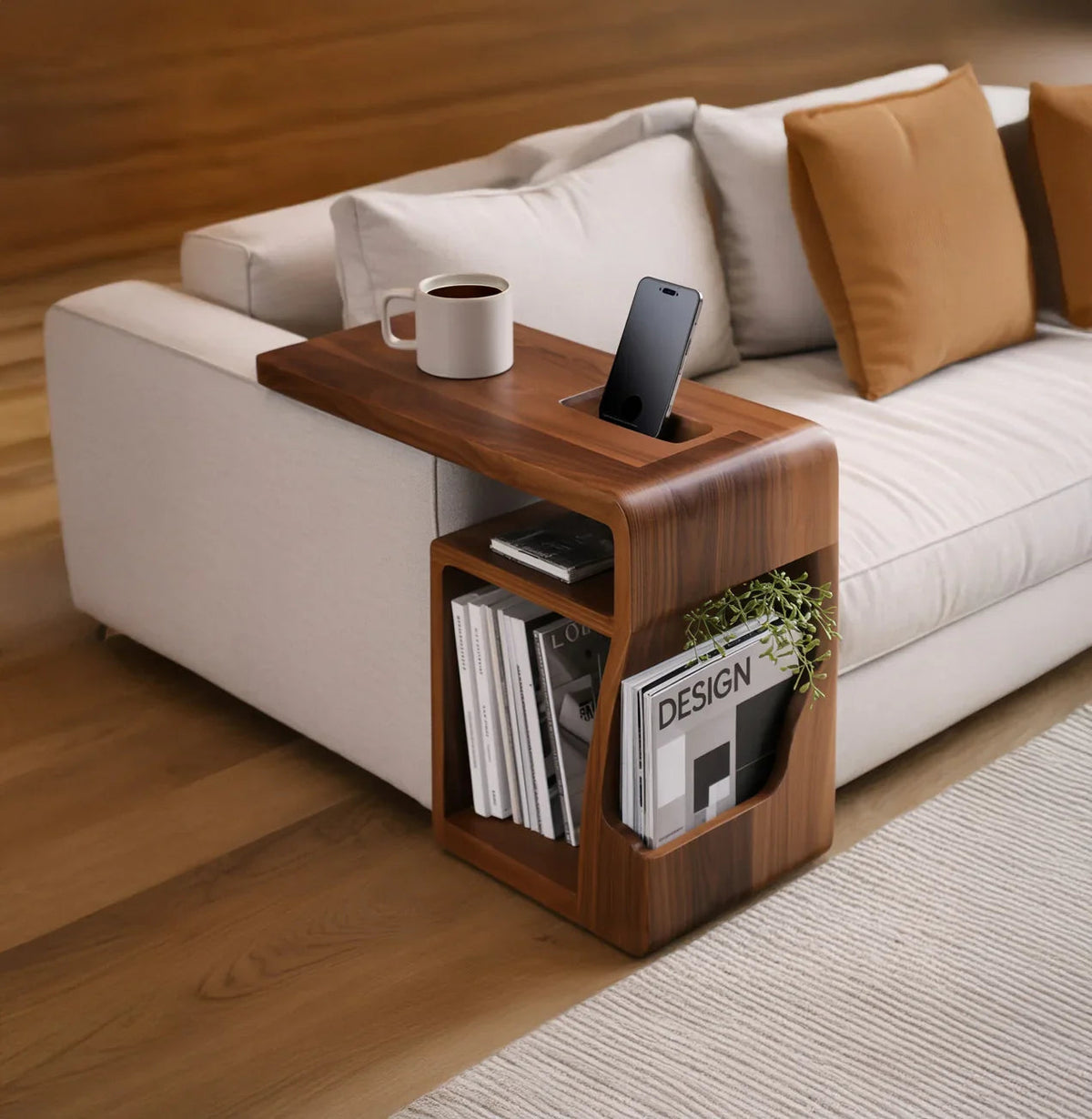
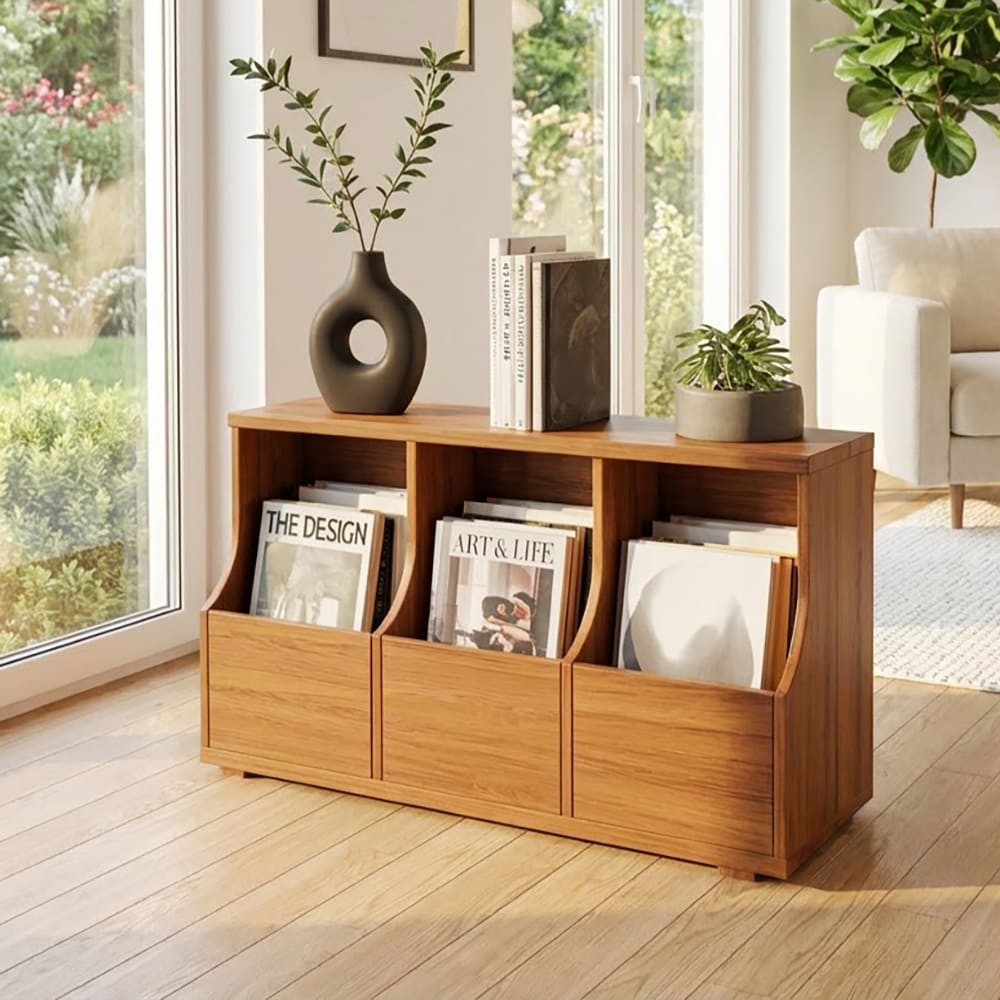
It creates a cleaner visual line than a collection of exposed covers. This makes it especially useful inside a magazine rack, bookshelf, or open console compartment.
If the spines have similar colors or typography, the arrangement can look particularly cohesive.
Face-Out Magazine Display
Face-out display turns the magazine cover into artwork. Use it selectively rather than showing every cover at once.
One strong cover can act as a focal point on a shelf or console. Two or three can work when their colors and proportions relate to each other.
This approach works particularly well for architecture, interiors, fashion, travel, photography, and other publications with strong cover design.
Stacked Magazine Display
Horizontal stacks work well on coffee tables, consoles, benches, and larger open shelves.
Start with the largest magazine at the bottom and add smaller issues above it. Keep the stack low enough that the magazines remain easy to pick up.
A small object on top can create another visual layer, but the magazine stack should remain the main element rather than disappearing under accessories.

3. Use Containment to Keep the Display Intentional
Even attractive magazines can look messy when they have no defined boundary. Containment gives the collection a visual home.
The right container depends on how many magazines you want to display and how often you use them.
| Location | Best orientation | Useful container |
|---|---|---|
| Coffee table | Stacked | Tray or open stack |
| Console | Stacked or face-out | Open shelf or magazine rack |
| Bookshelf | Spine-out or mixed | Shelf compartment or bookend zone |
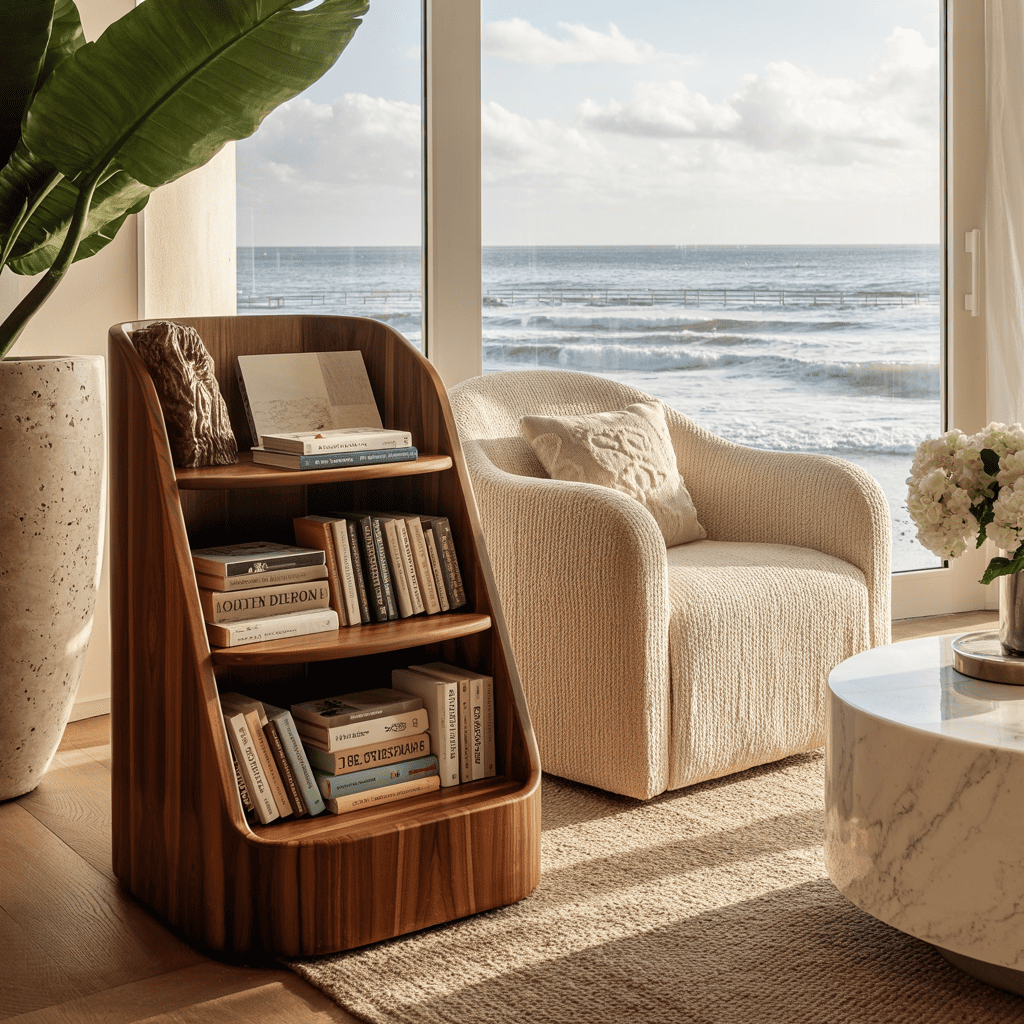
| Reading chair | Spine-out or angled | Freestanding magazine rack |
| Entryway | Face-out or spine-out | Console shelf or compact rack |
| Unused corner | Spine-out | Freestanding magazine rack |
Containment does not mean hiding the magazines. It means giving them a defined footprint so the surrounding space stays visually calm.

The Designer Shelf Formula for Magazine Displays
A good magazine display needs hierarchy. If every issue faces forward and every cover competes for attention, nothing becomes the focal point.
Use a simple hero-support-negative space formula:
- Hero: one or two magazines with the strongest covers.
- Support: several spine-out or stacked issues that provide volume.
- Negative space: enough empty area to separate the collection from nearby objects.
This is an adaptation of the same zoning principle Ashdeco uses for styled bookshelves: the display should have a visual anchor, supporting pieces, and breathing room.
Try the 1-2-3 Display
For a small shelf or console, start with one face-out magazine, two supporting issues, and one small decorative object.
For a larger surface, increase the number of supporting magazines rather than adding more focal covers.
This keeps the display from becoming a wall of competing graphics.

How to Display Magazines by Color
Color sorting can make magazines look highly intentional, but a completely color-coded collection can also become difficult to use.
A better approach is to create a loose color story.
Monochromatic Display
Choose magazines within one color family. Cream, tan, brown, and muted orange can create a warm display against natural wood.
Two-Tone Display
Choose two dominant colors already present in the room. For example, pair dark green covers with warm neutrals when those tones appear elsewhere in the furniture or textiles.
Accent-Color Display
Keep most magazines visually quiet and use one brighter cover as an accent. This works especially well when the room already has a strong neutral base.
The goal is coordination, not perfection. Your magazines should still look like publications rather than color swatches.

How to Display Magazines on a Console
A console gives magazines more vertical and horizontal styling options than a small side table.
Place a short horizontal stack on one side of the console and balance it with a lamp, vase, sculpture, or other object on the opposite side.
For a console with open storage, use the compartments as dedicated display zones. A few face-out magazines can break up rows of books and make the furniture feel more lived-in.
A sculptural console can also become part of the display itself. Ashdeco's Artistic Solid Wood Console Bookshelf with Sculptural Circular Arches uses open circular and arched compartments for books, magazines, records, and collectibles. The magazine collection can therefore become part of the furniture's visual composition rather than sitting separately on top.
How to Display Magazines on a Bookshelf
Magazines can break up a bookshelf that contains mostly books. Use them as visual transitions instead of treating them as another full row of reading material.
Try a face-out magazine at eye level, a small horizontal stack on the shelf below, and regular books around both groups.
Do not face every magazine outward. One or two covers are usually enough to introduce color without overwhelming the shelf.
For more ideas on balancing books, objects, and empty space, see Ashdeco's bookshelf decor styling guide.
How to Display Magazines on a Coffee Table
A coffee table is one of the easiest places to display magazines because horizontal stacks naturally fit the surface.
Keep the stack compact and leave enough clear tabletop for everyday use. You can add a tray, small bowl, candle, or other object beside the magazines to create a defined styling zone.
Avoid covering the entire table with publications. Ashdeco's coffee table styling guidance similarly emphasizes keeping part of the surface available for everyday use rather than turning the table into a storage area.
For more detailed rules on stacking and arranging display books, see the Coffee Table Books display guide.
Magazine Display Ideas by Location
| Location | Recommended display | Best orientation |
|---|---|---|
| Living room | Magazine rack beside sofa or stacked on console | Spine-out + stacked |
| Reading nook | Freestanding rack beside chair | Spine-out |
| Entryway | Small console display | Face-out + stacked |
| Home office | Open shelf or compact rack | Spine-out |
| Bedroom | Small bedside or bench stack | Stacked |
| Dining area | Console or sideboard display | Face-out + stacked |
Common Magazine Display Mistakes
Displaying Too Many Covers
Ten colorful covers competing for attention can make a shelf look busier rather than more styled. Choose a few favorites and keep the rest spine-out.
Making Every Stack the Same Height
Uniform stacks can look overly rigid. Vary the number of magazines slightly while keeping the overall arrangement balanced.
Ignoring Negative Space
Do not fill every available shelf or tabletop with magazines. Empty space gives the display a visual boundary and makes individual pieces easier to notice.
Mixing Too Many Colors
A magazine collection already contains typography, photography, and graphics. Too many unrelated cover colors can quickly create visual noise.
Using Decor to Hide the Magazines
A magazine display should still look like a magazine display. Do not place so many objects on top of or in front of the publications that they become inaccessible.
A 5-Minute Magazine Styling Method
- Pull out your best issues. Start with five to ten magazines you actually like.
- Choose two or three dominant colors. Ignore minor colors on individual covers.
- Select one hero cover. Make it the main face-out piece.
- Create one or two supporting stacks. Put larger magazines underneath smaller ones.
- Add containment. Use a rack, tray, shelf compartment, or defined console zone.
- Remove one item. If the display feels crowded, subtract rather than add.
Frequently Asked Questions About Displaying Magazines as Decor
How do you display magazines as decor?
Display magazines as decor by curating a small selection, mixing face-out and spine-out orientations, and using stacks, racks, trays, or shelves to contain them. Choose covers that complement the room without making the display look overly staged.
Should magazines be displayed face out or spine out?
Use face-out placement for one or two magazines with strong covers. Use spine-out placement for larger collections that need to remain easy to browse. Mixing both usually creates more visual variety.
How many magazines should you display?
There is no fixed number, but a small curated group usually looks more intentional than displaying an entire collection. Start with three to seven magazines and add more only if the furniture has enough visual space.
How do you make magazines look organized?
Group magazines by subject, color, or size, then give them a defined container or display zone. Keep the largest issues toward the bottom of stacks and avoid filling every available surface.
Can magazines be displayed on a bookshelf?
Yes. Use magazines to break up rows of books. Try one face-out issue at eye level, a small horizontal stack on another shelf, and spine-out magazines elsewhere.
How do you display magazines on a coffee table?
Stack two to five magazines with the largest issue on the bottom, then place the stack slightly off-center. Leave clear tabletop space for everyday use and add one small object if the arrangement needs another layer.
How do you organize magazines by color?
Use two or three dominant colors as a loose visual theme rather than sorting every magazine perfectly. Keep personal favorites in the collection even when their covers do not match.
What is the best way to store magazines while keeping them decorative?
A magazine rack is useful when you want frequent access, while open shelves and console compartments work well for decorative displays. Choose a container that keeps the collection organized without hiding the covers completely.
Make Magazine Storage Part of the Room
The best magazine displays do not look like storage added after the room was finished. They feel like part of the furniture and the overall composition.
Start with a small collection. Choose one hero cover, mix orientations, keep the colors connected, and give the magazines a defined home.
For a dedicated storage solution, explore Ashdeco's solid wood console tables or use an open shelving design to combine magazine storage with everyday decor.