
























Quick view
Shop this guide
Handcrafted Coffee Tables, made to order in solid wood.
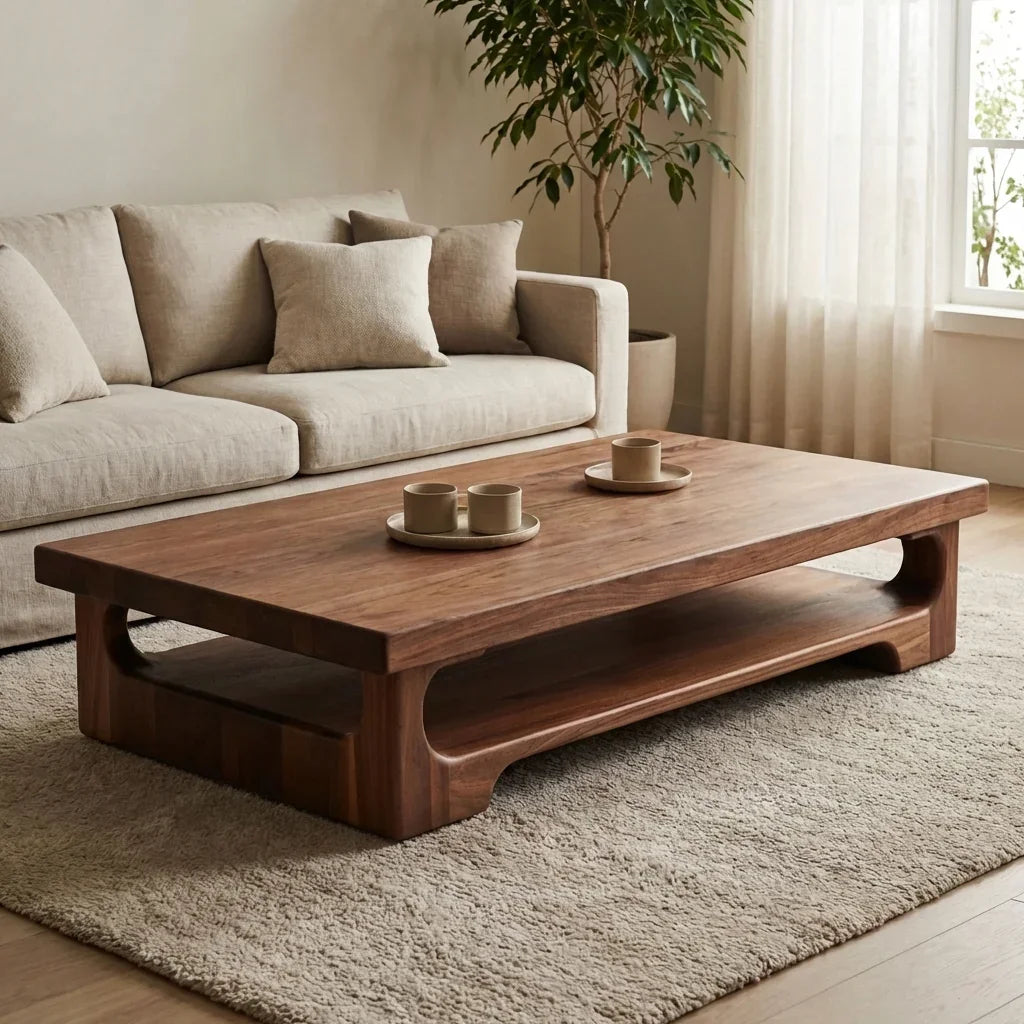
 Round Biomorphic Solid Wood Coffee Table Sculptural Hollowed Center Table
From $2,156.0010% off at checkout
Round Biomorphic Solid Wood Coffee Table Sculptural Hollowed Center Table
From $2,156.0010% off at checkout
 Curved Biomorphic Solid Wood Coffee Table Monolithic Organic Low Table
From $1,789.00
Curved Biomorphic Solid Wood Coffee Table Monolithic Organic Low Table
From $1,789.00
 Christmas edit
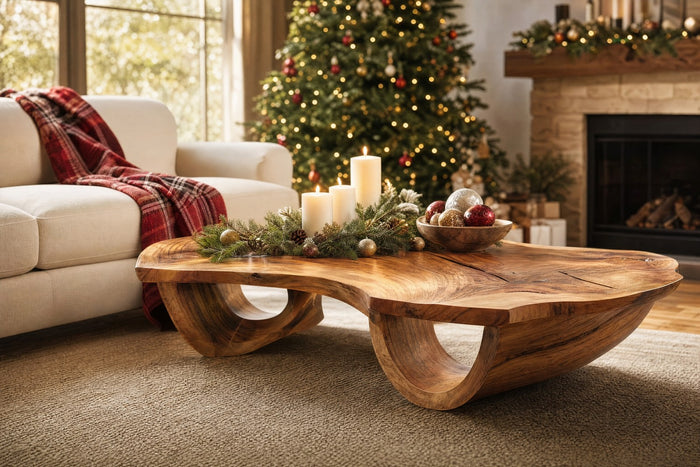
Handcrafted Live-Edge Solid Wood Christmas Coffee Table with Monolithic Tree-Trunk Stump Pedestal Base & Natural Slab Top
From $2,176.0010% off at checkout
Christmas edit
Handcrafted Live-Edge Solid Wood Christmas Coffee Table with Monolithic Tree-Trunk Stump Pedestal Base & Natural Slab Top
From $2,176.0010% off at checkout
 Modern Handcrafted Solid Wood Square Plinth Coffee Table with Open Storage & Architectural Block Pillars
From $1,567.00
Modern Handcrafted Solid Wood Square Plinth Coffee Table with Open Storage & Architectural Block Pillars
From $1,567.00
 Modern Handcrafted Solid Wood Plinth Coffee Table with Cantilevered Top, Storage Cubby & Drawer
From $1,865.00
Modern Handcrafted Solid Wood Plinth Coffee Table with Cantilevered Top, Storage Cubby & Drawer
From $1,865.00
 Sculptural Hand-Carved Tree Root Round Solid Wood Coffee Table & Sprawling Branch Base
From $2,212.0010% off at checkout
Sculptural Hand-Carved Tree Root Round Solid Wood Coffee Table & Sprawling Branch Base
From $2,212.0010% off at checkout
Coffee table books are the rare decor item that's actually useful. They add color, scale, texture, and personality, but they also invite someone to sit down, open a page, and stay a little longer.
A coffee table book is usually a large-format hardcover designed to be displayed as much as read. Think photography, art, architecture, travel, fashion, cars, gardens, interiors, food, or any subject with strong visuals. The book becomes part of the room while still saying something about what you care about.
The best displays feel personal, not staged. A stack of meaningful books can soften a sculptural solid wood table, bring height to a tray, or give a guest an easy conversation starter. This guide covers what these books are, which types work best, how many to use, how to display them, and how to pair them with different coffee table shapes.
What Is a Coffee Table Book?
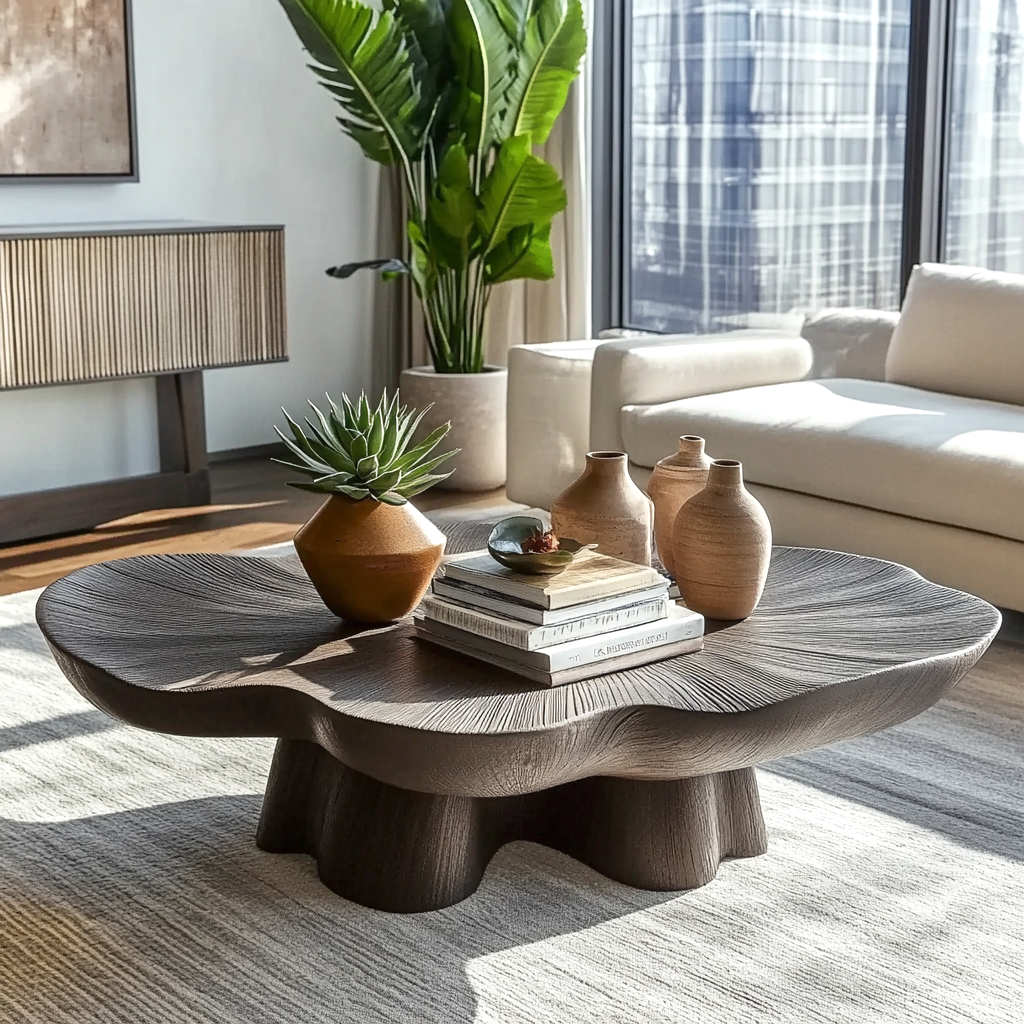
Unique Petal Shaped Coffee Table Minimalist Living Room Furniture
A coffee table book is a large hardcover book made for casual browsing. Most are roughly 9 by 12 inches or larger, with strong photography, illustration, artwork, or visual documentation. They often use heavier paper, sewn or reinforced binding, and layouts that look good when viewed slowly.
The format became especially visible in American publishing during the 1940s and grew as photography, art, travel, and design books became more collectible. Instead of being stored spine-out on a shelf, these books were meant to live in shared rooms. They sit on a table, a bench, a console, or a large shelf where people can pick them up without ceremony.
Many large display books run 200 to 400 pages and cost more than a standard hardcover because of their size, printing quality, and image licensing. A typical new title may fall around $40 to $150, while rare, limited, or publisher-special editions can cost more.
The name comes from how they are used. They are not usually deep-reading books for long study sessions. They are books for looking, browsing, pausing, and sharing. That makes them one of the easiest ways to make a living room feel layered without adding clutter.
Types of Coffee Table Books
The strongest titles are chosen by subject first, then by color and size. If you only buy them to match a room, they can feel like props. If you choose topics you genuinely like, the display feels more relaxed and more convincing.
Photography Books
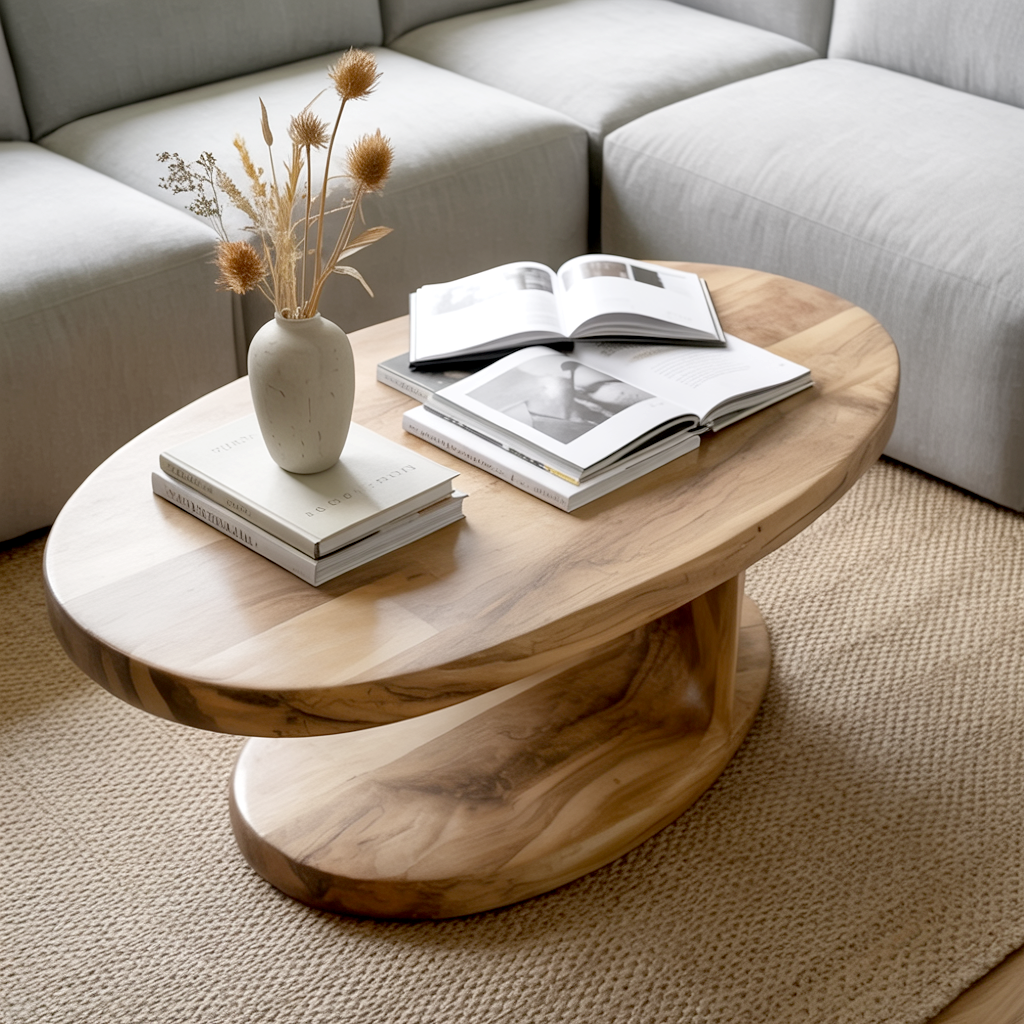
Handcrafted Oval Solid Wood Coffee Table Organic Elegance Meets Everyday Functionality
Photography books are the classic choice because they work even when opened at random. City scenes, landscapes, fashion portraits, nature studies, and documentary photography all bring strong visual impact. Collections by photographers such as Annie Leibovitz or Steve McCurry are common examples because the images carry emotion even without long captions.
Art and Design Books
Art and design books work well in rooms with strong furniture, carved wood, or architectural details. They can cover painters, sculptors, interior designers, architects, museums, movements, or specific homes. Publishers such as Phaidon, Taschen, and museum presses often produce design books with strong covers and thoughtful layouts.
Travel and Geography
Travel books bring escape into the living room. They might focus on one country, a city, remote hotels, coastlines, national parks, or broad world surveys. Atlas-style books, National Geographic collections, and unusual destination guides work especially well when you want guests to browse without needing context.
Fashion and Lifestyle
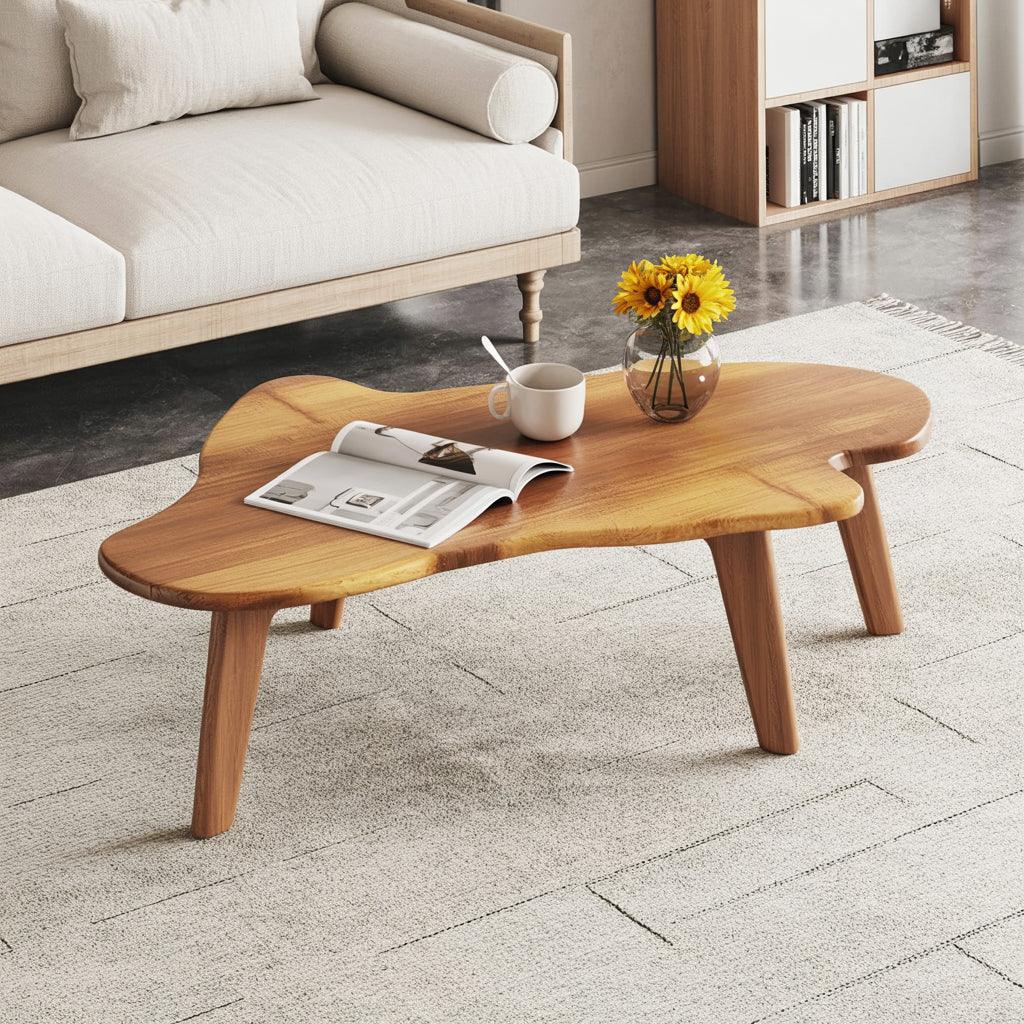
Handcrafted Solid Wood Coffee Table with Organic Curved Top - Modern Center Table
Fashion and lifestyle books add polish. Designer monographs, style histories, interiors, gardens, hotels, and entertaining books can all work here. A large Tom Ford, Yves Saint Laurent, or interiors volume can act almost like a sculptural object because the cover is so graphic.
Subject Matter: Wine, Cars, Architecture, and More
Niche books often make the best conversation starters. Wine, classic cars, motorcycles, architecture, surfing, ceramics, gardens, watches, music, or film can say more about you than a generic decor book. If someone notices the subject and asks about it, the book has done its job.


How Many Coffee Table Books Should You Have?
For most homes, 3 to 7 display books per coffee table is the sweet spot. Fewer than 3 can look unfinished unless the table is very small or intentionally minimal. More than 7 can start to feel cluttered, especially if the books cover too much usable surface.
Scale matters. On a small apartment table, 2 large books and 1 small object may be enough. On a larger table, especially one 54 inches or wider, 5 to 9 books can work if they are grouped into zones instead of spread everywhere.
A simple formula is 3 small books plus 1 large anchor book. Put the largest book at the bottom of a stack, then add two or three smaller titles above it. Leave part of the tabletop open for drinks, remotes, or daily use. A display should make the table better, not make it hard to live with.
How to Display Coffee Table Books
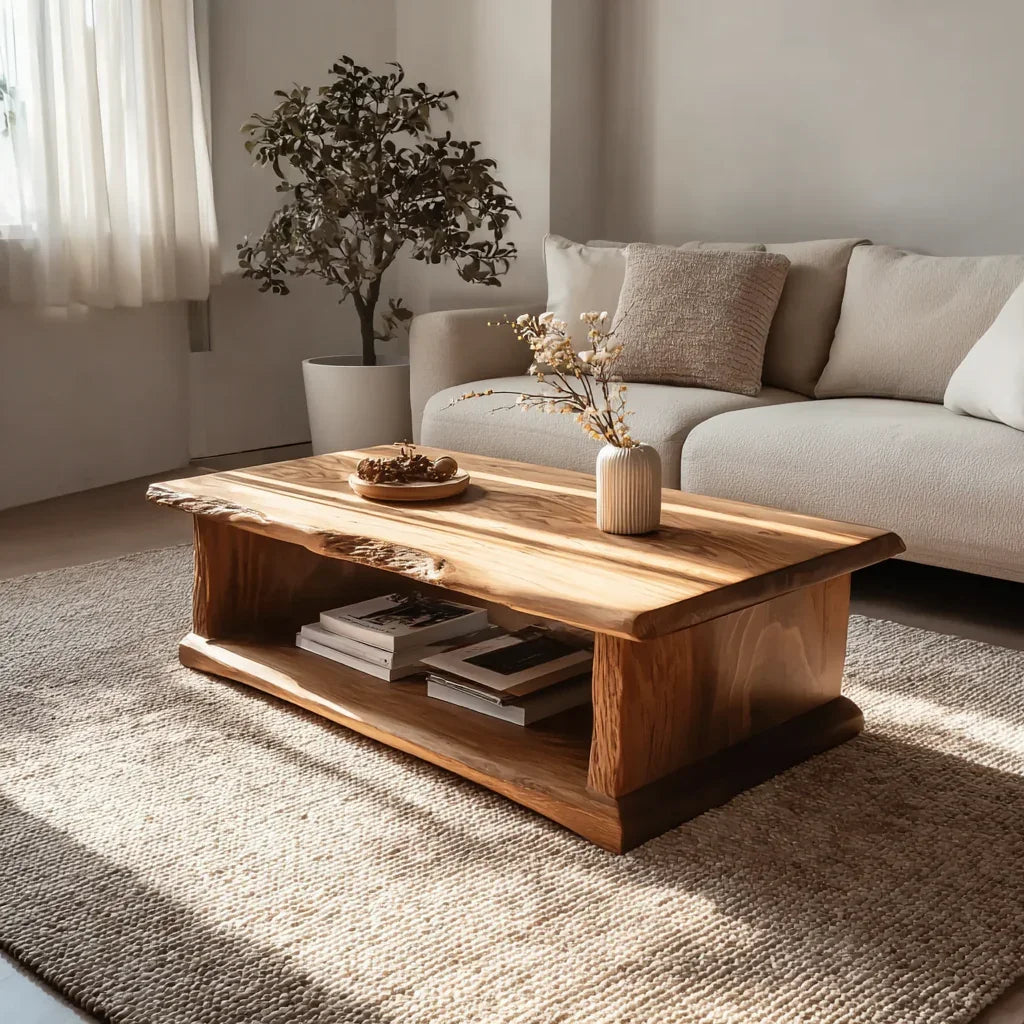
Handcrafted Driftwood Coffee Table - Modern Reclaimed Wood Live Edge Table
Good display is less about perfection and more about rhythm. You want height changes, visible covers, easy access, and enough negative space to let the table breathe.
The Vertical Stack
The vertical stack is the easiest method. Stack 3 to 5 books with the largest at the bottom and the smallest near the top. Vary thickness slightly so the stack feels natural. This works on round, square, rectangular, and organic tables because it creates a clear visual anchor.
If the covers are loud, turn one book so the spine faces a quieter direction. If the room is neutral, use the top cover as your accent color.
The Spread, or Open Display
An open display uses one book opened to a beautiful page. It works best with photography, art, travel, and architecture books because the spread becomes temporary artwork. Rotate the page every week or two so the room feels refreshed without buying anything new.
Use this method when the table is wide enough to keep the book safe from cups and food. It looks especially good on sculptural solid wood tables where the open pages contrast with natural grain.
The Bookend Group
A bookend group mixes books with an object that creates height. Lean one or two books against a vase, small sculpture, candleholder, or carved bowl, then place a short horizontal stack nearby. This adds dimension and avoids the flat look of everything lying down.
For Ashdeco-style rooms with handcrafted wood furniture, choose objects with texture: ceramic, stone, metal, woven fiber, or carved wood. That keeps the styling warm instead of showroom-stiff.
The Tray Cluster
A tray cluster keeps books, coasters, and small decor contained. Place 1 to 3 books on a tray with a small object beside or on top. This is practical because the whole cluster can be lifted when you need the table clear.
Trays work well on round and square tables because they create structure. On a rectangular table, place the tray off-center so the arrangement does not look too rigid.
Double-Stack with Decor
A double-stack arrangement uses two stacks at different heights. One stack might hold 3 books with a small object on top, while the second stack holds 1 or 2 books. Keep the object roughly one-third the height of the taller stack so it feels balanced.
This method is useful when you want coffee table styling books to feel integrated with candles, bowls, or seasonal pieces. Avoid stacking so high that guests cannot see across the table.
Don't miss
These pieces qualify for 10% off orders over $2,000. Applied automatically at checkout.
10% off
Round Biomorphic Solid Wood Coffee Table Sculptural Hollowed Center Table
From $2,156.00
10% off at checkout
10% off
Handcrafted Live-Edge Solid Wood Christmas Coffee Table with Monolithic Tree-Trunk Stump Pedestal Base & Natural Slab Top
From $2,176.00
10% off at checkout
10% off
Sculptural Hand-Carved Tree Root Round Solid Wood Coffee Table & Sprawling Branch Base
From $2,212.00
10% off at checkout
 10% off
Sculptural Oval Solid Wood Coffee Table with Continuous Infinity Wave Base
From $2,176.00
10% off at checkout
10% off
Sculptural Oval Solid Wood Coffee Table with Continuous Infinity Wave Base
From $2,176.00
10% off at checkout
Coffee Table Book Selection Criteria
The right books for coffee table display need more than pretty covers. They should feel connected to your taste, your furniture, and the way you actually use the room.
Subject Matter Reflects You
Avoid buying books only because a designer used them in a photo. Choose subjects you would actually open. A strong mix might include 1 art book, 1 travel book, and 1 hobby book. That gives the table range without making it feel random.
Visual Cohesion
Look at spine color, cover color, and scale. Your books do not need to match perfectly, but they should belong to the room. Two or three dominant tones are usually enough. If your living room is warm wood, cream, and black, a stack in tan, ivory, charcoal, and muted green will feel calmer than a pile of neon covers.
Quality Construction
Choose hardcover books whenever possible. Cloth covers, sturdy paper covers, and well-bound spines hold up better under regular handling. Avoid flimsy magazine-style bindings for display because corners bend quickly. Plastic dust jackets can also slide around and make a stack look messy unless the jacket is designed well.
Where to Find Quality Coffee Table Books
Bookstores are still one of the best places to shop because you can feel the paper, check the binding, and see whether the images hold your attention. Large stores such as Barnes & Noble can be useful for current titles, while independent stores and major used-book shops can surprise you with better character.
Publisher sites are also worth browsing. Phaidon, Taschen, Assouline, Rizzoli, Thames & Hudson, and museum shops often carry art books, architecture titles, and fashion monographs with strong design value.
Vintage sources can be excellent if you want patina. Thrift stores, estate sales, flea markets, and used bookstores often have older travel, art, and photography books with covers that feel less mass-market. Check for water damage, loose binding, strong odors, and missing pages before buying.
Be cautious with ultra-cheap decorative book bundles and low-quality reprints. Some are made only to look good from the spine and do not offer much inside. A better coffee table book should be worth opening.
Pairing Display Books with Furniture
Books change depending on the table under them. The goal is to respect the furniture's shape, surface, and material instead of covering what makes it special. If you are choosing a table first, Ashdeco's coffee tables collection is a good place to compare solid wood forms made by Vietnamese artisans.
Round tables work best with a stack and tray rather than a long linear arrangement. Keep the display compact and slightly off-center so the round shape stays visible. If you use a small tray, let one book extend beyond it for a relaxed look.
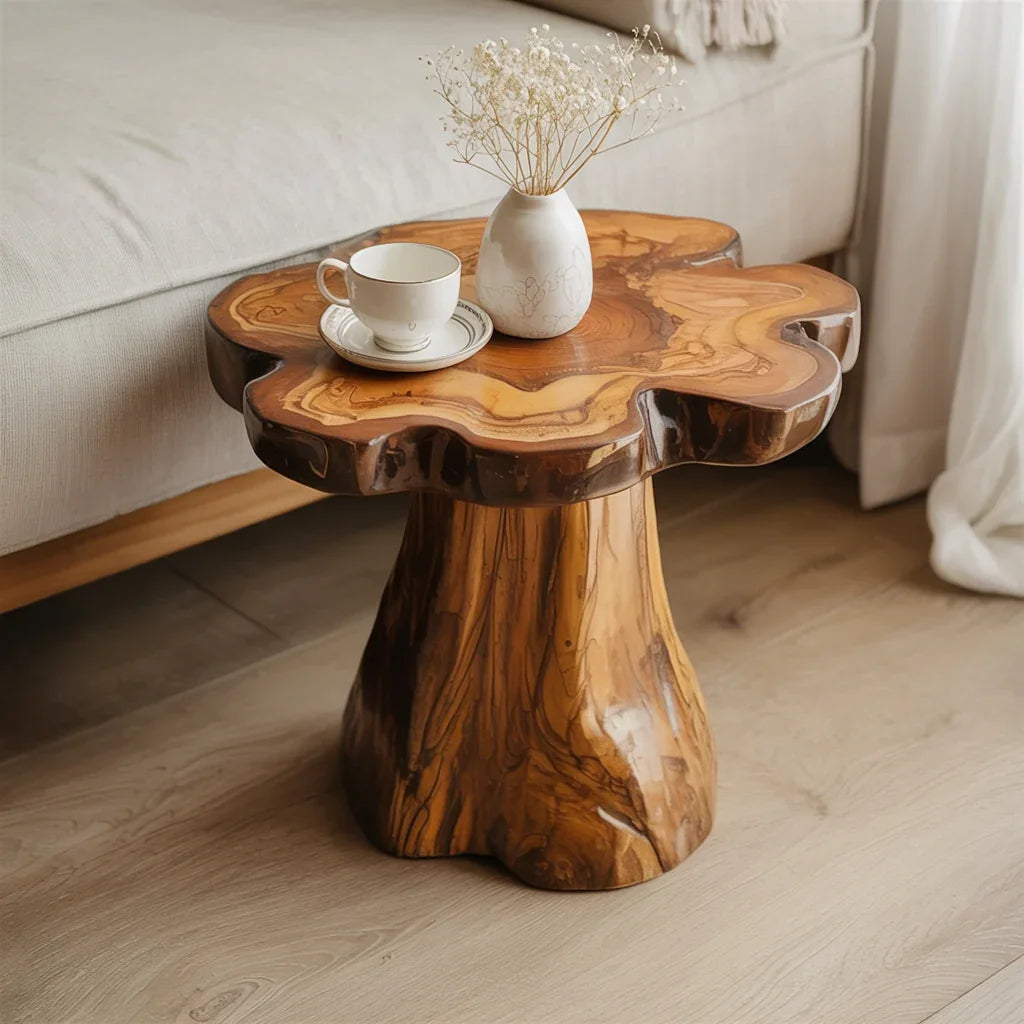
Handcrafted Live Edge End Table with Natural Grain for Artisanal Home Decor
Rectangular tables can handle a vertical stack along one edge, an open book in the center, and a small decor object on the opposite side. If you need extra surfaces around the sofa, pair the main table with Ashdeco end tables so the coffee table does not carry every drink, lamp, and book.
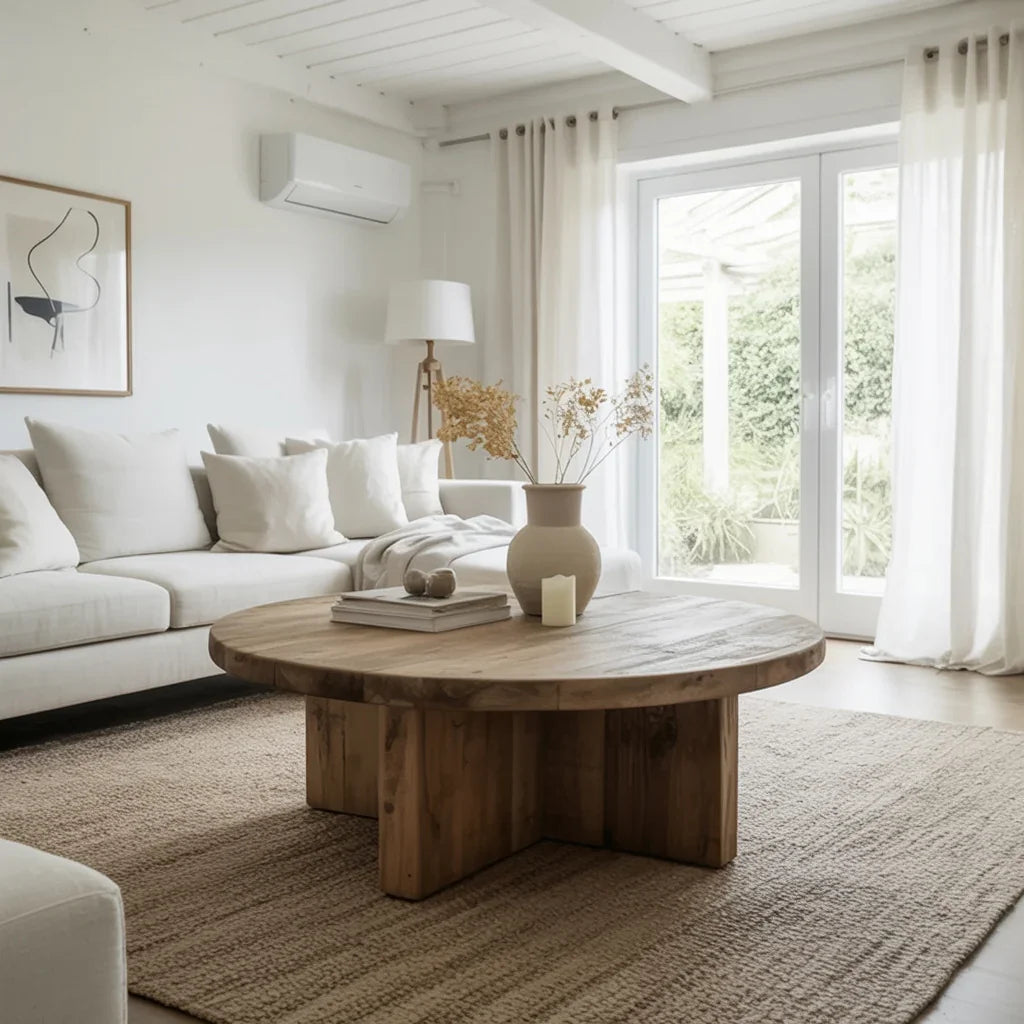
Reclaimed Wood Round Coffee Table - Wabi Sabi Style Furniture
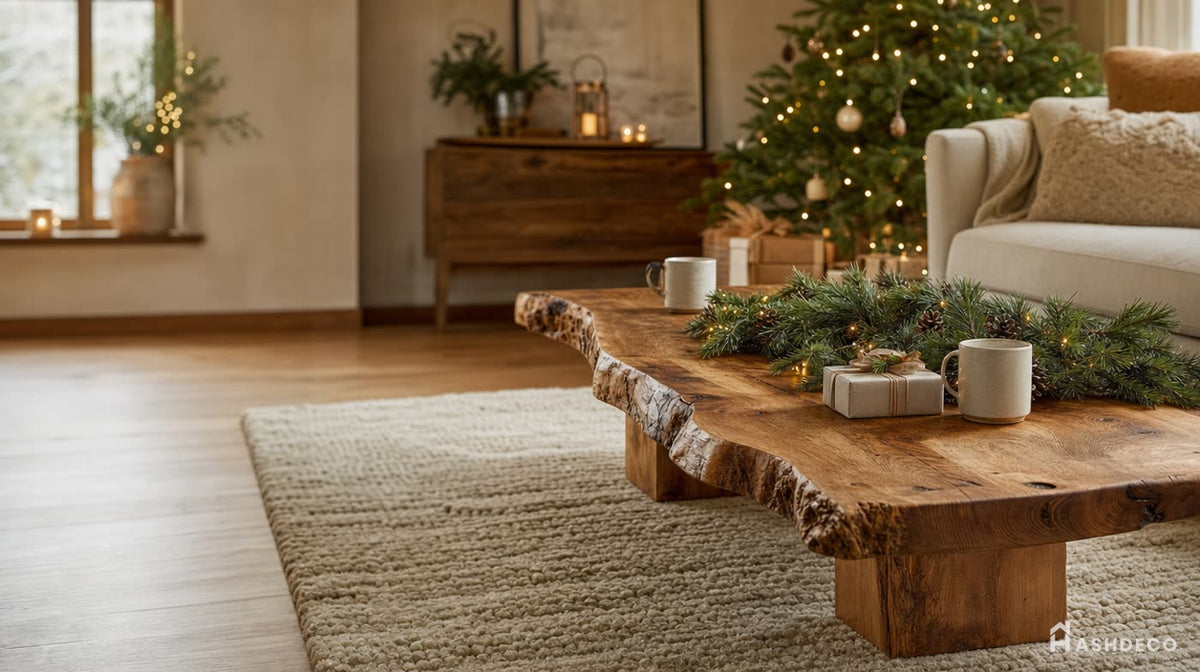
Live edge coffee tables need restraint. The wood already has movement, grain, and an organic outline, so use fewer books and leave more surface exposed. A single large coffee table book with a small ceramic bowl may be enough.
Glass tables benefit from heavier hardcovers because the books visually anchor the transparent surface. Use bold covers, large formats, and tidy stacks so the table feels intentional.
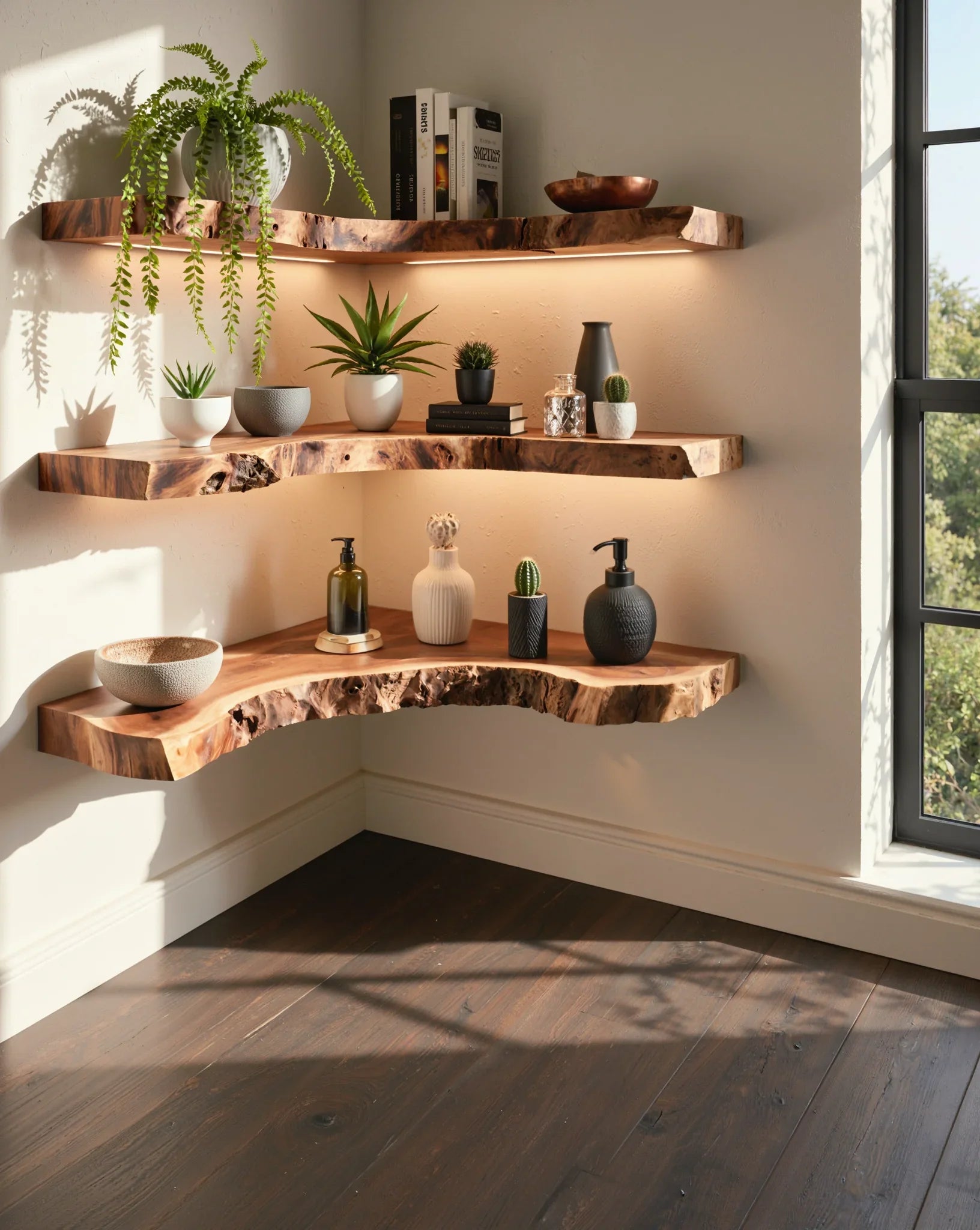
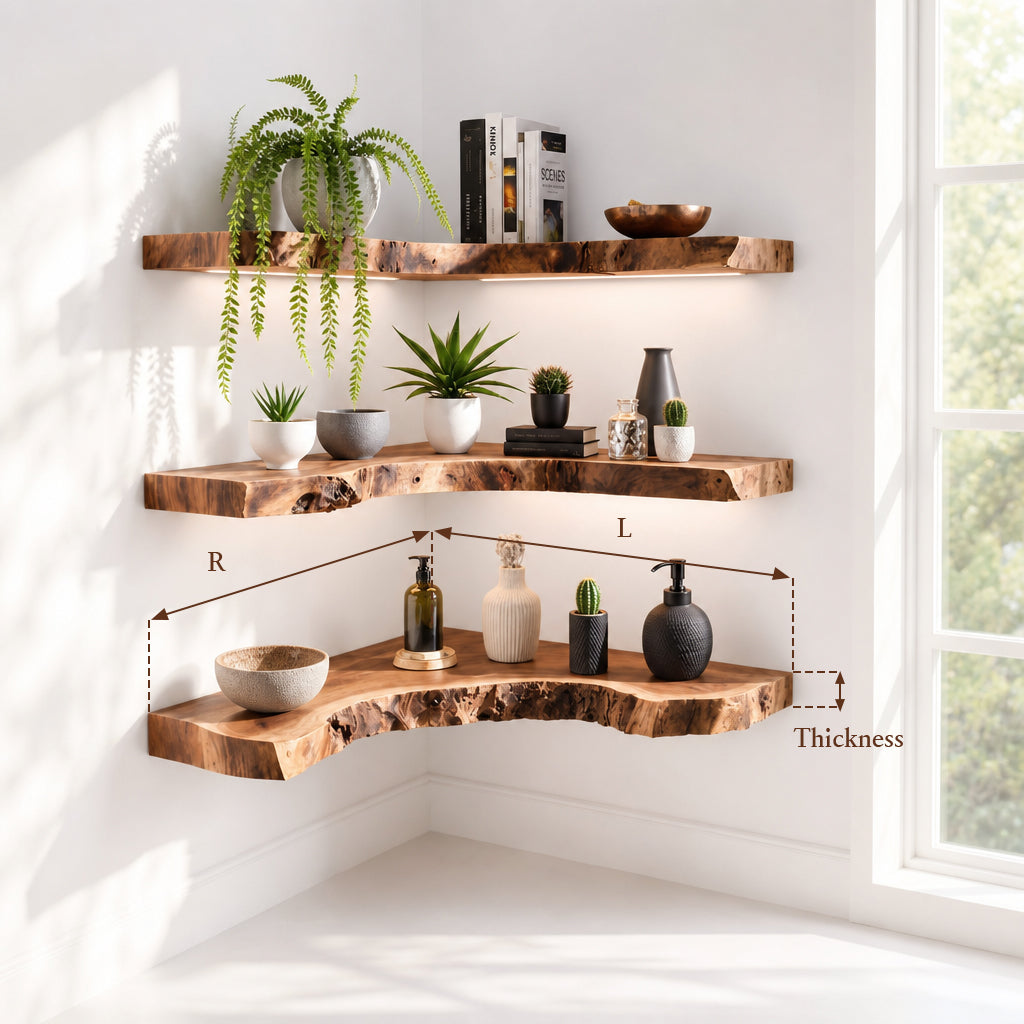
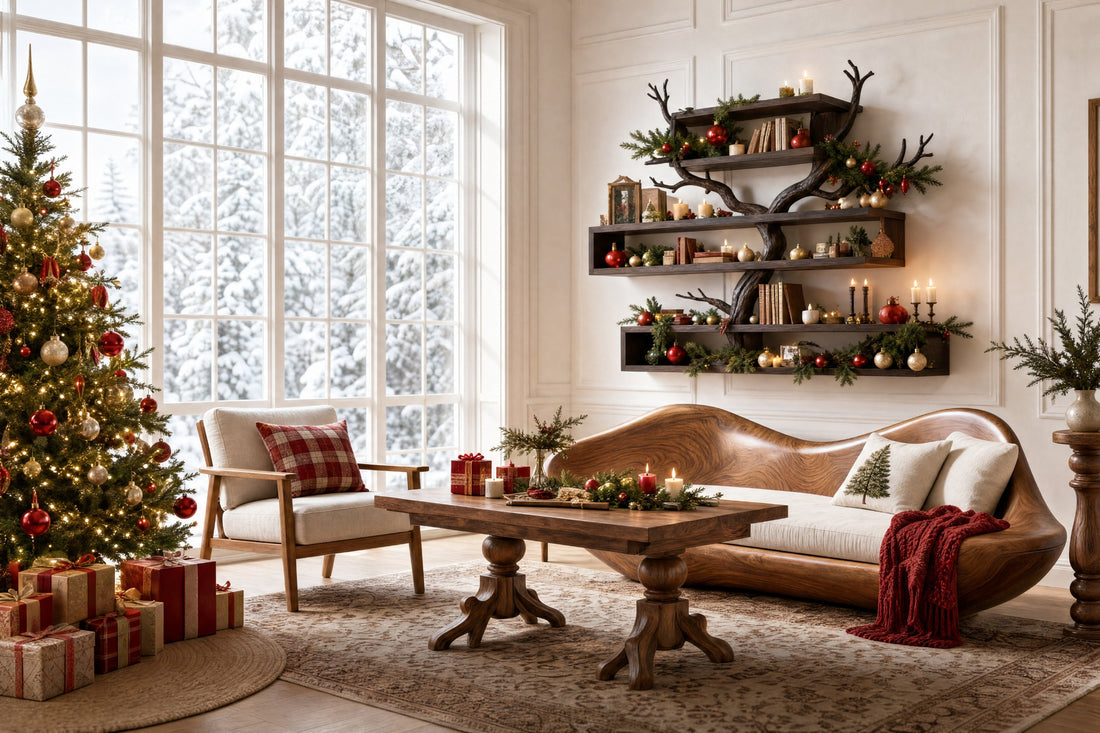
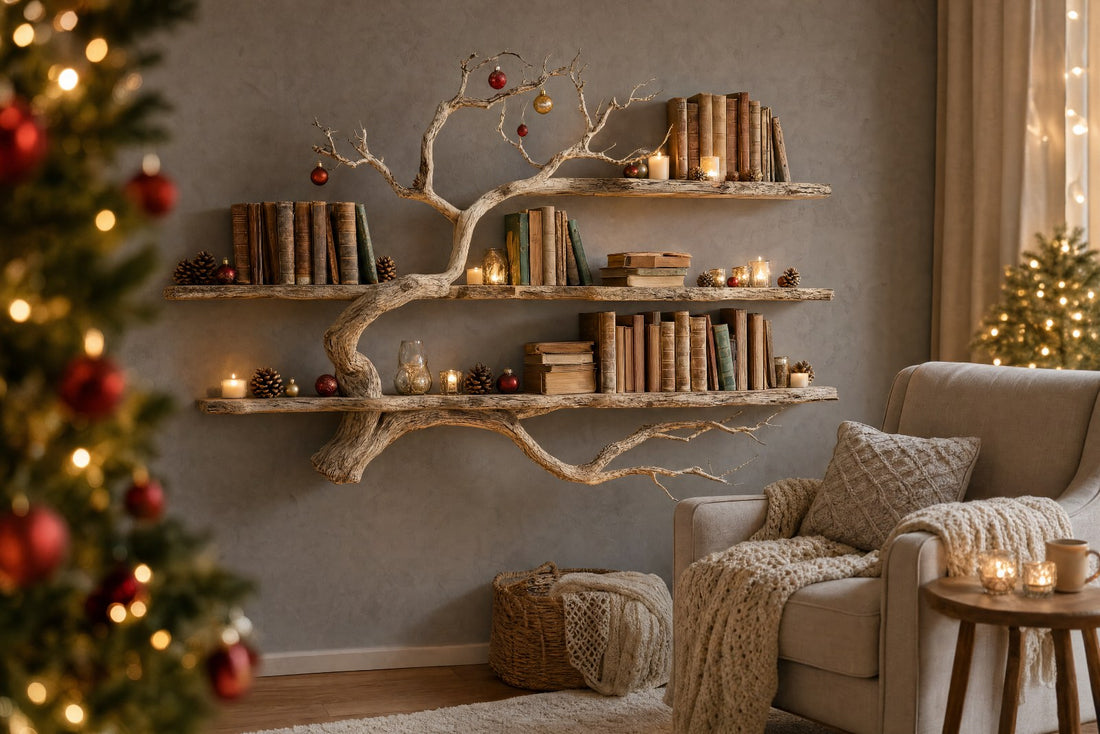
You can also move overflow books beyond the table. Display favorites on floating shelves for living room walls, sculptural tree bookshelves, or the wider bookshelves collection. That keeps your main table edited while still showing your library.
FAQ
How many display books is too many?
More than 7 to 9 usually looks cluttered on a standard coffee table. Large tables can handle more if the books are grouped into zones, but you should still leave open surface for daily use.
Can paperbacks work as display books?
Paperbacks rarely work well. They bend, curl, and look too lightweight for display. Hardcover books are better because they stack cleanly, hold their shape, and feel more substantial.
Should display books match my decor?
The spine colors and cover tones should work with your room, but the content can be personal. A room feels better when the books reflect your real interests instead of only matching the sofa.
Are display books out of style?
No. They have stayed useful for decades because they combine decor, browsing, and personal expression. The styling changes, but a beautiful book on a well-made table still feels timeless.
Display books work best when they balance beauty and meaning. Start with 3 to 7 titles, choose subjects you actually care about, and use simple display techniques: a stack, an open spread, a tray cluster, or a double-stack with one small object.
The table matters too. A thin MDF table can make even good books feel temporary. A handcrafted solid wood coffee table gives them weight and context. Ashdeco tables are shaped by Vietnamese artisans with sculptural forms, carved details, and natural grain that factory-flat-pack furniture cannot copy. Browse the coffee tables collection to find a surface worthy of your favorite books.