

Quick view
Shop this guide
Handcrafted Hall Trees, made to order in solid wood.
 Christmas edit
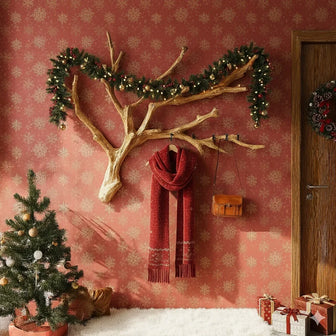
Sculptural Solid Wood Hall Tree - Artistic Branch Tree Hanger - Unique Live Edge Entryway Coat Rack
$2,234.0010% off at checkout
Christmas edit
Sculptural Solid Wood Hall Tree - Artistic Branch Tree Hanger - Unique Live Edge Entryway Coat Rack
$2,234.0010% off at checkout
 Classic Solid Wood Entryway Hall Tree & Valet Stand with Storage Drawers
From $1,834.00
Classic Solid Wood Entryway Hall Tree & Valet Stand with Storage Drawers
From $1,834.00
 Rustic Solid Wood Hall Tree Entryway Bench with Coat Rack Handcrafted Storage Organizer
From $1,956.00
Rustic Solid Wood Hall Tree Entryway Bench with Coat Rack Handcrafted Storage Organizer
From $1,956.00
 Blossom Branch Hall Tree - Aesthetic Tree Hanger with Floating Shelf
$2,876.0010% off at checkout
Blossom Branch Hall Tree - Aesthetic Tree Hanger with Floating Shelf
$2,876.0010% off at checkout
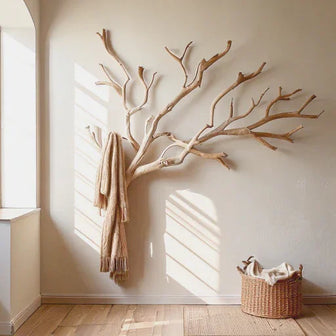
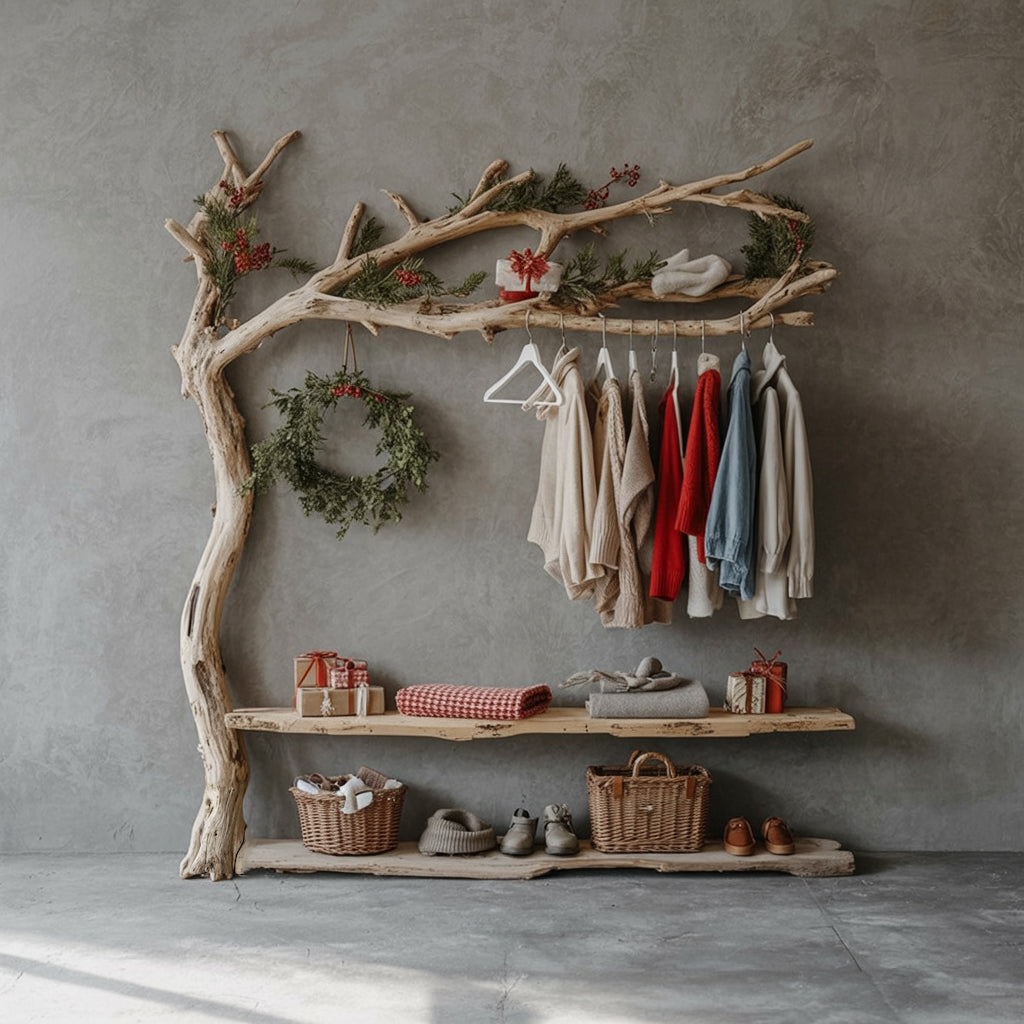
 Wall Mounted Driftwood Hall Tree Coat Rack – Tree Branch Rack with Shelf & Shoe Storage
$2,333.0010% off at checkout
Wall Mounted Driftwood Hall Tree Coat Rack – Tree Branch Rack with Shelf & Shoe Storage
$2,333.0010% off at checkout
 Tree Branch Hall Tree Coat Rack – Wall Mount Driftwood Storage Shelf Coat Hook Shoe Storage
$2,546.0010% off at checkout
Tree Branch Hall Tree Coat Rack – Wall Mount Driftwood Storage Shelf Coat Hook Shoe Storage
$2,546.0010% off at checkout
Most entryways are a mess. Shoes on the floor, coats on door handles, bags dumped wherever there's space. A hall tree with bench and storage fixes all of that in one piece -- but only if you pick the right one. Get the size wrong and it blocks your door. Get the material wrong and the bench seat cracks in two years.
This guide covers what actually matters before you buy.
What Makes a Hall Tree with Bench and Storage Actually Useful
A hall tree with bench and storage combines four functions in one unit: a place to hang coats, a seat to put on shoes, storage for footwear underneath, and often shelving above for hats, bags, or everyday items. The best ones let you handle the entire coming and going routine without touching another piece of furniture.
The bench seat is the part most buyers overlook. It needs to be deep enough to sit on comfortably (at least 14 inches) and strong enough to hold an adult's weight repeatedly. A hall tree that wobbles when you sit down is not a hall tree. It's a coat rack with a problem.
What separates a genuinely useful unit from a decorative one comes down to two things: hook placement and bench depth. Hooks set too low catch coat hems on the bench below. A bench shallower than 12 inches is uncomfortable to sit on and often too narrow to store anything useful underneath.

How Much Space Do You Actually Need?
A hall tree with bench and storage needs a minimum of 36 inches of wall width and 16 inches of floor depth to function properly. Narrower than that and the bench becomes unusable or the hooks end up in the doorway.
Standard sizing breaks down like this:
| Type | Width | Depth | Height |
|---|---|---|---|
| Narrow (small entryway) | 24-36" | 12-16" | up to 74" |
| Standard | ~42" | ~19" | ~72" |
| Wide (family use) | 50-60"+" | 15-20" | 70-78" |
Measure your wall width first. Then measure how far out from the wall the bench can extend without blocking foot traffic. In most hallways, 16-18 inches of depth is the practical limit.
Ceiling height matters too. Most hall trees run 70-78 inches tall. If you have standard 8-foot ceilings, you have room. Anything lower and you want to check the exact height before ordering.
The hall trees collection at Ashdeco runs 60-75 inches tall with widths from 50 to 70 inches. All made to order, so sizing can be adjusted.


Solid Wood vs MDF: Why the Bench Material Matters
For the bench seat specifically, solid wood and MDF behave very differently under repeated load. MDF is compressed wood fiber. It holds up fine for shelves and frames, but under a bench seat that gets sat on daily, MDF can sag or crack at the mounting points within 2-3 years. Solid hardwood does not.
The frame and back panel matter less. MDF frames are acceptable for the upright sections and back panel. Where material quality makes a real difference is the bench seat itself and the hook mounting points.
| Solid Wood | MDF/Particle Board | |
|---|---|---|
| Bench durability | High, handles daily use | Can sag under repeated load |
| Hook strength | Screws hold firmly | Can strip over time |
| Price range | $900 and up | $100-$600 |
| Look over time | Gets better with age | Can chip, peel, swell |
| Moisture resistance | Good (finished) | Poor near doors |
Hall trees near front doors face real humidity variation: cold air coming in, warm air inside. MDF absorbs moisture and can swell at edges. Solid hardwood, properly finished, handles that cycle much better.

What to Expect at Different Price Points
Budget and mid-range options cover most buyers. But the gap between a $300 hall tree and a $2,000+ one is not just about looks.
| Price Range | What you get |
|---|---|
| $100-$400 | MDF or particle board, basic hooks, functional but not durable |
| $400-$900 | Engineered wood, better finish, some solid wood elements |
| $900-$1,500 | Real solid wood frames, heavier construction, lasts 10+ years |
| $2,000+ | Handcrafted solid hardwood, one-of-a-kind piece, made to order |
Most families with kids and heavy daily use should spend at least $600-$800 to get something that survives more than a couple of years. The budget options wear out fast when four people are using them every day.
At the upper end, pieces like Ashdeco's handcrafted hall trees are built by Vietnamese artisans who carve and sculpt solid wood by hand. Each one is different because the wood itself is different. That is not marketing language. It is the actual production process: no two pieces come out of the workshop looking identical.
The Handmade Tree Hall Tree with Shoe Storage is $2,833 at 60"H x 50"W. The standing Driftwood Tree Branch version starts at $2,134 at 50"W x 70"H x 12"D. Both are made to order, so sizing adjustments are available.

Don't miss
These pieces qualify for 10% off orders over $2,000. Applied automatically at checkout.
10% off
Sculptural Solid Wood Hall Tree - Artistic Branch Tree Hanger - Unique Live Edge Entryway Coat Rack
$2,234.00
10% off at checkout
10% off
Blossom Branch Hall Tree - Aesthetic Tree Hanger with Floating Shelf
$2,876.00
10% off at checkout
10% off
Wall Mounted Driftwood Hall Tree Coat Rack – Tree Branch Rack with Shelf & Shoe Storage
$2,333.00
10% off at checkout
10% off
Tree Branch Hall Tree Coat Rack – Wall Mount Driftwood Storage Shelf Coat Hook Shoe Storage
$2,546.00
10% off at checkout
Honest Downsides
Lead time on handcrafted pieces. Made-to-order solid wood hall trees take 4-8 weeks to produce and ship. If you need something this weekend, that is not the right option. Factory-made options ship in days.
Price vs. budget reality. Solid wood hall trees start around $900 and go to $3,000+. For most buyers, that is a significant purchase. Budget MDF options exist at $100-$400 and work fine for light use, but they will not last as long under daily family use.
No bench cushion. Solid wood bench seats are firm. Some people add a cushion separately, which is easy to do. Others prefer the clean look without one. Worth knowing if comfort while putting on shoes is a priority.
Weight and shipping. Large solid wood hall trees are heavy, sometimes 80-120 lbs. Shipping costs reflect that. Factor this in when comparing total prices.
Wall mounting requirements. Wall-mounted versions require drilling into studs. If your entryway wall is drywall only with no studs in the right spots, freestanding is the safer choice.
Also worth noting for buyers who browse shoe benches separately: a standalone shoe bench plus a wall-mounted coat rack can sometimes give more flexibility than a combined unit, especially in oddly shaped entryways.
FAQ
How much weight can a hall tree bench hold?
Solid wood bench seats typically hold 250-400 lbs depending on construction. MDF and particle board benches are usually rated 150-250 lbs. Always check the manufacturer's weight spec before buying, especially for households with heavier adults or children who jump onto furniture.
What is the standard depth for a hall tree with bench?
Most hall trees run 12-19 inches deep at the bench seat. A minimum of 14 inches is needed for comfortable seating. Narrow options at 12 inches are usable but tight. If you have the wall space, 16-18 inches gives a noticeably better sitting experience.
Can a hall tree work in a small entryway?
Yes, if you choose the right width. Narrow hall trees at 24-36 inches wide work in tight spaces. Look for vertical designs that maximize height rather than width. Wall-mounted versions with a fold-down bench also exist for very tight spots, though solid wood freestanding versions generally require at least 36 inches of wall width.
Is solid wood worth it over MDF for a hall tree?
For light use (one or two people, occasional use), MDF is fine and saves significant money. For daily family use with kids, solid wood is worth the investment. The bench seat and hook mounting points on solid wood handle repeated stress far better. MDF options near entryway doors also risk moisture damage over time.
How long does a handcrafted solid wood hall tree last?
A well-built solid hardwood hall tree lasts 20-30 years with basic care. The main maintenance needs are occasional re-oiling or re-finishing of the wood surface, and tightening of any hardware screws every year or two. Compare that to MDF options that typically show wear within 3-5 years under daily use.
What is the difference between a hall tree and a coat rack with bench?
A hall tree is a standalone unit that combines multiple storage functions: coat hooks, a bench seat, and shoe or bag storage below. A coat rack with bench is typically a coat rack sold alongside a separate bench, without integrated storage. Hall trees are generally more space-efficient because everything is built into one structure.