
















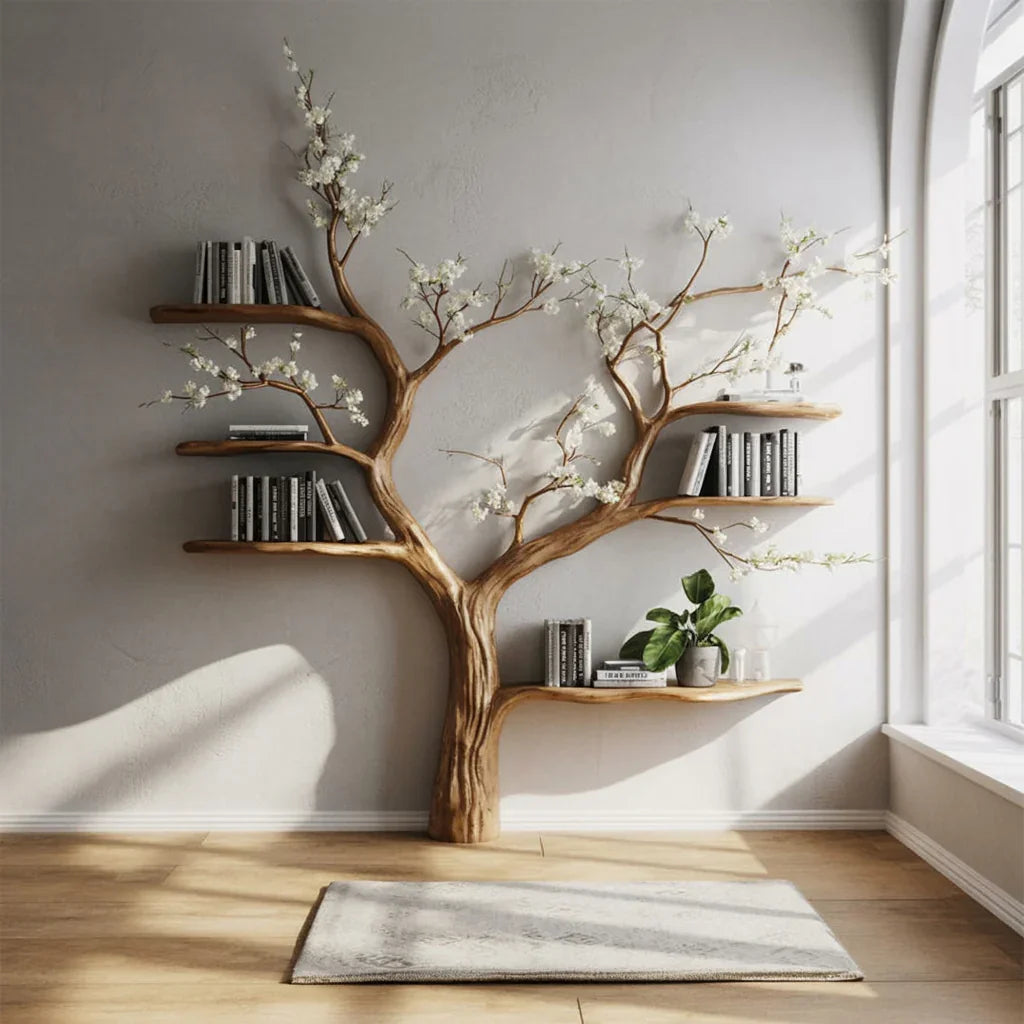
Quick view
- The Core Formula: 70/30 Ratio
- The Rule of Three (and Why Even Numbers Look Wrong)
- How Many Books Per Shelf? The Specific Numbers
- Color Story: The Pinterest Shortcut and Why It Backfires
- Vertical vs Horizontal Book Stacks
- 5 Bookshelf Mistakes We See in Customer Photos
- Best Bookshelf Forms for the 70/30 Rule
- The Hardness Question: Why Wood Choice Matters for Heavy Books
- Style by Room Function
- Frequently Asked Questions
- Now Style Your Shelf
Shop this guide
Handcrafted Tree Bookshelf, made to order in solid wood.
 Christmas edit
Corner Tree Floating Bookshelf – Driftwood Branch Wall Mounted Hanging Shelf, Artistic Corner Furniture Decoration
From $901.00
Christmas edit
Corner Tree Floating Bookshelf – Driftwood Branch Wall Mounted Hanging Shelf, Artistic Corner Furniture Decoration
From $901.00
 Christmas edit
Handcrafted Wooden Tree Wall Shelf – Rustic Branch Bookshelf
From $1,087.00
Christmas edit
Handcrafted Wooden Tree Wall Shelf – Rustic Branch Bookshelf
From $1,087.00
 Christmas edit
Solid Wood Floating Corner Shelf – Driftwood Branch Wall Shelf
From $789.00
Christmas edit
Solid Wood Floating Corner Shelf – Driftwood Branch Wall Shelf
From $789.00
 Christmas edit
Tree Bookshelf – Rustic Wooden Book Tree Shelf, Wall-Mounted Natural Wood Décor
$2,099.0010% off at checkout
Christmas edit
Tree Bookshelf – Rustic Wooden Book Tree Shelf, Wall-Mounted Natural Wood Décor
$2,099.0010% off at checkout
 Christmas edit
Handcrafted Solid Wood Nursery Decor & Kids' Library
$2,834.0010% off at checkout
Christmas edit
Handcrafted Solid Wood Nursery Decor & Kids' Library
$2,834.0010% off at checkout
 Christmas edit
Floating Bookshelf – Tree Branch Wall-Mounted Bookcase for Rustic Home Decor
From $1,000.00
Christmas edit
Floating Bookshelf – Tree Branch Wall-Mounted Bookcase for Rustic Home Decor
From $1,000.00
You've seen the photos. Half-empty bookshelves with a single ceramic vase and three angled books. They look effortless. They aren't. There's a measurable system behind them, and it's been used by interior designers for 60 years. Here's the math, the mistakes, and the actual measurements.
Updated April 2026 by the Ashdeco Design Team. Based on 387 customer reviews and 12 years of furniture craft in Vietnam.
The Core Formula: 70/30 Ratio
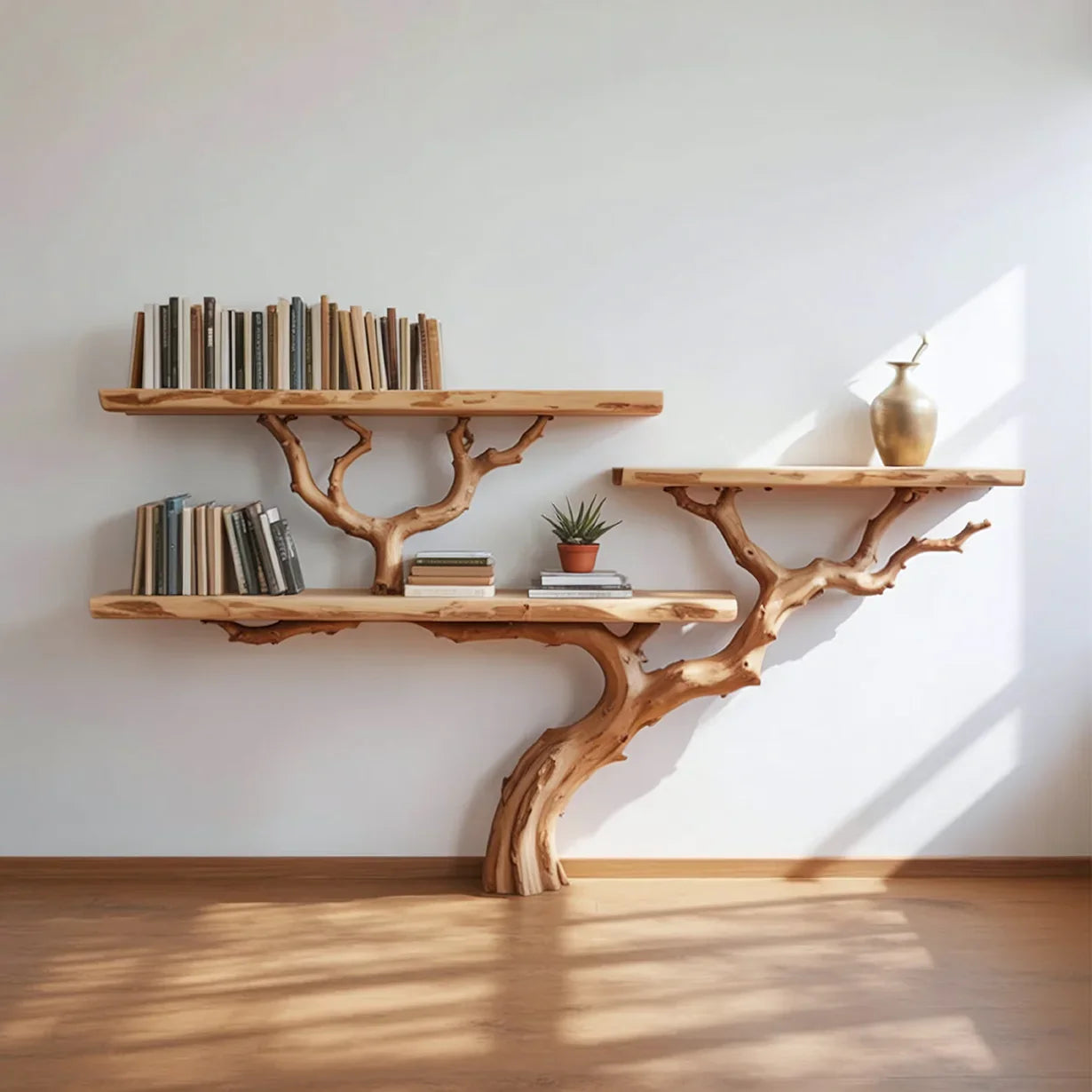
Tree Branch Floor Bookshelf - Solid Wood Live Edge Bookcase
The "bookshelf rule" originated in 1960s American magazine spreads. The formula: 70% books, 30% objects. Modern variants drift to 60/40 for high-design rooms or 80/20 for true reader homes. The point: never 50/50.
Here's why 50/50 fails. Your eye reads competing weights and gives up trying to focus. The shelf looks chaotic. At 70/30, books form the visual foundation. Objects punctuate. Your eye has a hierarchy.
The math, applied to a standard 36-inch oak shelf at full capacity (30 hardcovers):
- 21 books vertical (70%)
- 2 horizontal book stacks (acts as platform)
- 3 objects: 1 plant, 1 ceramic, 1 frame
- Empty space: 20% of shelf width remains visually open
The Rule of Three (and Why Even Numbers Look Wrong)
Group decor objects in 3, 5, or 7. Never 2, 4, or 6. This isn't superstition. It's pre-attentive perception. The human brain processes asymmetric clusters as intentional design. Symmetric pairs read as accidental. Decades of design research confirm this. Apple's product pages, gallery wall photos, and Architectural Digest spreads all follow it.
The rule has three sub-rules:
1. Vary heights within the group. Tall vase + medium book stack + small frame. Three same-height objects look like soldiers.
2. Mix textures. Wood + ceramic + metal. Or fabric + glass + paper. Three of the same material disappears.
3. Touch or stack at least once. Stack a small ceramic on top of a horizontal book. Lean a frame against a vase. Floating-isolated objects look afraid.


How Many Books Per Shelf? The Specific Numbers
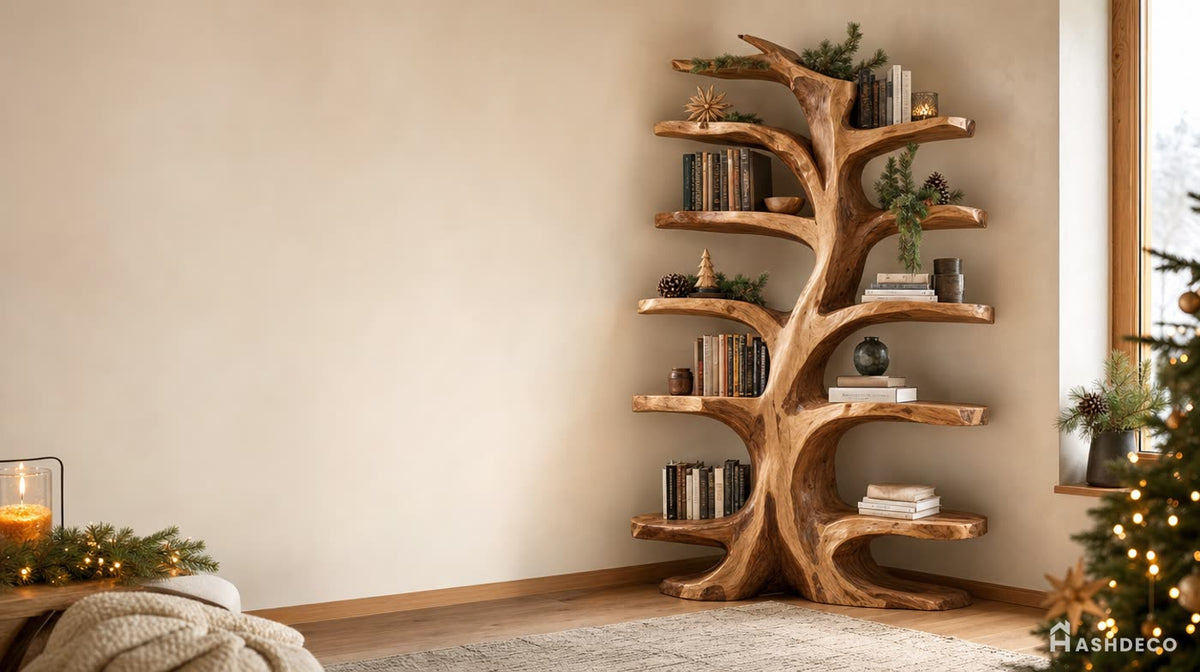
A 36-inch shelf in 7-inch depth holds 30 hardcovers at 100% capacity. Don't load 100%. Here's what actually works:
| Shelf Length | Max Capacity | Sweet Spot (70%) | Sparse (40%) |
|---|---|---|---|
| 24 inches | 20 books | 14 books | 8 books |
| 36 inches | 30 books | 21 books | 12 books |
| 48 inches | 40 books | 28 books | 16 books |
| 60 inches | 50 books | 35 books | 20 books |
Stuffed shelves stress the eye. We've watched people walk into a styled space and immediately exhale. That reaction comes from breathing room. 70% capacity is the magic ratio.
Color Story: The Pinterest Shortcut and Why It Backfires
Sorting books by spine color is the most-shared Pinterest tip of the past decade. It works in two scenarios. It fails in everything else.
Works: If you're styling for a magazine photo, an Airbnb, or a room you don't actually use the books in. The shelves become art. Function dies.
Fails: If you read regularly. You'll never find anything. Color sorting puts your dystopia hardcover next to a children's primer because both have orange spines. The system collapses on first use.
Compromise: Sort by topic in primary collection. Pull a small "color wall" of 8 to 12 spine-matched books for one shelf as visual interest. The rest stays functional.
The "books backwards" trend (spines facing in, page edges out) is the same trade-off, taken further. Designers love it. Readers hate finding their books. Try it for one shelf only.
Don't miss
These pieces qualify for 10% off orders over $2,000. Applied automatically at checkout.
10% off
Tree Bookshelf – Rustic Wooden Book Tree Shelf, Wall-Mounted Natural Wood Décor
$2,099.00
10% off at checkout
10% off
Handcrafted Solid Wood Nursery Decor & Kids' Library
$2,834.00
10% off at checkout
 10% off
Authentic Hand-Carved Solid Wood Tree Bookshelf Daybed - Sculptural Lounge Library
From $4,087.00
10% off at checkout
10% off
Authentic Hand-Carved Solid Wood Tree Bookshelf Daybed - Sculptural Lounge Library
From $4,087.00
10% off at checkout
 10% off
Rustic Tree Shaped Wooden Bookshelf with Branch Design for Living Room or Home Library
$2,145.00
10% off at checkout
10% off
Rustic Tree Shaped Wooden Bookshelf with Branch Design for Living Room or Home Library
$2,145.00
10% off at checkout
Vertical vs Horizontal Book Stacks
Mix both. Always.
All-vertical = library. Functional but monotonous.
All-horizontal = lazy. Looks like you gave up sorting.
Vertical + occasional horizontal stack of 3-5 = rhythm. Your eye scans naturally.
Use horizontal stacks as platforms. Stack three large art books, then place a small ceramic on top. The stack becomes a pedestal. Now you have height variation in the styling without buying a separate riser.
5 Bookshelf Mistakes We See in Customer Photos
From 387 customer reviews of our tree bookshelves and floating shelves, here's what consistently goes wrong:
1. Filling 100% of capacity. Most common mistake. Pull 30% of books to a back closet rotation pile.
2. All books same direction, same height. Looks like a bookstore inventory shelf. Not a home.
3. No focal point per shelf. Every shelf needs one anchor object - a tall vase, framed art, sculptural piece.
4. Cluttered top shelf. Top shelf dominates the sight line. Keep it sparser than middle shelves.
5. Ignoring symmetry choice. Either commit to symmetric (formal living room) or asymmetric (organic modern). Half-symmetric looks accidental.
Best Bookshelf Forms for the 70/30 Rule
The shelf design changes how easy 70/30 is to execute.
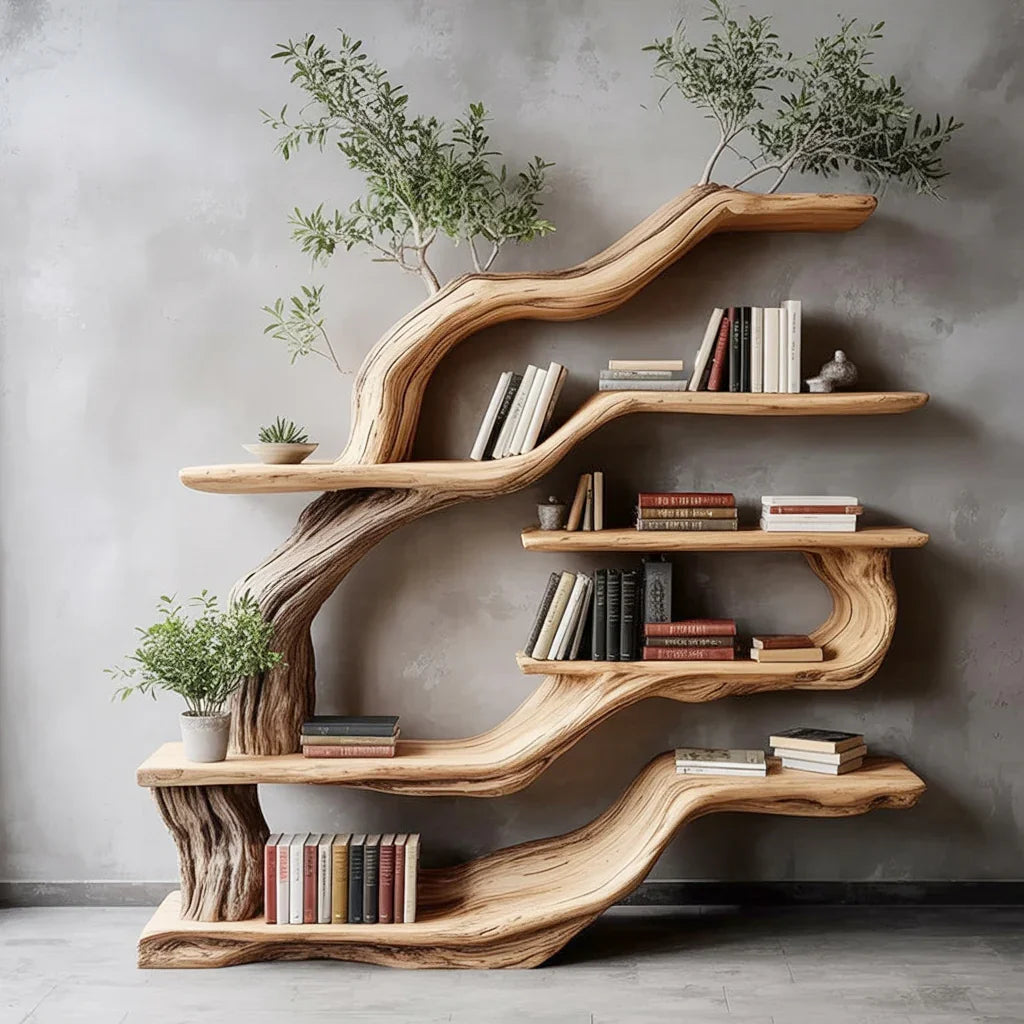
Handcrafted Live Edge Wooden Bookshelf - Artistic Tree Branch Design for Home or Office
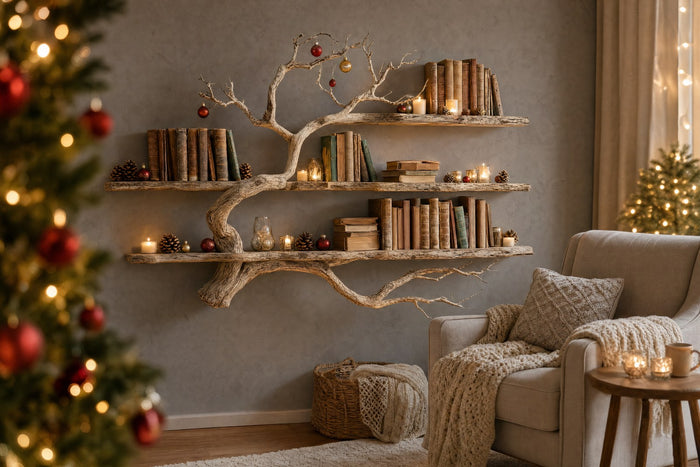
Tree bookshelves work especially well. The branching form creates natural styling zones at different heights. Our freestanding tree bookshelves ($1,225 to $2,134 range) come with 4 to 8 branch shelves at staggered heights, which forces visual rhythm even before you style.
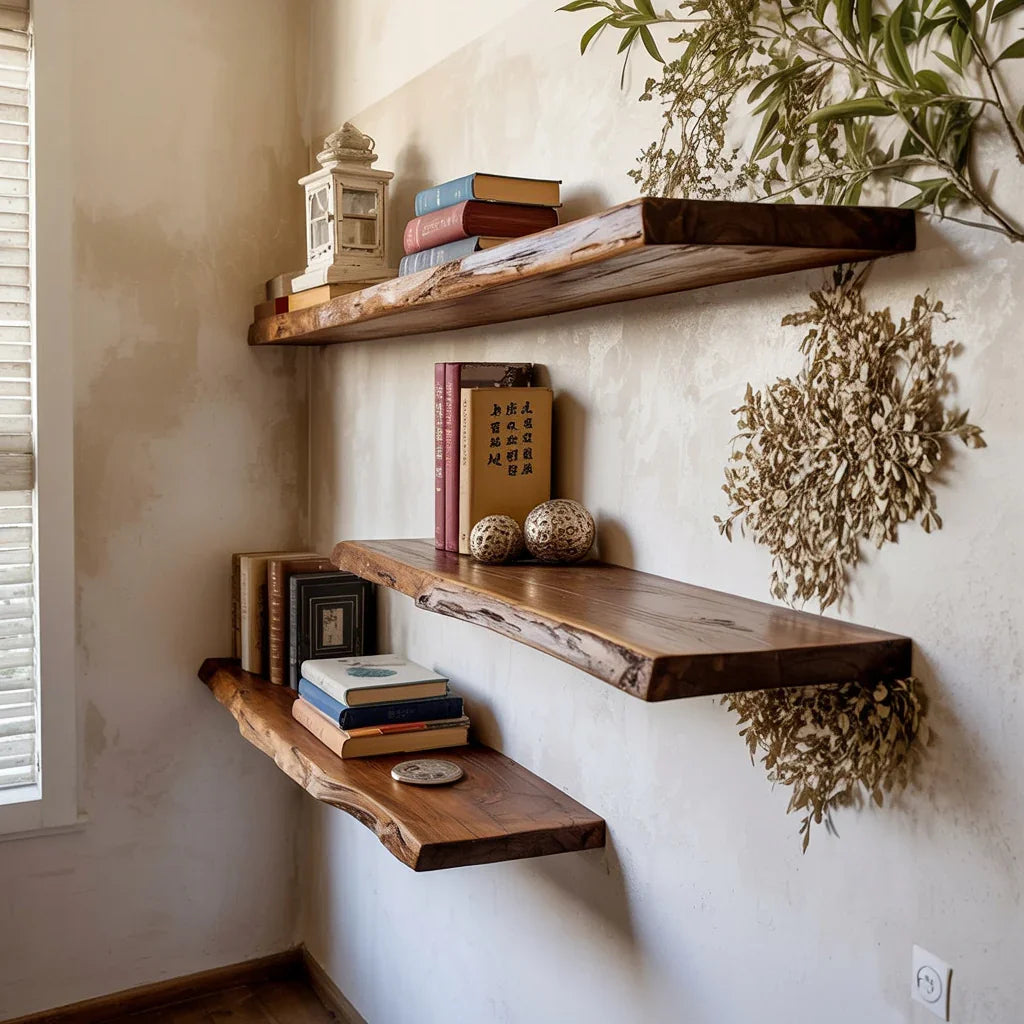
Solid Wood Live Edge Floating Shelf - Rustic Wall Decor for Bathroom & Laundry
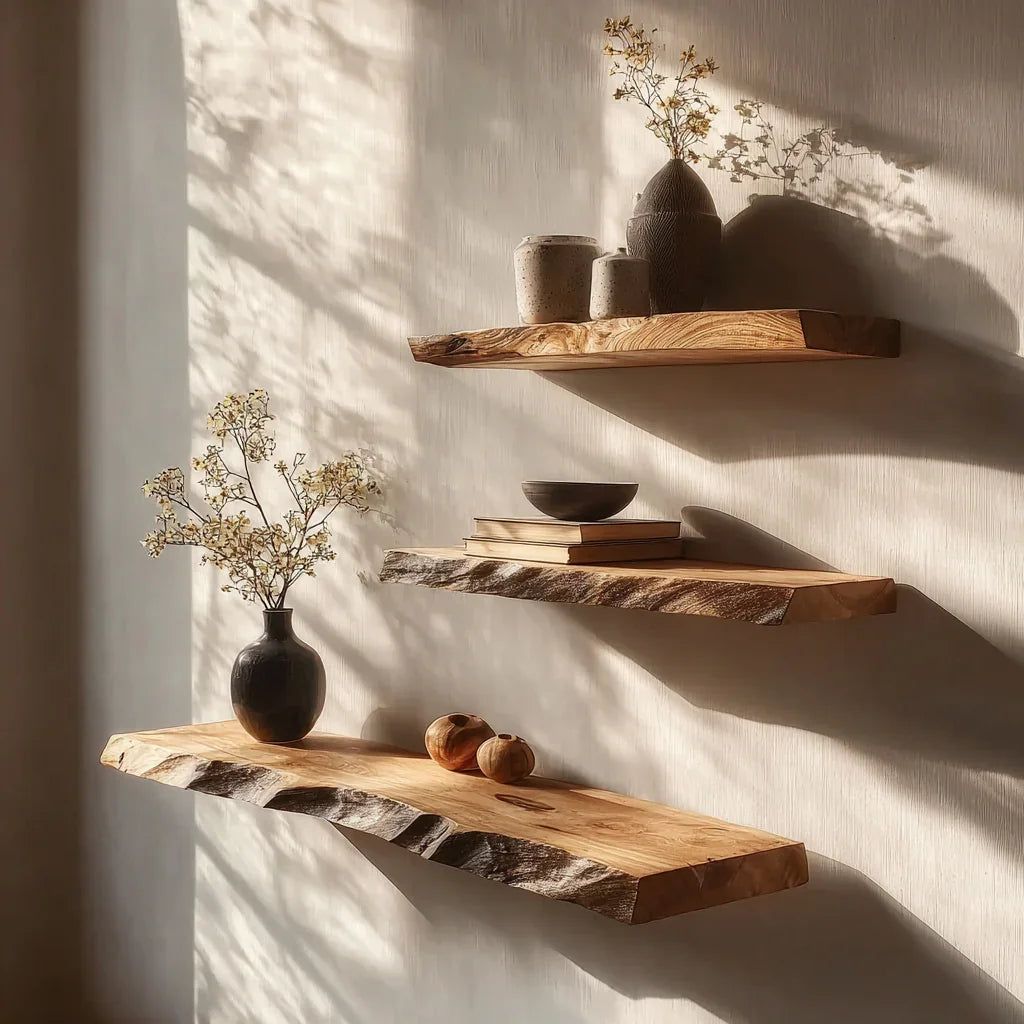
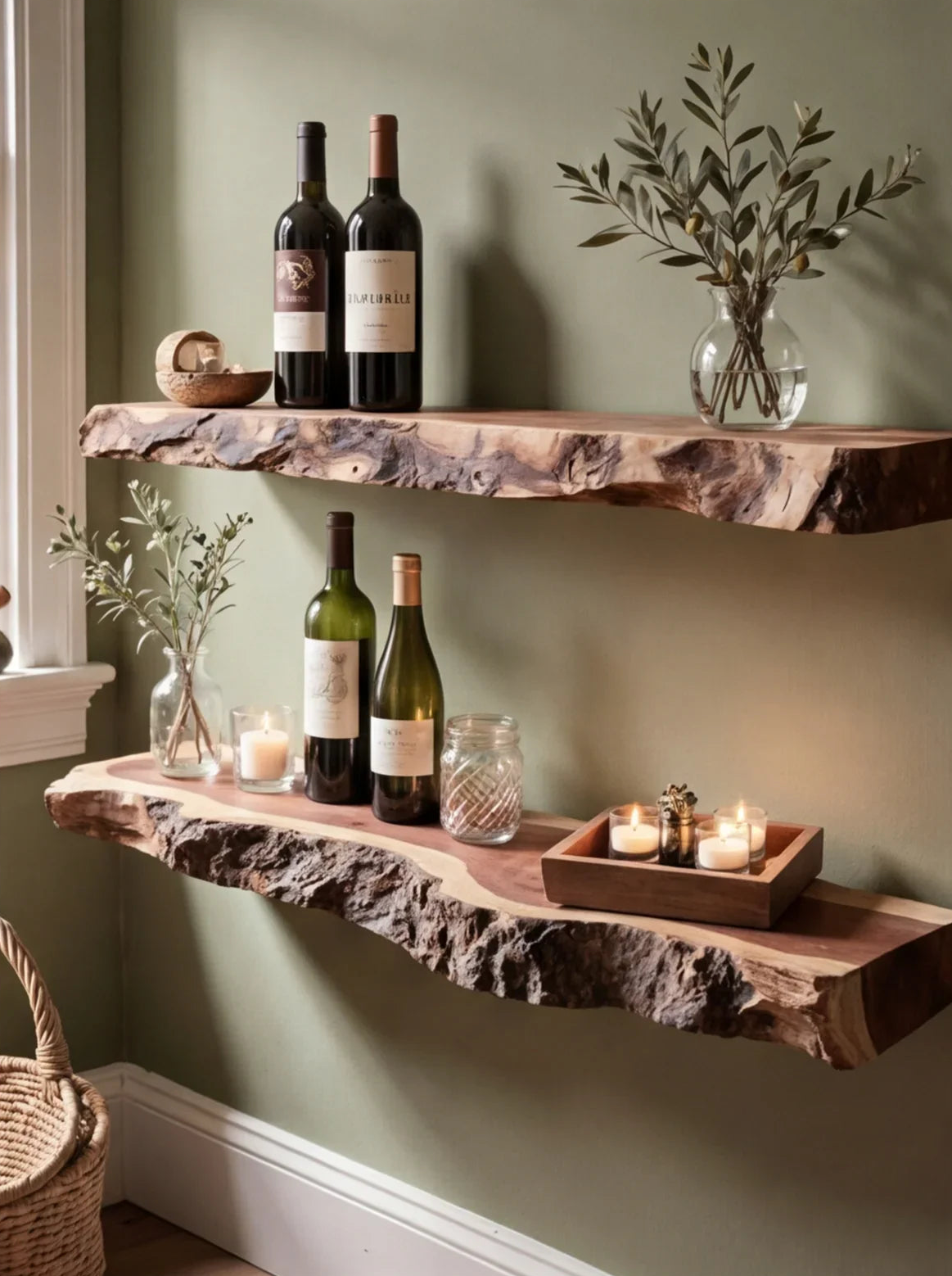
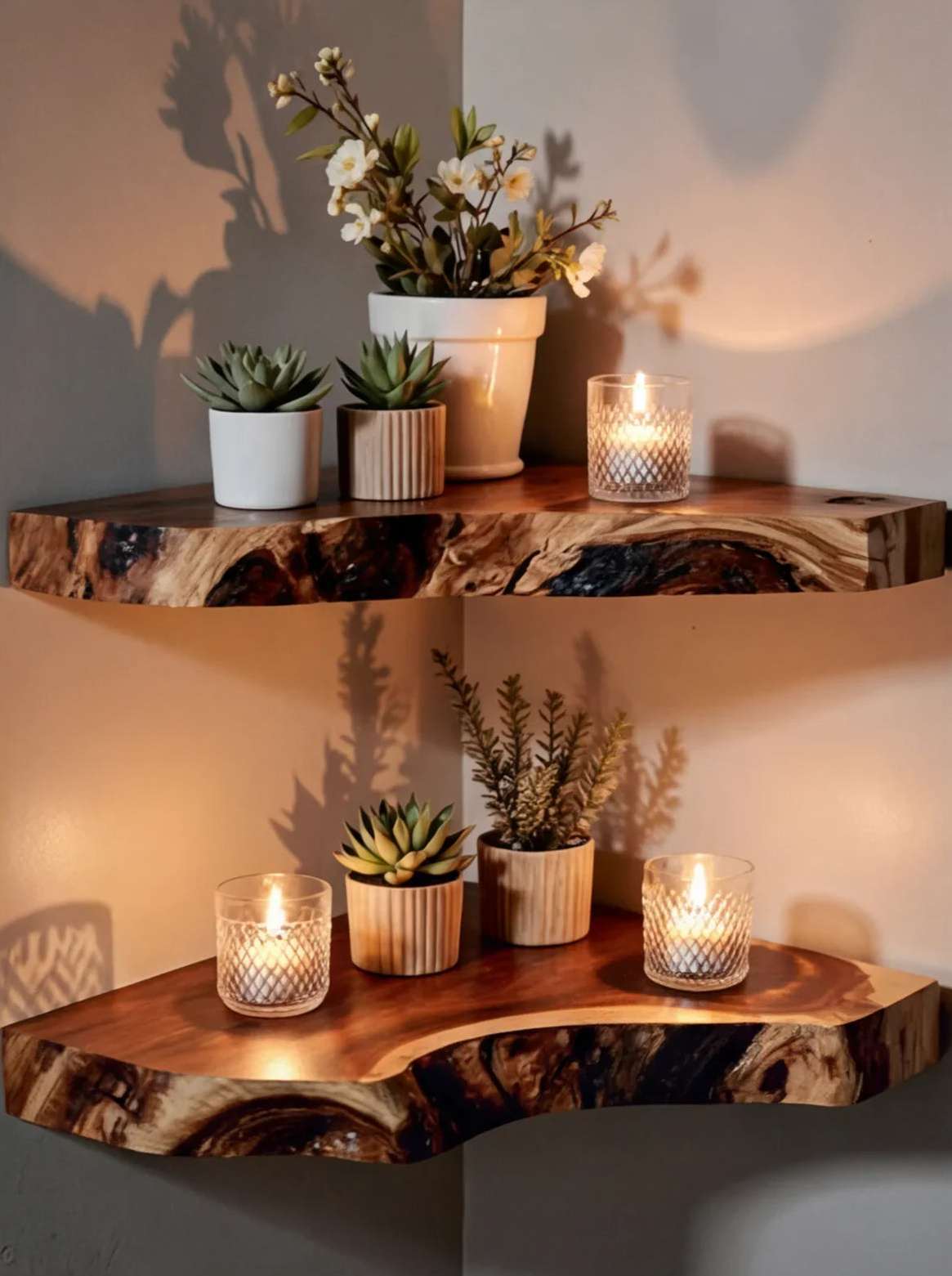
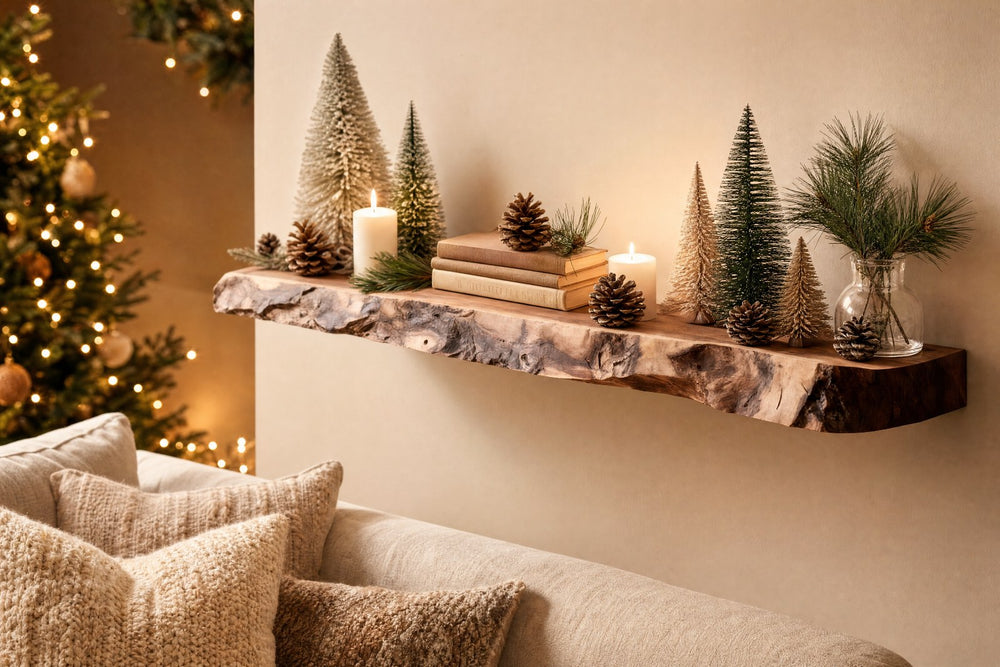
Floating shelves are the cleanest canvas. No frame to compete with content. Our rustic floating shelves start at $185 and provide that breathing room minimal interiors need.
Traditional bookcases work but require more discipline. The frame creates visual weight even before you add books. Stick to 60/40 ratio in framed bookcases - the frame counts as some of the "object" weight.
The Hardness Question: Why Wood Choice Matters for Heavy Books
Heavy hardcover collections need real wood. The Janka Hardness Scale measures wood resistance. Numbers that matter for bookshelves:
- Pine: 380 (soft, sags under 30+ books)
- Acacia: 1,750 (good, affordable)
- Walnut: 1,010 (warm tones, moderate hardness)
- White oak: 1,360 (best balance)
- Teak: 1,070 (water resistant, premium price)
MDF doesn't appear on the Janka scale because it's not real wood. It's compressed sawdust with glue. After 50+ pounds of hardcovers, MDF shelves bow within 12 to 18 months. We've replaced enough customer setups to know.
Style by Room Function
The 70/30 rule applies universally. Object choice changes by room.
Living room: Mixed photos, art books, ceramics, candles. Personal expression heavy.
Home office: Reference books, awards, plants. Professional restraint.
Bedroom: Current reading stack, fewer objects (2-3 max), calming materials. Less is more.
Kids room: Forward-facing books at the lowest shelf. Adult-style 70/30 on upper shelves where kids can't reach.
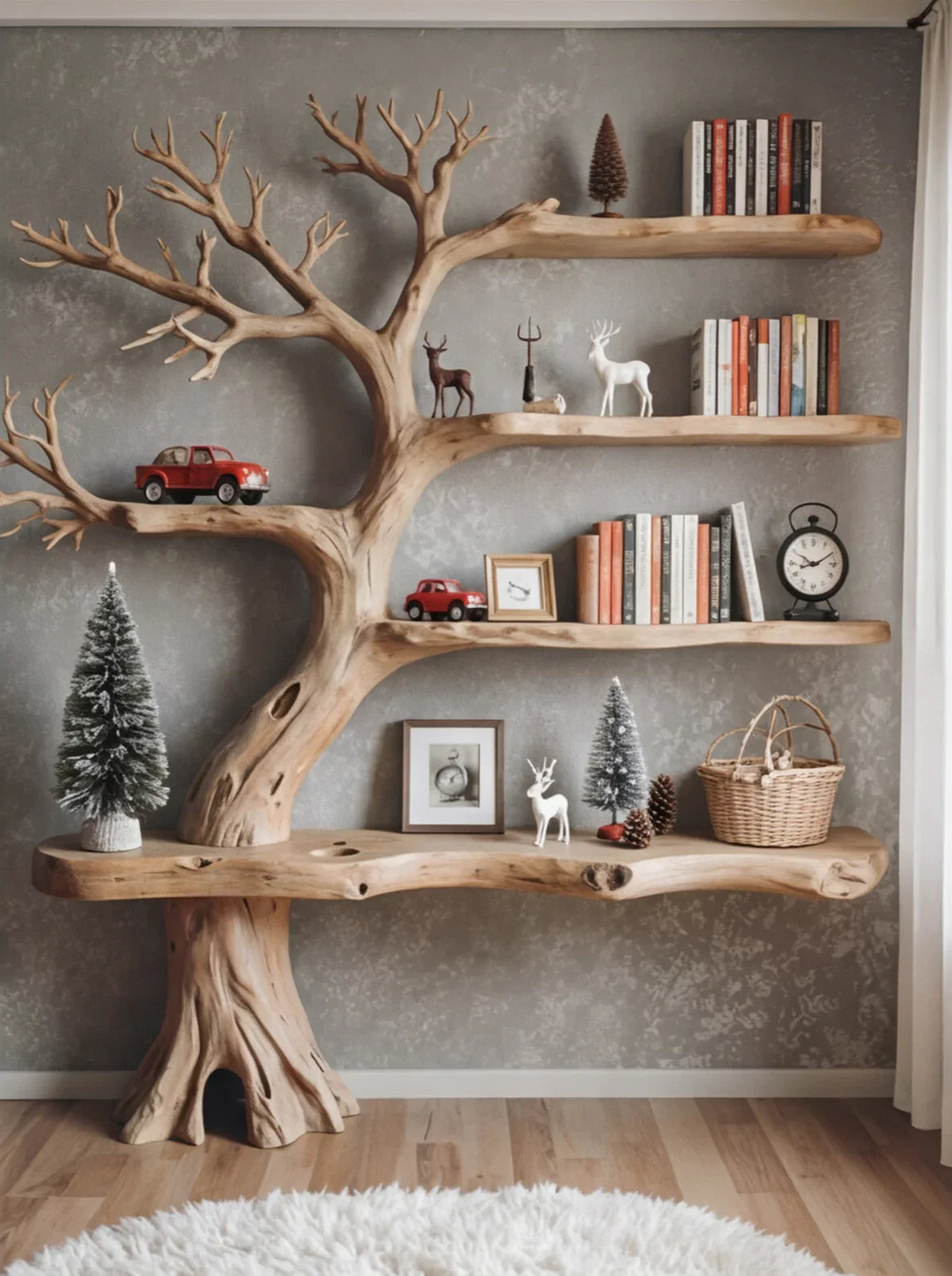
Rustic Tree Shaped Wooden Bookshelf with Branch Design for Living Room or Home Library
Reading nook: A single shelf does this best. Pair with a reading nook bookshelf and one floor lamp.
Frequently Asked Questions
What's the 70/30 bookshelf rule?
70% of shelf space holds books, 30% holds objects (plants, frames, ceramics). The ratio prevents both cluttered and sparse looks. Modern variants use 60/40 for high-design rooms or 80/20 for active reader homes.
How many books should I have on a 36-inch shelf?
21 books at 70% capacity. The shelf physically holds 30 hardcovers, but stuffing it removes visual breathing room. Pull 9 books to a closet rotation if you need more space.
Should I sort books by color?
Color sorting works for shelves you photograph but don't actively use. For active readers, sort by topic. Compromise: dedicate one shelf to a color story; keep the rest functional.
What wood holds heavy books best?
White oak (Janka 1,360) is the best balance of affordability and hardness. Acacia (1,750) is even harder. Walnut and teak are softer (1,010-1,070) but still adequate. Avoid pine (380) and MDF (not real wood) for collections over 30 books.
Now Style Your Shelf
Pull books to 70% capacity. Group decor in threes. Mix vertical and horizontal stacks. Vary height and texture. Pick one focal point per shelf. Walk away. Come back in an hour.
If your shelf still looks wrong, the problem is usually the shelf itself, not the styling. Cheap MDF with no presence will undermine even perfect 70/30 placement. Real wood with grain, weight, and craft makes the styling sing.
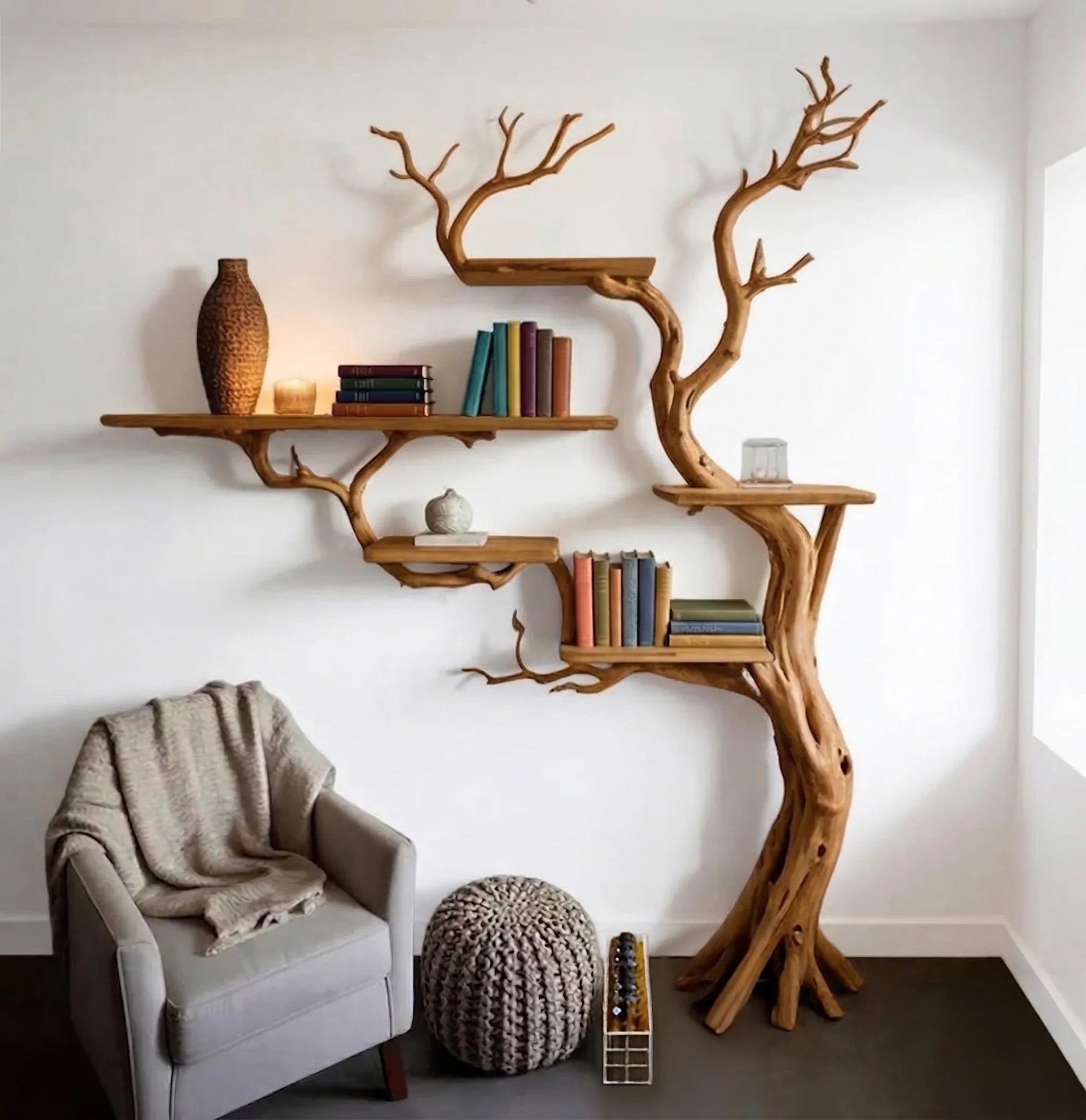
Tree Branch Bookshelf Wooden Bookcase Tree Bookshelves Mid Century Decor
Browse our tree bookshelves for the easiest forms to style with the 70/30 rule. Or start smaller with a single floating shelf and apply the rule to one wall section. Solid wood, handcrafted by Vietnamese artisans, designed for the homes you actually live in.
Have a styling photo to share? Tag @ashdeco on Instagram. We feature customer setups every month.