Best Cat Towers 2026: What's Worth Buying and What Falls Apart in Six Months
Cat towers and cat trees get lumped together constantly, but they're not the same thing. A cat tree is usually a multi-level structure with platforms, scratching posts, and condos. A cat tower leans taller and narrower, built for climbing more than lounging. If your cat is a climber, a tower is what you want.
The problem is most cat towers sold online are wrapped in carpet, held together with cardboard tubes, and start wobbling the first week your 15-pound cat launches off the top platform. Here's what actually holds up.
Cat Tower vs. Cat Tree: What's the Difference?
Cat towers go vertical - taller, narrower, built for climbing. Cat trees spread horizontal with multiple condos for multi-cat households. We break down every difference - space, cost, cat personality - in our full cat tree vs cat tower guide.

What Makes a Cat Tower Actually Last?
Four things separate a cat tower that lasts years from one that wobbles after a month:
Base weight and width. The base needs to weigh enough and spread wide enough that a 20-pound cat launching off the top won't tip the whole thing. We go deep on the physics of this in our weight & stability guide. Look for bases at least 20x20 inches with solid wood or weighted bottoms.
Post material. Cardboard tubes covered in carpet are the cheapest option. They also compress and fray, then start tilting. Solid wood posts or thick sisal-wrapped solid cores hold up dramatically longer. Not all hardwoods perform the same though - see our wood species safety guide for which ones are actually safe and durable for cats
Platform attachment method. Cheap towers use small screws into particle board. The screws strip out over time as the cat jumps on and off. Bolt-through or dowel construction holds.
Scratching surface. Sisal rope lasts longer than carpet for scratching. Natural wood bark is even better, because cats actually prefer the texture over woven materials.

The Solid Wood Advantage (and the Real Cost)
Solid wood costs more upfront but wins over any timeline past ~3 years - the full material breakdown (wood vs MDF vs carpet, with real weight-capacity numbers) is in our natural wood cat tower guide

Features That Actually Matter (and Ones That Don't)
Worth paying for:
- Solid wood or hardwood posts (not pressed wood tubes)
- Wide, heavy base (20+ inches, 15+ pounds for the base alone)
- Multiple platform heights with at least 12 inches between levels
- Sisal or natural bark scratching surfaces
- Wall-anchor kit included (prevents tipping for extra safety)
Not worth the upcharge:
- Built-in laser toys or dangling feathers (cats lose interest in days)
- Heated pads (cats seek warmth elsewhere anyway)
- Tunnel inserts in cheap towers (the fabric rips)
- Carpet covering on every surface (traps hair, hard to clean, smells over time)
Best Cat Tower Picks by Cat Size
For cats under 10 pounds
Smaller cats don't need massive platforms. A tower 4-5 feet tall with 3-4 levels works well. The platforms can be smaller (10-12 inches wide) since lighter cats don't need as much landing room.
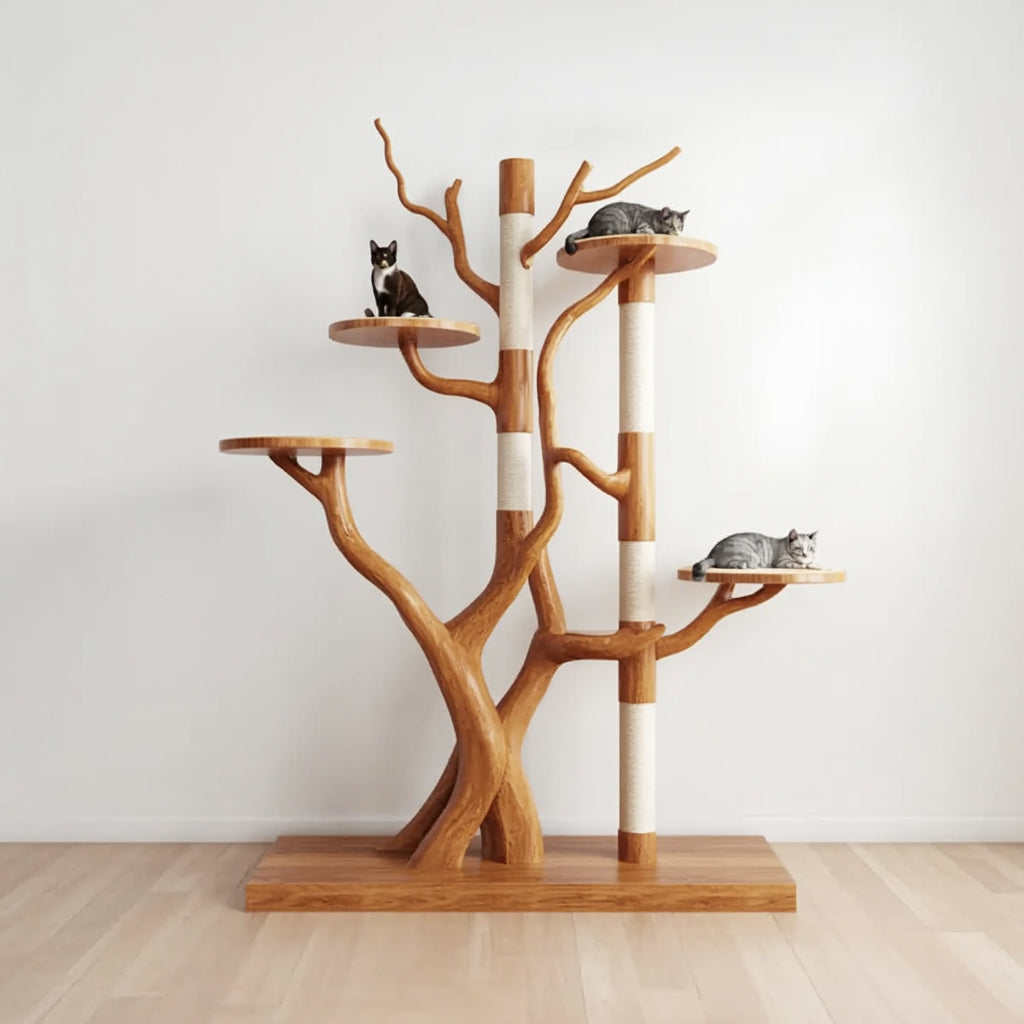
Ashdeco's Rustic Solid Wood Cat Tree ($1,023-$1,323) works well for smaller cats. The natural branch design gives them real bark to scratch, and the weight keeps it stable even for energetic kittens.

For cats 10-20 pounds
This is where build quality matters most. A 15-pound Maine Coon landing on a platform with force puts serious stress on joints. For the full breakdown on sizing and weight limits for big breeds, see our complete guide to cat trees for large cats. You need platforms at least 14 inches wide, solid post connections, and a base heavy enough to absorb the impact.
The Mid Century Cat Tree Tower ($1,969-$2,909) handles larger cats well. The platforms are wider, the base is heavier, and the mid-century design means it doesn't look out of place next to your sofa.
For multi-cat households
Two cats means twice the climbing, twice the jumping, and twice the wear. Plus territorial cats need separate perching spots at different heights so they can coexist without staring each other down.
Look for towers with at least 5-6 platforms at varying heights. The Wooden Cat Tower Cat Tree ($2,163-$3,149) has enough levels for two cats to each claim their own territory.
How to Pick the Right Height
General rule: the tower should be at least as tall as the highest surface your cat currently climbs to. If your cat sits on top of your fridge (about 6 feet), a 4-foot tower won't satisfy them.
- 4-5 feet: Good for calm cats, kittens, seniors
- 5-6 feet: Standard for most adult cats
- 6+ feet (floor to ceiling): For dedicated climbers and active breeds
Ceiling height matters too. A 6-foot tower in a room with 8-foot ceilings leaves just 2 feet of headroom for the cat. That's actually fine. Cats like being close to the ceiling. For exact height recommendations by room and ceiling type, see our cat tree height guide.
Frequently Asked Questions
How much should I spend on a cat tower?
Budget cat towers ($50-$100) last 1-2 years with average use. Mid-range options ($100-$300) with solid wood posts and sisal wrap last 3-5 years. Handcrafted solid wood towers ($1,000+) can last 10-15 years and double as living room furniture. Spend based on how long you want it to last and how visible it is in your home.
Do cats prefer cat towers or cat trees?
Climbers and single cats tend to prefer tall towers. Social cats in multi-cat households prefer wider trees with separate spaces. Watch where your cat hangs out. If they always go high, get a tower. If they like hiding, get a tree with condos.
How often should you replace a cat tower?
Replace when it wobbles, leans, or has fraying carpet that the cat is ingesting. Cheap towers usually hit this point at 12-18 months. Solid wood towers rarely need full replacement, though sisal wrap on posts may need re-wrapping every 3-5 years.
Can a cat tower be too tall?
A cat tower can be too tall if it's not properly anchored. Tall towers (over 5 feet) without wall anchors can tip when a cat launches off the top. Always use the wall-anchor kit if one is included, especially in homes with large or multiple cats.
Picking the Right Tower
Cat towers are a long-term purchase. A cheap one costs less today but more over five years. A solid wood one costs more today but nothing after that, and it doesn't make your living room look like a pet store. Check the base weight, the post material, and the platform connections before the color or the style.
Browse Ashdeco's cat tree towers collection to see what solid wood options look like. Every piece is hand-carved, so each one has slightly different branch angles and bark textures. That's the trade-off for buying handcrafted: no two are identical.