Solid Wood Nightstand: Complete Guide to Wood, Drawers, Size & Quality
A solid wood nightstand isn't just furniture - it's a long-term investment. While particle-board and MDF options look fine at first, they chip, swell, and sag within a few years. Solid hardwood, on the other hand, lasts decades and only gets better with age.
This guide covers everything you need to know: what makes a real wood nightstand worth buying, how to spot genuine solid wood construction vs. veneer scams, and which drawer configurations actually work for your bedroom.

What Is a Solid Wood Nightstand?
A true solid wood nightstand is built entirely from natural lumber - no particleboard, MDF, or melamine core. The frame, drawers, shelves, and back panel are all cut from solid boards. This matters because:
- Structural integrity: Solid hardwood joints hold screws and dovetails far better than engineered wood. A quality piece can handle daily drawer opening for 30+ years without loosening.
- Moisture resistance: Real wood expands and contracts naturally. Particleboard swells permanently when exposed to humidity - a common problem in bedrooms near en-suite bathrooms.
- Refinishability: You can sand and restain a solid wood piece multiple times. Veneer on MDF gives you one chance before you sand through.
- Resale value: Hardwood furniture retains value. Big-box store particleboard has zero resale market.
How to Tell If a Nightstand Is Actually Solid Wood
Many products labeled "wood nightstand" are actually MDF with a thin wood-grain laminate. Here's how to verify:
- Check the grain pattern: Real wood has unique grain on every surface. If the front and side grain repeat identically, it's likely a printed veneer.
- Inspect drawer interiors: Cheap nightstands use solid wood for the visible exterior but particleboard inside. Pull out the drawer and look at the raw edges - unfinished wood means solid construction.
- Knock test: Solid wood produces a deep, dense sound. Hollow or papery tones indicate a veneer over engineered core.
- Weight: A solid oak nightstand typically weighs 30–50 lbs. A comparable MDF piece will feel noticeably lighter.
- Edge banding: If you see a visible seam where a thin strip wraps around the edge, it's veneered MDF, not solid wood.

Types of Wood Used for Nightstands
Not all wood nightstands are created equal. The species determines durability, appearance, and price. Here's how the most common options compare:
| Wood Species | Janka Hardness | Best For | Price Range |
|---|---|---|---|
| White Oak | 1,360 | Classic, durable bedroom sets | $$$ |
| Hard Maple | 1,450 | Maximum durability, modern styles | $$$ |
| Red Oak | 1,290 | Traditional, budget-friendly solid wood | $$ |
| Black Walnut | 1,010 | Premium, rich dark tones | $$$$ |
| Cherry | 995 | Elegant designs, warm aging patina | $$$ |
| Acacia | 1,750 | Hard-wearing, distinctive grain | $$ |
| Pine | 380–420 | Budget / rustic looks only | $ |
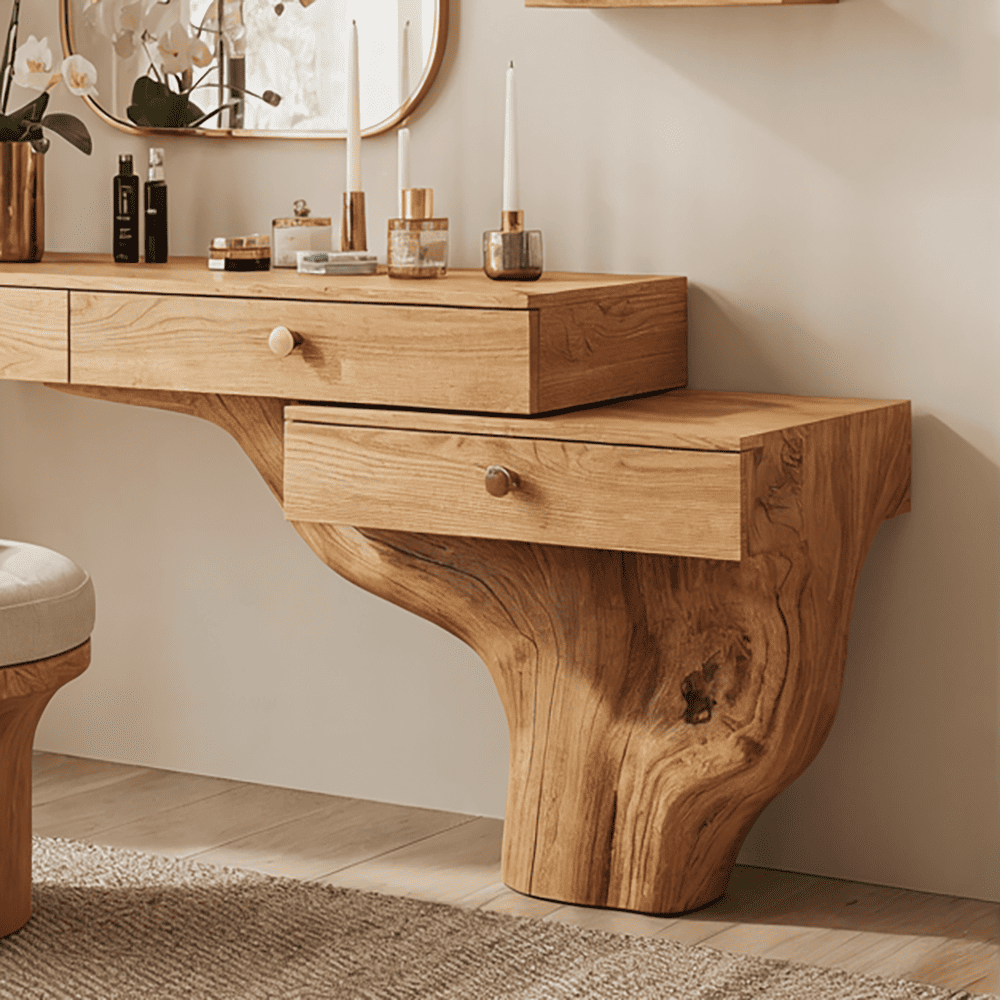
For a nightstand that handles daily use - lamps, books, phone chargers, late-night water glasses - aim for a Janka rating above 1,000. Oak and maple are the most reliable choices. Pine looks charming but dents from a fingernail. Ashdeco's own nightstands are handcrafted from acacia, walnut, teak, and reclaimed wood - see the full range in the nightstands collection.

Solid Wood Nightstand with Drawers: What to Look For
A solid wood nightstand with drawers is the most popular configuration for good reason. But drawer quality is where manufacturers cut corners. Here's what separates a great piece from a frustrating one:
Drawer Construction
- Dovetail joints: Interlocking wood-to-wood dovetail joints are the gold standard. They get stronger over time as wood swells. Staples or glue joints fail within a few years of daily use.
- Drawer slides: Full-extension ball-bearing slides let you access the entire drawer. Cheap center-mounted wooden guides only open halfway and stick when humidity changes.
- Bottom panel: A plywood or solid wood drawer bottom is far stronger than a thin fiberboard panel stapled to the sides.
- Wood species match: Some brands use solid oak for the exterior but poplar or pine for drawer boxes. This isn't necessarily bad - softer drawer wood is lighter and easier to slide - but it should be disclosed.

Soft-Close vs. Standard
Soft-close drawer mechanisms are a premium feature that prevents slamming - especially useful in a shared bedroom. They add $50–$150 to the price but significantly improve the daily experience. If the nightstand doesn't mention soft-close, assume it's standard friction slides.
Solid Wood 3 Drawer Nightstand: When Three Drawers Make Sense
A solid wood 3 drawer nightstand offers maximum storage in a compact footprint. But is three drawers always better than two?
Pros of a 3-Drawer Design
- Separate compartments for different categories (meds in top drawer, reading materials in middle, electronics/chargers in bottom)
- Narrower overall width fits tighter spaces while maintaining storage volume
- Better weight distribution - three smaller drawers are less likely to sag than one large one
Cons to Consider
- Smaller individual drawers - won't fit larger items like tablet stands or bulky books
- More moving parts means more potential points of failure over time
- Typically taller, which may not match lower platform beds
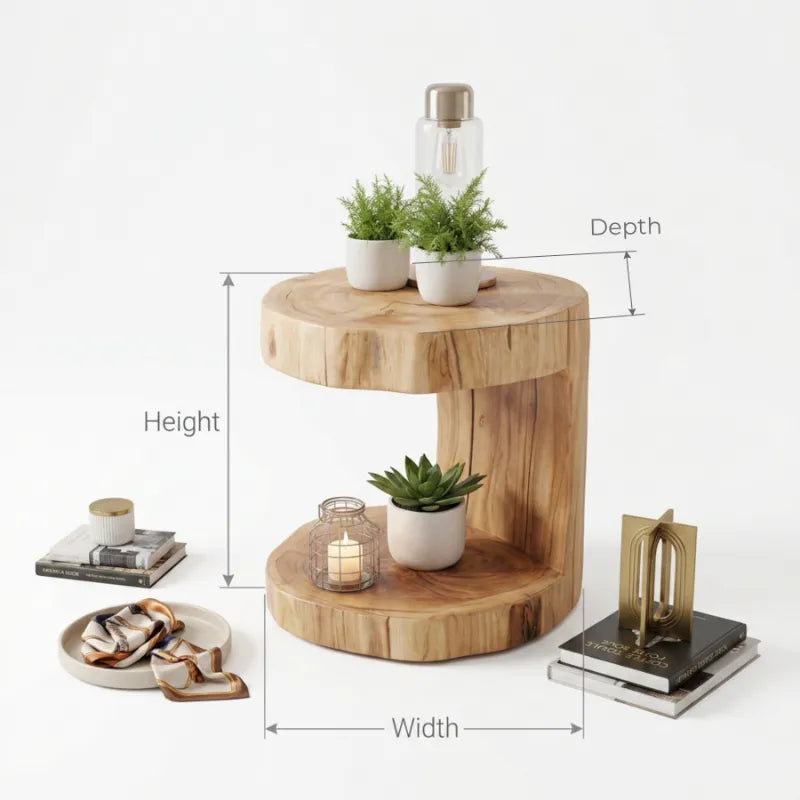
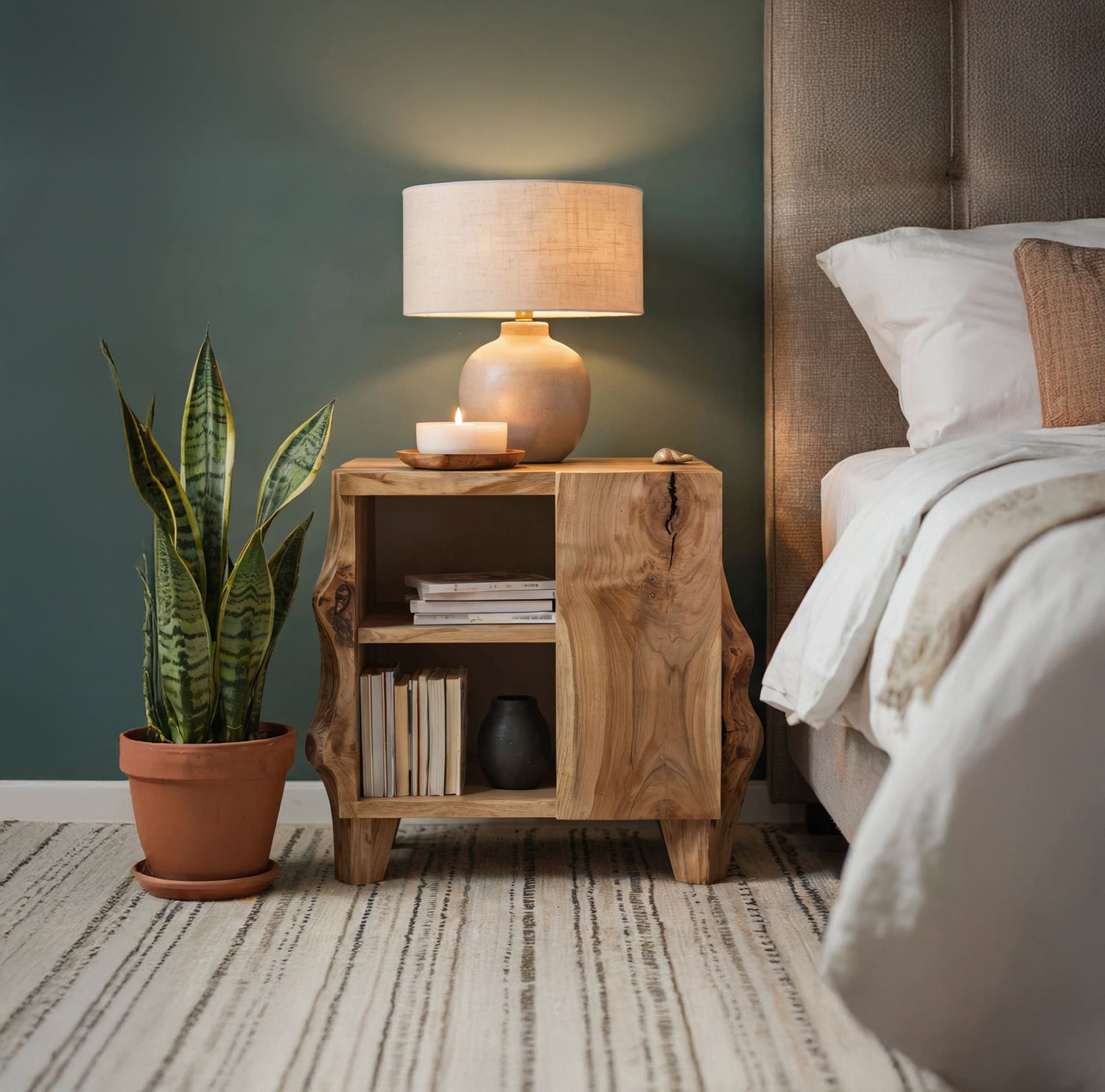
Rule of thumb: If your bedside essentials are small and numerous (glasses case, lip balm, phone, charging cable, book, sleep mask), three drawers work perfectly. If you have fewer, larger items (a laptop, a large water bottle), prioritize two wider drawers plus an open shelf - like Ashdeco's Handcrafted Solid Wood Nightstand with Open Shelf.
Solid Wood vs. Veneer Nightstands: The Honest Comparison
This is the question most buyers wrestle with. Here's the reality:
| Factor | Solid Wood | Veneer Over MDF |
|---|---|---|
| Lifespan | 30–100+ years | 5–15 years |
| Refinishable | Multiple times | Once (risk of sanding through) |
| Moisture resistance | Good (natural movement) | Poor (permanent swelling) |
| Weight capacity | High | Moderate to low |
| Edge durability | Excellent | Chips and peels |
| Price | $200–$1,000+ | $50–$300 |
If you're furnishing a guest room you rarely use, veneer might suffice. For your own bedroom - where this piece gets handled every single day - a real wood nightstand pays for itself in longevity alone.

How to Choose the Right Solid Wood Nightstand
Use this checklist when shopping:
- Measure your bed height first. Nightstand should be level with or 2–4 inches above the mattress top. Most mattresses sit 24–28 inches off the floor, so a nightstand in that same range works for most setups.
- Decide on drawer count. Two wide drawers + shelf for most people. Three drawers if you have many small items.
- Pick your wood species. Oak for durability and classic grain. Walnut for luxury dark tones. Maple for modern light aesthetics.
- Verify construction. Ask: is the entire piece solid wood, or just the frame? Check drawer interiors and back panel material.
- Test the finish. A quality hand-rubbed oil or hardwax oil finish is better than thick polyurethane that feels plastic-like.
- Check drawer slides. Full-extension ball-bearing is ideal. At minimum, look for smooth center-mounted metal slides.
Width guidance: 18–24 inches for twin and full beds, 22–28 inches for queen and king, with at least 4 inches of clearance between the nightstand edge and the bed frame. Depth of 14–18 inches is standard; go narrower (12–14 inches) in tight spaces.
Common Mistakes When Buying a Wood Nightstand
- Buying based on price alone: A $60 "wood" nightstand is almost certainly MDF with veneer. You'll replace it within a few years.
- Ignoring the bed-to-nightstand height ratio: A nightstand 6+ inches above or below your mattress height feels awkward every time you reach for it.
- Skipping the drawer quality check: Beautiful exterior doesn't matter if the drawers stick, don't close flush, or fall off their tracks after six months.
- Assuming "rustic" means solid wood: Many distressed-finish nightstands use engineered wood with artificial distressing. Check the materials list carefully.

Built to last decades, not months.
Browse Ashdeco's 32-piece nightstand collection - handcrafted from solid acacia, walnut, teak, and reclaimed wood by Vietnamese artisans. No MDF, no veneer, no flat-pack assembly.
Shop Solid Wood Nightstands →Frequently Asked Questions
Is a solid wood nightstand worth the extra cost?
Yes, if you value longevity. A $400 solid oak nightstand used daily for 40 years costs $10/year. A $80 MDF nightstand replaced every 5 years over the same period costs $640 - and looks worn out the whole time.
Can I refinish a solid wood nightstand?
Absolutely. Sand it down, apply new stain or oil, and it looks brand new. This is impossible with veneered MDF - once you sand through the thin veneer layer, you're left with raw particleboard.
What's the difference between a solid wood nightstand and a real wood nightstand?
They mean the same thing. "Real wood" is a marketing term that should indicate solid hardwood construction. Always verify the materials description - some products say "real wood" but only mean the visible surfaces are wood veneer over engineered core.
How heavy should a solid wood nightstand be?
Expect 25–50 lbs for a standard two-drawer piece, depending on the wood species. Walnut and oak are denser (heavier), while pine and acacia are lighter for the same dimensions. If it feels suspiciously light, it likely contains engineered wood.
Do solid wood nightstands crack or warp?
Quality solid wood moves with seasonal humidity changes - this is normal and doesn't indicate a defect. Properly kiln-dried lumber (6–8% moisture content at manufacture) minimizes movement. Avoid placing nightstands directly next to heating vents or in rooms with extreme humidity swings.
Should my nightstand match my bed frame?
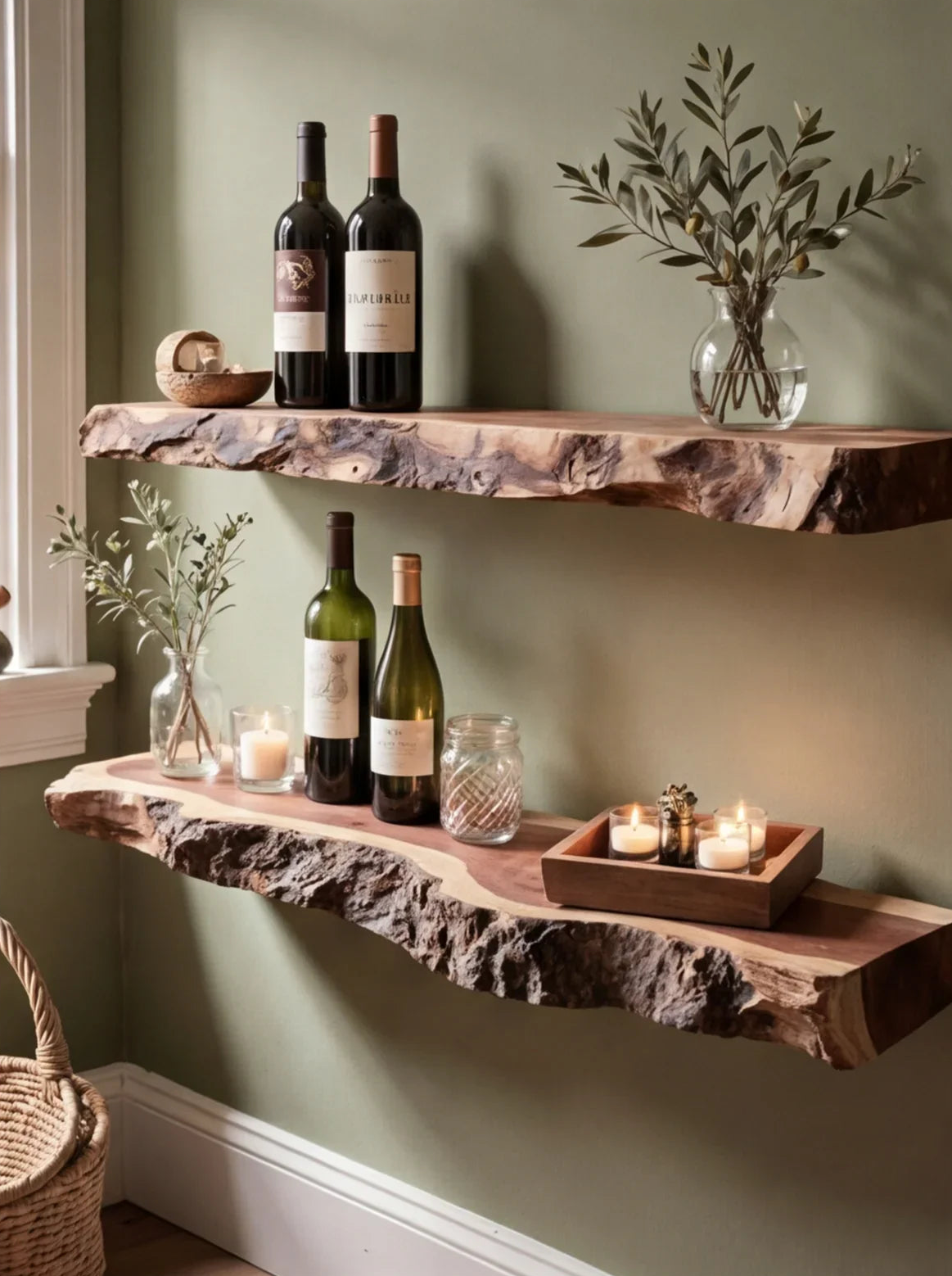
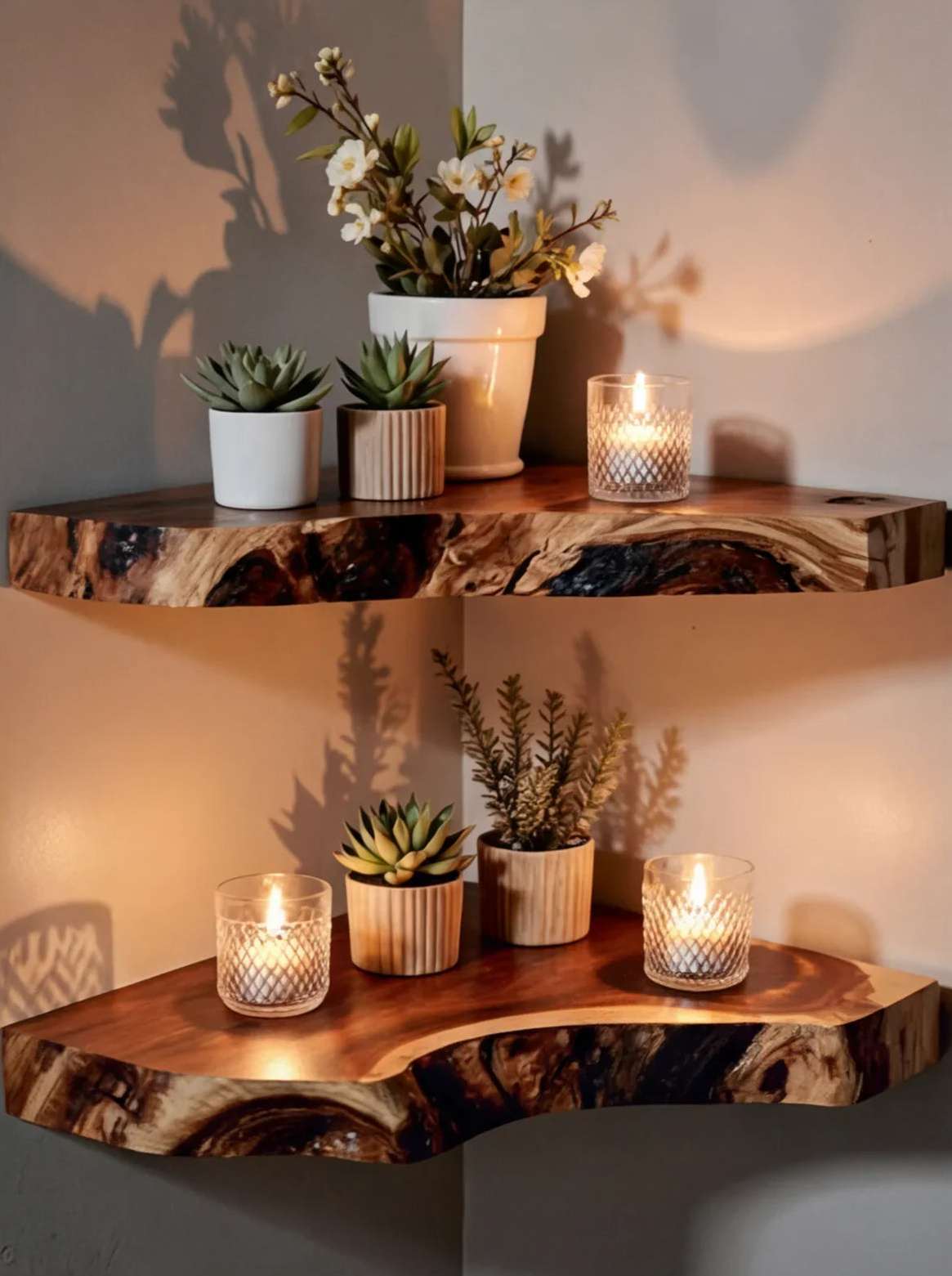
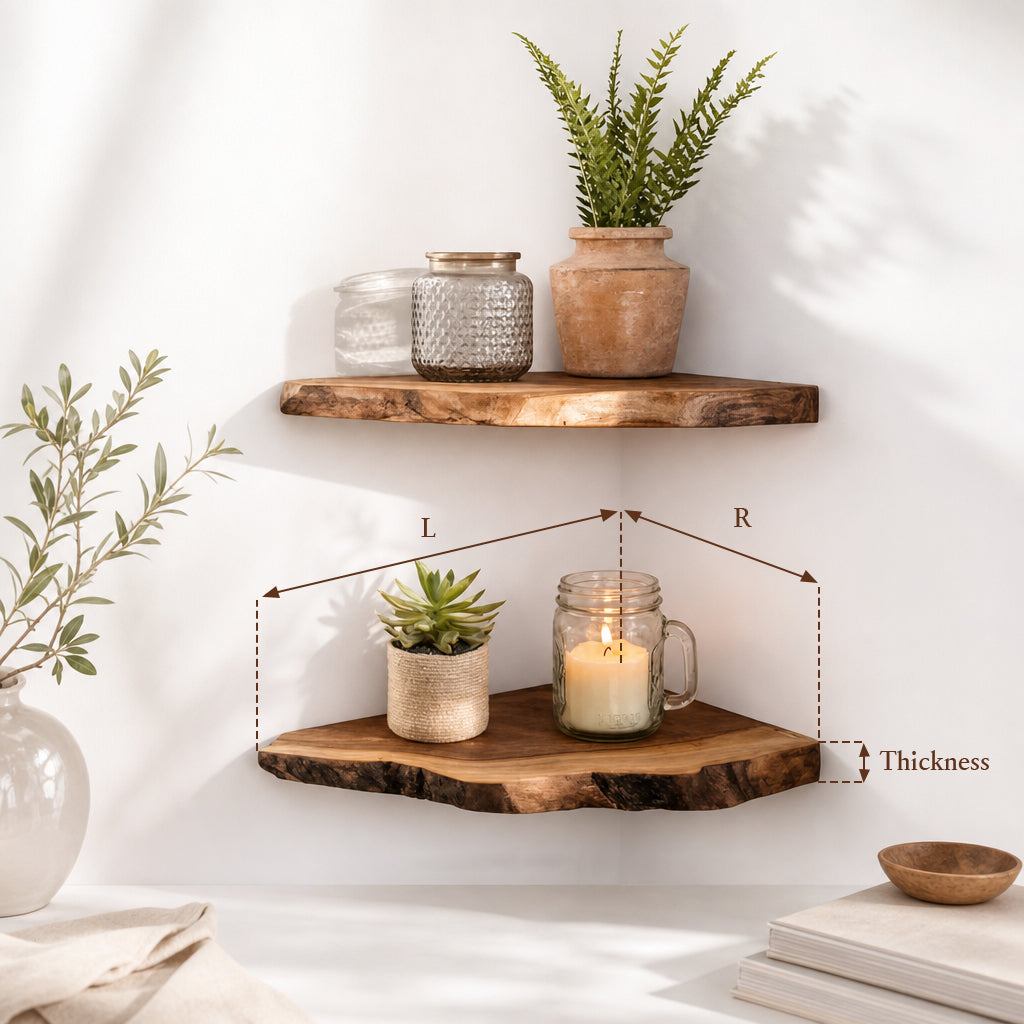
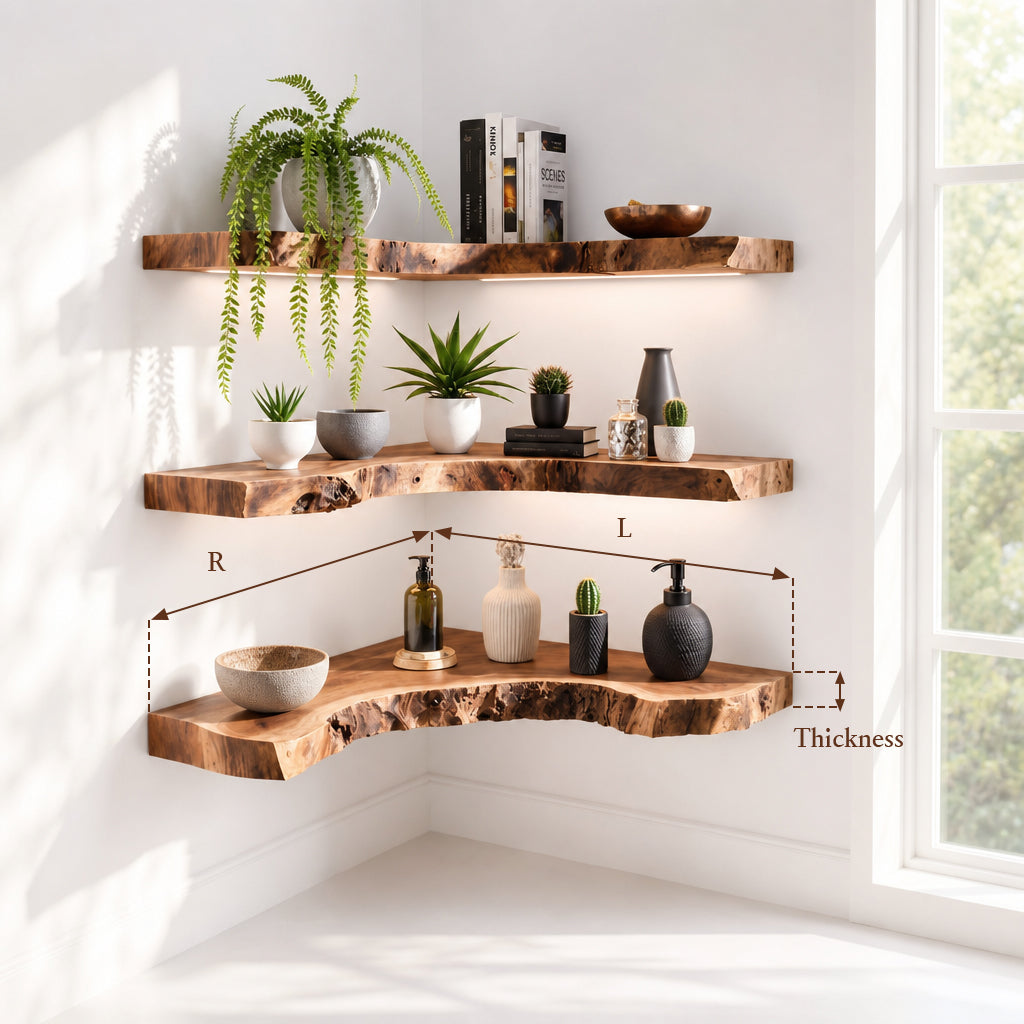
Not necessarily. Matching the wood tone (not the exact style) is usually enough to create cohesion - a walnut nightstand next to a walnut bed frame reads as intentional even if the design language differs. Many people also pair a nightstand on one side with a floating shelf for bedroom on the other for a relaxed, asymmetrical look that saves floor space.
Related: Bedroom Floating Shelves · Tree Bookshelf for Bedroom