The entryway problem nobody talks about
The entryway is the first thing people see when they walk into your home and the last thing they see when they leave. It's also the space that gets the least thought during decorating. Most people throw a table against the wall, put a bowl on it for keys, and call it done.
Six months later, the table is buried under mail, random chargers, sunglasses, a half-dead plant, and whatever didn't make it to its actual home. The entryway went from "first impression" to "junk drawer with legs."
The console table is supposed to solve this. A narrow table against the wall that's both functional (holds your daily items) and decorative (sets the tone). But the wrong console table makes the problem worse: too big and it blocks the walkway, too small and it looks like a forgotten afterthought, wrong height and it fights with everything around it.
Getting this right isn't complicated. It's just specific.

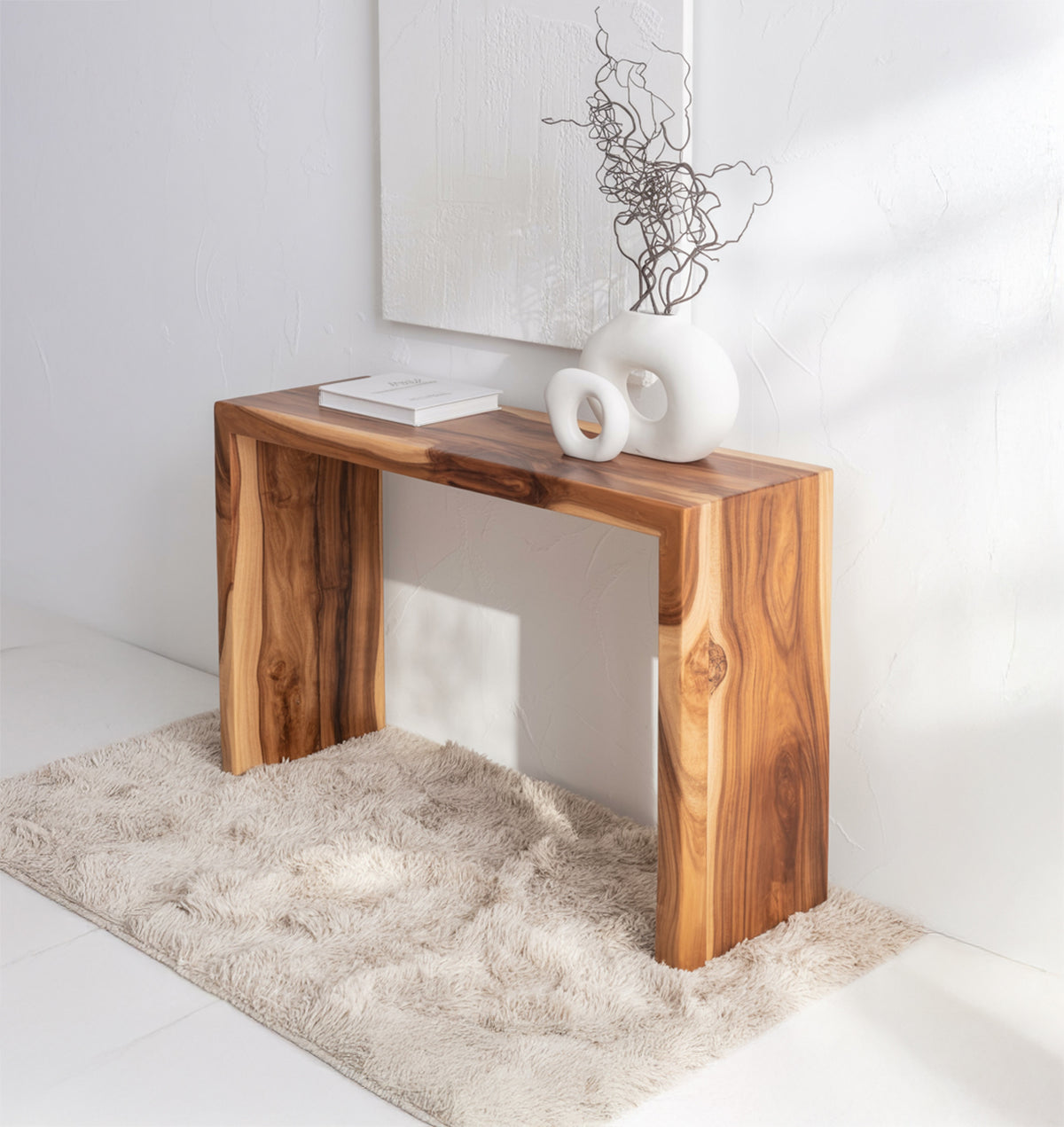
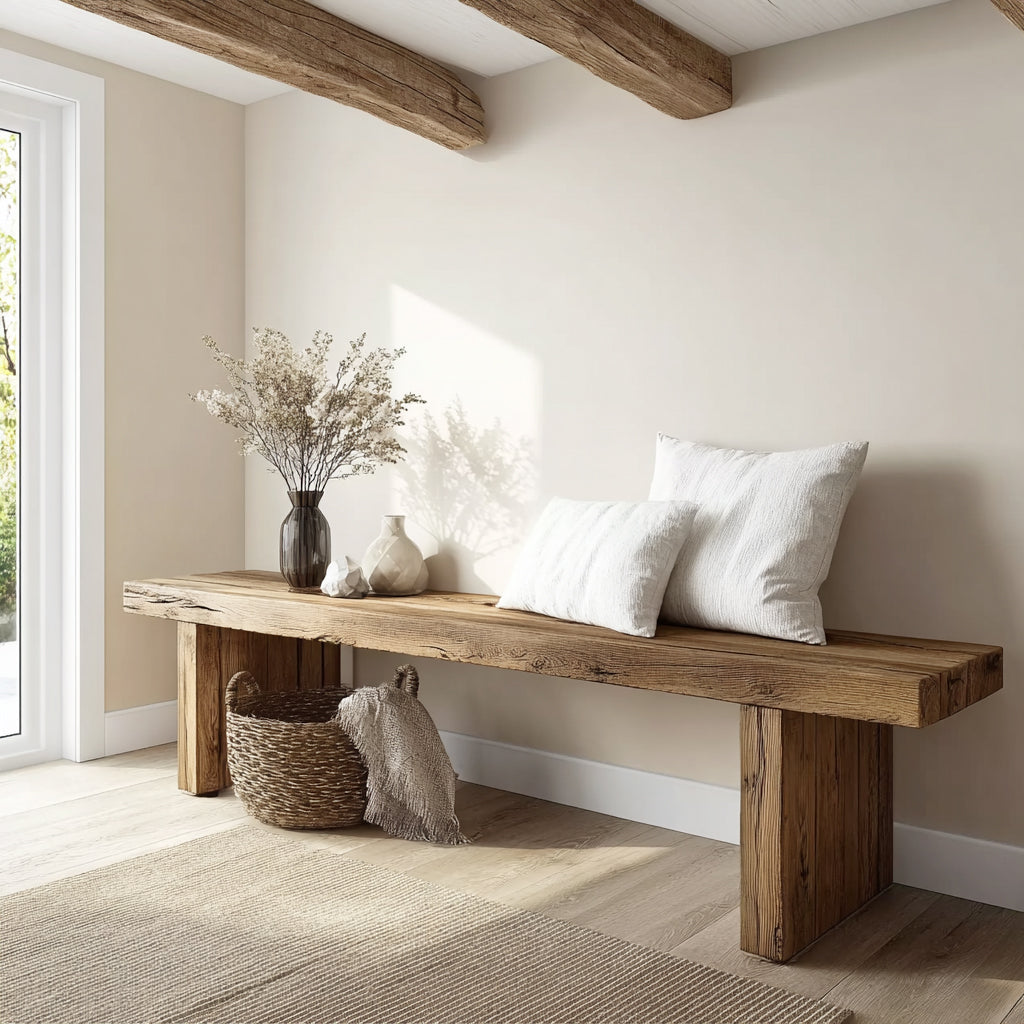
Natural Solid Wood Console Table - from $1,530
Dimensions that actually work

Console table sizing is tighter than most furniture because it lives in narrow spaces. Every inch matters.
Height: 28 to 34 inches. The sweet spot is 30 to 32 inches, which is roughly hip height for most adults. This lets you set things down without bending and pick things up without reaching. If you have a mirror or artwork above the table, the 30-inch height leaves room for a visually balanced gap (4 to 8 inches between the table surface and the bottom of the frame above).
Depth: 10 to 18 inches. This is the measurement that matters most in narrow entryways. A table deeper than 14 inches in a 36-inch wide hallway leaves only 22 inches for walking, which feels tight, especially with a coat on or carrying groceries. For narrow halls, look for 10 to 12 inch depth. Wider entryways and living room placement can handle 14 to 18 inches.
Width: 36 to 72 inches. The table should be roughly two-thirds the width of the wall it sits against. A 60-inch wall gets a 36 to 40 inch table. A 96-inch wall can handle a 60 to 72 inch table. Too narrow and the table looks stranded. Too wide and it crowds the wall visually.
Clearance underneath: 24+ inches. If you plan to tuck baskets, shoes, or a bench underneath, you need at least 24 inches of vertical space between the floor and the bottom of the table apron. Many console tables have cross bars or low shelves at 6 to 8 inches that limit what you can store below.
Three approaches to styling

There's no single right way to style a console table. What matters is committing to an approach rather than ending up with a random accumulation.
The gallery approach
Symmetrical and intentional. A large mirror or single piece of art centered above the table. Two matching items on each end (lamps, vases, candleholders). One focal object in the center (a decorative bowl, a sculptural piece, fresh flowers).
This works best in formal entryways, dining room walls, and living rooms where the console is purely a display surface. The symmetry creates a composed, deliberate look that reads as "designed" from across the room.
The risk: it can feel stiff. If everything matches too perfectly, the arrangement looks like a hotel lobby. Break the perfect symmetry with one slightly different element: mismatched candleholders, a stack of books on one side, or a plant that grows asymmetrically.
The layered approach
Casual, collected, personal. Lean a piece of art or a mirror against the wall (don't hang it). Stack books. Add a trailing plant. Place a woven basket underneath. Mix heights and textures. Nothing matches exactly, but everything coordinates.
This works in homes with an organic or collected aesthetic: rooms where the furniture has been gathered over time rather than ordered as a set. The layered look requires more items but more negative space between them. Each object needs breathing room or the table reads as cluttered.
The balance: 5 to 7 items maximum on the table surface. More than that and the casual look crosses into messy. Fewer than 3 and it looks unfinished.
The functional approach
The entryway workhorse. A key tray or small dish near one end. A plant or small lamp for warmth. Hooks on the wall above for bags, coats, or hats. A basket or bin underneath for shoes or scarves. Everything on this table earns its spot by being used daily.
This works for busy households where the entryway serves as the transition zone between outside and inside. The styling is minimal because the function is maximal. Keep decorative objects to one or two pieces. Everything else should have a job.
The trick: contain the functional items. A leather tray for keys looks intentional. Keys scattered on the table surface look abandoned. Small containers, dishes, and trays turn daily objects into styled objects.
Material choices and what they signal
The console table is often the first piece of furniture a visitor sees. The material sets a tone before anyone consciously notices it.
Solid hardwood. Warm, substantial, grounding. A heavy wood console table says "this home is built around real things." The grain pattern adds texture. The weight keeps the table anchored against the wall (light tables get bumped and shifted). Wood develops a patina from use, especially on the front edge where hands touch when leaning or reaching.
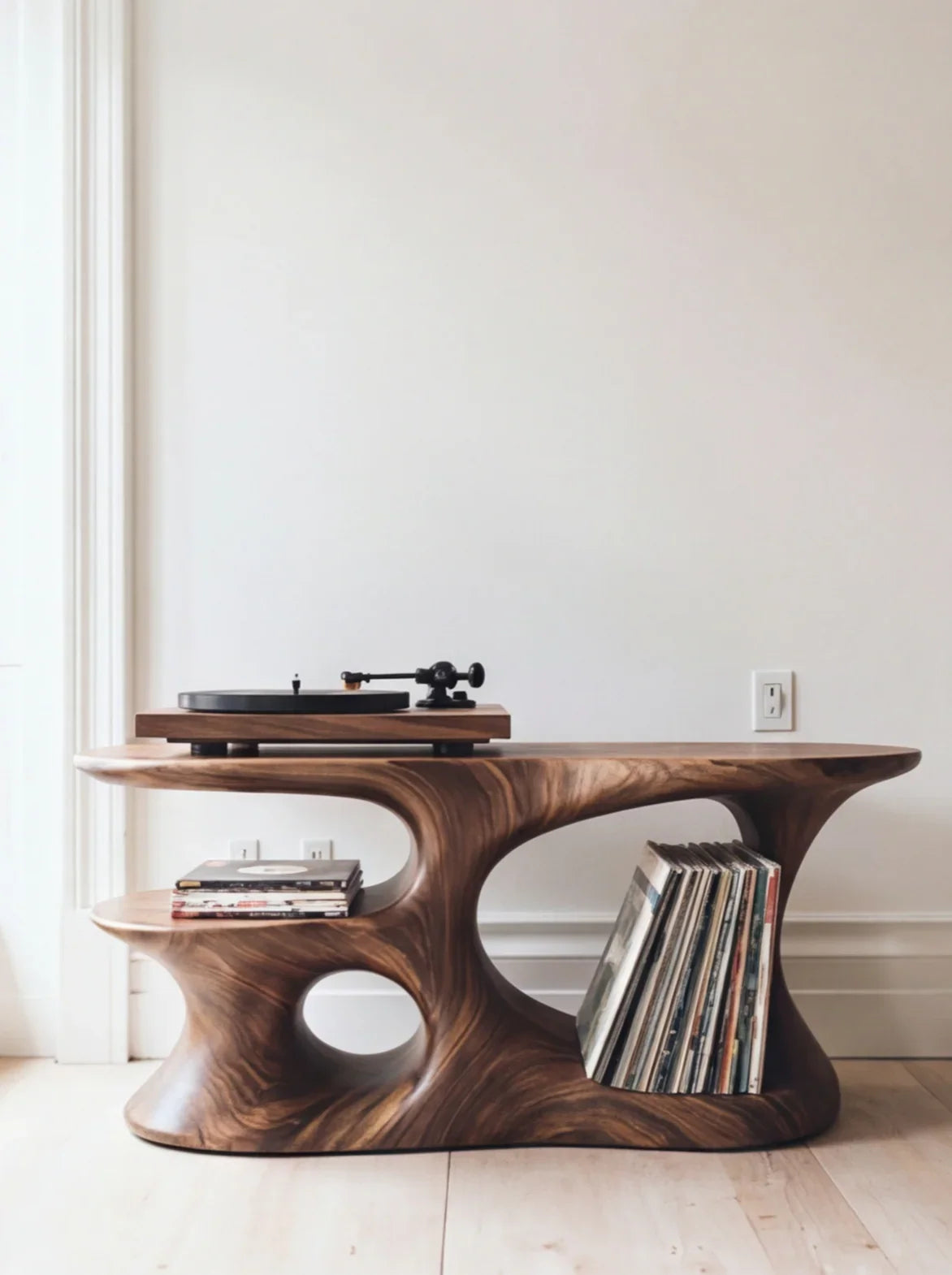
Live edge or raw edge wood. Organic and sculptural. The natural edge turns the table into an art piece. This works in spaces where the console is a focal point rather than a background element. Live edge console tables pair well with simple styling because the table itself provides the visual interest.
Painted or lacquered MDF. Clean and uniform. White, black, or colored console tables in smooth finishes suit contemporary and transitional rooms. The surface is even and predictable, which makes styling easier. The tradeoff is durability: lacquered MDF chips at the edges and shows wear at contact points within a year or two of daily use.
Metal and glass. Light and transparent. These tables recede visually, which is useful in small entryways where you want a surface without visual bulk. The downside is that glass shows fingerprints and metal legs scratch floors. Not ideal for high-traffic family entryways.
Metal frame with wood top. The hybrid that works in most settings. The metal base provides structural strength and a modern profile. The wood top adds warmth and practical durability. This combination handles both contemporary and transitional rooms.
Where console tables work beyond the entryway
People default to putting console tables in entryways, but they're versatile enough for several other spots.
Behind a sofa. In rooms where the sofa floats in the middle (not against a wall), a console table behind the backrest creates a visual boundary between the seating area and the space behind it. Use it for a lamp, books, or decorative objects. It also hides the back of the sofa, which is rarely the most attractive side.
Under a window. A low-profile console below a window creates a display surface without blocking light. This works in living rooms, bedrooms, and dining areas. Choose a table that's lower than the windowsill so it doesn't compete with the view.
As a narrow desk. In small apartments, a console table with a chair or stool becomes a minimal workspace. The shallow depth (12 to 14 inches) is enough for a laptop and a cup. When work is done, it goes back to being a display surface.
Dining room sideboard alternative. A long console table against the dining room wall holds serving dishes during meals and decorative items the rest of the time. It's narrower and lighter than a traditional sideboard, which suits smaller dining rooms.
Browse our console table collection for handcrafted solid wood options that work in entryways, living rooms, and anywhere a narrow surface makes sense. Each piece is built to order by Vietnamese artisans.
Frequently asked questions
What is the ideal console table height?
30 to 32 inches for most spaces. This is roughly hip height, which allows comfortable placement and retrieval of items without bending. If the table is going behind a sofa, match it to the sofa back height (usually 28 to 34 inches).
How deep should an entryway console table be?
10 to 14 inches for narrow hallways, 14 to 18 inches for wider entryways. Measure your hallway width and subtract the table depth. If less than 30 inches remain for walking, the table is too deep for the space.
What should I put on my console table?
Depends on the purpose. For decorative styling: a mirror or art above, a lamp, a plant, and 2-3 objects at varying heights. For daily function: a key tray, small dish for change or sunglasses, a plant, and hooks above for bags. The rule is the same either way: every item earns its spot.
Can a console table work as a TV stand?
For a wall-mounted TV, yes. The console sits below the TV and holds the sound bar, remote, and maybe a streaming device. Choose a table that's at least as wide as the TV and sturdy enough to hold any equipment. For a TV that sits on the table, make sure the depth and weight capacity are sufficient.
How do I keep my entryway table from looking cluttered?
Daily editing. Every evening, clear anything that doesn't belong on the table. Use containers (trays, bowls, small baskets) to group loose items. Follow the 5-to-7 item maximum. If the table regularly collects clutter, add a drawer or basket underneath to give overflow items a place to go without staying on the surface.
What wall decor goes above a console table?
A mirror is the most common and practical choice: it reflects light and gives the illusion of more space. A single large art piece works for a gallery approach. A grouping of smaller frames or a leaning art arrangement works for the layered look. The bottom edge of whatever hangs above should be 4 to 8 inches above the table surface.