
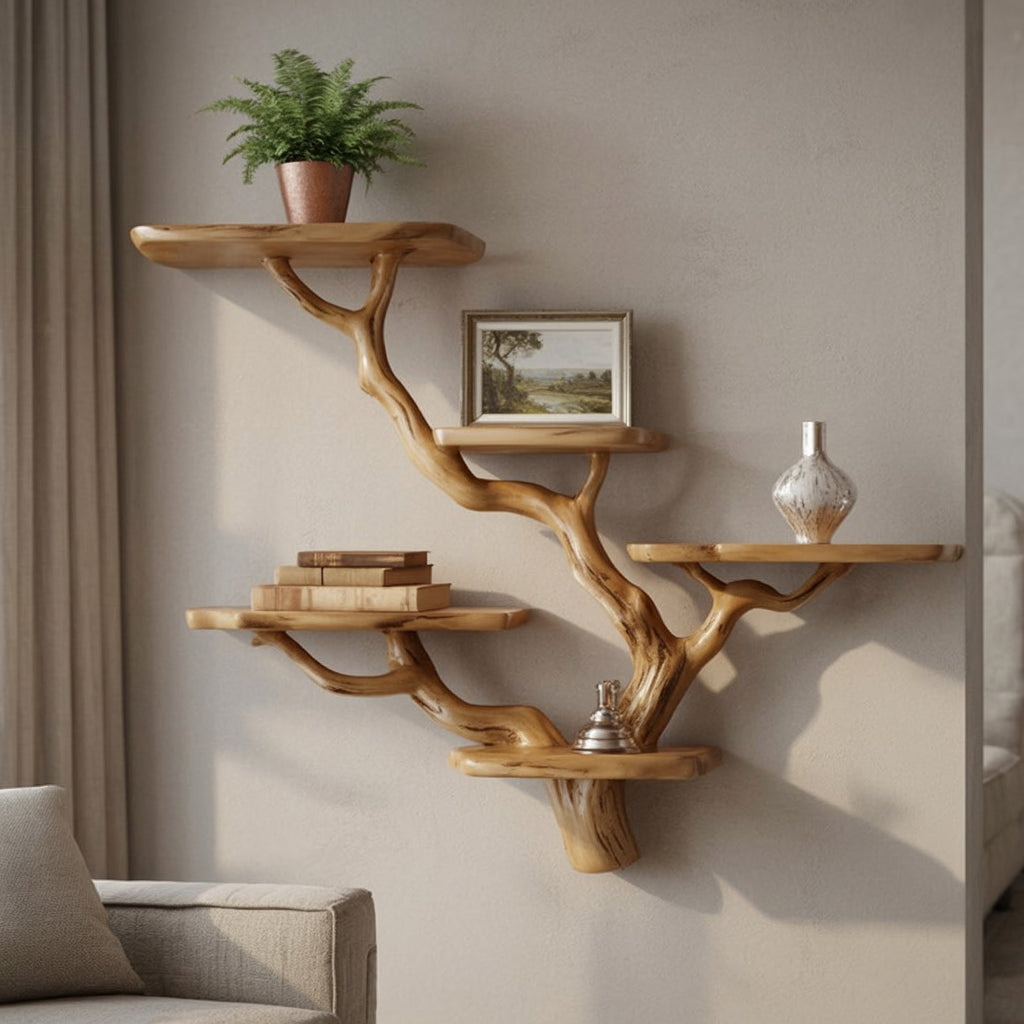
Quick view
Shop this guide
Handcrafted Tree Bookshelf, made to order in solid wood.
 Christmas edit
Corner Tree Floating Bookshelf – Driftwood Branch Wall Mounted Hanging Shelf, Artistic Corner Furniture Decoration
From $901.00
Christmas edit
Corner Tree Floating Bookshelf – Driftwood Branch Wall Mounted Hanging Shelf, Artistic Corner Furniture Decoration
From $901.00
 Christmas edit
Handcrafted Solid Wood Nursery Decor & Kids' Library
$2,834.0010% off at checkout
Christmas edit
Handcrafted Solid Wood Nursery Decor & Kids' Library
$2,834.0010% off at checkout
 Christmas edit
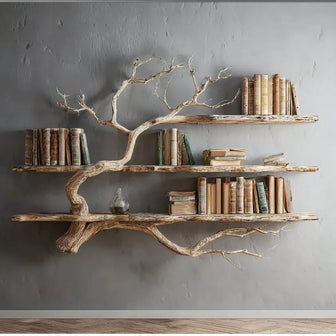
Handcrafted Wooden Tree Wall Shelf – Rustic Branch Bookshelf
From $1,087.00
Christmas edit
Handcrafted Wooden Tree Wall Shelf – Rustic Branch Bookshelf
From $1,087.00
 Christmas edit
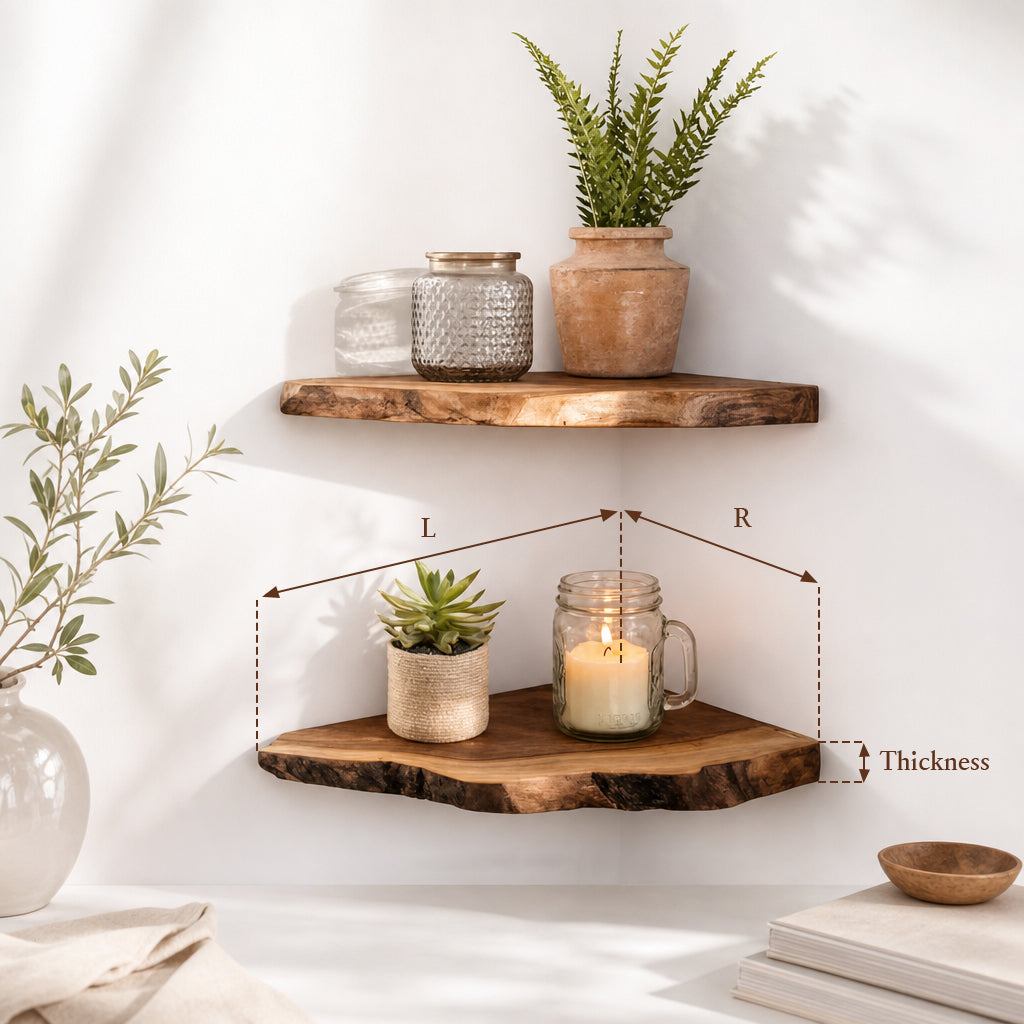
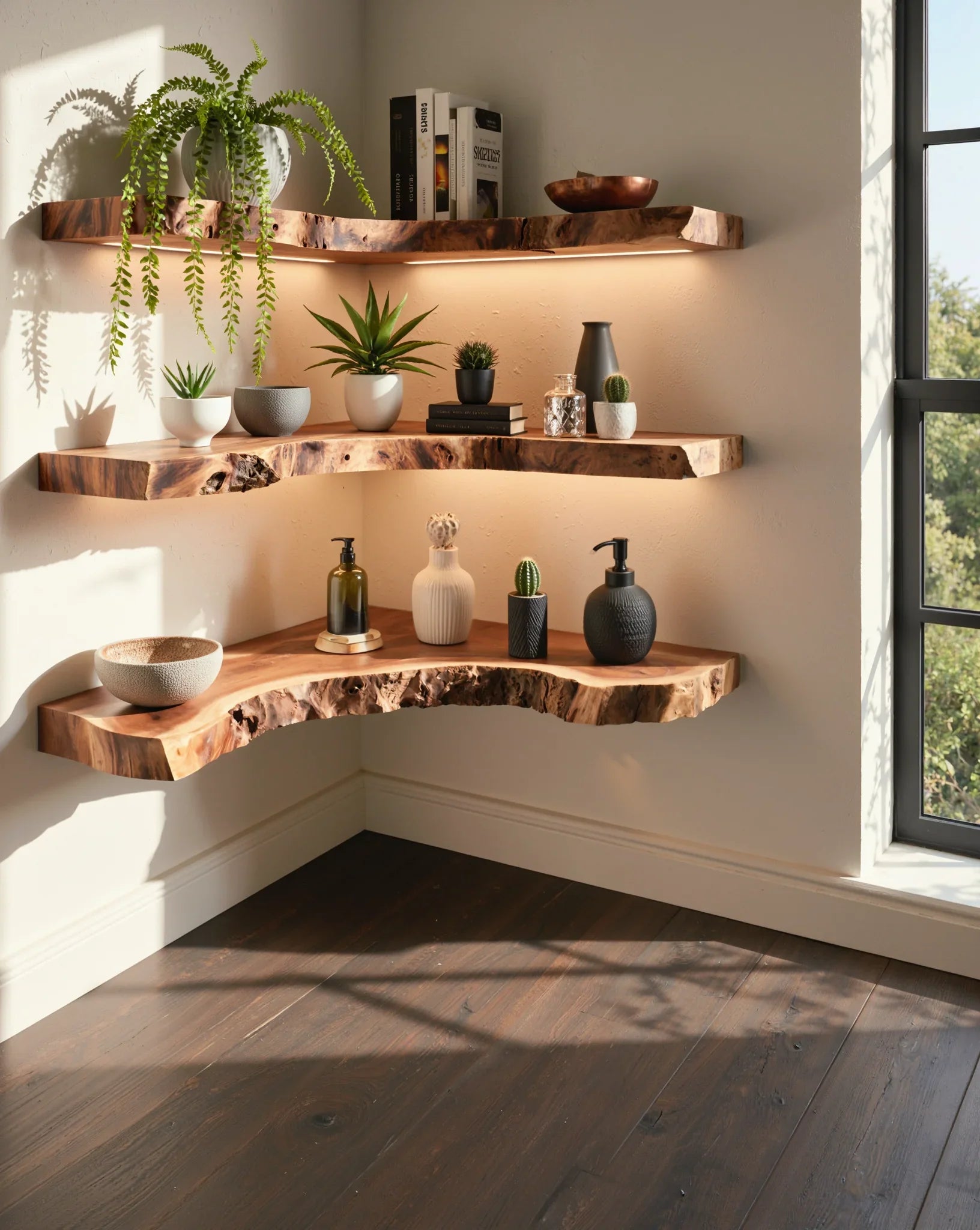
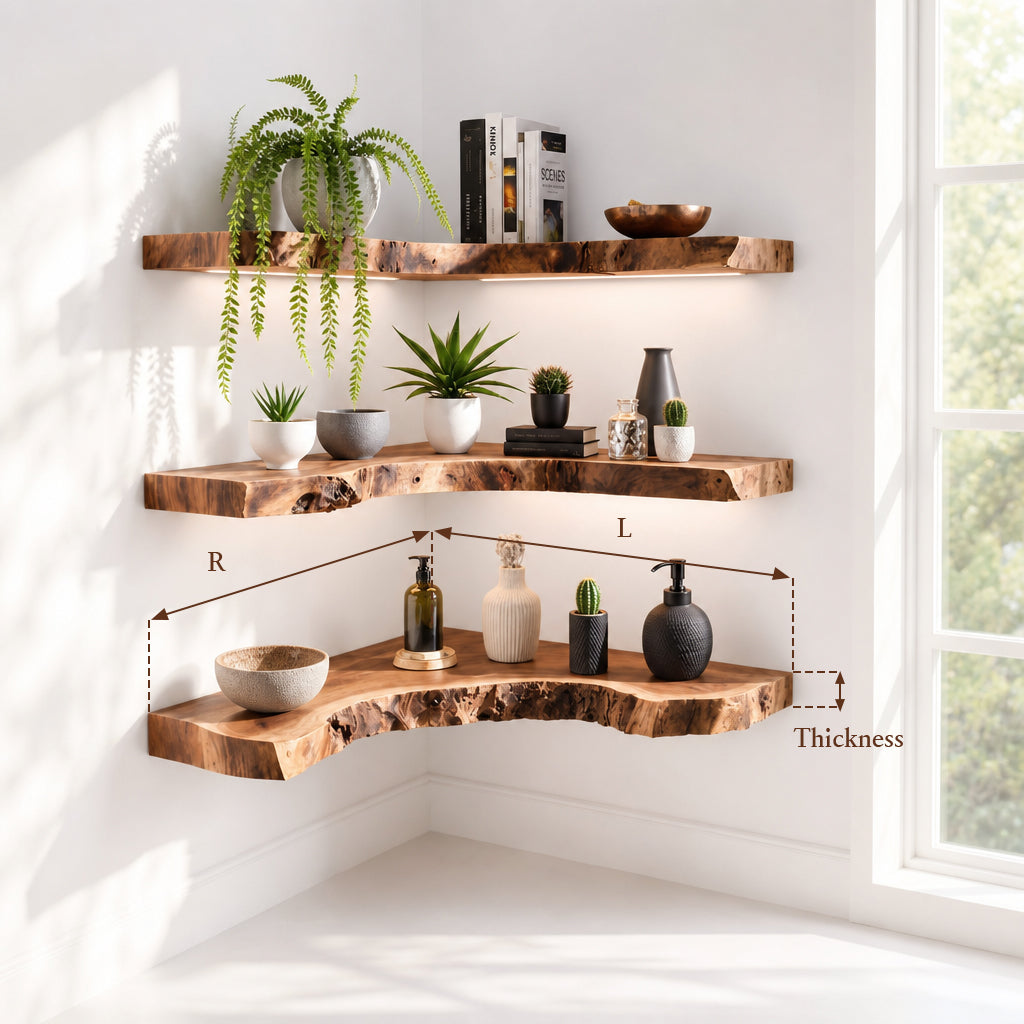
Solid Wood Floating Corner Shelf – Driftwood Branch Wall Shelf
From $789.00
Christmas edit
Solid Wood Floating Corner Shelf – Driftwood Branch Wall Shelf
From $789.00
 Christmas edit
Tree Bookshelf – Rustic Wooden Book Tree Shelf, Wall-Mounted Natural Wood Décor
$2,099.0010% off at checkout
Christmas edit
Tree Bookshelf – Rustic Wooden Book Tree Shelf, Wall-Mounted Natural Wood Décor
$2,099.0010% off at checkout
 Christmas edit
Floating Bookshelf – Tree Branch Wall-Mounted Bookcase for Rustic Home Decor
From $1,000.00
Christmas edit
Floating Bookshelf – Tree Branch Wall-Mounted Bookcase for Rustic Home Decor
From $1,000.00
A tree bookshelf DIY project sounds appealing - grab some branches, a few screws, and build something unique for under $50. But before you fire up the saw, it's worth understanding what DIY actually costs in time, tools, and durability compared to a handcrafted alternative. This guide breaks down both options honestly.
We're not here to sell you on one path. Some people love the build process. Others want a finished product that lasts decades. Here's what each option really involves.
The True Cost of a Tree Shelf DIY Project
Building a DIY bookshelf tree costs less upfront, but the total investment goes beyond lumber prices. Factor in tools, finishing supplies, hardware, and the 15-30 hours most first-timers spend on a single piece - and the gap between DIY and handcrafted narrows more than you'd expect.
Materials Breakdown
| Item | DIY Cost | Notes |
|---|---|---|
| Wood (pine/plywood) | $30-$80 | Hardwood costs 2-3x more |
| Screws, brackets, hardware | $15-$30 | Wall-mount adds more |
| Stain, sealant, sandpaper | $20-$40 | Quality stain matters for the look |
| Tools (if not owned) | $50-$200+ | Jigsaw, drill, clamps minimum |
| Total | $115-$350 | Before counting your time |
Most YouTube tutorials for a diy bookshelf tree use pine or plywood. That keeps costs down but limits durability. Pine dents easily, and plywood edges are nearly impossible to finish cleanly in a curved tree shape.
Time Investment
Expect 15-30 hours for a first attempt. That includes designing the template, cutting curves (the hardest part), sanding every edge smooth, assembling, and finishing. Mistakes add hours - and curved cuts on a jigsaw are unforgiving for beginners.
If you value your time at even $15/hour, the labor alone adds $225-$450 to the real cost.
What You Get With Handcrafted
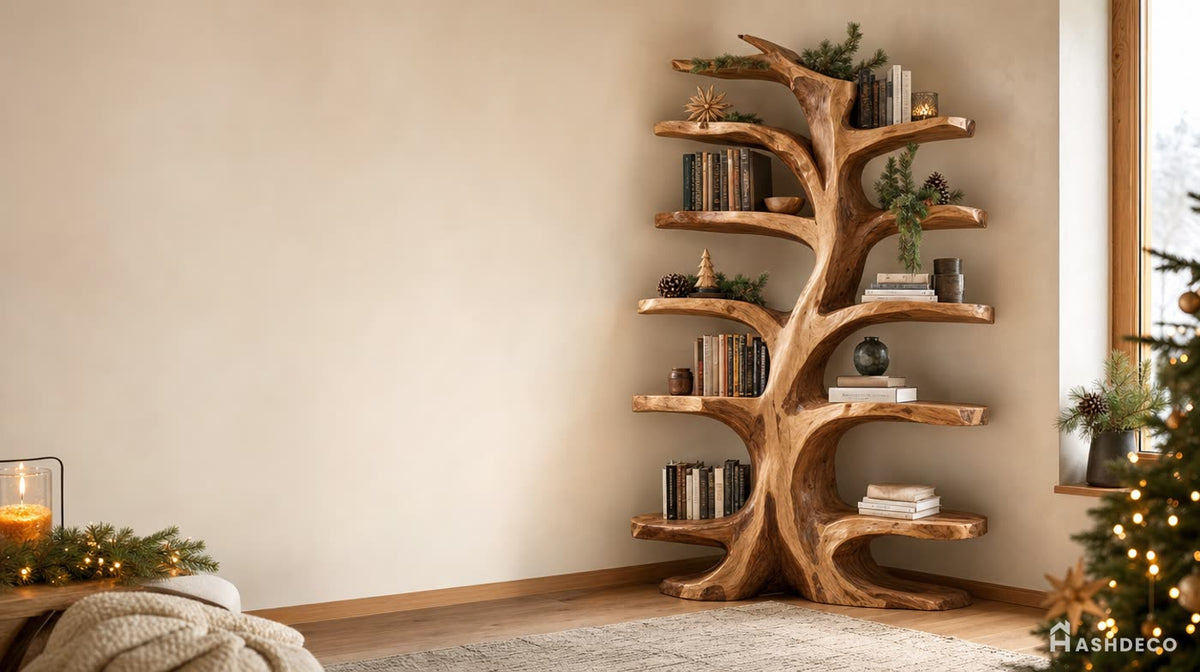
A handcrafted tree bookshelf starts with solid hardwood - not pine, not plywood - and is shaped by skilled woodworkers who understand wood grain, stress points, and joinery. The result is a piece that holds more weight, lasts longer, and looks substantially different from anything cut on a home jigsaw. We've written a full breakdown in our tree bookshelf ideas for every room post.
Ashdeco's tree bookshelves are handcrafted by Vietnamese artisans who carve solid wood into natural tree forms. Each shelf follows the wood's grain rather than fighting it, which is why the branches look organic rather than forced.
You're paying for expertise that takes years to develop. The joints are stronger. The finish is smoother. The proportions are balanced because the maker has built hundreds of these - not just watched a tutorial.


Durability: Where the Gap Shows
Durability is the biggest difference between DIY and handcrafted tree bookshelves, and it becomes obvious within the first year of use. Pine DIY builds are particularly vulnerable to sagging on longer branch shelves, while plywood edges delaminate with humidity changes. We cover this in more detail in our store bought vs handmade bookshelves guide.
| Factor | DIY (Pine/Plywood) | Handcrafted (Solid Hardwood) |
|---|---|---|
| Weight capacity per branch | 5-8 lbs | 10-15+ lbs |
| Sag resistance | Low - visible within months | High - maintains shape for years |
| Scratch/dent resistance | Low (pine is soft) | High (hardwood is dense) |
| Moisture tolerance | Poor - warps easily | Good - properly sealed |
| Expected lifespan | 2-5 years | 15-30+ years |
A DIY tree shelf that costs $150 and lasts 3 years actually costs $50/year. A handcrafted version at $300 that lasts 20 years costs $15/year. The math favors the investment piece.
When DIY Makes Sense
DIY is the right call if you genuinely enjoy woodworking as a hobby - not just as a way to save money. Building a tree shelf teaches curve-cutting, finishing techniques, and spatial design. Those skills have value beyond one project.
It also makes sense for temporary spaces. Dorm rooms, short-term rentals, or rooms you plan to redesign within a year don't need a 20-year investment piece.
For kids' craft projects, a simplified tree shelf diy using pre-cut boards can be a fun weekend activity. Just don't expect it to hold a full library.
Don't miss
These pieces qualify for 10% off orders over $2,000. Applied automatically at checkout.
10% off
Handcrafted Solid Wood Nursery Decor & Kids' Library
$2,834.00
10% off at checkout
10% off
Tree Bookshelf – Rustic Wooden Book Tree Shelf, Wall-Mounted Natural Wood Décor
$2,099.00
10% off at checkout
 10% off
Authentic Hand-Carved Solid Wood Tree Bookshelf Daybed - Sculptural Lounge Library
From $4,087.00
10% off at checkout
10% off
Authentic Hand-Carved Solid Wood Tree Bookshelf Daybed - Sculptural Lounge Library
From $4,087.00
10% off at checkout
 10% off
Rustic Tree Shaped Wooden Bookshelf with Branch Design for Living Room or Home Library
$2,145.00
10% off at checkout
10% off
Rustic Tree Shaped Wooden Bookshelf with Branch Design for Living Room or Home Library
$2,145.00
10% off at checkout
When Handcrafted Makes Sense
If you want a tree bookshelf that functions as real furniture - holding books, displaying objects, and looking good for a decade or more - handcrafted solid wood is the clear choice. The finish quality, structural integrity, and design precision simply can't be replicated with home tools and softwood. If you're weighing your options, our guide on how to choose a tree bookshelf breaks it down further.
It especially makes sense when the shelf is going in a visible, high-traffic room. Living rooms, offices, and nurseries deserve pieces that look intentional, not improvised.

Handcrafted Tree Branch Bookshelf - Natural Wood Floating Shelves - Artistic Wall Decor
Browse Ashdeco's handcrafted tree bookshelves to see what's possible when skilled artisans work with quality hardwood.
The Honest Verdict
Neither option is universally "better." DIY wins on learning experience and initial cost. Handcrafted wins on durability, aesthetics, and long-term value. The question is what matters more to you right now.
If your goal is a functional, beautiful bookshelf that lasts - and you'd rather spend a weekend reading than sanding - a solid wood tree shelf is the smarter investment. If you love building things and don't mind imperfections, the DIY route has its own rewards.
FAQ
How much does a tree bookshelf DIY project really cost?
Budget $115-$350 for materials and basic tools. If you don't own a jigsaw, drill, and clamps, tool costs push the total higher. Factor in 15-30 hours of labor for a realistic picture.
Is a DIY tree bookshelf sturdy enough for heavy books?
Pine and plywood builds handle 5-8 lbs per shelf branch. That's fine for paperbacks and small decor, but hardcover collections will cause sagging over time. Solid hardwood handles significantly more weight.
How long does a handcrafted tree bookshelf last?
Properly made solid wood bookshelves last 15-30+ years with basic care. The wood develops a richer patina over time rather than degrading - the opposite of what happens with MDF or pine.
Can I make a tree bookshelf DIY without power tools?
Technically yes, but cutting curved tree shapes with hand tools is extremely difficult and time-consuming. A jigsaw is the minimum power tool you'll need for any tree-shaped design.
What's the best wood for a DIY tree shelf?
Poplar offers the best balance of affordability and workability for DIY. It's harder than pine, takes stain well, and cuts cleanly. Avoid MDF for curved shapes - it crumbles at the edges.