Quick view
- What Counts as "Store Bought" vs "Handmade"?
- Cost Comparison: What You Actually Pay
- Materials: Particle Board vs Plywood vs Solid Wood
- Durability and Lifespan
- Assembly Experience: Allen Wrench vs Ready to Enjoy
- Customization: One Size vs Your Size
- Resale Value: Investment vs Expense
- Environmental Impact: The Sustainability Question
- When Store Bought Is the Right Call
- When Handmade Is Worth Every Dollar
- The Middle Path: Artisan Quality Without the Custom Wait
- The Bottom Line
Shop this guide
Handcrafted Trending, made to order in solid wood.
 Christmas edit
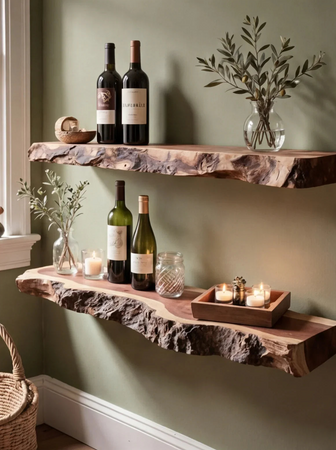
Handcrafted Live Edge Floating Bar Shelf – Rustic Solid Wood Wall Shelf for Kitchen or Bar
From $167.00
Christmas edit
Handcrafted Live Edge Floating Bar Shelf – Rustic Solid Wood Wall Shelf for Kitchen or Bar
From $167.00
 Christmas edit
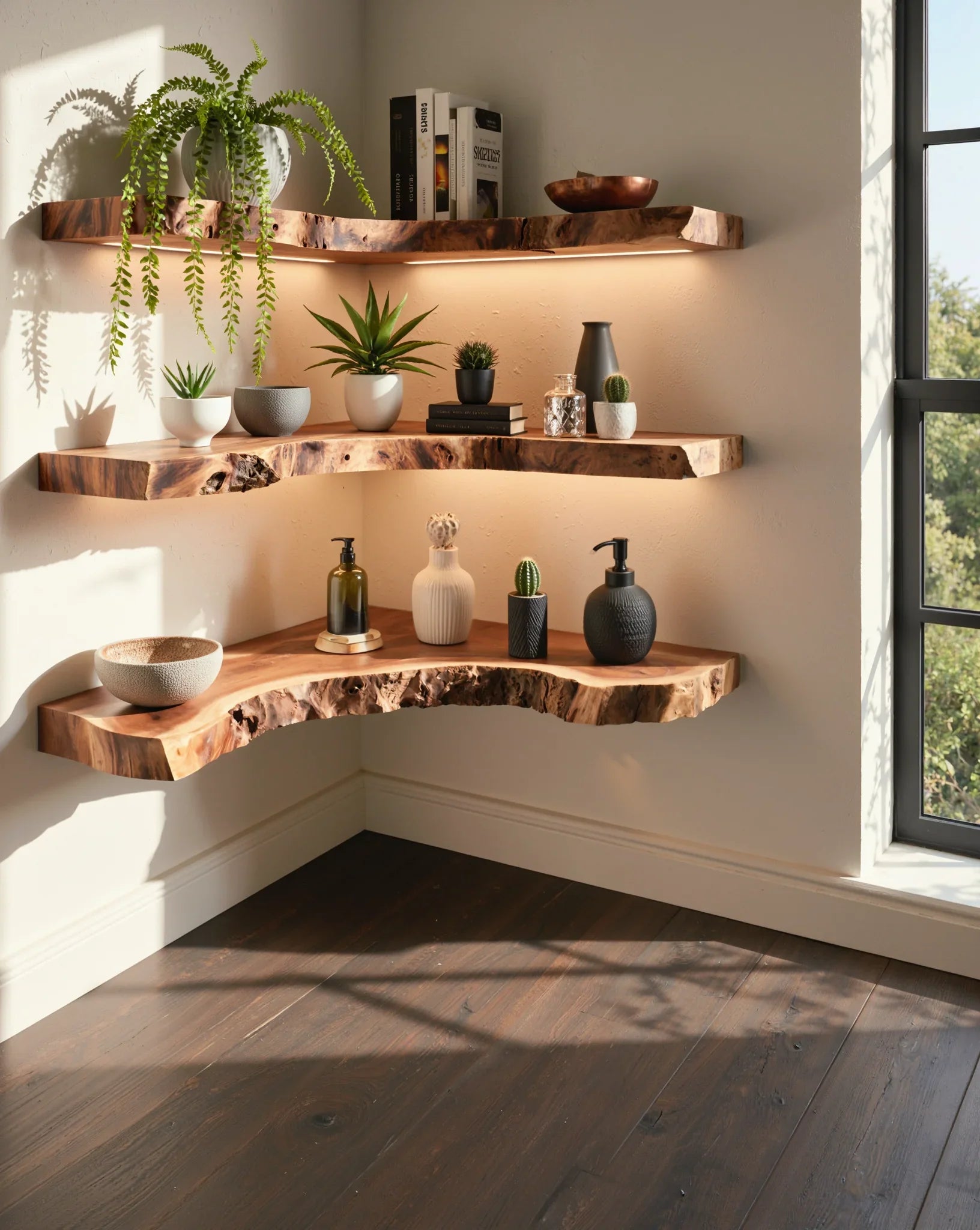
Rustic Corner Wall Shelf – Natural Live Edge Wood Floating Shelf for Candles and Plants
From $176.00
Christmas edit
Rustic Corner Wall Shelf – Natural Live Edge Wood Floating Shelf for Candles and Plants
From $176.00
 Christmas edit
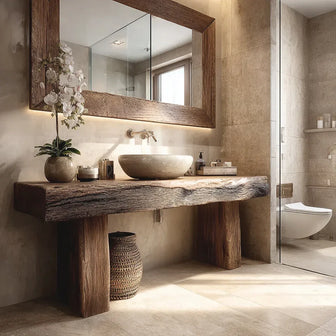
Rustic Live Edge Floating Vanity – Handmade Wooden Bathroom Shelf with Brackets
From $180.00
Christmas edit
Rustic Live Edge Floating Vanity – Handmade Wooden Bathroom Shelf with Brackets
From $180.00
 Christmas edit
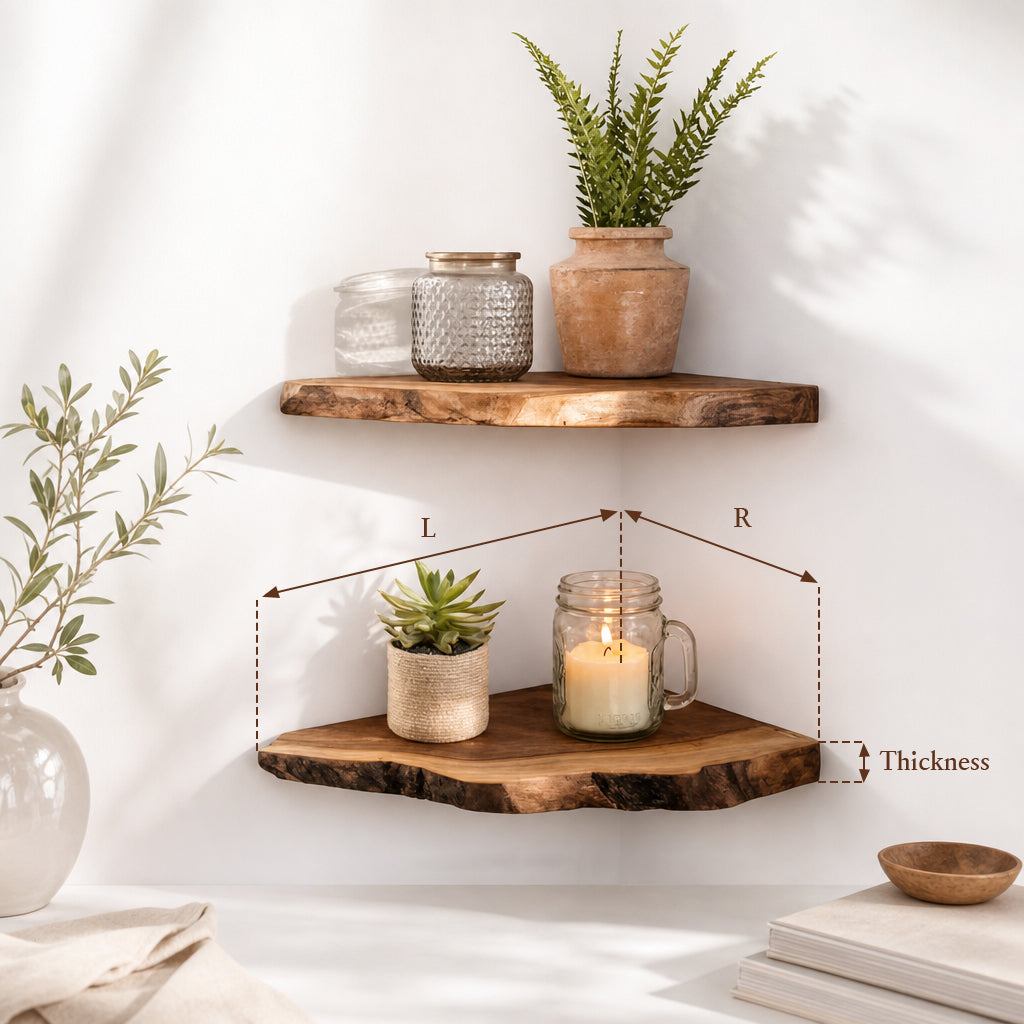
Rustic Teak Root Wood Corner Shelf - Floating Corner Shelf Decor
From $176.00
Christmas edit
Rustic Teak Root Wood Corner Shelf - Floating Corner Shelf Decor
From $176.00
 Christmas edit
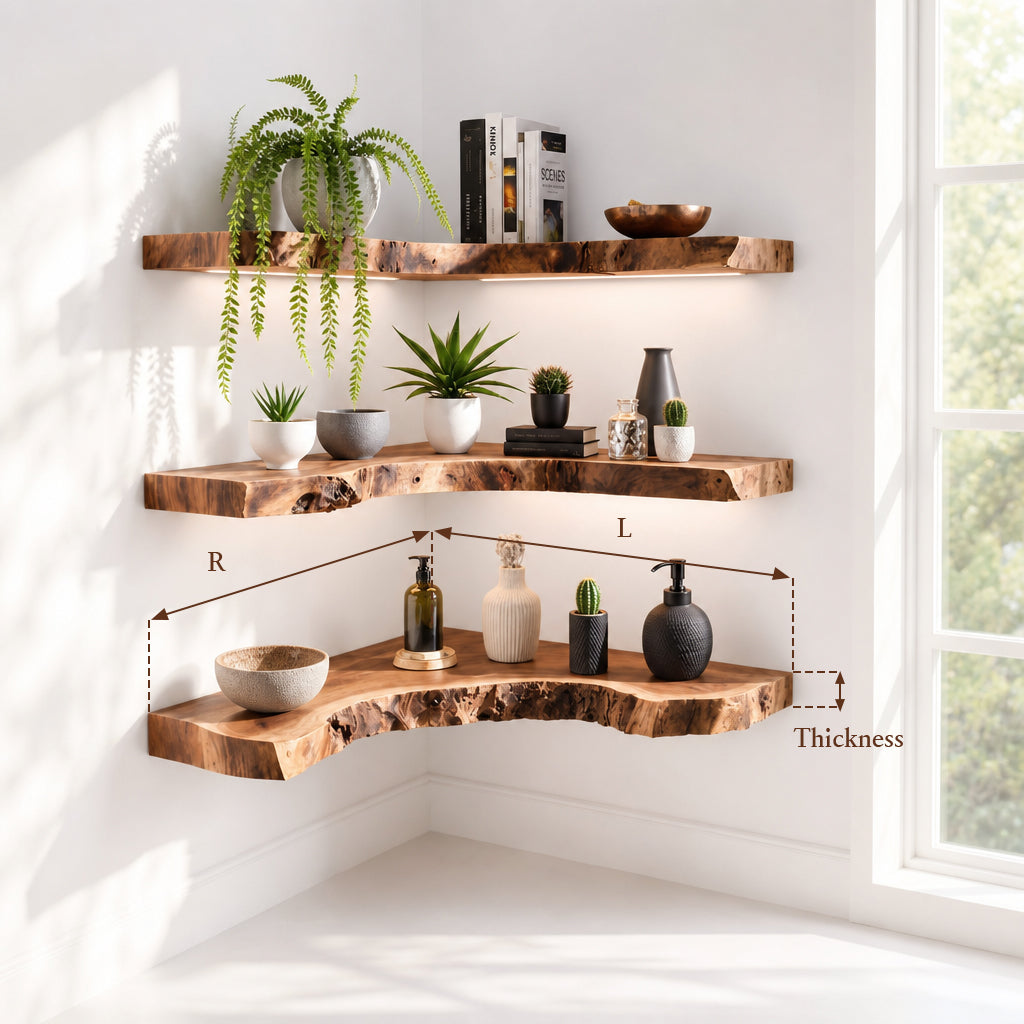
Live Edge Corner Floating Shelf – Handcrafted Solid Wood Wall Shelf
From $140.00
Christmas edit
Live Edge Corner Floating Shelf – Handcrafted Solid Wood Wall Shelf
From $140.00
 Christmas edit
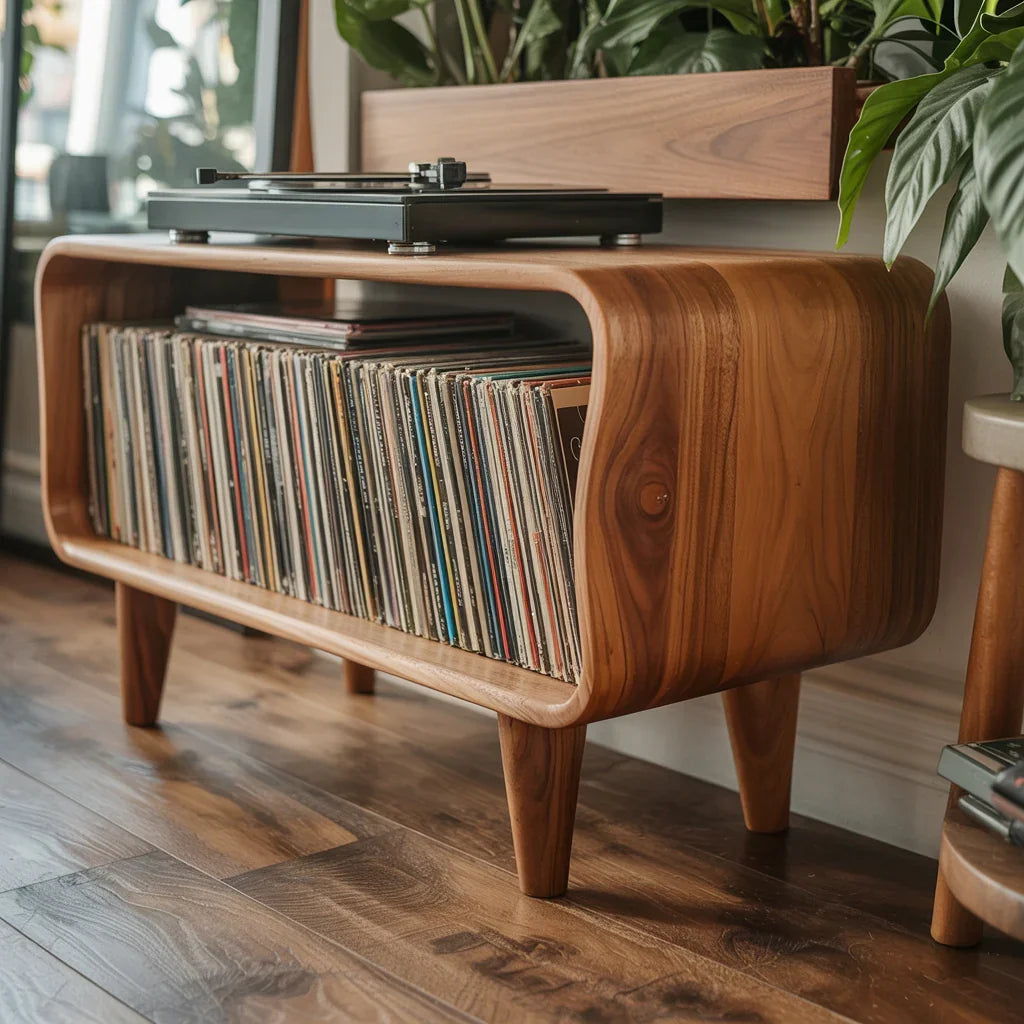
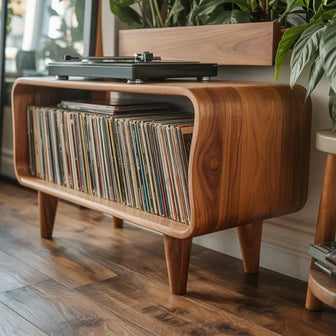
Ashdeco Solid Wood Record Player Stand – Mid-Century Modern Turntable Console
From $1,023.00
Christmas edit
Ashdeco Solid Wood Record Player Stand – Mid-Century Modern Turntable Console
From $1,023.00
You need a bookshelf. Maybe your paperbacks are stacking up on the nightstand, or your living room needs a focal point that isn't just a blank wall. So you open a browser tab and immediately face the question every book lover eventually asks: store bought vs handmade bookshelves - which one is actually worth your money?
The honest answer? It depends on what you value. A $79 IKEA BILLY gets the job done. A $3,000 hand-carved solid wood bookcase becomes a family heirloom. And there's a whole spectrum in between that most comparison articles ignore entirely.
This guide breaks down the real differences - cost, durability, materials, environmental impact, and everything else - so you can make a decision you won't regret in five years.
What Counts as "Store Bought" vs "Handmade"?
Before comparing anything, let's define terms, because "handmade" means wildly different things depending on who's selling.
Store bought bookshelves are mass-produced furniture sold through big-box retailers (IKEA, Target, Walmart) or online marketplaces (Wayfair, Amazon). They're manufactured in factories using standardized designs, machine-cut components, and cost-efficient materials. You pick a model, it ships in a flat box, and you assemble it at home.
Handmade bookshelves fall into two categories:
- Custom/bespoke: A local woodworker builds a one-off piece to your exact specifications. Long wait times, premium pricing, and you're paying for both materials and labor hours.
- Artisan-made: Skilled craftspeople produce original designs using traditional techniques - hand-carving, joinery, natural wood shaping - but sell through established shops or online stores. You get handmade quality with shorter lead times and more predictable pricing.
This distinction matters because most "store bought vs handmade" comparisons pit a $50 particle board shelf against a $5,000 custom commission and call it a day. The reality has more nuance.
Cost Comparison: What You Actually Pay
Let's talk numbers. Here's what you can expect across the full price spectrum:
| Category | Typical Price Range | What You Get |
|---|---|---|
| Budget store bought (IKEA, Target) | $50 - $200 | Particle board or MDF, basic designs, self-assembly |
| Mid-range store bought (Wayfair, West Elm) | $200 - $800 | Engineered wood or plywood, some solid wood accents, better finishes |
| Artisan handmade (online artisan shops) | $800 - $3,000 | Solid wood, hand-carved or hand-shaped, unique designs |
| Full custom/bespoke (local woodworkers) | $2,000 - $8,000+ | Built to spec, client consultations, premium hardwoods |
The sticker price tells only part of the story. A $150 bookshelf you replace every 3-4 years costs $600 over a decade. A $1,200 solid wood bookshelf that lasts 20+ years costs $60 per year - and still has resale value when you're done with it.
The real question isn't "which costs less?" It's "which costs less per year of actual use?"


Materials: Particle Board vs Plywood vs Solid Wood
This is where store bought and handmade bookshelves diverge most dramatically.
Particle Board and MDF
Most budget store bought bookshelves use particle board (wood chips bound with resin) or MDF (medium-density fiberboard). These materials are:
- Lightweight and easy to ship flat-packed
- Prone to swelling and warping from moisture
- Difficult or impossible to repair once damaged
- Covered with laminate or veneer that can peel over time
If you've ever watched an IKEA shelf develop a permanent sag under the weight of hardcovers, you've seen particle board's limitations in real time.
Plywood and Engineered Wood
Mid-range bookshelves - the $300-$700 range - often use plywood or engineered wood with solid wood frames. This is a meaningful step up:
- Stronger and more moisture-resistant than particle board
- Can hold more weight without bowing
- Still manufactured rather than hand-finished
- Limited to standard shapes and dimensions
Solid Wood
Handmade bookshelves typically use solid hardwoods - teak, walnut, oak, or other species chosen for grain, strength, and beauty. Solid wood is:
- Extremely durable (decades to generations of use)
- Repairable - scratches and dents can be sanded out and refinished
- Unique - natural grain patterns mean no two pieces look identical
- Heavier, which actually increases stability
The material alone doesn't guarantee quality, but it sets the ceiling. You can make a mediocre bookshelf from solid wood, but you can't make a great one from particle board.
Durability and Lifespan
Here's a comparison that doesn't get enough attention - how long these things actually last:
| Type | Expected Lifespan | Common Failure Points |
|---|---|---|
| Budget store bought (particle board) | 2 - 5 years | Shelf sag, peg holes strip out, laminate peeling, water damage |
| Mid-range store bought (plywood/engineered) | 5 - 10 years | Joint loosening, finish wear, limited repairability |
| Artisan handmade (solid wood) | 20 - 50+ years | Minimal - solid wood can be refinished and repaired indefinitely |
| Custom bespoke (solid wood) | 30 - 100+ years | Essentially none with basic care |
The durability gap comes down to three things:
- Material strength. Solid wood distributes weight evenly and resists deformation. Particle board doesn't.
- Joinery. Handmade shelves typically use mortise-and-tenon, dowel, or dovetail joints. Store bought shelves use cam locks and plastic pegs.
- Finish quality. Hand-applied natural oils and waxes penetrate the wood and protect it. Factory-sprayed lacquer sits on top and chips.
Don't miss
These pieces qualify for 10% off orders over $2,000. Applied automatically at checkout.
 10% off
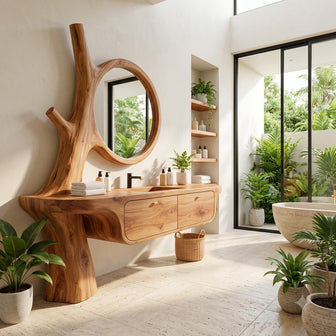
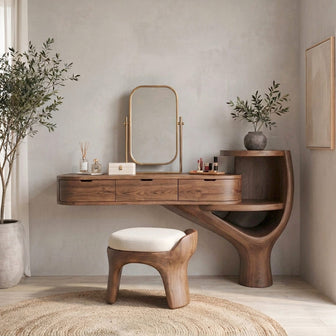
Modern Floating Wooden Vanity – Handmade Rustic Solid Wood Bathroom Cabinet
From $2,090.00
10% off at checkout
10% off
Modern Floating Wooden Vanity – Handmade Rustic Solid Wood Bathroom Cabinet
From $2,090.00
10% off at checkout
 10% off
Solid Wood Turntable Stand – Rustic Record Player Cabinet with Farmhouse Storage
From $2,036.00
10% off at checkout
10% off
Solid Wood Turntable Stand – Rustic Record Player Cabinet with Farmhouse Storage
From $2,036.00
10% off at checkout
 10% off
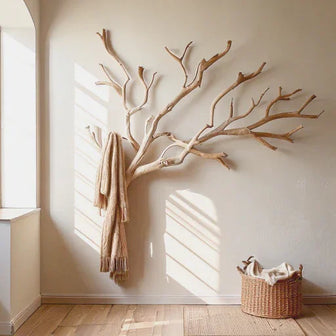
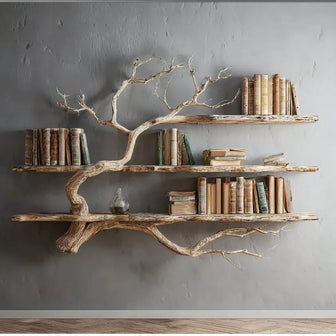
Tree Bookshelf – Rustic Wooden Book Tree Shelf, Wall-Mounted Natural Wood Décor
$2,099.00
10% off at checkout
10% off
Tree Bookshelf – Rustic Wooden Book Tree Shelf, Wall-Mounted Natural Wood Décor
$2,099.00
10% off at checkout
 10% off
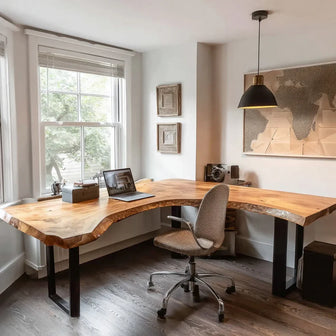
Live Edge L-Shaped Desk – Handmade Solid Wood Corner Desk for Home Office
From $2,340.00
10% off at checkout
10% off
Live Edge L-Shaped Desk – Handmade Solid Wood Corner Desk for Home Office
From $2,340.00
10% off at checkout
Assembly Experience: Allen Wrench vs Ready to Enjoy
Let's be real: nobody loves assembling flat-pack furniture. The allen wrench, the wordless diagrams, the leftover screws you're 90% sure were important.
Store bought bookshelves require assembly. Sometimes 30 minutes, sometimes an entire afternoon. And every cam lock connection is a potential failure point - retightening them after a move weakens the joints further.
Handmade bookshelves typically ship fully assembled or require minimal mounting (wall-mounted designs). The piece arrives as the craftsperson intended it to look and function. No guesswork, no stripped screws, no mystery hardware.
For wall-mounted designs, you'll need to install mounting hardware - but that's a 15-minute job with a drill, not a 2-hour battle with an instruction manual. Most artisan makers include all the necessary hardware (brackets, drywall anchors, screws) and clear instructions, so you're not making an extra trip to the hardware store before you even get started.
There's also a psychological dimension here. Unboxing a handmade bookshelf feels like receiving something crafted for you. Unpacking 47 particle board panels and a bag of cam locks feels like homework.
Customization: One Size vs Your Size
Store bought bookshelves come in predetermined sizes, colors, and configurations. You can choose from what's available. That's it.
Handmade bookshelves offer varying degrees of customization:
- Size and dimensions - fit a specific wall, corner, or alcove
- Wood species and finish - match existing furniture or flooring
- Shelf number and placement - accommodate your actual collection
- Design elements - carved details, organic shapes, integrated lighting
This matters more than people realize. A bookshelf that's 2 inches too narrow for a space looks like an afterthought. One that fits precisely looks intentional, like it was always meant to be there.
Some artisan makers also offer design elements that simply don't exist in mass production - hand-carved organic forms, live-edge details, natural branch shapes integrated into the structure. These aren't just customizations; they're artistic decisions that transform a piece of furniture into something closer to sculpture. We cover this in more detail in our live edge bookcase guide guide.
Many artisan makers welcome custom requests without the months-long wait and consultation fees that local bespoke woodworkers charge.
Resale Value: Investment vs Expense
Here's a factor most buyers don't consider until they're moving or redecorating.
Store bought bookshelves have essentially zero resale value. Try selling a used IKEA KALLAX on Facebook Marketplace - you'll be lucky to get $20. Disassembly weakens the joints, and buyers know it.
Handmade solid wood bookshelves hold value remarkably well. A well-maintained piece from a recognized artisan can resell for 40-70% of its original price. Some appreciate in value over time, especially if the maker develops a following.
Think of it this way: store bought furniture is an expense. Handmade furniture is closer to an investment - one you actually get to use daily.
Environmental Impact: The Sustainability Question
Both options have environmental tradeoffs, and neither is perfectly green.
Store bought furniture's footprint:
- Particle board uses wood waste (good) bound with formaldehyde-based resins (not great)
- Mass production generates significant factory emissions
- Flat-pack shipping is relatively efficient
- Short lifespan means more furniture in landfills - the EPA estimates Americans discard over 12 million tons of furniture annually
Handmade furniture's footprint:
- Uses more raw wood per piece
- Lower production volume means less industrial waste
- Longer lifespan dramatically reduces per-year environmental impact
- Often uses natural finishes (oils, waxes) instead of chemical-heavy lacquers
- Smaller operations typically generate less packaging waste
The sustainability calculus favors the option that stays out of the landfill longest. A bookshelf you keep for 30 years has a fraction of the lifetime environmental impact of six bookshelves you replace every 5 years - even if each individual replacement is "cheaper" to produce.
There's also the repairability factor. Solid wood furniture can be sanded, refinished, and restored multiple times throughout its life. A particle board shelf with a water ring or a stripped cam lock? That's going to the curb. In an era when consumers are increasingly asking where their stuff ends up, buying fewer, longer-lasting pieces is one of the most impactful choices you can make.
When Store Bought Is the Right Call
Let's be fair. Store bought bookshelves make sense in several scenarios:
- Temporary living situations. If you're in a rental and moving in 18 months, a $100 bookshelf you can leave behind is practical.
- Kids' rooms. Children outgrow things fast. A budget shelf for a nursery that becomes a playroom that becomes a teenager's room may not need to last forever.
- Tight budgets. If $150 is what you have, get the best $150 shelf you can find. No shame in that.
- Standardized spaces. Sometimes you need six identical shelving units for an office or garage. Uniformity and price matter more than character.
Store bought furniture fills a real need. The key is knowing what you're getting and setting expectations accordingly.
When Handmade Is Worth Every Dollar
Handmade bookshelves earn their price when:
- You're furnishing a space you'll live in for years. The per-year cost drops dramatically with time.
- The bookshelf is a focal point. Living rooms, reading nooks, home offices - places where furniture defines the room.
- You care about materials. Real wood versus composite isn't snobbery; it's a preference for natural materials that age beautifully.
- You want something that sparks conversation. Nobody asks about your BILLY bookshelf. A hand-carved tree bookshelf? People notice.
- You're building a home, not just filling a room. Long-term homeowners who invest in quality pieces end up with spaces that feel cohesive and intentional.
The Middle Path: Artisan Quality Without the Custom Wait
Here's what most comparison articles miss: you don't have to choose between a $79 flat-pack shelf and a $6,000 custom commission with a 4-month wait.
A growing number of artisan furniture makers offer handcrafted pieces at accessible price points - solid wood, skilled craftsmanship, unique designs - without the bespoke timeline or pricing. You get the quality of handmade without treating furniture shopping like a renovation project.
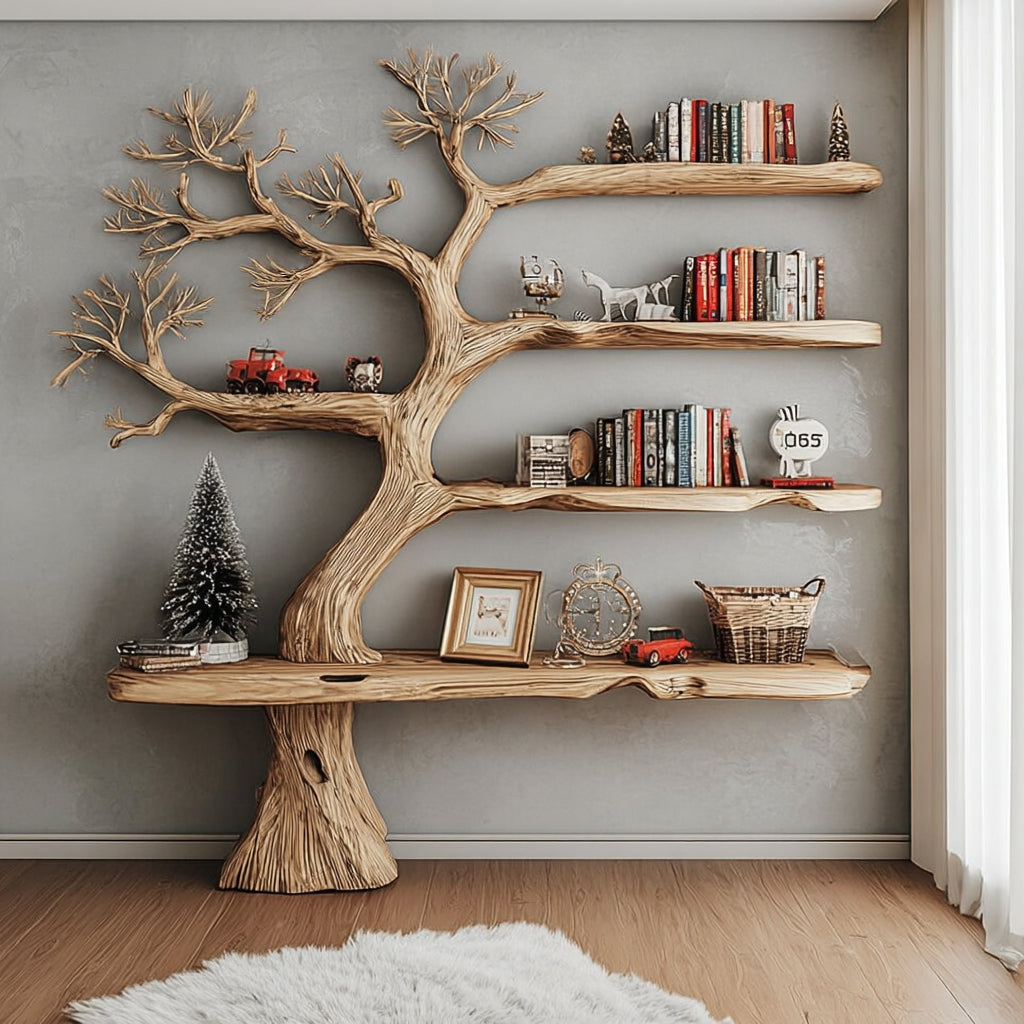
Ashdeco is a good example of this middle ground. Their bookshelves are handcrafted by Vietnamese artisans from solid wood - including their tree bookshelves, which are hand-carved to replicate natural tree forms with branches serving as shelves. Every piece has unique grain patterns and organic shapes because it's sculpted by hand, not stamped out by machine. If you're weighing your options, our guide on tree bookshelf DIY vs handcrafted breaks it down further.
What makes this approach different from full bespoke:
- Pricing starts around $900 for pieces like the Corner Tree Floating Bookshelf - real solid wood, hand-carved, wall-mounted - rather than the $3,000+ entry point for most custom woodworkers.
- No months-long wait for consultations and builds. Pieces are crafted and available to ship.
- Customization is still available - size, finish, color, shelf placement - without the upcharge that comes with a from-scratch commission.
- Free shipping and a 30-day guarantee remove the risk of buying handmade furniture online.
Their wall-mounted tree bookshelves and corner tree bookshelves are particularly interesting for anyone dealing with small spaces. You get a statement piece that functions as both storage and wall art, without sacrificing floor space.

For larger rooms, the Rustic Tree Shaped Bookshelf (70"H × 70"W) or the Handcrafted Solid Wood Sculptural Bookcase make genuine centerpieces - the kind of furniture that defines a room rather than just occupying it. We've written a full breakdown in our tree bookshelf ideas for every room post.
Use code ASHDECO5 at checkout for 5% off your first order.
The Bottom Line
Store bought vs handmade bookshelves isn't a question with one right answer. It's a question about what you're optimizing for.
Choose store bought if: You need functional shelving quickly and affordably, you're in a temporary space, or the bookshelf plays a supporting role in the room.
Choose handmade if: You want furniture that lasts, you're furnishing a space you care about, and you value craftsmanship and natural materials over convenience.
And if you want both? Look for artisan makers who've figured out how to deliver handcrafted quality - solid wood, skilled hands, unique designs - without the barriers that traditionally make handmade furniture inaccessible. The best bookshelf isn't the cheapest or the most expensive. It's the one that fits your space, your life, and your timeline.
Your books deserve a home that lasts as long as the stories they hold.