Quick view
Shop this guide
Handcrafted Dining Tables, made to order in solid wood.
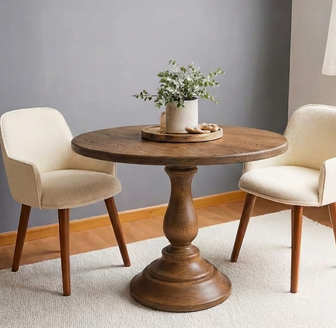
 Round Solid Wood Pedestal Dining Table Handcrafted Solid Wood Center Table
From $1,345.00
Round Solid Wood Pedestal Dining Table Handcrafted Solid Wood Center Table
From $1,345.00
 Round Bistro Dining Table, Small Kitchen Breakfast Table, Compact Circular Dining Table
From $1,022.00
Round Bistro Dining Table, Small Kitchen Breakfast Table, Compact Circular Dining Table
From $1,022.00
 Organic Modern Live Edge Solid Wood Dining Table - Handcrafted Slab Table with Dual Storage Pedestals
From $6,800.0010% off at checkout
Organic Modern Live Edge Solid Wood Dining Table - Handcrafted Slab Table with Dual Storage Pedestals
From $6,800.0010% off at checkout
 Round Solid Wood Dining Table with Architectural Spider Pedestal Base
From $1,254.00
Round Solid Wood Dining Table with Architectural Spider Pedestal Base
From $1,254.00
 Flowing Pedestal Solid Wood Round Dining Table - Japandi Living Sculpture
From $5,850.0010% off at checkout
Flowing Pedestal Solid Wood Round Dining Table - Japandi Living Sculpture
From $5,850.0010% off at checkout
 Sculptural Pedestal Solid Wood Round Dining Table - Organic Modern Centerpiece
From $5,850.0010% off at checkout
Sculptural Pedestal Solid Wood Round Dining Table - Organic Modern Centerpiece
From $5,850.0010% off at checkout
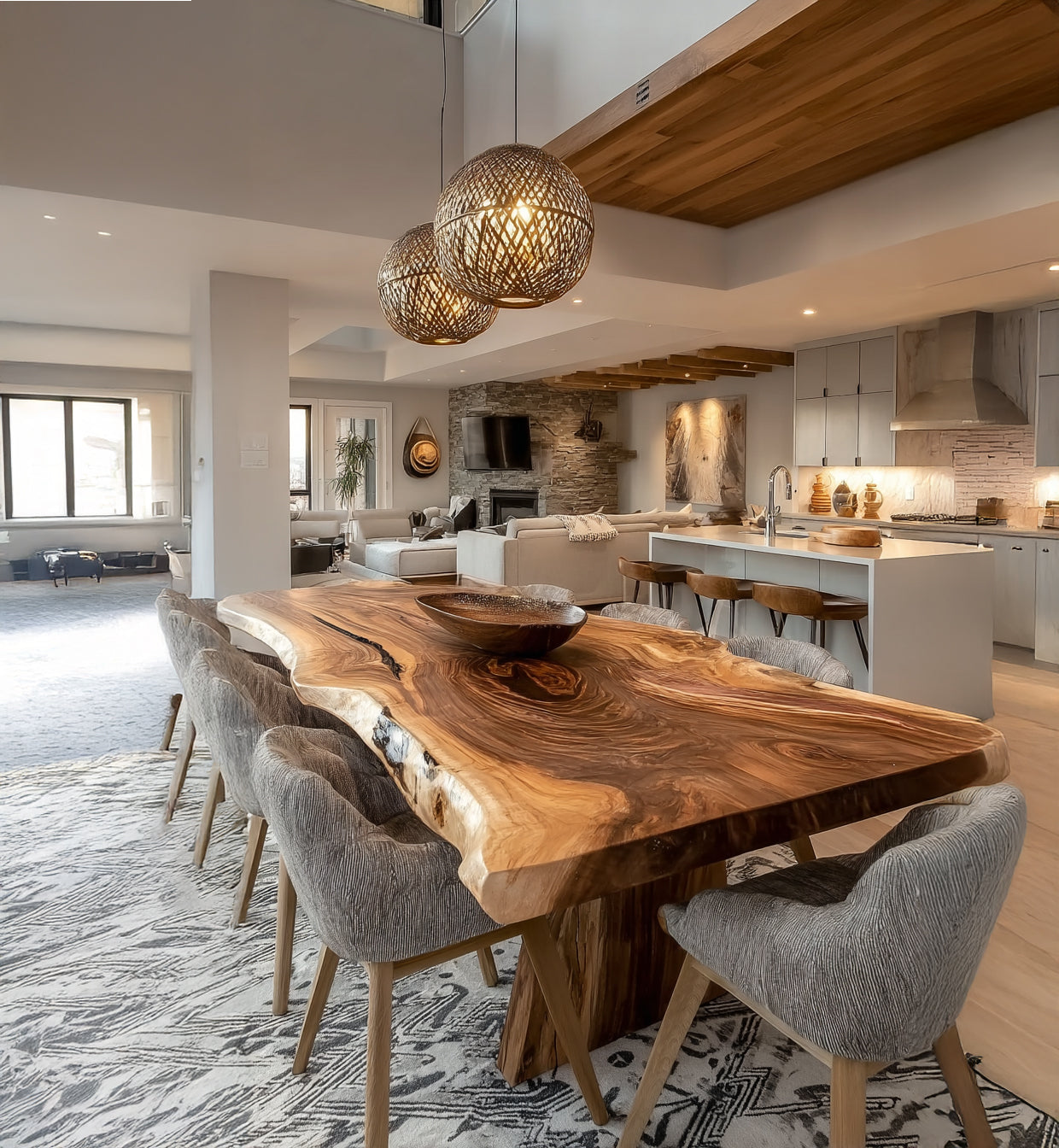
A live edge dining table transforms a dining room from functional to unforgettable. The raw, natural edge of the wood slab becomes the centerpiece of every meal, every gathering, every holiday. Unlike mass-produced dining furniture, a live edge table brings organic texture and one-of-a-kind character that sets the tone for the entire room.
Below, you'll find styling ideas matched to specific home aesthetics - plus practical advice on wood selection, sizing, and base pairings that actually work.
Modern Minimalist
Modern minimalism is about restraint, clean lines, and letting a few key pieces carry the room. A live edge dining table is the perfect "one statement piece" for this style - organic enough to add warmth, sculptural enough to hold visual interest on its own.
Best wood: Hard maple or white ash. The light, neutral tones integrate with white walls, concrete floors, and muted palettes without competing. Maple's fine, uniform grain reads as sophisticated rather than rustic.
Best base: Flat black steel - either U-shaped or slim trestle. The contrast between raw organic wood and precise geometric metal defines the modern live edge look. Keep the base simple. Nothing ornate.
Chairs: Eames-style molded plastic or slim upholstered dining chairs in black, white, or gray. Avoid bulky wooden chairs - they'll crowd the visual space around the table.
Styling tip: Leave the table mostly bare. A single low planter with trailing greenery or one architectural candle holder. The slab is the decor.
Rustic Farmhouse
Farmhouse style celebrates warmth, texture, and a "gathered over time" feeling. A live edge table fits naturally here - it's literally a piece of the forest brought indoors. The key is choosing the right wood and base to feel authentic, not contrived.
Best wood: White oak or reclaimed hardwood. Oak's open grain and warm honey tones are quintessentially farmhouse. The ray fleck patterns add visual depth without being showy.
Best base: Turned wooden legs or a thick trestle base in matching or complementary wood. A farmhouse dining table should feel solid and grounded. Metal legs can work if they're heavy and matte - think blacksmith, not factory.
Chairs: Windsor chairs, cross-back dining chairs, or a long bench on one side. Mixing chair styles (intentionally) adds the collected-over-time charm that defines good farmhouse interiors.
Styling tip: A linen table runner down the center, a stoneware pitcher with dried eucalyptus, and mismatched candlesticks. Embrace imperfection - that's the whole point of both farmhouse style and live edge wood.


Industrial Loft
Exposed brick, concrete floors, steel beams - industrial spaces need furniture with equal visual weight. A live edge wood table provides the organic counterpoint to hard industrial materials, softening the space without weakening its edge.
Best wood: Black walnut. Its dark, rich tones hold their own against exposed brick and dark metals. The dramatic grain patterns - cathedral arches, swirling burls - match the bold character of industrial architecture. Each slab is handcrafted by Vietnamese artisans who select wood with exactly this kind of visual drama.
Best base: Heavy-gauge raw steel or blackened iron. I-beam style, thick flat bars, or custom welded frames. The base should look like it belongs in the same building as the exposed ductwork. Powder-coated matte black is the safest choice.
Chairs: Metal dining chairs (Tolix-style), leather-upholstered seats, or industrial stools for a more casual setup. Avoid anything delicate or ornate.
Styling tip: Edison bulb pendant lights (or modern equivalents) hung low over the table create a warm focal zone. Keep table decor minimal - maybe a cast iron candle holder or a small succulent planter.
Mid-Century Modern
Mid-century modern values clean geometry, warm wood tones, and functional elegance. A live edge table introduces organic asymmetry into this structured aesthetic - and that tension is what makes it visually exciting.
Best wood: Cherry or walnut. Both offer the warm, medium-to-dark tones that define mid-century palettes. Cherry's natural color shift (from pink to deep red-brown over months) mirrors the era's love of rich, evolved finishes.
Best base: Tapered wooden legs (walnut or teak) or brass hairpin legs. The base should feel light and geometric - think Nakashima-inspired. Avoid heavy steel or industrial-style frames; they fight the mid-century vibe.
Chairs: Wishbone chairs, Eames DCW, or upholstered seats in mustard, teal, or burnt orange. These era-appropriate pops of color pair beautifully with warm wood tones.
Styling tip: A Noguchi-style floor lamp beside the table, a ceramic bowl centerpiece, and a vintage-inspired area rug underneath. The live edge slab adds the "one wild element" that keeps mid-century rooms from feeling stiff.
Don't miss
These pieces qualify for 10% off orders over $2,000. Applied automatically at checkout.
10% off
Organic Modern Live Edge Solid Wood Dining Table - Handcrafted Slab Table with Dual Storage Pedestals
From $6,800.00
10% off at checkout
10% off
Flowing Pedestal Solid Wood Round Dining Table - Japandi Living Sculpture
From $5,850.00
10% off at checkout
10% off
Sculptural Pedestal Solid Wood Round Dining Table - Organic Modern Centerpiece
From $5,850.00
10% off at checkout
 10% off
Organic Live Edge Solid Wood Dining Table with Sculptural River Legs
From $4,180.00
10% off at checkout
10% off
Organic Live Edge Solid Wood Dining Table with Sculptural River Legs
From $4,180.00
10% off at checkout
Coastal/Organic Modern
Coastal interiors lean on light, natural materials and a relaxed atmosphere. A live edge table in a lighter wood species brings that beach-house calm while still making a strong design statement.
Best wood: White ash, bleached oak, or natural maple. Light wood tones reflect more light, keeping the room airy. Ash has a prominent grain pattern that reads as textural and organic - perfect for the "nature indoors" feel coastal style aims for.
Best base: Natural wood pedestal, light-colored steel, or even a driftwood-inspired form if you can find a quality one. White or light gray powder-coated metal works well. Avoid dark or heavy bases that anchor the visual weight too much.
Chairs: Woven rattan or cane dining chairs, slipcovered linen seats, or light-wood Windsor-style chairs. Texture is key - coastal style layers natural materials.
Styling tip: A large piece of coral or a bowl of sea glass as a centerpiece. Woven jute placemats. Linen napkins in soft blue or sand tones. The live edge wood and coastal palette share the same DNA: raw, organic, calming.
Sizing Your Live Edge Dining Table
Getting the size right is critical. Too small and the table feels cramped during meals. Too large and the room loses walking space. Here are the numbers that work.
Length per person: Allow 24" of table length per seated guest. A 72" table seats 6, an 84" seats 8, and a 96" seats 10.
Width: 36-40" is the sweet spot for dining. Wide enough for place settings on both sides with serving dishes in the center. Live edge slabs often vary in width along their length - the narrowest point should be at least 34".
Room clearance: Leave 36" minimum between the table edge and the nearest wall or furniture. This gives enough space to pull out chairs and walk behind seated guests. 42" is more comfortable.
| Guests | Minimum Length | Ideal Length | Room Size Needed |
|---|---|---|---|
| 4 | 48" | 54-60" | 10' × 10' |
| 6 | 72" | 78-84" | 12' × 10' |
| 8 | 84" | 90-96" | 14' × 11' |
| 10 | 96" | 108-120" | 16' × 12' |
Book-Matched vs Single Slab
For dining tables wider than 30", you'll often encounter book-matched slabs. This is when two slabs are cut sequentially from the same log, then opened like a book so their grain patterns mirror each other. The result is a symmetrical, butterfly-like grain pattern across the full width.
Single slabs wider than 30" are rare and come from very large trees. They command premium prices but offer an unbroken surface with no center seam.
Both options are beautiful. Book-matching gives you width and symmetry. Single slabs give you a completely uninterrupted surface. Your budget and aesthetic preference should guide the choice.
Pair It With a Live Edge Coffee Table

Once you've committed to a live edge dining table, extending the aesthetic to your living room creates a cohesive wood-forward home. A matching (or complementary) live edge coffee table in the same wood species ties both spaces together visually. We cover this in more detail in our live edge coffee table buyers guide guide.
You don't need an exact match - in fact, slight variation looks more natural. A walnut dining table paired with a walnut coffee table from a different slab creates continuity without looking like a matching set from a catalog.

Browse our full live edge coffee table collection to find the right companion piece for your dining table. For a deeper dive, see our article on live edge vs regular coffee table.
Frequently Asked Questions
How much does a live edge dining table cost?
Prices range from $800 for smaller 4-person tables to $3,000+ for large 8-10 person pieces in premium wood species. The main cost drivers are slab size, wood species (walnut commands a premium), and base style. Book-matched slabs cost more than single slabs of the same species due to the extra material and matching process.
Is a live edge table sturdy enough for daily family dining?
Absolutely. These are solid hardwood slabs 1.5-2.5" thick - they're built for generations of daily use. A live edge dining table is actually more structurally sound than most manufactured alternatives because there are no joints, seams, or weak composite materials in the main surface.
What's the best finish for a dining table that gets heavy use?
Conversion varnish or high-quality polyurethane provides the most durable, water-resistant surface for dining. Hardwax oil is a beautiful option that's easy to maintain and repair but requires reapplication every 6-12 months on heavily used surfaces. For families with young kids, go with a film finish.
Can I use a live edge dining table outdoors?
Not recommended for permanent outdoor placement. Even with marine-grade finish, solid hardwood will eventually warp, crack, and deteriorate from UV exposure, rain, and temperature swings. For occasional covered-patio use, it's fine - just bring it inside during extreme weather.
How do I find a live edge dining table in a specific wood species?
Browse collections filtered by wood type, or contact the maker directly with your preference. At Ashdeco, we work with walnut, oak, maple, cherry, and other hardwoods - and can often source specific species on request. Check our live edge dining table collection for current availability.