
Quick view
Shop this guide
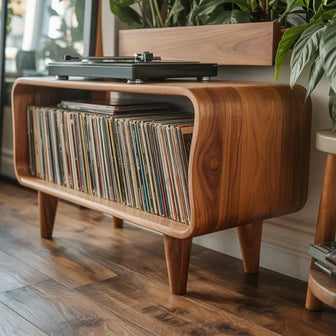
Handcrafted Record Player Stand, made to order in solid wood.
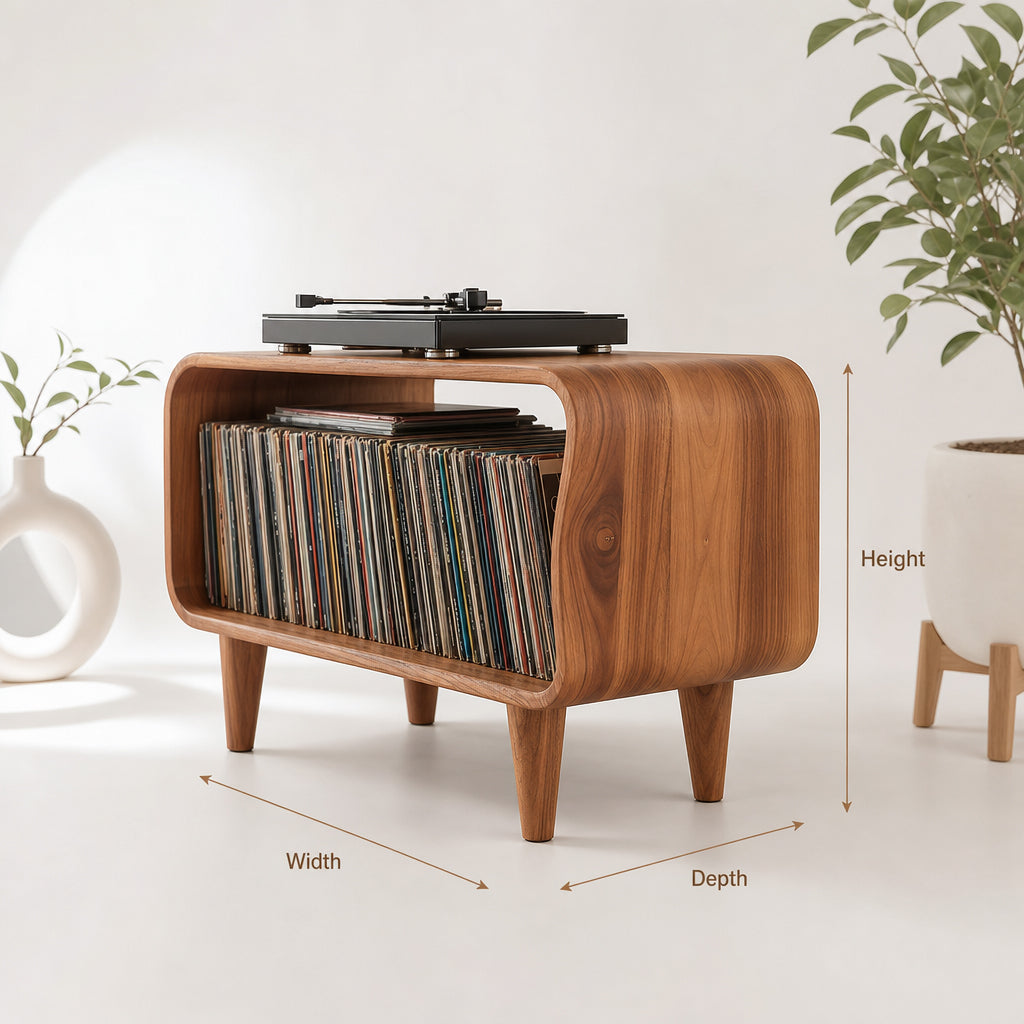
 Mid Century Stepped Solid Wood Record Player Stand with Vinyl Storage and Drawers
From $2,318.0010% off at checkout
Mid Century Stepped Solid Wood Record Player Stand with Vinyl Storage and Drawers
From $2,318.0010% off at checkout
 Sculptural Wavy Solid Wood Record Player Stand with Vinyl Storage and Drawers
From $1,536.00
Sculptural Wavy Solid Wood Record Player Stand with Vinyl Storage and Drawers
From $1,536.00
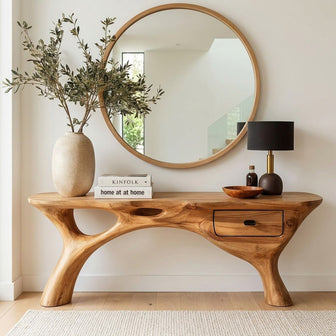
 Biophilic Sculptural Solid Wood Vinyl Record Credenza - Handcrafted Turntable Console & Media Sideboard
From $2,743.0010% off at checkout
Biophilic Sculptural Solid Wood Vinyl Record Credenza - Handcrafted Turntable Console & Media Sideboard
From $2,743.0010% off at checkout
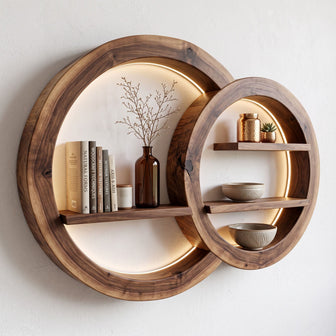
 Sculptural Handcrafted Solid Wood Vinyl Record Storage Console with Circular Tunnel Base
From $2,217.0010% off at checkout
Sculptural Handcrafted Solid Wood Vinyl Record Storage Console with Circular Tunnel Base
From $2,217.0010% off at checkout
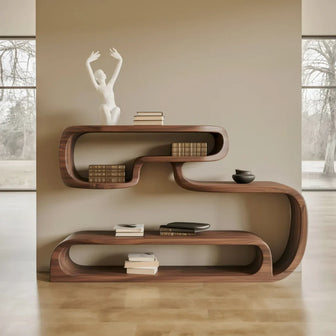
 Sculptural Handcrafted Z-Shape Solid Wood Turntable Stand & 2-Tier Vinyl Record Storage Rack
From $1,564.00
Sculptural Handcrafted Z-Shape Solid Wood Turntable Stand & 2-Tier Vinyl Record Storage Rack
From $1,564.00
 Sculptural Handcrafted Wave Solid Wood Turntable Stand & Low-Profile Audio Console
From $1,543.00
Sculptural Handcrafted Wave Solid Wood Turntable Stand & Low-Profile Audio Console
From $1,543.00
You have seen the Pinterest boards. A weekend project, some reclaimed wood, maybe a hairpin leg kit from Amazon, and suddenly you have a record player stand that looks like it belongs in a design magazine. Costs less than $200. What is not to love?
Honestly, a lot. But also, sometimes nothing. It depends on what you actually want the thing to do.
I have seen DIY turntable stands that turned out great and others that started warping within a few months. I have also seen people drop serious money on furniture that looked handcrafted but was really just particle board with a nice photo. So before you pick a direction, it helps to know what you are actually comparing.
What a DIY Record Player Stand Actually Costs
The appeal of building your own is obvious: you save money and get exactly what you want. At least in theory.
Here is what the real numbers tend to look like.
Materials alone run $80 to $300 depending on wood quality. Pine from a big box store keeps you on the low end. Walnut or maple boards push you toward $200 or higher, especially if you need enough width for a turntable plus speakers. Hardware (legs, screws, brackets, finish) adds another $30 to $80.
Tools are the hidden cost most people forget. If you already own a circular saw, drill, sander, and clamps, great. If not, even renting adds $50 to $100 per project. Buying a basic setup starts around $150 and goes up fast.
Time is the one nobody prices honestly. A simple open-shelf stand takes most beginners 8 to 15 hours spread across a couple weekends. That includes measuring twice, cutting, sanding, staining, drying time between coats, and the trip back to the hardware store for the thing you forgot.
Total realistic cost for a decent DIY record player stand: $150 to $400, plus your weekends.
Where DIY Stands Run Into Trouble
The builds that go sideways usually share a few things in common.
Vibration transfer. This is the one vinyl people care about most, and it is the hardest to solve without experience. A turntable picks up vibration through whatever surface it sits on. If your stand resonates at certain frequencies, or if the speakers sit on the same surface as the platter, you get feedback and muddy bass. Fixing this after the fact means adding isolation pads, decoupling shelves, or rebuilding the top section entirely.
Weight capacity math. A full vinyl collection is heavier than most people expect. One hundred records weigh roughly 35 to 40 pounds. Add a turntable (15 to 25 lbs), a receiver or amp, and speakers, and you are looking at 80 to 120 pounds total on a piece of furniture that may have been designed with looks in mind first. Shelves that sag in the middle after six months are a common complaint in DIY forums.
Finish quality. Sanding and staining solid wood takes patience and practice. Uneven stain absorption, visible brush marks, drips on the inside of shelves. None of these ruin the stand, but they are the difference between something that looks intentional and something that looks like a first attempt.
Wood movement. Solid wood expands and contracts with humidity changes. If you do not account for this in how you join panels (breadboard ends, floating tenons, properly oriented grain), joints can crack or panels can cup over time. Plywood avoids this problem but introduces a different one: visible edge grain that needs banding or paint.


What Handcrafted Actually Means (and Why It Costs More)
The word "handcrafted" gets thrown around a lot in furniture listings. Half the time it means someone assembled pre-cut parts in a workshop. The other half, it means a factory in a country with low labor costs.
Neither of those is what we mean here.
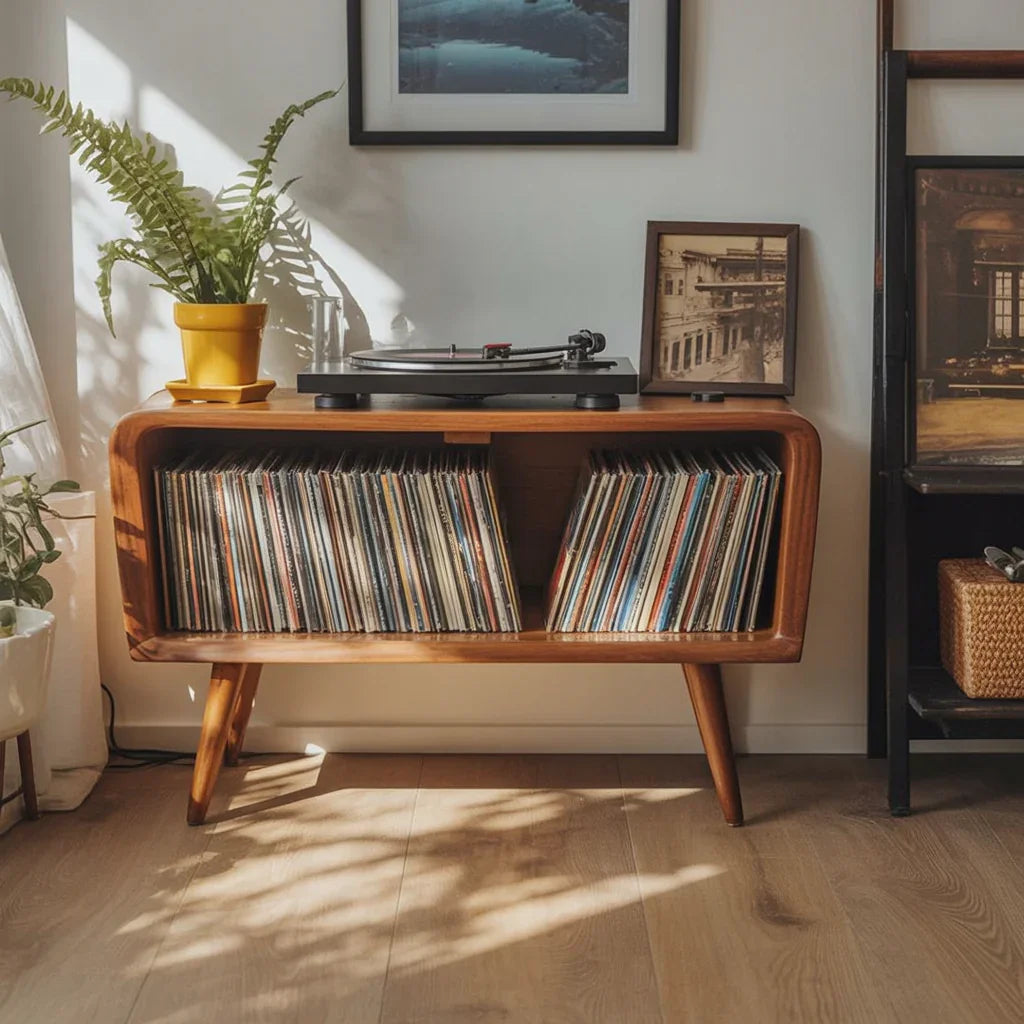
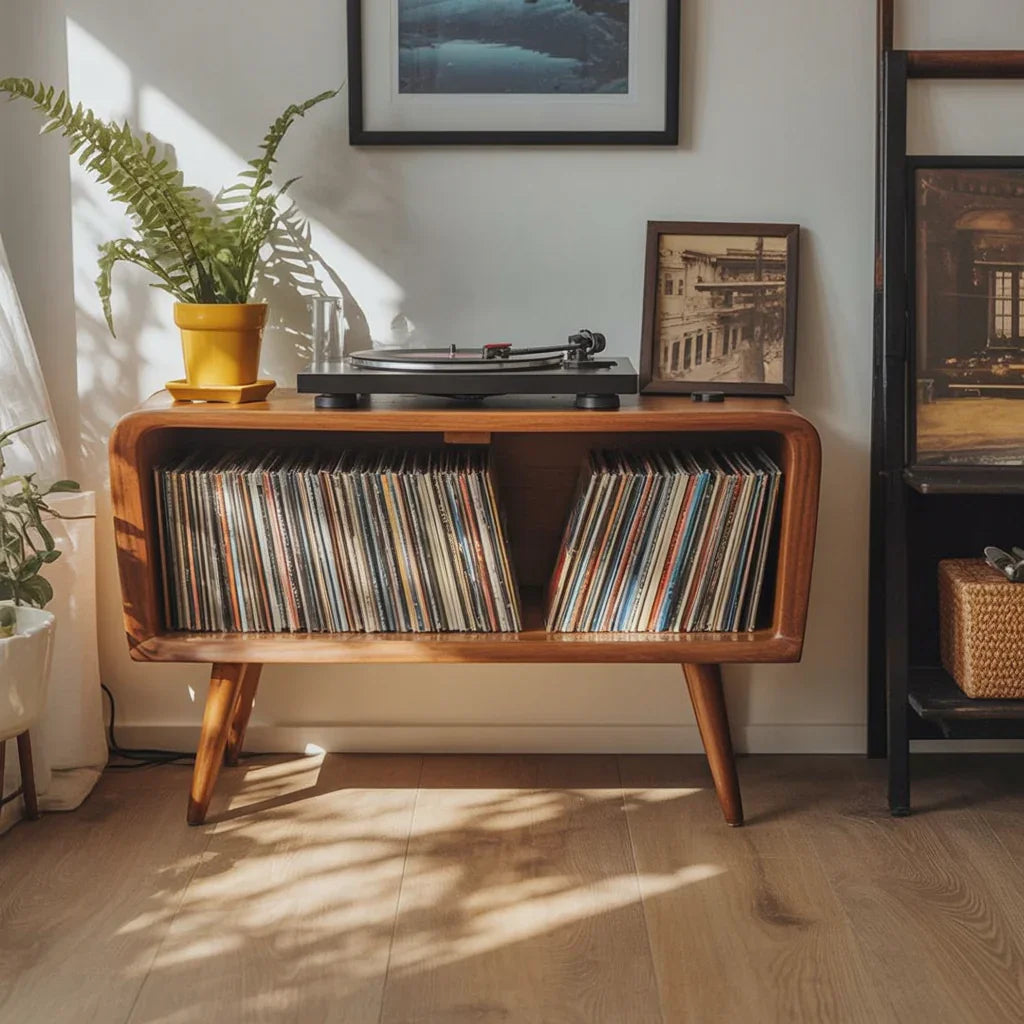
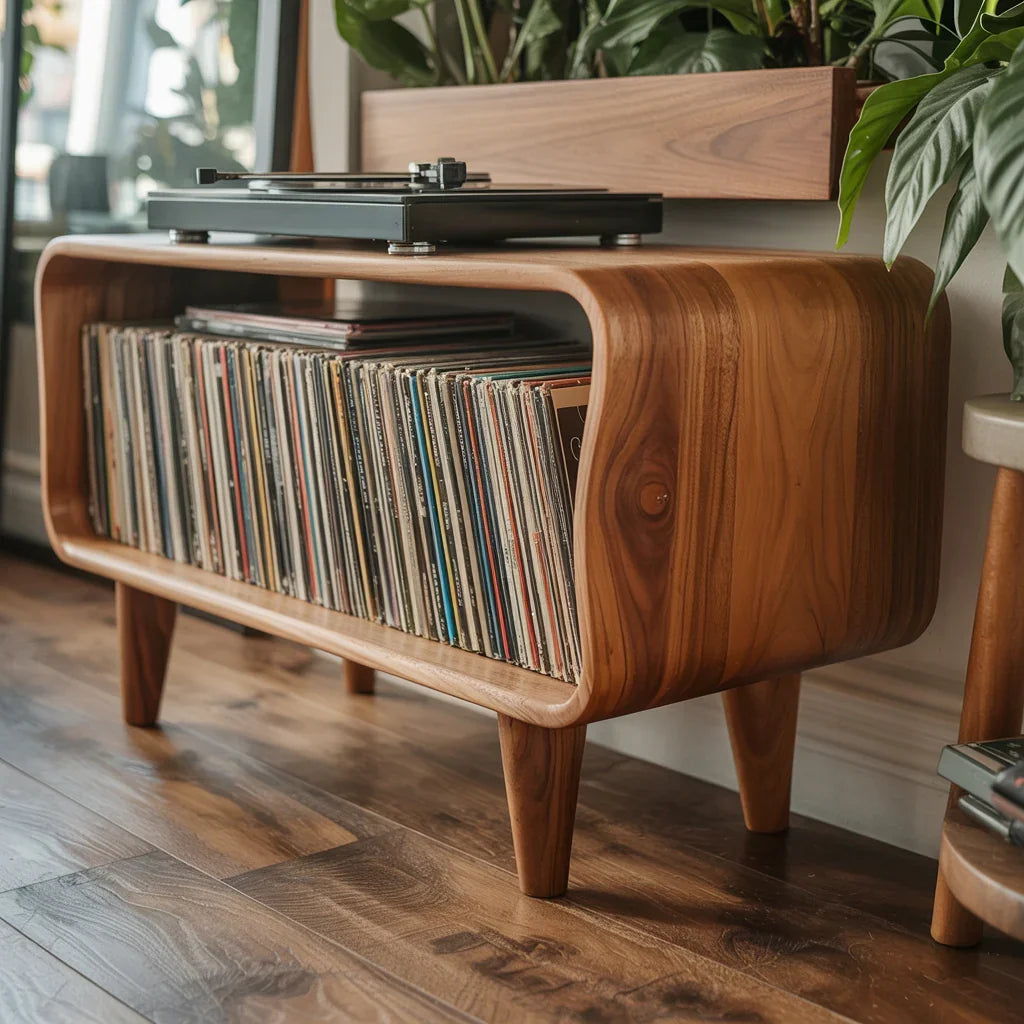
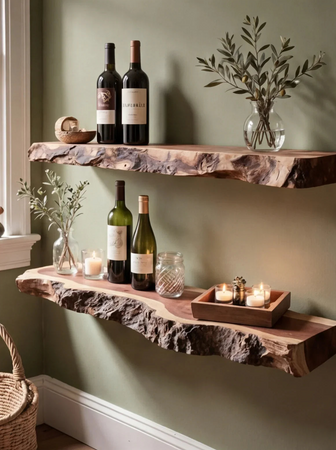
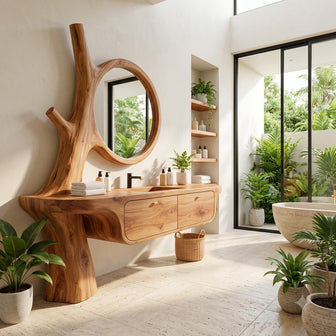
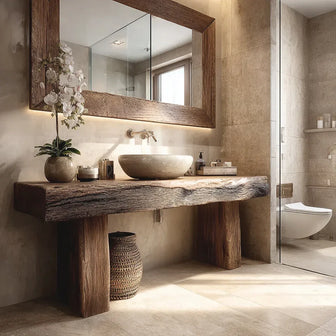
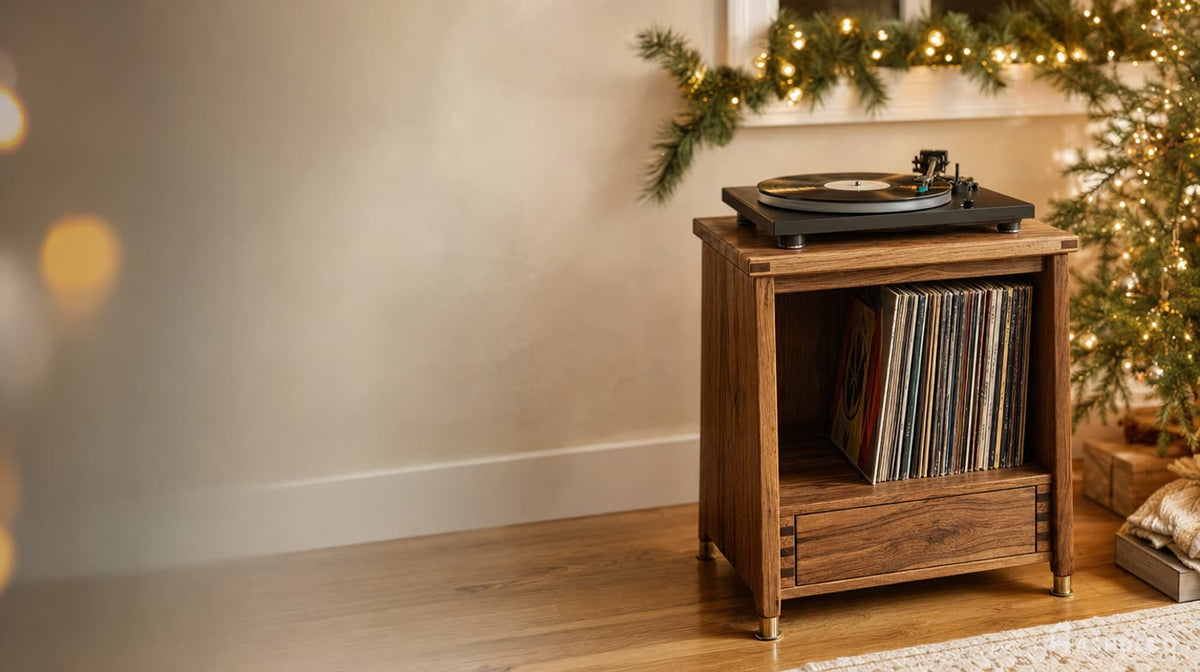
At Ashdeco, each record player stand is built by Vietnamese artisans who shape solid wood by hand. The pieces have live edges, natural grain patterns, and the kind of organic curves that a CNC router cannot replicate because they come from responding to the wood itself. A knot in the grain becomes a design feature. A natural curve in the slab becomes the shelf edge. Two stands from the same product line will look related but never identical.
That process takes longer than factory production. It also costs more. Ashdeco record player stands range from about $950 to $3,300 depending on the size, wood species, and number of storage sections.
Is that a lot more than a DIY build? Yes. But you are comparing different categories of object.
Side by Side: What You Get for the Money
| DIY Build | Handcrafted (Ashdeco) | |
|---|---|---|
| Cost | $150 to $400 + tools + time | $950 to $3,300 |
| Wood | Pine, plywood, or mid-range hardwood | Solid walnut, maple, oak, teak, suar, acacia |
| Customization | Full control (if you have the skill) | Size and wood variants; custom requests available |
| Vibration handling | Depends on your engineering | Built with mass and isolation in mind |
| Finish | Varies with skill level | Professional hand-finished |
| Durability | Good if built correctly | Solid wood, built to last decades |
| Uniqueness | One of a kind (your design) | One of a kind (natural wood variation) |
| Time to enjoy | 2 to 4 weekends | Ships ready |
| Resale value | Low | Holds value as artisan furniture |
Don't miss
These pieces qualify for 10% off orders over $2,000. Applied automatically at checkout.
10% off
Mid Century Stepped Solid Wood Record Player Stand with Vinyl Storage and Drawers
From $2,318.00
10% off at checkout
10% off
Biophilic Sculptural Solid Wood Vinyl Record Credenza - Handcrafted Turntable Console & Media Sideboard
From $2,743.00
10% off at checkout
10% off
Sculptural Handcrafted Solid Wood Vinyl Record Storage Console with Circular Tunnel Base
From $2,217.00
10% off at checkout
 10% off
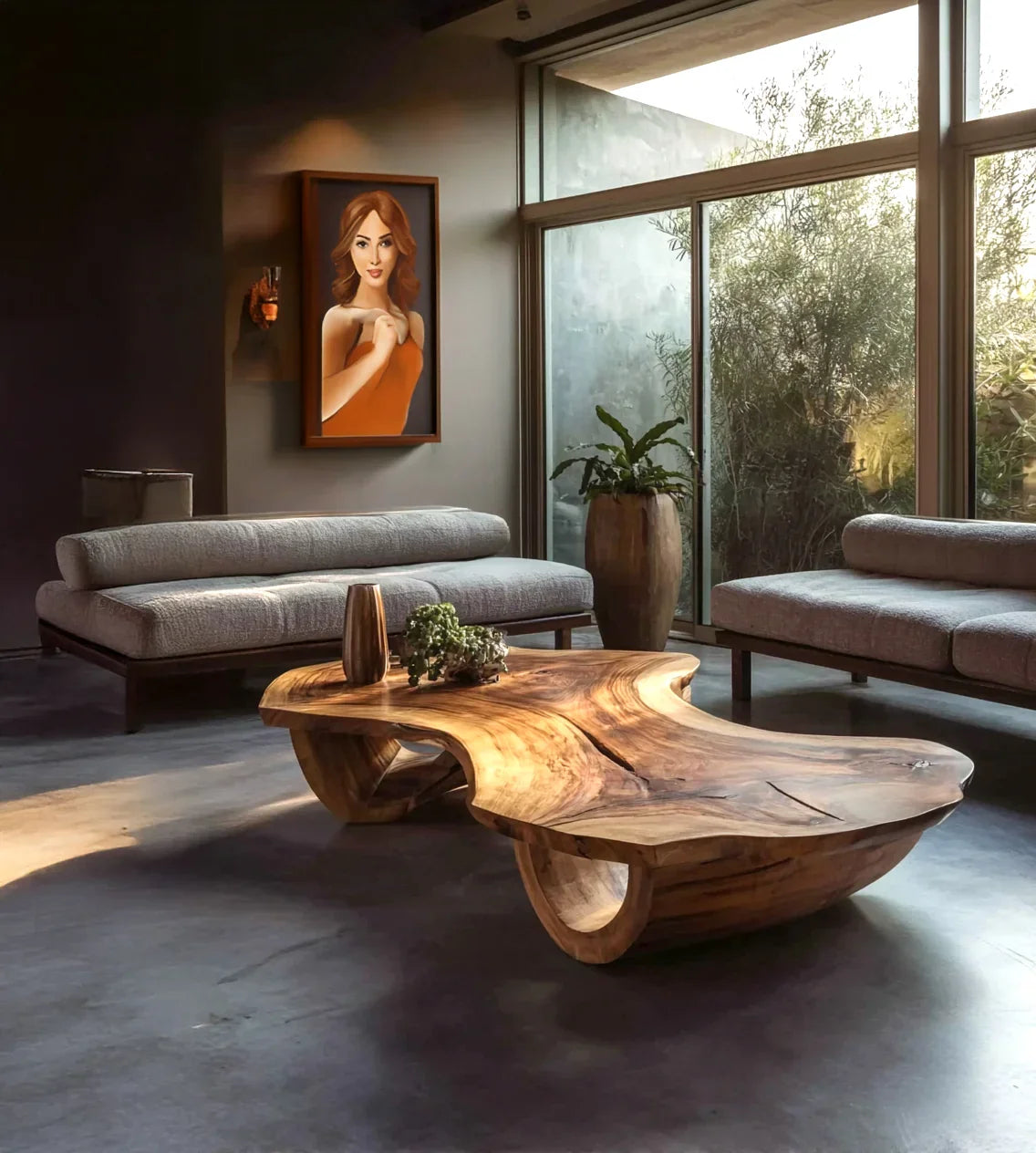
Sculptural Handcrafted Live Edge Tree Trunk Solid Wood Vinyl Record Player Stand & Media Console
From $2,178.00
10% off at checkout
10% off
Sculptural Handcrafted Live Edge Tree Trunk Solid Wood Vinyl Record Player Stand & Media Console
From $2,178.00
10% off at checkout
When DIY Is the Right Call
Building your own makes sense in a few situations.
You genuinely enjoy woodworking and want the project itself, not just the end product. The process is the point. You already have tools and workspace. You have specific dimensional requirements that no production piece will match, like fitting into a 28-inch nook beside a radiator. Or you are on a tight budget and a functional stand matters more than a showpiece.
If any of those sound like you, go for it. A well-built DIY record player stand can last years and look great doing it.
When Handcrafted Makes More Sense
On the other hand, buying handcrafted tends to win when different priorities are in play.
You want the stand to be a piece of furniture you keep for a long time, not a placeholder. You care about the wood itself, the grain, the texture, the way light catches a live edge. You do not have the tools or time for a build but you do not want to settle for flat-pack. Or you have already tried DIY and know firsthand how much effort goes into getting a really good result.
Ashdeco buyers have rated the collection 4.9 stars across 387 reviews, which tends to reflect people who expected quality and got it. That kind of consistency is hard to achieve with a first or second DIY project.
A Few Picks Worth Looking At
If you are leaning toward handcrafted and want a starting point, here are a few from the record player stand collection that cover different setups.
- Mid-Century Modern Record Player Stand with Vinyl Storage ($950 to $1,680). Clean lines, open front for easy access, fits most turntables and a modest vinyl collection. Good if you want something that does not dominate the room.
- Handcrafted Solid Wood Record Player Stand, Farmhouse Style ($1,236 to $2,016). More storage depth, warmer rustic feel. Works well in living rooms where the stand sits near a sofa or reading chair.
- Solid Wood Record Player Stand with Vinyl Storage, Mid-Century Console ($1,705 to $3,300). The larger option with more shelf area and a wider footprint. Built for serious collectors with 200+ records who want everything in one place.
The Honest Answer
If you are handy and want a project, build it. You will learn a lot and end up with something personal.
If you want a piece of furniture that feels like it belongs in your home for the next ten or twenty years, and you want the wood itself to be part of the appeal, handcrafted solid wood is a different experience. Not better or worse across the board. Different in a way that matters to some people and does not matter to others.
The worst option is the middle ground nobody talks about: spending $400 to $700 on a mass-produced stand made from engineered wood with a vinyl wrap that looks like walnut in photos and looks like a desk from a college dorm in person. If you are going to spend real money, spend it on something real.
Browse the full record player stand collection to see what solid wood options look like, or check out the best record player stands guide for a broader comparison.