Quick view
Shop this guide
Handcrafted Lamps for Modern Homes, made to order in solid wood.
 Christmas edit
Rustic Driftwood Floor Lamp – Handmade Solid Wood Standing Light for Home Décor
From $1,220.00
Christmas edit
Rustic Driftwood Floor Lamp – Handmade Solid Wood Standing Light for Home Décor
From $1,220.00
 Christmas edit
Driftwood Wall Sconce - Handcrafted Rustic Wooden Wall Lamp
From $650.00
Christmas edit
Driftwood Wall Sconce - Handcrafted Rustic Wooden Wall Lamp
From $650.00
 Christmas edit
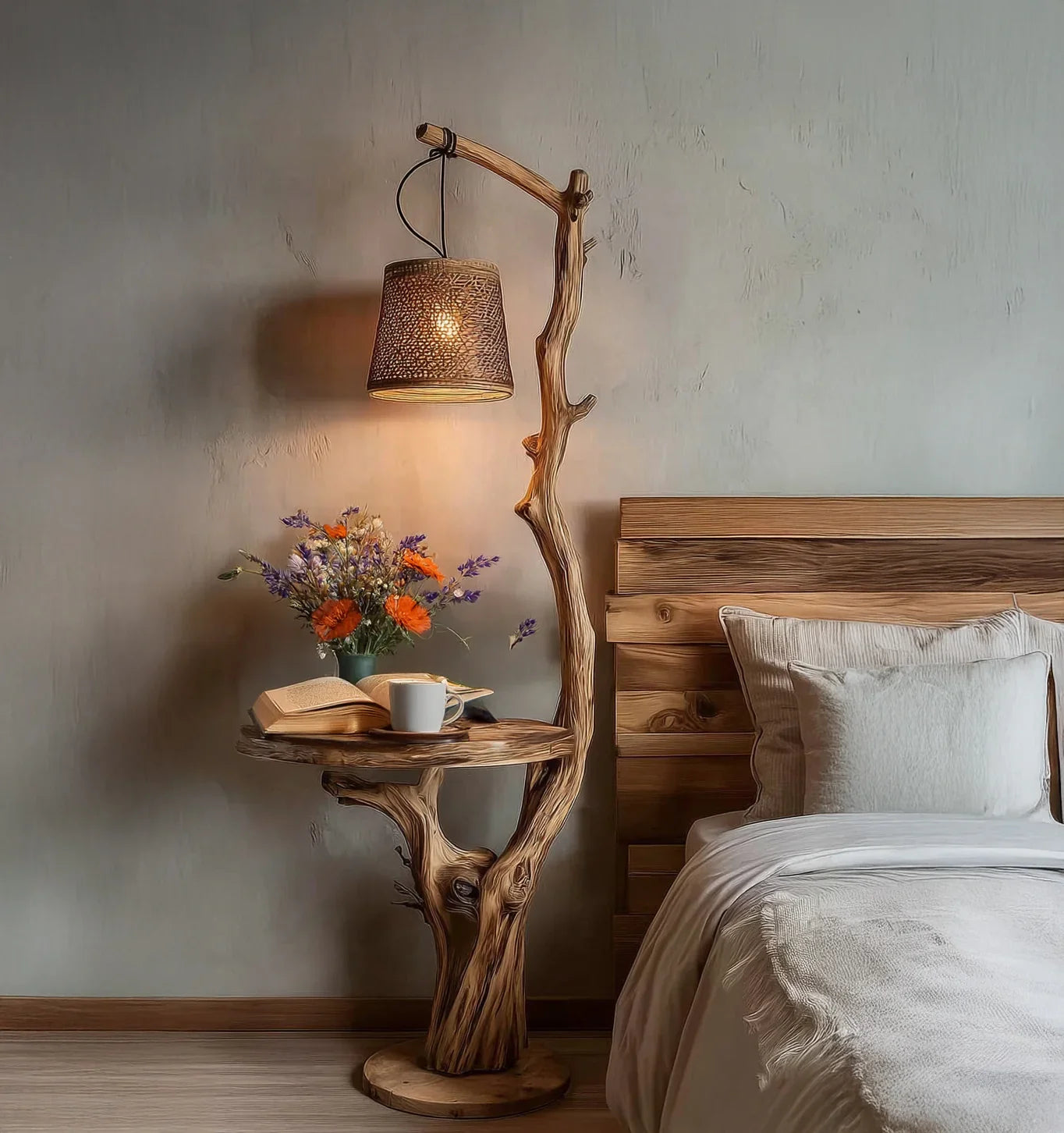
Rustic Driftwood Floor Lamp with Shelves – Handmade Wooden Standing Light
From $2,350.0010% off at checkout
Christmas edit
Rustic Driftwood Floor Lamp with Shelves – Handmade Wooden Standing Light
From $2,350.0010% off at checkout
 Sculptural Twisted Solid Wood Floor Lamp - Organic Modern Statement Lamp
From $1,780.00
Sculptural Twisted Solid Wood Floor Lamp - Organic Modern Statement Lamp
From $1,780.00
 Christmas edit
Twisted Vine Wooden Floor Lamp - Handcrafted Driftwood Standing Light With Leaf Shade
From $1,280.00
Christmas edit
Twisted Vine Wooden Floor Lamp - Handcrafted Driftwood Standing Light With Leaf Shade
From $1,280.00
 Christmas edit
S-Curve Wooden Floor Lamp - Driftwood Standing Light With Dual Glow Openings
From $1,480.00
Christmas edit
S-Curve Wooden Floor Lamp - Driftwood Standing Light With Dual Glow Openings
From $1,480.00
What Defines 90s Interior Design? A Nostalgic Guide to the '90s Aesthetic Comeback
90s interior design is having a real moment. Picture a typical home from the 1990s: beige walls, an overstuffed sectional, a glass-top coffee table, maybe a wicker chair tucked in the corner. It wasn't trying to be Instagram-worthy - it was trying to be comfortable. Three decades later, that exact sensibility is back, reshaping how we want our homes to feel in 2026.
Want to bring the look into your space today? Explore our 90s Aesthetic Collection → for pieces that capture that warm, nostalgic energy without feeling dated.

What Is 90s Interior Design?
90s interior design is a style rooted in warmth, comfort, and material honesty. It favors warm neutral color palettes (beige, cream, taupe), natural materials like solid wood, wicker, and rattan, deep jewel-tone accents (forest green, burgundy, terracotta), and "lived-in" comfort-first furniture over sleek, sterile minimalism. Where 2010s design chased a curated, gallery-like look, 90s interior design prioritized rooms that felt warm and personal to actually live in.
It's this material honesty - real wood grain, real texture, real imperfection - that's driving its comeback in 2026, and it's exactly what defines our 90s Aesthetic Collection.

The Cultural Moment: Why 90s Home Decor Is Back
The 30-year nostalgia cycle isn't just a theory - it's a pattern that shows up in fashion, music, and now, interior design. Gen Z is discovering the '90s for the first time, and millennials are revisiting the aesthetic of their childhood homes with fresh eyes.
But there's something deeper at play. Multiple sources - including Jaipur Rugs' 2026 analysis and Spacejoy's trend report - note that the revival isn't about irony or nostalgia alone. It's a reaction against the sterile, overly-curated interiors of the 2010s: homes that looked great in photos but didn't feel comfortable to actually live in. People are exhausted. They want their homes to feel warm again.
The '90s offered exactly that: abundance, coziness, and a willingness to let a room feel lived in. It's that energy - not the inflatable chairs or the neon posters - that designers are pulling back into contemporary spaces.



Key Characteristics of 1990s Interior Design
Warm Neutral Color Palettes
Beige wasn't just popular in the '90s - it was the color. Cream, warm white, taupe, and soft brown formed the foundation of almost every room. But unlike today's cool-toned grays, '90s neutrals leaned warm. They hugged.
The strategy was simple: warm walls as a backdrop, then layer in personality through accessories, textiles, and the occasional bold paint choice in smaller rooms.
| 90s Original | Today's Updated Version |
|---|---|
| Beige walls throughout | Warm white or cream walls, beige as accent |
| Matching wall-to-wall carpet | Warm wood floors + oversized area rugs |
| Dark wood trim | Lighter oak or painted trim for airiness |
Natural Materials: Wood, Wicker, and Rattan
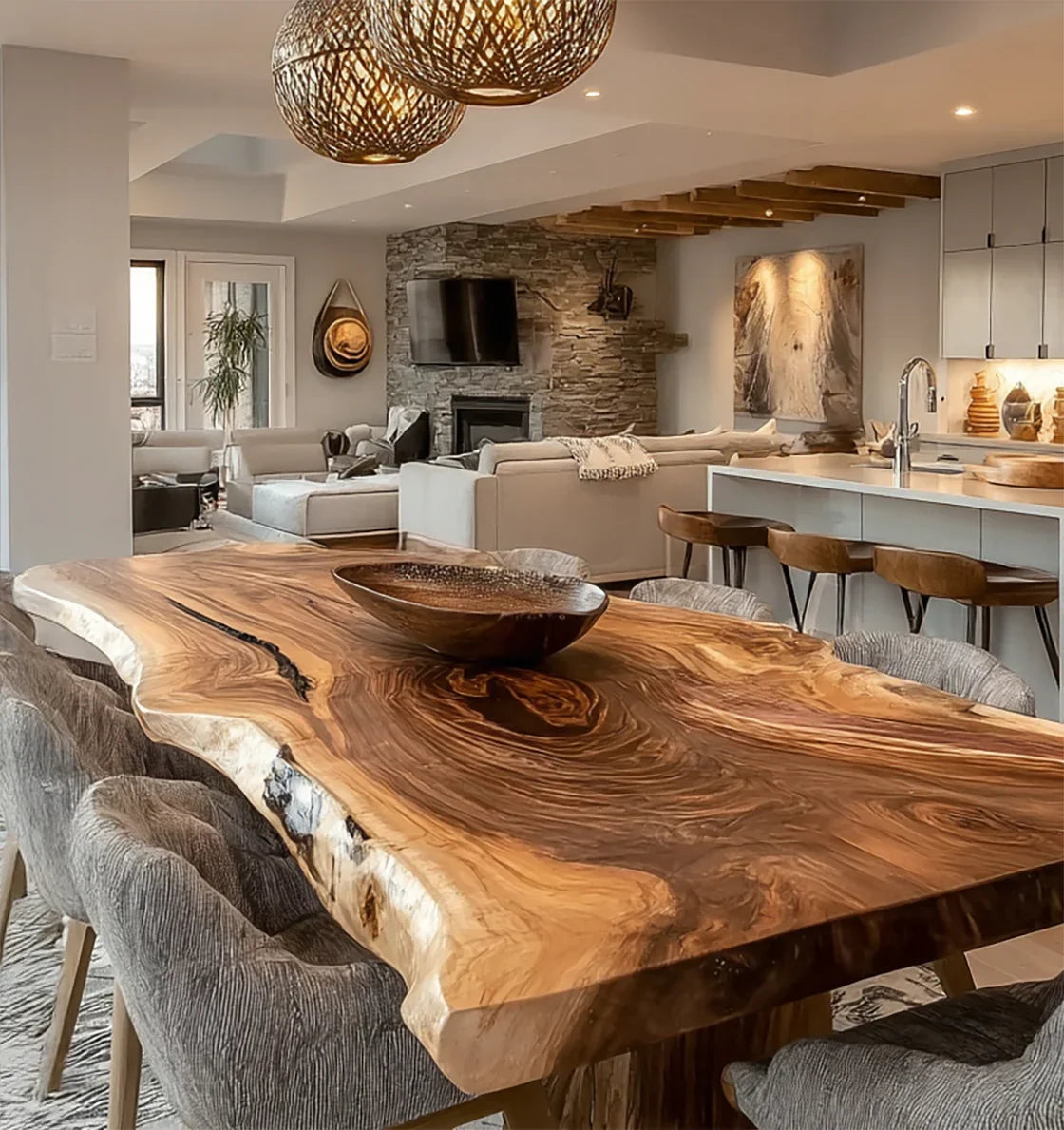
Wood was everywhere in '90s homes - and not the dark, heavy mahogany of the '80s. Think honey oak, pine, and lighter European oak. Floor-to-ceiling wood cabinets in kitchens. Oak dining tables with visible grain.
Wicker and rattan brought organic texture into bathrooms, sunrooms, and living spaces. A wicker chair, a cane-front cabinet, a rattan light fixture - these pieces added warmth without visual weight.
That's exactly why natural wood pieces from our 90s Aesthetic Collection feel right at home in this style. The grain, the warmth, the imperfection - it's all part of the look.

Bold Jewel-Tone Accents
Here's where '90s design got interesting. Once the warm neutral base was set, designers and homeowners layered in deep, saturated colors. The palette wasn't random - specific tones dominated:
- Forest green - walls, upholstery, even kitchens
- Burgundy and maroon - curtains, rugs, accent chairs
- Terracotta - pottery, tile, warm accent walls
- Sage green - softer take on the green trend, especially in bedrooms
- Navy and deep blue - libraries, dens, traditional spaces
The rule was clear: pick one or two jewel tones, keep the rest neutral, and let those saturated colors do the heavy lifting. No room needed five accent colors. One strong choice was enough.
Minimalism with Heart (Not Sterile)
'90s minimalism looked nothing like the 2010s version. Yes, rooms were decluttered compared to the maximalist '80s. But they weren't cold. An overstuffed sofa, a well-worn throw blanket, a gallery wall of family photos - these were all acceptable in a "minimal" '90s room.
The difference? '90s minimalism prioritized comfort over aesthetic purity. If something felt good to use, it stayed - even if it broke the clean-line rule.

90s Interior Design Elements That Defined the Era
Furniture Styles: Chunky, Comfortable, and Real
Furniture in the '90s had presence. Oversized sectionals replaced the sleek loveseats of the previous decade. Platform beds with solid wood frames were common in many '90s bedrooms. Glass-top tables with metal bases brought a postmodern edge to dining rooms and living spaces.
The common thread: furniture was built for using, not just looking at. Deep seats, thick cushions, arms wide enough to actually rest on. It's the opposite of the spindly, delicate pieces that defined the mid-century modern revival.
Today's updated version keeps the comfort but trims the bulk. Think solid wood frames with cleaner lines, upholstered pieces in warm fabrics, and glass accents used sparingly rather than as the main event. Browse pieces that strike this balance in our 90s Aesthetic Collection →.
Textiles and Patterns
The '90s weren't afraid of pattern - they were just selective about it.
- Subtle florals on curtains or throw pillows (not entire walls)
- Stripes as accent - a single chair, a rug border
- Faux finishes like sponge painting and rag rolling
- Soft, plush fabrics - chenille, velvet, microfiber for sofas and cushions
The approach was restrained compared to the '80s but still more playful than what followed. A room might have one patterned element - a floral armchair, a striped throw - while everything else stayed solid and neutral.
Lighting: From Track Lights to Woven Fixtures
Track lighting was a hallmark of '90s design - functional, adjustable, and very much a product of the era's growing obsession with flexibility. Alongside it, woven pendant lights, rattan lampshades, and table lamps with fabric shades brought soft, layered illumination to living spaces.
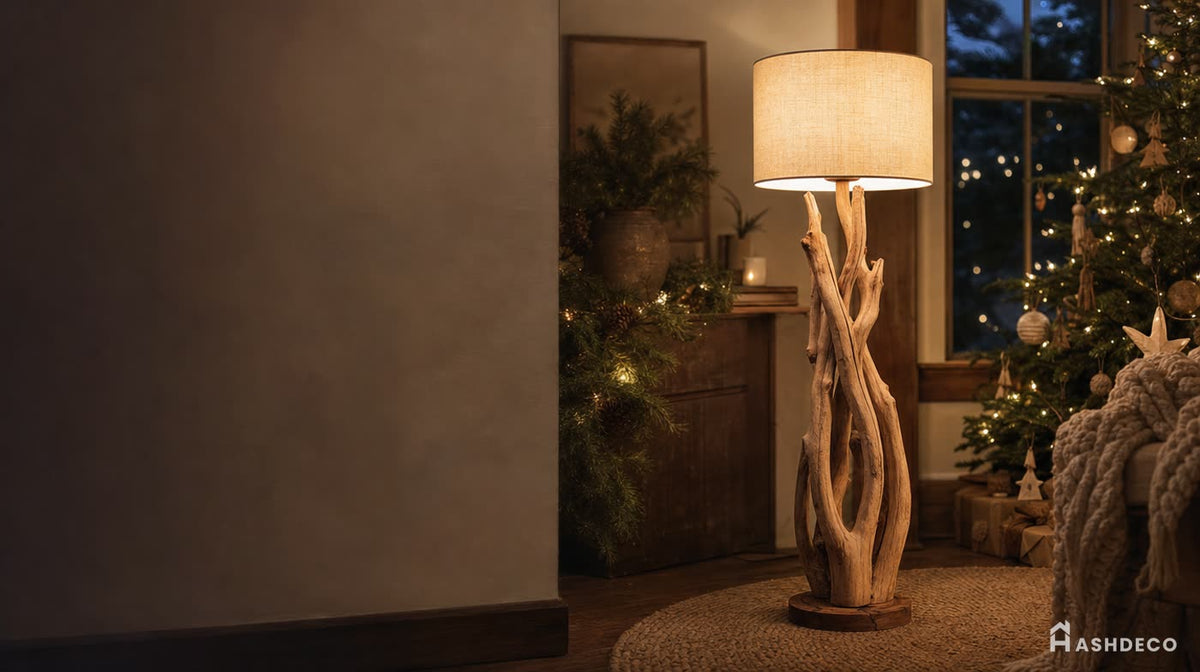
Today's version leans into that warmth. Rattan pendants, linen-shade floor lamps like our Driftwood Floor Lamp, and warm-bulb table fixtures recreate the feeling without the dated hardware.

Don't miss
These pieces qualify for 10% off orders over $2,000. Applied automatically at checkout.
10% off
Rustic Driftwood Floor Lamp with Shelves – Handmade Wooden Standing Light
From $2,350.00
10% off at checkout
 10% off
Rustic Driftwood Floor Lamp with Side Table – Solid Wood Standing Light with Rattan Shade
From $2,350.00
10% off at checkout
10% off
Rustic Driftwood Floor Lamp with Side Table – Solid Wood Standing Light with Rattan Shade
From $2,350.00
10% off at checkout
 10% off
Sculpted Spiral Twist Floor Lamp Handcrafted Solid Timber Standing Light with Linen Drum Shade
From $2,280.00
10% off at checkout
10% off
Sculpted Spiral Twist Floor Lamp Handcrafted Solid Timber Standing Light with Linen Drum Shade
From $2,280.00
10% off at checkout
 10% off
Biomorphic Sculpted Hollow Floor Sculpture Organic Timber Art Piece Hand Carved in Solid Wood
From $2,280.00
10% off at checkout
10% off
Biomorphic Sculpted Hollow Floor Sculpture Organic Timber Art Piece Hand Carved in Solid Wood
From $2,280.00
10% off at checkout
What's Different: 90s Original vs Today's Updated Look
The '90s aesthetic is back - but the smart approach isn't replication. It's translation. Here's what to keep, what to update, and what to leave in 1997.
| Original 90s Element | Modern Interpretation | Verdict |
|---|---|---|
| Honey oak kitchen cabinets | European oak flooring, cane-front credenzas | ✅ Keep the wood, change the application |
| Beige walls everywhere | Warm white walls + beige textiles | ✅ Soften the beige, don't eliminate it |
| Oversized floral prints | Subtle botanical accents | ✅ Scale down, keep the spirit |
| Glass-top everything | Glass as accent, not centerpiece | ✅ Use sparingly |
| Faux-finish sponge painting | Textured plaster or limewash | ❌ Skip the faux, go real texture |
| Track lighting everywhere | Layered warm fixtures | ❌ Ditch the tracks, keep the layers |
| Inflatable/novelty furniture | - | ❌ Leave these in the '90s |
The principle: keep warmth, natural materials, and personality. Drop the gimmicks.
How to Get the 90s Interior Design Look Today
You don't need to hunt thrift stores for original '90s pieces. Here's a practical five-step approach:
1. Start with warm neutrals. Paint your main walls warm white or cream. Skip cool grays entirely. This is your canvas.
2. Add natural wood. One or two solid wood pieces - a coffee table, a sideboard, a bed frame. Look for visible grain, warm tones, clean but not ultra-modern lines. Our 90s Aesthetic Collection has pieces that hit this exact note.
3. Pick one jewel-tone accent. Forest green throw pillows. A burgundy area rug. Terracotta pottery on open shelving. One strong color, used intentionally.
4. Layer textures. Woven basket, linen curtain, wood bowl, soft throw. The '90s were about tactile richness - surfaces that invited touch.
5. Edit ruthlessly. The '90s weren't cluttered - they were curated comfort. Every piece should earn its place. If it doesn't add warmth or function, it goes.

Bring That '90s Warmth Home
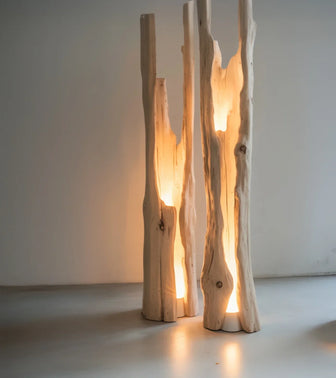
Hand-carved from natural driftwood by Vietnamese artisans - this dual mushroom floor lamp glows with the same warm, lived-in energy that defined '90s interiors. No two pieces alike.
Shop This Floor Lamp →Frequently Asked Questions
Why is 90s interior design coming back?
Multiple design publications have documented this shift. The core reason: fatigue with the sterile, all-neutral aesthetic that dominated the 2010s. As Spacejoy's trend analysis has noted, people are gravitating toward spaces that feel personal and warm rather than curated and cold. The '90s aesthetic delivers exactly that - comfort-first design with room for personality.
What colors were popular in the 1990s?
The dominant '90s interior color palette included:
- Base: beige, cream, warm white, taupe
- Accents: forest green, burgundy/maroon, terracotta, sage green, navy/deep blue
The approach was warm neutral as the foundation, with one or two deep, saturated accent colors per room.
Is 90s design the same as 90s minimalism?
No - and this is a common confusion. The '90s actually had two design streams running in parallel:
- Warm cozy: overstuffed furniture, rich colors, layered textiles, wood tones
- Clean minimal: sleek profiles, neutral palettes, uncluttered spaces
Both were "90s." The minimalist stream influenced the stark modernism of the 2000s and 2010s. The warm cozy stream is what's coming back now. They shared a rejection of '80s excess but expressed it in opposite directions.
How do I avoid the 90s look feeling dated?
Focus on the principles, not the literal pieces:
- Warm neutrals over beige overload - one or two warm tones, not an entire house in one shade
- Quality wood over laminate - real grain, real texture
- One bold color per room - not every room in every bold color
- Comfort-first furniture - but with cleaner proportions than the originals
- Natural materials throughout - wood, rattan, linen, stone
The goal is a room that feels like the '90s without looking like a time capsule. Pieces from our 90s Aesthetic Collection are designed with this balance in mind - nostalgic warmth, contemporary execution.