Quick view
Shop this guide
Handcrafted Dining Tables, made to order in solid wood.
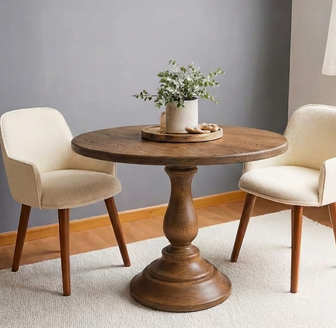
 Round Solid Wood Pedestal Dining Table Handcrafted Solid Wood Center Table
From $1,345.00
Round Solid Wood Pedestal Dining Table Handcrafted Solid Wood Center Table
From $1,345.00
 Round Bistro Dining Table, Small Kitchen Breakfast Table, Compact Circular Dining Table
From $1,022.00
Round Bistro Dining Table, Small Kitchen Breakfast Table, Compact Circular Dining Table
From $1,022.00
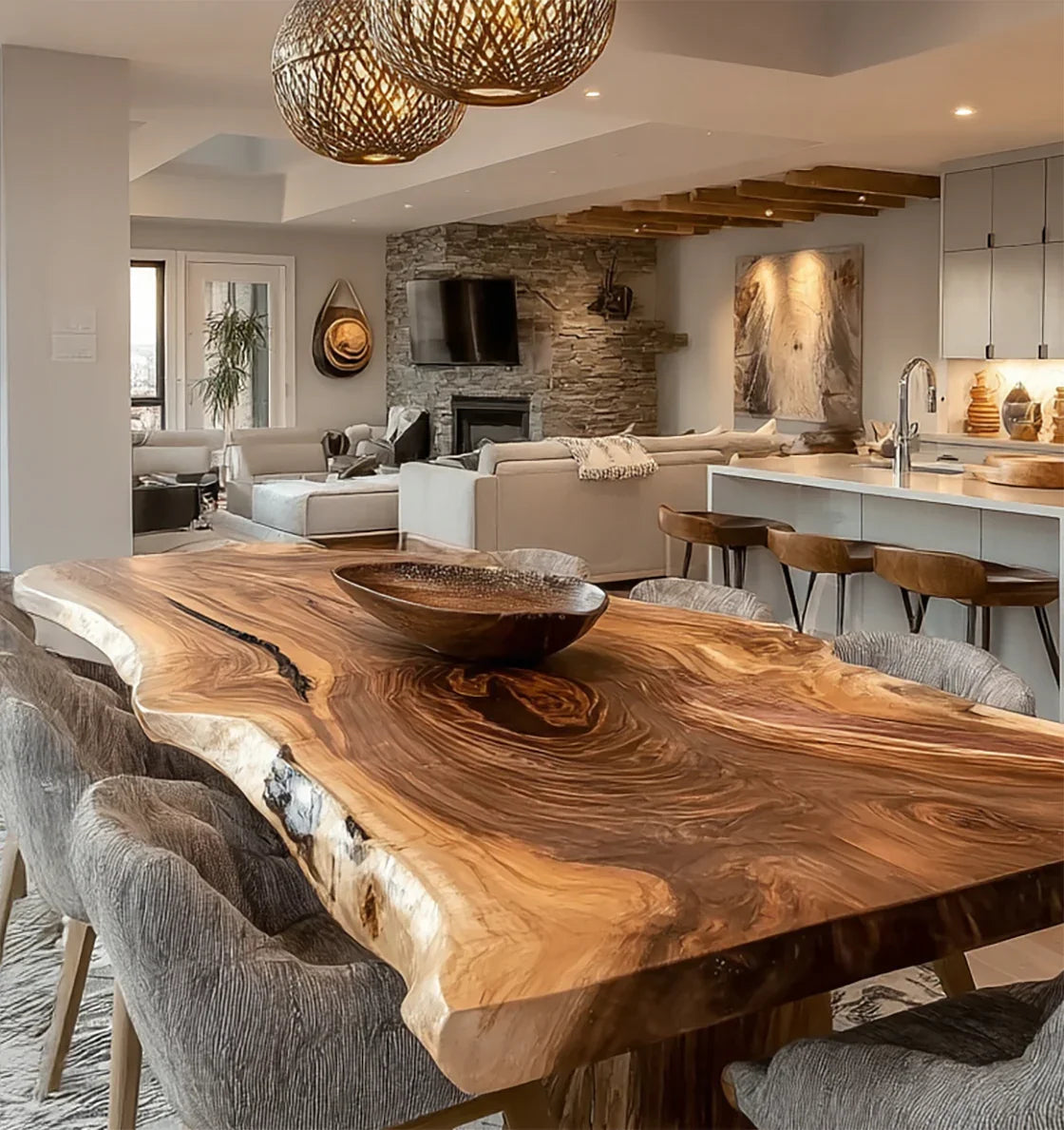
 Organic Modern Live Edge Solid Wood Dining Table - Handcrafted Slab Table with Dual Storage Pedestals
From $6,800.0010% off at checkout
Organic Modern Live Edge Solid Wood Dining Table - Handcrafted Slab Table with Dual Storage Pedestals
From $6,800.0010% off at checkout
 Round Solid Wood Dining Table with Architectural Spider Pedestal Base
From $1,254.00
Round Solid Wood Dining Table with Architectural Spider Pedestal Base
From $1,254.00
 Flowing Pedestal Solid Wood Round Dining Table - Japandi Living Sculpture
From $5,850.0010% off at checkout
Flowing Pedestal Solid Wood Round Dining Table - Japandi Living Sculpture
From $5,850.0010% off at checkout
 Sculptural Pedestal Solid Wood Round Dining Table - Organic Modern Centerpiece
From $5,850.0010% off at checkout
Sculptural Pedestal Solid Wood Round Dining Table - Organic Modern Centerpiece
From $5,850.0010% off at checkout
A dining table is where birthdays happen, where homework gets spread out across a too-big surface, where a Tuesday-night pizza suddenly turns into a two-hour conversation. It's not just furniture - it's the anchor of your home.
And when that table is made from solid wood, it doesn't just serve meals. It ages. It develops character. It becomes the piece your kids remember.
But here's the thing most guides don't tell you: the shape of your table matters just as much as what it's made of. A solid walnut table in the wrong shape for your room will feel awkward every single day. Get the shape and size right, though, and everything else falls into place.
This guide covers what most buyer's guides skip - shapes, sizing, base types, room placement, and style matching - so you can pick a solid wood dining table that actually works for your space, not just looks good in a catalog photo.

Why Your Dining Table Shape Matters More Than You Think
Walk into any furniture store and you'll see rows of beautiful tables. Walk into your own dining room and you'll quickly discover that the table that looked perfect in the showroom might not fit your life.
Shape affects how people sit, how conversation flows, how easy it is to serve food, and whether your kids bump their knees every time they stand up. Here's what each shape actually means in practice.
Rectangular Dining Tables
The classic choice - and for good reason. A rectangular dining table is the most versatile shape for most homes. It fits against walls, works in long rooms, and scales from a cozy dining table for 6 up to a 10-person entertainer's dream.
Best for:
- Dining rooms that are longer than they are wide
- Families who regularly host guests
- Spaces where the table might also double as a workspace
Watch out for:
- The people sitting at the ends can feel isolated from the conversation
- Sharp corners aren't ideal for homes with small kids
A 72-inch rectangular table seats 6 comfortably. Push to 84–96 inches and you've got room for 8. If you're regularly feeding more than that, you probably want an extendable design.

Round Dining Table
A round dining table changes the energy of a room completely. Everyone faces everyone. There are no "head of the table" politics, no one stuck in the corner. Conversation just... works.
Best for:
- Small to medium rooms (square layouts especially)
- Intimate dinners - a small dining table for 4 in round form feels cozy, not cramped
- Homes with young kids (no sharp corners to worry about)
Watch out for:
- Round tables don't scale well past 6–8 people without becoming massive
- A 48-inch round table seats 4. You'll need 60 inches for 6, and 72 inches for 8 - at which point reaching the center becomes a stretch

Round Pedestal Dining Table
Here's where it gets interesting. A round pedestal dining table - one with a single central column instead of four legs - is arguably the most practical dining table shape ever designed.
Why pedestal wins in real life:
- Legroom freedom. No legs to bump, no awkward corner seats where your knees hit the table support
- Chair flexibility. Slide chairs in from any angle, add an extra seat when someone drops by
- Visual space. A single column makes a room feel less cluttered than four thick legs
Trade-offs:
- Pedestal bases can be less stable on very large tables (anything over 60 inches diameter)
- Cheap pedestal tables sometimes wobble - check the base diameter and weight
If you're torn between a pedestal dining table and a four-leg design, here's the simple rule: under 60 inches, pedestal. Over 60 inches, consider four legs or a double-pedestal for stability.

Oval Dining Table & Oval Dining Table Furniture
Think of an oval dining table as the diplomat between rectangular and round. You get the capacity of a rectangular table with the flow and softer edges of a round one.
Best for:
- Rooms that are long but narrow - an oval table fits the proportions better than rectangular
- Families who want rectangular seating but round-table safety (no sharp corners for kids)
- Oval dining table furniture pairs especially well with mid-century and Scandinavian interiors
An oval table that's 72 inches long seats 6–8, same as its rectangular equivalent, but feels less imposing in the room.

Dining Tables Circular
When people search for dining tables circular, they're usually working with a smaller space - an apartment dining area, a breakfast nook, or a multi-purpose room.
A 36-inch circular table seats 2–3. A 42-inch handles 4. Beyond that, you're really in the "round dining table" category.
The circular table sweet spot: kitchens and breakfast areas where the table isn't just for meals - it's where mail gets sorted, where kids do homework, where coffee happens at midnight.
Square Dining Tables
Underrated and underused. A square table - say 48 × 48 inches - seats 4 with room to breathe. It works beautifully in square rooms where a rectangular table would leave awkward dead space on the sides.
Best for:
- Small apartments and condos
- Breakfast nooks
- When you want an intimate, symmetrical setup

Size Guide - Measure Twice, Buy Once
Here's the mistake people make: they buy a table that fits in the room on paper, then discover they can't pull out a chair without hitting the wall.
Seating Capacity Quick Reference
| Table Size | Seats (comfortable) | Seats (cozy) |
|---|---|---|
| 36" round / square | 2–3 | 4 |
| 42" round | 4 | 4–5 |
| 48" round | 4–5 | 6 |
| 60" round | 6 | 8 |
| 60" rectangular (60×36) | 4–6 | 6 |
| 72" rectangular (72×36) | 6 | 8 |
| 84" rectangular (84×40) | 6–8 | 8–10 |
| 96" rectangular (96×42) | 8 | 10 |
The Clearance Rule Nobody Tells You About
You need at least 90cm (36 inches) of clear space around every edge of the table. This is the minimum for someone to sit down, stand up, and walk behind a seated person without the dance of "sorry, excuse me."
If there's a wall, buffet, or other furniture behind the chairs, measure from the table edge to that obstacle - not to the wall.
Room size reality check:
- A 72 × 36 inch table needs a room that's at least 12 × 10 feet to feel comfortable
- Add 90cm on every side: that's 36" + 36" + 72" = 144" (12 feet) on the long side, and 36" + 36" + 36" = 108" (9 feet) on the short side
- If your room is smaller, go with a small dining table or a round/oval shape that uses space more efficiently
Per-Person Seating Width
Give each person 60cm (24 inches) of table edge. That's enough for a plate, a glass, and elbows without bumping your neighbor. Squeeze to 45cm and it works for casual meals but feels tight for dinner parties.


Pedestal Dining Table vs Four-Leg - Which Base Works Better?
The base determines how your table actually feels to use - and it's the most overlooked factor in dining table shopping.
Pedestal Base
A single central column (sometimes with a wide foot) supports the entire tabletop.
Pros:
- Maximum legroom - no corners, no crossbars to kick
- Flexible chair placement - slide chairs anywhere around the edge
- Easier to clean under - one column instead of four legs and stretchers
- Classic look that works with traditional, farmhouse, and transitional styles
Cons:
- Large tables (over 60 inches) can feel less stable with a single pedestal
- The central column can limit how close chairs tuck in on some designs
- A poorly made pedestal wobbles - the base needs to be heavy and wide

Four-Leg Base
The traditional design - four legs, sometimes connected by stretchers or an apron.
Pros:
- Inherently stable, even on large tables
- Wide design variety - farmhouse trestle, modern tapered, traditional turned
- Often stronger for heavy wood tops (thick acacia, live-edge slabs)
Cons:
- Corner legs eat into seating space - the people at the corners have to straddle a leg
- Stretchers between legs can limit foot placement
- More visual bulk - four legs make a room feel busier
Trestle Base
Two A-frame or H-frame supports connected by a beam. The farmhouse favorite.
Pros:
- Extremely sturdy - handles heavy wood tops easily
- Great legroom along the long sides
- Distinctive rustic aesthetic
Cons:
- End seating can be awkward if the trestle crossbar is in the way
- Not ideal for tight spaces - the base footprint is larger than it looks

Quick Decision Guide
- Round table under 60" → pedestal
- Rectangular table, 6–8 people → four-leg or trestle
- Rectangular table, 4 people or fewer → pedestal or four-leg, both work
- Heavy slab top (2"+ thick) → four-leg or trestle for support
- Tight space, need maximum seating flexibility → pedestal
Solid Wood Dining Tables for Every Room
A dining table doesn't live in a vacuum. Where you put it changes what you should buy.
Formal Dining Room
This is the statement piece. A larger rectangular or oval table - 72 to 96 inches - in a premium wood like walnut or white oak. The formal dining room table is the one people notice when they walk in.
What to prioritize:
- Visual impact - grain pattern, finish quality, base design
- Seating capacity for hosting
- Complementing your existing dining room furniture (sideboard, china cabinet)
Kitchen & Breakfast Nook
This table gets used every single day - for breakfast, for quick lunches, for kids' homework, for the 11pm snack that turns into a conversation.
A small dining table for 4 in a kitchen setting should be durable above all else. Acacia and oak handle daily abuse better than softer woods. Round or small rectangular shapes work best in kitchen layouts.
What to prioritize:
- Durability - this table will see spills, heat, and daily wear
- Easy-to-clean finish
- Size that leaves room to move around the kitchen
Outdoor Dining Table
If you want a table on a patio, deck, or garden, you need wood that can handle weather. Teak is the gold standard - its natural oils make it essentially waterproof. Acacia is a strong runner-up at a lower price point.
What to prioritize:
- Weather-resistant wood species (teak, acacia, eucalyptus)
- Proper outdoor finish or sealant
- A table that can be covered or moved during extreme weather
A solid wood outdoor dining table will develop a silver-gray patina over time if left untreated. Some people love this look. If you want to keep the original color, plan on reapplying teak oil once or twice a year.

Multi-Purpose Spaces
More and more homes are using the dining table as a workspace, craft station, or homework desk. If your table needs to pull double duty, think about:
- A smooth, flat surface (avoid heavily textured or live-edge tops for work use)
- Enough clearance under the table for a chair that works for both dining and desk work
- A size that accommodates a laptop and a dinner plate at the same time - because that's real life
Don't miss
These pieces qualify for 10% off orders over $2,000. Applied automatically at checkout.
10% off
Organic Modern Live Edge Solid Wood Dining Table - Handcrafted Slab Table with Dual Storage Pedestals
From $6,800.00
10% off at checkout
10% off
Flowing Pedestal Solid Wood Round Dining Table - Japandi Living Sculpture
From $5,850.00
10% off at checkout
10% off
Sculptural Pedestal Solid Wood Round Dining Table - Organic Modern Centerpiece
From $5,850.00
10% off at checkout
 10% off
Organic Live Edge Solid Wood Dining Table with Sculptural River Legs
From $4,180.00
10% off at checkout
10% off
Organic Live Edge Solid Wood Dining Table with Sculptural River Legs
From $4,180.00
10% off at checkout
Styles That Match Your Home
Your dining table should feel like it belongs in your space. Here's how the major styles break down.
Farmhouse & Rustic
Thick tops, trestle or chunky four-leg bases, often in oak or acacia with a distressed or natural finish. Some feature reclaimed wood or hand-forged metal hardware.
Pairs well with: woven chairs, pendant lighting with Edison bulbs, linen table runners, open shelving
Best wood choices: oak, acacia, reclaimed pine

Mid-Century Modern
Clean lines, tapered legs, warm wood tones. Walnut is the MCM king - that dark, flowing grain is practically the signature of the style.
Pairs well with: Eames-style chairs, geometric rugs, minimalist decor, large windows
Best wood choices: walnut, teak, cherry
Scandinavian
Light, airy, functional. Think blonde oak, simple forms, nothing ornamental. A Scandinavian solid wood dining table prioritizes warmth and practicality over visual drama.
Pairs well with: white walls, natural textiles, simple ceramic tableware, plants
Best wood choices: white oak, ash, maple
Industrial
Raw metal meets raw wood. Black steel bases with thick wood tops. Exposed bolts, matte finishes, no polish.
Pairs well with: exposed brick, concrete floors, leather chairs, vintage lighting
Best wood choices: acacia, reclaimed wood, dark-stained oak
Traditional
Carved details, dark finishes, turned legs, formal proportions. A traditional wood dining table is the piece that makes your dining room feel like a dining room.
Pairs well with: upholstered chairs, chandeliers, china cabinets, formal place settings
Best wood choices: mahogany, cherry, dark walnut
5 Mistakes People Make When Buying a Solid Wood Dining Table
1. Buying Without Measuring Clearance
The table fits in the room? Great. But can you pull out a chair? Can someone walk behind you while you're eating? Can the dishwasher door open? Measure the clearance - not just the room.
2. Ignoring Wood Hardness
Pine looks beautiful and costs less. It also dents if you look at it wrong. If you have kids, pets, or plan to actually use this table daily, go with acacia, oak, or walnut. Save pine for the decorative side table.
3. Not Checking the Joinery
A table is only as strong as its joints. Mortise-and-tenon and dovetail joints will last decades. Tables held together primarily by screws and metal brackets? They'll start wobbling within a few years. Always check how the legs connect to the apron and how the top attaches to the base.
4. Forgetting About Expandability
You eat as a family of four most nights, but Thanksgiving brings ten. An extendable solid wood dining table with a well-designed leaf mechanism is worth the extra cost if you host even occasionally. Check that the extension mechanism is smooth and the leaf stores somewhere practical.
5. Using the Wrong Finish for the Environment
Indoor oil finish on an outdoor table = water damage in one rainy season. Outdoor sealer on an indoor table = unnecessary chemical smell and a surface that feels wrong to the touch. Match the finish to where the table actually lives.

Found your shape? Now find your table.
Browse Burlholt's handcrafted solid wood dining tables - round, oval, rectangular, and pedestal designs built with mortise-and-tenon joinery that only gets better with age.
Shop Dining Tables →Solid wood · Handcrafted · Mortise-and-tenon joinery
FAQ
Is a solid wood dining table worth the extra cost?
Yes, if you plan to keep it for more than a few years. A well-made solid wood dining table will last 20–50 years with basic care. It can be sanded, refinished, and repaired in ways that veneer and MDF tables simply can't. The upfront cost is higher, but the cost per year is often lower than replacing a cheaper table every 3–5 years.
How many people can a 6-foot dining table seat?
A 72-inch (6-foot) rectangular table comfortably seats 6 people - two at each end, two on each long side. You can squeeze in 8 if the chairs are narrow and your guests don't mind being cozy. For 8 as a regular setup, go with 84–96 inches.
Round dining table vs oval dining table - which is better for small spaces?
For truly small spaces (square rooms under 10 × 10 feet), a round dining table uses space more efficiently and keeps the room feeling open. For narrow rectangular spaces, an oval dining table fits the proportions better while still offering the corner-free comfort of a round shape.
Can I use a solid wood table outdoors?
Only if it's made from weather-resistant wood like teak or acacia and finished with an outdoor-rated sealant. Regular indoor solid wood dining tables will warp, crack, and mold if left outside. Even outdoor tables benefit from a cover during heavy rain or winter.
Is a pedestal dining table stable enough for 6 or more people?
For tables up to 60 inches, yes - a well-made pedestal dining table with a wide, heavy base is perfectly stable. For larger tables, look for double-pedestal designs (two columns) or switch to a four-leg base. The key is base weight and diameter: a light, narrow pedestal will wobble regardless of table size.
Should I choose an oval dining table over a rectangular one?
If your room is long and narrow, an oval dining table will feel more proportional and the curved ends make the space flow better. If your room is wide or you regularly seat 8+ people, rectangular gives you more usable surface area. Oval is the compromise choice - and often the right one for families who want capacity without the visual heaviness of a long rectangle.
Final Thoughts
Finding the right solid wood dining table comes down to three things: shape that fits your room, size that fits your life, and style that fits your home. Nail those three, and the wood species and joinery details will take care of themselves.
Already picked your shape and size? See our Solid Wood Dining Table Buyer's Guide to choose the right wood species and check joinery quality before you buy.
Looking for handcrafted solid wood dining tables? Browse the Ashdeco dining collection - each piece is built to last, with mortise-and-tenon joinery and wood that only gets better with age.